Results by title
110 books match the query 'Italian' and 13 start with s
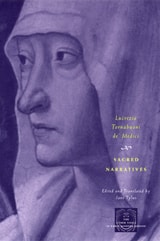
Sacred Narratives
Lucrezia Tornabuoni de' Medici
University of Chicago Press, 2001
This is the first major collection in any language of her extensive body of religious poems. Ranging from gentle lyrics on the Nativity to moving dialogues between a crucified Christ and the weeping sinner who kneels before him, the nine laudi (poems of praise) included here are among the few such poems known to have been written by a woman. Tornabuoni's five storie sacre, narrative poems based on the lives of biblical figures-three of whom, Judith, Susanna, and Esther, are Old Testament heroines-are virtually unique in their range and expressiveness. Together with Jane Tylus's substantial introduction, these poems offer us both a fascinating portrait of a highly educated and creative woman and a lively sense of cultural and social life in Renaissance Florence.
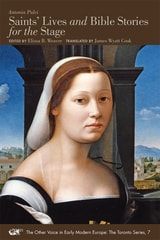
Saints' Lives and Bible Stories for the Stage
A Bilingual EditionAntonia Pulci
Iter Press, 2010
—Sharon Strocchia
Professor of History, Emory University
Secret Germany
Myth in Twentieth-Century German CultureFurio Jesi
Seagull Books, 2021
In the decades before the rise of the Third Reich, “Secret Germany” was a phrase used by the circle of writers around the poet Stefan George to describe a collective political and poetic project: the introduction of the highest values of art into everyday life, the secularization of myth and the mythologization of history. In this book, Furio Jesi takes up the term in order to trace the contours of that political, artistic, and aesthetic thread as it runs through German literary and artistic culture in the period—which, in the 1930s, became absorbed by Nazism as part of its prophecy of a triumphant future. Drawing on thinkers like Carl Jung and writers such as Thomas Mann and Rainer Maria Rilke, Jesi reveals a literary genre that was transformed, tragically, into a potent political myth.
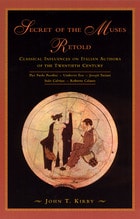
Secret of the Muses Retold
Classical Influences on Italian Authors of the Twentieth CenturyJohn T. Kirby
University of Chicago Press, 2000
These are some of the questions that gave rise to John Kirby's Secret of the Muses Retold. This new study of works by five twentieth-century Italian writers investigates the abiding influence of the Greek and Roman classics, and their rich legacy in our own day. The result is not only a splendid introduction to contemporary Italian literature, but also a lucid and stimulating meditation on the insights that writers such as Umberto Eco and Italo Calvino have tapped from the wellspring of ancient tradition.
Kirby's book offers an impassioned plea for the recuperation of the humanities in general, and of classical studies in particular. No expertise in Greek, Latin, Italian, or literary theory is presumed, and both traditional and postmodern perspectives are accommodated.
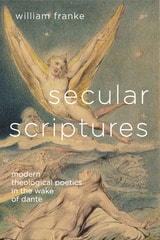
Secular Scriptures
Modern Theological Poetics in the Wake of DanteWilliam Franke
The Ohio State University Press, 2015
Secular Scriptures examines, through its own original speculative outlook, some of the most compelling exemplars of religious-poetic revelation in modern Western literature. The essays taken as an ensemble revolve around and are bookended by Dante, but they also explore the work of Chaucer, Shakespeare, Milton, Blake, Leopardi, Baudelaire, Dickinson, and Yeats. Looking both backward and forward from the vantage of Dante, Franke explores the roots of secularized religious vision in antiquity and the Middle Ages, even as he also looks forward toward its fruits in modern poetry and poetics. Ultimately, Franke’s analyses demonstrate the possibilities opened by understanding literature as secularized religious revelation.
Selected Essays and Dialogues by Gianni Celati
Adventures into the Errant FamiliarEdited and Translated by Patrick Barron
University College London, 2024
Selected Essays and Dialogues is a collection of translations of Italian essayist Gianni Celati’s theoretical and musing work from the late 1960s to the present. Its topics range from environmental perception and archaeological conceptions of historical knowledge to street theater, writing, photography, cinema, and translation. The book provides a framework of key literary, theoretical, and artistic movements of the past fifty years, as well as a guide for English-language readers to place Celati’s work in historical, cultural, and biographical contexts.
Celati’s fondness for the unexpected ordinary tempts readers to wander and become lost in the webs of his daring thoughts. Indeed, a genial adventurousness can be found within all of his writings collected here, driven by an affectionate and light-hearted engagement with the surrounding world. This collection offers a taste of his adventures of the mind and body, led by a lithe sensitivity not restricted to the so-called high arts or letters, but also very much engaged with the everyday lives, places, and tales we all constantly share.
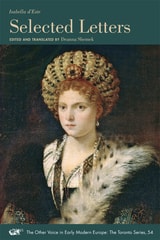
Selected Letters
Isabella d’Este
Iter Press, 2017
Isabella d’Este (1474–1539), daughter of the Este dukes of Ferrara and wife of Marchese Francesco II Gonzaga of Mantua, co-regent of the Gonzaga state, art collector, musician, diplomat, dynastic mother, traveler, reader, gardener, fashion innovator, and consummate politician, was also, as this volume attests, a prolific letter writer with a highly developed epistolary network. Presented here for the first time in any language is a representative selection from over 16,000 letters sent by Isabella to addressees across a wide social spectrum. Together, they paint a nuanced and colorful portrait of a brilliant and influential female protagonist of early modern European society.
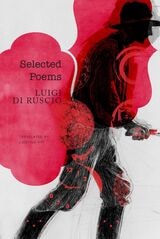
Selected Poems
Luigi Di Ruscio
Seagull Books, 2023
Born in a sub-proletarian ghetto in Italy in 1930 under the fascist regime, Luigi Di Ruscio was an urchin running wild in the countryside, a Communist with clear anarchist leanings, a jack-of-all-trades. In 1957 he emigrated to Oslo, where he worked for forty years in a steel-wire factory, spending his evenings at the typewriter, delving with furious energy into his native Italian. Di Ruscio insisted that whereas the language of power is always a contrived, one-way fabrication, the language of the underprivileged is upfront and direct, aiming straight and sharp for the truth. Caustic as a shopfloor scouring agent, exhilarating in its overabundance, humor, and outspokenness, Selected Poems stands as a testament of tenacity, a record of class struggle, and a vital presence for our times.
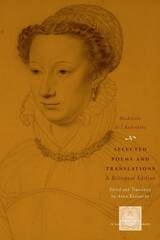
Selected Poems and Translations
A Bilingual EditionMadeleine de l'Aubespine
University of Chicago Press, 2007
Rather than adopt the conventional self-effacement that defined female poets of the time, l’Aubespine’s speakers are sexual, dominant, and defiant; and her subjects are women who are able to manipulate, rebuke, and even humiliate men.
Unavailable in English until now and only recently identified from scattered and sometimes misattributed sources, l’Aubespine’s poems and literary works are presented here in Anna Klosowska’s vibrant translation. This collection, which features one of the first French lesbian sonnets as well as reproductions of l’Aubespine’s poetic translations of Ovid and Ariosto, will be heralded by students and scholars in literature, history, and women’s studies as an important addition to the Renaissance canon.
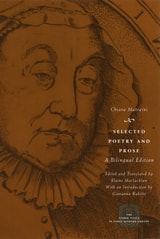
Selected Poetry and Prose
A Bilingual EditionChiara Matraini
University of Chicago Press, 2007
Mostly available in only a handful of rare book collections, her writings are now adeptly translated here for an English-speaking audience and situated historically in an introduction by noted Matraini expert Giovanna Rabitti. Selected Poetry and Prose allows the poet to finally take her place as one of the seminal authors of the Renaissance, next to her contemporaries Vittoria Colonna and Laura Battiferra, also published in the Other Voice series.
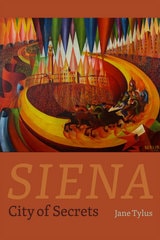
Siena
City of SecretsJane Tylus
University of Chicago Press, 2015
As Tylus leads us through the city, she shares her passion for Siena in novelistic prose, while never losing sight of the historical complexities that have made Siena one of the most fascinating and beautiful towns in Europe. Today, Siena can appear on the surface standoffish and old-fashioned, especially when compared to its larger, flashier cousins Rome and Florence. But first impressions wear away as we learn from Tylus that Siena was an innovator among the cities of Italy: the first to legislate the building and maintenance of its streets, the first to publicly fund its university, the first to institute a municipal bank, and even the first to ban automobile traffic from its city center.
We learn about Siena’s great artistic and architectural past, hidden behind centuries of painting and rebuilding, and about the distinctive characters of its different neighborhoods, exemplified in the Palio, the highly competitive horserace that takes place twice a year in the city’s main piazza and that serves as both a dividing and a uniting force for the Sienese. Throughout we are guided by the assured voice of a seasoned scholar with a gift for spinning a good story and an eye for the telling detail, whether we are traveling Siena’s modern highways, exploring its underground tunnels, tracking the city’s financial history, or celebrating giants of painting like Simone Martini or giants of the arena, Siena’s former Serie A soccer team.
A practical and engaging guide for tourists and armchair travelers alike, Siena is a testament to the powers of community and resilience in a place that is not quite as timeless and serene as it may at first appear.
Slashing Sounds
A Bilingual EditionJolanda Insana
University of Chicago Press, 2024
Jolanda Insana’s Slashing Sounds uses invectives, fragments, epigrams, and epigraphs to construct poems that pulse with the texture of an idiosyncratic Sicilian dialect. The poems in this collection are ferocious, irreverent, strange, snarky, and otherworldly. Insana’s commitment to contentiousness, her brutal and skeptical eye, and her preoccupation with language make Insana’s poetry particularly arresting. For Insana, there is no subject more worthy of our interest than language’s misfires and contradictory impulses—language being the ultimate arrow, forging a direction in the world and forcing a turn toward whatever reality appears in front of you.
The first book-length collection of Insana’s poetry published in English, Slashing Sounds is a powerful offering that addresses a lack of female Italian voices in Anglophone poetry publishing.
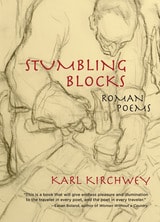
Stumbling Blocks
Roman PoemsKarl Kirchwey
Northwestern University Press, 2017
As in his 1998 New York Times Notable Book The Engrafted Word, the city of Rome becomes a lens through which to understand the contemporary human experience and the upheavals of human loss. Stumbling Blocks takes as its starting point the shattered ancient Roman ruins described in Renaissance poet Joachim du Bellay's celebrated sonnet—a landscape of death feeding upon itself and restored to life in the imagination of each successive generation to salvage its own narratives.
Kirchwey builds new arches and mythological intersections in exquisite poems that take long walks in the Eternal City, through landscapes far away and deep within. This gorgeous collection takes us back in time and brings us forward through our Old and New Worlds, revealing through the religion of art both beauty and atrocity.