Results by title
412 books match the query 'Japan' and 23 start with s
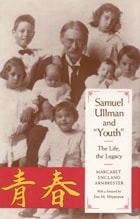
Samuel Ullman and "Youth"
The Life, the LegacyMargaret E. Armbrester
University of Alabama Press, 2009
Thousands of wonderful and sometimes strange fads have captured the public fancy in the almost five decades since the end of World War II. Most have been short-lived and soon faded away. There is, however, a poem that has not only withstood the vicissitudes of time, but has spread around the world like the waves lapping at a beach. This is the poem "Youth," by Samuel Ullman.
In December 1945, the Reader’s Digest published the poem and reported that General Douglas MacArthur, Commander of the Allied Forces, Far East, kept a copy of the poem near his desk.
Around that time, Yoshio Okada, a Japanese businessman, bought a copy of that December 1945 edition of the Reader's Digest, read the poem and was deeply affected by it. He translated it into Japanese and displayed it in his office as a guiding inspiration. Many of Okada's friends read the poem and were fascinated by its beauty. It began to receive national publicity through newspapers and magazines and became popular throughout Japan, especially among the intellectual community. Part of the reason for this widespread popularity is the excellence of the translation. Yoshio Okada, a man of noble character, gifted with a profound philosophy of life and literary talent, translated the poem into a beautiful, soulstirring Japanese version.
Samuel Ullman's “Youth” reflects the truth of life, and his outcry of spirituality touches the intrinsic nature of man.
Samurai in the Land of the Gaucho
Transpacific Modernity and Nikkei Literature in ArgentinaKoichi Hagimoto
Vanderbilt University Press, 2023
In the early twentieth century, historical imaginings of Japan contributed to the Argentine vision of “transpacific modernity." Intellectuals such as Eduardo Wilde and Manuel Domecq García celebrated Japanese customs and traditions as important values that can be integrated into Argentine society. But a new generation of Nikkei or Japanese Argentines is rewriting this conventional narrative in the twenty-first century. Nikkei writers such as Maximiliano Matayoshi and Alejandra Kamiya are challenging the earlier, unapologetic view of Japan based on their own immigrant experiences.
Compared to the experience of political persecution against Japanese immigrants in Brazil and Peru, the Japanese in Argentina generally lived under a more agreeable sociopolitical climate. In order to understand the "positive" perception of Japan in Argentine history and literature, Samurai in the Land of the Gaucho turns to the current debate on race in Argentina, particularly as it relates to the discourse of whiteness. One of the central arguments is that Argentina's century-old interest in Japan represents a disguised method of (re)claiming its white, Western identity.
Through close readings of diverse genres (travel writing, essay, novel, short story, and film) Samurai in the Land of the Gaucho yields a multi-layered analysis in order to underline the role Japan has played in both defining and defying Argentine modernity from the twentieth century to the present.

Samurai with Telephones
Anachronism in Japanese LiteratureChristopher Smith
University of Michigan Press, 2024
From the modern period, this volume examines literature by Mori Ōgai and Ōe Kenzaburō, manga by Tezuka Osamu, art by Murakami Takashi, and a variety of other pop cultural works. Turning to the Early Modern period (Edo period, 1600–1868), which produced a literature rich with playful anachronism, he also examines several Kabuki and Bunraku plays, kibyōshi comic books, and gōkan illustrated novels. In analyzing these works, he draws a distinction between anachronisms that attempt to hide their work on history and convincingly rewrite it and those conspicuous anachronisms that highlight and disrupt the construction of historical narratives.
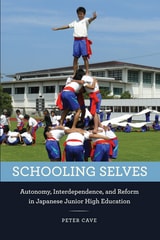
Schooling Selves
Autonomy, Interdependence, and Reform in Japanese Junior High EducationPeter Cave
University of Chicago Press, 2016
Cave examines the implementation of “relaxed education” reforms that attempted to promote individual autonomy and free thinking in Japanese classrooms. As he shows, however, these policies were eventually transformed by educators and school administrators into curricula and approaches that actually promoted social integration over individuality, an effect opposite to the reforms’ intended purpose. With vivid detail, he offers the voices of teachers, students, and parents to show what happens when national education policies run up against long-held beliefs and practices, and what their complex and conflicted interactions say about the production of self and community in education. The result is a fascinating analysis of a turbulent era in Japanese education that offers lessons for educational practitioners in any country.
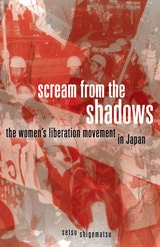
Scream from the Shadows
The Women’s Liberation Movement in JapanSetsu Shigematsu
University of Minnesota Press, 2012
More than forty years ago a women’s liberation movement called ūman ribu was born in Japan amid conditions of radicalism, violence, and imperialist aggression. Setsu Shigematsu’s book is the first to present a sustained history of ūman ribu’s formation, its political philosophy, and its contributions to feminist politics across and beyond Japan. Through an in-depth analysis of ūman ribu, Shigematsu furthers our understanding of Japan’s gender-based modernity and imperialism and expands our perspective on transnational liberation and feminist movements worldwide.
In Scream from the Shadows, Shigematsu engages with political philosophy while also contextualizing the movement in relation to the Japanese left and New Left as well as the anti–Vietnam War and radical student movements. She examines the controversial figure Tanaka Mitsu, ūman ribu’s most influential activist, and the movement’s internal dynamics. Shigematsu highlights ūman ribu’s distinctive approach to the relationship of women—and women’s liberation—to violence: specifically, the movement’s embrace of violent women who were often at the margins of society and its recognition of women’s complicity in violence against other women.
Scream from the Shadows provides a powerful case study of a complex and contradictory movement with a radical vision of women’s liberation. It offers a unique opportunity to reflect on the blind spots within our contemporary and dominant views of feminism across their liberal, marxist, radical, Euro-American, postcolonial, and racial boundaries.
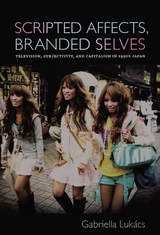
Scripted Affects, Branded Selves
Television, Subjectivity, and Capitalism in 1990s JapanGabriella Lukács
Duke University Press, 2010
Searching for Home Abroad
Japanese Brazilians and TransnationalismJeffrey Lesser, ed.
Duke University Press, 2003
The concepts of home and diaspora are engaged and debated throughout the volume. Drawing on numerous sources—oral histories, interviews, private papers, films, myths, and music—the contributors highlight the role ethnic minorities have played in constructing Brazilian and Japanese national identities. The essayists consider the economic and emotional motivations for migration as well as a range of fascinating cultural outgrowths such as Japanese secret societies in Brazil. They explore intriguing paradoxes, including the feeling among many Japanese-Brazilians who have migrated to Japan that they are more "Brazilian" there than they were in Brazil. Searching for Home Abroad will be of great interest to scholars of immigration and ethnicity in the Americas and Asia.
Contributors. Shuhei Hosokawa, Angelo Ishi, Jeffrey Lesser, Daniel T. Linger, Koichi Mori, Joshua Hotaka Roth, Takeyuki (Gaku) Tsuda, Keiko Yamanaka, Karen Tei Yamashita

Second-Best Justice
The Virtues of Japanese Private LawJ. Mark Ramseyer
University of Chicago Press, 2015
With Second-Best Justice, J. Mark Ramseyer offers a more compelling, better-grounded explanation: the low rate of lawsuits in Japan results not from distrust of a dysfunctional system but from trust in a system that works—that sorts and resolves disputes in such an overwhelmingly predictable pattern that opposing parties rarely find it worthwhile to push their dispute to trial. Using evidence from tort claims across many domains, Ramseyer reveals a court system designed not to find perfect justice, but to “make do”—to adopt strategies that are mostly right and that thereby resolve disputes quickly and economically.
An eye-opening study of comparative law, Second-Best Justice will force a wholesale rethinking of the differences among alternative legal systems and their broader consequences for social welfare.
Secrets, Sex, and Spectacle
The Rules of Scandal in Japan and the United StatesMark D. West
University of Chicago Press, 2006
A leader of a global superpower is betrayed by his mistress, who makes public the sordid details of their secret affair. His wife stands by as he denies the charges. Debates over definitions of moral leadership ensue. Sound familiar? If you guessed Clinton and Lewinsky, try again. This incident involved former Japanese prime minister Sosuke Uno and a geisha.
In Secrets, Sex, and Spectacle, Mark D. West organizes the seemingly random worlds of Japanese and American scandal—from corporate fraud to baseball cheaters, political corruption to celebrity sexcapades—to explore well-ingrained similarities and contrasts in law and society. In Japan and the United States, legal and organizational rules tell us what kind of behavior is considered scandalous. When Japanese and American scandal stories differ, those rules—rules that define what’s public and what’s private, rules that protect injuries to dignity and honor, and rules about sex, to name a few—often help explain the differences. In the cases of Clinton and Uno, the rules help explain why the media didn’t cover Uno’s affair, why Uno’s wife apologized on her husband’s behalf, and why Uno—and not Clinton—resigned.
Secrets, Sex, and Spectacle offers a novel approach to viewing the phenomenon of scandal—one that will be applauded by anyone who has obsessed over (or ridiculed) these public episodes.
Seeking Sakyamuni
South Asia in the Formation of Modern Japanese BuddhismRichard M. Jaffe
University of Chicago Press, 2019
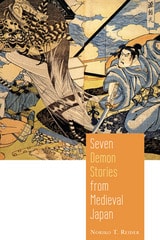
Seven Demon Stories from Medieval Japan
Noriko T. Reider
Utah State University Press, 2016
Reider, concordant with many scholars of Japanese cultural studies, argues that to study oni is to study humanity. These tales are from an era in which many new oni stories appeared for the purpose of both entertainment and moral/religious edification and for which oni were particularly important, as they were perceived to be living entities. They reflect not only the worldview of medieval Japan but also themes that inform twenty-first-century Japanese pop and vernacular culture, including literature, manga, film, and anime. With each translation, Reider includes an introductory essay exploring the historical and cultural importance of the characters and oni manifestations within this period.
Offering new insights into and interpretations of not only the stories therein but also the entire genre of Japanese ghost stories, Seven Demon Stories is a valuable companion to Reider’s 2010 volume Japanese Demon Lore. It will be of significant value to folklore scholars as well as students of Japanese culture.
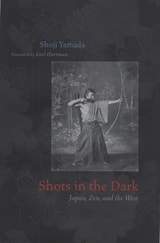
Shots in the Dark
Japan, Zen, and the WestShoji Yamada
University of Chicago Press, 2009
In the years after World War II, Westerners and Japanese alike elevated Zen to the quintessence of spirituality in Japan. Pursuing the sources of Zen as a Japanese ideal, Shoji Yamada uncovers the surprising role of two cultural touchstones: Eugen Herrigel’s Zen in the Art of Archery and the Ryoanji dry-landscape rock garden. Yamada shows how both became facile conduits for exporting and importing Japanese culture.
First published in German in 1948 and translated into Japanese in 1956, Herrigel’s book popularized ideas of Zen both in the West and in Japan. Yamada traces the prewar history of Japanese archery, reveals how Herrigel mistakenly came to understand it as a traditional practice, and explains why the Japanese themselves embraced his interpretation as spiritual discipline. Turning to Ryoanji, Yamada argues that this epitome of Zen in fact bears little relation to Buddhism and is best understood in relation to Chinese myth. For much of its modern history, Ryoanji was a weedy, neglected plot; only after its allegorical role in a 1949 Ozu film was it popularly linked to Zen. Westerners have had a part in redefining Ryoanji, but as in the case of archery, Yamada’s interest is primarily in how the Japanese themselves have invested this cultural site with new value through a spurious association with Zen.
Shugendo
Essays on the Structure of Japanese Folk ReligionMiyake Hitoshi; Edited and with an Introduction by H. Byron Earhart
University of Michigan Press, 2001
Social Contracts Under Stress
The Middle Classes of America, Europe, and Japan at the Turn of the CenturyOlivier Zunz
Russell Sage Foundation, 2002
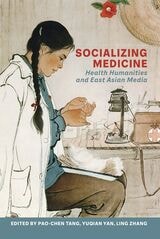
Socializing Medicine
Health Humanities and East Asian MediaEdited by Pao-chen Tang, Yuqian Yan, and Ling Zhang
Hong Kong University Press, 2025
Socializing Medicine explores the intersections of medicine, health, and East Asian media. Interweaving archival research, audiovisual analyses, and theoretical insights from the emerging field of Health Humanities, the contributors reveal the multifaceted ways in which mass media—including photography, film, television, and live streaming—has been deployed as a tool for controlling medicine and health, privileging those with power and authority since the early twentieth century. Adopting anti-colonial and anti-capitalist perspectives, the contributors in this volume challenge the dominant mediations of health against the backdrop of imperialism, Cold War geopolitical tensions, and neoliberal capitalism. Collectively, they advocate for alternative understandings of medical culture through media productions that envision accessible and equitable healthcare practices.
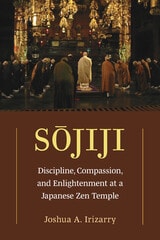
Sojiji
Discipline, Compassion, and Enlightenment at a Japanese Zen TempleJoshua A. Irizarry
University of Michigan Press, 2022
Based on more than fifteen years of fieldwork, interviews, and archival research, Sōjiji: Discipline, Compassion, and Enlightenment at a Japanese Zen Temple immerses the reader in the lives and experiences of the different groups that comprise Sōjiji's contemporary religious community. Through clear and accessible prose, ethnographically-grounded analysis, and emotionally compelling stories, the reader will explore the rich pastiche of daily life and ritual activity at a major Japanese Zen temple in institutional, historical, and social context through the lived practices of its community of clergy, practitioners, parishioners, and visitors.
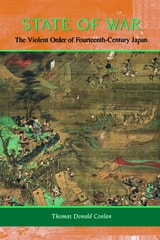
State of War
The Violent Order of Fourteenth-Century JapanThomas Donald Conlan
University of Michigan Press, 2003

Stateless
Tienshi Lara Chen
National University of Singapore Press, 2023
"In the springtime of the year that I was twenty-one, I found myself stuck at the border between two familiar countries, unable to enter either. I had never felt my statelessness so keenly.”
Japan’s 1971 termination of diplomatic ties with the Republic of China left 9,200 Chinese residents stateless. Tienshi “Lara” Chen was one of them, born to Chinese parents in Yokohama’s Chinatown. What does it mean to be stateless? What does it feel like?
To answer, Stateless presents Chen’s engaging autobiographical account of her bi-cultural upbringing and Japanese education. She reflects on her experience of statelessness eventually led her into a career spanning academia and activism, and she analyzes the contradictions inherent in the concepts of nationality, nation-state, and citizenship, in a world where individual nationality, identity, and experience are increasingly complex. She concludes that the current system of regulating individuals with citizenship is unworkable in the long run.
Blending life writing, auto-ethnography, and a study of stateless communities around Asia, this book unpacks the idea of citizenship by showing the hidden everyday narratives and lived experiences of stateless persons who have no legal ties to any nation-state. Originally published in Japanese, this adapted and updated English edition critically engages with questions of borders, mobility, belonging, and identity.

Steamships across the Pacific
Maritime Journeys between Mexico, China, and Japan, 1867–1914Ruth Mandujano López
Hong Kong University Press, 2025
During the nineteenth century, the Trans-Pacific world underwent a profound transformation due to the transition from sail to steam navigation that was accompanied by a reconfiguration of power. Steamships across the Pacific explores how diverse Mexican, British, Chinese, and Japanese interests participated, particularly during Porfirio Díaz’s presidency at the peak of Mexico’s participation, in the steam network. It investigates this network in its 1860s outset through a time of many revolutionary changes, including the World War, the Mexican Revolution, the opening of the Panama Canal, and the introduction of a new maritime technology—vessels run by oil. These transoceanic exchanges, generated within these new geographies of power, contributed not only to the formation of a Trans-Pacific region but also to the refashioning of the Mexican national imaginary.
With transnationalism, global, and migration studies as its main frameworks, this study draws upon a dazzling array of primary sources to center Mexico’s Trans-Pacific relations and the influence they wielded over the region at the height of the steamship period.
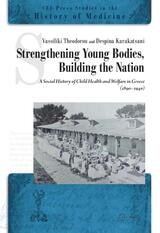
Strengthening Young Bodies, Building the Nation
A Social History of the Child Health and Welfare in Greece (1890–1940)Vassiliki Theodorou
Central European University Press, 2019
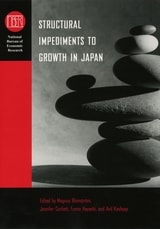
Structural Impediments to Growth in Japan
Edited by Magnus Blomström, Jennifer Corbett, Fumio Hayashi, and Anil Kashyap
University of Chicago Press, 2003
In this, the first book-length academic treatment of this important issue, a team of notable contributors present nine papers, offering a comprehensive assessment of those economic difficulties and addressing a range of specific issues, from financial restructuring and the impact of the aging Japanese population to corporate behavior, public lending, employment practices, and innovative capacity. In each paper, contributors clearly identify and outline problems and concerns, carefully pose provocative questions, and in many instances present concrete suggestions for improvement.
The resulting volume is a timely and important examination of critical issues for Japan's stalling economy, packed with both telling data and expert analysis and offering valuable perspectives on Japan's current obstacles.
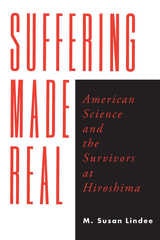
Suffering Made Real
American Science and the Survivors at HiroshimaM. Susan Lindee
University of Chicago Press, 1994
Suffering Made Real is the first comprehensive history of the ABCC's research on how radiation affected the survivors of the atomic bomb. Arguing that Cold War politics and cultural values fundamentally shaped the work of the ABCC, M. Susan Lindee tells the compelling story of a project that raised disturbing questions about the ethical implications of using human subjects in scientific research.
How did the politics of the emerging Cold War affect the scientists' biomedical research and findings? How did the ABCC document and publicly present the effects of radiation? Why did the ABCC refuse to provide medical treatment to the survivors? Through a detailed examination of ABCC policies, archival materials, the minutes of committee meetings, newspaper accounts, and interviews with ABCC scientists, Lindee explores how political and cultural interests were reflected in the day-to-day operations of this controversial research program.
Set against a period of conflicting views of nuclear weapons and nuclear power, Suffering Made Real follows the course of a politically charged research program and reveals in detail how politics and cultural values can shape the conduct, results, and uses of science.
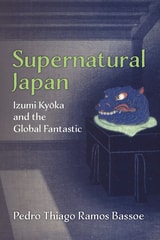
Supernatural Japan
Izumi Kyoka and the Global FantasticPedro Thiago Ramos Bassoe
University of Michigan Press, 2026
Pedro Bassoe considers how Kyōka’s stories have been produced by a meeting of global influences—including Apuleius, The Arabian Nights, Hans Christian Andersen, the Brothers Grimm, Prosper Mérimée, Guy de Maupassant, Gerhart Hauptmann, and Jules Verne—combined with traditional Japanese genres. Bassoe develops the notion of “the scholarly fantastic” to describe how a set of realistic epistemologies reinforce the fantastic in Kyōka’s writings. Supernatural Japan offers an up-to-date introduction to Izumi Kyōka and his writing for students, scholars, or fans of Japanese fantasy literature and media.