Results by title
486 books match the query 'LGBTQ+' and 36 start with s
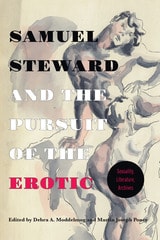
Samuel Steward and the Pursuit of the Erotic Sexuality, Literature, Archives
Sexuality, Literature, ArchivesEdited by Debra A. Moddelmog and Martin Joseph Ponce
The Ohio State University Press, 2017
With work by prominent scholars in queer, transgender, and sexuality studies, and with topics such as the queer archive, hoarding, masochism, the queer mystery, race and desire, sexology, and gay pornography, Samuel Steward and the Pursuit of the Erotic will appeal to a wide range of readers across a variety of disciplines invested in queer experience. Closing on a personal recollection from one of Steward’s last close friends, the volume will also appeal to readers interested in the personal aspects of this fascinating, idiosyncratic figure’s multifaceted life.
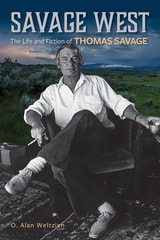
Savage West
The Life and Fiction of Thomas SavageO. Alan Weltzien
University of Nevada Press, 2022
O. Alan Weltzien's insightful and detailed literary biography chronicles the life and work of this neglected but deeply talented novelist. Savage, a closeted gay family man, was both an outsider and an insider, navigating an intense conflict between his sexual identity and the claustrophobic social restraints of the rural West. Unlike many other Western writers, Savage avoided the formula westerns— so popular in his time— and offered instead a realistic, often subversive version of the region. His novels tell a hard, harsh story about dysfunctional families, loneliness, and stifling provincialism in the small towns and ranches of the northern Rockies, and his minority interpretation of the West provides a unique vision and caustic counternarrative contrary to the triumphant settler-colonialism themes that have shaped most Western literature. Savage West seeks to claim Thomas Savage's well-deserved position in American literature and to reintroduce twenty-first-century readers to a major Montana writer.
School
A NovelRay Levy
University of Alabama Press, 2023
Both an exorcism of contemporary academia and a comedic portrait of an artist seeking the means to survive.
At once angry and jubilant, Ray Levy’s School is a curse on a dying system and an incantation for transforming pain into a vessel for capacious, creative selfhood.
A dissertation manuscript possessed by the spirit of Marquis de Sade; a lecture on psychoanalysis delivered as stand-up comedy by a dysphoric graduate student; a review of a found-footage horror movie that’s also a YouTube video of a conference presentation on French theory; an interview with an avant-garde filmmaker that’s really an invocation for conjuring your demon brother; oversharing and withholding, chanting and channeling, School is a slapstick roast of Derrida’s corpse and a mystical vision of a life in which you have not lost.
Scream / Queen
PoemsCD Eskilson
Acre Books, 2025
Scream / Queen, CD Eskilson’s debut poetry collection, examines queerness, mental illness, and transgender identity through the lens of thrillers and B movies. The Creature from the Black Lagoon, Michael Myers, and the Headless Horseman are just a few of the fright-film villains and monsters that populate this book.
Eskilson’s formally innovative poems document how a body—a nonbinary transgender body, a chronically ill body, a body carrying trauma—can be understood, accepted, and healed even in a violent sociopolitical climate. Drawing on the language and images of horror cinema, the poems’ speakers find strength and the means to survive both family legacy and the pain inflicted on them: “I want to behemoth, be the biggest / violence in the galaxy,” says one who thinks about Godzilla and dreams of “learning how to roar.”
Though an atmosphere of trans panic and state legislation against trans bodies pervades the book, Scream / Queen ultimately conjures a world of hope and tenderness through connection and care. It celebrates all the body’s possibilities: the glorious and the monstrous. As a werewolf in the book says, “I kiss the moon; it took so long / to get here.”
Seabeast
Rajiv Mohabir
Four Way Books, 2025
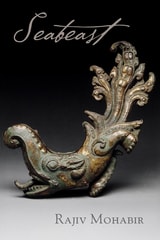
Mohabir's language ingeniously plumbs the depths, illustrating how the objectification fundamental to the construction and preservation of animal taxonomy mirrors the internecine violence of humankind on both a broad and intimate scale. "We were misnamed / again and again: first Hindu, / then Hindoo, then Indian, then / Coolie, all subhuman / much like this precursory cetacean / of the Eocene, named / in Latin great lizard— / anguilliform, what to make / of twist and tear, teeth / gnashing sharks and durodons / into pulp, judged by fossilized / gouges in enamel and finger / holes on skulls?"
Through the invention of race, the conquest and consumption of land, and the cultural amnesia enforced on the subaltern, imperialism threatens human survival on this planet just as we have misunderstood, taken captive, and hunted whales nearly to extinction. Meditating on the results of genetic testing, Mohabir details how, like his white ex-spouse's "ancestors / from northern Germany / played bone flutes / for their dead at gravesites," a lab "one day exhumed" them all "in perfect pentatonic scales." Meanwhile, he wonders what of his Indo-Caribbean heritage, complicated by the obfuscating forces of indenture, ethnic oppression, and frequent relocation, "can be revived" from this "wastebasket taxon, / us unnamed hoard of no future?" Of the Irrawaddy Dolphin once "known for / herding shoals of fish / for fisherfolk / in whose nets / they now drown," Mohabir observes that "learning human / language opens you // to betrayal." "Trust me," he urges, "though I am no // hairless dolphin— / I once had a husband." Standing at the confluence of these prehistoric, mythological, and contemporary tributaries feeding our attitude toward whales, Mohabir asks, who is the seabeast, really? The namer or the named? The answer prompts us to see that, if we recognize the legacy of human barbarism in the whale's long history with us, we can also locate a new reserve of resilience and survival. It is their example Mohabir uses, not the "bright honey" of their blubber that once would "fuel lanterns," to power his own spiritual refortification. "Maybe I will, from filling my lungs, blood / rushing to my core, / into a finned thing, / transform."
Secretly Inside
A NovelHans Warren; Translated by S. J. Leinbach
University of Wisconsin Press, 2006
Self-Made Woman
A MemoirDenise Chanterelle DuBois
University of Wisconsin Press, 2017
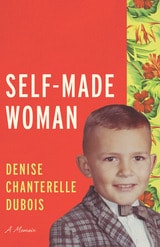
Defying all expectations, DuBois didn't crash and burn. Embracing her identity as a woman, she remade herself. Writing with resolute honesty and humor, she confronts both her past and her present to tell an American story of self-discovery.

Setting the Lawn on Fire
A NovelMack Friedman
University of Wisconsin Press, 2007
Setting the Lawn on Fire, the first novel by critically acclaimed writer Mack Friedman, trails its narrator through his obsessions with sex, drugs, art, and poison. Ivan, a young Jewish boy from Milwaukee, embarks on a journey of sexual discovery that leads him from Wisconsin to Alaska, Philadelphia, and Mexico through stints as a fishery worker, artist, and finally a hustler who learns to provide the blank canvas for other people’s dreams. The result is a new kind of coming-of-age story that sees passion from every angle because its protagonist is every kind of lover: the seducer and the seduced, the pornographer and the model, the hunter and the prey, the trick and the john. In the end, Setting the Lawn on Fire is also something rare—a fully realized, contemporary romance that illuminates the power of desire and the rituals of the body, the brain, and the heart that attempt to contain our passions.
Sex Isn't Real
The Invention of an Incoherent BinaryBeans Velocci
Duke University Press, 2026
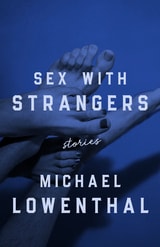
Sex with Strangers
Michael Lowenthal
University of Wisconsin Press, 2021
Recognizing that any partner is unknowable on some level, Michael Lowenthal writes about how intimacy can make strangers of us all. A newly ordained priest struggles with guilt and longing when he runs into his ex-girlfriend. A woman weighs the cost of protecting her daughter from a man they both adore. A teenage busboy has a jolting brush with a famous musician. A young man tries to salvage a long-distance relationship while caring for his mentor, an erotic writer dying of AIDS.
In edgy, disquieting stories, Lowenthal traces the paths that attraction and erotic encounters take, baffling and rueful as often as electrifying. This fraught and funny volume forces us to grapple with our own subconscious desires and question how well we can ever really know ourselves.

Sexology and Translation
Cultural and Scientific Encounters across the Modern WorldHeike Bauer
Temple University Press, 2015
Sexology and Translation is the first study of the contemporaneous emergence of sexology in Europe, Asia, and the Middle East. Heike Bauer and her contributors—historians, literary and cultural critics, and translation scholars—address the intersections between sexuality and modernity in a range of contexts during the period from the 1880s to the 1930s.
From feminist sexualities in modern Japan to Magnus Hirschfeld’s affective sexology, this book offers compelling new insights into how sexual ideas were formed in different contexts via a complex process of cultural negotiation. By focusing on issues of translation—the dynamic process by which ideas are produced and transmitted—the essays in Sexology and Translation provide an important corrective to the pervasive idea that sexuality is a “Western” construct that was transmitted around the world.
This volume deepens understanding of how the intersections between national and transnational contexts, between science and culture, and between discourse and experience, shaped modern sexuality.

Sexual Aim and Its Misses
On the Birth of the Sexual SubjectBenjamin Kahan
University of Chicago Press, 0
By shifting the study of sexuality to focus on “sexual aim,” we can understand the birth of the sexual subject—the historical emergence of an understanding of sexuality as an aspect of personhood.
Is it possible that half of the organization of modern sexuality has been forgotten? Historians of sexuality have thought about sexual desire almost exclusively in terms of the sexual object—the person to whom one is attracted. This book offers a history and theory of “sexual aim”—the what and how of desire—arguing that aim furnishes a constitutive and almost wholly ignored governing logic of sexuality.
The term “sexual aim” was coined by Sigmund Freud to describe “modes of gratification”—the sexual acts in which one finds pleasure, from kissing and copulation to voyeurism and fetishism. Benjamin Kahan repurposes this account to tell the complex story of how sexual aim catalyzed the formation of modern sexual identity and continues to operate as a powerful optic for understanding Euro-American sexualities.
Kahan focuses on nonnormative sexual aims, examining the histories of sadism, masochism, voyeurism, exhibitionism, and fetishism in order to articulate the relationship between sexual acts and sexuality. Drawing on diaries, court records, erotica, literary texts, marriage manuals, and medical treatises, Kahan vividly maps the emergence of the sexual subject from the early modern period through the twentieth century to furnish a new account of sexual modernity.
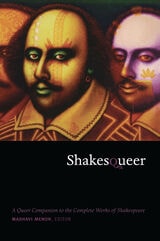
Shakesqueer
A Queer Companion to the Complete Works of ShakespeareMadhavi Menon, ed.
Duke University Press, 2011
Contributors. Matt Bell, Amanda Berry, Daniel Boyarin, Judith Brown, Steven Bruhm, Peter Coviello, Julie Crawford, Drew Daniel, Mario DiGangi, Lee Edelman, Jason Edwards, Aranye Fradenburg, Carla Freccero, Daniel Juan Gil, Jonathan Goldberg, Jody Greene, Stephen Guy-Bray, Ellis Hanson, Sharon Holland, Cary Howie, Lynne Huffer, Barbara Johnson, Hector Kollias, James Kuzner , Arthur L. Little Jr., Philip Lorenz, Heather Love, Jeffrey Masten, Robert McRuer , Madhavi Menon, Michael Moon, Paul Morrison, Andrew Nicholls, Kevin Ohi, Patrick R. O’Malley, Ann Pellegrini, Richard Rambuss, Valerie Rohy, Bethany Schneider, Kathryn Schwarz, Laurie Shannon, Ashley T. Shelden, Alan Sinfield, Bruce Smith, Karl Steel, Kathryn Bond Stockton, Amy Villarejo, Julian Yates

Shared Secrets
The Queer World of Newbery Medalist Charles J. FingerElizabeth Findley Shores
University of Arkansas Press, 2021
Winner, 2023 Booker Worthern Literary Prize
For nearly a century, British expatriate Charles Joseph Finger (1867–1941) was best known as an award-winning author of children’s literature. In Shared Secrets, Elizabeth Findley Shores relates Finger’s untold story, exploring the secrets that connected the author to an international community of twentieth-century queer literati.
As a young man, Finger reveled in the easy homosociality of his London polytechnical school, where he launched a student literary society in the mold of the city’s private men’s clubs. Throughout his life, as he wandered from England to Patagonia to the United States, he tried to recreate similarly open spaces—such as Gayeta, his would-be art colony in Arkansas. But it was through his idiosyncratic magazine All’s Well that he constructed his most successful social network, writing articles filled with coded signals and winking asides for an inner circle of understanding readers.
Capitalizing on the publishing opportunities of the day, Finger used every means available to express his twin loves—literature and men. He produced an enormous body of work, and his short, semiautobiographical fiction won some critical acclaim. Ultimately, the children’s book that won Finger a Newbery Medal ushered him into the public eye, ending his development as an author of serious queer literature.
Shared Secrets is both the story of Finger’s remarkable, adventurous life and a rare look at a community of gay writers and artists who helped shaped twentieth-century American culture, even as they artfully concealed their own identities.

Sideways Developments
Queer and Trans Aesthetics of Global Hong KongKai Hang Cheang
University of Michigan Press, 2026
In this moment of multiple crises, Sideways Developments offers a timely hermeneutic and theory of solidarity and sustainability. The book tracks how sideways aesthetics have evolved from a feature of LGBTQ+ plots, performance, and nonlinear approaches to space-time to a form of togetherness that links postcolonial Hong Kong with struggles worldwide. Using what Cheang terms intersectional formalism as an analytical tool, the book provides a multilayered examination of the alternative pathways exemplified by queer and trans resilience and regeneration.
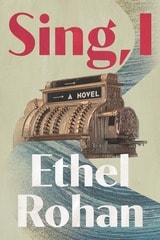
Sing, I
A NovelEthel Rohan
Northwestern University Press, 2024
Inside Half Moon Bay, a sparkling California coastal town, Ester Prynn is dulled and diminished by struggles with work, money, marriage, her senile father, a troubled teenage son, and old guilt she can’t assuage. When a masked gunman robs the convenience store where Ester works, he upends her fraught life and propels her toward passions buried, like singing; desires discovered, like a same-sex infatuation; and wrongs righted, like bringing the violent assailant to justice. But as the armed robber commits new crimes and continues to evade capture, the trauma from the holdup climbs, threatening Ester’s newfound delights and longings and forcing her to contend with her burning regrets and what-ifs. In the reckoning between Ester and these growing, molten upsets, she’s faced with enormous choices and must determine what and who can bring her to her best life.
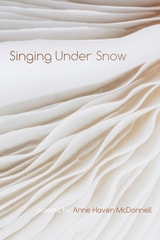
Singing Under Snow
Anne Haven McDonnell
Michigan State University Press, 2026
These are poems of queer ecology—poetry that “exults in the grit and texture of the natural world, in the unassuming and overlooked wonders beneath our feet and beyond our doors—in lichen and snow, in martens and mushrooms.” In reckoning with a mother’s aging, a breakup, or grief and disorientation in the face of the climate crisis, these poems seek a spiritual meaning in ecological belonging. Central to the collection is a series of poems exploring science, ceremony, and personal encounters with fungi. Fungi and lichen blur what we consider biological, what we think of as an individual, and how we understand death, and these poems reflect this complexity through imagery, juxtaposition, leaps of imagination, and sonic spells.
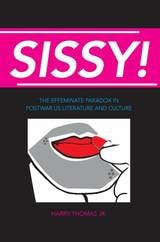
Sissy!
The Effeminate Paradox in Postwar US Literature and CultureHarry Thomas Jr.
University of Alabama Press, 2017
Sissy!: The Effeminate Paradox in Postwar US Literature and Culture is a fascinating work of cultural criticism that focuses on the ways men and boys deemed to be feminine have been—and continue to be—condemned for their personalities and behavior. Critic Harry Thomas Jr. does not dismiss this approach, but rather identifies it as merely one side of a coin. On the other side, he asserts, the opposite exists: an American artistic tradition that celebrates and affirms effeminate masculinity.
The author argues that effeminate men and boys are generally portrayed using the grotesque, an artistic mode concerned with the depictions of hybrid bodies. Thomas argues that the often grotesque imagery used to depict effeminate men evokes a complicated array of emotions, a mix of revulsion and fascination that cannot be completely separated from one another.
Thomas looks to the sissies in the 1940s novels of Truman Capote and Carson McCullers; the truth-telling flaming princesses of James Baldwin’s Giovanni’s Room; the superstardom of pop culture icon Liberace; the prophetic queens of Tony Kushner’s Angels in America; and many others to demonstrate how effeminate men have often been adored because they are seen as the promise of a different world, one free from the bounds of heteronormativity.
Sissy! offers an unprecedented and counterintuitive overview of cultural and artistic attitudes toward male effeminacy in post–World War II America and provides a unique and contemporary reinterpretation of the “sissy” figure in modern art and literature.
Sleep Demons
An Insomniac’s MemoirBill Hayes
University of Chicago Press, 2018
An acclaimed journalist and memoirist—and partner of the late neurologist Oliver Sacks—Hayes has been plagued by insomnia his entire life. The science and mythology of sleep and sleeplessness form the backbone to Hayes’s narrative of his personal battles with sleep and how they colored his waking life, as he threads stories of fugitive sleep through memories of growing up in the closet, coming out to his Irish Catholic family, watching his friends fall ill during the early years of the AIDS crisis in San Francisco, and finding a lover. An erudite blend of science and personal narrative, Sleep Demons offers a poignant introduction to the topics for which Hayes has since become famous, including art, eros, city life, the history of medical science, and queer identity.

Sleep Tight Satellite
StoriesCarol Guess
Tupelo Press, 2023
Slow Burn
PoemsEvan Wang, Ching-In Chen
Northwestern University Press, 2026
Winner of the 2024 Drinking Gourd Chapbook Poetry Prize
Persistent yet flickering, Slow Burn unveils a passionate world where love is both impossible and inevitable. Divided into three sections, Evan Wang’s debut chapbook traces the confrontation of the self through a cyclical journey of discovery and contradiction, ultimately leading to the choice of allowance: that which is made by the reader. These poems slowly burn first through our own inner silence, then through the thick dark of night, and finally to abstract closure—or lack thereof. They urge and hold us back, begging us to understand how, amid cultural, societal, and political suppression of the self, we kiss the muscled mouths of the world by carrying our bodies through it. Slow Burn is a romantic’s answer to the search for love, and the strangely comforting realization that the effects of the world mark us all.
Slut Lullabies
StoriesGina Frangello, Rebecca Makkai
Northwestern University Press, 2026
Through beauty, horror, humor, and chaos, Gina Frangello’s electric stories mine the human experience. A gay Latino man whose pious relatives are boycotting his commitment ceremony becomes caught up in hypocrisy and splendor when his lover’s Waspy mother hires a glitzy wedding coordinator. A desperate teen “seduces” her teacher in order to blackmail him into funding her young stepmother’s escape from their violent home. A wife turns to infidelity and drugs to distract her from chronic pain following an accident. A teenage boy attempts atonement in Amsterdam after having exploited and betrayed his naive girlfriend at home. A socialite must confront her dark past as her husband’s deteriorating illness erodes both her bank account and social standing.
Intimate and raw, this new edition of Frangello’s short fiction includes two previously unpublished stories. A foreword by Rebecca Makkai explains how Frangello’s incendiary work has opened the door for writing about deeply flawed and fascinating women.
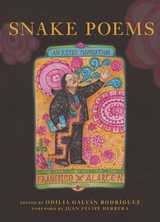
Snake Poems
An Aztec InvocationFrancisco X. Alarcón; Edited by Odilia Galván Rodríguez; Foreword by Juan Felipe Herrera; Translated by David Bowles and Xánath Caraza
University of Arizona Press, 2019
Alarcón was a stalwart student, researcher, and specialist on the lost teachings of his Indigenous ancestors. He first found their wisdom in the words of his Mexica (Aztec) grandmother and then by culling through historical texts. During a Fulbright fellowship to Mexico, Alarcón uncovered the writings of zealously religious Mexican priest Hernando Ruiz de Alarcón (1587–1646), who collected (often using extreme measures), translated, and interpreted Nahuatl spells and invocations.
In Snake Poems Francisco Alarcón offered his own poetic responses, reclaiming the colonial manuscript and making it new. This special edition is a tender tribute to Alarcón, who passed away in 2016, and includes Nahuatl, Spanish, and English renditions of the 104 poems based on Nahuatl invocations and spells that have survived more than three centuries. The book opens with remembrances and testimonials about Alarcón’s impact as a writer, colleague, activist, and friend from former poet laureate Juan Felipe Herrera and poet and activist Odilia Galván Rodríguez, who writes, “This book is another one of those doors that [Francisco] opened and invited us to enter. Here we get to visit a snapshot in time of an ancient place of Nahuatl-speaking ancestors, and Francisco’s poetic response to what he saw through their eyes.”
So Long
Jen Levitt
Four Way Books, 2023
Anticipating and then grieving the death of her father, Jen Levitt’s So Long fleshes out a full elegiac register, sitting with the mourning of farewell while holding onto gratitude, remembrance, and a permeating love. “Soon,” she says, “we’ll have to find another way to meet, as moonlight / makes the river glow.” In the contrails of bittersweet loss, Levitt’s speaker observes all that surrounds her, and the self, too, as a phenomenon in loneliness. In the suburbs, she notes high- school athletes circling “in their sweat-resistant fabrics,” “so natural in their tank tops, those dutiful kids trying to beat time”; upstate, she finds herself in temple where Broadway music has replaced prayer and discovers “no promises, / but, like hearing a rustle in deep woods & turning to locate its source, the chance for something rare.” It is this humanistic faith that inverts the title’s idiomatic goodbye into a statement of permanence, the truth of our enduring, improbable lives: look at this, she seems to command herself, “& look at how lucky I’ve been, for so long.”
South Africa and the Dream of Love to Come
Queer Sexuality and the Struggle for FreedomBrenna M. Munro
University of Minnesota Press, 2012
After apartheid, South Africa established a celebrated new political order that imagined the postcolonial nation as belonging equally to the descendants of indigenous people, colonizing settlers, transported slaves, indentured laborers, and immigrants. Its constitution, adopted in 1996, was the first in the world to include gays and lesbians as full citizens. Brenna M. Munro examines the stories that were told about sexuality, race, and nation throughout the struggle against apartheid in order to uncover how these narratives ultimately enabled gay people to become imaginable as fellow citizens. She also traces how the gay, lesbian, or bisexual person appeared as a stock character in the pageant of nationhood during the transition to democracy. In the process, she offers an alternative cultural history of South Africa.
Munro asserts that the inclusion of gay people made South Africans feel “modern”—at least for a while. Being gay or being lesbian was reimagined in the 1990s as distinctly South African, but the “newness” that made these sexualities apt symbols for a transformed nation can also be understood as foreign and un-African. Indeed, a Western-style gay identity is often interpreted through the formula “gay equals modernity equals capitalism.” As South Africa’s reentrance into the global economy has failed to bring prosperity to the majority of its citizens, homophobic violence has been on the rise.
Employing a wide array of texts—including prison memoirs, poetry, plays, television shows, photography, political speeches, and the postapartheid writings of Nobel Laureates Nadine Gordimer and J. M. Coetzee—Munro reports on how contemporary queer activists and artists are declining to remain ambassadors for the “rainbow nation” and refusing to become scapegoats for the perceived failures of liberation and liberalism.

Sovereign Erotics
A Collection of Two-Spirit LiteratureEdited by Qwo-Li Driskill, Daniel Heath Justice, Deborah Miranda, and Lisa Tatonetti
University of Arizona Press, 2011
This landmark collection strives to reflect the complexity of identities within Native Gay, Lesbian, Bisexual, Transgender, Queer, and Two-Spirit (GLBTQ2) communities. Gathering together the work of established writers and talented new voices, this anthology spans genres (fiction, nonfiction, poetry, and essay) and themes (memory, history, sexuality, indigeneity, friendship, family, love, and loss) and represents a watershed moment in Native American and Indigenous literatures, Queer studies, and the intersections between the two.
Collaboratively, the pieces in Sovereign Erotics demonstrate not only the radical diversity among the voices of today’s Indigenous GLBTQ2 writers but also the beauty, strength, and resilience of Indigenous GLBTQ2 people in the twenty-first century.
Contributors: Indira Allegra, Louise Esme Cruz, Paula Gunn Allen, Qwo-Li Driskill, Laura Furlan, Janice Gould, Carrie House, Daniel Heath Justice, Maurice Kenny, Michael Koby, M. Carmen Lane, Jaynie Lara, Chip Livingston, Luna Maia, Janet McAdams, Deborah Miranda, Daniel David Moses, D. M. O’Brien, Malea Powell, Cheryl Savageau, Kim Shuck, Sarah Tsigeyu Sharp, James Thomas Stevens, Dan Taulapapa McMullin, William Raymond Taylor, Joel Waters, and Craig Womack

Split Britches
Fifty Years OnPeggy Shaw and Lois Weaver, Edited by Benjamin Gillespie
University of Michigan Press, 2027
What does it mean to sustain a creative life over fifty years? Split Britches: Fifty Years On offers an intimate look at the enduring collaboration of Peggy Shaw and Lois Weaver, the artists behind the groundbreaking performance troupe Split Britches. The collection highlights Split Britches’ enduring queer and feminist legacies, tracing how their distinctive butch/femme lesbian aesthetic and collaborative performance practice have evolved over five decades and nearly thirty original productions. It foregrounds their shift toward increasingly autobiographical and introspective work, while also situating their later performances within key theatrical, historical, and critical frameworks–paying particular attention to issues of embodiment, aging, the archive, and queer temporality. Bringing together performance scripts, candid interviews, production photos, accessible essays, and video documentation, Split Britches: Fifty Years On demonstrates how Shaw and Weaver pull from the past in order to critique the present. For scholars, artists, and students, the volume's unique combination of primary texts, critical essays, and multimedia resources makes it an essential volume that considers theatre scholarship and practice, queer and feminist discourses, and the evolution of creativity with age and time.
Staging Black Fugitivity
Stacie Selmon McCormick
The Ohio State University Press, 2019
McCormick traces the innovative ways that artists render slavery for present-day audiences. The dramas assembled in this book approach slavery from myriad perspectives—afrofuturist, feminist, and queer—in order to produce new imaginaries that offer more complex depictions of black experience. Through subverting notions of time, race, gender, and familiar histories of slavery themselves, the dramas under discussion produce performances of fugitivity—subversive, radical, and experimental performances of black artistic and political freedom at the site of slavery.
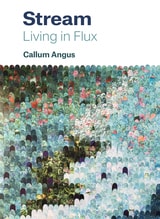
Stream
Living in FluxCallum Angus
Northwestern University Press, 2027
A nonfiction work examining a confluence of bodily and worldwide transition
Stream is an exploration of the large- and small-scale changes taking place in a single body and on our planet as a whole. Using a stream as a biological, technological, and psychological metaphor, Angus layers lyric essay, journal entries, and the detritus of a life spent writing about the climate within and without to consider how we remain fluid in a time of constant change. Each section of Stream flows into the next, weaving through thaws, floods, cataracts, and eddies while asking how a melting of rigid categories, from seasons to gender, might help us approach a changing world anew. From winery workers dying in the fields to endangered desert tortoises unable to outrun the flames, Stream is an outpouring of climatological grief toward those who perpetuate inaction, an elegy for those we’ve lost to the heat, and a tribute to the tributaries that help us see the world from other perspectives.
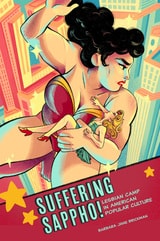
Suffering Sappho!
Lesbian Camp in American Popular CultureBarbara Jane Brickman
Rutgers University Press, 2024
Offering the first major consideration of lesbian camp in American popular culture, Suffering Sappho! traces a larger-than-life lesbian menace across midcentury media forms to propose five prototypical queer icons—the sicko, the monster, the spinster, the Amazon, and the rebel. On the pages of comics and sensational pulp fiction and the dramas of television and drive-in movies, Barbara Jane Brickman discovers evidence not just of campy sexual deviants but of troubling female performers, whose failures could be epic but whose subversive potential could inspire.
Supplemental images of interest related to this title: George and Lomas; Connie Minerva; Cat On Hot Tin; and Beulah and Oriole.


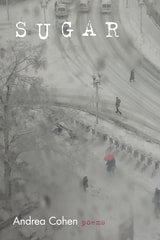
Sugar
Andrea Cohen
Four Way Books, 2026
About Sugar, David Orr has said: “Andrea Cohen’s ninth collection is elegantly precise—but this isn’t the precision of a meticulously arranged garden or tidy bookshelf. Rather, Cohen’s nimble, exacting lines are like guide ropes strung up the sides of an icy mountain: Her precision manages risk, and the risk leads to startling vistas. An entire relationship dynamic unfolds in the five monosyllables of ‘Proximity’: ‘She died / Of my wounds.’ In ‘Ghosting,’ the ambiguity of departure—the way in which lives and loves sometimes cease without concluding—is captured in all its shades of gray: ‘Any ghost will / tell you— // the last thing / we mean // to do / is leave you.’ We sometimes think of poems as recreating experience, but Cohen’s work reminds us that poetry, at its most patient and compassionate, is also a way of discerning. Sugar brings us a step closer to the sun; it helps us to orient ourselves, but more than that, it helps us to see.”

Sugarless
A NovelJames Magruder
University of Wisconsin Press, 2009
After he brings two girls in speech class to tears by reading a story aloud, Rick is coaxed onto the interscholastic forensics team to perform an eight-minute dramatic interpretation of The Boys in the Band, the controversial sixties play about homosexuality. Unexpectedly successful at this oddball event, Rick begins winning tournaments and making friends with his teammates.
Rick also discovers the joys of sex—with a speech coach from a rival school—just as his mother, reacting to a deteriorating home environment, makes an unnerving commitment to Christ. The newly confident Rick assumes this too shall pass—until the combined forces of family, sex, and faith threaten to undo him at the state meet in Peoria.
James Magruder’s Sugarless offers a ruefully entertaining take on the simultaneous struggles of coming-out, coming-of-age, and coming-to-Jesus.
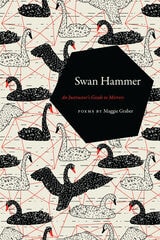
Swan Hammer
An Instructor’s Guide to MirrorsMaggie Graber
Michigan State University Press, 2022
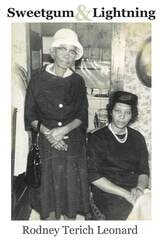
Sweetgum & Lightning
Rodney Terich Leonard
Four Way Books, 2021
Sweetgum & Lightning lets us into an extraordinary poetic universe, shaped by a vernacular rooted in the language of self, one’s origins, and music. In poems that are deeply sensual in nature, Rodney Terich Leonard considers gender and sexuality, art, poverty, and community. Imagery expands through unexpected lexical associations and rumination on the function of language; words take on new meaning and specificity, and the music of language becomes tantamount to the denotations of words themselves. Through extensive webs of connotation, Leonard’s narratives achieve a sense of accuracy and intimacy. The nuanced lens of these poems is indicative of the honesty of expression at work in the collection—one that affirms the essentiality of perception to living and memory.
Swimming with Dead Stars
Vi Khi Nao
University of Alabama Press, 2022
She wanted to die. The universe—and her mother—had other plans.
Maldon is an adjunct literature instructor at a prestigious East Coast university, with a deteriorating heart condition and no insurance. She finds herself caught between the demands of her job and the needs of her body, triggering economic and emotional strains that cause her to fantasize about taking her own life. But Maldon, who has pledged to safeguard her mother ever since their arrival in the US on a refugee ship from postwar Vietnam, has vowed to forgo suicide for as long as her mother is living.
In time, her heart worsens rapidly, and she ventures cross-country to a place called Cloud for the operation that may save her life. In Cloud, Maldon is joined by old friend planet Neptune, who is hermaphroditic, peculiar, and has agreed to accompany Maldon through the operation.
Swimming with Dead Stars is a hallucinatory meditation on the stars and planets, the precariousness of our existence, the cruel inequities of labor and healthcare, chickens and ice cream, and the grace that comes from enduring the physical and psychic pain wrought by pernicious social forces that enslave us all.
Synthetic Jungle
PoemsMichael Chang
Northwestern University Press, 2023
A vital breath of life arrives in American poetry with Synthetic Jungle, the latest collection from acclaimed poet Michael Chang. With poems in a register both hilarious and scathing, Synthetic Jungle effortlessly bashes convention while simultaneously rebuilding the language we use to communicate our fears and joys.
Synthetic Jungle is a collection written by a brilliant jester who winks at you as you catch their every reference before sharing a laugh at your own self-satisfaction. Themes of identity, sexuality, and literacy play out in a dizzying rhythm of microtheaters. Readers will find themselves giggling, snorting, and guffawing their way through this work: whether at a repudiation of the literary landscape or a critique of a failing justice system, to laugh along with Chang is to recognize your mistakes and, ultimately, grow from them.
Fractal and kinetic in the quick-witted spirit of John Ashbery and Emily Dickinson, Chang’s tender poems dance around, between, and through the personal and philosophical. Synthetic Jungle is as sweet as it is grand, and beneath its sarcastic grin reverberates an immense, open heart.