Results by title
1228 books match the query 'Library & Information Science' and 66 start with s

STEP into Storytime
Saroj Nadkarni Ghoting
American Library Association, 2014
Sacred Stacks
The Higher Purpose of Libraries and LibrarianshipNancy Kalikow Maxwell
American Library Association, 2006
Say It with Data
A Concise Guide to Making Your Case and Getting ResultsPriscille Dando
American Library Association, 2014

Scholarly Practice, Participatory Design and the Extensible Catalog
Nancy Fried Foster
Assoc of College & Research Libraries, 2011
Scholarly Practice, Participatory Design and the Extensible Catalog
Nancy Fried Foster
Assoc of College & Research Libraries, 2011
Scholarship In The Sandbox
Amy Jackson
Assoc of College & Research Libraries, 2019
School Librarian’s Career Planner
Hilda K. Weisburg
American Library Association, 2013
Screencasting for Libraries
Greg Notess
American Library Association, 2012
Scribes, Script, and Books
The Book Arts from Antiquity to the RenaissanceLeila Avrin
American Library Association, 2009
Securing Library Technology
American Library Association, 2009

Selected Writings of Sir Hilary Jenkinson
Roger H. Ellis
Society of American Archivists, 0
Semantic Web Technologies and Social Searching for Librarians
Robin M. American Library Association
American Library Association, 2012
Sequels
An Annotated Guide to Novels in Series, Fourth EditionAmerican Library Association, 2009
Serving At-Risk Teens
Proven Strategies and Programs for Bridging the GapAngela Craig
American Library Association, 2013
Serving Patrons with Disabilities
Perspectives and Insights from People with DisabilitiesEdited by Kodi Laskin
American Library Association, 2023
- bridging the gap between people with disabilities and those without, through empathy, patience, and understanding;
- techniques for training staff and overcoming discomfort;
- making your library accessible for people with mobility issues;
- how to interact with and assist a person with limited sight or hearing;
- guidance for interacting with a service animal handler;
- advice on library programming for people with learning differences; and
- best practices for effective service to patrons who use a speech assistance device.
Sex, Brains, and Video Games
Information and Inspiration for Youth Services LibrariansJennifer Burek Pierce
American Library Association, 2017
Shaping the Campus Conversation on Student Learning and Experience
Activating the Results of Assessment in ActionKaren Brown
Assoc of College & Research Libraries, 2018
Shared Collections
Collaborative StewardshipDawn Hale
American Library Association, 2016
Sharing Spaces and Students
Employing Students in Collaborative PartnershipsHolly A. Jackson
Assoc of College & Research Libraries, 2020
Small Business and the Public Library
Strategies for a Successful PartnershipLuise Weiss
American Library Association, 2011
Small Public Library Management
Jane Pearlmutter
American Library Association, 2012
Small Public Library Management, Second Edition
Cindy Fesemyer and Christina Jones
American Library Association, 2025
- benefit from this handbook’s up-to-date perspectives on what it takes to run your library in today’s post-pandemic, politically polarized, technologically advanced, socially isolated world;
- receive to-the-point advice on governance, strategic planning, human resources, policy development, facilities, services and programs, and other foundational tasks;
- become informed on how to safeguard intellectual freedom, handle challenges to materials and programming, and protect patron privacy;
- get pointers on broadening their personal network, understanding what outside resources are available, and spearheading effective advocacy and community engagement;
- learn from real-life “Success Stories” and “On the Job” words of wisdom sprinkled throughout the text; and
- find adaptable templates, self-enrichment activities, and other tools to facilitate ongoing professional development.
Snapshots Of Reality
A Practical Guide To FormativeMary Snyder Broussard
Assoc of College & Research Libraries, 2014
Snapshots of Reality
A Practical Guide to Formative Assessment in Library InstructionMary Snyder Broussard
Assoc of College & Research Libraries, 2014
So You Want to Be an Academic Library Director
Colleen S. Harris
American Library Association, 2017
Social Media Curation
Joyce Kasman Valenza
American Library Association, 2014
Something Funny Happened at the Library
How to Create Humorous Programs for Children and Young AdultsAmerican Library Association, 2003
Spatial Literacy in Public Health
Faculty-Librarian Teaching CollaborationsLaureen P. Cantwell-Jurkovic
Assoc of College & Research Libraries, 2024
Chapters include step-by-step learning activities, teaching tips, recommended readings, and four-color maps as well as other useful illustrations—these not only support student learning, but also professional development for librarians interested in spatial literacy instruction and in pitching such instruction to potential faculty collaborators. Interdisciplinary topics include supply chain management, social media campaigns, data visualization, racial disparities, and other demographic themes related to immunization patterns, epidemiology, recreation access, and community health and environmental health/environmental science.
Spatial Literacy in Public Health offers specific plans for collaborative, interdisciplinary spatial literacy instruction and activities. Chapters also connect with supplementary content in the ACRL Framework for Information Literacy Sandbox (https://sandbox.acrl.org), including activity-focused slide decks and more, all findable with the tag “#SpatialLit” and freely available. Learning activities support open-source tools, open educational resources (OER), and other institutional cost-saving initiatives, and the ability to adapt from in-person to virtual instruction settings.

Sport History in the Digital Era
Edited by Gary Osmond and Murray G. Phillips
University of Illinois Press, 2015
Chapters consider how the philosophical and theoretical understanding of the meaning of history influence a willingness to engage with digital history, and conceptualize the relationship between history making and the digital era. As the writers show, digital media's mostly untapped potential for studying the recent past via blogs, chat rooms, gambling sites, and the like forge a symbiosis between sports and the internet, and offer historians new vistas to explore and utilize.
Sport History in the Digital Era also shows how the best digital history goes beyond a static cache of curated documents. Instead, it becomes a truly public history that serves as a dynamic site of enquiry and discussion. In such places, scholars enter into a give-and-take with individuals while inviting the audience to grapple with, rather than passively absorb, the evidence being offered.
Timely and provocative, Sport History in the Digital Era affirms how the information revolution has transformed sport and sport history--and shows the road ahead.
Contributors include Douglas Booth, Mike Cronin, Martin Johnes, Matthew Klugman, Geoffery Z. Kohe, Tara Magdalinski, Fiona McLachlan, Bob Nicholson, Rebecca Olive, Gary Osmond, Murray G. Phillips, Stephen Robertson, Synthia Sydnor, Holly Thorpe, and Wayne Wilson.
Staff Development Strategies That Work!
Stories and Strategies from New LibrariansAmerican Library Association, 2009
Staff Development on a Shoestring
A How-To-Do-It Manual for LibrariansAmerican Library Association, 2011
Staff Development
A Practical GuideCarol Zsulya
American Library Association, 2013
Start a Revolution
Stop Acting Like a LibraryBen Bizzle
American Library Association, 2014
Starting, Strengthening and Managing Institutional Repositories
Jonathan A. Nabe
American Library Association, 2010
Stories of Open
Opening Peer Review through Narrative InquiryEmily Ford
Assoc of College & Research Libraries, 2021
Stories of Open: Opening Peer Review through Narrative Inquiry examines the methods and processes of peer review, as well as the stories of those who have been through it. Eleven chapters are divided into three parts:
• Part 1: Orientation. This section offers a conceptual frame for the book, providing details about narrative inquiry as a methodology and the author’s worldview and research approach.
• Part 2: The Stories (The Story Middle). What is the standard experience of peer review in our field? This section shares stories told from a variety of viewpoints and roles—author, editor, and referee—and explores how these roles interact, the tension between them, and the duality and sometimes multiplicity of roles experienced by any one individual.
• Part 3: Coda. These four chapters tie the stories to the idea of open and look in detail at the research method, as well as imagine how we might move forward—reflecting on our past stories to create future ones.
When we open ourselves to others’ experiences, we reflect on our own. Stories of Open offers questions for reflection at the end of many chapters in order to assist in the continued exploration of your own experiences with peer review, and encourages the use of these reflections in creating new and improved peer review methods.
This book is also available as an open access edition at https://bit.ly/ACRLStoriesofOpen
Stories, Songs, and Stretches!
Creating Playful Storytimes with Yoga and MovementKatie Scherrer
American Library Association, 2017
Storytime Magic
400 Fingerplays, Flannelboards, and Other ActivitiesKathy MacMillan
American Library Association, 2009
Storytimes for Everyone!
Developing Young Children's Language and LiteracySaroj Nadkarni Ghoting
American Library Association, 2013
Storytimes for Two-Year-Olds
Judy American Library Association
American Library Association, 2007
Strategic Planning for Public Libraries
Joy L. Fuller
American Library Association, 2021
Strategic Planning for Public Libraries is a complete planning toolkit. This book provides a framework that any library, whether it serves urban, suburban, or rural communities, can use as a basis for its strategic planning.
Supported by research conducted across more than 200 public library professionals and in-depth interviews with more than twenty library directors and leaders throughout the country, this book addresses some of the key areas of strategic planning that librarians care about most:
- Engaging the community
- Measuring progress against the plan
- Reaching non-users
- Creating a living document that can be continually updated
- How to conduct a community assessment
- Engaging staff
Strategic Planning for Results
Sandra Nelson
American Library Association, 2008
Strategic Planning for Social Media in Libraries
Sarah K. Steiner
American Library Association, 2012
Streaming Video Resources for Teaching, Learning, and Research
Julie A. American Library Association
American Library Association, 2014
Structures for Organizing Knowledge
Exploring Taxonomies, Ontologies, and Other SchemaJune Abbas
American Library Association, 2010
Student Engagement and Information Literacy
Craig Gibson
Assoc of College & Research Libraries, 2011
Student Engagement and Information Literacy
Craig Gibson
Assoc of College & Research Libraries, 2011
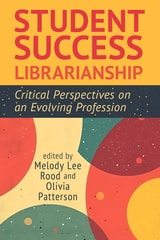
Student Success Librarianship
Critical Perspectives on an Evolving ProfessionMelody Lee Rood
Assoc of College & Research Libraries, 2025
Student Success Librarianship: Critical Perspectives on an Evolving Profession examines this position through a critical lens and provides insight and advice to help the profession work toward a positive evolution of this important role. In three sections—Theory, Praxis, and Research—chapters written by student success librarians explore how to articulate, set boundaries for, and bring our humanity to the role; address student mental health and provide multilingual resources and support; and map both the current state of student success and a vision for its future.
Student success librarians can feel alone in both their love for and critiques of their profession and their roles within it. Student Success Librarianship can help you celebrate your work, find areas of improvement, and offers validation and inspiration.
Student Wellness And Acad Libraries Case Studies And Activity
Sara Holder
Assoc of College & Research Libraries, 2020
Students Lead The Library
The Importance Of StudentCarissa Tomlinson
Assoc of College & Research Libraries, 2016
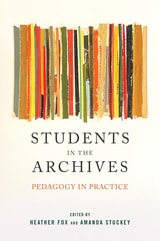
Students in the Archives
Pedagogy in PracticeEdited by Heather Fox and Amanda Stuckey
University of Illinois Press, 2026
The contributors examine approaches that integrate exhibitions with archived artifacts, collections, recovery, and digital humanities projects. Throughout, they connect these approaches to conversations about using archived materials in teaching and learning. The essays also feature observations about the work produced from collaborations and provide resources for sustaining future archival pedagogy. Topics include teaching in the twenty-first century; ways to support inclusivity, accessibility, and equity through engagements with digital and non-digital sources; and partnerships across disciplines, grade levels, and learning spaces through the collaborative relationships that emerge from archival teaching.
Interdisciplinary and up-to-date, Students in the Archives reveals how engagement with archived artifacts and collections opens spaces for conversations about the historical, social, and political contexts embedded in their productions and dissemination.