Results by title
279 books match the query 'Management' and 25 start with s
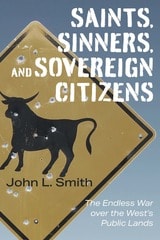
Saints, Sinners, and Sovereign Citizens
The Endless War over the West's Public LandsJohn L. Smith
University of Nevada Press, 2026
The grazing rights battle between Nevada rancher Cliven Bundy and the federal government, resulting in a tense, armed standoff between Bundy’s supporters and federal law enforcement officers, garnered international media attention in 2014. Saints, Sinners, and Sovereign Citizens places the Bundy conflict into the larger context of the Sagebrush Rebellion and the long struggle over the use of federal public lands in the American West.
Author John L. Smith skillfully captures the drama of the Bundy legal tangle amid the current political climate. Although no shots were fired during the standoff itself, just weeks later self-proclaimed Bundy supporters murdered two Las Vegas police officers and a civilian. In Eastern Oregon, other Bundy supporters occupied the federal offices of the Malheur National Wildlife Refuge, and one of them died in a hail of bullets.
While examining the complex history of federal public land policies, Smith exposes both sides of this story. He shows that there are passionate true believers on opposite sides of the insurrection, along with government agents and politicians in Washington complicit in efforts to control public lands for their wealthy allies and campaign contributors. With the promise of billions of dollars in natural resource profits and vast tracts of environmentally sensitive lands hanging in the balance, the West’s latest range war is the most important in the nation’s history. This masterful exposé raises serious questions about the fate of America’s public lands and the vehement arguments that are framing the debate from all sides.
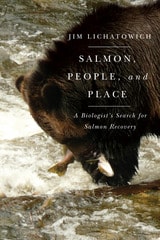
Salmon, People, and Place
A Biologist's Search for Salmon RecoveryJim Lichatowich
Oregon State University Press, 2013
In Salmon, People, and Place, acclaimed fisheries biologist Jim Lichatowich eloquently exposes the misconceptions underlying salmon management and recovery programs that have fueled the catastrophic decline in Northwest salmon populations for more than a century. These programs will continue to fail, he suggests, so long as they regard salmon as products and ignore their essential relationship with their habitat.
But Lichatowich offers hope. In Salmon, People, and Place he presents a concrete plan for salmon recovery, one based on the myriad lessons learned from past mistakes. What is needed to successfully restore salmon, Lichatowich states, is an acute commitment to healing the relationships among salmon, people, and place.
A significant contribution to the literature on Pacific salmon, Salmon, People, and Place: A Biologist’s Search for Salmon Recovery is an essential read for anyone concerned about the fate of this Pacific Northwest icon.

Saving the Pryor Mountain Mustang
A Legacy of Local and Federal CooperationChrstine Reed
University of Nevada Press, 2015
Saving the Pryor Mountain Mustang explores the unique and ongoing relationship between locals and the federal government, highlighting the Lovell citizens’ philosophy of cooperation instead of the typical mistrust that exists between wild horse advocates and federal agencies. The book provides a rich analysis of how a determined group of people saved an endangered wild horse herd. The book will have wide appeal to wild horse activists, scholars of local and federal governance, and western history enthusiasts.

Schools for Scandal
The Dysfunctional Marriage of Division I Sports and Higher EducationSheldon Anderson
University of Missouri Press, 2024
Science and Ecosystem Management in the National Parks
Edited by William L. Halvorson and Gary E. Davis
University of Arizona Press, 1996
Science and Ecosystem Management in the National Parks presents twelve case studies of long-term research conducted in and around national parks that address major natural resource issues. These cases demonstrate how the use of longer time scales strongly influence our understanding of ecosystems and how interpretations of short-term patterns in nature often change when viewed in the context of long-term data sets. Most importantly, they show conclusively that scientific research significantly reduces uncertainty and improves resource management decisions. Chosen by scientists and senior park managers, the cases offer a broad range of topics, including: air quality at Grand Canyon; interaction between moose and wolf populations on Isle Royale; control of exotic species in Hawaiian parks; simulation of natural fire in the parks of the Sierra Nevada; and the impact of urban expansion on Saguaro National Monument.
Because national parks are increasingly beset with conflicting views of their management, the need for knowledge of park ecosystems becomes even more critical--not only for the parks themselves, but for what they can tell us about survival in the rest of our world. This book demonstrates to policymakers and managers that decisions based on knowledge of ecosystems are more enduring and cost effective than decisions derived from uninformed consensus. It also provides scientists with models for designing research to meet threats to our most precious natural resources. "If we can learn to save the parks," observe Halvorson and Davis, "perhaps we can learn to save the world."
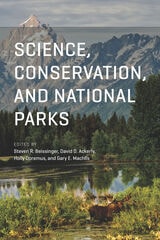
Science, Conservation, and National Parks
Edited by Steven R. Beissinger, David D. Ackerly, Holly Doremus, and Gary E. Machlis
University of Chicago Press, 2016
Examining the major challenges of parks and protected areas throughout the world, contributors provide answers to a number of key conservation questions, such as: How should stewardship address climate change, urban encroachment and pollution, and invasive species? How can society, especially youth, become more engaged with nature and parks, and are there models to guide interactions between parks and their neighbors? What are appropriate conservation objectives for parks in the Anthropocene? Charting a course for the parks of the next century, Science, Conservation, and National Parks is certain not only to catalyze the continued evolution of US park conservation policy, but also to be an inspiration for parks, conservation, and management worldwide.

Serengeti II
Dynamics, Management, and Conservation of an EcosystemEdited by A. R. E. Sinclair and Peter Arcese
University of Chicago Press, 1995
Building on the groundwork laid by the classic Serengeti: Dynamics of an Ecosystem, published in 1979 by the University of Chicago Press, this new book integrates studies of the ecosystem at every level—from the plants at the bottom of the visible food chain, to the many species of herbivores and predators, to the system as a whole. Drawing on new data from many long-term studies and from more recent research initiatives, and applying new theory and computer technology, the contributors examine the large-scale processes that have produced the Serengeti's extraordinary biological diversity, as well as the interactions among species and between plants and animals and their environment. They also introduce computer modeling as a tool for exploring these interactions, employing this new technology to test and anticipate the effects of social, political, and economic changes on the entire ecosystem and on particular species, and so to shape future conservation and management strategies.

Shaping Science
Organizations, Decisions, and Culture on NASA’s TeamsJanet Vertesi
University of Chicago Press, 2020
In Shaping Science, Janet Vertesi draws on a decade of immersive ethnography with NASA’s robotic spacecraft teams to create a comparative account of two great space missions of the early 2000s. Although these missions featured robotic explorers on the frontiers of the solar system bravely investigating new worlds, their commands were issued from millions of miles away by a very human team. By examining the two teams’ formal structures, decision-making techniques, and informal work practices in the day-to-day process of mission planning, Vertesi shows just how deeply entangled a team’s local organizational context is with the knowledge they produce about other worlds.
Using extensive, embedded experiences on two NASA spacecraft teams, this is the first book to apply organizational studies of work to the laboratory environment in order to analyze the production of scientific knowledge itself. Engaging and deeply researched, Shaping Science demonstrates the significant influence that the social organization of a scientific team can have on the practices of that team and the results they yield.

Shared Capitalism at Work
Employee Ownership, Profit and Gain Sharing, and Broad-Based Stock OptionsEdited by Douglas L. Kruse, Richard B. Freeman, and Joseph R. Blasi
University of Chicago Press, 2010
The historical relationship between capital and labor has evolved in the past few decades. One particularly noteworthy development is the rise of shared capitalism, a system in which workers have become partial owners of their firms and thus, in effect, both employees and stockholders. Profit sharing arrangements and gain-sharing bonuses, which tie compensation directly to a firm’s performance, also reflect this new attitude toward labor.
Shared Capitalism at Work analyzes the effects of this trend on workers and firms. The contributors focus on four main areas: the fraction of firms that participate in shared capitalism programs in the United States and abroad, the factors that enable these firms to overcome classic free rider and risk problems, the effect of shared capitalism on firm performance, and the impact of shared capitalism on worker well-being. This volume provides essential studies for understanding the increasingly important role of shared capitalism in the modern workplace.
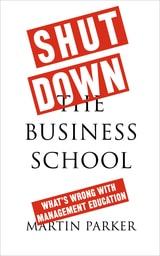
Shut Down the Business School
What's Wrong with Management EducationMartin Parker
Pluto Press, 2018

Smart Governance
Governing the Global Knowledge SocietyHelmut Willke
Campus Verlag, 2007
In the wake of globalization, national governments are becoming increasingly interdependent, and knowledge is arguably becoming the most valuable form of capital. Helmut Willke’s Smart Governance offers a new perspective on global governance from the vantage point of a global knowledge society.
Employing a case study of the global financial system and an analysis of several governance regimes, Willke contends that markets, legal systems, and morality must evolve to cope with uncertainty, build capacities, and achieve resilience. Smart Governance will change the way economists, historians, and political scientists view international cooperation.
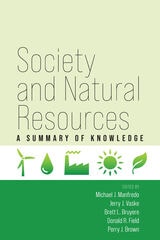
Society and Natural Resources
A Summary of KnowledgeMichael J. Manfredo
University Press of Colorado, 2023
This book is a reprint of the original edited volume first published in 2004. In thirty-one chapters, the edited volume documents the exciting period of the emerging interdisciplinary field of society and natural resource scholarship from 1986 to 2004. It was published in part to commemorate the tenth International Symposium on Society and Resources Management (ISSRM) in Keystone, Colorado. ISSRM has brought together natural resource professionals, social science researchers, non-government agencies, private sector organizations, and students on a biennial basis since 1986. The book presents the most significant contributions to the symposia hosted by Pennsylvania State University, Colorado State University, University of Wisconsin-Madison, Texas A&M University, University of Illinois at Urbana-Champaign, Oregon State University, University of Missouri at Columbia, Western Washington University, and Indiana University. The first International ISSRM was held in Belize, Australia, and Italy and started a fruitful cross-continental exchange on society and natural resources showcased in this book.
Contributors: Jim Absher, Kathleen Andereck, Jill Belsky, John Bergstrom, Carter Betz, Alan Bright, Perry J. Brown, Tommy Brown, Mark Brunson, Rabel Burdge, Fred Buttel, KristinCheek, Chia-Kuen Cheng, Tony Cheng, David Cole, H Ken Cordell, Terry Daniel, Steven Daniels, Dan Decker, Robert Ditton, John Dwyer, Alan Ewert, Don Field, Myron Floyd, R Bruce Gill, Alan Graefe, Gary Green, Doug Jackson-Smith, Rebecca Johnson, Richard Knopf, Rick Krannich, Jessica Leahy, Xinran You Lehto, John Loomas, Al Luloff, Mike Manfredo, Robert Manning, Sarah McCaffrey, Stephen McCool, Yoon-Jung Oh, Joseph O'Leary, Carol Saunders, Steve Selin, Bruce Shindler, George Stankey, Bill Stewart, Vicky Sturtevant, Jonathan Taylor, Suzanne Taylor, Tara Teel, Brijesh Thapa, Gene Theodori, Carla Koons Trentelman, Jerry Vaske, Joanne Vining, Doug Whittaker, Dan Williams
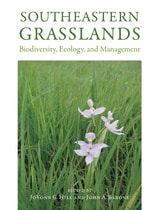
Southeastern Grasslands
Biodiversity, Ecology, and ManagementJoVonn G. Hill and John A. Barone, eds.
University of Alabama Press, 2019
Today the southeastern United States is a largely rural, forested, and agricultural landscape interspersed with urban areas of development. However, two centuries ago it contained hundreds of thousands of acres of natural grasslands that stretched from Florida to Texas. Now more than 99 percent of these prairies, glades, and savannas have been plowed up or paved over, lost to agriculture, urban growth, and cattle ranching. The few remaining grassland sites are complex ecosystems, home to hundreds of distinct plant and animal species, and worthy of study.
Southeastern Grasslands: Biodiversity, Ecology, and Management brings together the latest research on southeastern prairie systems and species, provides a complete picture of an increasingly rare biome, and offers solutions to many conservation biology queries. Editors JoVonn G. Hill and John A. Barone have gathered renowned experts in their fields from across the region who address questions related to the diversity, ecology, and management of southeastern grasslands, along with discussions of how to restore sites that have been damaged by human activity.
Over the last twenty years, both researchers and the public have become more interested in the grasslands of the Southeast. This volume builds on the growing knowledge base of these remarkable ecosystems with the goal of increasing appreciation for them and stimulating further study of their biota and ecology. Topics such as the historical distribution of grasslands in the South, the plants and animals that inhabit them, as well as assessments of several techniques used in their conservation and management are covered in-depth. Written with a broad audience in mind, this book will serve as a valuable introduction and reference for nature enthusiasts, scientists, and land managers.
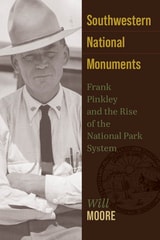
Southwestern National Monuments
Frank Pinkley and the Rise of the National Park SystemWill Moore
University of Utah Press, 2025
This volume uncovers the little-known legacy of Frank Pinkley, the first superintendent of the Southwestern National Monuments (SWNM)—a unique National Park Service unit established in 1923. Pinkley’s leadership and innovative approach helped protect and develop thirty diverse monuments, ranging from Montezuma Castle to White Sands, linked by miles of rough roads and united by their historical, archaeological, and natural significance.
Drawing on archived SWNM Monthly Reports, Will Moore reconstructs the stories behind these monuments and their contributions to the nascent national park system. From the pioneering all-Navajo Mobile Unit of the Civilian Conservation Corps to visionary work in visitor education, Pinkley and his team helped to set a course for the protection of American landscapes. Southwestern National Monuments is essential reading for anyone passionate about America's natural heritage and national parks.

Sport Facility Management
Organizing Events and Mitigating Risks, Fourth EditionRobert E. Ammon
FiT Publishing, 2023
The success of facilities and events in a multi-billion dollar sport industry requires that sport and event facility managers understand the complex relationships between the events, facilities, the players and the public and the risks involved in organizing events.
Sport Facility Management: Organizing Events and Mitigating Risks, 4th Edition, examines what it takes to successfully operate and manage a sport facility. Veteran authors Robin Ammon, Richard Southall, and Mark Nagel provide a framework for the successful operation of sport and event venues through proven strategies and techniques, as highlighted through salient industry examples.
Chapters in this edition explore the complex rules and relationships of public and private financing and ownership, the management of facility revenues and expenses, pricing strategies at the box office, approaches to booking and scheduling, best practices in leveraging human resources, as well as an understanding of and adherence to laws and regulations governing and affecting facilities, employees, and the public through venue contracts, risks, liability, negligence, crowd and alcohol management, as well as emergency planning.
Sport Facility Management: Organizing Events and Mitigating Risks, 4th Edition, builds understanding of this important segment of the global sport industry to prepare undergraduate and graduate students for the challenges, the risks, and the rewards inherent in operating sport and event facilities.
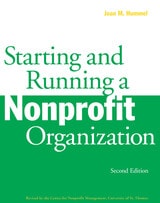
Starting and Running a Nonprofit Organization
Joan M. Hummel
University of Minnesota Press, 1996
Starting and Running a Nonprofit Organization is a book for people who are forming new small nonprofits; thinking about converting an informal, grassroots group into tax-exempt status; reorganizing an existing agency; or currently managing a nonprofit. It provides practical and basic how-to information on legal, tax, organizational, and other issues particular to nonprofits.
This one-of-a-kind resource has been a valuable guide to nonprofit management for decades. While much of the information originated in an earlier era of nonprofit formation, it remains highly useful for gaining an overview and creating an action plan for people entering this realm of organizational management. Its compact format provides information in an easy-to-understand style. The book describes, step-by-step, the typical phases of creating and operating a new nonprofit, including incorporation, establishing a board of directors, writing bylaws, obtaining tax-exempt status, creating a strategic plan, budgeting and grant seeking, understanding accounting principles, managing human resources, and creating a community relations plan.
The Center for Nonprofit Management is a department of the Graduate School of Business at the University of St. Thomas in Minneapolis and St. Paul. It provides training and guidance in all aspects of the nonprofit sector to existing organizations as well as individuals or groups who are seeking help in starting a nonprofit.

Starting and running a nonprofit organization
Joan M. Hummel
University of Minnesota Press, 1980
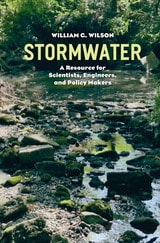
Stormwater
A Resource for Scientists, Engineers, and Policy MakersWilliam G. Wilson
University of Chicago Press, 2016
As Wilson shows, rivers of runoff flowing from manmade surfaces—such as roads, sidewalks, and industrial sites—carry a glut of sediments and pollutants. Unlike soil, pavement does not filter or biodegrade these contaminants. Oil, pesticides, road salts, metals, automobile chemicals, and bacteria all pour into stormwater systems. Often this runoff discharges directly into waterways, uncontrolled and untreated, damaging valuable ecosystems. Detailing the harm that can be caused by this urban runoff, Wilson also outlines methods of control, from restored watersheds to green roofs and rain gardens, and, in so doing, gives hope in the face of an omnipresent threat. Illustrated throughout, Stormwater will be an essential resource for urban planners and scientists, policy makers, citizen activists, and environmental educators in the stormy decades to come.

Strategic Newspaper Management
Conrad Fink
Southern Illinois University Press, 1988
The time is right for bright, aggressive newspaper managers to influence and prosper, but bleak indeed for those newspapers whose managers lack the requisite knowledge. Using case studies and examples from the business, Fink shows why some newspapers change with the times and surge ahead and why some continue to publish to an eroding market base and fail.
The difference between success and failure, he concludes, is in "long-range planning and in daily operating methodology—in, simply, the professionalism of management at all levels."

Strategic Planning in the Arts
A Practical GuideMichael M. Kaiser
Brandeis University Press, 2018
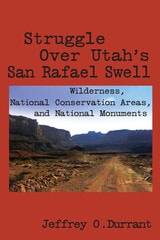
Struggle Over Utah's San Rafael Swell
Wilderness, National Conservation Areas, and National MonumentsJeffrey O. Durrant
University of Arizona Press, 2007
In detailing political and environmental squabbles over the San Rafael Swell, Durrant illuminates issues that confront land managers, bureaucrats, and elected officials throughout the country. He describes struggles between county commissioners and environmental activists, conflicts over water rights, proposals that repeatedly fail to gain government approval, and political posturings. Caught in the crossfire, and often overwhelmed, the Bureau of Land Management has seen its long-time mission—once centered on grazing and mining rights—transmogrify into a new and, to some, unsettling responsibility for recreation and preservation.
The sandstone crags and twisting valleys of the San Rafael Swell present a formidable landscape, but as this book clearly shows, the political landscape may be even more daunting, strewn with bureaucratic boulders and embedded with fixed positions on the functions and values of public land.
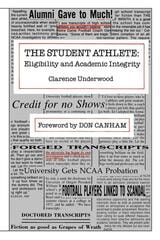
Student Athlete
Eligibility and Academic IntegrityClarence Underwood
Michigan State University Press, 1984
Student Athlete Eligibility and Academic Integrity covers areas: Characteristics of Student Athletes, Prospective Student Athletes and the NCAA, Black Student Athletes and Their Revolt, Financial Aid to Student Athletes, Support Services Staff, Recruitment and Admission, Monitoring Academic Affairs and Eligibility, Study Hall and Tutorial Programs, and Legal Implications for the Athletic Advisor.
Supervision & Management
A Guide to Modifying Work BehaviorMARR JOHN
University of Arkansas Press, 1994
Sustainability and Water Management in the Maya World and Beyond
Jean T. Larmon
University Press of Colorado, 2021
The volume focuses primarily on the Precolumbian Maya but offers several analogous case studies outside the ancient Maya world that illustrate the pervasiveness of water’s role in sustainability, including an ethnographic study of the sustainability of small-scale, farmer-managed irrigation systems in contemporary New Mexico and the environmental consequences of Angkor’s growth into the world’s most extensive preindustrial settlement. The archaeological record offers rich data on past politics of climate change, while epigraphic and ethnographic data show how integrated the ideological, political, and environmental worlds of the Maya were.
While Sustainability and Water Management in the Maya World and Beyond stresses how lessons from the past offer invaluable insight into current approaches of adaptation, it also advances our understanding of those adaptations by making the inevitable discrepancies between past and present climate change less daunting and emphasizing the sustainable negotiations between humans and their surroundings that have been mediated by the changing climate for millennia. It will appeal to students and scholars interested in climate change, sustainability, and water management in the archaeological record.
Contributors: Mary Jane Acuña, Wendy Ashmore, Timothy Beach, Jeffrey Brewer, Christopher Carr, Adrian S. Z. Chase, Arlen F. Chase, Diane Z. Chase, Carlos R. Chiriboga, Jennifer Chmilar, Nicholas Dunning, Maurits W. Ertsen, Roland Fletcher, David Friedel, Robert Griffin, Joel D. Gunn, Armando Anaya Hernández, Christian Isendahl, David Lentz, Sheryl Luzzadder-Beach, Dan Penny, Kathryn Reese-Taylor, Michelle Rich, Cynthia Robin, Sylvia Rodríguez, William Saturno, Vernon Scarborough, Payson Sheets, Liwy Grazioso Sierra, Michael Smyth, Sander van der Leeuw, Andrew Wyatt

Systems Librarian
Designing Roles, Defining SkillsAmerican Library Association, 1998