Results by title
914 books match the query 'Medieval' and 60 start with s
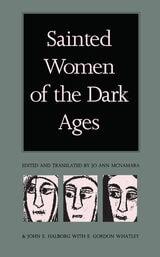
Sainted Women of the Dark Ages
Jo Ann McNamara, John E. Halborg, and Gordon Whatley, eds.
Duke University Press, 1992
Three of these holy women were queens who turned to religion only after a period of intense worldly activity. Others were members of the Carolingian family, deeply implicated in the political ambitions of their male relatives. Some were partners in the great Irish missions to the pagan countryside and others worked for the physical salvation of the poor. From the peril and suffering of their lives they shaped themselves as paragons of power and achievement. Beloved by their sisters and communities for their spiritual gifts, they ultimately brought forth a new model of sanctity.
These biographies are unusually authentic. At least two were written by women who knew their subjects, while others reflect the direct testimony of sisters within the cloister walls. Each biography is accompanied by an introduction and notes that clarify its historical context. This volume will be an excellent source for students and scholars of women's studies and early medieval social, religious, and political history.
Saints of the Christianization Age of Central Europe
Tenth to Eleventh CenturiesCristian Gaspar
Central European University Press, 2012
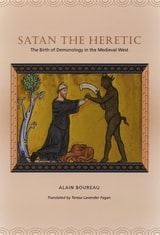
Satan the Heretic
The Birth of Demonology in the Medieval WestAlain Boureau
University of Chicago Press, 2006
Depicting this new demonology, Satan the Heretic considers the period between the mid-thirteenth and mid-fourteenth centuries when demons, in the eyes of Church authorities, suddenly burst forth, more real and more terrifying than ever before in the history of Christianity. Boureau argues that the rise in this obsession with demons occurs at the crossroads of the rise of sovereignties and of the individual, a rise that, tellingly, also coincides with the emergence of the modern legal system in the European West.
Teeming with original insights and lively anecdotes, Satan the Heretic is a significant contribution to the history of Christian demonology from one of the most original minds in the field of medieval studies today.
Satiric Advice on Women and Marriage
From Plautus to ChaucerWarren S. Smith, Editor
University of Michigan Press, 2005
Advice on sex and marriage in the literature of antiquity and the middle ages typically stressed the negative: from stereotypes of nagging wives and cheating husbands to nightmarish visions of women empowered through marriage. Satiric Advice on Women and Marriage brings together the leading scholars of this fascinating body of literature. Their essays examine a variety of ancient and early medieval writers' cautionary and often eccentric marital satire beginning with Plautus in the third century B.C.E. through Chaucer (the only non-Latin author studied). The volume demonstrates the continuity in the Latin tradition which taps into the fear of marriage and intimacy shared by ancient ascetics (Lucretius), satirists (Juvenal), comic novelists (Apuleius), and by subsequent Christian writers starting with Tertullian and Jerome, who freely used these ancient sources for their own purposes, including propaganda for recruiting a celibate clergy and the promotion of detachment and asceticism as Christian ideals.
Warren S. Smith is Professor of Classical Languages at the University of New Mexico.
Scholastic Meditations
Nicholas Rescher
Catholic University of America Press, 2005
Scholasticism
Personalities & Problems Medieval PhilosophyJosef Pieper
St. Augustine's Press, 2001
The account is broken by the gradual replacement of the synthesis of faith and reason that had been achieved in the early Middle Ages by a new one that made use of Aristotle. Pieper gives a thorough and lively account of the struggle between Aristotelians and anti-Aristotelians, and the famous condemnations that put the effort of Saint Thomas Aquinas at risk. But the Summa theologiae is regarded by Pieper as the unique achievement of the period.
If the early centuries, the medieval period, can be seen as moving toward the thirteenth and Thomas's unique achievement, subsequent centuries saw the decline of scholasticism and theappearance of harbingers of modern philosophy.
The book closes with Pieper's thoughts on the permanent philosophical and theological significance of scholasticism and the Middle Ages. Once again, wearing his learning lightly, writing with a clarity that delights, Josef Pieper has taken the field from stuffier and more extended accounts.

Schoolcraft's Ojibwa Lodge Stories
Life on the Lake Superior FrontierPhilip P. Mason
Michigan State University Press, 1997
Scribal Authorship and the Writing of History in Medieval England
Matthew Fisher
The Ohio State University Press, 2012
Scribit Mater
Marey and the Language Arts in the Literature of Medieval EnglandGeorgiana Donavin
Catholic University of America Press, 2012
Scripting the Nation
Court Poetry and the Authority of History in Late Medieval ScotlandKatherine H. Terrell
The Ohio State University Press, 2021
Sea of Lentils
Hilda Otano Benitez
University of Massachusetts Press, 1990

Sealed in Parchment
Rereadings of Knighthood in the Illuminated Manuscripts of Chretien de TroyesSandra Hindman
University of Chicago Press, 1994
Secrets of the English War Bow
Hugh D. H. Soar
Westholme Publishing, 2010
A Complete Recreation of the Deadliest Medieval Arm
Dominating medieval battlefields for more than two centuries but requiring long and arduous practice to command, the English war bow and its battle shaft are the symbols of the rise of British power in Europe. Despite being crafted for hundreds of years and wielded by generations of archers, no example of the war bow—the military version of the longbow—exists, outside of a single broken limb. Now for the first time, expert craftsmen use all available evidence including applied archaeology to unlock the secrets of the English war bow. Historian Hugh D. H. Soar is joined by Mark Stretton, master blacksmith, and Joseph Gibbs, bowyer, in order to demonstrate how a war bow and its associated arrow heads and shafts may have been constructed and used. In addition to showing the complete manufacture of a bow from tree selection to stringing and how specialized arrowheads were forged and attached to shafts, Secrets of the English War Bowprovides information on the actual performance of the war bow, including the bow's effectiveness against various materials and, for the first time, its use against moving targets, since bows were often drawn against mounted soldiers. Armed with this new information, Soar provides an analysis of both successes and failures of the war bow in several important battles. Illustrated in color and black and white, Secrets of the English War Bowprovides an invaluable service for those interested in medieval military history, archery, and technology.
Seeing Sodomy in the Middle Ages
Robert Mills
University of Chicago Press, 2015
In Seeing Sodomy in the Middle Ages, Robert Mills explores the relationship between sodomy and motifs of vision and visibility in medieval culture, on the one hand, and those categories we today call gender and sexuality, on the other. Challenging the view that ideas about sexual and gender dissidence were too confused to congeal into a coherent form in the Middle Ages, Mills demonstrates that sodomy had a rich, multimedia presence in the period—and that a flexible approach to questions of terminology sheds new light on the many forms this presence took. Among the topics that Mills covers are depictions of the practices of sodomites in illuminated Bibles; motifs of gender transformation and sex change as envisioned by medieval artists and commentators on Ovid; sexual relations in religious houses and other enclosed spaces; and the applicability of modern categories such as “transgender,” “butch” and “femme,” or “sexual orientation” to medieval culture.
Taking in a multitude of images, texts, and methodologies, this book will be of interest to all scholars, regardless of discipline, who engage with gender and sexuality in their work.
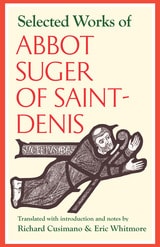
Selected Works of Abbot Suger of Saint Denis
Richard Abbot Suger of Saint-Denis
Catholic University of America Press, 2018
Suger, the twelfth century abbot of Saint-Denis, has not received the respect and attention that he deserves. Bernard of Clairvaux and Peter the Venerable have garnered more attention, and students of medieval history know their names well. In one respect, however, Suger has earned due praise, for his architectural innovations to the church of Saint-Denis made it truly one of the most beautiful churches in Europe.
Students of history and architecture know Suger best for his work on Saint-Denis, the burial site of medieval French kings, queens, and nobility. The abbot enlarged, decorated, improved, and redesigned the building so beautifully that it is safe to say that he became the foremost church architect of twelfth-century France.
The man, however, was so much more than an architect. He served as a counselor and member of the courts of King Louis VI and VII, who sent him across Europe on diplomatic missions. He represented those kings at the papal curia and imperial diets. He was also a close friends and confidante of King Henry I of England, whom he often visited on behalf of French royal interests.
Never shy, Suger seems almost obsessed that his works and deeds not be forgotten. He acquired numerous properties and estates for his abbey, as well as improved the ones it already possessed. He built new buildings, barns, walls for villages, and increased the return of grain from all the abbey’s lands. Readers interested in the medieval agricultural system and way of life will also enjoy these texts.
Suger’s texts also provide a wealth of information about the events of his era as well as a large amount of biographical material on his accomplishments. This translation of his writings intends to enhance his reputation and make his name better known by students at all levels and among those interested in medieval topics.
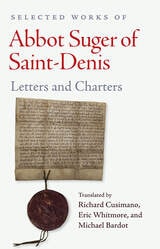
Selected Works of Abbot Suger of Saint-Denis
Letters and ChartersEric Abbot Suger of Saint-Denis
Catholic University of America Press, 2025
Sensible Ecstasy
Mysticism, Sexual Difference, and the Demands of HistoryAmy Hollywood
University of Chicago Press, 2001
What is particular to these thinkers, Hollywood reveals, is their attention to forms of mysticism associated with women. They regard mystics such as Angela of Foligno, Hadewijch, and Teresa of Avila not as emotionally excessive or escapist, but as unique in their ability to think outside of the restrictive oppositions that continue to afflict our understanding of subjectivity, the body, and sexual difference. Mystics such as these, like their twentieth-century descendants, bridge the gaps between action and contemplation, emotion and reason, and body and soul, offering new ways of thinking about language and the limits of representation.
Sensus Spiritualis
Studies in Medieval Significs and the Philology of CultureFriedrich Ohly
University of Chicago Press, 2005
Drawn from the entire career of this great medievalist, who, more clearly and in greater detail than anyone before him, articulated the singularly allegorical mentality of the Middle Ages, the essays in this collection show the tendency of medieval thinkers and writers to see nature as a diaphanous screen held against God's sacred mysteries, simultaneously illuminating and obscuring. Ohly's work on the hermeneutics of word and image, meanwhile, traces the way his thinking opened philology to new possibilities through the dual interpretation of textual and visual media.
Including penetrating essays on poetic inspiration, the nature of beauty, sacred and profane exegesis, history as typology, and art as both object and text, this volume will be of enormous value to scholars of comparative literature, the history of art, and religion during the Middle Ages and Renaissance.
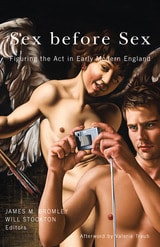
Sex before Sex
Figuring the Act in Early Modern EnglandJames M. Bromley
University of Minnesota Press, 2013
What is sex exactly? Does everyone agree on a definition? And does that definition hold when considering literary production in other times and places? Sex before Sex makes clear that we cannot simply transfer our contemporary notions of what constitutes a sex act into the past and expect them to be true for the people who were then reading literature and watching plays. The contributors confront how our current critical assumptions about definitions of sex restrict our understanding of representations of sexuality in early modern England.
Drawing attention to overlooked forms of sexual activity in early modern culture, from anilingus and interspecies sex to “chin-chucking” and convivial drinking, Sex before Sex offers a multifaceted view of what sex looked like before the term entered history. Through incisive interpretations of a wide range of literary texts, including Romeo and Juliet, The Comedy of Errors, Paradise Lost, the figure of Lucretia, and pornographic poetry, this collection queries what might constitute sex in the absence of a widely accepted definition and how a historicized concept of sex affects the kinds of arguments that can be made about early modern sexualities.
Contributors: Holly Dugan, George Washington U; Will Fisher, CUNY–Lehman College; Stephen Guy-Bray, U of British Columbia; Melissa J. Jones, Eastern Michigan U; Thomas H. Luxon, Dartmouth College; Nicholas F. Radel, Furman U; Kathryn Schwarz, Vanderbilt U; Christine Varnado, U of Buffalo–SUNY.
Shards of Love
Exile and the Origins of the LyricMaría Rosa Menocal
Duke University Press, 1994
It is in exile that Menocal locates the founding conditions for philology--as a discipline that loves origins--and for the genre of love songs that philology reveres. She crosses the boundaries, both temporal and geographical, of 1492 to recover the "original" medieval culture, with its Mediterranean mix of European, Arabic, and Hebrew poetics. The result is a form of literary history more lyrical than narrative and, Menocal persuasively demonstrates, more appropriate to the Middle Ages than to the revisionary legacy of the Renaissance. In discussions ranging from Eric Clapton's adaption of Nizami's Layla and Majnun, to the uncanny ties between Jim Morrison and Petrarch, Shards of Love deepens our sense of how the Middle Ages is tied to our own age as it expands the history and meaning of what we call Romance philology.
Signifying God
Social Relation and Symbolic Act in the York Corpus Christi PlaysSarah Beckwith
University of Chicago Press, 2001
Introducing a radical new understanding of these plays as "sacramental theater," Beckwith shows how organizing the plays served as a political mechanism for regulating labor, and how theater and sacrament combined in them to do important theological work. She argues, for instance, that the theology of Corpus Christi in the resurrection plays can only be understood as a theatrical exploration of eucharistic absence and presence. Beckwith frames her study with discussions of twentieth-century manifestations of sacramental theater in Barry Unsworth's novel Morality Play and Denys Arcand's film Jesus of Montreal, and the connections between contemporary revivals of the York Corpus Christi plays and England's heritage culture.
Silent Medievalisms
Reimagining the Middle Ages During Film’s Foundational EraEdited by Tison Pugh and Angela Jane Weisl
The Ohio State University Press, 2026
Contributors:
Kimberly Ball, Elizabeth Coggeshall, John Haines, Kevin J. Harty, Valerie B. Johnson, Tison Pugh, Sabina Rahman, Carol L. Robinson, Robert Squillace, Alexandra Sterling-Hellenbrand, Alfred Thomas, Laura E. Wangerin, Angela Jane Weisl
Sir Gawain and the Green Knight
R. A. Waldron
Northwestern University Press, 1972
Sir Gawain and the Green Knight
In a Modern English Version with a Critical IntroductionTranslated, Edited, and with an Introduction by John Gardner
University of Chicago Press, 2011
The adventures and challenges of Sir Gawain, King Arthur’s nephew and a knight at the Round Table, including his duel with the mysterious Green Knight, are among the oldest and best known of Arthurian stories. Here the distinguished author and poet John Gardner has captured the humor, elegance, and richness of the original Middle English in flowing modern verse translations of this literary masterpiece. Besides the tale of Sir Gawain and the Green Knight, this edition includes two allegorical poems, “Purity” and “Patience”; the beautiful dream allegory “Pearl”; and the miracle story “Saint Erkenwald,” all attributed to the same anonymous poet, a contemporary of Chaucer and an artist of the first rank.
Sisters and Workers in the Middle Ages
Edited by Judith M. Bennett, Elizabeth A. Clark, Jean F. O'Barr, B. Anne Vilen,
University of Chicago Press, 1989
These essays provide a greater understanding of the ways in which gender has played a part in determining relations of power in Western cultures. This volume makes a vital contribution to the current scholarship about women in the Middle Ages.
Socrates' Children
Medieval: The 100 Greatest PhilosophersPeter Kreeft
St. Augustine's Press, 2019
This is the second of a four-volume history of philosophy . . . on ancient, medieval, modern, and contemporary philosophy. After the fourth volume is produced in paper, a one-volume clothbound edition, containing all four paperbound editions, will be published.
Kreeft focuses on the “big ideas” that have influenced present people and present times, and includes relevant biographical data, proportionate to its importance for each thinker. Moreover, the aim of the work is to stimulate philosophizing, controversy, and argument. It uses ordinary language and logic, not jargon and symbolic logic, and it is commonsensical (like Aristotle) and existential in the sense that it sees philosophy as something to be lived and experienced in life. Philosophy, after all, is not about philosophy but reality . . . about wisdom, life and death, good and evil, and God.
Kreeft seeks to be simple and direct and clear. But it is not dumbed down and patronizing. It will stretch the reader, but it is meant for beginnings, not just scholars. It can be used for college classes or do-it-yourselfers. It emphasizes surprises; remember, “philosophy begins in wonder.” And it includes visual aids: charts, cartoons, line drawings, and drawings of each philosopher.
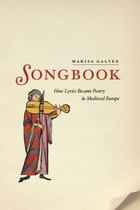
Songbook
How Lyrics Became Poetry in Medieval EuropeMarisa Galvez
University of Chicago Press, 2012
Today we usually think of a book of poems as composed by a poet, rather than assembled or adapted by a network of poets and readers. But the earliest European vernacular poetries challenge these assumptions. Medieval songbooks remind us how lyric poetry was once communally produced and received—a collaboration of artists, performers, live audiences, and readers stretching across languages and societies.
The only comparative study of its kind, Songbook treats what poetry was before the emergence of the modern category “poetry”: that is, how vernacular songbooks of the thirteenth to fifteenth centuries shaped our modern understanding of poetry by establishing expectations of what is a poem, what is a poet, and what is lyric poetry itself. Marisa Galvez analyzes the seminal songbooks representing the vernacular traditions of Occitan, Middle High German, and Castilian, and tracks the process by which the songbook emerged from the original performance contexts of oral publication, into a medium for preservation, and, finally, into an established literary object. Galvez reveals that songbooks—in ways that resonate with our modern practice of curated archives and playlists—contain lyric, music, images, and other nonlyric texts selected and ordered to reflect the local values and preferences of their readers. At a time when medievalists are reassessing the historical foundations of their field and especially the national literary canons established in the nineteenth century, a new examination of the songbook’s role in several vernacular traditions is more relevant than ever.
Speculum, volume 100 number 1 (January 2025)
The University of Chicago Press
University of Chicago Press Journals, 2025
Speculum, volume 100 number 2 (April 2025)
The University of Chicago Press
University of Chicago Press Journals, 2025
Speculum, volume 100 number 3 (July 2025)
The University of Chicago Press
University of Chicago Press Journals, 2025
Speculum, volume 100 number 4 (October 2025)
The University of Chicago Press
University of Chicago Press Journals, 2025
Speculum, volume 101 number 1 (January 2026)
The University of Chicago Press
University of Chicago Press Journals, 2026
Speculum, volume 101 number 2 (April 2026)
The University of Chicago Press
University of Chicago Press Journals, 2026
Speculum, volume 101 number 3 (July 2026)
The University of Chicago Press
University of Chicago Press Journals, 2026
Speculum, volume 101 number 4 (October 2026)
The University of Chicago Press
University of Chicago Press Journals, 2026
Speculum, volume 96 number 4 (October 2021)
The University of Chicago Press
University of Chicago Press Journals, 2021
Speculum, volume 97 number 1 (January 2022)
The University of Chicago Press
University of Chicago Press Journals, 2022
Speculum, volume 97 number 2 (April 2022)
The University of Chicago Press
University of Chicago Press Journals, 2022
Speculum, volume 97 number 3 (July 2022)
The University of Chicago Press
University of Chicago Press Journals, 2022
Speculum, volume 97 number 4 (October 2022)
The University of Chicago Press
University of Chicago Press Journals, 2022
Speculum, volume 98 number 1 (January 2023)
The University of Chicago Press
University of Chicago Press Journals, 2023
Speculum, volume 98 number 2 (April 2023)
The University of Chicago Press
University of Chicago Press Journals, 2023
Speculum, volume 98 number 4 (October 2023)
The University of Chicago Press
University of Chicago Press Journals, 2023
Speculum, volume 99 number 1 (January 2024)
The University of Chicago Press
University of Chicago Press Journals, 2024
Speculum, volume 99 number 2 (April 2024)
The University of Chicago Press
University of Chicago Press Journals, 2024
Speculum, volume 99 number 3 (July 2024)
The University of Chicago Press
University of Chicago Press Journals, 2024
Speculum, volume 99 number 4 (October 2024)
The University of Chicago Press
University of Chicago Press Journals, 2024
Spinoza and the Cunning of Imagination
Eugene Garver
University of Chicago Press, 2018
Spinoza initially presents imagination as an inadequate and confused way of thinking, always inferior to ideas that adequately represent things as they are. It would seem to follow that one ought to purge the mind of imaginative ideas and replace them with rational ideas as soon as possible, but as Garver shows, the Ethics don’t allow for this ultimate ethical act until one has cultivated a powerful imagination. This is, for Garver, “the cunning of imagination.” The simple plot of progress becomes, because of the imagination, a complex journey full of reversals and discoveries. For Garver, the “cunning” of the imagination resides in our ability to use imagination to rise above it.
Spiritual Sonnets
A Bilingual EditionGabrielle de Coignard
University of Chicago Press, 2003
Spiritual Sonnets presents the first English translation of 129 of Coignard's highly autobiographical poems, giving us a startlingly intimate view into the life and mind of this Renaissance woman. The sonnets are all written "in the shadow of the Cross" and include elegies, penitential lyrics, Biblical meditations, and more. Rich with emotion, Coignard's poems reveal anguished moments of loneliness and grief as well as ecstatic experiences of mystical union. They also reveal her mastery of sixteenth-century literary conventions and spiritual traditions.
This edition, printed in bilingual format with Melanie E. Gregg's translations facing the French originals, will be welcomed by teachers and students of poetry, French literature, women's studies, and religious and Renaissance studies.
Staging Contemplation
Participatory Theology in Middle English Prose, Verse, and DramaEleanor Johnson
University of Chicago Press, 2018
Yet, in this groundbreaking new book, Eleanor Johnson argues instead for the pervasiveness and accessibility of contemplative works to medieval audiences. By drawing together ostensibly diverse literary genres—devotional prose, allegorical poetry, cycle dramas, and morality plays—Staging Contemplation paints late Middle English contemplative writing as a broad genre that operated collectively and experientially as much as through radical individual disengagement from the world. Johnson further argues that the contemplative genre played a crucial role in the exploration of the English vernacular as a literary and theological language in the fifteenth century, tracing how these works engaged modes of disfluency—from strained syntax and aberrant grammar, to puns, slang, code-switching, and laughter—to explore the limits, norms, and potential of English as a devotional language. Full of virtuoso close readings, this book demonstrates a sustained interest in how poetic language can foster a participatory experience of likeness to God among lay and devotional audiences alike.