Results by title
527 books match the query 'Novel' and 35 start with s

Sacred River
A NovelSyl Cheney-Coker
Ohio University Press, 2015

Sailing Against the Wind
A NovelJaan Kross
Northwestern University Press, 2012
Jaan Kross's historical novel Sailing Against the Wind fictionalizes the life of Bernhard Schmidt (1879–1935), an Estonian-born inventor. Schmidt lost an arm in his youth while experimenting with a homemade rocket, resulting in psychological trauma that would plague him for the rest of his life. Largely self-taught, Schmidt was driven to seek recognition of his talents.
He moved to Germany in the 1930s, where, after perfecting techniques for polishing lenses, he began developing ideas for improving astronomical telescopes. He was arrested for selling one to the Russians, and although he got off with only a warning, he later suffered a breakdown and was sent to a mental hospital, where he soon died. Sailing Against the Wind becomes a meditation on national identity, the relationship between history and the individual life, and the mechanisms of the historical novel as a genre.
Scattered Crumbs
A NovelMuhsin Al-ramli
University of Arkansas Press, 2003
School
A NovelRay Levy
University of Alabama Press, 2023
Both an exorcism of contemporary academia and a comedic portrait of an artist seeking the means to survive.
At once angry and jubilant, Ray Levy’s School is a curse on a dying system and an incantation for transforming pain into a vessel for capacious, creative selfhood.
A dissertation manuscript possessed by the spirit of Marquis de Sade; a lecture on psychoanalysis delivered as stand-up comedy by a dysphoric graduate student; a review of a found-footage horror movie that’s also a YouTube video of a conference presentation on French theory; an interview with an avant-garde filmmaker that’s really an invocation for conjuring your demon brother; oversharing and withholding, chanting and channeling, School is a slapstick roast of Derrida’s corpse and a mystical vision of a life in which you have not lost.
Secret Understandings
A NovelMorris Philipson
University of Chicago Press, 2000
Secretly Inside
A NovelHans Warren; Translated by S. J. Leinbach
University of Wisconsin Press, 2006
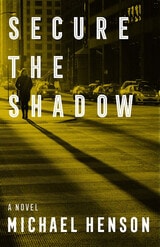
Secure the Shadow
A NovelMichael Henson
Ohio University Press, 2021
An interconnected web of lives in one midwestern city captures the surprising humanity of people searching for their authentic selves amid the 1990s drug crisis.
Amy Taylor finds the inner-city streets around her high school vibrant and animated compared to the bland middle-class neighborhood where she lives with her career-driven mother. In these streets, she meets the people of the city, among them a wayward boy named Jonathan, a struggling drug dealer, and Paul Lewis, a documentary photographer who becomes Amy’s mentor. Under his inspiration, she attempts to capture their world through the lens of her camera.
From the multiple perspectives of Amy and the expansive group of people she meets, award-winning novelist Michael Henson presents a heartbreaking portrait of the effects the Reagan-initiated drug war had on the young.
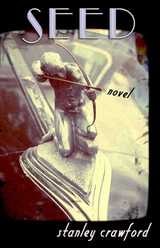
Seed
A NovelStanley Crawford
University of Alabama Press, 2015
What they get instead are Bill’s memories, made vivid by each item from the past, memories that are more exotic and curious than the lives currently lived by his young relatives.
Accompanied by his housekeeper, Ramona, and his young gardener, Jonathan, Bill is a somewhat cantankerous, wildly intelligent, and often forgetful man who recalls and speaks to his passed wife, often thinking that she's not dead. His unwillingness to recognize what has happened to her and to give away his only possession of any value, a 1937 Pierce-Arrow automobile that they bought together, becomes the measure of his grief and of his love in this profoundly funny novel that faces death and love sincerely.
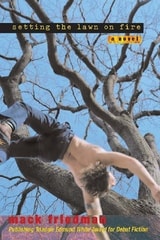
Setting the Lawn on Fire
A NovelMack Friedman
University of Wisconsin Press, 2007
Setting the Lawn on Fire, the first novel by critically acclaimed writer Mack Friedman, trails its narrator through his obsessions with sex, drugs, art, and poison. Ivan, a young Jewish boy from Milwaukee, embarks on a journey of sexual discovery that leads him from Wisconsin to Alaska, Philadelphia, and Mexico through stints as a fishery worker, artist, and finally a hustler who learns to provide the blank canvas for other people’s dreams. The result is a new kind of coming-of-age story that sees passion from every angle because its protagonist is every kind of lover: the seducer and the seduced, the pornographer and the model, the hunter and the prey, the trick and the john. In the end, Setting the Lawn on Fire is also something rare—a fully realized, contemporary romance that illuminates the power of desire and the rituals of the body, the brain, and the heart that attempt to contain our passions.

Shadow of the White Chrysanthemum
A NovelJan Morrill
University of Arkansas Press, 2027
In 1957 Berkeley, California, Nobu Kimura runs a nursery with his older brother, Taro—until a hidden letter exposes a family secret and reopens old wounds left by his family’s internment. As Nobu wrestles with a renewed sense of betrayal, Taro, still haunted by wartime memories, confronts his own deepest fears when he learns he is about to become a father.
In Arkansas, their sister, Sachiko Kimura Baker, and her best friend, Jubie, watch nine Black students attempt to enter the newly desegregated Little Rock Central High School. The past collides with the present when Terrence Harris—a man who caused one of the Kimura family’s darkest moments—unexpectedly saves Sachiko and her daughter, forcing the family to reckon with old hatreds, buried truths, and the possibility of forgiveness.
In the midst of the family’s turmoil, their mother’s return from Japan brings revelations about the misunderstandings that have kept her away since the war’s end. Yet even as some of the family begins to heal, Nobu retreats further into a dangerous obsession with honor, shame, and revenge—a spiral that threatens to shatter the family.
Set in the aftermath of Japanese American internment and against the rising heat of the civil rights movement, Shadow of the White Chrysanthemum continues the Kimura family saga that began with Jan Morrill’s The Red Kimono and explores the bonds that hold a family together—and the secrets that threaten to break them apart.
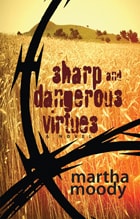
Sharp and Dangerous Virtues
A NovelMartha Moody
Ohio University Press, 2012
It’s 2047 in Dayton, Ohio. In response to food and water shortages, the U.S. government has developed an enormous, and powerfully successful, agricultural area—the “Heartland Grid”—just north of the city. In the meantime, in the wake of declining American power a multinational force has established itself in Cleveland. Behind these quickly shifting alliances lies a troubling yet tantalizing question: what will the American future look like?
Sharp and Dangerous Virtues is the story of ordinary people caught in situations they had never planned for or even imagined. There are Chad and Sharis, a married couple with two sons, holding out for normal life in their decaying suburb; Tuuro, a black church custodian whose false confession of murder is used for political purposes; Lila, Dayton’s aging, lonely Commissioner of Water, who dreams of being part of the “pure” existence of the Grid residents; and Charles and Diana, idealistic lovers trying desperately to preserve the nature center that has become their refuge.
What will these people do? What choices are left for them, and what choices have been taken away? Whom and what can they trust? Novelist Moody—known for her vivid portrayals of complicated characters and relationships in novels such as Best Friends and Sometimes Mine—weaves together cataclysmic events and the most intimate of human emotions to create a future that seems achingly real. Sharp and Dangerous Virtues will change the way you think and feel.
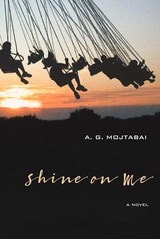
Shine on Me
A NovelA. G. Mojtabai
Northwestern University Press, 2016
The rules are simple enough: “Here’s the deal: Whoever keeps his hands longest on one of the dealer’s brand new pickup trucks owns it and gets to drive it away.” An actual contest hosted by an auto dealership in Texas is the prompt for this fictional exploration, which seeks to probe the depths and shallows of the American soul.
To the players vying for this shiny new prize, competition revs up as the hours wear on, positions harden, sightlines narrow, and sleep-deprivation intensifies. At the center is the reporter Trew Reade, struggling to make sense of the event and his own role in it. Early on, he muses that “surface and substance were rarely the same; transparency could be the most cunning of masks.” So, too, is the author’s transparent prose. Reviewers have sometimes found Mojtabai’s vision akin to that of Marilynne Robinson and Flannery O’Connor, but the characterization from Books & Culture—“not like anyone else”—is perhaps best, inviting readers to discover this provocative writer for themselves.
Simone
A NovelEduardo Lalo
University of Chicago Press, 2015
A tale of alienation, love, suspense, imagination, and literature set on the streets of San Juan, Puerto Rico, Simone tells the story of a self-educated Chinese immigrant student courting (and stalking) a disillusioned, unnamed writer who is struggling to make a name for himself in a place that is not exactly a hotbed of literary fame. By turns solipsistic and political, romantic and dark, Simone begins with the writer’s frustrated, satiric observations on his native city and the banal life of the university where he teaches—forces utterly at odds with the sensuality of his writing. But, as mysterious messages and literary clues begin to appear—scrawled on sidewalks and walls, inside volumes set out in bookstores, left on his answering machine and under his windshield wiper—Simone progresses into a cat-and-mouse game between the writer and his mystery stalker. When the eponymous Simone’s identity is at last revealed, the writer finds in the life of this Chinese immigrant a plight not unlike his own. Traumatized and lonely, the pair moves towards bittersweet collaborations in passion, grief, and art.
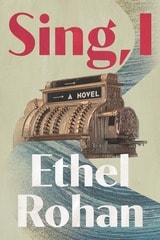
Sing, I
A NovelEthel Rohan
Northwestern University Press, 2024
Inside Half Moon Bay, a sparkling California coastal town, Ester Prynn is dulled and diminished by struggles with work, money, marriage, her senile father, a troubled teenage son, and old guilt she can’t assuage. When a masked gunman robs the convenience store where Ester works, he upends her fraught life and propels her toward passions buried, like singing; desires discovered, like a same-sex infatuation; and wrongs righted, like bringing the violent assailant to justice. But as the armed robber commits new crimes and continues to evade capture, the trauma from the holdup climbs, threatening Ester’s newfound delights and longings and forcing her to contend with her burning regrets and what-ifs. In the reckoning between Ester and these growing, molten upsets, she’s faced with enormous choices and must determine what and who can bring her to her best life.
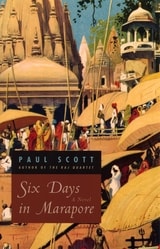
Six Days in Marapore
A NovelPaul Scott
University of Chicago Press, 1953
In this swiftly paced and lyrical novel about British expatriates at the time of Indian independence, Paul Scott grapples with the themes of race, possession, and history that dominate all four novels of his masterpiece, The Raj Quartet, especially The Jewel in the Crown. As always, Scott fills his book with vivid characters: the seductive, bigoted war widow; the sophisticated, wily Hindu politician; and the athletic young American who only gradually begins to understand the legacy of pain and hatred veiling the woman he has come to rescue. Set against the backdrop of a nation in violent transition—a climate of exhilaration and shifting loyalties—Six Days in Marapore unfolds amidst the possibility of reconciliation, freedom, and healing.
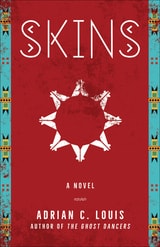
Skins
A NovelAdrian C. Louis
University of Nevada Press, 2022
It’s the early 1990s and Rudy Yellow Shirt and his brother, Mogie, are living on the Pine Ridge Reservation in South Dakota, home of the legendary Oglala Sioux warrior Crazy Horse. Both Vietnam veterans, the men struggle with daily life on the rez. Rudy, a criminal investigator with the Pine Ridge Public Safety Department, must frequently arrest his neighbors and friends, including his brother, who has become a rez wino.
But when Rudy falls and hits his head on a rock while pursuing a suspected murderer, Iktome the trickster enters his brain. Iktome restores Rudy’s youthful sexual vigor—long-lost to years of taking high blood pressure pills—and ignites his desire for political revenge via an alter ego, the “Avenging Warrior.” As the Avenging Warrior, Rudy takes direct action to punish local criminals. In a violent act, he torches the local liquor store, nearly burning Mogie alive while he is hiding on the store’s roof, plotting to steal booze. Although the brothers reconcile before Mogie dies, he leaves the Avenging Warrior with one final mission: go to Mount Rushmore and blow the nose off George Washington’s face.
Louis’s critically acclaimed novel was made into a movie in 2002, directed by Chris Eyre.
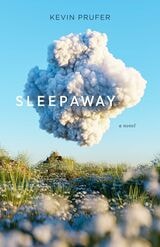
Sleepaway
A NovelKevin Prufer
Acre Books, 2024
It’s 1984, and the invisible mists are falling, mists that cause people to slip into dreamless slumber—sleeps from which most, but not all, awaken. Those who do wake live in fear of the next mist, and the next, each a little longer and more dangerous than the last.
Alternating between the perspectives of a kleptomaniac waitress named Cora and her twelve-year-old friend Glass, Sleepaway depicts a small-town America turned alarming. This is a place where loved ones are lost to a state between life and death; where denial, delusion, and desperation take hold of those remaining; where dealers of the antisleep drug Eight Track disappear into shadows, and a murderous wannabe kingpin hunts for victims.
As civilization is shaved away one sleep storm at a time, people struggle to go on, making and losing allies and discovering new strengths and weaknesses. Cora sets out on an ill-fated road trip hoping to reclaim her sister’s love, only to discover a more powerful bond than blood. Glass, having lost his only parent to one of the first mists, searches for a stability he has never had and may never achieve. All the while, buildings rise outside town to cope with the mounting number of sleepers. Some see them as hospitals, others as repositories, and yet soon the air around them fills with ash.
An allegory for post-pandemic America, Sleepaway grapples with questions concerning friendship, race, and family amid the horror of inexplicable, arbitrary annihilation.
Sleepaway
A NovelKevin Prufer
Acre Books, 2024
It’s 1984, and the invisible mists are falling, mists that cause people to slip into dreamless slumber—sleeps from which most, but not all, awaken. Those who do wake live in fear of the next mist, and the next, each a little longer and more dangerous than the last.
Alternating between the perspectives of a kleptomaniac waitress named Cora and her twelve-year-old friend Glass, Sleepaway depicts a small-town America turned alarming. This is a place where loved ones are lost to a state between life and death; where denial, delusion, and desperation take hold of those remaining; where dealers of the antisleep drug Eight Track disappear into shadows, and a murderous wannabe kingpin hunts for victims.
As civilization is shaved away one sleep storm at a time, people struggle to go on, making and losing allies and discovering new strengths and weaknesses. Cora sets out on an ill-fated road trip hoping to reclaim her sister’s love, only to discover a more powerful bond than blood. Glass, having lost his only parent to one of the first mists, searches for a stability he has never had and may never achieve. All the while, buildings rise outside town to cope with the mounting number of sleepers. Some see them as hospitals, others as repositories, and yet soon the air around them fills with ash.
An allegory for post-pandemic America, Sleepaway grapples with questions concerning friendship, race, and family amid the horror of inexplicable, arbitrary annihilation.
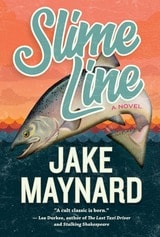
Slime Line
A NovelJake Maynard
West Virginia University Press, 2024
In the wake of his father’s death, Garrett Deaver washes up at a salmon processing plant in his dad’s old stomping grounds of Alaska. There, he renames himself Beaver—because just like a beaver, he’s “an industrious motherfucker”— and vows to become a supervisor at Klak Fancy Salmon, LLC. But moving up within the industry’s seasonal underclass is anything but simple, and soon he finds himself with real, and imagined, enemies at the plant. As amphetamines scramble his sense of reality, and secrets about his father’s life are revealed, the job he’d hoped would bring him salvation threatens to leave him broke, alone, and—maybe even literally—underwater.

Slouching Towards Kalamazoo
A NovelPeter De Vries
University of Chicago Press, 2005
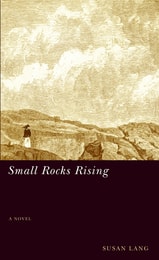
Small Rocks Rising
(A Novel)Susan Lang
University of Nevada Press, 2002
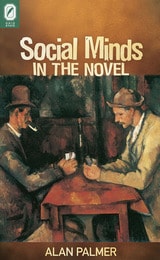
Social Minds in the Novel
Alan Palmer
The Ohio State University Press, 2010
Social Minds in the Novel is the highly readable sequel to Alan Palmer’s award-winning and much-acclaimed Fictional Minds. Here he argues that because of its undue emphasis on the inner, introspective, private, solitary, and individual mind, literary theory tells only part of the story of how characters in novels think. In addition to this internalist view, Palmer persuasively advocates an externalist perspective on the outer, active, public, social, and embodied mind. His analysis reveals, for example, that a good deal of fictional thought is intermental— joint, group, shared, or collective.
Social Minds in the NovelSocial minds are not of marginal interest; they are central to our understanding of fictional storyworlds. The purpose of this groundbreaking and important book is to put the complex and fascinating relationship between social and individual minds at the heart of narrative theory. The book will be of interest to scholars in narrative theory, cognitive poetics or stylistics, cognitive approaches to literature, philosophy of mind, social psychology, and the nineteenth-century novel.
focuses primarily on the epistemological and ethical debate in the nineteenth-century novel about the extent of our knowledge of the workings of other minds and the purposes to which this knowledge should be put. Palmer’s illuminating approach is pursued through skillful and provocative readings of Bleak House, Middlemarch, and Persuasion, and, in addition, Evelyn Waugh’s Men at Arms and Ian McEwan’s Enduring Love.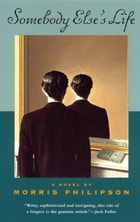
Somebody Else's Life
A NovelMorris Philipson
University of Chicago Press, 2000
"We move inside Cooper's chilly satisfaction as he and his lover-accomplice bring off one trick after another in the identity switching necessary to their scam. . . . And we're also brought close to the pain and rage . . . of the women whom Cooper (incorrigible to the end) deceives."—Benjamin DeMott, New York Times Book Review
"An authentic and ingenious account of the ingeniously counterfeit in art and in life."—D. J. Enright
"This offbeat romp intrigues with its ironic probing of life values at the same time that it provides lively entertainment."—Kirkus Reviews
"An extended and absorbing mediation on the loss of integrity."—Chicago Sun-Times
"Witty, sophisticated and intriguing, this tale of a forger is the genuine article: an example of the art of suspense and the suspense of art."—Jack Fuller
"An entertainingly mordant psychological thriller."—Washington Times Magazine
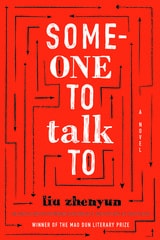
Someone to Talk To
A NovelLiu Zhenyun
Duke University Press, 2018

Somewhere in Germany
A NovelStefanie Zweig, Translated by Marlies Comjean
University of Wisconsin Press, 2006
In Frankfurt, Regina matures into a woman and, though her parents want her to marry an upstanding Jewish man, her love life progresses in its own idiosyncratic fashion. She develops a passion for art and journalism and begins her professional career at a Frankfurt newspaper. Walter at last finds professional success as a lawyer, but never quite adjusts to life in Frankfurt, recalling with nostalgia his childhood in Upper Silesia and his years in Africa. Only his son Max truly finds what Walter had hoped for: a new homeland in Germany.
Although the Redlichs receive kindness from strangers, they also learn anti-Semitism still prevails in post-Nazi Germany. They partake in the West German “economic miracle” with their own home, a second-hand car, and the discovery of television, but young Max’s discovery of the Holocaust revives long-buried memories. Rich in memorable moments and characters, this novel portrays the reality of postwar German society in vivid and candid detail.

Somewhere
A NovelBy Paloma Vidal, translated by Jordan B. Jones
Amherst College Press, 2026
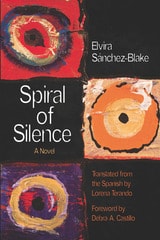
Spiral of Silence
A NovelElvira Sánchez-Blake; Translated from the Spanish by Lorena Terando; Foreword by Debra A. Castillo
Northwestern University Press, 2019
A multigenerational epic, Spiral of Silence (Espiral de Silencios) opens in the early 1980s, as peace and amnesty agreements spark optimism and hope. We meet Norma, a privileged, upper-class woman who is married to an army general; Maria Teresa (Mariate), a young rebel who loves a guerrilla fighter and navigates commitments to motherhood and revolutionary activism; and Amparo, a woman who comes of age later, and carries the confusion and dislocation of a younger generation. Each contends with the consequences of war and violence on her life; each is empowered through community-building and working for change.
Few authors have considered the role of women in Colombia during this wartime period, and Sánchez-Blake's nuanced exploration of gender and sexism—framed by conflict and social upheaval—distinguishes the novel. Drawing on stories from women who have worked within organizations in Colombia to end state violence, Spiral of Silence celebrates resistance, reinvention, and how women create and protect their families and communities.
Sport
A NovelMick Cochrane
University of Minnesota Press, 2003

Star Lake Saloon and Housekeeping Cottages
A NovelSara Rath
University of Wisconsin Press, 2006
When Hannah unexpectedly inherits her uncle's rundown resort, she must head to the northwoods to close up and sell the business. But the only interested buyer is Ingold, an international mining company, and Hannah finds herself reluctantly operating the resort while trapped in the midst of a treacherous dispute between Ingold and Uncle Hal's activist friends.
From safeguarding the wilderness to pursuing elusive new love interests, Hannah has plenty to engage her imagination at Star Lake. A new aspect of her personality emerges, one that is surprisingly courageous and compassionate. Throughout this humorous, elegantly plotted adventure with its appealing characters and lyrical depictions of nature, Hannah encounters the inevitability of change—in herself and in the nostalgic landscape of the deep North.
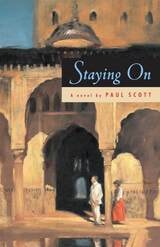
Staying On
A NovelPaul Scott
University of Chicago Press, 1977
"Staying On far transcends the events of its central action. . . . [The work] should help win for Scott . . . the reputation he deserves—as one of the best novelists to emerge from Britain's silver age."—Robert Towers, Newsweek
"Scott's vision is both precise and painterly. Like an engraver cross-hatching in the illusion of fullness, he selects nuances that will make his characters take on depth and poignancy."—Jean G. Zorn, New York Times Book Review
"A graceful comic coda to the earlier song of India. . . . No one writing knows or can evoke an Anglo-Indian setting better than Scott."—Paul Gray, Time
"Staying On provides a sort of postscript to [Scott's] deservedly acclaimed The Raj Quartet. . . . He has, as it were, summoned up the Raj's ghost in Staying On. . . . It is the story of the living death, in retirement, and the final end of a walk-on character from the quartet. . . . Scott has completed the task of covering in the form of a fictional narrative the events leading up to India's partition and the achievement of independence in 1947. It is, on any showing, a creditable achievement."—Malcolm Muggeridge, New York Times Book Review
Straight White Male
(A Novel)Gerald W. Haslam
University of Nevada Press, 2000
But life is about to deliver a series of challenges that overturn Leroy’s hard-won serenity and threaten to destroy his marriage and his family. Leroy’s father, Earl, once so wise and invincible, is descending into the empty, helpless depths of senility, while his ill-tempered mother struggles with her own health problems. The marriage of a high school friend ends tragically. And Leroy wrestles with his own bitter secret—his fierce resentment of his beloved wife’s troubled past and of the other men who knew her before he married her.

Strange Gourmets
Sophistication, Theory, and the NovelJoseph Litvak
Duke University Press, 1997
Though commonly thought of as a kind of worldliness at its best and an elitist snobbery at its worst, sophistication, Litvak reminds us, remains tied to its earlier, if forgotten, meaning of "perversion"—a perversion whose avatars are the homosexual and the intellectual. Proceeding with his investigations from a specifically gay academic perspective, Litvak presents thoroughly inventive readings of novels by Austen, Thackeray, and Proust, and of theoretical works by Adorno and Barthes, each text epitomizing sophistication in one of its more familiar modes. Among the issues he explores are the ways in which these texts teach sophistication, the embarrassment that sophistication causes the sophisticated, and how the class politics of sophistication are inseparable from its sexual politics. Helping gay, queer, feminist, and other provocative critics to make the most of their bad publicity, Litvak mindfully celebrates sophistication’s economy of taste and pleasure.

Sugarless
A NovelJames Magruder
University of Wisconsin Press, 2009
After he brings two girls in speech class to tears by reading a story aloud, Rick is coaxed onto the interscholastic forensics team to perform an eight-minute dramatic interpretation of The Boys in the Band, the controversial sixties play about homosexuality. Unexpectedly successful at this oddball event, Rick begins winning tournaments and making friends with his teammates.
Rick also discovers the joys of sex—with a speech coach from a rival school—just as his mother, reacting to a deteriorating home environment, makes an unnerving commitment to Christ. The newly confident Rick assumes this too shall pass—until the combined forces of family, sex, and faith threaten to undo him at the state meet in Peoria.
James Magruder’s Sugarless offers a ruefully entertaining take on the simultaneous struggles of coming-out, coming-of-age, and coming-to-Jesus.

Sunland
A NovelDon Waters
University of Nevada Press, 2013
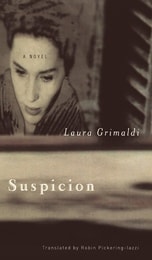
Suspicion
A NovelLaura Grimaldi
University of Wisconsin Press, 2003
In the shadow of the "Monster of Florence," a serial murderer who has terrorized Italy for seventeen years, Laura Grimaldi sets her tense psychological thriller Suspicion—a noir mystery of a city transformed by fear, and of friendships and family ties twisted by uncertainty and dark speculation. Grimaldi, whose hardboiled mysteries of the 1950s earned her the title "Italy’s queen of crime," turns here to the deeper, more elusive and disturbing questions that haunt human affairs.
For years Matilde, the widow of a prominent Florentine doctor, has lived alone with her eccentric middle-aged son, Enea. When the police pay a call, the balance between mother and son is shifted just subtly enough to make Matilde prey to suspicions and doubts that grow ever more corrosive, ever harder to conceal and more dangerous to reveal. In the literary tradition of such mystery writers as Patricia Highsmith and Ruth Rendell, Grimaldi creates an atmosphere charged with suspense as the daily lives and routines of her characters, infected with suspicion, begin to rearrange themselves around a few frightening facts and infinite monstrous possibilities.
Matilde’s efforts to decipher Enea’s secretive movements and occupations appear perfectly sensible and defensible through Grimaldi’s deft shifts between mother and son—and another, chillingly detached perspective on the gruesome murders. Grimaldi’s readers will find themselves as subject to misinterpretation and doubt, to sympathies and suspicions as her Florentine characters, and spellbound until the book’s final page.