Results by title
117 books match the query 'Philippines' and 4 start with s
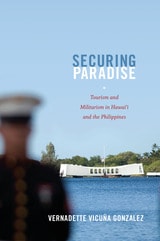
Securing Paradise
Tourism and Militarism in Hawai'i and the PhilippinesVernadette Vicuña Gonzalez
Duke University Press, 2013

Soil Erosion in a Coastal River Basin
A Case Study from the PhilippinesRandom DuBois
University of Chicago Press, 1990
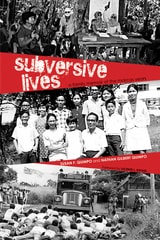
Subversive Lives
A Family Memoir of the Marcos YearsSusan F. Quimpo
Ohio University Press, 2016
From the 1960s to the 1990s, seven members of the Quimpo family dedicated themselves to the anti-Marcos resistance in the Philippines, sometimes at profound personal cost. In this unprecedented memoir, eight siblings (plus one by marriage) tell their remarkable stories in individually authored chapters that comprise a family saga of revolution, persistence, and, ultimately, vindication, even as easy resolution eluded their struggles.
Subversive Lives tells of attempts to smuggle weapons for the New People’s Army (the armed branch of the Communist Party of the Philippines); of heady times organizing uprisings and strikes; of the cruel discovery of one brother’s death and the inexplicable disappearance of another (now believed to be dead); and of imprisonment and torture by the military. These stories show the sacrifices and daily heroism of those in the movement. But they also reveal its messy legacies: sons alienated from their father; daughters abused by the military; friends betrayed; and revolutionary affection soured by intractable ideological differences.
The rich and distinctive contributions span the martial law years of Ferdinand Marcos’s rule. Subversive Lives is a riveting and accessible primer for those unfamiliar with the era, and a resonant history for those with a personal connection to what it meant to be Filipino at that time, or for anyone who has fought political repression.
Suspended Apocalypse
White Supremacy, Genocide, and the Filipino ConditionDylan Rodríguez
University of Minnesota Press, 2009
Suspended Apocalypse is a rich and provocative meditation on the emergence of the Filipino American as a subject of history. Culling from historical, popular, and ethnographic archives, Dylan Rodríguez provides a sophisticated analysis of the Filipino presence in the American imaginary. Radically critiquing current conceptions of Filipino American identity, community, and history, he puts forth a genealogy of Filipino genocide, rooted in the early twentieth-century military, political, and cultural subjugation of the Philippines by the United States.
Suspended Apocalypse critically addresses what Rodríguez calls "Filipino American communion," interrogating redemptive and romantic notions of Filipino migration and settlement in the United States in relation to larger histories of race, colonial conquest, and white supremacy. Contemporary popular and scholarly discussions of the Filipino American are, he asserts, inseparable from their origins in the violent racist regimes of the United States and its historical successor, liberal multiculturalism.
Rodríguez deftly contrasts the colonization of the Philippines with present-day disasters such as Hurricane Katrina and Mount Pinatubo to show how the global subjection of Philippine, black, and indigenous peoples create a linked history of genocide. But in these juxtapositions, Rodríguez finds moments and spaces of radical opportunity. Engaging the violence and disruption of the Filipino condition sets the stage, he argues, for the possibility of a transformation of the political lens through which contemporary empire might be analyzed, understood, and perhaps even overcome.