Results by title
704 books match the query 'Political Process' and 37 start with s
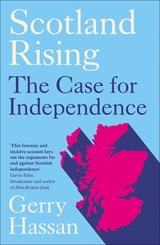
Scotland Rising
The Case for IndependenceGerry
Pluto Press, 2022
A systematic exploration of the arguments for Scottish independence from a sympathetic angle.
The Scottish independence question is one of the pivotal questions facing British politics and the future of the United Kingdom. It is also one of the most contentious and misunderstood.
In Scotland Rising, Gerry Hassan addresses the fundamental questions covering the Scottish independence debate so that people can better understand the case for independence and the nuances, contours, and implications for the whole country. Looking beyond the merits and shortcomings of the SNP and the Conservative government in Westminster, Hassan tackles the larger driving dynamics of 'the Scottish Question' - a growing desire amongst many Scots for an explicit discussion about society, public policy choices, and wider values.
Addressing the constitutional framework, and questions about the role of government and democracy, the nature of the British state, society, and capitalism, Scotland Rising makes an urgent and intelligent contribution to one of the defining political questions of our time.
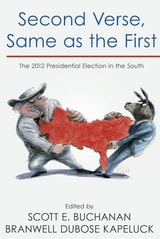
Second Verse, Same as the First
The 2012 Presidential Election in the SouthScott E. Buchanan
University of Arkansas Press, 2014

Second-Place Mo
Morris Udall ’76 and the Twilight of Democratic LiberalismJon Krampner
Michigan State University Press, 2027
Second-Place Mo examines the rightward drift of the Democratic Party that began in earnest with Jimmy Carter’s defeat of Morris “Mo” Udall for the Democratic presidential nomination in 1976—a turning point that set the party toward a free-market economy and away from economic liberalism.
The candidacy of Mo Udall, a congressman from Arizona, was the first time in almost a century that a member of the House of Representatives had a chance to become president; it also promised a continuation of the Democrats’ tradition of New Deal liberalism, which had been the party’s guiding star since the 1930s. But the Udall campaign was rocked by events beyond its control, its own mistakes, and the whirlwind candidacy of Jimmy Carter, who went on to win the nomination and the presidency.
Mo Udall chalked up eight second-place primary finishes without a victory. His candidacy was memorable for his dogged persistence, sunny good humor, and unabashed liberalism. This book chronicles a Democratic primary filled with memorable candidates, including the militarist and arch-Zionist Scoop Jackson; the newly minted more-populist-than-thou Fred Harris; the Hamlet-like figures of Birch Bayh and Hubert Humphrey; the fading, injured apostle of the Confederate South, George Wallace; the affable yet ineffective Kennedy in-law, Sargent Shriver; the anti-abortion housewife from Long Island, Ellen McCormack; and others. All are vividly brought to life—including Jimmy Carter, a thrower of sharp elbows before he became the beloved, humanitarian former president—set against the backdrop of Udall’s doomed effort.
Second-Place Mo examines why Udall’s 1976 campaign failed and what lessons his near misses hold for contemporary politics. Along the way, it recovers a figure whose principled liberalism and self-deprecating humor offer an instructive contrast to the politics of our own moment.

Secret Service
National Security in an Age of Open InformationJonathan Evans
Haus Publishing, 2020
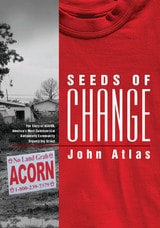
Seeds of Change
The Story of ACORN, America's Most Controversial Antipoverty Community Organizing GroupJohn Atlas
Vanderbilt University Press, 2010
Seeds of Change goes beyond the headlines of the last Presidential campaign to describe what really happened in ACORN's massive voter registration drives, why it triggered an unrelenting attack by Fox News and the Republican Party, and how it confronted its internal divisions and scandals.
Based on Atlas's own eyewitness original reporting, as the only journalist to have access to ACORN's staff and board meetings, this book documents the critical transition from founder Wade Rathke, a white New Orleans radical to Bertha Lewis, a Brooklyn African American activist.
The story begins in the 1970s, when a small group of young men and women, led by a charismatic college dropout, began a quest to help the powerless help themselves. In a tale full of unusual characters and dramatic conflicts, the book follows the ups and downs of ACORN's organizers and members as they confront big corporations and unresponsive government officials in Albuquerque, Brooklyn, Chicago, Detroit, Little Rock, New Orleans, Philadelphia, and the Twin Cities.
The author follows the course of local and national campaigns to organize unions, fight the subprime mortgage crisis, promote living wages for working people, struggle for affordable housing and against gentrification, and help Hurricane Katrina's survivors return to New Orleans.
The book dispels the conservative myth that we can only help the poor through private soup kitchens and charity and the liberal myth that the solution rests simply with more government services. Seeds of Change, not only provides a gripping look at ACORN's four decades of effective organizing, but also offers a hopeful analysis of the potential for a revival of real American democracy.
An offering of The Progressive Book Club.
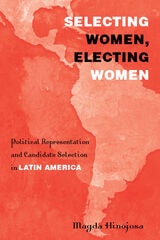
Selecting Women, Electing Women
Political Representation and Candidate Selection in Latin AmericaMagda Hinojosa
Temple University Press, 2012
Selecting Women, Electing Women is a groundbreaking book that examines how the rules for candidate selection affect women’s political representation in Latin America. Focusing particularly on Chile and Mexico, Magda Hinojosa presents counterintuitive assumptions about factors that promote the election of women. She argues that primaries—which are regularly thought of as the most democratic process for choosing candidates—actually produce fewer female nominees than centralized and seemingly exclusionary candidate selection procedures.
Hinojosa astutely points out the role of candidate selection processes in explaining variation in women’s representation that exists both across and within political parties. Selecting Women, Electing Women makes critical inroads to the study of gender and politics, candidate selection, and Latin American politics.
Self-Rule
A Cultural History of American DemocracyRobert H. Wiebe
University of Chicago Press, 1995
American democracy arrived abruptly in the 19th century; it changed just as dramatically early in the 20th. Hence, Self-Rule divides the history of American democracy into two halves: a 19th century half covering the 1820s to the present, and a 20th century half, with a major transition from the 1890s to the 1920s between them. As Wiebe explains why the original democracy of the early 19th century represented a sharp break from the past, he recreates in vivid detail the way European visitors contrasted the radical character of American democracy with their own societies. He then discusses the operation of various 19th century democratic publics, including a nationwide public, the People. Finally, he places democracy's white fraternal world of equals in a larger environment where other Americans who differed by class, race, and gender, developed their own relations to democracy.
Wiebe then picks up the history of democracy in the 1920s and carries it to the present. Individualism, once integrated with collective self-governance in the 19th century, becomes the driving force behind 20th century democracy. During those same years, other ways of defining good government and sound public policy shunt majoritarian practices to one side. Late in the 20th century, these two great themes in the history of American democracy—individualism and majoritarianism—turn on one another in modern democracy's war on itself.
Finally, Self-Rule assesses the polarized state of contemporary American democracy. Putting the judgments of sixty-odd commentators from Kevin Phillips and E.J. Dionne to Robert Bellah and Benjamin Barber to the test of history, Wiebe offers his own suggestions on the meaning and direction of today's democracy. This sweeping work explains how the history of American democracy has brought us here and how that same history invites us to create a different future.
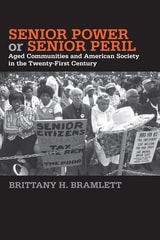
Senior Power or Senior Peril
Aged Communities and American Society in the Twenty-First CenturyBrittany H Bramlett
Temple University Press, 2015
In Senior Power or Senior Peril, Bramlett examines the assertions that the increasing number of older adult-concentrated communities across the United States form a growing bloc of senior power that will influence the redistribution of particularized welfare benefits to older adults at the expense of younger people. However, others suggest that political influence declines with old age. Bramlett uses interviews and on-site research at various senior communities to explore what qualities make an aged community politically unique, and the impact of the local aged context on residents' political knowledge, safety-net policy attitudes, efficacy, and political activity.
This path-breaking book identifies the political behaviors, attitudes, and political consciousness of both older and younger residents as it recounts the perceived and actual political power of seniors.
In the series The Social Logic of Politics, edited by Scott McClurg

Separate Destinations
Migration, Immigration, and the Politics of PlacesJames G. Gimpel
University of Michigan Press, 1999
Shaming the Constitution
The Detrimental Results of Sexual Violent Predator LegislationMichael L. Perlin
Temple University Press, 2017
Convicted sexually violent predators are more vilified, more subject to media misrepresentation, and more likely to be denied basic human rights than any other population. Shaming the Constitution authors Michael Perlin and Heather Cucolo question the intentions of sex offender laws, offering new approaches to this most complex (and controversial) area of law and social policy.
The authors assert that sex offender laws and policies are unconstitutional and counter-productive. The legislation largely fails to add to public safety—even ruining lives for what are, in some cases, trivial infractions. Shaming the Constitution draws on law, behavioral sciences, and other disciplines to show that many of the “solutions” to penalizing sexually violent predators are “wrong,” as they create the most repressive and useless laws.
In addition to tracing the history of sex offender laws, the authors address the case of Jesse Timmendequas, whose crime begat “Megan’s Law;” the media’s role in creating a “moral panic;” recidivism statistics and treatments, as well as international human rights laws. Ultimately, they call attention to the flaws in the system so we can find solutions that contribute to public safety in ways that do not mock Constitutional principles.

Shaping Citizenship through Talk Radio
Listening to the 2024 UK ElectionStephen Coleman
Intellect Books, 2026
Can the mass media contribute to meaningful public debate in the run-up to an election?
Talk radio in the United States is said to have contributed to a political atmosphere in which the loudest, crudest, and simplest arguments prevail. Is there a different model of public talk that can contribute to a kinder, wiser, more empathetic democracy? In the run-up to the 2024 UK general election, Stephen Coleman listened to callers to the BBC’s daily phone-in show in the hope of finding answers to these questions. In this year-long study, we see the public expressing its mood, telling its stories, and testing its arguments.
Shaping Citizenship through Talk Radio argues that even in a time of democratic anxiety and rising division, people are still finding ways to talk, listen, and act together. It explains why democracies need reliable public spaces that help citizens connect and communicate across their differences. Reporting on what he found, Coleman also proposes a way forward for a more empathetic democratic discourse.

Short-Changed?
South Africa since ApartheidColin Bundy
Ohio University Press, 2015
What have been the most significant developments—political, social, economic—in South Africa since 1994? How much has changed since the demise of apartheid, and how much remains stubbornly the same? Should one celebrate a robust democracy now two decades old, or lament the corrosive effects of factionalism, greed, and corruption on political life? Colin Bundy tries to answer such questions, while avoiding simplistic or one-sided assessments of life under Mandela, Mbeki, and Zuma. He recognizes real advances under ANC rule but also identifies the limits and contradictions of such progress. Bundy demonstrates, too, how the country’s past permeates the present, complicating and constraining the politics of transition, so that genuine transformation has been short-changed.

Sinn Fein and the Politics of Left Republicanism
Eoin O'Broin
Pluto Press, 2009
Sinn Féin is a growing force in Irish politics. Now the country's third largest party, Sinn Féin have been one of the central architects of the peace process and are increasingly setting the terms of political debate in Ireland north and south. Despite this, the party remains much misunderstood and often misrepresented.
In Sinn Féin & The Politics of Left Republicanism, Sinn Féin activist Eoin Ó Broin explores the ideological and organisational origins of the party, charts their history and recent political development and assesses their possible futures.
He argues that Sinn Féin is part of a distinct left-republican tradition in Irish society whose future lies in the globally resurgent radical democratic left.
Skepticism and Freedom
A Modern Case for Classical LiberalismRichard A. Epstein
University of Chicago Press, 2003
He begins by laying out his own vision of the key principles of classical liberalism: respect for the autonomy of the individual, a strong system of private property rights, the voluntary exchange of labor and possessions, and prohibitions against force or fraud. Nonetheless, he not only recognizes but insists that state coercion is crucial to safeguarding these principles of private ordering and supplying the social infrastructure on which they depend. Within this framework, Epstein then shows why limited government is much to be preferred over the modern interventionist welfare state.
Many of the modern attacks on the classical liberal system seek to undermine the moral, conceptual, cognitive, and psychological foundations on which it rests. Epstein rises to this challenge by carefully rebutting each of these objections in turn. For instance, Epstein demonstrates how our inability to judge the preferences of others means we should respect their liberty of choice regarding their own lives. And he points out the flaws in behavioral economic arguments which, overlooking strong evolutionary pressures, claim that individual preferences are unstable and that people are unable to adopt rational means to achieve their own ends. Freedom, Epstein ultimately shows, depends upon a skepticism that rightly shuns making judgments about what is best for individuals, but that also avoids the relativistic trap that all judgments about our political institutions have equal worth.
A brilliant defense of classical liberalism, Skepticism and Freedom will rightly be seen as an intellectual landmark.

Skin Color, Power, and Politics in America
Mara Cecilia Ostfeld
Russell Sage Foundation, 2022
Ostfeld and Yadon surveyed over 1,300 people about their political views, including party affiliation, their opinions on welfare, and the importance of speaking English in the U.S. The authors created a matrix grounded in their “Roots of Race” framework, which predicts the relationship between skin color and political attitudes for each ethnoracial group based on the blurriness of the group’s boundaries and historical levels of privilege. They draw upon three distinct measures of skin color to conceptualize the relationship between skin color and political views: “Machine-Rated Skin Color,” measured with a light-reflectance meter; “Self-Assessed Skin Color,” using the Yadon-Ostfeld Skin Color Scale; and “Skin Color Discrepancy,” the difference between one’s Machine-Rated and Self-Assessed Skin Color.
Ostfeld and Yadon examine patterns that emerge among these measures, and their relationships with life experiences and political stances. Among Latinos, a group with relatively blurry group boundaries and low levels of historical privilege, the authors find a robust relationship between political views and Self-Assessed Skin Color. Latinos who overestimate the lightness of their skin color are more likely to hold conservative views on current racialized political issues, such as policing. Latinos who overestimate the darkness of their skin color, on the other hand, are more likely to hold liberal political views. As America’s major political parties remain divided on issues of race, this suggests that for Latinos, self-reported skin color is used as a means of aligning oneself with valued political coalitions.
African Americans, another group with low levels of historical privilege but with more clearly defined group boundaries, demonstrated no significant relationship between skin color and political attitudes. Thus, the lived experiences associated with being African American appeared to supersede the differences in life experiences due to skin color.
Whites, a group with more historical privilege and increasingly blurry group boundaries, showed a clear relationship between machine-assessed skin color and attitudes on political issues. Those with darker Machine-Rated Skin Color are more likely to hold conservative views, suggesting that they are responding to the threat of losing their privilege in a multicultural society.
At a time when the U.S. is both more diverse and politically divided, Skin Color, Power, and Politics in Americais a timely account of the ways in which skin color and politics are intertwined.
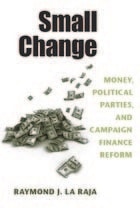
Small Change
Money, Political Parties, and Campaign Finance ReformRaymond J. La Raja
University of Michigan Press, 2010
Reformers lament that, with every effort to regulate the sources of campaign funding, candidates creatively circumvent the new legislation. But in fact, political fundraisers don't need to look for loopholes because, as Raymond J. La Raja proves, legislators intentionally design regulations to gain advantage over their partisan rivals.
La Raja traces the history of the U.S. campaign finance system from the late nineteenth century through the passage of the Bipartisan Campaign Reform Act (BCRA) of 2002. Then, using the 2004 presidential election as a case study, he compares the ways in which Democrats and Republicans adapted their national fund-raising and campaigning strategies to satisfy BCRA regulations. Drawing upon this wealth of historical and recent evidence, he concludes with recommendations for reforming campaign finance in ways that promote fair competition among candidates and guarantee their accountability to voters.
Small Change offers an engaging account of campaign finance reforms' contradictory history; it is a must-read for anyone concerned about influence of money on democratic elections.
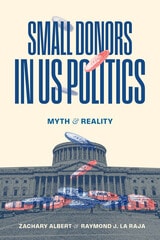
Small Donors in US Politics
Myth and RealityZachary Albert and Raymond J. La Raja
University of Chicago Press, 2026
A myth-busting investigation of small donors: who they are, how they spend their money, and whose campaigns actually benefit from their donations.
Many political reformers argue that more robust small donor participation in US campaigns would reduce the influence of the wealthiest Americans and improve political responsiveness to ordinary citizens. Drawing on extensive data, including surveys and campaign records, Zachary Albert and Raymond J. La Raja largely dispel this myth, offering the first comprehensive portrait to date of small donors in US elections.
Although small donor contributions to high-profile, national races have increased markedly since 2018, the US campaign finance system allows for even larger sums of money from Super PACs and other independent spending groups. Moreover, small donors are mostly similar to their larger contributor counterparts: both are socioeconomically advantaged, strongly partisan, ideologically extreme, and distinct from non-donors. Small donors can also be impulsive: they tend to give mostly to high-profile candidates on the ideological extremes, empowering media celebrities and norm-breakers rather than consensus-builders, and they underinvest in competitive and down-ballot races. Importantly, the candidates who rely most heavily on small donor support are not necessarily better legislators or representatives.
Yet, the story is not entirely bleak. Small donors bring energy and resources, especially for challengers and outsider candidates. The book shows how reforms could channel this energy more productively—by strengthening political parties, emphasizing local representation, and creating systems that broaden participation beyond the most ideological citizens.
Timely, accessible, and grounded in data, Small Donors in US Politics reveals both the promise and the peril of small donor politics—and what it will take to make money in politics serve democracy, not undermine it.
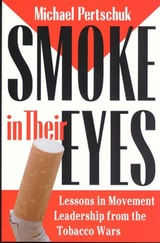
Smoke in Their Eyes
Lessons in Movement Leadership from the Tobacco WarsMichael Pertschuk
Vanderbilt University Press, 2001
A lifelong public health leader and tobacco control advocate, Pertschuk provides uncommon insight into the movement and its opposition. Questions that reveal themselves here can be applied to public advocacy as a whole: how can movement leaders gauge and best employ popular support? Who has legitimacy to speak on behalf of a particular public cause? And perhaps most crucially, how is it possible for those whose cause is a moral one to strike political compromise? With a narrative as compelling as the issues it raises, Smoke in Their Eyes will be of great interest to everyone from students of public advocacy and political science to general readers.
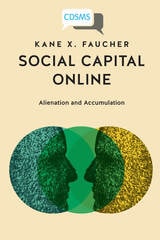
Social Capital Online
Alienation and AccumulationKane X. Faucher
University of Westminster Press, 2018
What is ‘social capital’? The enormous positivity surrounding it conceals the instrumental economic rationality underpinning the notion as corporations silently sell consumer data for profit. Status chasing is just one aspect of a process of transforming qualitative aspects of social interactions into quantifiable metrics for easier processing, prediction, and behavioural shaping.
A work of critical media studies, Social Capital Online examines the idea within the new ‘network spectacle’ of digital capitalism via the ideas of Marx, Veblen, Debord, Baudrillard and Deleuze. Explaining how such phenomena as online narcissism and aggression arise, Faucher offers a new theoretical understanding of how the spectacularisation of online activity perfectly aligns with the value system of neoliberalism and its data worship. Even so, at the centre of all, lie familiar ideas – alienation and accumulation – new conceptions of which he argues are vital for understanding today’s digital society.
Social Media, Social Justice and the Political Economy of Online Networks
Jeffrey Layne Blevins and James Jaehoon Lee
University of Minnesota Press, 2021
Next Generation e-book nonfiction 2023 Indie Book Award Prize.
While social network analyses often demonstrate the usefulness of social media networks to affective publics and otherwise marginalized social justice groups, this book explores the domination and manipulation of social networks by more powerful political groups. Jeffrey Layne Blevins and James Lee look at the ways in which social media conversations about race turn politically charged, and in many cases, ugly. Studies show that social media is an important venue for news and political information, while focusing national attention on racially involved issues. Perhaps less understood, however, is the effective quality of this discourse, and its connection to popular politics, especially when Twitter trolls and social media mobs go on the attack.
Taking on prominent case studies from the past few years, including the Ferguson protests and the Black Lives Matter movement, the 2016 presidential election, and the rise of fake news, this volume presents data visualization sets alongside careful scholarly analysis. The resulting volume provides new insight into social media, legacy news, and social justice.
Social Movements in the World-System
The Politics of Crisis and TransformationJackie Smith
Russell Sage Foundation, 2012

Socialist Feminism
A New ApproachFrieda Afary
Pluto Press, 2022
What is socialist feminism and why is it needed to fight the global rise of authoritarianism and fascism?
Frieda Afary brings the insights gained through her study of feminist philosophy, her international activism, and her work in community education as a public librarian in Los Angeles, offering a bold new vision of an alternative to capitalism, racism, sexism, heterosexism, and alienation.
Socialist Feminism: A New Approach reclaims theories of women’s oppression through a return to humanism, enriched by social reproduction theories, Black feminist intersectionality, abolitionism, queer theories, Marxist-Humanism, and the author’s own experiences as an Iranian American feminist, scholar, and activist.
She looks at global developments in gender relations since the 1980s, the impact of the Covid-19 pandemic, the distinct features of twenty-first-century authoritarianism, and current struggles against it, drawing out lessons for revolutionary theorizing, organizing, and international solidarity including the #MeToo and Black Lives Matter movements.
This book also contains a study guide that transforms it into a useful pedagogical tool for teachers and activists.
Socialist Feminism
A New ApproachFrieda Afary
Pluto Press, 2022
A new take on a powerful and revolutionary movement.
What is socialist feminism and why is it needed to fight the global rise of authoritarianism and fascism?
Frieda Afary brings the insights gained through her study of feminist philosophy, her international activism, and her work in community education as a public librarian in Los Angeles, offering a bold new vision of an alternative to capitalism, racism, sexism, heterosexism, and alienation.
Socialist Feminism: A New Approach reclaims theories of women’s oppression through a return to humanism, enriched by social reproduction theories, Black feminist intersectionality, abolitionism, queer theories, Marxist-Humanism, and the author’s own experiences as an Iranian American feminist, scholar, and activist.
She looks at global developments in gender relations since the 1980s, the impact of the Covid-19 pandemic, the distinct features of twenty-first-century authoritarianism, and current struggles against it, drawing out lessons for revolutionary theorizing, organizing, and international solidarity including the #MeToo and Black Lives Matter movements.
Contains a study guide that transforms it into a useful pedagogical tool for teachers and activists.
Socialist Subjectivities
Queering East Germany under HoneckerScott Harrison, Jeff Hayton, and Katharine White, Editors
University of Michigan Press, 2025
Whether one was an apparatchik, artist, or alcoholic, the everyday interactions, experiences, and rituals of late socialism proved crucial to establishing the conditions around which subjecthood was constructed. Despite stereotypes of apathy and inertia, East Germans lent a considerable dynamism to their society, and by generating a cacophony of opinions and a heterogeneity of ideas, they constantly transformed state socialism. By foregrounding socialist subjects and the iterative nature of socialism during these decades, this volume paints a richer portrait of East Germany—one that illuminates how East Germans imagined their futures in a society whose collapse they could not foresee.
Sound System
The Political Power of MusicDave Randall
Pluto Press, 2017
Sound System is the story of one musician's journey to discover what makes music so powerful. Dave Randall uses his insider's knowledge of the industry to shed light on the secrets of celebrity, commodification and culture.
This is a book of raves, riots and revolution. From the Glastonbury Festival to the Arab Spring, Pop Idol to Trinidadian Carnival, Randall finds political inspiration across the musical spectrum and poses the question: how can we make music serve the interests of the many, rather than the few?
Published in partnership with the Left Book Club.
South Africa’s Suspended Revolution
Hopes and ProspectsAdam Habib
Ohio University Press, 2013
South Africa’s Suspended Revolution tells the story of South Africa’s democratic transition and the prospects for the country to develop a truly inclusive political system. Beginning with an account of the transition in the leadership of the African National Congress from Thabo Mbeki to Jacob Zuma, the book then broadens its lens to examine the relationship of South Africa’s political elite to its citizens. It also examines the evolution of economic and social policies through the democratic transition, as well as the development of a postapartheid business community and a foreign policy designed to re-engage South Africa with the world community.
Written by one of South Africa’s leading scholars and political commentators, the book combines historical and contemporary analysis with strategies for an alternative political agenda. Adam Habib connects the lessons of the South African experience with theories of democratic transition, social change, and conflict resolution. Political leaders, scholars, students, and activists will all find material here to deepen their understanding of the challenges and opportunities of contemporary South Africa.
Southern Parties and Elections
Studies in Regional Political ChangeRobert P. Steed
University of Alabama Press, 1997
Clarifies the recent and dramatic development of party competition in the South
Southern politics has changed dramatically during the past half century. While new developments have touched virtually every aspect of the region's politics, change has been especially marked in the South's political party and electoral systems. Southern Parties and Elections explores the contemporary developments in party realignment and examines the relationship between regional party change and electoral behavior and the larger patterns in national politics.
The collection's first group of essays examines some of the key legal issues in contemporary southern politics: the legal battle over majority-minority districting, the electoral consequences of such districting, the practice-fairly widespread in the South-of separating presidential elections from state and local elections, and the connections between the electorate and party change.
The second section of essays focuses on nominations, elections, and partisan developments in the South, including the recent surge of voter participation in southern Republican primaries, the comparative importance of the South and selected states with large blocks of electoral votes in presidential election outcomes, and the southern contribution to patterns of voting in Congress. The final two chapters examine changes in southern state legislatures-one a case study of the Virginia General Assembly and the other an analysis of state legislatures in the region as a whole.
Collectively these essays add important pieces to the enduring puzzle of "southern politics."

Spark of Independence
The American Revolution in the Northern Colonies, 1775–1776Michael Cecere
Westholme Publishing, 2024
The Independence Trilogy (Spark of Independence, United for Independence, March to Independence) seeks to answer one simple question. What happened in the thirteen colonies after bloodshed erupted at Lexington and Concord in April 1775 until independence was declared in July 1776?
For the Northern colonies, the traditional view is that they reacted as one in their opposition to Great Britain, each sending troops to Massachusetts to help form an Army of Observation that within two months of Lexington became the Continental Army. This is indeed what happened, and the events at Lexington and Concord, Bunker Hill, and the siege of Boston had a tremendous impact on each New England colony.But so too did other events that occurred in New Hampshire, Massachusetts, Rhode Island and Connecticut. Clashes with the British navy in far-away Machias, on the coast of present-day Maine, as well as in Boston Harbor, Massachusetts Bay, Buzzards Bay, Narragansett Bay, and the Long Island Sound; the destruction of Falmouth (present-day Portland, Maine), the bombardment of Stonington, Connecticut, and the threatened destruction of Portsmouth, New Hampshire, and Newport, Rhode Island, all contributed to the growing sentiment for independence that grew in New England following the outbreak of war. New Englanders, too, participated in the American effort to seize Canada in 1775 with troops under Colonel Benedict Arnold who marched through the wilderness of Maine to Quebec. New Englanders also joined General Philip Schuyler and participated in the capture of St. Jeans and Montreal. New England soldiers captured Fort Ticonderoga in New York just a few weeks after Lexington, and of course most notably, the Continental Army that besieged Boston in 1775 was comprised almost entirely of New England volunteers.
Like its companion volumes, Spark of Independence: The American Revolution in the Northern Colonies, 1775–1776 by historian Michael Cecere extensively uses primary source documents to explore both the well known and less-known clashes and events that occurred during the fifteen months between Lexington and Concord and the Declaration of Independence, and how these events contributed to the growing support across the colonies for independence from Great Britain by 1776.

Special?
The Chequered History of the UK-US RelationshipSimon McDonald
Haus Publishing, 2027
Special? investigates the unique, but increasingly weak, relationship between the US and UK and contemplates how it might develop in the future.
Many relationships in international affairs are singular, but the United Kingdom’s relationship with the United States has always been different. For a time, what Churchill dubbed the "special" relationship had consequences far beyond the borders of the two countries—a closeness that has provoked envy, curiosity, and bewilderment.
In this new volume, Simon McDonald takes stock of this special relationship and speculates about its future. Starting with its sixteenth-century origins, he takes a longer look at the twentieth century and the two nations' relationship today, before looking forward at how, and if, it may develop in the coming centuries. Just how important are ties in defense, intelligence, language, and culture? What can we make of the United States’s ambivalent relationship with the Royal Family? Has the US ever acted benevolently towards the UK, or has it always taken decisions in its own interest?
Today, the relationship is weaker than Churchill, Thatcher, or even Blair understood it; much that made it special belongs to a rapidly receding past. Though it can no longer be claimed that the relationship is central to international relations, McDonald asks if recent events represent a temporary cooling of what remains a vital relationship to the UK and an important one to the US; or a rift that will only grow wider.
Starving the Beast
Ronald Reagan and the Tax Cut RevolutionMonica Prasad
Russell Sage Foundation, 2018
Drawing on never-before seen archival documents, Prasad traces the history of the 1981 tax cut—the famous “supply side” tax cut, which became the cornerstone for the next several decades of Republican domestic economic policy. She demonstrates that the main impetus behind this tax cut was not business group pressure, racial animus, or a belief that tax cuts would pay for themselves.
Rather, the tax cut emerged because in America--unlike in the rest of the advanced industrial world—progressive policies are not embedded within a larger political economy that is favorable to business. Since the end of World War II, many European nations have combined strong social protections with policies to stimulate economic growth such as lower taxes on capital and less regulation on businesses than in the United State. Meanwhile, the United States emerged from World War II with high taxes on capital and some of the strongest regulations on business in the advanced industrial world. This adversarial political economy could not survive the economic crisis of the 1970s.
Starving the Beast suggests that taking inspiration from the European model of progressive policies embedded in market-promoting political economy could serve to build an American economy that works better for all.
State Constitutional Politics
Governing by Amendment in the American StatesJohn Dinan
University of Chicago Press, 2018
With State Constitutional Politics, John Dinan looks at the various occasions in American history when state constitutional amendments have served as instruments of governance. Among other things, amendments have constrained state officials in the way they levy taxes and spend money; enacted policies unattainable through legislation on issues ranging from minimum wage to the regulation of marijuana; and updated understandings of rights, including religious liberty, equal protection, and the right to bear arms. In addition to comprehensively chronicling the ways amendments shape politics in the states, Dinan also assesses the consequences of undertaking changes in governance through amendments rather than legislation or litigation. For various reasons, including the greater stability and legitimacy of changes achieved through the amendment process, he argues that it might be a more desirable way of achieving change.
Statesmanship and Party Government
A Study of Burke and BolingbrokeHarvey C. Mansfield
University of Chicago Press, 1965
Mansfield points out that while parties have always existed, the party government that we know today is possible only because parties are now considered respectable. In Burke’s day, however, they were thought by detractors to be a cancer in a free polity. Even many supporters of the parties viewed them as a dangerous instrument, only to be used cautiously by statesmen in dire times. Burke, however, was an early champion of the party system in Britain and made his arguments with a clear-eyed realism. In Statesmanship and Party Government, Mansfield provides a skillful evaluation of Burke’s writings and sheds light present-day party politics through a profound understanding of the historical background of the their inception.
Stirrings In The Jug
Black Politics In The Post-Segregation EraAdolph Reed, Jr.
University of Minnesota Press, 1999
Storming Heaven
Class Composition and Struggle in Italian Autonomist MarxismSteve Wright
Pluto Press, 2017

Story Tech
Power, Storytelling, and Social Change AdvocacyFilippo Trevisan, Michael Vaughan, and Ariadne Vromen
University of Michigan Press, 2025
Story Tech explores the increasingly influential impact of technologies—such as databases, algorithms, and digital story banks—that are usually invisible to the public. It shows that hidden “story tech” enables political organizations to treat stories as data that can be queried for storylines and used to intervene in news and information cycles in real time. In particular, the authors review successful story-centered campaigns that helped change dominant narratives on disability rights, marriage equality, and essential workers’ rights in the United States and Australia. They compare the use of storytelling advocacy across different types of organizations including volunteer grassroots groups, large national advocacy coalitions, and trade unions, and examine how trends differ for storytellers, organizers, and their technology partners. As political stories shift to being “on demand,” they reshape power relationships in key public debates in ways that produce moments of tension as well as positive narrative change. Story Tech examines these trends and illustrates how storytelling success can—and should—be achieved in conjunction with personal dignity, privacy, and empowerment for storytellers and their communities, particularly marginalized ones.

Strictly Personal and Confidential
The Letters Harry Truman Never MailedEdited by Monte M. Poen
University of Missouri Press, 1999
Harry S. Truman made plain speaking his trademark, and it was a common belief that "Give 'em hell" Harry spared few with his words. However, this fascinating collection of 140 amusing, angry, sarcastic, and controversial letters President Truman wrote but never mailed proves that conception wrong. Addressed to admirers and enemies alike, including Adlai Stevenson, Justice William Douglas, Dwight Eisenhower, Joe McCarthy, and Truman's wife, Bess, these intriguing letters cover such diverse subjects as the atomic bomb, running the country, and human greed.
Survival Strategy
Stopping Fossil Fuels in the Age of "Drill, Baby, Drill"David McDermott Hughes
Rutgers University Press, 2027
In the United States, the climate movement has, so far, failed in the all-important task of shutting down fossil fuels. David McDermott Hughes offers a plan for a more daring form of climate politics, recommending that the climate movement adopt a strategy of mass blockades and sabotage against functioning fossil fuel infrastructure. Ideally, the saboteurs would not get caught—but if they did, in their trials they could appeal to the little-known power of jury nullification to avoid prison and to make pipelines unprotectable.
Climate change is no longer a technical problem that can simply be fixed. It is now a political predicament that must be faced. Elected politicians—even those who support renewable energy—remain committed to the extraction of petroleum and methane. No one with political power is even attempting to do the one thing that must be done: shut down fossil fuels. With trepidation, Hughes offers the last resort against the approaching climate catastrophe.