Results by title
355 books match the query 'Political and social views' and 27 start with s
Satiric Advice on Women and Marriage
From Plautus to ChaucerWarren S. Smith, Editor
University of Michigan Press, 2005
Advice on sex and marriage in the literature of antiquity and the middle ages typically stressed the negative: from stereotypes of nagging wives and cheating husbands to nightmarish visions of women empowered through marriage. Satiric Advice on Women and Marriage brings together the leading scholars of this fascinating body of literature. Their essays examine a variety of ancient and early medieval writers' cautionary and often eccentric marital satire beginning with Plautus in the third century B.C.E. through Chaucer (the only non-Latin author studied). The volume demonstrates the continuity in the Latin tradition which taps into the fear of marriage and intimacy shared by ancient ascetics (Lucretius), satirists (Juvenal), comic novelists (Apuleius), and by subsequent Christian writers starting with Tertullian and Jerome, who freely used these ancient sources for their own purposes, including propaganda for recruiting a celibate clergy and the promotion of detachment and asceticism as Christian ideals.
Warren S. Smith is Professor of Classical Languages at the University of New Mexico.
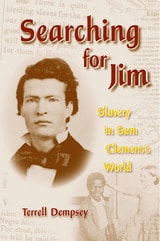
Searching for Jim
Slavery in Sam Clemens's WorldTerrell Dempsey
University of Missouri Press, 2005
During Sam’s earliest years, his father, John Marshall Clemens, had significant interaction with slaves. Newly discovered court records show the senior Clemens in his role as justice of the peace in Hannibal enforcing the slave ordinances. With the death of his father, young Sam was apprenticed to learn the printing and newspaper trade. It was in the newspaper that slaves were bought and sold, masters sought runaways, and life insurance was sold on slaves. Stories the young apprentice typeset helped Clemens learn to write in black dialect, a skill he would use throughout his writing, most notably in Huckleberry Finn.
Missourians at that time feared abolitionists across the border in Illinois and Iowa. Slave owners suspected every traveling salesman, itinerant preacher, or immigrant of being an abolition agent sent to steal slaves. This was the world in which Sam Clemens grew up. Dempsey also discusses the stories of Hannibal’s slaves: their treatment, condition, and escapes. He uncovers new information about the Underground Railroad, particularly about the role free blacks played in northeast Missouri.
Carefully reconstructed from letters, newspaper articles, sermons, speeches, books, and court records, Searching for Jim offers a new perspective on Clemens’s writings, especially regarding his use of race in the portrayal of individual characters, their attitudes, and worldviews. This fascinating volume will be valuable to anyone trying to measure the extent to which Clemens transcended the slave culture he lived in during his formative years and the struggles he later faced in dealing with race and guilt. It will forever alter the way we view Sam Clemens, Hannibal, and Mark Twain.
Selected Writings on Marxism
Stuart Hall
Duke University Press, 2021

Selected Writings on Race and Difference
Stuart Hall
Duke University Press, 2021

Selected Writings on Visual Arts and Culture
Detour to the ImaginaryStuart Hall. Edited by Gilane Tawadros
Duke University Press, 2024

Shakespeare and Trump
Jeffrey R. Wilson
Temple University Press, 2020
Should we draw an analogy between Shakespeare’s tyrants—Richard III, Julius Caesar, Macbeth, and King Lear—and Donald Trump? In Shakespeare and Trump, Jeffrey Wilson applies literary criticism to real life, examining plot, character, villainy, soliloquy, tragedy, myth, and metaphor to identify the formal features of the Trump phenomenon, and its hidden causes, structure, and meanings.
Wilsonapproaches his comparison prismatically. He first considers two high-concept (read: far-fetched) Shakespeare adaptations penned by Trump’s former chief political strategist Steve Bannon. He looks at University of Pennsylvania students protesting Trump by taking down a monument to Shakespeare. He reads Trump’s first 100 days in office against Netflix’s House of Cards. Wilson also addresses the summer 2017 Shakespeare in the Park production of Julius Caesar wherein an assassination of a Trump-ian leader caused corporations to withdraw sponsorship.
These stories reveal a surprising—and bizarre—relationship between the provincial English playwright and the billionaire President of the United States, ostensibly a medieval king living in a modern world. The comparison reveals a politics that blends villainy and comedy en route to tragedy.
Shakespeare from the Margins
Language, Culture, ContextPatricia Parker
University of Chicago Press, 1996
Combining feminist and historical approaches with attention to the "matter" of language as well as of race and gender, Parker's brilliant "edification from the margins" illuminates much that has been overlooked, both in Shakespeare and in early modern culture. This book, a reexamination of popular and less familiar texts, will be indispensable to all students of Shakespeare and the early modern period.

Shakespeare's Freedom
Stephen Greenblatt
University of Chicago Press, 2010
Shakespeare lived in a world of absolutes—of claims for the absolute authority of scripture, monarch, and God, and the authority of fathers over wives and children, the old over the young, and the gentle over the baseborn. With the elegance and verve for which he is well known, Stephen Greenblatt, author of the best-selling Will in the World, shows that Shakespeare was strikingly averse to such absolutes and constantly probed the possibility of freedom from them. Again and again, Shakespeare confounds the designs and pretensions of kings, generals, and churchmen. His aversion to absolutes even leads him to probe the exalted and seemingly limitless passions of his lovers.
Greenblatt explores this rich theme by addressing four of Shakespeare’s preoccupations across all the genres in which he worked. He first considers the idea of beauty in Shakespeare’s works, specifically his challenge to the cult of featureless perfection and his interest in distinguishing marks. He then turns to Shakespeare’s interest in murderous hatred, most famously embodied in Shylock but seen also in the character Bernardine in Measure for Measure. Next Greenblatt considers the idea of Shakespearean authority—that is, Shakespeare’s deep sense of the ethical ambiguity of power, including his own. Ultimately, Greenblatt takes up Shakespearean autonomy, in particular the freedom of artists, guided by distinctive forms of perception, to live by their own laws and to claim that their creations are singularly unconstrained.
A book that could only have been written by Stephen Greenblatt, Shakespeare’s Freedom is a wholly original and eloquent meditation by the most acclaimed and influential Shakespearean of our time.
Shakespeare's Politics
Allan Bloom
University of Chicago Press, 1981
In essays looking at Julius Caesar, Othello, and The Merchant of Venice, Bloom shows how Shakespeare presents a picture of man that does not assume privileged access for only literary criticism. With this claim, he argues that political philosophy offers a comprehensive framework within which the problems of the Shakespearean heroes can be viewed. In short, he argues that Shakespeare was an eminently political author. Also included is an essay by Harry V. Jaffa on the limits of politics in King Lear.
"A very good book indeed . . . one which can be recommended to all who are interested in Shakespeare." —G. P. V. Akrigg
"This series of essays reminded me of the scope and depth of Shakespeare's original vision. One is left with the impression that Shakespeare really had figured out the answers to some important questions many of us no longer even know to ask."-Peter A. Thiel, CEO, PayPal, Wall Street Journal
Allan Bloom was the John U. Nef Distinguished Service Professor on the Committee on Social Thought and the co-director of the John M. Olin Center for Inquiry into the Theory and Practice of Democracy at the University of Chicago. Harry V. Jaffa is professor emeritus at Claremont McKenna College and Claremont Graduate School.
Simone de Beauvoir’s Political Thinking
Edited by Lori Jo Marso and Patricia Moynagh
University of Illinois Press, 2006
By exploring the life and work of the influential feminist thinker Simone de Beauvoir, this book shows how each of us lives within political and social structures that we can--and must--play a part in transforming. It argues that Beauvoir’s careful examination of her own existence can also be understood as a dynamic method for political thinking.
As the contributors illustrate, Beauvoir's political thinking proceeds from the bottom up, using examples from individual lives as the basis for understanding and transforming our collective existence. For example, she embraced her responsibility as a French citizen as making her complicit in the French war against Algeria. Here, she sees her role as an oppressor. In other contexts, she looks to the lives of individual women, including herself, to understand the dimensions of gender inequality.
This volume’s six tightly connected essays home in on the individual’s relationship to community, and how one’s freedom interacts with the freedom of other people. Here, Beauvoir is read as neither a liberal nor a communitarian. The authors focus on her call for individuals to realize their freedom while remaining consistent with ethical obligations to the community. Beauvoir's account of her own life and the lives of others is interpreted as a method to understand individuals in relations to others, and as within structures of personal, material, and political oppression. Beauvoir's political thinking makes it clear that we cannot avoid political action. To do nothing in the face of oppression denies freedom to everyone, including oneself.

Skepticism And Ideology
Shelley'S Political ProseTerence Allan Hoagwood
University of Iowa Press, 1988
Smoothing the Jew
"Abie the Agent" and Ethnic Caricature in the Progressive EraJeffrey A. Marx
Rutgers University Press, 2024
Smoothing the Jew investigates how Jewish artists of the time attempted to “smooth over” these demeaning portrayals by focusing on the first Jewish comic strip published in English, Harry Hershfield’s Abie the Agent. Jeffrey Marx demonstrates how Hershfield created a Jewish protagonist who in part reassured nativists of the Jews’ ability to assimilate into American society while also encouraging immigrants and their children that, over time, they would be able to adopt American customs without losing their distinctly Jewish identity.

Snow on the Cane Fields
Women’s Writing and Creole SubjectivityJudith Raiskin
University of Minnesota Press, 1995
Snow on the Cane Fields was first published in 1995. Minnesota Archive Editions uses digital technology to make long-unavailable books once again accessible, and are published unaltered from the original University of Minnesota Press editions.
In a probing analysis of creole women's writing over the past century, Judith Raiskin explores the workings and influence of cultural and linguistic colonialism. Tracing the transnational and racial meanings of creole identity, Raiskin looks at four English-speaking writers from South Africa and the Caribbean: Olive Schreiner, Jean Rhys, Michelle Cliff, and Zoë Wicomb. She examines their work in light of the discourses of their times: nineteenth-century "race science" and imperialistic rhetoric, turn-of-the-century anti-Semitic sentiment and feminist pacifism, postcolonial theory, and apartheid legislation.
In their writing and in their multiple identities, these women highlight the gendered nature of race, citizenship, culture, and the language of literature. Raiskin shows how each writer expresses her particular ambivalences and divided loyalties, both enforcing and challenging the proprietary British perspective on colonial history, culture, and language. A new perspective on four writers and their uneasy places in colonial culture, Snow on the Cane Fields reveals the value of pursuing a feminist approach to questions of national, political, and racial identity.
Judith Raiskin is assistant professor of women's studies at the University of California, Santa Barbara.
Sociability and Its Enemies
German Political Theory After 1945Jakob Norberg
Northwestern University Press, 2014
Social Figures
George Eliot, Social History, and Literary RepresentationDaniel Cottom
University of Minnesota Press, 1987
Centers on the discourse of the liberal intellectual as exemplified in the novels of George Eliot, whose awareness of her aesthetic and social task was keener than that of most Victorian writers.
“…Daniel Cottom has produced a readable, well-researched, and thoroughly referenced work that speaks to a broad scholarly audience composed of philosophers, psychologists, sociolinguists, literary critics, historians, sociologists, and anthropologists, to name but a few.” Anthropology and Humanism Quarterly
Socialist Joy in the Writing of Langston Hughes
Jonathan Scott
University of Missouri Press, 2007
Jonathan Scott has written the first book-length study to analyze the extraordinary range of Hughes’s creative output, showing that his unassailable reputation as one of America’s finest “folk poets” barely scratches the surface of his oeuvre. Scott offers a robust account of the relations between Hughes and political activism to show that Hughes’s direct involvement with the U.S. socialist movement of the 1920s and 1930s was largely responsible for the variety of his writing. Scott also contends that the goal of overthrowing white oppression produced a “socialist joy” that would express itself repeatedly in Hughes’s work during the anticommunist crusades of the 1950s and 1960s.
In his provocative study, Scott explores four areas of Hughes’s intellectual work: his relationship with Afro-Caribbean arts, Soviet Russia, and the Harlem Renaissance; his postwar newspaper writing for the African American press; his extensive cultural work as an anthologist; and his writings for young people. Through these analyses, Scott proposes the concept of “red, white, and black” as an alternative paradigm for appreciating Hughes in particular and the American scene in general.
Scott views Hughes not simply as a great author but as an American working-class intellectual trickster whose eccentric projects require a redefinition of the very concept of authorship. By focusing on Hughes’s intellectual method, Scott also contests the notion of reducing all African Americans to one undifferentiated social status beneath that of any class within the white oppressing group—a hallmark of racial oppression that has diminished, in the U.S. academy, Hughes’s international status.
As Scott persuasively argues, it is only through an understanding of Hughes’s literary method that we can undertake a thorough account of his prolific production during the cold war era. His book situates Hughes’s life and work in their proper contexts, both reconfirming Hughes’s reputation as an intellectual of the American Left and establishing his long-denied place in American studies as the most well-rounded writer of his time.
Socrates Founding Political Philosophy in Xenophon's "Economist", "Symposium", and "Apology"
Thomas L. Pangle
University of Chicago Press, 2020
Unlike the Socrates of Plato, Xenophon’s Socrates is more complicated and human, an individual working out the problem of what it means to live well and virtuously. While the Memorabilia defends Socrates by stressing his likeness to conventionally respectable gentlemen, Xenophon’s remaining Socratic texts offer a more nuanced characterization by highlighting how Socrates also diverges from conventions of gentlemanliness in his virtues, behaviors, and peculiar views of quotidian life and governmental rule. One question threads through the three writings: Which way of life best promotes human existence, politics, and economics—that of the Socratic political philosopher with his philosophic virtues or that of the gentleman with his familial, civic, and moral virtues? In uncovering the nuances of Xenophon’s approach to the issue in the Economist, Symposium, and Apology, Pangle’s book cements the significance of these writings for the field and their value for shaping a fuller conception of just who Socrates was and what he taught.
Sojourner Truth's America
Margaret Washington
University of Illinois Press, 2009
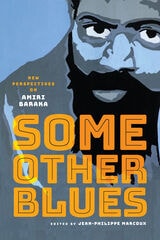
Some Other Blues
New Perspectives on Amiri BarakaEdited by Jean-Philippe Marcoux
The Ohio State University Press, 2021
(Include contributors if space allows) Contributors: Tony Bolden, Jeremy Glick, William J. Harris, Benjamin Lee, Aidan Levy, John Lowney, Jean-Philippe Marcoux, Kim McMillon, Fred Moten, Michael New, Aldon Lynn Nielsen, Amy Abugo Ongiri, Gregory Pierrot, Howard Rambsy II, Emily Ruth Rutter, Anthony Reed, Lauri Scheyer, Kathy Lou Schultz, Michael Simanga, James Smethurst, Laura Vrana, Tyrone Williams, Kalamu ya Salaam.
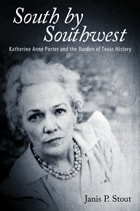
South by Southwest
Katherine Anne Porter and the Burden of Texas HistoryJanis P. Stout
University of Alabama Press, 2013
An interdisciplinary study of Katherine Anne Porter’s troubled relationship to her Texas origins and southern roots, South by Southwest offers a fresh look at this ever-relevant author.
Today, more than thirty years after her death, Katherine Anne Porter remains a fascinating figure. Critics and biographers have portrayed her as a strikingly glamorous woman whose photographs appeared in society magazines. They have emphasized, of course, her writing— particularly the novel Ship of Fools, which was made into an award-winning film, and her collection Pale Horse, Pale Rider, which cemented her role as a significant and original literary modernist. They have highlighted her dramatic, sad, and fragmented personal life. Few, however, have addressed her uneasy relationship to her childhood in rural Texas.
Janis P. Stout argues that throughout Porter’s life she remained preoccupied with the twin conundrums of how she felt about being a woman and how she felt about her Texas origins. Her construction of herself as a beautiful but unhappy southerner sprung from a plantation aristocracy of reduced fortunes meant she construed Texas as the Old South. The Texas Porter knew and re-created in her fiction had been settled by southerners like her grandparents, who brought slaves with them. As she wrote of this Texas, she also enhanced and mythologized it, exaggerating its beauty, fertility, and gracious ways as much as the disaffection that drove her to leave. Her feelings toward Texas ran to both extremes, and she was never able to reconcile them.
Stout examines the author and her works within the historical and cultural context from which she emerged. In particular, Stout emphasizes four main themes in the history of Texas that she believes are of the greatest importance in understanding Porter: its geography and border location (expressed in Porter’s lifelong fascination with marginality, indeterminacy, and escape); its violence (the brutality of her first marriage as well as the lawlessness that pervaded her hometown); its racism (lynchings were prevalent throughout her upbringing); and its marginalization of women (Stout draws a connection between Porter’s references to the burning sun and oppressive heat of Texas and her life with her first husband).

Spirits of the Cold War
Contesting Worldviews in the Classical Age of American Security StrategyNed O'Gorman
Michigan State University Press, 2012
In spring of 1953, newly elected President Eisenhower sat down with his staff to discuss the state of American strategy in the cold war. America, he insisted, needed a new approach to an urgent situation. From this meeting emerged Eisenhower’s teams of “bright young fellows,” charged with developing competing policies, each of which would come to shape global politics. In Spirits of the Cold War, Ned O’Gorman argues that the early Cold War was a crucible not only for contesting political strategies, but also for competing conceptions of America and its place in the world. Drawing on extensive archival research and wide reading in intellectual and rhetorical histories, this comprehensive account shows cold warriors debating “worldviews” in addition to more strictly instrumental tactical aims. Spirits of the Cold War is a rigorous scholarly account of the strategic debate of the early Cold War—a cultural diagnostic of American security discourse and an examination of its origins.

Stand Up for Alabama
Governor George WallaceJeffrey Frederick
University of Alabama Press, 2007
Reassessing the Political Legacy of Alabama's Most Influential Governor.
Whereas other studies have focused on George Wallace’s career as a national figure, Stand Up for Alabama provides a detailed, comprehensive, and analytical study of Wallace’s political life that emphasizes his activities and their impact within the state of Alabama. Jeff Frederick answers two fundamental questions: What was George Wallace’s impact on the state of Alabama? Why did Alabamians continue to embrace him over a twenty-five year period? Using a variety of sources to document the state’s performance in areas including mental health, education, conservation, prisons, and industrial development, Frederick answers question number one. He cites comparisons between Alabama and both peer states in the South and national averages. Wallace’s policies improved the state, but only in relation to Alabama’s past, not in relation to peer states in the region or national averages. As a result, energy was expended but little progress was made.
To answer the second question, Frederick uses the words of Alabamians themselves through oral history, correspondence, letters to the editor, and other sources. Alabamians, white and eventually black, supported Wallace because race was but one of his appeals. Stand Up for Alabama shows that Wallace connected to Alabamians at a gut level, reminding them of their history and memory, championing their causes on the stump, and soothing their concerns about their place in the region and the nation.
Jeff Frederick examines the development of policy during the Wallace administrations and documents relationships with his constituents in ways that go beyond racial politics. He also analyzes the connections between Wallace’s career and Alabamians’ understanding of their history, sense of morality, and class system. “Stand up for Alabama” was the governor’s campaign slogan.
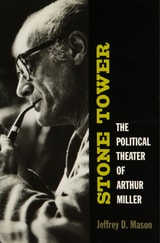
Stone Tower
The Political Theater of Arthur MillerJeffrey D. Mason
University of Michigan Press, 2008
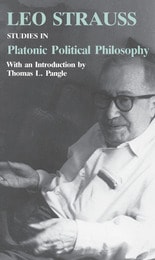
Studies in Platonic Political Philosophy
Leo Strauss
University of Chicago Press, 1983
As his choice of title indicates, the heart of Strauss's work is Platonism—a Platonism that is altogether unorthodox and highly controversial. These essays consider, among others, Heidegger, Husserl, Nietzsche, Marx, Moses Maimonides, Machiavelli, and of course Plato himself to test the Platonic understanding of the conflict between philosophy and political society. Strauss argues that an awesome spritual impoverishment has engulfed modernity because of our dimming awareness of that conflict.
Thomas Pangle's Introduction places the work within the context of the entire Straussian corpus and focuses especially on Strauss's late Socratic writings as a key to his mature thought. For those already familiar with Strauss, Pangle's essay will provoke thought and debate; for beginning readers of Strauss, it provides a fine introduction. A complete bibliography of Strauss's writings if included.
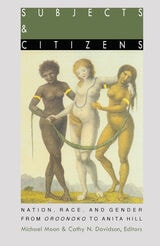
Subjects and Citizens
Nation, Race, and Gender from Oroonoko to Anita HillMichael Moon and Cathy N. Davidson, eds.
Duke University Press, 1995
Defining the landscape of the New American literary history, these essays are united by three interrelated concerns: ideas of origin (where does "American literature" begin?), ideas of nation (what does "American literature" mean?), and ideas of race and gender (what does "American literature" include and exclude and how?). Work by writers as diverse as Aphra Behn, James Fenimore Cooper, Edgar Allan Poe, Frances Harper, Harriet Beecher Stowe, Herman Melville, William Faulkner, Harriet Jacobs, Frederick Douglass, Abraham Lincoln, Bharati Mukherjee, Booker T. Washington, Mark Twain, Kate Chopin, Américo Paredes, and Toni Morrison are discussed from several theoretical perspectives, using a variety of methodologies. Issues of the "frontier" and the "border" as well as those of coloniality and postcoloniality are explored. In each case, these essays emphasize the ideological nature of national identity and, more specifically, the centrality of race and gender to our concept of nationhood.
Collected from recent issues of American Literature, with three new essays added, Subjects and Citizens charts the new directions being taken in American literary studies.
Contributors. Daniel Cooper Alarcón, Lori Askeland, Stephanie Athey, Nancy Bentley, Lauren Berlant, Michele A. Birnbaum, Kristin Carter-Sanborn, Russ Castronovo, Joan Dayan, Julie Ellison, Sander L. Gilman, Karla F. C. Holloway, Annette Kolodny, Barbara Ladd, Lora Romero, Ramón Saldívar, Maggie Sale, Siobhan Senier, Timothy Sweet, Maurice Wallace, Elizabeth Young
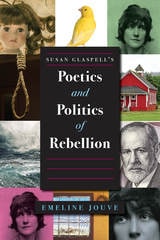
Susan Glaspell's Poetics and Politics of Rebellion
Emeline Jouve
University of Iowa Press, 2017
Analyzing plays from the early Trifles (1916) through Springs Eternal (1943) and the undated, incomplete Wings, author Emeline Jouve illustrates the way that Glaspell’s dramas addressed issues of sexism, the impact of World War I on American values, and the relationship between individuals and their communities, among other concerns. Jouve argues that Glaspell turns the playhouse into a courthouse, putting the hypocrisy of American democracy on trial. In staging rebels fighting for their rights in fictional worlds that reflect her audience’s extradiegetic reality, she explores the strategies available to individuals to free themselves from oppression. Her works envisage a better future for both her fictive insurgents and her spectators, whom she encourages to consider which modes of revolt are appropriate and effective for improving the society they live in. The playwright defines social reform in terms of collaboration, which she views as an alternative to the dominant, alienating social and political structures. Not simply accusing but proposing solutions in her plays, she wrote dramas that enacted a positive revolt.
A must for students of Glaspell and her contemporaries, as well as scholars of American theatre and literature of the first half of the twentieth century.
Symbolic Power, Politics, and Intellectuals
The Political Sociology of Pierre BourdieuDavid L. Swartz
University of Chicago Press, 2013