Results by title
2916 books match the query 'Politics and government' and 172 start with s

Saddam's War of Words
Politics, Religion, and the Iraqi Invasion of KuwaitBy Jerry M. Long
University of Texas Press, 2004
From a Western perspective, the Persian Gulf War of 1990-1991 largely fulfilled the first President Bush's objective: "In, out, do it, do it right, get gone. That's the message." But in the Arab world, the causes and consequences of Saddam Hussein's invasion of Kuwait and his subsequent defeat by a U.S.-led coalition were never so clear-cut. The potent blend of Islam and Arab nationalism that Saddam forged to justify the unjustifiable—his invasion of a Muslim state—gained remarkable support among both Muslims and Arabs and continued to resonate in the Middle East long after the fighting ended. Indeed, as this study argues in passing, it became a significant strand in the tangled web of ideologies and actions that led to the attacks of 9/11.
This landmark book offers the first in-depth investigation of how Saddam Hussein used Islam and Arab nationalism to legitimate his invasion of Kuwait in the eyes of fellow Muslims and Arabs, while delegitimating the actions of the U.S.-led coalition and its Arab members. Jerry M. Long addresses three fundamental issues: how extensively and in what specific ways Iraq appealed to Islam during the Kuwait crisis; how elites, Islamists, and the elusive Arab "street," both in and out of the coalition, responded to that appeal and why they responded as they did; and the longer-term effects that resulted from Saddam's strategy.

Salisbury
Eric Midwinter
Haus Publishing, 2006

Salvador Allende
Revolutionary Democrat: Revolutionarvy DemocratVictor Figueroa Clark
Pluto Press, 2013
This is a political biography of one of the 20th century’s most emblematic left-wing figures - Salvador Allende, who was president of Chile until he was ousted by General Pinochet in a US-supported coup in 1973.
Victor Figueroa Clark guides us through Allende's life and political project, answering some of the most frequently asked questions. Was he a revolutionary or a reformist? A bureaucrat or inspirational democrat? Clark argues that Allende and the Popular Unity Party created a unique fusion which was both revolutionary and democratic.
The process led by Allende was a symbol of hope for the left during his short time in power. Forty years on, and with left governments back in power across Latin America, this book looks back at the man and the process in order to draw vital lessons for the left in Latin America and around the world today.
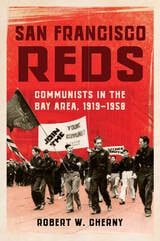
San Francisco Reds
Communists in the Bay Area, 1919-1958Robert W. Cherny
University of Illinois Press, 2024
Founded in 1919, the Communist Party (CP) in San Francisco survived an ineffectual early period to become a force in the trade union heyday of the 1930s. Robert Cherny uses the lives and careers of more than fifty members to tell the story of the city’s CP from its founding through 1958.
Cherny draws on FBI files, the records of the CP at the Russian State Archive for Social and Political History, interviews, and memoirs to follow male and female party and union leaders, rank-and-file members, and others. His history reveals why people joined the CP while charting the frequent changes in policy, constant member turnover, and disruptive factionalism that limited party aims and successes. Cherny also follows his subjects through their resignations, expulsions, or other reasons for departure and looks at the CP’s influence on their lives in subsequent years.
Vivid and exhaustively researched, San Francisco Reds is a long view account of the personal motivations and activism of an Old Left generation in a West Coast city.
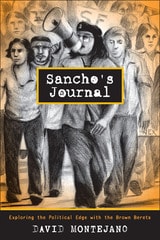
Sancho's Journal
Exploring the Political Edge with the Brown BeretsBy David Montejano
University of Texas Press, 2012
How do people acquire political consciousness, and how does that consciousness transform their behavior? This question launched the scholarly career of David Montejano, whose masterful explorations of the Mexican American experience produced the award-winning books Anglos and Mexicans in the Making of Texas, 1836–1986, a sweeping outline of the changing relations between the two peoples, and Quixote’s Soldiers: A Local History of the Chicano Movement, 1966–1981, a concentrated look at how a social movement “from below” began to sweep away the last vestiges of the segregated social-political order in San Antonio and South Texas. Now in Sancho’s Journal, Montejano revisits the experience that set him on his scholarly quest—“hanging out” as a participant-observer with the South Side Berets of San Antonio as the chapter formed in 1974.
Sancho’s Journal presents a rich ethnography of daily life among the “batos locos” (crazy guys) as they joined the Brown Berets and became associated with the greater Chicano movement. Montejano describes the motivations that brought young men into the group and shows how they learned to link their individual troubles with the larger issues of social inequality and discrimination that the movement sought to redress. He also recounts his own journey as a scholar who came to realize that, before he could tell this street-level story, he had to understand the larger history of Mexican Americans and their struggle for a place in U.S. society. Sancho’s Journal completes that epic story.

Sarajevo
A Bosnian KaleidoscopeFran Markowitz
University of Illinois Press, 2010
This fascinating urban anthropological analysis of Sarajevo and its cultural complexities examines contemporary issues of social divisiveness, pluralism, and intergroup dynamics in the context of national identity and state formation. Rather than seeing Bosnia-Herzegovina as a volatile postsocialist society, the book presents its capital city as a vibrant yet wounded center of multicultural diversity, where citizens live in mutual recognition of difference while asserting a lifestyle that transcends boundaries of ethnicity and religion. It further illuminates how Sarajevans negotiate group identity in the tumultuous context of history, authoritarian rule, and interactions with the built environment and one another.
As she navigates the city, Fran Markowitz shares narratives of local citizenry played out against the larger dramas of nation and state building. She shows how Sarajevans' national identities have been forged in the crucible of power, culture, language, and politics. Sarajevo: A Bosnian Kaleidoscope acknowledges this Central European city's dramatic survival from the ravages of civil war as it advances into the present-day global arena.

Savage Frontier Volume I
Rangers, Riflemen, and Indian Wars in Texas, 1835-1837Stephen L. Moore
University of North Texas Press, 2002

Savage Frontier Volume III
Rangers, Riflemen, and Indian Wars in Texas, 1840-1841Stephen L. Moore
University of North Texas Press, 2007

Savage Frontier Volume IV
Rangers, Riflemen, and Indian Wars in Texas, 1842-1845Stephen L. Moore
University of North Texas Press, 2002

Saving Lake Tahoe
An Environmental History of a National TreasureMichael J. Makley
University of Nevada Press, 2014
Left alone, nature healed itself, and by the 1960s mature forests once again surrounded the lake and its water clarity improved, with visibility more than one hundred feet deep. However, Tahoe’s wonders brought a new kind of threat: millions of annual visitors and incessant development, including ski resorts and casinos. Saving Lake Tahoe looks at the interaction through the years between human activities and Tahoe’s natural ecosystems. It is a dramatic story of ecological disasters and near misses, political successes and failures. Utilizing primary sources and interviews with key figures, Makley provides a meticulously researched account of the battles surrounding the management of the Tahoe basin.
Makley takes the story up to the present, describing the formation and evolution of a new type of governing body, the bistate Tahoe Regional Planning Agency, and groundbreaking efforts to utilize science in establishing policy. He depicts the passionate fights between those who seek to preserve the environment and advocates of individual property rights. Although Tahoe remains unique in its splendor, readers will understand why, with continued pressure for development, reversing environmental deterioration and improving the lake water’s clarity remain elusive goals.

Saxony in German History
Culture, Society, and Politics, 1830-1933James Retallack, Editor
University of Michigan Press, 2000
Focusing on the east German state of Saxony, the contributors to this volume refuse easy resolution of that tension, seeking instead to illustrate how local, regional, and national cultures commingled, diverged, and influenced each other over time. By considering both the erosion and the persistence of traditional identities and regional boundaries, these essays help to restore an appreciation of regional "ways of seeing," suggesting they really did matter--in their own right, and for the nation as a whole.
Topics considered include the expansion of a German reading public, Jewish emancipation, the formation of socio-moral milieus, working-class leisure, the expansion of the public sphere, the rise of consumer co-operatives, gendered attempts to fashion the "new" liberal man, and degradation rituals in the 1920s. Presenting to English-reading audiences the fruits of cutting-edge research conducted in Saxon archives since 1989, the contributors offer innovative ways to reassess the larger sweep of German history.
This book serves as a how-to guide for the study of any region in history. Beyond its primary appeal to European historians, it will also speak to students and scholars in comparative politics and sociology.
James Retallack is Professor of History, University of Toronto.

Scotland Rising
The Case for IndependenceGerry
Pluto Press, 2022
A systematic exploration of the arguments for Scottish independence from a sympathetic angle.
The Scottish independence question is one of the pivotal questions facing British politics and the future of the United Kingdom. It is also one of the most contentious and misunderstood.
In Scotland Rising, Gerry Hassan addresses the fundamental questions covering the Scottish independence debate so that people can better understand the case for independence and the nuances, contours, and implications for the whole country. Looking beyond the merits and shortcomings of the SNP and the Conservative government in Westminster, Hassan tackles the larger driving dynamics of 'the Scottish Question' - a growing desire amongst many Scots for an explicit discussion about society, public policy choices, and wider values.
Addressing the constitutional framework, and questions about the role of government and democracy, the nature of the British state, society, and capitalism, Scotland Rising makes an urgent and intelligent contribution to one of the defining political questions of our time.

Scottish Mandarin
The Life and Times of Sir Reginald JohnstonShiona Airlie
Hong Kong University Press, 2012
Searching for Life's Meaning
Changes and Tensions in the Worldviews of Chinese Youth in the 1980sLuo Xu
University of Michigan Press, 2002
Drawing on his own experience as a teacher at Capital Normal University in Beijing, China during the 1980s, as well as exhaustive research, Luo Xu investigates the social and political climate of 1980s China in order to help better define the culture that ultimately drove the events at Tiananmen. Supporting his arguments with solid primary source documents, Xu contends that the contemplation of the meaning of life, along with other philosophical questions, were integral components of the general social crisis leading up to the movement of 1989.
Elegantly written and accessible to a general readership, this study will also be useful to specialists. Searching for Life's Meaning is a concise but detailed introduction to the mentalities of the Chinese generation presently assuming leadership in China. It should be valuable reading in courses on Chinese history and politics, and will be of interest to scholars in the related fields of Asian studies, anthropology, cultural studies, and youth studies. The book will also appeal to business- people and other professionals concerned with managing relations with the world's fastest growing polity.
Luo Xu is Assistant Professor of History, State University of New York College at Cortland.
Secessionist Rule
Protracted Conflict and Configurations of Non-State AuthorityFranziska Smolnik
Campus Verlag, 2016

Second Life
A West Bank MemoirJanet Gunn
University of Minnesota Press, 1995
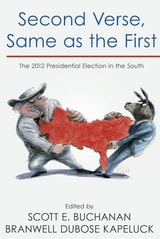
Second Verse, Same as the First
The 2012 Presidential Election in the SouthScott E. Buchanan
University of Arkansas Press, 2014

Second in Command
Reevaluating the Role of Vice Presidents and Running Mates in Modern American PoliticsEdited by Karine Prémont and Christopher J. Devine
University of Michigan Press, 2026
In recent years, the office of the vice president has become a focal point of presidential politics and governance. From the emergence of the modern vice presidency under Walter Mondale to Mike Pence’s and Kamala Harris’s dramatic influence on the outcome of the 2020 election, Second in Command explores how vice presidents and vice-presidential candidates have shaped the direction of the country and changed American politics. The frenzy of speculation surrounding the “veepstakes” every four years and extensive media coverage of the vice-presidential debate may seem odd, given the vice presidency’s limited constitutional powers and dismal public reputation.
Dispelling the myth that the vice presidency is a powerless or merely ceremonial role, Second in Command draws on the multidisciplinary expertise of more than a dozen leading vice-presidential scholars to reveal the complex, consequential, and often misunderstood nature of the office. With accessible language and vivid examples, it traces the transformation of vice-presidential power over the past half-century, reveals the evolving electoral significance of vice-presidential running mates, and highlights the need for a deeper public understanding of these pivotal figures. Chapters employ a range of qualitative and quantitative methodologies, including elite interviews, archival research, case studies, and advanced statistical modeling to cover topics such as gender and media effects in running mate selection and the representation of vice presidents in popular culture. This book offers a fresh, engaging, and essential perspective on a vital institution at the heart of American democracy.

Secrets I Won't Take with Me
Home, War, and the Struggle for Peace in IsraelYossi Beilin
University of Alabama Press, 2025
An Israeli political leader’s riveting first-hand account of pivotal moments from recent Israeli history, including the Oslo Peace Accords, the founding of the Birthright Initiative, the assassination of Yitzhak Rabin, the rise of the Israeli far right, and more
In Secrets I Won't Take with Me, Yossi Beilin, a key Israeli political and ministerial leader, offers an intimate and candid memoir that chronicles pivotal events in the nation’s recent history. From the crucible of its founding to the complexities of the modern era, Beilin reveals an insider’s perspective and previously undocumented insights about the events that have and continue to shape Israel.
Beginning his career as an academic and a journalist, Beilin became the spokesperson of the Labor Party in 1977. Among his many career highlights include the chairmanship of the Meretz-Yachad Party, Minister of Justice, Minister of Religious Affairs, and Deputy Finance Minister, and perhaps most significantly, as Deputy Foreign Minister during the Israel-PLO Oslo Peace Accords. As a key architect of the Oslo Peace Accords, he shares unprecedented details of the negotiations that defined an era.
Beyond diplomacy, Beilin illuminates his role in shaping Israel’s identity, from steering Israel away from its alliance with apartheid South Africa to the foundation of the influential Birthright program. With unflinching honesty, Beilin navigates the triumphs and tragedies of a nation, from the euphoria of the Six-Day War to the heartbreak of Yitzhak Rabin’s assassination. A deeply personal memoir of one man’s life interwoven with a nation’s, Beilin’s stunning account of his career serves as a masterful tour d’horizon of Israel’s recent past and evolving future.

Sectionalism in Virginia from 1776 - 1861
Charles H. Ambler with a new introduction by Barbara Rasmussen
West Virginia University Press, 2008
This 1910 study of sectionalism in Virginia illustrates how the east and west of Virginia were destined to separate into two states. Barbara Rasmussen, professor of Public History and Director of Cultural Resource Management at West Virginia University writes a new introduction to Sectionalism in Virginia, setting Ambler’s classic grand achievement into the context of its production by creating an historical process for studying West Virginia history.
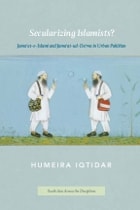
Secularizing Islamists?
Jama'at-e-Islami and Jama'at-ud-Da'wa in Urban PakistanHumeira Iqtidar
University of Chicago Press, 2011
Secularizing Islamists? provides an in-depth analysis of two Islamist parties in Pakistan, the highly influential Jama‘at-e-Islami and the more militant Jama‘at-ud-Da‘wa, widely blamed for the November 2008 terrorist attack in Mumbai, India. Basing her findings on thirteen months of ethnographic work with the two parties in Lahore, Humeira Iqtidar proposes that these Islamists are involuntarily facilitating secularization within Muslim societies, even as they vehemently oppose secularism.
This book offers a fine-grained account of the workings of both parties that challenges received ideas about the relationship between the ideology of secularism and the processes of secularization. Iqtidar particularly illuminates the impact of women on Pakistani Islamism, while arguing that these Islamist groups are inadvertently supporting secularization by forcing a critical engagement with the place of religion in public and private life. She highlights the role that competition among Islamists and the focus on the state as the center of their activity plays in assisting secularization. The result is a significant contribution to our understanding of emerging trends in Muslim politics.
Security. Cooperation. Governance.
The Canada-United States Open Border ParadoxChristian Leuprecht and Todd Hataley, Editors
University of Michigan Press, 2023
The book’s findings show that border governance straddles multiple regional, sectoral, and security scales in ways rarely documented in such detail. These developments have precipitated an Open Border Paradox: extensive, regionally varied flows of trade and people have resulted in a series of nested but interdependent security regimes that function on different scales and vary across economic and policy sectors. These realities have given rise to regional and sectoral specialization in related security regimes. For instance, just-in-time automotive production in the Great Lakes region varies considerably from the governance of maritime and intermodal trade (and port systems) on the Atlantic and Pacific coasts, which in turn is quite different from commodity-based systems that manage diverse agricultural and food trade in the Canadian Prairies and US Great Plains.
The paradox of open borders and their legitimacy is a function of robust bilateral and multilevel governance based on effective partnerships with substate governments and the private sector. Effective policy accounts for regional variation in integrated binational security and trade imperatives. At the same time, binational and continental policies are embedded in each country’s trade and security relationships beyond North America.
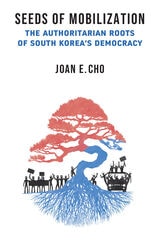
Seeds of Mobilization
The Authoritarian Roots of South Korea's DemocracyJoan E. Cho
University of Michigan Press, 2024
By using original subnational protest event datasets, government publications, oral interviews, and publications from labor and student movement organizations, Joan E. Cho takes a long view of democratization that incorporates the decades before and after South Korea’s democratic transition. She demonstrates that Korea’s democratization resulted from a combination of factors from below and from above, and that authoritarian development itself was a hidden root cause of democratic development in South Korea. Seeds of Mobilization shows how socioeconomic development did not create a steady pressure toward democracy but acted as a “double-edged sword” that initially stabilized autocratic regimes before destabilizing them over time.

Seeing Like a Citizen
Decolonization, Development, and the Making of Kenya, 1945–1980Kara Moskowitz
Ohio University Press, 2019
In Seeing Like a Citizen, Kara Moskowitz approaches Kenya’s late colonial and early postcolonial eras as a single period of political, economic, and social transition. In focusing on rural Kenyans—the vast majority of the populace and the main targets of development interventions—as they actively sought access to aid, she offers new insights into the texture of political life in decolonizing Kenya and the early postcolonial world.
Using multisited archival sources and oral histories focused on the western Rift Valley, Seeing Like a Citizen makes three fundamental contributions to our understanding of African and Kenyan history. First, it challenges the widely accepted idea of the gatekeeper state, revealing that state control remained limited and that the postcolonial state was an internally varied and often dissonant institution. Second, it transforms our understanding of postcolonial citizenship, showing that its balance of rights and duties was neither claimed nor imposed, but negotiated and differentiated. Third, it reorients Kenyan historiography away from central Kenya and elite postcolonial politics. The result is a powerful investigation of experiences of independence, of the meaning and form of development, and of how global political practices were composed and recomposed on the ground in local settings.
Seeing Through Madness
Essays in Crazy TimesW. J. T. Mitchell
University of Chicago Press, 2027
An insightful reconsideration of our historical moment seen through the lens of madness.
In Seeing Through Madness, W. J. T. Mitchell pursues the idea of “putting madness to work” by transforming it from an individual affliction—an illness to be treated—into a critical framework for understanding the human condition. The human species is now a danger to itself and others—the very definition of mental disorder in most societies. Therefore, it is time, Mitchell argues, for a fundamental reconsideration of madness, not only as a subject in media and the arts but more fundamentally as a “critical optic” on our historical moment. It is time to see through madness in all its variations, to see by means of it as a template for understanding, and to see it through to some form of wisdom.
While drawing a sense of urgency from Mitchell’s conviction that the whole world is experiencing a widespread political madness, the book specifically focuses on American psychoses and collective disorders, not least the country’s delusional exceptionalism.
Incisive, eclectic, and occasionally enraged, Mitchell’s essays are the guide we need to see us through crazy times.

Seeking Mandela
Peacemaking Between Israelis And PalestiniansHeribert Adam and Kogila Moodley
Temple University Press, 2005

Seeking Rights from the Left
Gender, Sexuality, and the Latin American Pink TideElisabeth Jay Friedman
Duke University Press, 2018
Contributors: Sonia E. Alvarez, María Constanza Diaz, Rachel Elfenbein, Elisabeth Jay Friedman, Niki Johnson, Victoria Keller, Edurne Larracoechea Bohigas, Amy Lind, Marlise Matos, Shawnna Mullenax, Ana Laura Rodríguez Gustá, Diego Sempol, Constanza Tabbush, Gwynn Thomas, Catalina Trebisacce, Annie Wilkinson
Seeking a Future for the Past
Space, Power, and Heritage in a Chinese CityPhilipp Demgenski
University of Michigan Press, 2024
Seeking a New Majority
The Republican Party and American Politics, 1960-1980Robert Mason
Vanderbilt University Press, 2013
Seeking a New Majority assembles an international group of scholars to move beyond the ideas and activities of party leaders who have hitherto received the bulk of historical attention. It illuminates how the Republican Party expanded its regional base, especially in the South, appealed to new constituencies ranging from blue-collar workers to Christian fundamentalists, and enhanced the political appeal of conservatism. It also examines how Republicans engaged in a remarkable organizational and intellectual mobilization to challenge Democratic Party dominance--in search of a new majority.

Selected Letters of Edmund Burke
Edmund Burke
University of Chicago Press, 1984
Self-Rule
A Cultural History of American DemocracyRobert H. Wiebe
University of Chicago Press, 1995
American democracy arrived abruptly in the 19th century; it changed just as dramatically early in the 20th. Hence, Self-Rule divides the history of American democracy into two halves: a 19th century half covering the 1820s to the present, and a 20th century half, with a major transition from the 1890s to the 1920s between them. As Wiebe explains why the original democracy of the early 19th century represented a sharp break from the past, he recreates in vivid detail the way European visitors contrasted the radical character of American democracy with their own societies. He then discusses the operation of various 19th century democratic publics, including a nationwide public, the People. Finally, he places democracy's white fraternal world of equals in a larger environment where other Americans who differed by class, race, and gender, developed their own relations to democracy.
Wiebe then picks up the history of democracy in the 1920s and carries it to the present. Individualism, once integrated with collective self-governance in the 19th century, becomes the driving force behind 20th century democracy. During those same years, other ways of defining good government and sound public policy shunt majoritarian practices to one side. Late in the 20th century, these two great themes in the history of American democracy—individualism and majoritarianism—turn on one another in modern democracy's war on itself.
Finally, Self-Rule assesses the polarized state of contemporary American democracy. Putting the judgments of sixty-odd commentators from Kevin Phillips and E.J. Dionne to Robert Bellah and Benjamin Barber to the test of history, Wiebe offers his own suggestions on the meaning and direction of today's democracy. This sweeping work explains how the history of American democracy has brought us here and how that same history invites us to create a different future.
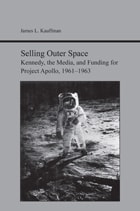
Selling Outer Space
Kennedy, the Media, and Funding for Project Apollo, 1961-1963James Kauffman
University of Alabama Press, 2009
Examines the Kennedy administration’s rhetorical campaign to persuade Congress and the public to adopt a manned flight to the moon. In so doing, the study addresses three key themes.
First, it illuminates the contrasting nature of technical and narrative arguments and explores how those arguments play different roles in public discussion of social policy. Second, the book examines how both the executive branch and the news media function to help set the agenda in American politics. Offering a case study of the increasingly complex relationship between the government and the media.
Finally, Selling Outer Space explores the power of technology to shape and direct human action.
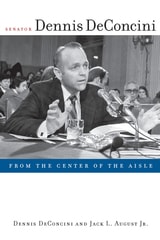
Senator Dennis DeConcini
From the Center of the AisleDennis DeConcini and Jack L. August, Jr.
University of Arizona Press, 2006
A vigilant centrist, who got results by building coalitions on both sides of the aisle, Senator DeConcini’s approach was not bound to strict party alliances but was deeply rooted in the independent political environment of Arizona. During his career, he sponsored legislation limiting the sale of assault weapons, which provoked the National Rifle Association. He confounded Democratic Party regulars by supporting Clarence Thomas during the controversial confirmation hearings and again split with his party in his support for William Rehnquist’s nomination to Chief Justice. In 1980 he voted for Ronald Reagan, but in 1993 he cast the swing vote for President Bill Clinton’s tax bill, which was strongly opposed by Republicans in Arizona.
This political memoir will be of interest to anyone concerned with the inner workings of the U.S. Senate or Arizona politics and offers relevant insights into today’s political climate.

Senator Howard Cannon of Nevada
A BiographyMichael Vernetti
University of Nevada Press, 2015
Born to a devout Mormon family in a small farming community in southwest Utah, Cannon served in the Army Air Force during World War II and emerged from the war as a hero. Soon he was part of the postwar migration of ambitious, adventurous Americans to the booming desert city of Las Vegas, where he practiced law and entered local politics. In 1958 he was elected to the U.S. Senate and joined a group of influential young Democratic senators who were to play a major role in shaping the country’s future. His service on the Aeronautical and Space Sciences Committee and the Armed Services Committee led to major changes in the air travel industry, including deregulation, and to increased support for national military preparedness.

Senator Leahy
A Life in ScenesPhilip Baruth
University Press of New England, 2017

Senator Thomas J. Walsh of Montana
Law and Public Affairs, from TR to FDRJ. Leonard Bates
University of Illinois Press, 1999
Walsh fought throughout his long career against corruption and monopoly power. During his early years as a lawyer-politician in Helena, he was often in conflict with the "Copper Kings" and other powerful figures. As a senator, he became an internationalist, working throughout the 1920s for naval disarmament, the World Court, the St. Lawrence Seaway, and the Kellogg-Briand Pact for the "outlawry" of war.
In his most celebrated coup, breaking open the Teapot Dome scandal of 1923-24, Walsh revealed that the secretary of the interior had accepted "loans" from oil men in return for leases of U.S. naval oil reserves. Working through the Public Lands Committee of the Senate, Walsh enjoyed support for his investigation from members of both parties, and the Supreme Court endorsed his interpretation of the scandal in 1927. Shortly before his death, he presided over the Democratic National Convention that nominated Franklin Roosevelt and served for a brief time as a key figure in the new leader's circle.
Drawing on archival sources of unprecedented depth, including personal letters between Walsh and his first wife, Elinor McClements Walsh, Bates's expansive study paints a richly detailed portrait of an influential and principled figure whose political career spanned world war, depression, and the administrations of six presidents.
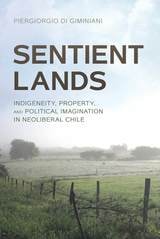
Sentient Lands
Indigeneity, Property, and Political Imagination in Neoliberal ChilePiergiorgio Di Giminiani
University of Arizona Press, 2018
Sentient Lands is a historically grounded ethnography of the Mapuche people’s engagement with state-run reconciliation and land-restitution efforts. Piergiorgio Di Giminiani analyzes environmental relations, property, state power, market forces, and indigeneity to illustrate how land connections are articulated, in both landscape experiences and land claims. Rather than viewing land claims as simply bureaucratic procedures imposed on local understandings and experiences of land connections, Di Giminiani reveals these processes to be disputed practices of world making.
Ancestral land formation is set in motion by the entangled principles of Indigenous and legal land ontologies, two very different and sometimes conflicting processes. Indigenous land ontologies are based on a relation between two subjects—land and people—both endowed with sentient abilities. By contrast, legal land ontologies are founded on the principles of property theory, wherein land is an object of possession that can be standardized within a regime of value. Governments also use land claims to domesticate Indigenous geographies into spatial constructs consistent with political and market configurations.
Exploring the unexpected effects on political activism and state reparation policies caused by this entanglement of Indigenous and legal land ontologies, Di Giminiani offers a new analytical angle on Indigenous land politics.

Separate Games
African American Sport behind the Walls of SegregationDavid K. Wiggins
University of Arkansas Press, 2017
Winner of the 2017 NASSH Book Award for best edited collection.
The hardening of racial lines during the first half of the twentieth century eliminated almost all African Americans from white organized sports, forcing black athletes to form their own teams, organizations, and events. This separate sporting culture, explored in the twelve essays included here, comprised much more than athletic competition; these “separate games” provided examples of black enterprise and black self-help and showed the importance of agency and the quest for racial uplift in a country fraught with racialist thinking and discrimination.
The significance of this sporting culture is vividly showcased in the stories of the Cuban Giants baseball team, basketball’s New York Renaissance Five, the Tennessee State Tigerbelles track-and-field team, black college football’s Turkey Bowl Classic, car racing’s Gold and Glory Sweepstakes, Negro League Baseball’s East-West All-Star game, and many more. These teams, organizations, and events made up a vibrant national sporting complex that remained in existence until the integration of sports beginning in the late 1940s. Separate Games explores the fascinating ways sports helped bind the black community and illuminate race pride, business acumen, and organizational abilities.

Serbia under the Swastika
A World War II OccupationAlexander Prusin
University of Illinois Press, 2017
Deftly merging political and social history, Serbia under the Swastika looks at the interactions between Germany’s occupation policies, the various forces of resistance and collaboration, and the civilian population. Alexander Prusin reveals a German occupying force at war with itself. Pragmatists intent on maintaining a sedate Serbia increasingly gave way to Nazified agencies obsessed with implementing the expansionist racial vision of the Third Reich. As Prusin shows, the increasing reliance on terror catalyzed conflict between the nationalist Chetniks, communist Partisans, and the collaborationist government. Prusin unwraps the winding system of expediency that at times led the factions to support one-another against the Germans--even as they fought a ferocious internecine civil war to determine the future of Yugoslavia.
Comprehensive and judicious, Serbia under the Swastika is a rare English-language foray into the still-fraught history of Serbia in World War II.

Seriously Funny
Mexican Political Jokes as Social ResistanceSamuel Schmidt, Translated by Adam Schmidt
University of Arizona Press, 2014
Now available in English for the first time, Seriously Funny is a groundbreaking work. Its goal is to examine the ways in which political humor—including nicknames, anagrams, poems, and parodies of religious prayers, in addition to jokes—has developed and operated in one country over more than four centuries. Although political humor thrives in Mexico, it is often cleverly encoded so that it doesn’t appear to be critical of government policies or officials. But, writes Samuel Schmidt, that is precisely its purpose: to question the actions and assumptions of the party in power. Schmidt argues persuasively that political jokes are acts of minor rebellion: their objective is not to overthrow a government but to correct its mistakes.
Shadow of Things to Come
Kossi Efoui
Seagull Books, 2013
In an unnamed African nation, the people are subject to a state of perpetual warfare and to an Orwellian abuse of language that strips from language its meaning and renders life senseless. And in a bare room lit only by moonlight, a young man hides, waiting for the mysterious crocodile-men to come and help him escape from the violent tyranny of the state. While he waits, he tells his story.
This is Kossi Efoui’s catastrophic and carnivalesque dreamscape, the dark setting of The Shadow of Things to Come. Here, men and women are taken in the night, spirited away from their families, and sent to plantation penal colonies to be worked to the edge of madness. When they return, they are empty shells, their lost time referred to as the “Time of Annexation.” But though his parents were taken, our protagonist survived, first in the care of a quirky benefactress named Mama Maize, then under the wing of the state itself, as a student at one of its elite schools. When he meets a bookseller named Axis Kemal, however, he has found a surrogate father, an eccentric and wise man who can bring him out of the meaningless confusion and tell him the truth about the society he lives in.
Through his characters, Efoui speaks out against atrocity and the abuse of power, but more, he writes against political rhetoric and the destruction of meaning by government. This novel is a love letter to language and, in Chris Turner’s dazzling translation, it becomes a stunning introduction for English-language readers to an exciting new talent.

Shame and Endurance
The Untold Story of the Chiricahua Apache Prisoners of WarH. Henrietta Stockel
University of Arizona Press, 2004
First removed from Arizona to Florida, the prisoners were eventually relocated to Mount Vernon Barracks in Alabama, where, in the words of one Apache, "We didn’t know what misery was until they dumped us in those swamps." Pulmonary disease took its toll—by 1894, disease had killed nearly half of the Apaches—and after years of pressure from Indian rights activists and bureaucratic haggling, Fort Sill in Oklahoma was chosen as a more healthful location. Here they were given the opportunity to farm, and here Geronimo, who eventually converted to Christianity, died of pneumonia in 1909 at the age of 89, still a prisoner of war. In the meantime, many Apache children had been removed to Carlisle, Pennsylvania, for education—despite earlier promises that families would not be split up—and most eventually lost their cultural identity.
Henrietta Stockel has combed public records to reconstruct this story of American shame and Native endurance. Unabashedly speaking on behalf of the Apaches, she has framed these documents within a readable narrative to show how exasperated public officials, eager to openly demonstrate their superiority over "savages" who had successfully challenged the American military for years, had little sympathy for the consequences of their confinement. Although the Chiricahua Apaches were not alone in losing their ancestral homelands, they were the only American Indians imprisoned for so long a time in an environment that continually exposed them to illnesses against which they had no immunity, devastating families even more than warfare. Shame and Endurance records events that ought never to be repeated—and tells a story that should never be forgotten.
Shameful Victory
The Los Angeles Dodgers, the Red Scare, and the Hidden History of Chavez RavineJohn H. M. Laslett
University of Arizona Press, 2015
John H. M. Laslett offers a new interpretation of the Chavez Ravine tragedy, paying special attention to the early history of the barrio, the reform of Los Angeles's destructive urban renewal policies, and the influence of the evictions on the collective memory of the Mexican American community.
In addition to examining the political decisions made by power brokers at city hall, Shameful Victory argues that the tragedy exerted a much greater influence on the history of the Los Angeles civil rights movement than has hitherto been appreciated. The author also sheds fresh light on how the community grew, on the experience of individual home owners who were evicted from the barrio, and on the influence that the event had on the development of recent Chicano/a popular music, drama, and literature.
Shanghai Rising
State Power and Local Transformations in a Global MegacityXiangming Chen
University of Minnesota Press, 2009
Analyzing a Chinese city’s dazzling rise to global megacity status
Until around 1990, Shanghai was China’s premier but sluggish industrial center. Now at the beginning of the twenty-first century, the joint impact of global forces and state power has turned Shanghai into a dynamic megacity. Shanghai’s remarkable growth in economy, infrastructure, and global presence has prompted questions about the Shanghai “miracle.” This collection places the city’s unprecedented rise in a rare comparative examination of U.S. cities, as well as with Asian megacities Singapore and Hong Kong, providing a nuanced account of how Shanghai’s politics, economy, society, and space have been transformed by macro- and micro-level forces.
Contributors: Stephen W. K. Chiu, Chinese U of Hong Kong; K. C. Ho, National U of Singapore; John D. Kasarda, U of North Carolina; Hanlong Lu, Shanghai Academy of Social Sciences; Tai-lok Lui, Chinese U of Hong Kong; Ann R. Markusen, U of Minnesota; Anthony M. Orum, U of Illinois, Chicago; Yuan Ren, Fudan U Shanghai; Saskia Sassen, Columbia U; Jiaming Sun, Texas A&M U, Commerce; Fulong Wu, Cardiff U; Pingkang Yu, George Washington U; Tingwei Zhang, U of Illinois, Chicago; Zhenhua Zhou, Development Research Center, Shanghai Municipal Government.
Shantytown Protest in Pinochet's Chile
Cathy Lisa Schneider
Temple University Press, 1995
Shaped by the State
Toward a New Political History of the Twentieth CenturyEdited by Brent Cebul, Lily Geismer, and Mason B. Williams
University of Chicago Press, 2019
Brent Cebul, Lily Geismer, and Mason B. Williams have brought together first-rate scholars from a wide range of subfields who are making structures of state power—not moments of crisis or partisan realignment—integral to their analyses. All of the contributors see political history as defined less by elite subjects than by tensions between state and economy, state and society, and state and subject—tensions that reveal continuities as much as disjunctures. This broader definition incorporates investigations of the crosscurrents of power, race, and identity; the recent turns toward the history of capitalism and transnational history; and an evolving understanding of American political development that cuts across eras of seeming liberal, conservative, or neoliberal ascendance. The result is a rich revelation of what political history is today.

Sharing the Balance of Power
An Examination of Shared Power in the Michigan House of Representatives, 1993-1994Daniel Loepp
University of Michigan Press, 1999
Like national politicians, state legislators all too often focus on partisanship instead of policy making, engaging themselves in rancorous debate that achieves little beyond gridlock. However, during one short period in Michigan's history, legislators stopped bickering and focused on forging compromise. Daniel Loepp's Sharing the Balance of Power chronicles the 87th Michigan Legislature (1993-1994), in which Republicans and Democrats successfully shared power.
In 1992, Michigan voters elected exactly fifty-five Republicans and fifty-five Democrats to the state house. As a result, the two parties each elected a co-speaker, and a shared power agreement was forged. Given the history of intense partisanship in the state house, political pundits predicted that any plan for shared power would disintegrate within months. What resulted instead was one of the most productive legislatures in Michigan history.
Author Daniel Loepp, chief of staff to Democratic Co-Speaker Curtis Hertel at the time, skillfully takes the reader "inside" the State Capitol, examining the key policy debates (including school finance reform), important personalities, and difficult negotiations. Loepp's balanced presentation is testimony to the two years of bi-partisan cooperation in which he took part.
In an age of public cynicism about the legislative process, Daniel Loepp offers the reader a refreshing story about two co-speakers and their 108 colleagues who came together in the spirit of bi-partisan representation to successfully serve their constituents, the people of Michigan.
Daniel Loepp is a partner in the firm of Karoub Associates, Michigan's oldest multi-client lobbying firm.
Shining and Other Paths
War and Society in Peru, 1980-1995Steve J. Stern, ed.
Duke University Press, 1998
The contributors—a team of Peruvian and U.S. historians, social scientists, and human rights activists—explore the origins, social dynamics, and long-term consequences of the effort by Shining Path to effect an armed communist revolution. The book begins by interpreting Shining Path’s emergence and decision for war as one logical culmination, among several competing culminations, of trends in oppositional politics and social movements. It then traces the experiences of peasants and refugees to demonstrate how human struggle and resilience came together in grassroots determination to defeat Shining Path, and explores the unsuccessful efforts of urban shantytown dwellers, as well as rural and urban activists, to build a “third path” to social justice. Integral to this discussion is an examination of women’s activism and consciousness during the years of the crisis. Finally, this book analyzes the often paradoxical and unintended legacies of this tumultuous period for social and human rights movements, and for presidential and military leadership in Peru.
Extensive field research, broad historical vision, and strong editorial coordination enable the authors to write a coherent and deeply humanistic account, one that draws out the inner tragedies, ambiguities, and conflicts of the war.
Providing historically grounded explication of the conflicts that reshaped contemporary Peru, Shining and Other Paths will be widely read by Latin Americanists, historians, anthropologists, gender theorists, sociologists, political scientists, and human rights activists.
Contributors. Jo-Marie Burt, Marisol de la Cadena, Isabel Coral Cordero, Carlos Iván Degregori, Iván Hinojosa, Carlos Basombrío Iglesias, Florencia E. Mallon, Nelson Manrique, Hortensia Muñoz, Enrique Obando, Patricia Oliart, Ponciano del Pino H., José Luis Rénique, Orin Starn, Steve J. Stern

Short-Changed?
South Africa since ApartheidColin Bundy
Ohio University Press, 2015
What have been the most significant developments—political, social, economic—in South Africa since 1994? How much has changed since the demise of apartheid, and how much remains stubbornly the same? Should one celebrate a robust democracy now two decades old, or lament the corrosive effects of factionalism, greed, and corruption on political life? Colin Bundy tries to answer such questions, while avoiding simplistic or one-sided assessments of life under Mandela, Mbeki, and Zuma. He recognizes real advances under ANC rule but also identifies the limits and contradictions of such progress. Bundy demonstrates, too, how the country’s past permeates the present, complicating and constraining the politics of transition, so that genuine transformation has been short-changed.
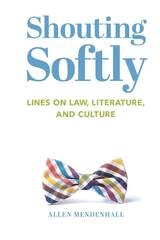
Shouting Softly
Lines on Law, Literature, and CultureAllen Mendenhall
St. Augustine's Press, 2020
The work is given in three parts. The first section on law explores legal minds, rules and commentary on seminal jurisprudence. The second part explores literature and the influence of the writer and the disconcerting truths stories often seek to convey. Thirdly, Mendenhall delves into culture and the more obvious situations wherein we gain insight into our manner of living, and here Mendenhall exudes a Southern accent that in no way compromises his universal bearings. One of the highlights is his echo of Larry Seidentop’s question: “If we in the West do not understand the moral depth of our own tradition, how can we hope to shape the conversation of mankind?” This is all the more meaningful given that Mendenhall is a member of the Millennial generation, and part of the intellectual minority who sees the urgency of “a studied appreciation for nuanced story and linguistic narrative.”