Results by title
129 books match the query 'Press coverage' and 9 start with s
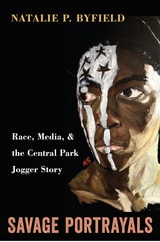
Savage Portrayals
Race, Media and the Central Park Jogger StoryNatalie Byfield
Temple University Press, 2014

Second Wounds
Victims’ Rights and the Media in the U.S.Carrie A. Rentschler
Duke University Press, 2011
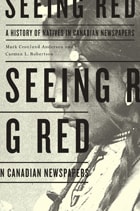
Seeing Red
A History of Natives in Canadian NewspapersMark Cronlund Anderson
University of Manitoba Press, 2011
Seeing Through The Media
Jeffords, Susan
Rutgers University Press, 1994
Looking to old and new technologies for mass communication-from CNN to comic books, from international news agencies to tabloids, from bomb sights to the Super Bowl-the essays in this collection show the ways in which public information is shaped, packaged, and disseminated.
Seeing Through The Media
The Persian Gulf WarJeffords, Susan
Rutgers University Press, 1994
Looking to old and new technologies for mass communication-from CNN to comic books, from international news agencies to tabloids, from bomb sights to the Super Bowl-the essays in this collection show the ways in which public information is shaped, packaged, and disseminated.
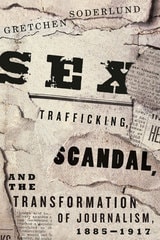
Sex Trafficking, Scandal, and the Transformation of Journalism, 1885-1917
Gretchen Soderlund
University of Chicago Press, 2013

Silencing the Opposition
Antinuclear Movements and the Media in the Cold WarAndrew Rojecki
University of Illinois Press, 1999
We can trace many important strategic decisions to compelling official fictions such as Kennedy's "missile gap" and Reagan's "window of vulnerability." Over the years, antinuclear movements have had mixed success debunking these fictions, raising public consciousness, and reorienting government policy.
Andrew Rojecki explores links between nuclear arms policy and the visibility of opposition groups in the media. He pays particular interest to two cycles of protest: the test ban movement of the Eisenhower and the Kennedy administrations and the Reagan-era nuclear freeze movement. As Rojecki shows, space devoted to the opposition as well as the quality of the coverage varied widely from the first to the second period. The change reflected different climates of public opinion and foreign policy but also a subtle shift in political culture that undermined the legitimacy of citizen protest. As the rationalized policymaking of government agencies, think tanks, and university departments increasingly restricted public debate, the potential for citizens to influence nuclear politics became more circumscribed while nuclear weapons continued to proliferate.
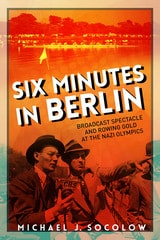
Six Minutes in Berlin
Broadcast Spectacle and Rowing Gold at the Nazi OlympicsMichael J Socolow
University of Illinois Press, 2016
The Berlin Games matched cutting-edge communication technology with compelling sports narrative to draw the blueprint for all future sports broadcasting. A global audience--the largest cohort of humanity ever assembled--enjoyed the spectacle via radio. This still-novel medium offered a "liveness," a thrilling immediacy no other technology had ever matched. Michael J. Socolow's account moves from the era's technological innovations to the human drama of how the race changed the lives of nine young men. As he shows, the origins of global sports broadcasting can be found in this single, forgotten contest. In those origins we see the ways the presentation, consumption, and uses of sport changed forever.
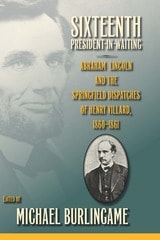
Sixteenth President-in-Waiting
Abraham Lincoln and the Springfield Dispatches of Henry Villard, 1860–1861Edited by Michael Burlingame
Southern Illinois University Press, 2018
Between Abraham Lincoln’s election in November 1860 and his departure for Washington three months later, journalist Henry Villard sent scores of dispatches from Springfield, Illinois, to various newspapers describing the president-elect’s doings, quoting or paraphrasing his statements, chronicling events in the Illinois capital, and analyzing the city’s mood. With Sixteenth President-in-Waiting Michael Burlingame has collected all of these dispatches in one insightful and informative volume.
Best known as a successful nineteenth-century railroad promoter and financier, German-born Henry Villard (1835–1900) was also among the most conscientious and able journalists of the 1860s. The dispatches gathered in this volume constitute the most intensive journalistic coverage that Lincoln ever received, for Villard filed stories from the Illinois capital almost daily to the New York Herald, slightly less often to the Cincinnati Commercial, and occasionally to the San Francisco Bulletin.
Lincoln welcomed Villard and encouraged him to ask questions, as he was the only full-time correspondent for out-of-town papers. He spoke with inside sources, such as Lincoln’s private secretaries John G. Nicolay and John Hay, devoted friends like Jesse K. Dubois and Stephen T. Logan, political leaders like Governor Richard Yates, and journalists like William M. Springer and Robert R. Hitt.
Villard boasted that he did Lincoln a service by scaring off would-be office seekers who, fearing to see their names published in newspapers, gave up plans to visit the Illinois capital to badger the president-elect. Villard may have done an even greater service by publicizing Lincoln’s views on the secession crisis.
His little-known coverage of the 1858 Lincoln-Douglas Senate race, translated from the German for the first time, is included as an appendix. At the time Villard was an ardent Douglas supporter, and his reports criticized Lincoln.
Not only informative but also highly readable, Villard’s vivid descriptions of Lincoln’s appearance, daily routine, and visitors, combined with fresh information about Springfielders, state political leaders, and the capital, constitute an invaluable resource.