119 books match the query 'Protest movements' and 8 start with s

cover of Saving Wyoming's Hoback: The Grassroots Movement that Stopped Natural Gas Development

Saving Wyoming's Hoback

The Grassroots Movement that Stopped Natural Gas Development

Florence R. Shepard and Susan L. Marsh

University of Utah Press, 2016

Winner of the Wallace Stegner Prize in Environmental Humanities

In late 2012, more than one hundred people gathered to hear a long-awaited announcement: the Trust for Public Land had succeeded in preventing natural gas development in the remote Hoback Basin of Wyoming. This landmark agreement—purchasing leases from Plains Exploration Company—would not have come to pass without the extraordinary will and expertise of local citizens. Unchallenged, the proposed natural gas development in the national forest near the hamlet of Bondurant, Wyoming, would have brought roads, pipelines, water and air pollution, and a complete change in the character of the landscape and its communities.
     Saving Wyoming's Hoback tells the story of the Hoback and Noble Basins in northwestern Wyoming and of the citizens who worked together to protect the land that they loved. Retired schoolteachers, mine workers, big game hunting outfitters, and other stakeholders brought together their knowledge of the area to achieve a single goal: to prevent the industrialization of the wild country that was their home. While some disagreed about specifics, their work as individuals and as coalitions is an inspiring example of how determined citizens can make a difference. 
[more]
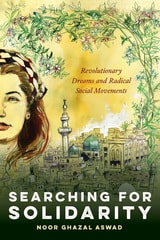
cover of Searching for Solidarity: Revolutionary Dreams and Radical Social Movements

Searching for Solidarity

Revolutionary Dreams and Radical Social Movements

Noor Ghazal Aswad

The Ohio State University Press, 2025

In Searching for Solidarity, Noor Ghazal Aswad explores how the emancipatory qualities of transnational revolutionary struggle are often denied, misunderstood, and erased. Drawing on the stories of those in struggle, Searching for Solidarity reimagines solidarity as an affective, ethical, and political capacity that can thrive amid today’s volatile “political economy of emotion”—an environment marked by mistrust, fake news, and disinformation campaigns targeting those in resistance. At the heart of this book is the “radical subject,” which refers to those revolting against repressive forces to achieve liberatory change at the risk of death, injury, or disappearance. These radical subjects offer a new foundation for critical theory—one that rejects “negative solidarity,” the tendency to acquiesce to power or distance oneself from those fighting against systemic injustice. By immersing readers in the testimony, memory, and hopes of these subjects, each chapter reveals solidarity as an affective force capable of cutting through distortive narratives and binding us in a cross-cultural, decolonizing, and nonhierarchical collectivity. Solidarity, through this lens, emerges as a transformative stance that compels us to, as Yassin al-Haj Saleh writes, become “partners in word and deed to change power.”
[more]
cover of Secret Manoeuvres in the Dark: Corporate and Police Spying on Activists

Secret Manoeuvres in the Dark

Corporate and Police Spying on Activists

Eveline Lubbers

Pluto Press, 2012

The exposure of undercover policeman Mark Kennedy in the eco-activist movement revealed how the state monitors and undermines political activism. This book shows the other grave threat to our political freedoms - undercover activities by corporations.

Secret Manoeuvres in the Dark documents how corporations are halting legitimate action and investigation by activists. Using exclusive access to previously confidential sources, Eveline Lubbers shows how companies such as Nestlé, Shell and McDonalds use covert methods to evade accountability. She argues that corporate intelligence gathering has shifted from being reactive to pro-active, with important implications for democracy itself.

Secret Manoeuvres in the Dark will be vital reading for activists, investigative and citizen journalists, and all who care about freedom and democracy in the 21st century.

[more]
cover of Shantytown Protest in Pinochet's Chile

Shantytown Protest in Pinochet's Chile

Cathy Lisa Schneider

Temple University Press, 1995
"Shantytown Protest is one of the richest and most interesting accounts of popular mobilizations in urban Latin America that I have ever seen. The description of popular resistance under conditions of extreme material scarcity and ruthless military repression is fascinating. The book is a major contribution to the research literatures on Third World urbanization and Latin America politics." --Alejandro Portes, John Dewey Professor of Sociology and International Relations, The Johns Hopkins University In 1973 armed forces launched a violent attack against the Chilean presidential palace and Santiago's slums and shantytowns. For ten years, only the Catholic Church was able to defy the military regime. Then, in 1983, students, workers, and shantytown residents stormed the streets demanding the resignation of Augusto Pinochet. The protests raged for three years and, in 1989, democratic elections were held. The following year a new civilian government took office. Cathy Lisa Schneider examines this democratic transition from the bottom up, looking at the struggles of poor people to create and sustain organized resistance, to risk their lives to fight tyranny. Both an oral history based on over a hundred interviews collected in shantytowns and a comparative sociological study that explores political differences among different shantytowns in Santiago, this book analyzes the context in which the urban poor make choices about their lives, and the political histories that shape their vision. "With an anthropologist's sympathetic ear, an activist's reasoned zeal, a social scientist's theoretical sensibility, and a journalist's deft pen, Cathy Schneider has brought to life Chile's burgeoning shantytown politics of the 1980s. From the overthrow of Allende to the fall of Pinochet, she chronicles and explains the swirling of popular struggles. Read her and learn." --Charles Tilly, Director, Center for Studies of Social Change, New School for Social Research "Cathy Schneider's book shows how democratic nation-building depends not only on how elites maneuver, but crucially on how ordinary citizens mobilize on behalf of democracy. She has successfully brought together Latin American studies and social science, the human drama of the shantytown protests with the analytical perspectives of social movement studies." --Sidney Tarrow, Professor of Government, Cornell University
[more]
cover of Social Controversy and Public Address in the 1960s and Early 1970s: A Rhetorical History of the United States, Volume IX

Social Controversy and Public Address in the 1960s and Early 1970s

A Rhetorical History of the United States, Volume IX

Richard J. Jensen

Michigan State University Press, 2017
The period between the 1960s and 1970s is easily one of the most controversial in American history. Examining the liberal movements of the era as well as those that opposed them, this volume offers analyses of the rhetoric of leaders, including those of the civil rights movement, the Chicano movement, the gay rights movement, second-wave feminism, and conservative resistance groups. It also features an introduction that summarizes much of the significant research done by communication scholars on dissent in the 1960s and 1970s. This time period is still a fertile area of study, and this book provides insights into the era that are both provocative and illuminating, making it an essential read for anyone looking to learn more about this time in America.
[more]
cover of Solidarity And Contention: Networks Of Polish Opposition

Solidarity And Contention

Networks Of Polish Opposition

Maryjane Osa

University of Minnesota Press, 2003

Offers an innovative model for understanding how social movements occur in repressive societies

After a series of failed attempts at mobilizing society, Poland’s opposition sprang to surprising—and newly effective—life with the formation of the Solidarity trade union in 1980. If not for those past failures, this book suggests, Solidarity might never have succeeded. Solidarity and Contention deftly reconstructs the networks of protest in Communist Poland to show how waves of dissent during the 1950s, 1960s, and 1970s left an organizational residue that both instructed and enabled Solidarity and, ultimately, the Polish revolution.

Using newly available documentary sources, Maryjane Osa establishes links between activists during three waves of protest: 1954 to 1959, 1966 to 1970, and 1976 to 1980. She shows how political challengers, applying lessons drawn from past failures, developed an ideological formula to de-emphasize divisive issues and promote symbolic concerns, thus facilitating coalition building. Solidarity was therefore able to take advantage of a large opposition network already well in place before the founding of the union. An important case study in itself, the book also answers one of the most intriguing questions in social movement research: how can movements emerge in authoritarian states—where media are state controlled, the rights of assembly and speech are restricted, and the risks of collective action are high?
[more]
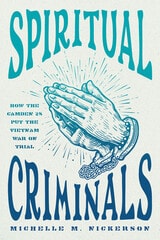
cover of Spiritual Criminals: How the Camden 28 Put the Vietnam War on Trial

Spiritual Criminals

How the Camden 28 Put the Vietnam War on Trial

Michelle M. Nickerson

University of Chicago Press, 2024

A surprising look at the 28 Catholic radicals who raided a draft board in 1971—and got away with it.

When the FBI arrested twenty-eight people in connection to a break-in at a Camden, New Jersey, draft board in 1971, the Bureau celebrated. The case should have been an easy victory for the department—the perpetrators had been caught red-handed attempting to destroy conscription documents for draftees into the Vietnam War. But the results of the trial surprised everyone, and in the process shook the foundations of American law, politics, and religion.

In Spiritual Criminals, Michelle M. Nickerson shares a complex portrait of the Camden 28, a passionate group of grassroots religious progressives who resisted both their church and their government as they crusaded against the Vietnam War. Founded by priests, nuns, and devout lay Catholics, members of this coalition accepted the risks of felony convictions as the cost of challenging the nation’s military-industrial complex and exposing the illegal counterintelligence operations of the FBI. By peeling away the layers of political history, theological traditions, and the Camden 28’s personal stories, Nickerson reveals an often-unseen spiritual side of the anti-war movement. At the same time, she probes the fractures within the group, detailing important conflicts over ideology, race, sex, and gender that resonate in the church and on the political Left today.
 
[more]
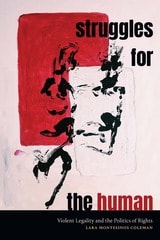
cover of Struggles for the Human: Violent Legality and the Politics of Rights

Struggles for the Human

Violent Legality and the Politics of Rights

Lara Montesinos Coleman

Duke University Press, 2024

In Struggles for the Human, Lara Montesinos Coleman blends ethnography, political philosophy, and critical theory to reorient debates on human rights through attention to understandings of legality, ethics, and humanity in anticapitalist and decolonial struggle. Drawing on her extensive involvement with grassroots social movements in Colombia, Coleman observes that mainstream expressions of human rights have become counterparts to capitalist violence, even as this discourse disavows capitalism’s deadly implications. She rejects claims that human rights are inherently tied to capitalism, liberalism, or colonialism, instead showing how human rights can be used to combat these forces. Coleman demonstrates that social justice struggles that are rooted in marginalized communities’ lived experiences can reframe human rights in order to challenge oppressive power structures and offer a blueprint for constructing alternative political economies. By examining the practice of redefining human rights away from abstract universals and contextualizing them within concrete struggles for justice, Coleman reveals the transformative potential of human rights and invites readers to question and reshape dominant legal and ethical narratives.
[more]