Results by title
1325 books match the query 'Psychology' and 90 start with s
Sacred Desire
Growing in Compassionate LivingNancy K. Morrison
Templeton Press, 2009
Is the call to spirituality embedded in human biology? Authors Nancy K. Morrison and Sally K. Severino draw on cutting-edge research, including the recent discovery of brain "mirror neurons" and the elucidation of the physiology of social affiliation and attachment, to make a bold case that we are, in fact, biologically wired to seek oneness with the divine. They have termed this innate urge "sacred Desire."
In their new book on the subject, ,em>Sacred Desire: Growing in Compassionate Living, Morrison and Severino, both highly esteemed academic psychiatrists, draw on neurophysiology, relationship studies, research on spiritual development, and psychotherapy to show how spirituality is intimately connected with our physical being. The authors offer several clinical examples of how recognizing sacred Desire can advance a person's healing and they provide an action plan for using Desire to move from fear to love of self, others, and all creation.
In addition to psychiatrists and neurophysiologists, who will undoubtedly welcome this significant contribution to their fields of study, Sacred Desire is sure to appeal as well to the much wider audience of spiritual seekers looking for intellectually and scientifically credible ways to understand spirituality in today's world.
Sacrifice Your Love
Psychoanalysis, Historicism, ChaucerL.O. Aranye Fradenburg
University of Minnesota Press, 2002
A long-awaited reevaluation of Chaucer through the lens of sacrifice by a major figure in medieval studies
Historicism and its discontents have long been central to the work of Louise Fradenburg, one of the world’s most original and provocative literary medievalists. Sacrifice Your Love brings this interest to bear on Chaucer’s writing and his world, rethought in light of a theory of sacrifice and its part in cultural production. Fradenburg writes the "history of the signifier"—a way of reading change in the symbolic order—and its role in making sacrifice enjoyable.
Sacrifice Your Love develops the idea that sacrifice is a mode of enjoyment—that our willingness to sacrifice our desire is actually a way of pursuing it. Fradenburg considers the implications of this idea for various problems important in medieval studies today—how to understand the religiosity of cultural forms, particularly chivalry, in the later Middle Ages and how to understand the ethics of Chaucer’s famously nondidactic poetry—as well as in other fields of inquiry. A major rethinking of Chaucer, Sacrifice Your Love works in depth as well as across a broad range of topics from medievalism to psychoanalysis, advancing both the theory and practice of a new kind of historicist approach.
Sadomasochism in Everyday Life
The Dynamics of Power and PowerlessnessChancer, Lynn S.
Rutgers University Press, 1992
Lynn Chancer advances the provocative thesis that sadomasochism is far more prevalent in contemporary societies like the United States than we realize. According to Chancer, sexual sadomasochism is only the best-known manifestation of what is actually a much more broadly based social phenomenon. Moving from personal relationships to school, the workplace, and other interactions, Chancer uses a variety of examples that are linked by a recurrent pattern of behavior. She goes beyond the predominantly individualistic and psychological explanations generally associated with sadomasochism (including those popularized in the "how to" literature of the recent Women Who Love Too Much genre) toward a more sociological interpretation. Chancer suggests that the structure of societies organized along male-dominated and capitalistic lines reflects and perpetuates a sadomasochistic social psychology, creating a culture steeped in everyday experiences of dominance and subordination.
In the first part of the book, Chancer discusses the prevalence of sadomasochistic cultural imagery in contemporary America and examines sadomasochism through several perspectives. She develops a set of definitional traits both through existential analysis of an instance of S/M sex and by incorporating a number of Hegelian and psychoanalytic concepts. In the second part of the book, she places sadomasochism in a broader context by exploring whether and how it appears in the workplace and how it relates to gender and race.
Sanity Plea
Schizophrenia in the Novels of Kurt VonnegutLawrence R. Broer
University of Alabama Press, 1994

Sardonic Smile
Nonverbal Behavior in Homeric EpicDonald Lateiner
University of Michigan Press, 1998

Savage Theory
Cinema as Modern MagicRachel O. Moore
Duke University Press, 2000
Moore mines the theories of language, spectatorship, and cinematic expression in the writings of Vachel Lindsay, Sergei Eisenstein, Siegfried Kracauer, and Walter Benjamin, among others. Illuminating the links between these theorists’ preoccupations with cinema as a form of primal communication and the numbing effects of modernity, she demonstrates how movies are uniquely able to negotiate the fragmentary and isolating nature of a modern world. In constructing an alternative to cognitive, psychoanalytic, and ideological approaches to film analysis, Moore provides eye-opening discussions of films such as Kenneth Anger’s Scorpio Rising, Hollis Frampton’s Nostalgia, and Robert Bresson’s l’Argent. Drawing from Marx’s theory of the commodity and Lukács’s work on second nature, she outlines the fetish character of the film image and reveals the emergence of the camera as a magical tool replete with animistic powers otherwise lost in the storm of progress.
Bound to influence the way future scholars think about the connection between modernism and primitivism, as well as the role of cinema therein during the early twentieth century, Savage Theory will be welcomed by scholars of film theory and anthropology and will also appeal to a wider cultural studies audience.
Saving Face
The Emotional Costs of the Asian Immigrant Family MythAngie Y. Chung
Rutgers University Press, 2016

Saying What We Mean
Implicit Precision and the Responsive OrderSelected Works by Eugene T. Gendlin, Edited by Edward S. Casey and Donata M. Schoeller; Foreword by Edward S. Casey
Northwestern University Press, 2018
The first collection of Eugene T. Gendlin’s groundbreaking essays in philosophical psychology, Saying What We Mean casts familiar areas of human experience, such as language and feeling, in a radically different light. Instead of the familiar scientific emphasis on what is conceptually explicit, Gendlin shows that the implicit also comprises a structure that can be made available for recognition and analysis.
Developing the traditions of phenomenology, existentialism, and pragmatism, Gendlin forges a new path that synthesizes contemporary evolutionary theory, cognitive psychology, and philosophical linguistics.
Scandalous Practices
Homosexuality, Male Prostitution, and Sexual Citizenship in Post-Fascist ItalyAlessio Ponzio
Temple University Press, 2027
From the 1940s to the 1970s, homosexual men in Italy began to express themselves authentically after years of silence under Fascist repression. In Scandalous Practices, Alessio Ponzio deftly recounts the socio-cultural shifts that occurred for queer Italians during this period.
In tabloids and other publications, journalists sensationalized same-sex male prostitution, dramatized scandalous homosexual murders, and portrayed homosexuality as devious, dangerous, and threatening to the “new” post-war masculinity. Homosexual Italians responded to this public shaming and these negative stereotypes through resistance. As part of an ongoing struggle for gender and sexual equality, they established networks and created public discussions that engendered pride, rights awareness, and a political commitment to emancipation.
Ponzio meticulously details how Italy as a nation and culture dealt with emerging representation of queer sexuality through a reinvention that fomented self-understanding and self-representations. Instead of marginalizing it, the popular media unintentionally made homosexuality understandable to many who did not know what it was or could not make sense of their own desires. Scandalous Practices illustrates how this new sexual knowledge spread publicly across social classes and fostered the development of positive queer identities and communities.
In the series Sexuality Studies

Scapegoat
The Impact of Death-Fear on an American FamilyEric Bermann
University of Michigan Press, 1973
Roscoe A. was eight years old when psychologist Eric Bermann first met him and his family. In kindergarten, Roscoe was considered highly creative, but his teachers also evaluated him as a potentially dangerous and destructive child capable of uncontrolled aggression toward other children. His parents denied the report. To them, Roscoe was a quiet, well-behaved boy.
In the second grade, over the objections and confusion of his parents, Roscoe was finally removed from public school and admitted to a day treatment facility where he could receive psychotherapy. Progress was minimal. After a year of effort, there was still no agreement on "Roscoe's problems." Mental health professionals despaired. They deemed his parents "unworkable" and labeled them "deniers" of their son's destructive behaviors. In turn, the parents blamed the professionals for therapeutic incompetencies and failure to help Roscoe, who, after all, "was never a problem at home."
The only alternative to terminating the therapeutic effort was to obtain new data and fresh insights into the dilemma. It was at this point that Dr. Bermann, a clinical researcher embarked on the study of family interaction, was consulted. He immediately arranged to visit them at home, where he could observe their interactions in situ. He hoped that, with them, he might shed some light on the discrepancy between reports of Roscoe's behavior.
Dr. Bermann visited the family and recorded his observations regularly and in detail throughout the next year. His analysis of these observations has resulted in this startling book--a research account that is both stunning in the originality of its method and searing in its documentation of an American family in crisis.
Scenes and Their Senses
Close Reading as Theory and MethodRobin Wagner-Pacifici
University of Chicago Press, 0
Makes the case for close readings of small scenes appearing in works of literature, scholarship, film, and visual art, showing how close attention to details can reveal the meaningful sociological action that often occurs on the margins.
Why do certain images, stories, and scenes impress upon us so strongly, inviting us to linger over the nuances of their meaning? In Scenes and Their Senses, sociologist Robin Wagner-Pacifici seeks to uncover the deeper meaning behind twenty “scenes” that have captured her theoretical imagination over her lifetime. Some of these come from classics of sociological theory or literature—Geertz, Habermas, Lévi-Strauss, Zola—and some are more contemporary, including the films Good Will Hunting and Luis Buñuel’s The Phantom ofLiberty. She seeks here to understand each scene less as examples of a given condition or conundrum and more as worlds in themselves.
As Wagner-Pacifici shows, close attention to the forms and flows of these minor, often quiet scenes reveals how meaningful action occurs in what might appear to be the margins or interstices of the bigger, noisier story being told. Providing an entry point to larger social conditions, relations, and change, the scenes analyzed here evoke sociological themes of belonging and exile, strength and weakness, cleanliness and pollution, reality and fantasy, courage and cowardice, and vision and obscurity, among others. As an ethnography of texts recalled from previous readings and revisited by the author, the scenes highlight the role of memory in sense-making. Furthermore, the activation of the scenes as a focused point of sustained contemplation functions as a remarkable bridge between method and theory.
Scenes from Bourgeois Life
Nicholas Ridout
University of Michigan Press, 2020
Schoolteacher
A Sociological StudyDan C. Lortie
University of Chicago Press, 2002
Science and Emotions after 1945
A Transatlantic PerspectiveEdited by Frank Biess and Daniel M. Gross
University of Chicago Press, 2014
In Science and Emotions after 1945, Frank Biess and Daniel M. Gross chronicle the curious resurgence of emotion studies and show that it was fueled by two very different sources: social movements of the 1960s and brain science. A central claim of the book is that the relatively recent neuroscientific study of emotion did not initiate – but instead consolidated – the emotional turn by clearing the ground for multidisciplinary work on the emotions. Science and Emotions after 1945 tells the story of this shift by looking closely at scientific disciplines in which the study of emotions has featured prominently, including medicine, psychiatry, neuroscience, and the social sciences, viewed in each case from a humanities perspective.

Science as a Carreer Choice
Theoretical and Empirical StudiesBernice T. Ediuson
Russell Sage Foundation, 1974

Scientific Knowledge
A Sociological AnalysisBarry Barnes, David Bloor, and John Henry
University of Chicago Press, 1996
The authors, all noted for their contributions to science studies, have organized this book so that each chapter examines a key step in the process of doing science. Using case studies from cognitive science, physics, and biology to illustrate their descriptions and applications of the social study of science, they show how this approach provides a crucial perspective on how science is actually done.
Scientific Knowledge will be of interest not only to those engaged in science studies, but also to anyone interested in the practice of science.
Sculpting the Self
Islam, Selfhood, and Human FlourishingMuhammad U. Faruque
University of Michigan Press, 2021
Sculpting the Self addresses “what it means to be human” in a secular, post-Enlightenment world by exploring notions of self and subjectivity in Islamic and non-Islamic philosophical and mystical thought. Alongside detailed analyses of three major Islamic thinkers (Mullā Ṣadrā, Shāh Walī Allāh, and Muhammad Iqbal), this study also situates their writings on selfhood within the wider constellation of related discussions in late modern and contemporary thought, engaging the seminal theoretical insights on the self by William James, Jean-Paul Sartre, and Michel Foucault. This allows the book to develop its inquiry within a spectrum theory of selfhood, incorporating bio-physiological, socio-cultural, and ethico-spiritual modes of discourse and meaning-construction. Weaving together insights from several disciplines such as religious studies, philosophy, anthropology, critical theory, and neuroscience, and arguing against views that narrowly restrict the self to a set of cognitive functions and abilities, this study proposes a multidimensional account of the self that offers new options for addressing central issues in the contemporary world, including spirituality, human flourishing, and meaning in life.
This is the first book-length treatment of selfhood in Islamic thought that draws on a wealth of primary source texts in Arabic, Persian, Urdu, Greek, and others. Muhammad U. Faruque’s interdisciplinary approach makes a significant contribution in the growing field of cross-cultural dialogue, as it opens up the way for engaging premodern and modern Islamic sources from a contemporary perspective by going beyond the exegesis of historical materials. He initiates a critical conversation between new insights into human nature as developed in neuroscience and modern philosophical literature and millennia-old Islamic perspectives on the self, consciousness, and human flourishing as developed in Islamic philosophical, mystical, and literary traditions.

Seduction of the Minotaur
Anaïs Nin
Ohio University Press, 2014
Seduction of the Minotaur is the fifth and final volume of Anaïs Nin’s continuous novel known as Cities of the Interior. First published by Swallow Press in 1961, the story follows the travels of the protagonist Lillian through the tropics to a Mexican city loosely based on Acapulco, which Nin herself visited in 1947 and described in the fifth volume of her Diary. As Lillian seeks the warmth and sensuality of this lush and intriguing city, she travels inward as well, learning that to free herself she must free the “monster” that has been confined in a labyrinth of her subconscious.
This new Swallow Press edition includes an introduction by Anita Jarczok, author of Inventing Anaïs Nin: Celebrity Authorship and the Creation of an Icon.
Swallow Press publishes all five volumes that make up Cities of the Interior: Ladders to Fire, Children of the Albatross, The Four-Chambered Heart, A Spy in the House of Love, and Seduction of the Minotaur.
See It Feelingly
Classic Novels, Autistic Readers, and the Schooling of a No-Good English ProfessorRalph James Savarese
Duke University Press, 2018
Since the 1940s researchers have been repeating claims about autistic people's limited ability to understand language, to partake in imaginative play, and to generate the complex theory of mind necessary to appreciate literature. In See It Feelingly Ralph James Savarese, an English professor whose son is one of the first nonspeaking autistics to graduate from college, challenges this view.
Discussing fictional works over a period of years with readers from across the autism spectrum, Savarese was stunned by the readers' ability to expand his understanding of texts he knew intimately. Their startling insights emerged not only from the way their different bodies and brains lined up with a story but also from their experiences of stigma and exclusion.
For Mukhopadhyay Moby-Dick is an allegory of revenge against autism, the frantic quest for a cure. The white whale represents the autist's baffling, because wordless, immersion in the sensory. Computer programmer and cyberpunk author Dora Raymaker skewers the empathetic failings of the bounty hunters in Philip K. Dick's Do Androids Dream of Electric Sheep? Autistics, some studies suggest, offer instruction in embracing the nonhuman. Encountering a short story about a lonely marine biologist in Antarctica, Temple Grandin remembers her past with an uncharacteristic emotional intensity, and she reminds the reader of the myriad ways in which people can relate to fiction. Why must there be a norm?
Mixing memoir with current research in autism and cognitive literary studies, Savarese celebrates how literature springs to life through the contrasting responses of unique individuals, while helping people both on and off the spectrum to engage more richly with the world.
See Me Naked
Black Women Defining Pleasure in the Interwar EraTara T. Green
Rutgers University Press, 2022
Seeing Through the Eighties
Television and ReaganismJane Feuer
Duke University Press, 1995
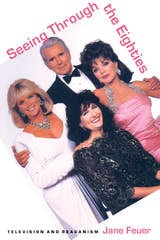
With a cast of characters including Michael, Hope, Elliot, Nancy, Melissa, and Gary; Alexis, Krystle, Blake, and all the other Carringtons; not to mention Maddie and David; even Crockett and Tubbs, Feuer smoothly blends close readings of well-known programs and analysis of television’s commercial apparatus with a thorough-going theoretical perspective engaged with the work of Baudrillard, Fiske, and others. Her comparative look at Yuppie TV, Prime Time Soaps, and made-for-TV-movie Trauma Dramas reveals the contradictions and tensions at work in much prime-time programming and in the frustrations of the American popular consciousness. Seeing Through the Eighties also addresses the increased commodification of both the producers and consumers of television as a result of technological innovations and the introduction of new marketing techniques. Claiming a close relationship between television and the cultures that create and view it, Jane Feuer sees the eighties through televison while seeing through television in every sense of the word.

Selected Writings of Selma Fraiberg
Edited by Louis Fraiberg with a Foreword by Robert N. Emde, M.D.
The Ohio State University Press, 1987
Self, Identity, and Social Movements
Sheldon Stryker
University of Minnesota Press, 2000
Self-Alteration
How People Change Themselves across CulturesJean-Paul Baldacchino
Rutgers University Press, 2024
Sensible Ecstasy
Mysticism, Sexual Difference, and the Demands of HistoryAmy Hollywood
University of Chicago Press, 2001
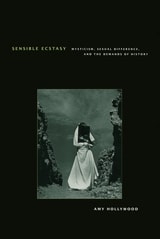
What is particular to these thinkers, Hollywood reveals, is their attention to forms of mysticism associated with women. They regard mystics such as Angela of Foligno, Hadewijch, and Teresa of Avila not as emotionally excessive or escapist, but as unique in their ability to think outside of the restrictive oppositions that continue to afflict our understanding of subjectivity, the body, and sexual difference. Mystics such as these, like their twentieth-century descendants, bridge the gaps between action and contemplation, emotion and reason, and body and soul, offering new ways of thinking about language and the limits of representation.

Seriously Mad
Mental Distress and the Broadway MusicalAleksei Grinenko
University of Michigan Press, 2023
Theatermakers in the United States have long been drawn to madness as a source of dramatic spectacle. During the Broadway musical’s golden age in the mid-twentieth century, creative teams used the currently in-vogue psychoanalytic ideas about mental life to construct troubled characters at odds with themselves and their worlds. As the clinical and cultural profile of madness transformed over the twentieth century, musicals continued to delve into the experience of those living with mental pain, trauma, and unhappiness.
Seriously Mad offers a dynamic account of stage musicals’ engagement with historically significant theories about mental distress, illness, disability, and human variance in the United States. By exploring who is considered mad and what constitutes madness at different moments in U.S. history, Aleksei Grinenko shows how, in attempts to bring the musicals closer to highbrow sophistication, theater dramatized serious medical conditions and social problems. Among the many Broadway productions discussed are Next to Normal, A Strange Loop, Sweeney Todd, Man of La Mancha, Gypsy, Oklahoma!, and Lady in the Dark.
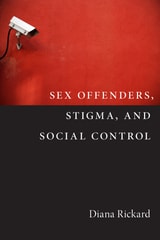
Sex Offenders, Stigma, and Social Control
Rickard, Diana
Rutgers University Press, 2016

Sex between Body and Mind
Psychoanalysis and Sexology in the German-speaking World, 1890s-1930sKatie Sutton
University of Michigan Press, 2019
This is the first book to closely examine vital encounters among this era’s German-speaking researchers across their emerging professional and disciplinary boundaries. Although psychoanalysis was often considered part of a broader “sexual science,” sexologists increasingly distanced themselves from its mysterious concepts and clinical methods. Instead, they turned to more pragmatic, interventionist therapies—in particular, to the burgeoning field of hormone research, which they saw as crucial to establishing their own professional relevance. As sexology and psychoanalysis diverged, heated debates arose around concerns such as the sexual life of the child, the origins and treatment of homosexuality and transgender phenomena, and female frigidity. This new story of the emergence of two separate approaches to the study of sex demonstrates that the distinctions between them were always part of a dialogic and competitive process. It fundamentally revises our understanding of the production of modern sexual subjects.
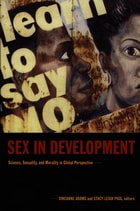
Sex in Development
Science, Sexuality, and Morality in Global PerspectiveVincanne Adams and Stacy Leigh Pigg, eds.
Duke University Press, 2005
Sex in Development combines the cultural analysis of sexuality, critiques of global development, and science and technology studies. Whether considering the resistance encountered by representatives of an American pharmaceutical company attempting to teach Russian doctors a “value free” way to offer patients birth control or the tension between Tibetan Buddhist ideas of fertility and the modernization schemes of the Chinese government, these essays show that attempts to make sex a universal moral object to be managed and controlled leave a host of moral ambiguities in their wake as they are engaged, resisted, and reinvented in different ways throughout the world.
Contributors. Vincanne Adams, Leslie Butt, Lawrence Cohen, Heather Dell, Vinh-Kim Nguyen, Shanti Parikh, Heather Paxson, Stacy Leigh Pigg, Michele Rivkin-Fish
Sex in the Middle East and North Africa
L. L. Wynn
Vanderbilt University Press, 2022
The book is organized into three sections: Single and Dating, Engaged and Married, and It's Complicated. The allusion to categories of relationship status on social media is at once a nod to the compulsion to categorize, recognition of the many ways that categorization is rarely straightforward, and acknowledgment that much of the intimate lives described by the contributors is mediated by online technologies.

Sex, Love, and Health in America
Private Choices and Public PoliciesEdited by Edward O. Laumann and Robert T. Michael
University of Chicago Press, 2000
Sixteen researchers have contributed essays to this collection that explore controversial topics, including teenage sexuality, sexual contact between children and adults, abortion, the role of cohabitation in the sexual satisfaction of couples, and how sexual behavior has changed in response to AIDS, as well as a widely heralded examination of circumcision, reported in the New York Times, which discusses the effects of the procedure on disease transmission and the preference for certain sexual practices. In its analysis, policy recommendations, and revelations about private practices, Sex, Love, and Health in America will, like the earlier volume, have a major role in shaping the discussion about American sexual behavior.
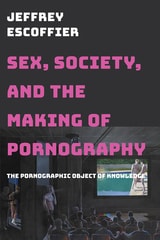
Sex, Society, and the Making of Pornography
The Pornographic Object of KnowledgeJeffrey Escoffier
Rutgers University Press, 2021
Sexology Uncensored
The Documents of Sexual ScienceEdited by Lucy Bland and Laura Doan
University of Chicago Press, 1998
Offering readers access to the primary materials on which contemporary sexology is founded, Sexology Uncensored is an invaluable record for all those interested in how we have come to think about sex and sexuality over the last hundred years.
Sexology in Culture and its companion Sexology Uncensored will interest all those concerned with understanding modern sexual discourse in its historical context.
Sexology in Culture
Labelling Bodies and DesiresEdited by Lucy Bland and Laura Doan
University of Chicago Press, 1998
Lucy Bland and Laura Doan have brought together leading historians of sex, cultural and literary critics, and scholars in gay, lesbian, and queer studies, to reassess current debates on sexology in light of its history. They address issues such as the relation of "sexual science" to the law, government policy, journalism, eugenics programs, marriage and sex manuals, and literary representation. They also map out new readings of transsexuality and bisexuality, and the centrality of race within sexology.
Sexology in Culture and its companion Sexology Uncensored will interest all those concerned with understanding modern sexual discourse in its historical context.

Sexual Identity and Faith
Helping Clients Find CongruenceMark A. Yarhouse
Templeton Press, 2019
Christians who struggle with a conflict between their sexual and religious identities have few therapeutic options available to them. ‘Sexual orientation change efforts’ (SOCE) have rightly fallen out of favor and are no longer practiced by most clinicians. At the same time, the common approach of gay affirmative therapy (GAT) can at times present challenges and may not be a good fit when clients hold to conventional religious beliefs and values.
An alternative to these methods is Sexual Identity Therapy (SIT)—an approach that aims to provide individuals with a safe therapeutic space to explore the tension between their sexuality and their faith. Working within the SIT framework, clients are able to resolve their inner conflict to their personal satisfaction and to freely choose a coherent identity that enables them to move forward in life.
SIT has several stages, each designed to enable the client to make meaning out of his or her same-sex sexuality. At no point in the process is the client encouraged to choose one sexual identity over another. The ultimate goal of SIT is congruence. Congruence is achieved when a person freely adopts an identity and lives it out in ways that are in keeping with his or her beliefs and values. The SIT model is brought to life throughout the book with the help of case studies drawn from the author’s 20 years of experience.
Written for both Christian and non-religious clinicians, Sexual Identity and Faith is an informed, respectful, and nuanced guide to help people navigate the difficult conflict between who they are sexually and what they believe religiously.

Sexual Nature/Sexual Culture
Edited by Paul R. Abramson and Steven D. Pinkerton
University of Chicago Press, 1995
Using as its center the idea that sexual pleasure is the primary motivational force behind human sexuality and that reproduction is simply a byproduct of the pleasurability of sex, this book examines sexuality at the individual, societal, and cultural levels. Beginning with a look at the evolution of sexuality in humans and other primates, the essays in the first section examine the sexual ingenuity of primates, the dominant theories of sexual behavior, the differences in male and female sexual interest and behavior, and the role of physical attractiveness in mate selection. The focus then shifts to biological approaches to sexuality, especially the genetic and hormonal origins of sexual orientation, gender, and pleasure.
The essays go on to look at the role of pleasure in different cultures. Included are essays on love among the tribespeople of the Brazilian rain forest and the regulation of adolescent sexuality in India. Finally, several contributors look at the methodological issues in the study of human sexuality, paying particular attention to the problems with research that relies on people's memories of their sexual experiences.
The contributors are Angela Pattatucci, Dean Hamer, David Greenberg, Frans de Waal, Mary McDonald Pavelka, Kim Wallen, Donald Symons, Heino Meyer-Bahlburg, Jean D. Wilson, Donald Tuzin, Lawrence Cohen, Thomas Gregor, Lenore Manderson, Robert C. Bailey, Alice Schlegel, Edward H. Kaplan, Richard Berk, Paul R. Abramson, Paul Okami, and Stephen D. Pinkerton.
Spanning the chasm of the nature versus nurture debate, Sexual Nature/Sexual Culture is a look at human sexuality as a complex interaction of genetic potentials and cultural influences. This book will be of interest to a wide range of readers—from scholars and students in psychology, anthropology, sociology, and history to clinicians, researchers, and others seeking to understand the many dimensions of sexuality.
"If we ever expect to solve the sexually based problems that modern societies face, we must encourage investigations of human sexual behavior. Moreover, those investigations should employ a broad range of disciplines—looking at sex from all angles, which is precisely what Sexual Nature, Sexual Culture does."—Mike May, American Scientist
"...This timely and relevant book reminds us that we cannot rely on simple solutions to complex problems. It represents a transdiciplinary approach integrating knowledge from diverse fields and provides the reader with a challenging and rewarding experience. Especially for those who are involved in teaching human sexuality to medical students and other health care professionals, this book is highly recommended."—Gerald Wiviortt, M.D., Journal of Nervous and Mental Disease
"In short, this volume contains much to stimulate, inform, and amuse, in varying proportions. What more can one ask?"—Pierre L. van den Berghe, Journal of the History of Sexuality
"...the book succeeds in bring together some of the sharpest thinkers in the field of human sexuality, and goes a long way toward clarifying the diverse perspectives that currently exist."—David M. Buss and Todd K. Shackelford, Quarterly Review of Biology
Sexuality across the Life Course
Edited by Alice S. Rossi
University of Chicago Press, 1994
In this wide-reaching volume, distinguished sociologist Alice S. Rossi addresses these questions and others through fourteen diverse essays on sexual behavior, covering adolescence through old age and studying such groups as singles, married couples, and homosexuals. This extensive study also explores the effects of chronic disease and medication on sexual functioning, recent developments in psychotherapy for sexual problems, and sexual abuse of children, incest, and rape.
"The interdisciplinary nature of the project has resulted in a text that is accessible to anyone with a behavioral science background. Well written, well edited, and well received by this reviewer."—Joan C. Chrisler, Journal of Sex & Marital Therapy
"This is a book that needs to be on the bookshelf of any AIDS researcher."—AIDS Book Review Journal

Sexuality and Form
Caravaggio, Marlowe, and BaconGraham Hammill
University of Chicago Press, 2000
Sexuation
SIC 3Renata Salecl, ed.
Duke University Press, 2000
In this volume, contributors discuss a third way of thinking about sexual identity and sexual difference—a direction opened by Jacques Lacan. For Lacan, what we all recognize as sexual difference is first and foremost representative of a certain fundamental deadlock inherent in the symbolic order, that is, in language and in the entire realm of culture conceived as a symbol system structured on the model of language. For him, the logical matrix of this deadlock is provided by his own formulas of sexuation. The essays collected here elaborate on different aspects of this deadlock of sexual difference. While some examine the role of semblances in the relation between the sexes or consider sexual identity not as anatomy but still involving an impasse of the real, others discuss the difference between sexuation and identification, the role of symbolic prohibition in the process of the subject’s sexual formation, or the changed role of the father in contemporary society and the impact of this change on sexual difference. Other essays address such topics as the role of beating in sexual fantasies and jouissance in feminine jealousy.
Contributors. Alain Badiou, Elizabeth Bronfen, Darian Leader, Jacques Alain Miller, Genevieve Morel, Renata Salecl, Eric L. Santner, Colette Soler, Paul Verhaeghe, Slavoj Žižek, Alenka Zupancic
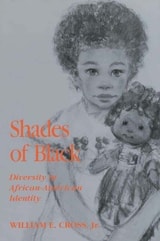
Shades of Black
Diversity in African American IdentityWilliam Cross
Temple University Press, 1991

Shamans and Robots
On Ritual, the Placebo Effect, and Artificial ConsciousnessRoger Bartra
University of Minnesota Press, 2024
A profound exploration of the external influences that shape human consciousness, from healing rituals to digital devices
In this voyage through thousands of years of psychosomatic healing, distinguished anthropologist and sociologist Roger Bartra examines the placebo effect as a key to our understanding of human consciousness. Shamans and Robots demonstrates how biology and technology become intertwined within human culture by using the various histories of ritual and symbolic healing to speculate about future developments in artificial intelligence.
Charting the extensive history of the placebo effect through medieval healing, shamanism, and early psychoanalytic practices, Bartra posits that consciousness is not simply the province of the mind but something equally shaped by external systems and objects. He finds evidence of this “exocerebrum”—the extension of our brains outside the body—in the shamanistic concept of the placebo, in which external objects heal our bodies, and in modern technical devices like prostheses or robots, whose development of a mechanical consciousness would have to mimic, and in turn elucidate, the processes involved in the creation of consciousness in humans. Through this radical concept, he analyzes digital media’s relationship to the functions of the human brain and probes the possibility of artificial consciousness.
Both a look at the human body’s potential to restore itself and a profound reflection on the curative power of symbolic structures, Shamans and Robots explores how our technologies increasingly serve as extensions of our cognitive selves.

Shamans, Mystics and Doctors
A Psychological Inquiry into India and its Healing TraditionsSudhir Kakar
University of Chicago Press, 1990
"With extraordinary sympathy, open-mindedness, and insight Sudhir Kakar has drawn from both his Eastern and Western backgrounds to show how the gulf that divides native healer from Western psychiatrist can be spanned."—Rosemary Dinnage, New York Review of Books
"Each chapter describes the geographical and cultural context within which the healers work, their unique approach to healing mental illness, and . . . the philosophical and religious underpinnings of their theories compared with psychoanalytical theory."—Choice
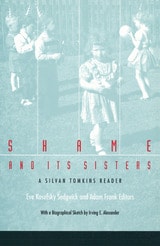
Shame and Its Sisters
A Silvan Tomkins ReaderEve Kosofsky Sedgwick and Adam Frank, eds.
Duke University Press, 1995
SilvanTomkins (1911–1991) was one of the most radical and imaginative psychologists of the twentieth century. In Affect, Imagery, Consciousness, a four-volume work published over the last thirty years of his life, Tomkins developed an ambitious theory of affect steeped in cybernetics and systems theory as well as in psychoanalysis, ethology, and neuroscience. The implications of his conceptually daring and phenomenologically suggestive theory are only now—in the context of postmodernism—beginning to be understood. With Shame and Its Sisters, editors Eve Kosofsky Sedgwick and Adam Frank make available for the first time an engaging and accessible selection of Tomkins’s work.
Featuring intensive examination of several key affects, particularly shame and anger, this volume contains many of Tomkins’s most haunting, diagnostically incisive, and theoretically challenging discussions. An introductory essay by the editors places Tomkins’s work in the context of postwar information technologies and will prompt a reexamination of some of the underlying assumptions of recent critical work in cultural studies and other areas of the humanities. The text is also accompanied by a biographical sketch of Tomkins by noted psychologist Irving E. Alexander, Tomkins’s longtime friend and collaborator.
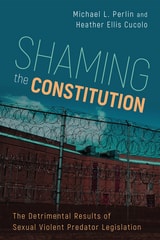
Shaming the Constitution
The Detrimental Results of Sexual Violent Predator LegislationMichael L. Perlin
Temple University Press, 2017
Convicted sexually violent predators are more vilified, more subject to media misrepresentation, and more likely to be denied basic human rights than any other population. Shaming the Constitution authors Michael Perlin and Heather Cucolo question the intentions of sex offender laws, offering new approaches to this most complex (and controversial) area of law and social policy.
The authors assert that sex offender laws and policies are unconstitutional and counter-productive. The legislation largely fails to add to public safety—even ruining lives for what are, in some cases, trivial infractions. Shaming the Constitution draws on law, behavioral sciences, and other disciplines to show that many of the “solutions” to penalizing sexually violent predators are “wrong,” as they create the most repressive and useless laws.
In addition to tracing the history of sex offender laws, the authors address the case of Jesse Timmendequas, whose crime begat “Megan’s Law;” the media’s role in creating a “moral panic;” recidivism statistics and treatments, as well as international human rights laws. Ultimately, they call attention to the flaws in the system so we can find solutions that contribute to public safety in ways that do not mock Constitutional principles.

Shattered Justice
Crime Victims' Experiences with Wrongful Convictions and ExonerationsKimberly J. Cook
Rutgers University Press, 2022
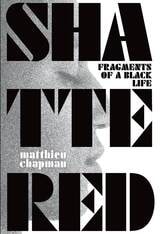
Shattered
Fragments of a Black LifeMatthieu Chapman
West Virginia University Press, 2023
From a distance, Matthieu Chapman’s life and accomplishments serve as an example of racial progress in America: the first in his family to go to college, he earns two master’s degrees and a doctorate and then becomes a professor of theater. Despite his personal and academic success, however, the specter of antiblackness continues to haunt his every moment and interaction.
Told through fragments, facets, shards, slivers, splinters, and absences, Shattered places Chapman’s own story in dialogue with US history and structural analysis of race to relay the experience of being very alive in a demonstrably antiblack society—laying bare the impact of the American way on black bodies, black psyches, and black lives. From the Church of Jesus Christ of Latter-day Saints to the offices of higher education, from a Loyal White Knights flyer on his windshield to a play with black students written by a black playwright, Chapman’s life story embodies the resistance that occurs, the shattering, collapsing, and reconfiguring of being that happens in the collisions between conceptions of blackness. Shattered is a heartrending and thought-provoking challenge to narratives of racial progress and postracial America—an important reminder that systemic antiblack racism affects every black person regardless of what they achieve in spite of it.
Shifting The Blame
How Victimization Became a Criminal DefenseWestervelt, Saundra D
Rutgers University Press, 1998
More than just a study of legal history, Shifting the Blame looks at the "abuse excuse" defense as an indicator of broad social change in cultural understandings of victimization, responsibility, and womanhood. The introduction of victimization as an exculpatory condition within the context of a criminal defense tells the story of a society that has accepted victimization as a new way of explaining and excusing misbehavior.
Through case law analysis, the book documents the initial development of the strategy in three different types of cases in the 1970s - "rotten social background", brainwashing, and battered women's self-defense cases. Since its initial acceptance in battered women's cases in the early 1980s, the use of the strategy has expanded to a variety of offenders in different types of relationships arguing different defenses. In lively, readable prose, Westervelt examines each form of expansion, revealing that while the expansion of the strategy has been fairly extensive, it has also been limited in some important ways. Her research shows readers that only certain types of "victims," particularly victims of physical abuse, have successfully used this defense. Shifting the Blame exposes the ways in which the acceptance of this new defense strategy illuminates a cultural shift in understandings of individual responsibility and shows how the law plays a role in defining who can be an acceptable victim.
Saundra D. Westervelt is an assistant professor in the Sociology Department at the University of North Carolina at Greensboro.
Shifting The Blame
How Victimization Became a Criminal DefenseWestervelt, Saundra D
Rutgers University Press, 1996
More than just a study of legal history, Shifting the Blame looks at the "abuse excuse" defense as an indicator of broad social change in cultural understandings of victimization, responsibility, and womanhood. The introduction of victimization as an exculpatory condition within the context of a criminal defense tells the story of a society that has accepted victimization as a new way of explaining and excusing misbehavior.
Through case law analysis, the book documents the initial development of the strategy in three different types of cases in the 1970s - "rotten social background", brainwashing, and battered women's self-defense cases. Since its initial acceptance in battered women's cases in the early 1980s, the use of the strategy has expanded to a variety of offenders in different types of relationships arguing different defenses. In lively, readable prose, Westervelt examines each form of expansion, revealing that while the expansion of the strategy has been fairly extensive, it has also been limited in some important ways. Her research shows readers that only certain types of "victims," particularly victims of physical abuse, have successfully used this defense. Shifting the Blame exposes the ways in which the acceptance of this new defense strategy illuminates a cultural shift in understandings of individual responsibility and shows how the law plays a role in defining who can be an acceptable victim.
Saundra D. Westervelt is an assistant professor in the Sociology Department at the University of North Carolina at Greensboro.
Shock Therapy
Psychology, Precarity, and Well-Being in Postsocialist RussiaTomas Matza
Duke University Press, 2018

Shows of Force
Power, Politics, and Ideology in Art ExhibitionsTimothy W. Luke
Duke University Press, 1992
The first section, “Envisioning a Past, Imagining the West,” looks at art exhibitions devoted to artworks about or from the American West. Luke shows how these exhibitions—displaying nineteenth- and early-twentieth century works by artists such as George Caleb Bingham, Frederic Remington, Frederic Edwin Church, and Georgia O’Keefe—express contemporary political agendas in the way the portray “the past” and shape new visions of “the West.”
In “Developing the Present, Defining a World,” Luke considers artists from the post-1945 era, including Ilya Kabokov, Hans Haacke, Sue Coe, Roger Brown, and Robert Longo. Recent art exhibits, his analysis reveals, attempt to develop politically charged conceptions of the present, which in turn struggle to define the changing contemporary world and art’s various roles within it.
Luke brings to light the contradictions encoded in the exhibition of art and, in doing so, illuminates the political realities and cultural ideologies of the present. Shows of Force offers a timely and surely controversial contribution to current discussions of the politics of exhibiting art.