Results by title
753 books match the query 'Race' and 45 start with s

Samurai among Panthers
Richard Aoki on Race, Resistance, and a Paradoxical LifeDiane C. Fujino
University of Minnesota Press, 2012
An iconic figure of the Asian American movement, Richard Aoki (1938–2009) was also, as the most prominent non-Black member of the Black Panther Party, a key architect of Afro-Asian solidarity in the 1960s and ’70s. His life story exposes the personal side of political activism as it illuminates the history of ethnic nationalism and radical internationalism in America.
A reflection of this interconnection, Samurai among Panthers weaves together two narratives: Aoki’s dramatic first-person chronicle and an interpretive history by a leading scholar of the Asian American movement, Diane C. Fujino. Aoki’s candid account of himself takes us from his early years in Japanese American internment camps to his political education on the streets of Oakland, to his emergence in the Black Panther Party. As his story unfolds, we see how his parents’ separation inside the camps and his father’s illegal activities shaped the development of Aoki’s politics. Fujino situates his life within the context of twentieth-century history—World War II, the Cold War, and the protests of the 1960s. She demonstrates how activism is both an accidental and an intentional endeavor and how a militant activist practice can also promote participatory democracy and social service.
The result of these parallel voices and analysis in Samurai among Panthers is a complex—and sometimes contradictory—portrait of a singularly extraordinary activist and an expansion and deepening of our understanding of the history he lived.

Sapphic Primitivism
Productions of Race, Class, and Sexuality in Key Works of Modern FictionHackett, Robin
Rutgers University Press, 2003
In this book, Robin Hackett examines portrayals of race, class, and sexuality in modernist texts by white women to argue for the existence of a literary device that she calls “Sapphic primitivism.” The works vary widely in their form and content and include Olive Schreiner’s proto-modernist exploration of New Womanhood, The Story of an African Farm; Virginia Woolf’s high modernist “play-poem,” The Waves; Sylvia Townsend Warner’s historical novel, Summer Will Show; and Willa Cather’s Southern pastoral, Sapphira and the Slave Girl. In each, blackness and working-class culture are figured to represent sexual autonomy, including lesbianism, for white women. Sapphic primitivism exposes the ways several classes of identification were intertwined with the development of homosexual identities at the turn of the century. Sapphic primitivism is not, however, a means of disguising lesbian content. Rather, it is an aesthetic displacement device that simultaneously exposes lesbianism and exploits modern, primitivist modes of self-representation. Hackett’s revelations of the mutual interests of those who study early twentieth-century constructions of race and sexuality and twenty-first-century feminists doing anti-racist and queer work are a major contribution to literary studies and identity theory.
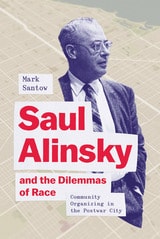
Saul Alinsky and the Dilemmas of Race
Community Organizing in the Postwar CityMark Santow
University of Chicago Press, 2023
Saul Alinsky is the most famous—even infamous—community organizer in American history. Almost single-handedly, he invented a new political form: community federations, which used the power of a neighborhood’s residents to define and fight for their own interests. Across a long and controversial career spanning more than three decades, Alinsky and his Industrial Areas Foundation organized Eastern European meatpackers in Chicago, Kansas City, Buffalo, and St. Paul; Mexican Americans in California and Arizona; white middle-class homeowners on the edge of Chicago’s South Side black ghetto; and African Americans in Rochester, Buffalo, Chicago, and other cities.
Mark Santow focuses on Alinsky’s attempts to grapple with the biggest moral dilemma of his age: race. As Santow shows, Alinsky was one of the few activists of the period to take on issues of race on paper and in the streets, on both sides of the color line, in the halls of power, and at the grassroots, in Chicago and in Washington, DC. Alinsky’s ideas, actions, and organizations thus provide us with a unique and comprehensive viewpoint on the politics of race, poverty, and social geography in the United States in the decades after World War II. Through Alinsky’s organizing and writing, we can see how the metropolitan color line was constructed, contested, and maintained—on the street, at the national level, and among white and black alike. In doing so, Santow offers new insight into an epochal figure and the society he worked to change.

Saul Alinsky and the Dilemmas of Race
Community Organizing in the Postwar CityMark Santow
University of Chicago Press, 2023
A groundbreaking examination of Saul Alinsky's organizing work as it relates to race.
Saul Alinsky is the most famous—even infamous—community organizer in American history. Almost single-handedly, he invented a new political form: community federations, which used the power of a neighborhood’s residents to define and fight for their own interests. Across a long and controversial career spanning more than three decades, Alinsky and his Industrial Areas Foundation organized Eastern European meatpackers in Chicago, Kansas City, Buffalo, and St. Paul; Mexican Americans in California and Arizona; white middle-class homeowners on the edge of Chicago’s South Side black ghetto; and African Americans in Rochester, Buffalo, Chicago, and other cities.
Mark Santow focuses on Alinsky’s attempts to grapple with the biggest moral dilemma of his age: race. As Santow shows, Alinsky was one of the few activists of the period to take on issues of race on paper and in the streets, on both sides of the color line, in the halls of power, and at the grassroots, in Chicago and in Washington, DC. Alinsky’s ideas, actions, and organizations thus provide us with a unique and comprehensive viewpoint on the politics of race, poverty, and social geography in the United States in the decades after World War II. Through Alinsky’s organizing and writing, we can see how the metropolitan color line was constructed, contested, and maintained—on the street, at the national level, and among white and black alike. In doing so, Santow offers new insight into an epochal figure and the society he worked to change.
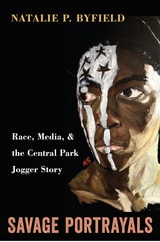
Savage Portrayals
Race, Media and the Central Park Jogger StoryNatalie Byfield
Temple University Press, 2014

Scarring the Black Body
Race and Representation in African American LiteratureCarol E. Henderson
University of Missouri Press, 2002
Science, Race, and Ethnicity
Readings from Isis and OsirisEdited by John P. Jackson
University of Chicago Press, 2002
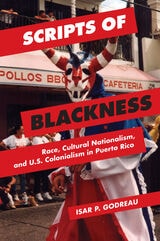
Scripts of Blackness
Race, Cultural Nationalism, and U.S. Colonialism in Puerto RicoIsar P. Godreau
University of Illinois Press, 2015
Based on an ethnographic study of the barrio of San Antón in the city of Ponce, Scripts of Blackness examines institutional and local representations of blackness as developing from a power-laden process that is inherently selective and political, not neutral or natural. Godreau traces the presumed benevolence or triviality of slavery in Puerto Rico, the favoring of a Spanish colonial whiteness (under a hispanophile discourse), and the insistence on a harmonious race mixture as discourses that thrive on a presumed contrast with the United States that also characterize Puerto Rico as morally superior. In so doing, she outlines the debates, social hierarchies, and colonial discourses that inform the racialization of San Antón and its residents as black.
Mining ethnographic materials and anthropological and historical research, Scripts of Blackness provides powerful insights into the critical political, economic, and historical context behind the strategic deployment of blackness, whiteness, and racial mixture.

Searching for Feminist Superheroes
Gender, Sexuality, and Race in Marvel ComicsSam Langsdale
University of Texas Press, 2024
How superhero narratives in the margins of the mainstream tell innovative, feminist stories.
It’s no secret that superhero comics and their related media perpetuate a model of a straight, white, male hero at the expense of representing women and other minorities, but other narratives exist. Searching for Feminist Superheroes recognizes that female-led superhero comics, with diverse casts of characters and inclusive storytelling, exist on the margins of the mainstream superhero genre. But rather than focusing on these stories as marginalized, Sam Langsdale’s work on heroes such as Spider-Woman, America Chavez, and Ironheart locates the margins as a site of innovation and productivity, which have enabled the creation of feminist superhero texts.
Employing feminist and intersectional philosophies in an analysis of these comics, Langsdale suggests that feminist superheroes have the potential to contribute to a social imagination that is crucial in working toward a more just world. At a time when US popular culture continues to manifest as a battleground between oppressive and progressive social norms, Searching for Feminist Superheroes demonstrates that a fight for a better world is worthwhile.

Security Disarmed
Critical Perspectives on Gender, Race, and MilitarizationMorgen, Sandra
Rutgers University Press, 2008
In Security Disarmed, scholars, policy planners, and activists come together to think critically about the human cost of violence and viable alternatives to armed conflict. Arranged in four parts--alternative paradigms of security, cross-national militarization, militarism in the United States, and pedagogical and cultural concerns--the book critically challenges militarization and voices an alternative encompassing vision of human security by analyzing the relationships among gender, race, and militarization. This collection of essays evaluates and resists the worldwide crisis of militarizationùincluding but going beyond American military engagements in the twenty-first century.

Selected Writings on Race and Difference
Stuart Hall
Duke University Press, 2021
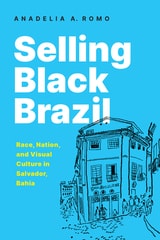
Selling Black Brazil
Race, Nation, and Visual Culture in Salvador, BahiaAnadelia Romo
University of Texas Press, 2022
2023 Honorable Mention, Brazil Section Humanities Book Prize, Latin American Studies Association (LASA)
This book explores visual portrayals of blackness in Brazil to reveal the integral role of visual culture in crafting race and nation across Latin America.
In the early twentieth century, Brazil shifted from a nation intent on whitening its population to one billing itself as a racial democracy. Anadelia Romo shows that this shift centered in Salvador, Bahia, where throughout the 1950s, modernist artists and intellectuals forged critical alliances with Afro-Brazilian religious communities of Candomblé to promote their culture and their city. These efforts combined with a growing promotion of tourism to transform what had been one of the busiest slaving depots in the Americas into a popular tourist enclave celebrated for its rich Afro-Brazilian culture. Vibrant illustrations and texts by the likes of Jorge Amado, Pierre Verger, and others contributed to a distinctive iconography of the city, with Afro-Bahians at its center. But these optimistic visions of inclusion, Romo reveals, concealed deep racial inequalities. Illustrating how these visual archetypes laid the foundation for Salvador’s modern racial landscape, this book unveils the ways ethnic and racial populations have been both included and excluded not only in Brazil but in Latin America as a whole.
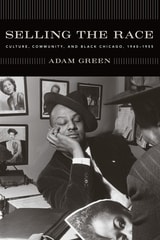
Selling the Race
Culture, Community, and Black Chicago, 1940-1955Adam Green
University of Chicago Press, 2006
In Selling the Race, Adam Green tells the story of how black Chicagoans were at the center of a national movement in the 1940s and ’50s, a time when African Americans across the country first started to see themselves as part of a single culture. Along the way, he offers fascinating reinterpretations of such events as the 1940 American Negro Exposition, the rise of black music and the culture industry that emerged around it, the development of the Associated Negro Press and the founding of Johnson Publishing, and the outcry over the 1955 lynching of Emmett Till.
By presenting African Americans as agents, rather than casualties, of modernity, Green ultimately reenvisions urban existence in a way that will resonate with anyone interested in race, culture, or the life of cities.

Sensory Experiments
Psychophysics, Race, and the Aesthetics of FeelingErica Fretwell
Duke University Press, 2020
Sentient Flesh
Thinking in Disorder, Poiesis in BlackR. A. Judy
Duke University Press, 2020

Sex, Race, and Merit
Debating Affirmative Action in Education and EmploymentFaye J. Crosby and Cheryl VanDeVeer, Editors
University of Michigan Press, 2000

Sex, Sickness, and Slavery
Illness in the Antebellum SouthMarli F. Weiner with Mazie Hough
University of Illinois Press, 2014

Shades of White Flight
Evangelical Congregations and Urban DepartureMark T. Mulder
Rutgers University Press, 2015
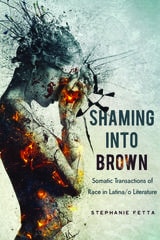
Shaming into Brown
Somatic Transactions of Race in Latina/o LiteratureStephanie Fetta
The Ohio State University Press, 2018
In Shaming into Brown: Somatic Transactions of Race in Latina/o Literature, Stephanie Fetta asserts that our bodies are fundamental to how we live and how we make meaning. Anchored by two psychoanalytic theories, bioenergetic analysis developed by Alexander Lowen and affect theory put forth by Silvan Tomkins, Fetta examines Latinx fiction to draw attention to the cultural role of the intelligent, emotional, and communicative body—the soma—in relation to shame. She argues that we bring the soma—the physical, emotive, and social register of our subjectivity—to the text as we do to our lives,proposing that the power of racialization operates at the level of somatic expression and reception through habituated, socially cued behaviors that are not readily subject to intentional control.
Fetta examines shame beyond individual experiences, looking at literary renderings of the cultural practice of racial shaming that are deeply embedded into our laws, hiring practices, marketing strategies, and more. Grounding her analysis in the works of Gloria Anzaldúa and Cherríe Moraga, Shaming into Brown focuses on exposing the underpinnings of racialized shame and does so through analyzing “scenes of racialization” in prominent works by authors such as Junot Díaz, Sandra Cisneros, and Oscar Zeta Acosta.

Shipping Out
Race, Performance, and Labor at SeaAnita Gonzalez
University of Michigan Press, 2025
Sightlines
Race, Gender, and Nation in Contemporary Australian TheatreHelen Gilbert
University of Michigan Press, 1998
Skin Acts
Race, Psychoanalysis, and the Black Male PerformerMichelle Ann Stephens
Duke University Press, 2014

Slavery's Descendants
Shared Legacies of Race and ReconciliationJill Strauss
Rutgers University Press, 2019
Slavery’s Descendants brings together contributors from a variety of racial backgrounds, all members or associates of a national racial reconciliation organization called Coming to the Table, to tell their stories of dealing with America’s racial past through their experiences and their family histories. Some are descendants of slaveholders, some are descendants of the enslaved, and many are descendants of both slaveholders and slaves. What they all have in common is a commitment toward collective introspection, and a willingness to think critically about how the nation’s histories of oppression continue to ripple into the present, affecting us all.
The stories in Slavery’s Descendants deal with harrowing topics—rape, lynching, cruelty, shame—but they also describe acts of generosity, gratitude, and love. Together, they help us confront the legacy of slavery to reclaim a more complete picture of U.S. history, one cousin at a time.
Funding for the production of this book was provided by Furthermore, a program of the J. M. Kaplan Fund (https://www.furthermore.org).
Slim's Table
Race, Respectability, and MasculinityMitchell Duneier
University of Chicago Press, 1992
"Slim's Table is an astonishment. Duneier manages to fling open windows of perception into what it means to be working-class black, how a caring community can proceed from the most ordinary transactions, all the while smashing media-induced stereotypes of the races and race relations."—Citation for Chicago Sun Times Chicago Book of the Year Award
"An instant classic of ethnography that will provoke debate and provide insight for years to come."—Michael Eric Dyson, Chicago Tribune
"Mr. Duneier sees the subjects of his study as people and he sees the scale of their lives as fully human, rather than as diminished versions of grander lives lived elsewhere by people of another color. . . . A welcome antidote to trends in both journalism and sociology."—Roger Wilkins, New York Times Book Review

Songs in Black and Lavender
Race, Sexual Politics, and Women's MusicEileen M. Hayes, Foreword by Linda Tillery
University of Illinois Press, 2010

Soundworks
Race, Sound, and Poetry in ProductionAnthony Reed
Duke University Press, 2021

Speaking of Race and Class
The Student Experience at an Elite CollegeElizabeth Aries
Temple University Press, 2012
In Speaking of Race and Class, the follow-up volume to her groundbreaking Race and Class Matters at an Elite College, Elizabeth Aries completes her four-year study of diversity at a prestigious liberal arts college. Here, the 58 students—affluent, lower-income, black, and white—that Aries has interviewed since they were Amherst freshmen provide a complete picture of what and how each group learned about issues of race and class.
Aries presents the students’ personal perceptions of their experiences. She reveals the extent to which learning from diversity takes place on campus, and examines the distinct challenges that arise for students living in this heterogeneous community. Aries also looks more broadly at how colleges and universities across the country are addressing the challenges surrounding diversity. Speaking of Race and Class testifies to the programming and practices that have proven successful.
Speculative Blackness
The Future of Race in Science FictionAndré M. Carrington
University of Minnesota Press, 2016
In Speculative Blackness, André M. Carrington analyzes the highly racialized genre of speculative fiction—including science fiction, fantasy, and utopian works, along with their fan cultures—to illustrate the relationship between genre conventions in media and the meanings ascribed to blackness in the popular imagination.
Carrington’s argument about authorship, fandom, and race in a genre that has been both marginalized and celebrated offers a black perspective on iconic works of science fiction. He examines the career of actor Nichelle Nichols, who portrayed the character Uhura in the original Star Trek television series and later became a recruiter for NASA, and the spin-off series Star Trek: Deep Space Nine, set on a space station commanded by a black captain. He recovers a pivotal but overlooked moment in 1950s science fiction fandom in which readers and writers of fanzines confronted issues of race by dealing with a fictitious black fan writer and questioning the relevance of race to his ostensible contributions to the 'zines. Carrington mines the productions of Marvel comics and the black-owned comics publisher Milestone Media, particularly the representations of black sexuality in its flagship title, Icon. He also interrogates online fan fiction about black British women in Buffy the Vampire Slayer and the Harry Potter series.
Throughout this nuanced analysis, Carrington theorizes the relationship between race and genre in cultural production, revealing new understandings of the significance of blackness in twentieth-century American literature and culture.
Spheres of Influence
The Social Ecology of Racial and Class InequalityDouglas S. Massey
Russell Sage Foundation, 2014

Spirits Before the Law
Faith, Race, and Freedom Beyond PropertyHannah Manshel
Duke University Press, 2027

Squee from the Margins
Fandom and RaceRukmini Pande
University of Iowa Press, 2018
Rukmini Pande’s examination of race in fan studies is sure to make an immediate contribution to the growing field. Until now, virtually no sustained examination of race and racism in transnational fan cultures has taken place, a lack that is especially concerning given that current fan spaces have never been more vocal about debating issues of privilege and discrimination.
Pande’s study challenges dominant ideas of who fans are and how these complex transnational and cultural spaces function, expanding the scope of the field significantly. Along with interviewing thirty-nine fans from nine different countries about their fan practices, she also positions media fandom as a postcolonial cyberspace, enabling scholars to take a more inclusive view of fan identity. With analysis that spans from historical to contemporary, Pande builds a case for the ways in which non-white fans have always been present in such spaces, though consistently ignored.

Staging Blackness
Representations of Race in German-Speaking Drama and TheaterPriscilla Dionne Layne and Lily Tonger-Erk, Editors
University of Michigan Press, 2024
Written by scholars and theater professionals with a wide variety of historical and theoretical expertise, the chapters seek to explore the connections between the German discourse on national theater and emerging ideas about race, analyze how dramaturges deal with older representations of Blackness in current productions, and discuss the contributions Black German playwrights and dramaturges have made to this discourse. Historians question how these plays were staged in their time, while cultural studies scholars contemplate how to interpret the function of race in these plays and how they can continue to be staged today.

Standards of Value
Money, Race, and Literature in AmericaGermana, Michael
University of Iowa Press, 2010
In Standards of Value, Michael Germana reveals how tectonic shifts in U.S. monetary policy—from the Coinage Act of 1834 to the abolition of the domestic gold standard in 1933–34—correspond to strategic changes by American writers who renegotiated the value of racial difference. Populating the pages of this bold and innovative study are authors as varied as Harriet Beecher Stowe, George Washington Cable, Charles Chesnutt, James Weldon Johnson, Nella Larsen, Jessie Redmon Fauset, and Ralph Ellison—all of whom drew analogies between the form Americans thought the nation's money should take and the form they thought race relations and the nation should take.
A cultural history of race organized around and enmeshed within the theories of literary and monetary value, Standards of Value also recovers a rhetorical tradition in American culture whose echoes can be found in the visual and lyrical grammars of hip hop, the paintings of John W. Jones and Michael Ray Charles, the cinematography of Spike Lee, and many other contemporary forms and texts.
This reconsideration of American literature and cultural history has implications for how we value literary texts and how we read shifting standards of value. In vivid prose, Germana explains why dollars and cents appear where black and white bodies meet in American novels, how U.S. monetary policy gave these symbols their cultural currency, and why it matters for scholars of literary and cultural studies.
Stories Employers Tell
Race, Skill, and Hiring in AmericaPhilip Moss
Russell Sage Foundation, 2001
Strange Affinities
The Gender and Sexual Politics of Comparative RacializationGrace Kyungwon Hong and Roderick A. Ferguson, eds.
Duke University Press, 2011
Contributors
Victor Bascara
Lisa Marie Cacho
M. Bianet Castellanos
Martha Chew Sánchez
Roderick A. Ferguson
Grace Kyungwon Hong
Helen H. Jun
Kara Keeling
Sanda Mayzaw Lwin
Jodi Melamed
Chandan Reddy
Ruby C. Tapia
Cynthia Tolentino

Street Therapists
Race, Affect, and Neoliberal Personhood in Latino NewarkAna Y. Ramos-Zayas
University of Chicago Press, 2012
Drawing from almost a decade of ethnographic research in largely Brazilian and Puerto Rican neighborhoods in Newark, New Jersey, Ana Y. Ramos-Zayas, in Street Therapists,examines how affect, emotion, and sentiment serve as waypoints for the navigation of interracial relationships among US-born Latinos, Latin American migrants, blacks, and white ethnics. Tackling a rarely studied dynamic approach to affect, Ramos-Zayas offers a thorough—and sometimes paradoxical—new articulation of race, space, and neoliberalism in US urban communities.
After looking at the historical, political, and economic contexts in which an intensified connection between affect and race has emerged in Newark, New Jersey, Street Therapists engages in detailed examinations of various community sites—including high schools, workplaces, beauty salons, and funeral homes, among others—and secondary sites in Belo Horizonte, Brazil and San Juan to uncover the ways US-born Latinos and Latin American migrants interpret and analyze everyday racial encounters through a language of psychology and emotions. As Ramos-Zayas notes, this emotive approach to race resurrects Latin American and Caribbean ideologies of “racial democracy” in an urban US context—and often leads to new psychological stereotypes and forms of social exclusion. Extensively researched and thoughtfully argued, Street Therapists theorizes the conflictive connection between race, affect, and urban neoliberalism.
Streetwise
Race, Class, and Change in an Urban CommunityElijah Anderson
University of Chicago Press, 1990
"The sharpness of his observations and the simple clarity of his prose recommend his book far beyond an academic audience. Vivid, unflinching, finely observed, Streetwise is a powerful and intensely frightening picture of the inner city."—Tamar Jacoby, New York Times Book Review
"The book is without peer in the urban sociology literature. . . . A first-rate piece of social science, and a very good read."—Glenn C. Loury, Washington Times

Subprime Health
Debt and Race in U.S. MedicineNadine Ehlers
University of Minnesota Press, 2017
From race-based pharmaceutical prescriptions and marketing, to race-targeted medical “hot spotting” and the Affordable Care Act, to stem-cell trial recruitment discourse, Subprime Health is a timely examination of race-based medicine as it intersects with the concept of debt.
The contributors to this volume propose that race-based medicine is inextricable from debt in two key senses. They first demonstrate how the financial costs related to race-based medicine disproportionately burden minorities, as well as how monetary debt and race are conditioned by broader relations of power. Second, the contributors investigate how race-based medicine is related to the concept of indebtedness and is often positioned as a way to pay back the debt that the medical establishment—and society at large—owes for the past and present neglect and abuses of many communities of color. By approaching the subject of race-based medicine from an interdisciplinary perspective—critical race studies, science and technology studies, public health, sociology, geography, and law—this volume moves the discussion beyond narrow and familiar debates over racial genomics and suggests fruitful new directions for future research.
Contributors: Ruha Benjamin, Princeton U; Catherine Bliss, U of California, San Francisco; Khiara M. Bridges, Boston U; Shiloh Krupar, Georgetown U; Jenna M. Loyd, U of Wisconsin–Milwaukee; Anne Pollock, Georgia Tech.
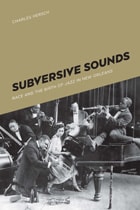
Subversive Sounds
Race and the Birth of Jazz in New OrleansCharles B. Hersch
University of Chicago Press, 2008
Subversive Sounds probes New Orleans’s history, uncovering a web of racial interconnections and animosities that was instrumental to the creation of a vital American art form—jazz. Drawing on oral histories, police reports, newspaper accounts, and vintage recordings, Charles Hersch brings to vivid life the neighborhoods and nightspots where jazz was born.
This volume shows how musicians such as Jelly Roll Morton, Nick La Rocca, and Louis Armstrong negotiated New Orleans’s complex racial rules to pursue their craft and how, in order to widen their audiences, they became fluent in a variety of musical traditions from diverse ethnic sources. These encounters with other music and races subverted their own racial identities and changed the way they played—a musical miscegenation that, in the shadow of Jim Crow, undermined the pursuit of racial purity and indelibly transformed American culture.
“More than timely . . . Hersch orchestrates voices of musicians on both sides of the racial divide in underscoring how porous the music made the boundaries of race and class.”—New Orleans Times-Picayune

Suffering for Territory
Race, Place, and Power in ZimbabweDonald S. Moore
Duke University Press, 2005
Moore makes a significant contribution to postcolonial theory with his conceptualization of “entangled landscapes” by articulating racialized rule, situated sovereignties, and environmental resources. Fusing Gramscian cultural politics and Foucault’s analytic of governmentality, he enlists ethnography to foreground the spatiality of power. Suffering for Territory demonstrates how emplaced micro-practices matter, how the outcomes of cultural struggles are contingent on the diverse ways land comes to be inhabited, labored upon, and suffered for.
Sunbelt Diaspora
Race, Class, and Latino Politics in Puerto Rican OrlandoBy Patricia Silver
University of Texas Press, 2020
2021 — Silver Medal, Raul Yzaguirre Best Political/Current Affairs Book – International Latino Book Awards, Latino Literacy Now
An in-depth look at an emerging Latino presence in Orlando, Florida, where Puerto Ricans and others navigate differences of race, class, and place of origin in their struggle for social, economic, and political belonging.
Puerto Ricans make up half of Orlando-area Latinos, arriving from Puerto Rico as well as from other long-established diaspora communities to a place where Latino politics has long been about Cubans in Miami. Together with other Latinos from multiple places, Puerto Ricans bring diverse experiences of race and class to this Sunbelt city. Tracing the emergence of the Puerto Rican and Latino presence in Orlando from the 1940s through an ethnographic moment of twenty-first-century electoral redistricting, Sunbelt Diaspora provides a timely prism for viewing how differences of race, class, and place play out in struggles to claim political, social, and economic ground for Latinos.
Drawing on over a decade of ethnographic, oral history, and archival research, Patricia Silver situates her findings in Orlando’s historically black-white racial landscape, post-1960s claims to “color-blindness,” and neoliberal celebrations of individualism. Through the voices of diverse participants, Silver brings anthropological attention to the question of how social difference affects collective identification and political practice. Sunbelt Diaspora asks what constitutes community and how criteria for membership and legitimate representation are negotiated.

Surrogate Humanity
Race, Robots, and the Politics of Technological FuturesNeda Atanasoski and Kalindi Vora
Duke University Press, 2019

Sweetness in the Blood
Race, Risk, and Type 2 DiabetesJames Doucet-Battle
University of Minnesota Press, 2021
A bold new indictment of the racialization of science
Decades of data cannot be ignored: African American adults are far more likely to develop Type 2 diabetes than white adults. But has science gone so far in racializing diabetes as to undermine the search for solutions? In a rousing indictment of the idea that notions of biological race should drive scientific inquiry, Sweetness in the Blood provides an ethnographic picture of biotechnology’s framings of Type 2 diabetes risk and race and, importantly, offers a critical examination of the assumptions behind the recruitment of African American and African-descent populations for Type 2 diabetes research.
James Doucet-Battle begins with a historical overview of how diabetes has been researched and framed racially over the past century, chronicling one company’s efforts to recruit African Americans to test their new diabetes risk-score algorithm with the aim of increasing the clinical and market value of the firm’s technology. He considers African American reticence about participation in biomedical research and examines race and health disparities in light of advances in genomic sequencing technology. Doucet-Battle concludes by emphasizing that genomic research into sub-Saharan ancestry in fact underlines the importance of analyzing gender before attempting to understand the notion of race. No disease reveals this more than Type 2 diabetes.
Sweetness in the Blood challenges the notion that the best approach to understanding, managing, and curing Type 2 diabetes is through the lens of race. It also transforms how we think about sugar, filling a neglected gap between the sugar- and molasses-sweetened past of the enslaved African laborer and the high-fructose corn syrup- and corporate-fed body of the contemporary consumer-laborer.

Swim Pretty
Aquatic Spectacles and the Performance of Race, Gender, and NatureJennifer A. Kokai
Southern Illinois University Press, 2017
Examining dramatic works in water and performances at four water parks, Kokai shows that the evolution of these works and performances helps us better understand our ever-changing relationship with the oceans and their inhabitants. Kokai sorts the regard for and harnessing of water in aquatic spectacles into three categories—natural, tamed, and domesticated—and discusses the ways in which these modes of water are engaged in the performances throug an aesthetics of descension. Ultimately, this study links the uncritical love of aquatic spectacles to a disregard for the rights of marine animals and lack of concern for the marine environment.
Sylvia Wynter
On Being Human as PraxisKatherine McKittrick, ed.
Duke University Press, 2015