Results by title
247 books match the query 'South Africa' and 27 start with s
Safari Nation
A Social History of the Kruger National ParkJacob S. T. Dlamini
Ohio University Press, 2020
Seeking Mandela
Peacemaking Between Israelis And PalestiniansHeribert Adam and Kogila Moodley
Temple University Press, 2005
Short-Changed?
South Africa since ApartheidColin Bundy
Ohio University Press, 2015
What have been the most significant developments—political, social, economic—in South Africa since 1994? How much has changed since the demise of apartheid, and how much remains stubbornly the same? Should one celebrate a robust democracy now two decades old, or lament the corrosive effects of factionalism, greed, and corruption on political life? Colin Bundy tries to answer such questions, while avoiding simplistic or one-sided assessments of life under Mandela, Mbeki, and Zuma. He recognizes real advances under ANC rule but also identifies the limits and contradictions of such progress. Bundy demonstrates, too, how the country’s past permeates the present, complicating and constraining the politics of transition, so that genuine transformation has been short-changed.
Sisters for Justice
Small Acts in the Transformation of Apartheid South AfricaCatherine Higgs
University of Wisconsin Press, 2025
Based on extensive oral history interviews with white and Black sisters as well as deep archival research, this groundbreaking book reveals a largely untold story, nested within the broader literature of women’s activism in South Africa. The result is a new perspective that expands and intensifies our understanding of a dramatic period during which individual actions, in the aggregate, contributed to social change.
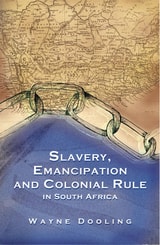
Slavery, Emancipation and Colonial Rule in South Africa
Wayne Dooling
Ohio University Press, 2008

Snow on the Cane Fields
Women’s Writing and Creole SubjectivityJudith Raiskin
University of Minnesota Press, 1995
Snow on the Cane Fields was first published in 1995. Minnesota Archive Editions uses digital technology to make long-unavailable books once again accessible, and are published unaltered from the original University of Minnesota Press editions.
In a probing analysis of creole women's writing over the past century, Judith Raiskin explores the workings and influence of cultural and linguistic colonialism. Tracing the transnational and racial meanings of creole identity, Raiskin looks at four English-speaking writers from South Africa and the Caribbean: Olive Schreiner, Jean Rhys, Michelle Cliff, and Zoë Wicomb. She examines their work in light of the discourses of their times: nineteenth-century "race science" and imperialistic rhetoric, turn-of-the-century anti-Semitic sentiment and feminist pacifism, postcolonial theory, and apartheid legislation.
In their writing and in their multiple identities, these women highlight the gendered nature of race, citizenship, culture, and the language of literature. Raiskin shows how each writer expresses her particular ambivalences and divided loyalties, both enforcing and challenging the proprietary British perspective on colonial history, culture, and language. A new perspective on four writers and their uneasy places in colonial culture, Snow on the Cane Fields reveals the value of pursuing a feminist approach to questions of national, political, and racial identity.
Judith Raiskin is assistant professor of women's studies at the University of California, Santa Barbara.

Sol Plaatje
Selected WritingsSol T. Plaatje
Ohio University Press, 1997
These books are not Plaatje’s only claim to fame. In the course of a prolific career he wrote letters to the press, newspaper articles and editorials, pamphlets, political speeches, evidence to government commissions of enquiry, unpublished autobiographical writings, and many personal letters. Together they provide both an engaging personal record and a very readable – and revealing – commentary on South African social and political affairs during the era of segregation, from 1899 through to Plaatje’s tragically early death in 1932.
What he wrote has a unique historical importance, all the more meaningful from the perspective of the 1990s.
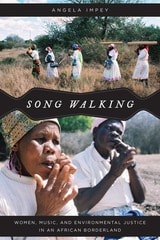
Song Walking
Women, Music, and Environmental Justice in an African BorderlandAngela Impey
University of Chicago Press, 2018
This book links ethnomusicological research to larger themes of international development, environmental conservation, gender, and local economic access to resources. By demonstrating that development processes are essentially cultural processes and revealing how music fits within this frame, Song Walking testifies to the affective, spatial, and economic dimensions of place, while contributing to a more inclusive and culturally apposite alignment between land and environmental policies and local needs and practices.
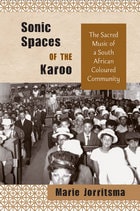
Sonic Spaces of the Karoo
The Sacred Music of a South African Coloured CommunityMarie Jorritsma
Temple University Press, 2011
Sonic Spaces of the Karoo is a pioneering study of the sacred music of three coloured (the apartheid designation for people "not white or native") people's church congregations in the rural town of Graaff-Reinet, South Africa. Jorritsma's fieldwork involves an investigation of the choruses, choir music, and hymns of the Karoo region to present a history of the people's traditional, religious, and cultural identity in song. This music is examined as part of a living archive preserved by the community in the face of a legacy of slavery and colonial as well as apartheid oppression.
Jorritsma's findings counteract a lingering stereotype that coloured music is inferior to European or African music and that coloured people should not or do not have a cultural identity. Sonic Spaces of the Karoo seeks to eradicate that bias and articulate a more legitimate place for these people in the contemporary landscape of South Africa.
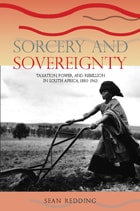
Sorcery and Sovereignty
Taxation, Power, and Rebellion in South Africa, 1880–1963Sean Redding
Ohio University Press, 2006
Rebellions broke out in many areas of South Africa shortly after the institution of white rule in the late nineteenth century and continued into the next century. However, distrust of the colonial regime reached a new peak in the mid-twentieth century, when revolts erupted across a wide area of rural South Africa. All these uprisings were rooted in grievances over taxes. Rebels frequently invoked supernatural powers for assistance and accused government officials of using witchcraft to enrich themselves and to harm ordinary people.
As Sean Redding observes in Sorcery and Sovereignty, beliefs in witchcraft and supernatural powers were part of the political rhetoric; the system of taxation—with all its prescribed interactions between ruler and ruled—was intimately connected to these supernatural beliefs.
In this fascinating study, Redding examines how black South Africans’ beliefs in supernatural powers, along with both economic and social change in the rural areas, resulted in specific rebellions and how gender relations in black South African rural families changed. Sorcery and Sovereignty explores the intersection of taxation, political attitudes, and supernatural beliefs among black South Africans, shedding light on some of the most significant issues in the history of colonized Africa.
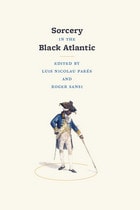
Sorcery in the Black Atlantic
Edited by Luis Nicolau Parés and Roger Sansi
University of Chicago Press, 2011
Most scholarship on sorcery and witchcraft has narrowly focused on specific times and places, particularly early modern Europe and twentieth-century Africa. And much of that research interprets sorcery as merely a remnant of premodern traditions. Boldly challenging these views, Sorcery in the Black Atlantic takes a longer historical and broader geographical perspective, contending that sorcery is best understood as an Atlantic phenomenon that has significant connections to modernity and globalization.
A distinguished group of contributors here examine sorcery in Brazil, Cuba, South Africa, Cameroon, and Angola. Their insightful essays reveal the way practices and accusations of witchcraft spread throughout the Atlantic world from the age of discovery up to the present, creating an indelible link between sorcery and the rise of global capitalism. Shedding new light on a topic of perennial interest, Sorcery in the Black Atlantic will be provocative, compelling reading for historians and anthropologists working in this growing field.
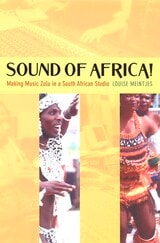
Sound of Africa!
Making Music Zulu in a South African StudioLouise Meintjes
Duke University Press, 2003
Focusing on the ways artists, producers, and sound engineers collaborate in the studio control room, Meintjes reveals not only how particular mbaqanga sounds are shaped technically, but also how egos and artistic sensibilities and race and ethnicity influence the mix. She analyzes how the turbulent identity politics surrounding Zulu ethnic nationalism impacted mbaqanga artists' decisions in and out of the studio. Conversely, she explores how the global consumption of Afropop and African images fed back into mbaqanga during the recording process. Meintjes is especially attentive to the ways the emotive qualities of timbre (sound quality or tone color) forge complex connections between aesthetic practices and political ideology. Vivid photos by the internationally renowned photographer TJ Lemon further dramatize Meintjes’ ethnography.
South Africa and the Dream of Love to Come
Queer Sexuality and the Struggle for FreedomBrenna M. Munro
University of Minnesota Press, 2012
After apartheid, South Africa established a celebrated new political order that imagined the postcolonial nation as belonging equally to the descendants of indigenous people, colonizing settlers, transported slaves, indentured laborers, and immigrants. Its constitution, adopted in 1996, was the first in the world to include gays and lesbians as full citizens. Brenna M. Munro examines the stories that were told about sexuality, race, and nation throughout the struggle against apartheid in order to uncover how these narratives ultimately enabled gay people to become imaginable as fellow citizens. She also traces how the gay, lesbian, or bisexual person appeared as a stock character in the pageant of nationhood during the transition to democracy. In the process, she offers an alternative cultural history of South Africa.
Munro asserts that the inclusion of gay people made South Africans feel “modern”—at least for a while. Being gay or being lesbian was reimagined in the 1990s as distinctly South African, but the “newness” that made these sexualities apt symbols for a transformed nation can also be understood as foreign and un-African. Indeed, a Western-style gay identity is often interpreted through the formula “gay equals modernity equals capitalism.” As South Africa’s reentrance into the global economy has failed to bring prosperity to the majority of its citizens, homophobic violence has been on the rise.
Employing a wide array of texts—including prison memoirs, poetry, plays, television shows, photography, political speeches, and the postapartheid writings of Nobel Laureates Nadine Gordimer and J. M. Coetzee—Munro reports on how contemporary queer activists and artists are declining to remain ambassadors for the “rainbow nation” and refusing to become scapegoats for the perceived failures of liberation and liberalism.

South Africa in the Global Imaginary, Volume 22
Bethlehem Kock, Louise Bethlehem, and Sonja Laden, eds.
Duke University Press, 0
This special issue of Poetics Today explores the development of a South African literary identity in the face of its staggering cultural, historical, and linguistic diversity. The collection uses the idea of the "global imaginary" to explore the ways the outside world has constructed ideas about South African literature as well as the way South Africans themselves have fashioned their literary selfhood. Articles address the legacy of colonialism and apartheid and wrestle with the fact that in spite of the fact that there are eleven official languages in South Africa and that many of the cultures have historically relied on an oral tradition, the dominant works continue to be those that are written down, in English. As de Kock writes in his introduction, the collection "raises a multiplicity of questions about the colonization of culture." There has been a "trope of binary pairing," he writes, between white and black, civilized and backward, home and exile, colonizer and colonized, which obscures the richness and complexity of the South African literary tradition. This collection promises to at least begin to correct that oversimplification.
Contributors: Louise Bethlehem, Jonathan Crewe, Dirk Klopper, Leon de Kock, Loren Kruger, Sonja Laden, Simon Lewis, Peter Merrington, Patricia Watson Shariff, Pippa Skotnes
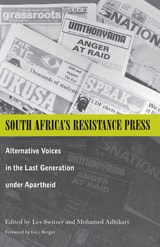
South Africa’s Resistance Press
Alternative Voices in the Last Generation under ApartheidLes Switzer
Ohio University Press, 2000
South Africa’s Struggle for Human Rights
Saul Dubow
Ohio University Press, 2012
The human rights movement in South Africa’s transition to a postapartheid democracy has been widely celebrated as a triumph for global human rights. It was a key aspect of the political transition, often referred to as a miracle, which brought majority rule and democracy to South Africa. The country’s new constitution, its Truth and Reconciliation Commission, and the moral authority of Nelson Mandela stand as exemplary proof of this achievement. Yet, less than a generation after the achievement of freedom, the status of human rights and constitutionalism in South Africa is uncertain. In government the ANC has displayed an inconsistent attitude to the protection, and advancement, of hard-won freedoms and rights, and it is not at all clear that a broader civic and political consciousness of the importance of rights is rooting itself more widely in popular culture.
South Africa’s Suspended Revolution
Hopes and ProspectsAdam Habib
Ohio University Press, 2013
South Africa’s Suspended Revolution tells the story of South Africa’s democratic transition and the prospects for the country to develop a truly inclusive political system. Beginning with an account of the transition in the leadership of the African National Congress from Thabo Mbeki to Jacob Zuma, the book then broadens its lens to examine the relationship of South Africa’s political elite to its citizens. It also examines the evolution of economic and social policies through the democratic transition, as well as the development of a postapartheid business community and a foreign policy designed to re-engage South Africa with the world community.
Written by one of South Africa’s leading scholars and political commentators, the book combines historical and contemporary analysis with strategies for an alternative political agenda. Adam Habib connects the lessons of the South African experience with theories of democratic transition, social change, and conflict resolution. Political leaders, scholars, students, and activists will all find material here to deepen their understanding of the challenges and opportunities of contemporary South Africa.
Southern Insurgency
The Coming of the Global Working ClassImmanuel Ness
Pluto Press, 2015
The product of extensive firsthand field research, Southern Insurgency paints a picture of the new industrial proletariat in the Global South—a group that lives a precarious, frightening existence yet at the same time offers hope for new approaches to solidarity and the anti-capitalist struggle.
Spear of the Nation
Umkhonto weSizwe: South Africa’s Liberation Army, 1960s–1990sJanet Cherry
Ohio University Press, 2011
Umkhonto weSizwe, Spear of the Nation, was arguably the last of the great liberation armies of the twentieth century—but it never got to “march triumphant into Pretoria.” MK—as it was known—was the armed wing of the African National Congress, South Africa’s liberation movement, that challenged the South African apartheid government. A small group of revolutionaries committed to the seizure of power, MK discovered its principal members engaged in negotiated settlement with the enemy and was disbanded soon after.
The history of MK is one of paradox and contradiction, of successes and failures. In this short study, which draws widely on the personal experiences of—and commentary by—MK soldiers, Janet Cherry offers a new and nuanced account of the Spear of the Nation. She presents in broad outline the various stages of MK’s thirty-year history, considers the difficult strategic and moral problems the revolutionary army faced, and argues that its operations are likely to be remembered as a just war conducted with considerable restraint.
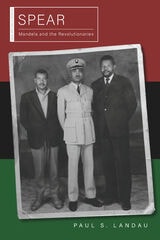
Spear
Mandela and the RevolutionariesPaul S. Landau
Ohio University Press, 2022
Speech and Song at the Margins of Global Health
Zulu Tradition, HIV Stigma, and AIDS Activism in South AfricaSteven P. Black
Rutgers University Press, 2019
Starring Mandela and Cosby
Media and the End(s) of ApartheidRon Krabill
University of Chicago Press, 2010
During the worst years of apartheid, the most popular show on television in South Africa—among both Black and White South Africans—was The Cosby Show. Why did people living under a system built on the idea that Black people were inferior and threatening flock to a show that portrayed African Americans as comfortably mainstream? Starring Mandela and Cosby takes up this paradox, revealing the surprising impact of television on racial politics.
The South African government maintained a ban on television until 1976, and according to Ron Krabill, they were right to be wary of its potential power. The medium, he contends, created a shared space for communication in a deeply divided nation that seemed destined for civil war along racial lines. At a time when it was illegal to publish images of Nelson Mandela, Bill Cosby became the most recognizable Black man in the country, and, Krabill argues, his presence in the living rooms of white South Africans helped lay the groundwork for Mandela’s release and ascension to power.
Weaving together South Africa’s political history and a social history of television, Krabill challenges conventional understandings of globalization, offering up new insights into the relationship between politics and the media.
Steeped in Heritage
The Racial Politics of South African Rooibos TeaSarah Ives
Duke University Press, 2017
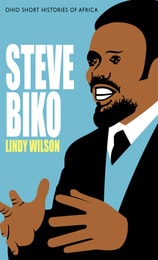
Steve Biko
Lindy Wilson
Ohio University Press, 2011
Steve Biko inspired a generation of black South Africans to claim their true identity and refuse to be a part of their own oppression. Through his example, he demonstrated fearlessness and self-esteem, and he led a black student movement countrywide that challenged and thwarted the culture of fear perpetuated by the apartheid regime. He paid the highest price with his life. The brutal circumstances of his death shocked the world and helped isolate his oppressors.
This short biography of Biko shows how fundamental he was to the reawakening and transformation of South Africa in the second half of the twentieth century—and just how relevant he remains. Biko’s understanding of black consciousness as a weapon of change could not be more relevant today to “restore people to their full humanity.”
As an important historical study, this book’s main sources were unique interviews done in 1989—before the end of apartheid—by the author with Biko’s acquaintances, many of whom have since died.
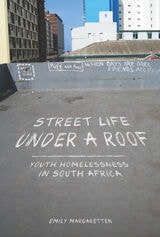
Street Life under a Roof
Youth Homelessness in South AfricaEmily Margaretten
University of Illinois Press, 2015
In Street Life under a Roof, Emily Margaretten draws on ten years of up-close fieldwork to explore the distinct cultural universe of the Point Place community. Margaretten's sensitive investigations reveal how young men and women draw on customary notions of respect and support to forge an ethos of connection and care that allows them to live far richer lives than ordinarily assumed. Her discussion of gender dynamics highlights terms like nakana--to care about or take notice of another--that young women and men use to construct "outside" and "inside" boyfriends and girlfriends and to communicate notions of trust. Margaretten exposes the structures of inequality at a local, regional, and global level that contribute to socioeconomic and political dislocation. But she also challenges the idea that Point Place's marginalized residents need "rehabilitation." As she argues, these young men and women want love, secure homes, and the means to provide for their dependents--in short, the same hopes and aspirations mirrored across South African society.
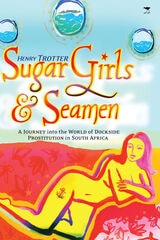
Sugar Girls & Seamen
A Journey into the World of Dockside Prostitution in South AfricaHenry Trotter
Ohio University Press, 2011
Sugar Girls and Seamen illuminates the shadowy world of dockside prostitution in South Africa, focusing on the women of Cape Town and Durban who sell their hospitality to foreign sailors.
Dockside “sugar girls” work at one of the busiest cultural intersections in the world. Through their continual interactions with foreign seamen, they become major traffickers in culture, ideas, languages, styles, goods, currencies, genes, and diseases. Many learn the seamen’s languages, develop emotional relationships with them, have their babies, and become entangled in vast webs of connection. Henry Trotter argues that these South African women are the ultimate cosmopolitans, the unsung sirens of globalization.
Based on research at the seamen’s nightclubs, plus countless interviews with sugar girls, sailors, club owners, cabbies, bouncers, and barmaids, this book provides a comprehensive account of dockside prostitution at the southern tip of Africa. Through stories, analysis, and firsthand experiences, it reveals this gritty world in all its raw vitality and fragile humanity. Sugar Girls and Seamen is simultaneously racy and light, critical and profound.
Synthesizing Hope
Matter, Knowledge, and Place in South African Drug DiscoveryAnne Pollock
University of Chicago Press, 2019
Consideration of this case exposes the limitations of global health frameworks that implicitly posit rich countries as the only sites of knowledge production. Analysis of iThemba identifies the problems inherent in global north/south divides at the same time as it highlights what is at stake in who makes knowledge and where. It also provides a concrete example for consideration of the contexts and practices of postcolonial science, its constraints, and its promise.
Synthesizing Hope explores the many legacies that create conditions of possibility for South African drug discovery, especially the specific form of settler colonialism characterized by apartheid and resource extraction. Paying attention to the infrastructures and laboratory processes of drug discovery underscores the materiality of pharmaceuticals from the perspective of their makers, and tracing the intellectual and material infrastructures of South African drug discovery contributes new insights about larger social, political, and economic orders.