Results by title
260 books match the query 'Soviet Union' and 24 start with s

Sectors of Mutual Benefit in U.S.-Soviet Relations
Nish Jamgotch Jr., editor
Duke University Press, 1985
Without minimizing the enormous dangers of ongoing strategic military competition, the contributors attempt to determine which sectors of U.S.-Soviet relations have yielded the most significant mutual benefits. They raise questions about where U.S. policy has gone wrong, where it has been effective, and how safe we are in forecasting the continuation of those cooperative relationships.
Sergei Dovlatov and His Narrative Masks
Jekaterina Young
Northwestern University Press, 2012
This book provides an introduction to Sergei Dovlatov (1941–1990) that is closely attentive to the details of his life and work, their place in the history of Soviet society and literature, and of émigré culture during this turbulent period. A journalist, newspaper editor, and prose writer, Dovlatov is most highly regarded for his short stories, which draw heavily on his experiences in Russia before 1979, when he was forced out of the country. During compulsory military service, before becoming a journalist, he worked briefly as a prison camp guard—an experience that gave him a unique perspective on the operations of the Soviet state. After moving to New York, Dovlatov published works (in the New Yorker and elsewhere) that earned him considerable renown in America and back in Russia. Young’s book presents a valuable critical overview of the prose of a late twentieth-century master within the context of the prevailing Russian and larger literary culture.

Sergei Paradjanov
Shadows of Forgotten AncestorsJoshua First
Intellect Books, 2016
This book is the first full-length companion to the film. In addition to a synopsis of the plot and a close analysis of the many levels of symbolism in the film, it offers a history of the film’s legendarily troubled production process (which included Paradjanov challenging a cinematographer to a duel). The book closes with an account of the film’s reception by critics, ordinary viewers, and Soviet officials, and the numerous controversies that have kept it a subject of heated debate for decades. An essential companion to a fascinating, complicated work of cinema art, this book will be invaluable to students, scholars, and regular film buffs alike.

Sergei Prokofiev
A BiographyUniversity Press of New England, 2002
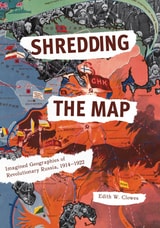
Shredding the Map
Imagined Geographies of Revolutionary Russia, 1914-1922Edith W. Clowes
Amherst College Press, 2024
An innovative, digitally-aided study of Russia’s “imagined geography” during the early decades of the twentieth century, Shredding the Map uncovers vying emotional patterns and responses to Russian ideas of place, some familiar and some quite new. The book includes new visualizations that connect otherwise invisible networks of shared place, feeling, and perception among dozens of writers in order to trace patterns of geospatial identity. A scholarly companion to the “Mapping Imagined Geographies of Revolutionary Russia” website and database, this book offers an innovative analysis of place and identity beyond the centers of power, enhancing our perceptions of Russia and encouraging debate about the possibilities for digital humanities and literary analysis.
Singing the Self
Guitar Poetry, Community, and Identity in the Post-Stalin PeriodRachel S. Platonov
Northwestern University Press, 2012
This book is a study of a Soviet cultural phenomenon of the 1950s through the 1980s known as guitar poetry—songs accompanied by guitar and considered poetry in much the same way as those of, for example, Bob Dylan. Platonov’s is the most comprehensive book in English to date to analyze guitar poetry, which has rarely received scholarly attention outside of Russia. Going well beyond the conventional, text-centered view of guitar poetry as a form of political or artistic dissent, largely a function of the Cold War climate in which it began, Platonov argues for a more complex understanding of guitar poetry as a means of self-invention and community formation. Although grounded in literary studies, the book effectively brings historical, anthropological, and musicological perspectives to bear on an understudied phenomenon of the post-Stalin period.
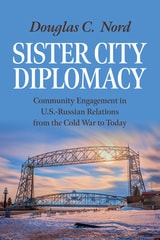
Sister City Diplomacy
Community Engagement in U.S.–Russian Relations from the Cold War to TodayDouglas C. Nord
University of Wisconsin Press, 2025
Sister City Diplomacy offers a historical account of citizen diplomacy set in a unique political and social environment. But in its theoretical grounding and informed arguments, this study speaks to much broader and contemporary concerns, both in terms of United States–Russian relations today and with regard to the challenges and opportunities of community-based diplomacy in general. Lessons learned along the shores of Lakes Superior and Onega in the last days of the Cold War hold great value given the heightened tensions of current geopolitics.
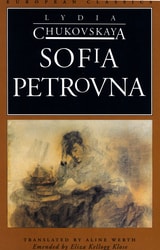
Sofia Petrovna
Lydia Chukovskaya
Northwestern University Press, 1989
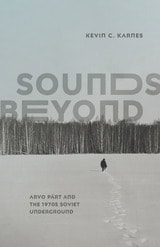
Sounds Beyond
Arvo Pärt and the 1970s Soviet UndergroundKevin C. Karnes
University of Chicago Press, 2021
In Sounds Beyond, Kevin C. Karnes studies the interconnected alternative music and art scenes in the USSR during the second half of the 1970s, revealing the audacious origins of some of Estonian composer Arvo Pärt’s most famous music. Karnes shows how Pärt’s work was created within a vital yet forgotten culture of collective experimentation, the Soviet underground.
Mining archives and oral history from across the former USSR, Sounds Beyond carefully situates modes of creative experimentation within their late socialist contexts. In documenting Pärt’s work, Karnes reveals the rich creative culture that thrived covertly in the USSR and the network of figures that made underground performances possible: students, audio engineers, sympathetic administrators, star performers, and aspiring DJs. Sounds Beyond advances a new understanding of Pärt’s music as an expression of the aesthetic and religious commitments shared, nurtured, and celebrated by many in Soviet underground circles. At the same time, this story attests to the lasting power of Pärt’s music. Dislodging the mythology of the solitary creative genius, Karnes shows that Pärt’s work would be impossible without community.
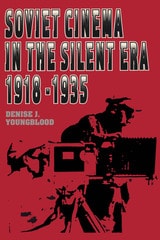
Soviet Cinema in the Silent Era, 1918–1935
By Denise J. Youngblood
University of Texas Press, 1991
The golden age of Soviet cinema, in the years following the Russian Revolution, was a time of both achievement and contradiction, as reflected in the films of Eisenstein, Pudovkin, and Kuleshov. Tensions ran high between creative freedom and institutional constraint, radical and reactionary impulses, popular and intellectual cinema, and film as social propaganda and as personal artistic expression. In less than a decade, the creative ferment ended, subjugated by the ideological forces that accompanied the rise of Joseph Stalin and the imposition of the doctrine of Socialist Realism on all the arts.
Soviet Cinema in the Silent Era, 1918–1935 records this lost golden age. Denise Youngblood considers the social, economic, and industrial factors that influenced the work of both lesser-known and celebrated directors. She reviews all major and many minor films of the period, as well as contemporary film criticism from Soviet film journals and trade magazines. Above all, she captures Soviet film in a role it never regained—that of dynamic artform of the proletarian masses.
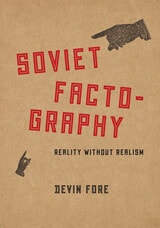
Soviet Factography
Reality without RealismDevin Fore
University of Chicago Press, 2024
This is the first major English-language study of factography, an avant-garde movement of 1920s modernism. Devin Fore charts this style through the work of its key figures, illuminating factography’s position in the material culture of the early Soviet period and situating it as a precursor to the genre of documentary that arose in the 1930s. Factographers employed photography and film practices in their campaign to inscribe facts and to chronicle modernization as it transformed human experience and society. Fore considers factography in light of the period’s explosion of new media technologies—including radio broadcasting, sound in film, and photo-media innovations—that allowed the press to transform culture on a massive scale.
This theoretically driven study uses material from Moscow archives and little-known sources to highlight factography as distinct from documentary and Socialist Realism and to establish it as one of the major twentieth-century avant-garde forms. Fore covers works of photography, film, literature, and journalism together in his considerations of Soviet culture, the interwar avant-gardes, aesthetics, and the theory of documentary.
Soviet International Law and the World Economic Order
Kazimierz Grzybowski
Duke University Press, 1987
Soviet Jewry in the 1980s
The Politics of Anti-Semitism and Emigration and the Dynamics of ResettlementRobert O. Freedman, ed.
Duke University Press, 1989
Soviet Military Intervention in Hungary, 1956
Alexandr Kirov
Central European University Press, 2000
This first detailed account of Soviet military operations is based on access to unpublished material in Soviet archives, which have recently been reclassified.
The major contribution made by the book is its source material, which reveals new information on the organization, command, strategy, and tactics of the Soviet armed forces which invaded Hungary in 1956. Particularly interesting is the precise documentation of the irrationally large size of the forces. The volume is based on research in Soviet archives, and this alone makes it of unique scholarly importance.
The book opens with a substantial introductory essay by the editors, and includes a major study by the Russian military historian Alexandr Kirov, based on research in Soviet military archives. One of the real strengths of the book is that it also includes the memoirs of General Yevgeny Malashenko, in 1956 a colonel in the Soviet Army and acting Chief of Staff of the Special Corps in Budapest. He provides unparalleled insights into Soviet military procedures, politico-military co-operation, and the actual fighting strengths and weaknesses of the Red Army. Very few other high-ranking Soviet officers have ever published their memoirs in the West.

Soviet Natural Resources in the World Economy
Edited by Robert G. Jensen, Theodore Shabad, and Arthur W. Wright
University of Chicago Press, 1983
The authors examine the mineral and forest resources that the Soviet Union has developed and may yet develop to provide exports during the 1980s. They discuss the regional dimension of these resources, especially in Siberia and the Soviet Far East; individual mineral raw materials, such as petroleum, natural gas, timber, iron ore, manganese, and gold; and finally the role of raw materials in Soviet foreign trade.
The authors, representing the United States, Canada, and Great Britain, are primarily geographers, but they include economists, political scientists, and a geologist. Their work is based on primary sources (for most of these reports, current information is no longer being released to researchers) and on interviews with Soviet officials.
Soviet Occupation of Romania, Hungary, and Austria 1944/45–1948/49
László Borhi
Central European University Press, 2015
Soviet Rock on Screen
The Life, Death, and Resurrection of a Film GenreRita Safariants
University of Wisconsin Press, 2026
In Soviet Rock on Screen, Rita Safariants chronicles the birth, life, death, and resurrection of a genre that rapidly became one of the most readily recognized cultural signifiers of the perestroika era and which continues to reflect and codify Russian culture. During their initial heyday in the 1980s, rock films were influenced by and encouraged the cultural shifts of perestroika and the incipient political storm. Today, Safariants argues, the reemergence and reconfiguration of the genre indicates the extent to which Soviet-era cultural emblems inform Russian national identity and obliquely support the current political repression under Putin.
Soviet-American Relations After the Cold War
Robert Jervis and Seweryn Bialer, eds.
Duke University Press, 1991
Moving beyond the boundaries of traditional studies of international relations, the contributors here focus on such topics as public opinion and the relationship of domestic policy to foreign policy. Other areas of consideration include the Soviet-U.S. relationship and the Third World and East Asia, the role of the United Nations in Soviet and American policy in the 1990s, international environmental protection, and the Soviet opening to nonprovocative defense. A final section concludes with policy choices for the future regarding security strategies and prospects for peace.
Contributors. Seweryn Bialer, Robert Dallek, Charles Gati, Toby Trister Gati, Colin S. Gray, Ole R. Holsti, Robert Jervis, Alexander J. Motyl, John Mueller, Eric A. Nordlinger, George H. Quester, Harold H. Sanders, Glenn E. Schweitzer, Jack Snyder, Donald S. Zagoria, William Zimmerman
Spirits of the Cold War
Contesting Worldviews in the Classical Age of American Security StrategyNed O'Gorman
Michigan State University Press, 2012
In spring of 1953, newly elected President Eisenhower sat down with his staff to discuss the state of American strategy in the cold war. America, he insisted, needed a new approach to an urgent situation. From this meeting emerged Eisenhower’s teams of “bright young fellows,” charged with developing competing policies, each of which would come to shape global politics. In Spirits of the Cold War, Ned O’Gorman argues that the early Cold War was a crucible not only for contesting political strategies, but also for competing conceptions of America and its place in the world. Drawing on extensive archival research and wide reading in intellectual and rhetorical histories, this comprehensive account shows cold warriors debating “worldviews” in addition to more strictly instrumental tactical aims. Spirits of the Cold War is a rigorous scholarly account of the strategic debate of the early Cold War—a cultural diagnostic of American security discourse and an examination of its origins.
Stalin's Italian Prisoners of War
Maria Teresa Giusti
Central European University Press, 2021
Stalin's Romeo Spy
The Remarkable Rise and Fall of the KGB's Most Daring OperativeEmil Draitser
Northwestern University Press, 2010
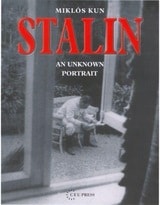
Stalin
An Unknown PortraitMiklós Kun
Central European University Press, 2003
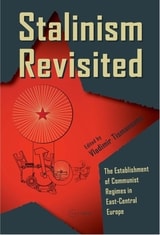
Stalinism Revisited
The Establishment of Communist Regimes in East-Central EuropeVladimir Tismaneanu
Central European University Press, 2010
Deals with the period of takeover and of ‘high Stalinism’ in Eastern Europe (1945–1955). These years are considered to be fundamentally characterized by institutional and ideological transfers based upon the premise of radical transformism and of cultural revolution. Both a balance-sheet and a politico-historical synthesis that reflects the archival and thematic novelties which came about in the field of communism studies after 1989.
Contains contributions analyzing various aspects related these topics for each country of the former Soviet bloc (with the exception of Albania). The essays are based on new archival research, some are reassessments of the author’s previous research and others are critical appraisals of the specific literature published on issues related to the main topic. A path-breaking comparative framework for interpreting the relationship between late Stalinism and the communist takeovers in former Eastern Europe. A bonus for the volume is that it also provides detailed, sectorial analyses for the Romanian case, something that the field paritcularly lacks.
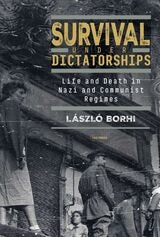
Survival under Dictatorships
Life and Death in Nazi and Communist RegimesLászló Borhi
Central European University Press, 2024
A complex array of individual responses to the abuse of power by the state is represented in this book in three horrific episodes in the history of East-Central Europe. The three events followed each other within a span of about ten years: the deportation and murder of Hungarian Jews in Nazi death and labor camps; the Arrow Cross terrorist rule in Budapest; and finally the Stalinist terror in Hungary and East-Central Europe. Through the prism of survival, László Borhi explores the relationship between the individual and power, attempting to understand the mechanism of oppression and terror produced by arbitrary, unbridled power through the experience of normal people.
Despite the obvious peculiarities of time and place, the Hungarian cases convey universal lessons about the Holocaust, Nazism, and Stalinism. In the author's conception, the National Socialist and Stalinist experiences are linked on several levels. Both regimes defended their visions of the future against social groups whom they saw as implacable enemies of those visions, and who therefore had to be destroyed for sake of social perfection. Furthermore, the social practices of National Socialism were passed on. And although Stalinism was imposed by a foreign power, some of the survival skills for coping with it were rehearsed under the previous hellish experience.