121 books match the query 'Space' and 23 start with s
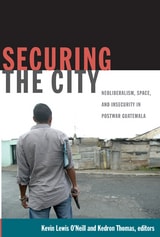
cover of Securing the City: Neoliberalism, Space, and Insecurity in Postwar Guatemala

Securing the City

Neoliberalism, Space, and Insecurity in Postwar Guatemala

Kevin Lewis O Neill and Kedron Thomas, eds.

Duke University Press, 2011

Unprecedented crime rates have made Guatemala City one of the most dangerous cities in the world. Following a peace process that ended Central America’s longest and bloodiest civil war and impelled the transition from a state-centric economy to the global free market, Guatemala’s neoliberal moment is now strikingly evident in the practices and politics of security. Postwar violence has not prompted public debates about the conditions that permit transnational gangs, drug cartels, and organized crime to thrive. Instead, the dominant reaction to crime has been the cultural promulgation of fear and the privatization of what would otherwise be the state’s responsibility to secure the city. This collection of essays, the first comparative study of urban Guatemala, explores these neoliberal efforts at security. Contributing to the anthropology of space and urban studies, this book brings together anthropologists and historians to examine how postwar violence and responses to it are reconfiguring urban space, transforming the relationship between city and country, and exacerbating deeply rooted structures of inequality and ethnic discrimination.

Contributors. Peter Benson, Manuela Camus, Avery Dickins de Girón, Edward F. Fischer, Deborah Levenson, Thomas Offit, Kevin Lewis O’Neill, Kedron Thomas, Rodrigo José Véliz
[more]
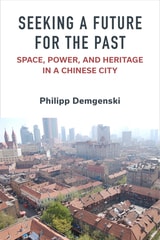
cover of Seeking a Future for the Past: Space, Power, and Heritage in a Chinese City

Seeking a Future for the Past

Space, Power, and Heritage in a Chinese City

Philipp Demgenski

University of Michigan Press, 2024
Seeking a Future for the Past: Space, Power, and Heritage in a Chinese City examines the complexities and changing sociopolitical dynamics of urban renewal in contemporary China. Drawing on ten years of ethnographic fieldwork in the northeastern Chinese city of Qingdao, the book tells the story of the slow, fragmented, and contentious transformation of Dabaodao—an area in the city’s former colonial center—from a place of common homes occupied by the urban poor into a showcase of architectural heritage and site for tourism and consumption. The ethnography provides a nuanced account of the diverse experiences and views of a range of groups involved in shaping, and being shaped, by the urban renewal process—local residents, migrant workers, preservationists, planners, and government officials—foregrounding the voices and experiences of marginal groups, such as migrants in the city. Unpacking structural reasons for urban developmental impasses, it paints a nuanced local picture of urban governance and political practice in contemporary urban China. Seeking a Future for the Past also weighs the positives and negatives of heritage preservation and scrutinizes the meanings and effects of “preservation” on diverse social actors. By zeroing in on the seemingly contradictory yet coexisting processes of urban stagnation and urban destruction, the book reveals the multifaceted challenges that China faces in reforming its urbanization practices and, ultimately, in managing its urban future.
[more]
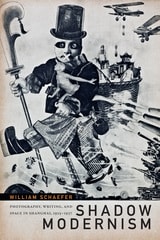
cover of Shadow Modernism: Photography, Writing, and Space in Shanghai, 1925-1937

Shadow Modernism

Photography, Writing, and Space in Shanghai, 1925-1937

William Schaefer

Duke University Press, 2017
During the early twentieth century, Shanghai was the center of China's new media culture. Described by the modernist writer Mu Shiying as "transplanted from Europe" and “paved with shadows,” for many of its residents Shanghai was a city without a past paradoxically haunted by the absent past’s traces. In Shadow Modernism William Schaefer traces how photographic practices in Shanghai provided a forum within which to debate culture, ethnicity, history, and the very nature of images. The central modernist form in China, photography was neither understood nor practiced as primarily a medium for realist representation; rather, photo layouts, shadow photography, and photomontage rearranged and recomposed time and space, cutting apart and stitching places, people, and periods together in novel and surreal ways. Analyzing unknown and overlooked photographs, photomontages, cartoons, paintings, and experimental fiction and poetry, Schaefer shows how artists and writers used such fragmentation and juxtaposition to make visible the shadows of modernity in Shanghai: the violence, the past, the ethnic and cultural multiplicity excluded and repressed by the prevailing cultural politics of the era and yet hidden in plain sight.
[more]
cover of Shaping the Discourse on Space: Charity and Its Wards in Nineteenth-Century San Juan, Puerto Rico

Shaping the Discourse on Space

Charity and Its Wards in Nineteenth-Century San Juan, Puerto Rico

By Teresita Martínez-Vergne

University of Texas Press, 1999

As an inchoate middle class emerged in Puerto Rico in the early nineteenth century, its members sought to control not only public space, but also the people, activities, and even attitudes that filled it. Their instruments were the San Juan town council and the Casa de Beneficencia, a state-run charitable establishment charged with responsibility for the poor.

In this book, Teresita Martínez-Vergne explores how municipal officials and the Casa de Beneficencia shaped the discourse on public and private space and thereby marginalized the worthy poor and vagrants, "liberated" Africans, indigent and unruly women, and destitute children. Drawing on extensive and innovative archival research, she shows that the men who comprised the San Juan ayuntamiento and the board of charity regulated the public discourse on topics such as education, religious orthodoxy, hygiene, and family life, thereby establishing norms for "correct" social behavior and chastising the "deviant" lifestyles of the working poor.

This research clarifies the ways in which San Juan's middle class defined itself in the midst of rapid social and economic change. It also offers new insights into notions of citizenship and the process of nation-building in the Caribbean.
[more]
cover of Somewhere in Space

Somewhere in Space

Talvikki Ansel

The Ohio State University Press, 2015
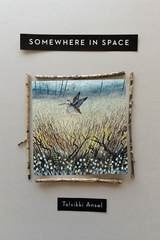
The poems in Talvikki Ansel’s Somewhere in Space work to locate us in this world and its mix of the made and natural, the cultivated and untamable. Faced with such mysteries and intricacies as the water-conducting tissue of trees, the sensory abilities of vultures, the lives of past writers (Edith Södergran, Bruno Schulz), and fragments of history and our tenuous connections to them, the poems acknowledge the difficulty of authority, yet continue with their forays. Invented characters coexist with observations of mergansers and moths, orioles and cats; “Particulars rock / just inside the breakwater / like conjured up skiffs.”
[more]
cover of Southern Stages: Space and Memory in US Performance

Southern Stages

Space and Memory in US Performance

Hopkins, Chandra

University of Iowa Press, 2025

Each day, countless southerners pass symbols and monuments dedicated to white supremacy and the “Old South”: statues, cemeteries, plantations, downtown squares, and even regional theatre stages. Some may only glance at them, ignorant to their history, while others recall the physical and psychological trauma embedded by generations of enslavement.

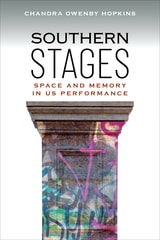
Through the eyes of actors and everyday people, Southern Stages offers an engaging new model for interrogating the performance of southernness, as well as how memory and imagination intersect in spaces that have shaped hundreds of years of American history. Chandra Owenby Hopkins employs cultural memory and lived realities of Black and white communities to examine the earliest and most enduring southern stages: the playhouse and the public square.
[more]
cover of Sovereign Acts: Performing Race, Space, and Belonging in Panama and the Canal Zone

Sovereign Acts

Performing Race, Space, and Belonging in Panama and the Canal Zone

Zien, Katherine A.

Rutgers University Press, 2017

Winner of the 2018 Gordon K. and Sybil Farrell Lewis Book Prize from the Caribbean Studies Association
Winner of the 2017 Annual Book Prize from the Canadian Association of Latin American and Caribbean Studies (CALACS)​


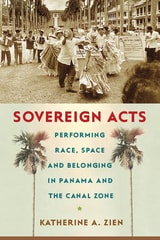
Sovereign Acts explores how artists, activists, and audiences performed and interpreted sovereignty struggles in the Panama Canal Zone, from the Canal Zone’s inception in 1903 to its dissolution in 1999. In popular entertainments and patriotic pageants, opera concerts and national theatre, white U.S. citizens, West Indian laborers, and Panamanian artists and activists used performance as a way to assert their right to the Canal Zone and challenge the Zone’s sovereignty, laying claim to the Zone’s physical space and imagined terrain. 

By demonstrating the place of performance in the U.S. Empire’s legal landscape, Katherine A. Zien transforms our understanding of U.S. imperialism and its aftermath in the Panama Canal Zone and the larger U.S.-Caribbean world. 
[more]
cover of Space And Place: The Perspective of Experience

Space And Place

The Perspective of Experience

Yi-Fu Tuan

University of Minnesota Press, 2001
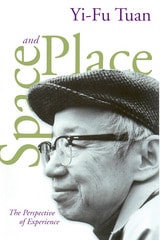
A study of the ways in which people feel and think about space, how they form attachments to home, neighborhood, and nation, and how feelings about space and place are affected by the sense of time.“Since it is the breadth and universality of his argument that concerns Yi-Fu Tuan, experience is defined as ‘all the modes by which a person knows and constructs reality,’ and examples are taken with equal ease from non-literate cultures, from ancient and modern oriental and western civilizations, from novels, poetry, anthropology, psychology, and theology. The result is a remarkable synthesis, which reflects well the subtleties of experience and yet avoids the pitfalls of arbitrary classification and facile generalization. For these reasons, and for its general tone and erudition and humanism, this book will surely be one that will endure when the current flurry of academic interest in environmental experience abates.” Canadian Geographer
[more]
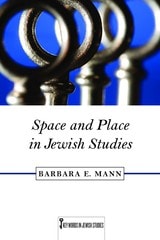
cover of Space and Place in Jewish Studies

Space and Place in Jewish Studies

Mann, Barbara E

Rutgers University Press, 2012

Scholars in the humanities have become increasingly interested in questions of how space is produced and perceived—and they have found that this consideration of human geography greatly enriches our understanding of cultural history. This “spatial turn” equally has the potential to revolutionize Jewish Studies, complicating familiar notions of Jews as “people of the Book,” displaced persons with only a common religious tradition and history to unite them.

Space and Place in Jewish Studies embraces these exciting critical developments by investigating what “space” has meant within Jewish culture and tradition—and how notions of “Jewish space,” diaspora, and home continue to resonate within contemporary discourse, bringing space to the foreground as a practical and analytical category. Barbara Mann takes us on a journey from medieval Levantine trade routes to the Eastern European shtetl to the streets of contemporary New York, introducing readers to the variety of ways in which Jews have historically formed communities and created a sense of place for themselves. Combining cutting-edge theory with rabbinics, anthropology, and literary analysis, Mann offers a fresh take on the Jewish experience.
[more]
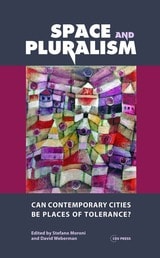
cover of Space and Pluralism: Can Contemporary Cities Be Places of Tolerance?

Space and Pluralism

Can Contemporary Cities Be Places of Tolerance?

Stefano Moroni

Central European University Press, 2016
This book addresses the social, functional and symbolic dimensions of urban space in today's world. The twelve essays are grouped in three parts, ranging from a conceptual framework to case descriptions rich with illustrations. They provide a valuable service in exploring the nature and significance of social space and particular aspects of its contemporary distribution and contestation. The book addresses a topic that is intrinsically interdisciplinary. Questions of space are examined from a rich variety of disciplinary perspectives in a welcome range from urban planning to political philosophy, shedding a good deal of light in the process. The issues in focus include the dichotomies of public and private space, discussion of rights and duties with regard to the use of space, or conflicts over its allocation. Well reasoned and presented discussion is offered from the perspective of basic values and rights. The policy issue of institutional recognition of the specifics of (minority community) identity is raised in opposition to abstract distributive accounts of justice.
[more]
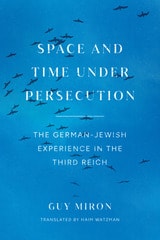
cover of Space and Time under Persecution: The German-Jewish Experience in the Third Reich

Space and Time under Persecution

The German-Jewish Experience in the Third Reich

Guy Miron

University of Chicago Press, 2023

A new history of how the Nazi era upended German-Jewish experiences of space and time from eminent historian Guy Miron.
 
In Space and Time under Persecution, Guy Miron considers how social exclusion, economic decline, physical relocation, and, later, forced evictions, labor, and deportation under Nazi rule forever changed German Jews’ experience of space and time. Facing ever-mounting restrictions, German Jews reimagined their worlds—devising new relationships to traditional and personal space, new interpretations of their histories, and even new calendars to measure their days. For Miron, these tactics reveal a Jewish community’s attachment to German bourgeois life as well as their defiant resilience under Nazi persecution.
[more]
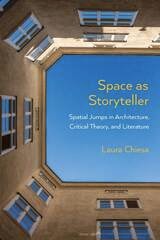
cover of Space as Storyteller: Spatial Jumps in Architecture, Critical Theory, and Literature

Space as Storyteller

Spatial Jumps in Architecture, Critical Theory, and Literature

Laura Chiesa

Northwestern University Press, 2016

Walter Benjamin's Arcades Project suggests that space can become a storyteller: if so, plenty of fleeting stories can be read in the space of modernity, where repetition and the unexpected cross-pollinate. In Space as Storyteller, Laura Chiesa explores several stories across a wide range of time that narrate spatial jumps, from Benjamin's tangential take on the cityscape, the experimentalism of Futurist theatricality, the multiple and potential atlases narrated by Italo Calvino and Georges Perec, and the posturban thought and practice of Bernard Tschumi and Rem Koolhaas/OMA. Space as Storyteller diverts attention from isolated disciplines and historical or geographical contexts toward transdisciplinary encounters that mobilize the potential to invent new spaces of comparison, a potential the author describes as "architecturability."
[more]
cover of Space in Greek Tragedy (BICS Supplement 131)

Space in Greek Tragedy (BICS Supplement 131)

Edited by Vassiliki Kampourelli

University of London Press, 2016
This book presents a critical application of semiotic models to Greek tragic space. It thus reappraises certain aspects of the tragic texts themselves by illuminating the semantics of space, that is, the ways in which space may contribute to the creation of meaning. After the formulation of a working model appropriate to the examination of space in Greek tragedy, an analysis of the proposed categories of tragic space follows. The architectural space of tragedy is then examined with particular reference to the ways in which it finds expression in the Theatre of Dionysus in Athens. Drawing widely on the works of Aeschylus, Sophocles and Euripedes, the focus turns to the interactions between the proposed categories of tragic space.
[more]
cover of Space in Performance: Making Meaning in the Theatre

Space in Performance

Making Meaning in the Theatre

Gay McAuley

University of Michigan Press, 2000

Theater, as distinct from other dramatic media, is essentially a relationship between performer, spectator, and the space in which both come together. Space in Performance examines the way theater buildings function to frame the performance event, the organization of audience and practitioner spaces within the building, the nature of the stage and the modes of representation it facilitates, and the relationship between the real space of the theater and the fictional places that are evoked.
The book's theoretical and methodological framework is both semiotic and phenomenological, based in part from the seminal work of Anne Ubersfeld, from direct observation of the rehearsal process, and from documentation and analysis of professional performances. The situation of the academic observer in the rehearsal room has much in common with that of the ethnographer in the field, and contemporary ethnographic practice provides a third theoretical and methodological perspective to this study.
Performance studies is an emerging discipline, and it is still evolving appropriate methodologies. The multi-faceted approach adopted here will engage theater and performance studies specialists, those concerned with modes of representation in contemporary culture, and students of theater, semiotics, architecture, set design, acting and performance theory. It also offers a great deal to theater practitioners as well as to spectators interested in deepening their appreciation of theater art. It is written in a simple, accessible way, and the theory always emerges from descriptions of practice.
"An excellent study that imaginatively summarizes, synthesizes, and intelligently critiques a wide range of previous theory and practice while making an important new contribution to the field of theater studies." --Marvin Carlson, City University of New York
Gay McAuley is Director of the Centre for Performance Studies, University of Sydney.
[more]
cover of Space of Detention: The Making of a Transnational Gang Crisis between Los Angeles and San Salvador

Space of Detention

The Making of a Transnational Gang Crisis between Los Angeles and San Salvador

Elana Zilberg

Duke University Press, 2011
Space of Detention is a powerful ethnographic account and spatial analysis of the “transnational gang crisis” between the United States and El Salvador. Elana Zilberg seeks to understand how this phenomenon became an issue of central concern for national and regional security, and how La Mara Salvatrucha, a gang founded by Salvadoran immigrants in Los Angeles, came to symbolize the “gang crime–terrorism continuum.” She follows Salvadoran immigrants raised in Los Angeles, who identify as—or are alleged to be—gang members and who are deported back to El Salvador after their incarceration in the United States. Analyzing zero-tolerance gang-abatement strategies in both countries, Zilberg shows that these measures help to produce the very transnational violence and undocumented migration that they are intended to suppress. She argues that the contemporary fixation with Latino immigrant and Salvadoran street gangs, while in part a product of media hype, must also be understood in relation to the longer history of U.S. involvement in Central America, the processes of neoliberalism and globalization, and the intersection of immigration, criminal, and antiterrorist law. These forces combine to produce what Zilberg terms “neoliberal securityscapes.”
[more]
cover of Space, Affect, Memory: Literary Geographies in Transnational and Transdisciplinary Comparison

Space, Affect, Memory

Literary Geographies in Transnational and Transdisciplinary Comparison

Edited by Fernando Cabo Aseguinolaza and Tomás Espino Barrera

University College London, 2025

An interdisciplinary exploration of the memorial and affective meanings of space in modern and contemporary literature.

Space, Affect, Memory highlights the centrality of space in modern and contemporary culture, both as an object of study and as a concept that underpins research and creative practice. In so doing, the book argues for the necessity of a new approach to space that fully integrates its affective and memorial dimensions. Encompassing lesser-known works in English, Spanish, Portuguese, French, Italian, and Japanese, the essays expand the scope of previous scholarship in literary geography. They also offer a unique analysis of the performative aspect of representation, incorporating analyses of non-textual media like photography, performance, and architecture. 
[more]
cover of Space, Drama, and Empire: Mapping the Past in Lope de Vega's Comedia

Space, Drama, and Empire

Mapping the Past in Lope de Vega's Comedia

Javier Lorenzo

Bucknell University Press, 2023
Spanish poet, playwright, and novelist Félix Lope de Vega (1562–1635) was a key figure of Golden Age Spanish literature, second only in stature to Cervantes, and is considered the founder of Spain’s classical theater. In this rich and informative study, Javier Lorenzo investigates the symbolic use of space in Lope’s drama and its function as an ideological tool to promote an imagined Spanish national past. In specific plays, this book argues, historical landscapes and settings were used to foretell and legitimize the imperial present in Hapsburg Spain, allowing audiences to visualize and plot, as on a map, the country’s expansionist trajectory throughout the centuries. By focusing on connections among space, drama, and empire, this book makes an important contribution to the study of literature and imperialism in early modern Spain and equally to our understanding of the role and political significance of spatiality in Siglo de Oro comedia.
[more]
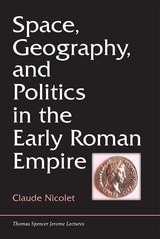
cover of Space, Geography, and Politics in the Early Roman Empire

Space, Geography, and Politics in the Early Roman Empire

Claude Nicolet

University of Michigan Press, 2015
Drawing on unexpected texts both ancient and modern, Space, Geography, and Politics in the Early Roman Empire offers startling insights into the character of Rome and its princeps-turned-emperor, Augustus. Claude Nicolet documents Roman expansion at the start of the early imperial period and explores how Romans came to map the world they knew and conquered. The roles of both the agrimensores, who worked in the state’s interest observing and recording new territories, and M. Vipsanius Agrippa, the sometime son-in-law of Emperor Augustus, are considered. Nicolet also presents the integral relations between territorial expansion and political expansion, as well as between propaganda cultivated in the national interest and propaganda designed to secure the status of the princeps as primus inter pares, first among equals.
[more]
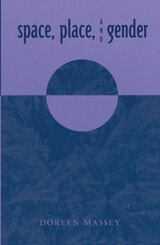
cover of Space, Place, and Gender

Space, Place, and Gender

Doreen Massey

University of Minnesota Press, 1994
A leading feminist geographer puts forth new ways of thinking about space and place. In these days of global acceleration on the one hand and intensifying local nationalisms on the other, how should we be thinking about space and place? This new book brings together Doreen Massey's key writings on this debate. In it she argues that we have seen some problematical readings of both terms in recent years, and she proposes an alternative approach more adequate to the issues facing the social sciences today. Massey has organized these debates around the three themes of space, place, and gender. She traces the development of ideas about the social structure of space and place, and the relation of both to issues of gender and certain debates within feminism. Beginning with the economy and social structures of production, Massey develops a wider notion of spatiality as the product of intersecting social relations. On this basis she proposes an approach to "places" that is essentially open and hybrid while always provisional and contested. The themes intersect with much current thinking about identity within feminism and cultural studies. The chapters range from studies of the concepts of place employed in debates on uneven regional development and inner-city problems to arguments about the relationship between the conceptualization of space/place and the social construction of gender relations. "This book presents a collection of Massey's writings that have appeared over the last two decades. The volume is, however, more than a sum of its parts, in that Massey uses commentaries throughout the book to delineate an intellectual trajectory in Anglo geography that connects the concerns of economic geography with critiques and extensions by feminist and postcolonial writers. Massey builds a multifaceted argument of the richness of geographical analysis and its centrality for contemporary social theory debates." Professional Geographer "In a compilation of essays spanning over fifteen years, Space, Place and Gender, Doreen Massey explores the intricate and profound connection of space and place with gender and the construction of gender relations. Spaces and places are gendered, she argues, at once reflecting and affecting how gender is understood." Harvard Design Magazine Doreen Massey is professor of geography at the Open University in the United Kingdom. She is the author of five books, including Spatial Divisions of Labour (1984) and, with David Weild and Paul Quintas, High-Tech Fantasies (1991).
[more]
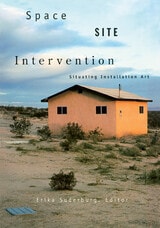
cover of Space, Site, Intervention: Situating Installation Art

Space, Site, Intervention

Situating Installation Art

Erika Suderburg

University of Minnesota Press, 2000

In Space, Site, Intervention, some of today's most prominent art critics, curators, and artists view installation art as a diverse, multifaceted, and international art form that challenges institutional assumptions and narrow conceptual frameworks. Together, the essays in Space, Site, Intervention investigate how installation resonates within modern culture and society, as well as its ongoing influence on contemporary visual culture. 

Contributors: C. Ondine Chavoya, John Coleman, Sean Cubitt, Colin Gardner, Chrissie Iles, Miwon Kwon, Ernest Larsen, Tiffany Ana López, Catherine Lord, Kevin McMahon, James Meyer, Alessandra Moctezuma, Leda Ramos, Laurence A. Rickels, Barbara Maria Stafford, Susan Stewart, Marita Sturken, and John C. Welchman. 

[more]
cover of Space, Time, and Gravity: The Theory of the Big Bang and Black Holes

Space, Time, and Gravity

The Theory of the Big Bang and Black Holes

Robert M. Wald

University of Chicago Press, 1992
Writing for the general reader or student, Wald has completely revised and updated this highly regarded work to include recent developments in black hole physics and cosmology. Nature called the first edition "a very readable and accurate account of modern relativity physics for the layman within the unavoidable constraint of almost no mathematics. . . . A well written, entertaining and authoritative book."
[more]
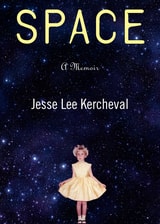
cover of Space: A Memoir

Space

A Memoir

Jesse Lee Kercheval

University of Wisconsin Press, 2014
Jesse Lee Kercheval opens her story in Cocoa, Florida, in 1966 as a precocious ten-year-old whose family—father, mother, two little girls—is trying to ride the Space Race’s tide of optimism. But even as the rockets keep going up, the Kercheval family slowly spirals down.
[more]
cover of Stratigraphic Paleobiology: Understanding the Distribution of Fossil Taxa in Time and Space

Stratigraphic Paleobiology

Understanding the Distribution of Fossil Taxa in Time and Space

Mark E. Patzkowsky and Steven M. Holland

University of Chicago Press, 2012

Whether the fossil record should be read at face value or whether it presents a distorted view of the history of life is an argument seemingly as old as many fossils themselves. In the late 1700s, Georges Cuvier argued for a literal interpretation, but in the early 1800s, Charles Lyell’s gradualist view of the earth’s history required a more nuanced interpretation of that same record. To this day, the tension between literal and interpretive readings lies at the heart of paleontological research, influencing the way scientists view extinction patterns and their causes, ecosystem persistence and turnover, and the pattern of morphologic change and mode of speciation.
 
With Stratigraphic Paleobiology, Mark E. Patzkowsky and Steven M. Holland present a critical framework for assessing the fossil record, one based on a modern understanding of the principles of sediment accumulation. Patzkowsky and Holland argue that the distribution of fossil taxa in time and space is controlled not only by processes of ecology, evolution, and environmental change, but also by the stratigraphic processes that govern where and when sediment that might contain fossils is deposited and preserved. The authors explore the exciting possibilities of stratigraphic paleobiology, and along the way demonstrate its great potential to answer some of the most critical questions about the history of life: How and why do environmental niches change over time? What is the tempo and mode of evolutionary change and what processes drive this change? How has the diversity of life changed through time, and what processes control this change? And, finally, what is the tempo and mode of change in ecosystems over time?
 
[more]