Results by title
254 books match the query 'Sports' and 45 start with s
San Francisco Bay Area Sports
Golden Gate Athletics, Recreation, and CommunityRita Liberti
University of Arkansas Press, 2017
San Francisco Bay Area Sports brings together fifteen essays covering the issues, controversies, and personalities that have emerged as northern Californians recreated and competed over the last 150 years. The area’s diversity, anti-establishment leanings, and unique and beautiful natural surroundings are explored in the context of a dynamic sporting past that includes events broadcast to millions or activities engaged in by just a few.
Professional and college events are covered along with lesser-known entities such as Oakland’s public parks, tennis player and Bay Area native Rosie Casals, environmentalism and hiking in Marin County, and the origins of the Gay Games. Taken as a whole, this book clarifies how sport is connected to identities based on sexuality, gender, race, and ethnicity. Just as crucial, the stories here illuminate how sport and recreation can potentially create transgressive spaces, particularity in a place known for its nonconformity.
Sandlot Seasons
SPORT IN BLACK PITTSBURGHRob Ruck
University of Illinois Press, 1987
Satchel Paige's America
William Price Fox
University of Alabama Press, 2005
Captures the sometimes outrageous, often humorous, and always bigger-than-life spirit of the World's Greatest Pitcher, Leroy Satchel Paige
This book began when the author met "the Satch" for the first time at the Twilight Zone Lounge of the Rhythm Lanes Bowling Alley in Kansas City. What started as a simple interview for Holiday magazine quickly grew into an animated conversation that lasted nearly a week as Paige and Fox moved from bar to club to restaurant to auto repair shop and from one topic to the next. Fox describes, with amazement, the reception the legendary baseball player received at Gates' Place, a famous barbecue restaurant, and The Flamingo, a big dance club. Over the course of the week, Paige shared stories about his start in the Negro leagues, his time with the Kansas City Monarchs, and barnstorming around the country, sleeping on the ground because there were no hotels for blacks. He also tells of his breakthrough to the big leagues when he signed with the Cleveland Indians and later pitched two shutouts against the Chicago White Sox.
In addition to his baseball career, Paige tells Fox about his childhood in Mobile, Alabama, catching fish during the Jubilee, throwing rocks at white boys, hustling bags at the train station, and working in the Depression era medicine shows. In contrast to these humble beginnings, Satchel recounts his later connections with film and music celebrities like Orson Welles, Jelly Roll Morton, Billie Holliday, and Cab Calloway. He also expounds on his friendships with other sports greats, including Goose Tatum, Meadowlark Lemon, and Sugar Ray Robinson.
The ironic intersections between oppression and fame, and between poverty and wealth, that emerge from Paige's narrative memoir exemplify the affliction of talent and genius in an era of racial discrimination and segregation.
Schools for Scandal
The Dysfunctional Marriage of Division I Sports and Higher EducationSheldon Anderson
University of Missouri Press, 2024
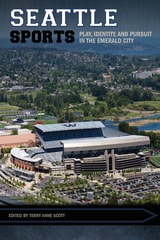
Seattle Sports
Play, Identity, and Pursuit in the Emerald CityTerry Anne Scott
University of Arkansas Press, 2020
Seattle Sports: Play, Identity, and Pursuit in the Emerald City, edited by Terry Anne Scott, explores the vast and varied history of sports in this city where diversity and social progress are reflected in and reinforced by play. The work gathered here covers Seattle’s professional sports culture as well as many of the city’s lesser-known figures and sports milestones. Fresh, nuanced takes on the Seattle Mariners, Supersonics, and Seahawks are joined by essays on gay softball leagues, city court basketball, athletics in local Japanese American communities during the interwar years, ultimate, the fierce women of roller derby, and much more. Together, these essays create a vivid portrait of Seattle fans, who, in supporting their teams—often in rain, sometimes in the midst of seismic activity—check the country’s implicit racial bias by rallying behind outspoken local sporting heroes.
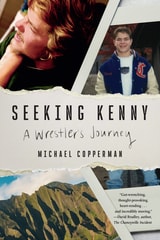
Seeking Kenny
A Wrestler's JourneyMichael Copperman
University of Iowa Press, 2026
Michael Copperman considers the life and untimely death of Cox, reconstructing memories of his former training partner with the help of Cox’s family, friends, fans, and fellow wrestlers. Seeking Kenny is, in part, an ode to a storied athlete. But it’s also a cautionary tale about the mental and bodily extremes Cox demanded for his achievements. Copperman asks what it means to live past one’s “glory days,” and what roles loss, grief, faith, and memory play when athletes leave pieces of themselves behind.
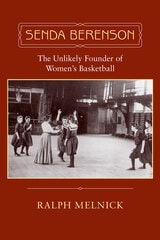
Senda Berenson
The Unlikely Founder of Women's BasketballRalph Melnick
University of Massachusetts Press, 2007
In the winter of 1892 the new instructor of physical training at Smith College, a diminutive young woman with a heavy accent, introduced her students to an adaptation of James Naismith's new game of Basket Ball. An immediate if unexpected success, the game spread to other women's schools across the country, and soon its founder, Senda Berenson (1868–1954), was called upon to codify its distinctive set of gender-specific rules. Emphasizing team passing and position over individual play, the version she instituted defined women's basketball for seventy years and eventually earned her the honor of being the first female elected to the Basketball Hall of Fame.
Yet as Ralph Melnick points out, Berenson's pioneering role in the history of women's athletics was more a matter of accident than destiny. A Jewish immigrant from Lithuania, prone to ill health throughout her childhood, she enrolled in the Boston Normal School for Gymnastics in the fall of 1890 with the hope of strengthening herself so that she could pursue a career as a pianist, dancer, or painter. Instead she soon became both a practitioner and a proponent of a new approach to women's physical education, one aimed at providing a “natural outlet of the play instinct,” developing “endurance and physical courage” as well as “quickness of thought and action,” and promoting through teamwork the “power of organization” women needed to achieve full social equality.
Extending her work into the factories and blighted urban tenements of America, Berenson later won the recognition of Jane Addams, Margaret Sanger, and other progressive reformers. Believing that “Americans have forgotten how to play,” she wanted to teach others to live “joyfully—beautifully.” For Berenson, the physical culture of exercise and games, played not for competition but for personal and social development as well as sheer enjoyment, was but another form of art.
This convergence of athletics and aesthetics was hardly surprising, Melnick explains, because the single most important influence on Senda Berenson's life was her brother, the renowned art critic and connoisseur Bernard Berenson. The two siblings wrote frequently to each other over the course of their lives, and the author draws heavily on their correspondence throughout the book to create an intimate and insightful portrait of a remarkable American woman.
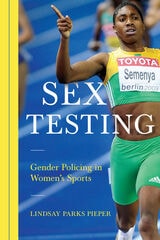
Sex Testing
Gender Policing in Women's SportsLindsay Pieper
University of Illinois Press, 2016
Ranging from Cold War tensions to gender anxiety to controversies around doping, Lindsay Parks Pieper explores sex testing in sport from the 1930s to the early 2000s. Pieper examines how the IOC in particular insisted on a misguided binary notion of gender that privileged Western norms. Testing evolved into a tool to identify--and eliminate--athletes the IOC deemed too strong, too fast, or too successful. Pieper shows how this system punished gifted women while hindering the development of women's athletics for decades. She also reveals how the flawed notions behind testing--ideas often sexist, racist, or ridiculous--degraded the very idea of female athleticism.
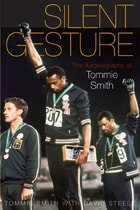
Silent Gesture
The Autobiography of Tommie SmithTommie Smith with David Steele
Temple University Press, 2008
n 1968, Tommie Smith and his teammate John Carlos won the gold and silver medals, respectively, for the 200 meter dash. Receiving their medals on the dais, they raised their fists and froze a moment in time that will forever be remembered as a powerful day of protest. In this, his autobiography, Smith tells the story of that moment, and of his life before and after it, to explain what that moment meant to him.
In Silent Gesture, Smith recounts his life before and after the 1968 Olympics: his life-long commitment to athletics, education, and human rights. He dispels some of the myths surrounding his and Carlos' act on the dais -- contrary to legend, Smith wasn't a member of the Black Panthers, but a member of the US Olympic Project for Human Rights -- and describes in detail the planning and risks involved in his protest. Smith also details his many years after Mexico City of devotion to human rights, athletics, and education. A unique resource for anyone concerned with international sports, history, and the African American experience, Silent Gesture contributes a complete picture of one of the most famous moments in sports history, and of a man whose actions always matched his words.
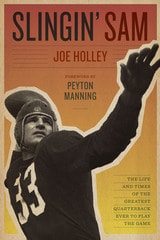
Slingin' Sam
The Life and Times of the Greatest Quarterback Ever to Play the GameBy Joe Holley
University of Texas Press, 2012
Dan Jenkins calls him “the greatest quarterback who ever lived, college or pro.” Slingin’ Sammy Baugh, who played for TCU and the Washington Redskins, single-handedly revolutionized the game of football. While the pros still wore leather helmets and played the game more like rugby, Baugh’s ability to throw the ball with rifle-like accuracy made the forward pass a strategic weapon, not a desperation heave. Like Babe Ruth, who changed the very perception of how baseball is played, Slingin’ Sam transformed the notion of offense in football and how much yardage can be gained through the air. As the first modern quarterback, Baugh led the Redskins to five title games and two NFL championships, while leading the league in passing six times—a record that endures to this day—and in punting four times. In 1943, the triple-threat Baugh also scored a triple crown when he led the league in passing, punting, and interceptions.
Slingin’ Sam is the first major biography of this legendary quarterback, one of the first inductees into the Pro Football Hall of Fame. Joe Holley traces the whole arc of Baugh’s life (1914–2008), from his small-town Texas roots to his college ball success as an All-American at TCU, his brief flirtation with professional baseball, and his stellar career with the Washington Redskins (1937–1952), as well as his later career coaching the New York Titans and Houston Oilers and ranching in West Texas. Through Holley’s vivid descriptions of close-fought games, Baugh comes alive both as the consummate all-around athlete who could play every minute of every game, on both offense and defense, and as an all-around good guy.

Soccer
Jean-Philippe Toussaint
Rutgers University Press, 2019
Soccer takes readers on an idiosyncratic journey that delves deep into the author’s childhood memories, but also transports us to World Cup matches in Japan, Germany, South Africa, and Brazil. Along the way, it kicks around such provocative questions as: How does soccer fandom both support and transcend nationalism? How are our memories of soccer matches both collective and distinctly personal? And how can a game this beautiful and this ephemeral be adequately captured in words?
Part travelogue, part memoir, and part philosophical essay, Soccer is entirely unique, a thrilling departure from the usual clichés of sports writing. Even readers with little knowledge of the game will be enthralled by Touissant’s profound musings and lyrical prose.
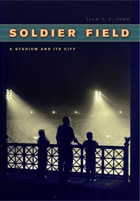
Soldier Field
A Stadium and Its CityLiam T. A. Ford
University of Chicago Press, 2009
Sports fans nationwide know Soldier Field as the home of the Chicago Bears. For decades its signature columns provided an iconic backdrop for gridiron matches. But few realize that the stadium has been much more than that. Soldier Field: A Stadium and Its City explores how this amphitheater evolved from a public war memorial into a majestic arena that helped define Chicago.
Chicago Tribune staff writer Liam Ford led the reporting on the stadium’s controversial 2003 renovation—and simultaneously found himself unearthing a dramatic history. As he tells it, the tale of Soldier Field truly is the story of Chicago, filled with political intrigue and civic pride. Designed by Holabird and Roche, Soldier Field arose through a serendipitous combination of local tax dollars, City Beautiful boosterism, and the machinations of Mayor “Big Bill” Thompson. The result was a stadium that stood at the center of Chicago’s political, cultural, and sporting life for nearly sixty years before the arrival of Walter Payton and William “The Refrigerator” Perry.
Ford describes it all in the voice of a seasoned reporter: the high school football games, track and field contests, rodeos, and even NASCAR races. Photographs, including many from the Chicago Park District’s own collections, capture these remarkable scenes: the swelling crowds at ethnic festivals, Catholic masses, and political rallies. Few remember that Soldier Field hosted Billy Graham and Martin Luther King Jr., Judy Garland and Johnny Cash—as well as Grateful Dead’s final show.
Soldier Field captures the dramatic history of Chicago’s stadium on the lake and will captivate sports fans and historians alike.
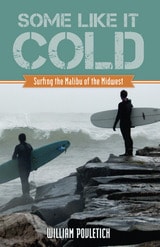
Some Like It Cold
Surfing the Malibu of the MidwestWilliam Povletich
Wisconsin Historical Society Press, 2016
Some Like It Cold
chronicles the true story of twin brothers Lee and Larry Williams, whose love of surfing evolved in the most unlikely of geographies: off the shores of Lake Michigan. From their boyhood home in Sheboygan, Wisconsin, the brothers trekked to the local beach with their longboards and their dreams to master the waves at spots like the Elbow and the Cove. The next six decades proved that their zeal for catching grinders and barrels was much more than a hobby.
Surfing in the cold had its challenges, and Lee and Larry recall stories of freak storms, ice-encrusted beaches, and near drownings, along with the usual hypothermia, helped but not cured by their customized cold-water wetsuits. Despite living nearly 2,000 miles from either coast, Lee and Larry have made a lifestyle out of freshwater surfing, recreating their hometown as "The Malibu of the Midwest" and gaining international fame as hosts of the Dairyland Surf Classic.
With humor and wit, author William Povletich brings their tale of revolutionizing surf culture to the page.
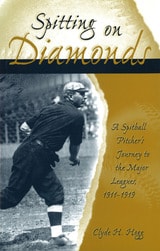
Spitting on Diamonds
A Spitball Pitcher's Journey to the Major Leagues, 1911-1919Clyde H. Hogg
University of Missouri Press, 2005
Sport History in the Digital Era
Edited by Gary Osmond and Murray G. Phillips
University of Illinois Press, 2015
Chapters consider how the philosophical and theoretical understanding of the meaning of history influence a willingness to engage with digital history, and conceptualize the relationship between history making and the digital era. As the writers show, digital media's mostly untapped potential for studying the recent past via blogs, chat rooms, gambling sites, and the like forge a symbiosis between sports and the internet, and offer historians new vistas to explore and utilize.
Sport History in the Digital Era also shows how the best digital history goes beyond a static cache of curated documents. Instead, it becomes a truly public history that serves as a dynamic site of enquiry and discussion. In such places, scholars enter into a give-and-take with individuals while inviting the audience to grapple with, rather than passively absorb, the evidence being offered.
Timely and provocative, Sport History in the Digital Era affirms how the information revolution has transformed sport and sport history--and shows the road ahead.
Contributors include Douglas Booth, Mike Cronin, Martin Johnes, Matthew Klugman, Geoffery Z. Kohe, Tara Magdalinski, Fiona McLachlan, Bob Nicholson, Rebecca Olive, Gary Osmond, Murray G. Phillips, Stephen Robertson, Synthia Sydnor, Holly Thorpe, and Wayne Wilson.
Sport and Christianity
A Sign of the Times in the Light of FaithKevin Lixey
Catholic University of America Press, 2012
Sport and Moral Conflict
A Conventionalist TheoryWilliam J.Morgan
Temple University Press, 2020
What is the purpose of sport, and how are ethical conceptions of sport shaped by the answers to this question? In Sport and Moral Conflict, William Morgan investigates, examining sport as a moral crucible that puts athletes in competitive, emotionally charged situations where fairness and equality are contested alongside accomplishment.
Morgan looks at the modern Olympics—from 1906 Athens to 1924 Paris, when the Games reached international prestige — in order to highlight the debate about athletic excellence and the amateur-professional divide. Whereas the Americans emphasized winning, the Europeans valued a love of the game. Morgan argues that the existing moral theories of sport—formalism and broad internalism (aka interpretivism), which rely on rules and general principles—fall short when confronted with such a dispute as the transition from amateur to professional sport. As such, he develops a theory of conventionalism, in which the norms at work in athletic communities determine how players should ethically acquit themselves. Presenting his case for an ethical theory of sport, Morgan provides insights regarding the moral controversies and crises that persist today.
Sport and Neoliberalism
Politics, Consumption, and CultureDavid L. Andrews
Temple University Press, 2012
Offering new approaches to thinking about sports and political ideologies, Sport and Neoliberalism explores the structures, formations, and mechanics of neoliberalism. The editors and contributors to this original and timely volume examine the intersection of sport as a national pastime and also an engine for urban policy—e.g., stadium building—as well as a powerful force for influencing our understanding of the relationship between culture, politics, and identity.
Sport and Neoliberalism examines the ways the neoliberal project creates priorities for civic society and how, in effect, it turns many aspects of sport into a vehicle of public governance. From the relationship between sport and the neo-liberal state, through the environmental dimensions of neo-liberal sport, to the political biopolitics of obesity, the essays in this volume explore the ways in which the “logics” of neoliberalism are manifest as powerful public pedagogies through the realm of popular culture.
Contributors include: Michael Atkinson, Ted Butryn, C. L. Cole, Norman Denzin, Grant Farred, Jessica Francombe, Caroline Fusco, Michael D. Giardina, Mick Green, Leslie Heywood, Samantha King, Lisa McDermott, Mary G. McDonald, Toby Miller, Mark Montgomery, Joshua I. Newman, Jay Scherer, Kimberly S. Schimmel, and Brian Wilson
In the series Sporting, edited by Amy Bass
Sport and Political Ideology
By John M. Hoberman
University of Texas Press, 1984
Across the modern political spectrum, left-wing and right-wing political theorists have invested sport with ideological significance. That significance, however, varies distinctively and characteristically with the ideology—a phenomenon John Hoberman terms "ideological differentiation." Taking this phenomenon as its point of departure, this provocative work interprets the major sport ideologies of the twentieth century as distinct expressions of political doctrine.
Hoberman argues that a political ideology's interpretation of sport is shaped in part by the value it assigns to work and play as modes of experience; the political anthropologies of right and left can be distinguished by examining their resistance to—or affinity for—sportive imagery of their leaders and of the state itself; there exists a fascist temperament that shows an affinity to athleticism and the sphere of the body that is not shared by the left.
Tracing modern sport ideology back to its premodern antecedents, Hoberman examines the interpretations of sport that have been promulgated by European political intellectuals, such as cultural conservatives and contemporary neo-Marxists, and by the official ideologists of Nazi Germany, the Soviet Union, the German Democratic Republic, and China before and after Mao.
As a form of mass theater, sport can advertise any ideology. But the deeper relationship between sport and political ideology has never before been explored wth such vigor. Presenting the first general theory of sport and political ideology to appear in any language, Hoberman's groundbreaking work is a unique and invaluable contribution to the intellectual and political history of sport in the twentieth century.
Sport and the Law
Historical and Cultural IntersectionsSamuel O. Regalado
University of Arkansas Press, 2014
Sport, Play, and Ethical Reflection
Randolph Feezell
University of Illinois Press, 2006
Feezell builds on these conclusions, addressing important ethical issues, arguing that sportsmanship should be seen as a kind of Aristotelian mean between the extremes of over- and under-investment in sport. Chapters on cheating, running up the score, and character building stress sport as a rule-governed, tradition-bound practice with standards of excellence and goods internal to the practice. With clear writing and numerous illuminating examples, Feezell demonstrates deep insight into both of his subjects.
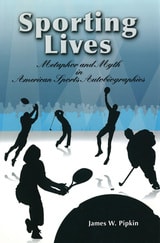
Sporting Lives
Metaphor and Myth in American Sports AutobiographiesJames W. Pipkin
University of Missouri Press, 2008
Sometimes the crack of the bat or the roar of the crowd fails to capture the meaning of sports as athletes themselves understand it. Books about sports have ignored this dimension of the subject, particularly the athletes’ own autobiographical accounts. In Sporting Lives, the first book to examine the two popular realms of sports and autobiography, James Pipkin looks at recurring patterns found in athletes’ accounts of their lives and sporting experiences, examining language, metaphor, rhetorical strategies, and other elements to analyze sports from the inside out.
Sporting Lives takes a fresh look at memoirs from baseball, football, basketball, golf, and other sports to explore how American athletes see themselves: not only how those images mesh with popular perceptions of them as heroes or celebrities but also how their accounts differ from those of sports journalists and other outsiders. Drawing on the life stories of such well-known figures as Wilt Chamberlain, Babe Ruth, and Martina Navratilova—both as-told-to and self-authored works—Pipkin follows players from the “echoing green” of eternal youth to the sometimes cultlike and isolated status of fame, interpreting recurring patterns both in the living of their lives and in the telling of them. He even considers Dennis Rodman’s four autobiographies to show how the contradictions of his self-portrayals reflect the Janus-faced quality of sports in the era of celebrity culture.
As Pipkin shows, the life of the athlete involves more than mere athleticism; it is also a world of nostalgia and sentiment, missed opportunities and lost youth. He sheds light on athletes’ common obsession with youth and body image—including gender and racial considerations—and explores their descriptions of being “in a zone,” that transcendent state when everything seems to click. And he considers the time that all athletes dread, when their bodies begin to betray them . . . and the cheering stops.
While the lives of athletes may often suggest the magic of Peter Pan, Pipkin’s engaging study reveals that they are in many ways more like the Lost Boys. Sporting Lives shows that the meaning of sports is intertwined with the telling. It is both an eminently readable book for fans and a critically sophisticated analysis that will engage scholars of literature, sports or media studies, and American popular culture.
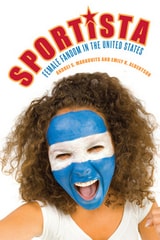
Sportista
Female Fandom in the United StatesAndrei S. Markovits
Temple University Press, 2012
The typical female sports fan remains very different from her male counterparts. In their insightful and engaging book, Sportista, Andrei S. Markovits and Emily Albertson examine the significant ways many women have become fully conversant with sports—acquiring a knowledge of and passion for them as a way of forging identities that until recently were quite alien to women.
Sportista chronicles the relationship that women have developed with sports in the wake of the second wave of feminism of the late 1960s and early 1970s. The changes women athletes have achieved have been nothing short of revolutionary. But, as Markovits and Albertson argue, women’s identities as sports fans, though also changed in recent decades, remain notably different from that of men. Sportista highlights the impediments to these changes that women have faced and the reality that, even as bona fide fans, they “speak” sports differently from and remain largely unaccepted by men.
In the series Politics, History and Social Change, edited by John C. Torpey
Sports Illusion, Sports Reality
A Reporter's View of Sports, Journalism, and SocietyLeonard Koppett
University of Illinois Press, 1994
ever written, I'd like to see the book that beats it. . . . Should be
read by every sports fan or -- for that matter -- social critic."
--From a five-star review, West Coast Review of Books.
"Explores its subject so thoroughly and demolishes so many commonly
held assumptions that after reading it even the most knowledgeable fans
(and some journalists) should feel like drunks who have suddenly been
forced to sober up."
-- Chicago Tribune
"Required reading for anyone who calls himself a fan."
-- Chicago Sun-Times
"An invaluable contribution to sports literature."
-- Howard Cosell

Sports Immortals
Deifying the American AthletePeter Williams
University of Wisconsin Press, 1994
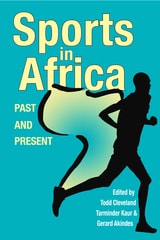
Sports in Africa, Past and Present
Todd Cleveland
Ohio University Press, 2020
These groundbreaking essays demonstrate how Africans past and present have utilized sports to forge complex identities and shape Africa’s dynamic place in the world.
Since the late nineteenth century, modern sports in Africa have both reflected and shaped cultural, social, political, economic, generational, and gender relations on the continent. Although colonial powers originally introduced European sports as a means of “civilizing” indigenous populations and upholding then current notions of racial hierarchies and “muscular Christianity,” Africans quickly appropriated these sporting practices to fulfill their own varied interests. This collection encompasses a wide range of topics, including women footballers in Nigeria, Kenya’s world-class long-distance runners, pitches and stadiums in communities large and small, fandom and pay-to-watch kiosks, the sporting diaspora, sports pedagogy, sports as resistance and as a means to forge identity, sports heritage, the impact of politics on sports, and sporting biography.
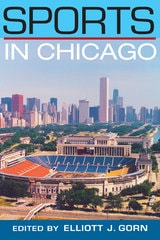
Sports in Chicago
Edited by Elliott Gorn
University of Illinois Press, 2007
Chicago teams have won the World Series, Super Bowl, multiple Stanley Cups, and a string of National Basketball Association titles. But amateur sports also play a large role in the city's athletic traditions, especially in schools and youth leagues that allow people from across the city to add to Chicago sports history.
In Sports and Chicago, an all-star roster of experts focuses on multiple aspects of Chicago sports, including long looks at amateur boxing, the impact of gender and ethnicity in sports, the politics of horse racing and stadium building, the lasting scandal of the Black Sox, and the once-perpetual heartbreak of the Cubs. Illustrated with forty photographs, the collection encourages historians and sports fans alike to appreciate the long-standing importance of sports in the Windy City.
Contributors: Peter Alter, Robin F. Bachin, Larry Bennett, Linda J. Borish, Gerald Gems, Elliott J. Gorn, Richard Kimball, Gabe Logan, Daniel A. Nathan, Timothy Neary, Steven A. Riess, John Russick, Timothy Spears, Costas Spirou, and Loïc Wacquant.
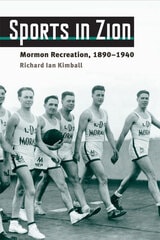
Sports in Zion
Mormon Recreation, 1890-1940Richard Ian Kimball
University of Illinois Press, 2002
If a religion cannot attract and instruct young people, it will struggle to survive, which is why recreational programs were second only to theological questions in the development of twentieth-century Mormonism. In this book, Richard Ian Kimball explores how Mormon leaders used recreational programs to ameliorate the problems of urbanization and industrialization and to inculcate morals and values in LDS youth. As well as promoting sports as a means of physical and spiritual excellence, Progressive Era Mormons established a variety of institutions such as the Deseret Gymnasium and camps for girls and boys, all designed to compete with more "worldly" attractions and to socialize adolescents into the faith.
Kimball employs a wealth of source material including periodicals, diaries, journals, personal papers, and institutional records to illuminate this hitherto underexplored aspect of the LDS church. In addition to uncovering the historical roots of many Mormon institutions still visible today, Sports in Zion is a detailed look at the broader functions of recreation in society.
Sports in the Western World
William J. Baker
University of Illinois Press, 1982
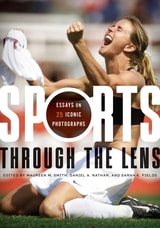
Sports through the Lens
Essays on 25 Iconic PhotographsEdited by Maureen M. Smith, Daniel A. Nathan, and Sarah K. Fields
University of Texas Press, 2024
2025 Anthology Award, North American Society for Sport History
The stories behind and legacies of important sports photos from the last 130 years.
Ever since photography and professional sports originated in the nineteenth century, photographers have shaped how we perceive sports. Sports through the Lens collects essays by twenty-five historians that consider what it means to capture and revisit a moment of cultural significance in sports, looking at each photo’s creation, its contexts, and how its meaning has shifted over time. Some essays provide fresh perspectives on such iconic images as Muhammad Ali standing over Sonny Liston at their 1965 rematch and Michael Jordan soaring at the 1988 NBA All-Star Game slam dunk competition; others introduce readers to the lesser-known stories of the first woman to officially run the Boston Marathon or the inaugural World Indigenous Games. The authors examine the photos' legacies alongside the artistry of both the athletes and the photographers. Reflecting on images of athletes from around the world engaged in sports from baseball to horse-racing to hockey, Sports through the Lens provides a wide-ranging meditation on the visual, historical, and cultural meaning of sports photographs.
Sports, Power, and Resistance
An Introduction to Critical Sports StudiesEdited by Thomas P. Oates and Travis Vogan
University of Illinois Press, 2026
Topics range from Black coaches in the National Football League to disordered eating within distance running to transgender athletes’ fight to participate in sports. The editors have organized the contributions into three sections. Part one probes how sports build communities that foster belonging as well as exclusion. The essays in part two explore multiple forms of resistance in sports through various performances and representations. In the final section, essayists analyze more explicit efforts to use sports as a platform for activism from various political viewpoints. Throughout, the works nurture and demonstrate a sensibility that encourages humanistic, critical, and interdisciplinary inquiry.
Wide-reaching and accessible, Sports, Power, and Resistance explores timely issues while demonstrating the value of blending perspectives to better understand the games we play and watch.
Contributors: Ali Bouterse, Adrian Burgos, Jr., Michael L. Butterworth, Noah Cohan, Douglas Hartmann, Victoria E. Johnson, Abraham I. Khan, Jason Kido Lopez, Theresa Runstedtler, Jaime Schultz, Samantha N. Sheppard, and Travers
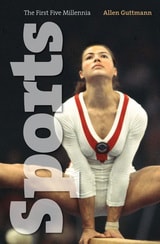
Sports
The First Five MillenniaAllen Guttmann
University of Massachusetts Press, 2004
From ancient Egyptian archery and medieval Japanese football to contemporary American baseball, every sport has been shaped by—and in turn has helped shape—the culture of which it is part. Yet as Allen Guttmann shows in this far-ranging study, for all their differences sports have followed a similar historical trajectory from traditional to modern forms.
In Sports: The First Five Millennia, Guttmann traces this evolution across continents, cultures, and historical epochs to construct a single comprehensive narrative of the world's sports.
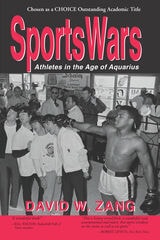
SportsWars
Athletes in the Age of AquariusDavid Zang
University of Arkansas Press, 2001
SportsWorld
An American DreamlandLipsyte, Robert
Rutgers University Press, 2018
In the America of 2017—where the SuperBowl is worth billions, athletes are penalized or forced out of sports for political and anti-racist activism, and Title IX is constantly questioned and undermined—Robert Lipsyte’s 1975 critique remains startlingly and intensely relevant.

Sportsex
Toby Miller
Temple University Press, 2002
Miller pays particular attention to the way celebrity is considered around the world through a number of different athletic activities. Along the way he also offers his own personal connection to sport as both a researcher and recipient of its abuses and pleasures.
In a world where everything is considered in its relationship to globalization, sport is one of the few arenas of social life that can be concretely seen in international terms. Sportsex opens that world up in a way that is accessible and significant for anyone interested in the shape of our emerging world culture.
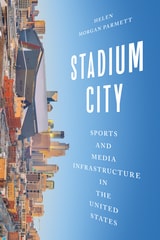
Stadium City
Sports and Media Infrastructure in the United StatesHelen Morgan Parmett
University of Illinois Press, 2025
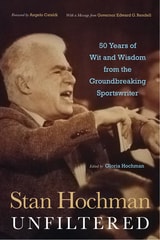
Stan Hochman Unfiltered
50 Years of Wit and Wisdom from the Groundbreaking SportswriterGloria Hochman
Temple University Press, 2020
The late Philadelphia Daily News sportswriter Stan Hochman was known for his many zingers, such as “Harry Litwack, the stoic Temple coach, stalks the sidelines like a blind man at a nudist colony.” As a reporter, he was more interested in how athletes felt, what their values were, how they lived their lives, or what made them tick than he was about how many runs they scored or punches they landed.
In Stan Hochman Unfiltered, his wife Gloria collects nearly 100 of his best columns from the Daily News about baseball, horse racing, boxing, football, hockey, and basketball (both college and pro), as well as food, films, and even Liz Taylor. Each section is introduced by a friend or colleague, including Garry Maddox, Bernie Parent, Larry Merchant, and Ray Didinger, among others.
Hochman penned a candid, cantankerous column about whether Pete Rose belongs in the Baseball Hall of Fame; wrote a graphic account of the Muhammad Ali and Joe Frazier fight of the century; and skewered Norman “Bottom Line” Braman, the one-time owner of the Eagles. He also wrote human-interest stories, including features about the importance of kids with special needs playing sports.
In addition to being a beloved writer, Hochman was also known for his stint on WIP’s radio as the Grand Imperial Poobah, where he would settle callers’ most pressing debates. Hochman long earned the respect and admiration of his subjects, peers, and readers throughout his career, and Stan Hochman Unfiltered is a testament to his enduring legacy.
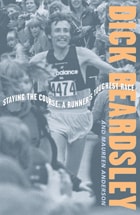
Staying The Course
A Runner’s Toughest RaceDick Beardsley
University of Minnesota Press, 2004
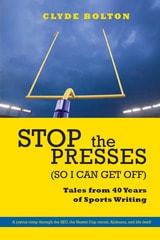
Stop the Presses (So I Can Get Off)
Tales from Forty Years of Sports WritingClyde Bolton
University of Alabama Press, 2005
A delightful blend of memoir, opinion, and sports from an Alabama original.
For 31 years, Clyde Bolton wrote four sports columns per week for the Birmingham News. By his estimation, this makes him the most widely read Alabamian in history. He may be right.
In Stop the Presses (So I Can Get Off) he takes the reader along on a joyride through more than three decades of Alabama sports. Unsurprisingly, tales of Bear Bryant and Shug Jordan, Roll Tide and War Eagle, dominate, but at one point or another, Clyde covered just about every type of sporting event in the state. Personalities and events from the realms of high school sports, minor league baseball, college basketball, and Nextel Cup Racing are just some of the many facets of his personal and professional life that he shares in this, his 17th book.
In relating the outlines of his life, Bolton pays homage to his mentors, including famed sports editor Benny Marshall, and shares some insights he’s gained after a lifetime in the newspaper game. But throughout the book, he never forgets that any good journalist—any good writer—is in the business of telling stories. And oh, what stories!
Bolton writes of meeting Michael Jordan during the basketball star’s year with the Birmingham Barons; of having dinner with Muhammad Ali at the Lambda Chi Alpha fraternity house at Auburn University; of walking incognito down sunny Birmingham sidewalks with Hall-of-Famer Johnny Unitas. He explains why Bear Bryant, in his opinion, is the greatest football coach ever, tells of interviewing Joe Namath in the men’s bathroom, and reveals why his grandmother watched professional wrestling on her hands and knees on the floor in front of the television.
Stop the Presses (So I Can Get Off) is a joyous romp through the SEC, the Nextel Cup Circuit, and, in the end, life itself.
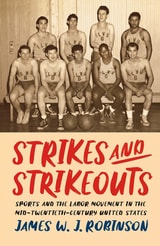
Strikes and Strikeouts
Sports and the Labor Movement in the Mid-Twentieth-Century United StatesJames W. J. Robinson
Rutgers University Press, 2027
During the first half of the twentieth century, the introduction of cheap or free recreation to the workplace provided a metaphorical place where ordinary working-class people of all races and genders gained access to physical leisure and developed bonds of camaraderie in the anti-fascist labor movement. Strikes and Strikeouts: Sports and the Labor Movement in the Mid-Twentieth-Century United States illustrates how this largely forgotten Labor Sports movement was critical in helping unions become forces for larger cultural change and essential to understanding the potency of the 1930-40s labor movement. Drawing from ten different labor and leftist social movement archives, Robinson strives to reconstruct the “people’s history." At its height, from the late 1930s to the early 1950s, the Labor Sports movement presented a real alternative to both apolitical and conservative sports and involved millions of working-class people. It was a key part of improving the lives of average Americans and helped build an anti-racist, anti-fascist, working class counterculture that helped change the United States through a strong labor movement. This movement brought higher living standards for working class people and the end of racial segregation in sports, which in turn aided the Civil Rights movement.
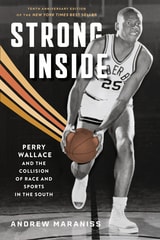
Strong Inside
Perry Wallace and the Collision of Race and Sports in the SouthAndrew Maraniss
Vanderbilt University Press, 2024
2015 RFK Book Awards Special Recognition
2015 Lillian Smith Book Award
2015 AAUP Books Committee "Outstanding" Title
When Strong Inside was first published ten years ago, no one could have predicted the impact the book would have on Vanderbilt University, Nashville, and communities across the nation. What began as a biography of Perry Wallace—the first African American basketball player in the Southeastern Conference (SEC)—became a catalyst for meaningful change and reconciliation between Wallace and the city that had rejected him. In this tenth-anniversary edition, scholars of race and sports Louis Moore and Derrick E. White provide a new foreword that places the story in the context of the study of sports and society, and author Andrew Maraniss adds a concluding chapter filling readers in on how events unfolded between Strong Inside’s publication in 2014 and Perry Wallace’s death in 2017 and exploring Wallace’s continuing legacy.
Wallace entered kindergarten the year that Brown v. Board of Education upended “separate but equal.” As a twelve-year-old, he sneaked downtown to watch the sit-ins at Nashville’s lunch counters. A week after Martin Luther King Jr.’s “I Have a Dream” speech, Wallace entered high school, and later saw the passage of the Civil Rights and Voting Rights acts. On March 19, 1966, his Pearl High School basketball team won Tennessee’s first integrated state tournament—the same day Adolph Rupp’s all-white Kentucky Wildcats lost to the all-Black Texas Western Miners in an iconic NCAA title game.
The world seemed to be opening up at just the right time, and when Vanderbilt recruited him, Wallace courageously accepted the assignment to desegregate the SEC. His experiences on campus and in the hostile gymnasiums of the Deep South turned out to be nothing like he ever imagined.
Strong Inside
Perry Wallace and the Collision of Race and Sports in the SouthAndrew Maraniss
Vanderbilt University Press, 2014
2015 RFK Book Awards Special Recognition
2015 Lillian Smith Book Award
2015 AAUP Books Committee "Outstanding" Title
Based on more than eighty interviews, this fast-paced, richly detailed biography of Perry Wallace, the first African American basketball player in the SEC, digs deep beneath the surface to reveal a more complicated and profound story of sports pioneering than we've come to expect from the genre. Perry Wallace's unusually insightful and honest introspection reveals his inner thoughts throughout his journey.
Wallace entered kindergarten the year that Brown v. Board of Education upended "separate but equal." As a 12-year-old, he sneaked downtown to watch the sit-ins at Nashville's lunch counters. A week after Martin Luther King Jr.'s "I Have a Dream" speech, Wallace entered high school, and later saw the passage of the Civil Rights and Voting Rights acts. On March 16, 1966, his Pearl High School basketball team won Tennessee's first integrated state tournament--the same day Adolph Rupp's all-white Kentucky Wildcats lost to the all-black Texas Western Miners in an iconic NCAA title game.
The world seemed to be opening up at just the right time, and when Vanderbilt recruited him, Wallace courageously accepted the assignment to desegregate the SEC. His experiences on campus and in the hostile gymnasiums of the Deep South turned out to be nothing like he ever imagined.
On campus, he encountered the leading civil rights figures of the day, including Stokely Carmichael, Martin Luther King Jr., Fannie Lou Hamer, and Robert Kennedy--and he led Vanderbilt's small group of black students to a meeting with the university chancellor to push for better treatment.
On the basketball court, he experienced an Ole Miss boycott and the rabid hate of the Mississippi State fans in Starkville. Following his freshman year, the NCAA instituted "the Lew Alcindor rule," which deprived Wallace of his signature move, the slam dunk.
Despite this attempt to limit the influence of a rising tide of black stars, the final basket of Wallace's college career was a cathartic and defiant dunk, and the story Wallace told to the Vanderbilt Human Relations Committee and later The Tennessean was not the simple story of a triumphant trailblazer that many people wanted to hear. Yes, he had gone from hearing racial epithets when he appeared in his dormitory to being voted as the university's most popular student, but, at the risk of being labeled "ungrateful," he spoke truth to power in describing the daily slights and abuses he had overcome and what Martin Luther King had called "the agonizing loneliness of a pioneer."

Sunlit Riffles and Shadowed Runs
Stories of Fly Fishing in AmericaKent Cowgill
University of Wisconsin Press, 2012
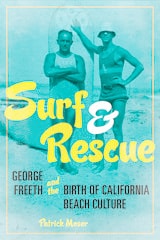
Surf and Rescue
George Freeth and the Birth of California Beach CulturePatrick Moser
University of Illinois Press, 2022
A compelling merger of biography and sports history, Surf and Rescue brings to light the forgotten figure whose novel way of seeing the beach sparked the imaginations of people around the world.
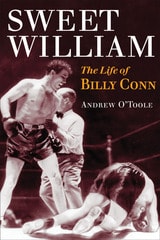
Sweet William
The Life of Billy ConnAndrew O'Toole
University of Illinois Press, 2009
An Irish working-class hero of Pittsburgh, Billy Conn captured hearts through his ebullient personality, stellar boxing record, and good looks. A light heavyweight boxing champion best remembered for his sensational near-defeat of heavyweight champion Joe Louis in 1941, Conn is still regarded as one of the greatest fighters of all time. Andrew O'Toole chronicles the boxing, Hollywood, and army careers of "the Pittsburgh Kid" by drawing from newspaper accounts, Billy's personal scrapbooks, and fascinating interviews with family. Presenting an intimate look at the champion's relationships with his girlfriend, manager, and rivals, O'Toole compellingly captures the personal life of a public icon and the pageantry of sports during the 1930s and '40s.