Results by title
67 books match the query 'Students' and 12 start with s
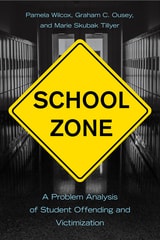
School Zone
A Problem Analysis of Student Offending and VictimizationPamela Wilcox, Graham C. Ousey, and Marie Skubak Tillyer
Temple University Press, 2022
Schools should be safe—but they are not always safe for everybody. Authors Pamela Wilcox, Graham Ousey, and Marie Skubak Tillyer studied crime among students located across diverse middle- and high-school settings to investigate why some students engage in delinquency—but others do not—and why some students are more prone to victimization. School Zone focuses on the three key interactional elements—context, victims, and offenders—to understand and explain the impact of common crimes such as theft, weapon carrying, drug possession and the verbal, physical, and sexual harassment of classmates.
The authors also consider how individual students and schools respond to crime and threats. They analyze the variables that schools can control in planning and practice that explain why some schools have higher crime rates. School Zone uses empirical studies to provide a comprehensive understanding of the patterns and causes of variation in individual- and aggregate-level school-based offending and victimization experiences while also addressing the adequacy of wide-ranging criminological explanations and crime prevention policies.
In their conclusion, the authors assess the extent to which currently popular strategies of school crime prevention align with what they have discovered through their problem-analysis framework and scientific understandings of student offending and victimization.
Shaping Higher Education with Students
Ways to Connect Research and TeachingEdited by Vincent C. H. Tong, Alex Standen, and Mina Sotiriou
University College London, 2018
In Shaping Higher Education with Students, leading researchers and educators from a range of disciplines lay out practical steps for shaping research-based education. Written in collaboration with university students, the book encourages active partnerships between students and educators and offers an accessible guide to accomplishing this, including connecting students with real-world projects and workplaces, working with students as partners in higher education, encouraging students to pursue research activities that transcend disciplinary boundaries, and rethinking current assessment and teaching practices. Together, the contributions poses fundamental questions about the future of education in universities.

Sharing Spaces and Students
Employing Students in Collaborative PartnershipsHolly A. Jackson
Assoc of College & Research Libraries, 2020

Soulful Bobcats
Experiences of African American Students at Ohio University, 1950–1960Carl H. Walker
Ohio University Press, 2013
During the 1950s, when less than 20 percent of American high school graduates attended college, a group of ambitious young African Americans enrolled at Ohio University, a predominantly white school in Athens, Ohio. Because they were a tiny, barely tolerated minority, they banded together, supported each other, and formed lasting bonds. Years later, at a series of “Soulful Reunions,” they recalled the joys and challenges of living on a white campus before the civil rights era, and eighteen of them decided to share their stories.
The authors of the eighteen autobiographical sketches in Soulful Bobcats were a diverse group. They were athletes, rhetoricians, musicians, and actresses; they aspired to professions in the military, business, education, government, architecture, and the arts. Some grew up in poor families, while others enjoyed the comforts of the middle class. But they had several things in common. They all came from families that believed education was important. They had been taught to avoid trouble, to persist despite setbacks, and to expect to encounter prejudice and even discrimination.
The authors vividly describe instances in which they were humiliated—by other students, by professors, or by townspeople—as well as the few occasions when violence seemed inevitable. In addition, they describe their “first,” including becoming the first African American students at Ohio University to be awarded scholarships for their prowess in football, basketball, track, and tennis; the first to compete for titles such as “Mr. Fraternity” or “Queen of the Military Ball”; the first to appear in theatrical performances alongside their white schoolmates. They also tell of their success in providing a social life for themselves by organizing two Greek letter fraternities and one sorority, holding their own off-campus dances, and joining the few campus organizations that were open to them. Above all, their stories speak to a resilience that allowed these “Soulful Bobcats” to learn from their experiences at Ohio University, to engage in meaningful careers, and to lead rich, fulfilling lives.

Straight A's
Asian American College Students in Their Own WordsChristine R. Yano and Neal K. Adolph Akatsuka, editors
Duke University Press, 2018
Strategies for Being Mindful
Workbook for Practitioners, Students, and Athletes, First EditionDouglas Barba
FiT Publishing, 2021
Written exclusively as a companion set for graduate and undergraduate students, Strategies for Being Mindful workbook, together with Being Mindful in Sport and Exercise Psychology (2017) presents and analyzes foundational mindfulness skills in real case studies and provides hands-on exercises that put these mindfulness concepts and techniques into practice.
The text teaches readers to view experiences objectively, and allow for the development of an open, nonjudging, and curious attitude, which has been shown to improve performance in sport and in daily life. Ultimately, strategies in this companion set aim to help the reader cultivate a more compassionate outlook, reduce anxiety, and increase tolerance for and acceptance of emotions, and beliefs that may hamper performance in sport and in life.
The companion workbook provides specific and effective techniques to help students better understand and accept uncomfortable emotions and beliefs, and to handle a range of issues athletes may experience in their careers. Students can work at their own pace to identify the values that align with their personal lives and goals to develop routines that can lead to lasting results for themselves, and—ultimately as practitioners—for their athletes, team, and clients.
Student Activism in Asia
Between Protest and PowerlessnessMeredith L. Weiss
University of Minnesota Press, 2012
Since World War II, students in East and Southeast Asia have led protest movements that toppled authoritarian regimes in countries such as Indonesia, South Korea, and Thailand. Elsewhere in the region, student protests have shaken regimes until they were brutally suppressed—most famously in China’s Tiananmen Square and in Burma. But despite their significance, these movements have received only a fraction of the notice that has been given to American and European student protests of the 1960s and 1970s. The first book in decades to redress this neglect, Student Activism in Asia tells the story of student protest movements across Asia.
Taking an interdisciplinary, comparative approach, the contributors examine ten countries, focusing on those where student protests have been particularly fierce and consequential: China, Japan, Hong Kong, Taiwan, South Korea, Indonesia, Burma, Malaysia, Thailand, and the Philippines. They explore similarities and differences among student movements in these countries, paying special attention to the influence of four factors: higher education systems, students’ collective identities, students’ relationships with ruling regimes, and transnational flows of activist ideas and inspirations.
The authors include leading specialists on student activism in each of the countries investigated. Together, these experts provide a rich picture of an important tradition of political protest that has ebbed and flowed but has left indelible marks on Asia’s sociopolitical landscape.
Contributors: Patricio N. Abinales, U of Hawaii, Manoa; Prajak Kongkirati, Thammasat U, Thailand; Win Min, Vahu Development Institute; Stephan Ortmann, City U of Hong Kong; Mi Park, Dalhousie U, Canada; Patricia G. Steinhoff, U of Hawaii, Manoa; Mark R. Thompson, City U of Hong Kong; Teresa Wright, California State U, Long Beach.
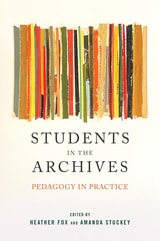
Students in the Archives
Pedagogy in PracticeEdited by Heather Fox and Amanda Stuckey
University of Illinois Press, 2026
The contributors examine approaches that integrate exhibitions with archived artifacts, collections, recovery, and digital humanities projects. Throughout, they connect these approaches to conversations about using archived materials in teaching and learning. The essays also feature observations about the work produced from collaborations and provide resources for sustaining future archival pedagogy. Topics include teaching in the twenty-first century; ways to support inclusivity, accessibility, and equity through engagements with digital and non-digital sources; and partnerships across disciplines, grade levels, and learning spaces through the collaborative relationships that emerge from archival teaching.
Interdisciplinary and up-to-date, Students in the Archives reveals how engagement with archived artifacts and collections opens spaces for conversations about the historical, social, and political contexts embedded in their productions and dissemination.
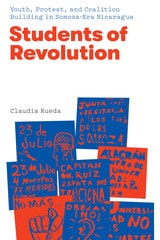
Students of Revolution
Youth, Protest, and Coalition Building in Somoza-Era NicaraguaBy Claudia Rueda
University of Texas Press, 2019
Students played a critical role in the Sandinista struggle in Nicaragua, helping to topple the US-backed Somoza dictatorship in 1979—one of only two successful social revolutions in Cold War Latin America. Debunking misconceptions, Students of Revolution provides new evidence that groups of college and secondary-level students were instrumental in fostering a culture of insurrection—one in which societal groups, from elite housewives to rural laborers, came to see armed revolution as not only legitimate but necessary.
Drawing on student archives, state and university records, and oral histories, Claudia Rueda reveals the tactics by which young activists deployed their age, class, and gender to craft a heroic identity that justified their political participation and to help build cross-class movements that eventually paralyzed the country. Despite living under a dictatorship that sharply curtailed expression, these students gained status as future national leaders, helping to sanctify their right to protest and generating widespread outrage while they endured the regime’s repression. Students of Revolution thus highlights the aggressive young dissenters who became the vanguard of the opposition.

Students of the World
Pedro Monaville
Duke University Press, 2022
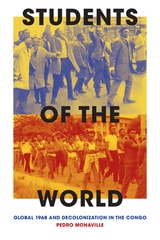
Students of the World
Global 1968 and Decolonization in the CongoPedro Monaville
Duke University Press, 2022

Swami and Friends
R. K. Narayan
University of Chicago Press, 1980
Offering rare insight into the complexities of Indian middle-class society, R. K. Narayan traces life in the fictional town of Malgudi. The Dark Room is a searching look at a difficult marriage and a woman who eventually rebels against the demands of being a good and obedient wife. In Mr. Sampath, a newspaper man tries to keep his paper afloat in the face of social and economic changes sweeping India. Narayan writes of youth and young adulthood in the semiautobiographical Swami and Friends and The Bachelor of Arts. Although the ordinary tensions of maturing are heightened by the particular circumstances of pre-partition India, Narayan provides a universal vision of childhood, early love and grief.
"The experience of reading one of his novels is . . . comparable to one's first reaction to the great Russian novels: the fresh realization of the common humanity of all peoples, underlain by a simultaneous sense of strangeness—like one's own reflection seen in a green twilight."—Margaret Parton, New York Herald Tribune
"The novels of R.K. Narayan are the best I have read in any language for a long time. . . . His work gives the conviction that it is possible to capture in English, a language not born of India, the distinctive characteristics of Indian family life."—Amit Roy, Daily Telegraph