Results by title
828 books match the query 'Study and teaching' and 47 start with s
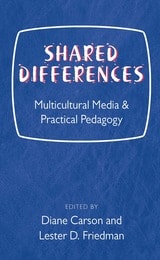
SHARED DIFFERENCES
MULTICULTURAL MEDIA AND PRACTICAL PEDAGOGYEdited by Diane Carson and Lester Friedman
University of Illinois Press, 1995
topics. Rather than offering a Band-Aid approach to curricular offerings,
the contributors demonstrate inclusive, innovative ways to integrate multicultural
issues and media into existing courses.
In "Struggling for America's Soul: A Search for Some Common Ground
in the Multicultural Debate," Lester Friedman leads off the volume
with an analysis of the value and necessity of multicultural approaches
for today's students and for society at large. The essays that follow
provide a wealth of material for organizing courses, including week-by-week
syllabi detailing specific writing assignments, bibliographical information
on readings, and sources for films and videos. The contributors, who teach
at institutions ranging from community colleges through major research
universities, describe their experiences teaching students of various
ages, backgrounds, and interests.
Shared Differences will be of value to all who use media as a
tool in their teaching, whether in history, literature, or the social
sciences, as well as to those who teach film and video production.

Samskrta-Subodhini
A Sanskrit PrimerMadhav M. Deshpande
University of Michigan Press, 1999
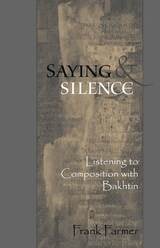
Saying And Silence
Frank Farmer
Utah State University Press, 2001
Frank Farmer has contributed important essays to the study of Bakhtin in composition, and in Saying and Silence he gathers some of those, along with several new essays, into a single volume. Scholars who specialize in Bakhtin will find this work engaging, but equally Farmer wants to explicate and apply Bakhtin for readers whose focus is teaching or some other nonspecialist dimension of writing scholarship.
Farmer explores the relationship between the meaningful word and the meaningful pause, between saying and silence, especially as the relationship emerges in our classrooms, our disciplinary conversations, and encounters with publics beyond the academy. Each of his chapters here addresses some aspect of how we and our students, colleagues, and critics have our say and speak our piece, often under conditions where silence is the institutionally sanctioned and preferred alternative. He has enlisted a number of Bakhtinian ideas (the superaddressee, outsideness, voice in dialogue) to help in the project of interpreting the silences we hear, naming the silences we do not hear, and of encouraging all silences to speak in ways that are freely chosen, not enforced.
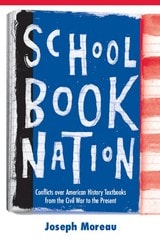
Schoolbook Nation
Conflicts over American History Textbooks from the Civil War to the PresentJoseph Moreau
University of Michigan Press, 2004
-Gary B. Nash, Director of the National Center for History in the Schools
Taking Frances FitzGerald's textbook study America Revised as a point of departure, Joseph Moreau in Schoolbook Nation challenges FitzGerald's premise that the 1960s were the beginning of the end of the glory days of American history education.
Moreau recounts how in the late twentieth century, cultural commentators such as historian Arthur Schlesinger Jr. and politician Newt Gingrich preached that a new identity crisis had shaken American history in the sixties, and that the grand unified view of our past had given way to various interest groups, who dismantled the old national narrative while demanding a more "inclusive" curriculum for their children.
Moreau discovered, however, that American history, while grand, has never been unified. Delving into more than 100 history books from the last 150 years, the author reveals that the efforts of pressure groups to influence the history curriculum are nearly as old as the mustiest textbook. "For those who would influence textbooks and teaching-Protestant elites in the 1870s, Irish-Americans in the 1920s, and conservative politicians today-the sky has always been falling," according to Moreau.
Schoolbook Nation offers a history lesson of its own: when the story of the past is written or rewritten, truth is often a victim. With its comprehensive treatment of the subjects of honesty and politics in the teaching of history, this is an essential book on the side of truth in a complex debate.
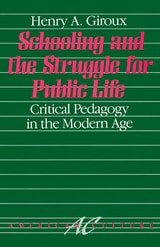
Schooling and the struggle for public life
critical pedagogy in the modern ageHenry A. Giroux
University of Minnesota Press, 1988
Securing a Place for Reading in Composition
The Importance of Teaching for TransferEllen C. Carillo
Utah State University Press, 2014
Securing a Place for Reading in Composition addresses the dissonance between the need to prepare students to read, not just write, complex texts and the lack of recent scholarship on reading-writing connections. Author Ellen C. Carillo argues that including attention-to-reading practices is crucial for developing more comprehensive literacy pedagogies. Students who can read actively and reflectively will be able to work successfully with the range of complex texts they will encounter throughout their post-secondary academic careers and beyond.
Considering the role of reading within composition from both historical and contemporary perspectives, Carillo makes recommendations for the productive integration of reading instruction into first-year writing courses. She details a “mindful reading” framework wherein instructors help students cultivate a repertoire of approaches upon which they consistently reflect as they apply them to various texts. This metacognitive frame allows students to become knowledgeable and deliberate about how they read and gives them the opportunity to develop the skills useful for moving among reading approaches in mindful ways, thus preparing them to actively and productively read in courses and contexts outside first-year composition.
Securing a Place for Reading in Composition also explores how the field of composition might begin to effectively address reading, including conducting research on reading, revising outcome statements, and revisiting the core courses in graduate programs. It will be of great interest to writing program administrators and other compositionists and their graduate students.
See It Feelingly
Classic Novels, Autistic Readers, and the Schooling of a No-Good English ProfessorRalph James Savarese
Duke University Press, 2018
Since the 1940s researchers have been repeating claims about autistic people's limited ability to understand language, to partake in imaginative play, and to generate the complex theory of mind necessary to appreciate literature. In See It Feelingly Ralph James Savarese, an English professor whose son is one of the first nonspeaking autistics to graduate from college, challenges this view.
Discussing fictional works over a period of years with readers from across the autism spectrum, Savarese was stunned by the readers' ability to expand his understanding of texts he knew intimately. Their startling insights emerged not only from the way their different bodies and brains lined up with a story but also from their experiences of stigma and exclusion.
For Mukhopadhyay Moby-Dick is an allegory of revenge against autism, the frantic quest for a cure. The white whale represents the autist's baffling, because wordless, immersion in the sensory. Computer programmer and cyberpunk author Dora Raymaker skewers the empathetic failings of the bounty hunters in Philip K. Dick's Do Androids Dream of Electric Sheep? Autistics, some studies suggest, offer instruction in embracing the nonhuman. Encountering a short story about a lonely marine biologist in Antarctica, Temple Grandin remembers her past with an uncharacteristic emotional intensity, and she reminds the reader of the myriad ways in which people can relate to fiction. Why must there be a norm?
Mixing memoir with current research in autism and cognitive literary studies, Savarese celebrates how literature springs to life through the contrasting responses of unique individuals, while helping people both on and off the spectrum to engage more richly with the world.
Self+Culture+Writing
Autoethnography for/as Writing StudiesRebecca Jackson
Utah State University Press, 2021
Interest in autoethnography is growing among writing studies scholars, who see clear connections to well-known disciplinary conversations about personal narrative, as well as to the narrative turn in general and social justice efforts in particular. Contributions by authors from diverse backgrounds and institutional settings are organized into three parts: a section of writing studies autoethnographies, a section on how to teach autoethnography, and a section on how ideas about autoethnography in writing studies are evolving.
Self+Culture+Writing discusses the use of autoethnography in the writing classroom as both a research method and a legitimate way of knowing, providing examples of the genre and theoretical discussions that highlight the usefulness and limitations of these methods.
Contributors: Leslie Akst, Melissa Atienza, Ross Atkinson, Alison Cardinal, Sue Doe, Will Duffy, John Gagnon, Elena Garcia, Guadalupe Garcia, Caleb Gonzalez, Lilly Halboth, Rebecca Hallman Martini, Kirsten Higgins, Shereen Inayatulla, Aliyah Jones, Autumn Laws, Soyeon Lee, Louis M. Maraj, Kira Marshall-McKelvey, Jennifer Owen, Tiffany Rainey, Marcie Sims, Amanda Sladek, Trixie Smith, Anthony Warnke
Self-Development and College Writing
Nick Tingle
Southern Illinois University Press, 2004
Nick Tingle investigates the psychoanalytic dimensions of composition instruction in Self-Development and College Writing to boldly illustrate that mastering academic prose requires students to develop psychologically as well as cognitively. Asserting that writing instruction should be an engaging, developmental process for both teachers and students, he urges reaching for new levels of consciousness in the classroom to aid students in realigning their subjective relationships with knowledge and truth.
Drawing on psychoanalytic theory and twenty years of experience as a teacher, Tingle outlines the importance of moving beyond usual ways of thinking, abandoning the common sense of everyday reality, and coming to understand beliefs as beliefs and not absolutes. These developmental moves must be accompanied, Tingle says, by a new attitude towards language—not as something that points to things, but as a series of concepts that arrange the very things one points to. And this development is necessary not just in order to perform well in the writing class, but also to fully participate in and reap the academic rewards of structured, university life.
Self-Development and College Writing calls attention to the psychological destabilization this method may produce for students. Tingle explains that, if writing instructors are to respond to this destabilization, they must conceive of the classroom as a transitional space, or a kind of holding environment. They must also become aware of their psychological allegiances to particular theories of writing if they are to construct such environments.
But the goal of the transitional environment is worth pursuing, Tingle argues, contending that university education fails to address students’ developmental needs. With purposeful writing and deft analyses, Tingle shows that this goal also affords a means by which to place writing courses at the center of the educational curriculum. Conceived as a transitional space, the writing class may support and stabilize students in their developmental passage, thereby fostering an improved understanding of their academic work and, more importantly, an increased intellectual understanding of themselves and the complex world in which they live.
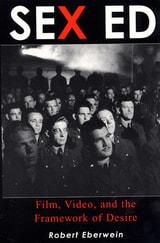
Sex Ed
Film, Video, and the Framework of DesireEberwein, Robert
Rutgers University Press, 1999
Eberwein starts his investigation in the silent and early sound eras with educational films used both to warn audiences about venereal disease and to provide basic contraception information. World War II movies, he states, waged their own war against venereal disease-in the armed services and at home. Newer works deal with birth control and focus in particular on AIDS.
Sex Ed also highlights the classroom. Eberwein draws connections between the earliest and most recent examples of educational films as he analyzes their ideological complexity. He concludes by examining marriage-manual films of the early 1970s and very recent videos for couples and individuals seeking instruction in sexual techniques to increase pleasure.
Sexual Harassment and Cultural Change in Writing Studies
Patricia Freitag Ericsson
University Press of Colorado, 2020
Sexuality and the Politics of Ethos in the Writing Classroom
Zan Meyer Goncalves
Southern Illinois University Press, 2005
Applying the complexities of literacy development and personal ethos to the teaching of composition, Zan Meyer Goncalves challenges writing teachers to consider ethos as a series of identity performances shaped by the often-inequitable social contexts of their classrooms and communities. Using the rhetorical experiences of students who identify as lesbian, gay, bisexual, and/or transgender, she proposes a new way of thinking about ethos that addresses the challenges of social justice, identity, and transfer issues in the classroom.
Goncalves offers an innovative approach to teaching identity performance theory bound by social contexts. She applies this new approach to theories of specificity and intersectionality, illustrating how teachers can help students redefine the relationship between their social identities and their writing. She also addresses bringing social activism and identity politics into the classroom, helping writers make transfers across rhetorical contexts and linking students' interests to public conversations.
Theoretical and practical, Sexuality and the Politics of Ethos in the Writing Classroom provides teachers of first-year and advanced composition studies with useful, detailed assignments based in specific identity performance. Goncalves offers techniques to subvert oppressive language practices, while encouraging students to recognize themselves as writers, citizens, and active participants in their own educations and communities.
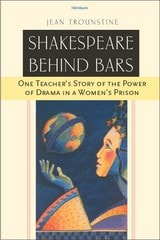
Shakespeare Behind Bars
One Teacher's Story of the Power of Drama in a Women's PrisonJean Trounstine
University of Michigan Press, 2004
Originally published in cloth in 2001, the paperback includes a new foreword that will inspire all teachers who work with students others have deemed unteachable. A new afterword updates readers on the prison art's program -- and the author herself -- since 2001.

Shakespeare Valued
Education Policy and Pedagogy 1989-2009Sarah Olive
Intellect Books, 2015
Shakespeare in Theory
The Postmodern Academy and the Early Modern TheaterStephen Bretzius
University of Michigan Press, 1997
Shaping Language Policy in the U.S.
The Role of Composition StudiesScott Wible
Southern Illinois University Press, 2013
In Shaping Language Policy in the U.S.: The Role of Composition Studies, author Scott Wible explores the significance and application of two of the Conference on College Composition and Communication’s key language policy statements: the 1974 Students’ Right to Their Own Language resolution and the 1988 National Language Policy. Wible draws from a wealth of previously unavailable archived material and professional literature to offer for the first time a comprehensive examination of these policies and their legacies that continue to shape the worlds of rhetoric, politics, and composition.
Wible demonstrates the continued relevance of the CCCC’s policies, particularly their role in influencing the recent, post-9/11 emergence of a national security language policy. He discusses in depth the role the CCCC’s language policy statements can play in shaping the U.S. government’s growing awareness of the importance of foreign language education, and he offers practical discussions of the policies’ pedagogical, professional, and political implications for rhetoric and composition scholars who engage contemporary debates about the politics of linguistic diversity and language arts education in the United States. Shaping Language Policy in the U.S. reveals the numerous ways in which the CCCC language policies have usefully informed educators’ professional practices and public service and investigates how these policies can continue to guide scholars and teachers in the future.
Shaping Nursing Science and Improving Health
The Michigan LegacyShaké Ketefian, editor
Michigan Publishing Services, 2016
The work covers selectively the development of nursing science over a period of some thirty years which was undertaken by nursing faculty and the School’s PhD Alumni. The account of the strategic development of a program of research across bio-behavioral phenomena, health promotion/risk reduction, women’s health and nursing and health care systems is instructive. Substantive contributions have been made across the selected areas; of note also is the impact of translational science on health outcomes of individuals and communities. The accounts of the purposeful development of health informatics in nursing and leadership as scholarship are also highly developed. The book is a valuable contribution to the literature on how nursing research at Michigan is helping transform the lives of patients, families and communities.

Sharpening the Legal Mind
How to Think Like a LawyerWilliam Powers Jr, edited by John Deigh
University of Texas Press, 2023
The way lawyers think about the law can seem deeply mysterious. They see nuance and meaning in statutes and implications in judicial opinions that are opaque to the rest of us. Accessible and thought provoking, Sharpening the Legal Mind explains how lawyers analyze the cases and controversies that come before the courts.
Written by William Powers Jr., the former president of the University of Texas at Austin, this book is an authoritative introduction to the academic study of law and legal reasoning, including insights into the philosophy of law and the intellectual history of legal thought. Powers discusses the methods lawyers use to interpret the law, the relation between law and morals, and the role of courts in shaping the law. In eight chapters, he follows the historical debate on these issues and others through different generations and movements in American legal thought—formalism, realism, positivism—to critical legal studies and postmodern theory. The perfect read for anyone looking for a primer on legal reasoning, Sharpening the Legal Mind demystifies the debates and approaches to thinking like a lawyer that profoundly influence the rule of law in our lives.
Shots in the Dark
Japan, Zen, and the WestShoji Yamada
University of Chicago Press, 2009
In the years after World War II, Westerners and Japanese alike elevated Zen to the quintessence of spirituality in Japan. Pursuing the sources of Zen as a Japanese ideal, Shoji Yamada uncovers the surprising role of two cultural touchstones: Eugen Herrigel’s Zen in the Art of Archery and the Ryoanji dry-landscape rock garden. Yamada shows how both became facile conduits for exporting and importing Japanese culture.
First published in German in 1948 and translated into Japanese in 1956, Herrigel’s book popularized ideas of Zen both in the West and in Japan. Yamada traces the prewar history of Japanese archery, reveals how Herrigel mistakenly came to understand it as a traditional practice, and explains why the Japanese themselves embraced his interpretation as spiritual discipline. Turning to Ryoanji, Yamada argues that this epitome of Zen in fact bears little relation to Buddhism and is best understood in relation to Chinese myth. For much of its modern history, Ryoanji was a weedy, neglected plot; only after its allegorical role in a 1949 Ozu film was it popularly linked to Zen. Westerners have had a part in redefining Ryoanji, but as in the case of archery, Yamada’s interest is primarily in how the Japanese themselves have invested this cultural site with new value through a spurious association with Zen.

Shut Down the Business School
What's Wrong with Management EducationMartin Parker
Pluto Press, 2018
Signed Language Interpreting Pedagogy
Insights and Innovations from the Conference of Interpreter TrainersLaurie Swabey
Gallaudet University Press, 2022
The contributors explore other important topics in interpreter education including ethics, Deaf translation, performance evaluation, consecutive and simultaneous interpreting, discourse analysis, critical thinking, curriculum sequencing, the social construction of learning, and mentoring. Through this collaborative approach featuring more than thirty scholars, Signed Language Interpreting Pedagogy presents a wealth of theoretical and practical information for interpreter educators and their students.
Signed Language Interpreting in the 21st Century
An Overview of the ProfessionLen Roberson
Gallaudet University Press, 2018
Each chapter provides students with objectives, keywords, and discussion questions. The chapters convey clear information about topics that include credentialing, disposition and aptitude for becoming an interpreter, interpreting for people who are DeafBlind, and working within specialty settings, such as legal and healthcare. A key resource for interpreter certification test preparation, this text follows the interpreter’s ethical, practical, and professional development through a career of lifelong learning and service.
Silence and Listening as Rhetorical Arts
Edited by Cheryl Glenn and Krista Ratcliffe
Southern Illinois University Press, 2011
In Silence and Listening as Rhetorical Arts,editors Cheryl Glenn and Krista Ratcliffe bring together seventeen essays by new and established scholars that demonstrate the value and importance of silence and listening to the study and practice of rhetoric. Building on the editors’ groundbreaking research, which respects the power of the spoken word while challenging the marginalized status of silence and listening, this volumemakes a strong case for placing these overlooked concepts, and their intersections, at the forefront of rhetorical arts within rhetoric and composition studies.
Divided into three parts—History, Theory and Criticism, and Praxes—this book reimagines traditional histories and theories of rhetoric and incorporates contemporary interests, such as race, gender, and cross-cultural concerns, into scholarly conversations about rhetorical history, theory, criticism, and praxes. For the editors and the other contributors to this volume, silence is not simply the absence of sound and listening is not a passive act. When used strategically and with purpose—together and separately—silence and listening are powerful rhetorical devices integral to effective communication. The essays cover a wide range of subjects, including women rhetors from ancient Greece and medieval and Renaissance Europe; African philosophy and African American rhetoric; contemporary antiwar protests in the United States; activist conflict resolution in Israel and Palestine; and feminist and second-language pedagogies.
Taken together, the essays in this volume advance the argument that silence and listening are as important to rhetoric and composition studies as the more traditionally emphasized arts of reading, writing, and speaking and are particularly effective for theorizing, historicizing, analyzing, and teaching. An extremely valuable resource for instructors and students in rhetoric, composition, and communication studies, Silence and Listening as Rhetorical Arts will also have applications beyond academia, helping individuals, cultural groups, and nations more productively discern and implement appropriate actions when all parties agree to engage in rhetorical situations that include not only respectful speaking, reading, and writing but also productive silence and rhetorical listening.
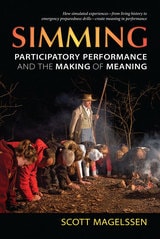
Simming
Participatory Performance and the Making of MeaningScott Magelssen
University of Michigan Press, 2014
At an ecopark in Mexico, tourists pretend to be illegal migrants, braving inhospitable terrain and the U.S. Border Patrol as they attempt to cross the border. At a living history museum in Indiana, daytime visitors return after dark to play fugitive slaves on the Underground Railroad. In the Mojave Desert, the U.S. Army simulates entire provinces of Iraq and Afghanistan, complete with bustling villages, insurgents, and Arabic-speaking townspeople, to train soldiers for deployment to the Middle East. At a nursing home, trainees put on fogged glasses and earplugs, thick bands around their finger joints, and sandbag harnesses to simulate the effects of aging and to gain empathy for their patients.
These immersive environments in which spectator-participants engage in simulations of various kinds—or “simming”—are the subject of Scott Magelssen’s book. His book lays out the ways in which simming can provide efficacy and promote social change through affective, embodied testimony. Using methodology from theater history and performance studies (particularly as these fields intersect with cultural studies, communication, history, popular culture, and American studies), Magelssen explores the ways these representational practices produce, reify, or contest cultural and societal perceptions of identity.
Simple Lives, Radiant Faith
Beckey Phipps
QuakerPress, 2005
Sites of Writing
Essays in Honor of Anne Ruggles GereJames Edward Beitler
University Press of Colorado, 2026
Sites of Writing builds upon the multiple contributions of Anne Ruggles Gere across a long and highly productive career. The chapters in this edited collection, written by leading scholars (including some of Gere’s former students) to track her major contributions to writing studies, situate those contributions within the broader landscape of field development, and draw on those findings to assess important trends and project productive pathways for the future. The contributors to the collection consider disciplinary history, language and literacy, writing across the curriculum, digital rhetoric, writing’s extracurriculum, assessment, and English education, among other areas. Connecting these multiple fields of activity, Sites of Writing affirms Gere’s view of writing as a powerful social and cultural activity and of literacy, broadly conceived, as enabling cultural transformations and, in the process, transforming writing studies and other fields.
Situating Composition
Composition Studies and the Politics of LocationLisa Ede
Southern Illinois University Press, 2004
Responding to a growing pedagogical paralysis in debates over the nature and status of composition studies as an academic discipline, Lisa Ede offers a provocative inquiry into the politics of composition’s place in the academy. The result is a timely and engaging reflection on the rhetoric, ideology, and ethics of scholarship and instruction in composition studies today.
Situating Composition: Composition Studies and the Politics of Location delves into some of the most vexing issues presently facing the field: its status in relation to English studies, the nature and consequences of the writing process movement, the uneven professionalization of composition teachers, and the widening chasm between theory and practice. Ede interrogates key moments and texts in composition’s evolution, from the writing process movement to Susan Miller’s Textual Carnivals, through the interpretive lenses of historical analysis, theoretical critique, feminist and cultural theory, and Ede’s own two decades of experiences as a teacher and writing program administrator.
Questioning the narratives of progress and paradigm shifts that inform the field’s highly regarded recent theoretical studies, Ede urges scholars to carefully reconsider these claims, to honor the roles of teachers and students as more than dupes of ideology, and to more fully acknowledge—and utilize—the differences between the practice of theory and the practice of teaching. As academic hierarchies of knowledge increasingly privilege scholarship over instruction, Ede warns researchers to be cognizant of the politics and power inherent in their own location in the academy, particularly when professing to speak for teachers and students. To that end, the volume’s conclusion advocates pragmatic avenues for change and proffers topics for future discussion and debate.
Situating Writing Processes
Physicality, Improvisation, and the Teaching of WritingHannah Rule
University Press of Colorado, 2020

Snapshots Of Reality
A Practical Guide To FormativeMary Snyder Broussard
Assoc of College & Research Libraries, 2014
Social Constructions of Deafness
Examining Deaf Languacultures in EducationThomas P. Horejes
Gallaudet University Press, 2012
Thomas P. Horejes’s new book focuses on revealing critical knowledge that addresses certain social justice issues, including deafness, language, culture, and deaf education. He conveys this information through discourses about his own experiences being deaf and through his research in which he “stresses the contingency of the social” in educational institutions.
In Social Constructions of Deafness: Examining Deaf Languacultures in Education, Horejes contends that schools as social institutions play powerful and exacting roles in the creation and maintenance of social constructions such as language and culture for deaf children. He subscribes to Michael Agar’s concept of “languaculture,” defined as the inextricable relationship between language and culture in which a specific language will shape and influence culture. His approach employs other anthropological terminology as he connects his personal experience as a deaf student (emic) to academic research on deafness (etic) to bring understanding to the multidimensional aspects of his own negotiated identities.
Horejes extends his inquiry through his analysis of two kindergarten classes for deaf students, one orally oriented and the other conducted using sing language. His findings are sobering evidence of the myriad challenges educators face in defining appropriate academic, linguistic, and cultural pedagogy for deaf children in schools and other social institutions.
Sojourner in the Promised Land
Forty Years among the MormonsJan Shipps
University of Illinois Press, 2001
Something Old, Something New
College Writing Teachers and Classroom ChangeWendy Bishop. Foreword by Patrick Hartwell
Southern Illinois University Press, 1990
How do college writing teachers learn new ways to teach? Most current composition research focuses almost exclusively on student writers, ignoring the role the teacher plays in classroom development. Here is the first book to focus on college writing teachers and the ways in which they are affected by graduate rhetoric pedagogy courses.
Wendy Bishop observed teachers enrolled in a doctoral seminar, titled "Teaching Basic Writing," and then conducted case studies of five of those teachers in their college writing classrooms to investigate how their teaching practices changed and how their previous professional and personal histories influenced their ability to make those changes.
Speaking in Social Contexts
Communication for Life and Study in the U.S.Robyn Brinks Lockwood
University of Michigan Press, 2018
The text provides language to use for a variety of functions as they might related to life on a university campus: offering greetings and goodbyes, making introductions, giving opinions, agreeing and disagreeing, using the phone, offering assistance, asking for advice, accepting and declining invitations, giving and receiving compliments, complaining, giving congratulations, expressing condolences, and making small talk. Users are also taught to think beyond the words and to interpret intonation and stress (how things sound).
Each of the 10 units includes discussion prompts, language lessons, practice activities, get acquainted tasks (interacting with native speakers), and analysis opportunities (what did they discover and what can they apply?).
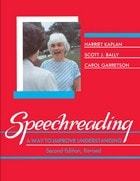
Speechreading
A Way To Improve UnderstandingHarriet Kaplan
Gallaudet University Press, 1985
Speechreading: A Way to Improve Understanding discusses the nature and process of speechreading, its benefits, and its limitations. This useful book clarifies commonly-held misconceptions about speechreading. The beginning chapters address difficult communication situations and problems related to the speaker, the speechreader, and the environment. It then offers strategies to manage them.
Speechreading provides practical exercises illustrating the use ofthese communication strategies in actual situations. It is an excellent book for late-deafened adults, families and friends, parents of children with hearing loss, and professionals and students.
Spirituality in Architectural Education
Twelve Years of the Walton Critic Program at The Catholic University of AmericaJulio Bermudez
Catholic University of America Press, 2021
Spreading the Word
Poetry and the Survival of Community in AmericaRoss Talarico
Duke University Press, 1995
Drawing on his workshops in Rochester, Talarico describes a unique approach for eliciting poetry from people of many ages and backgrounds—particularly underpriviledged urban kids and the elderly. The process—from dialogue to self-expression to publication to public event—illuminates the urgency and meaning of releasing the spirit captured in each man and woman and child’s experience. "Some people say that Ross Talarico has done the impossible," the Today Show remarked of his success in Rochester; and with this book Talarico offers the same opportunity to others. Teachers, community leaders, parents, and children will be able to follow his practical, hands-on approach to encouraging self-expression in diverse, even unlikely, settings. They will see here how poetry is indeed relevant, ever more crucial to our identity as the culture evolves—how it is, finally, the place where the inarticulate can come to speak for themselves.
Standing at the Threshold
Working through Liminality in the Composition and Rhetoric TAshipWilliam J. Macauley
Utah State University Press, 2021
These authors enrich the TA experience by supporting agency and self-efficacy, encouraging TAs to take active roles in understanding their positions and making the most of that experience. Many chapters are written by current or former TAs who are writing as a means of preparing, informing, and guiding new rhet/comp TAs, encouraging them to make choices about how they want to think through and participate in their teaching work.
The first work on the market to delve deeply into the TAship itself and what it means for the larger discipline, Standing at the Threshold provides a rich new theorizing based in the real experiences and liminalities of teaching assistants in composition and rhetoric, approached from a productive array of perspectives.
Contributors: Lew Caccia, Lillian Campbell, Rachel Donegan, Jaclyn Fiscus-Cannady, Jennifer K. Johnson, Ronda Leathers Dively, Faith Matzker, Jessica Restaino, Elizabeth Saur, Megan Schoettler, Kylee Thacker Maurer
State Work
Public Administration and Mass IntellectualityStefano Harney
Duke University Press, 2002
State Work begins with an ethnographic account of Harney’s work as a midlevel manager within an Ontario government initiative charged with leading the province’s efforts to combat racism. Through readings of material such as The X-Files and Law & Order, Harney then reviews how popular images of the state and government labor are formed within American culture and how these ideas shape everyday life. He highlights the mutually dependent roles played in state work by the citizenry and civil servants. Using as case studies Al Gore’s National Partnership for Reinventing Government and a community-policing project in New York City, Harney also critiques public management literature and performance measurement theories. He concludes his study with a look at the motivations of state workers.
Story By Story
Creating a School Storytelling Troupe & Making the Common Core ExcitingKaren Chace
Parkhurst Brothers, Inc., 2014
Karen Chace’s book, Story by Story, Building a Storytelling Troupe is a must have for anyone even slightly interested in starting a storytelling group with students. I know I am guilty of sometimes skipping over sections, but every word that Karen writes is important and useful distilled (and therefore potent) information. Ms. Chace not only tells you what to do to run a successful troupe, but also WHY you need to do it. This is, to me, very important. Sometimes one is tempted to skip things, but this book explains how important the steps are. Everything from how many hours Karen thought it would take, to ACTUAL hours, where the funding comes from, how and why to lay foundations and expectations (including ‘no teasing policies’ and group dynamics), right the way through presentation skills to advertising the event and getting bums on seats (emphasis important)!
Over the years Karen has and continues to come up with new and inventive ways of teaching the skills of storytelling, and a great many of these exercises and activities are included in the book. When it comes to research and materials as well as technique, Karen adds new meaning to "thorough". There are links to websites for stories, for grants, for microphone techniques, and how storytelling connects to the school curriculum and more. And if you prefer to read books, there is an extensive bibliography, too.
Basically, I believe if you want to succeed in building a storytelling troupe or group, all you need is Karen Chace’s book, Story by Story, Building a Storytelling Troupe and to do everything Karen suggests. I am sure it would be very hard to fail if you follow her words of wisdom between the covers of her goldmine of a book.
Simon Brooks, storyteller, and educator
Strange Natures
Futurity, Empathy, and the Queer Ecological ImaginationNicole Seymour
University of Illinois Press, 2013

Strange Tales of an Oriental Idol
An Anthology of Early European Portrayals of the BuddhaEdited by Donald S. Lopez Jr.
University of Chicago Press, 2016
Featuring writings by soldiers, adventurers, merchants, missionaries, theologians, and colonial officers, this volume contains a wide range of portraits of the Buddha. The descriptions are rarely flattering, as all manner of reports—some accurate, some inaccurate, and some garbled—came to circulate among European savants and eccentrics, many of whom were famous in their day but are long forgotten in ours. Taken together, these accounts present a fascinating picture, not only of the Buddha as he was understood and misunderstood for centuries, but also of his portrayers.

Strategies for Legal Case Reading and Vocabulary Development
Susan M. Reinhart
University of Michigan Press, 2007
Strategies for Legal Case Reading and Vocabulary Development begins with an overview of the American legal system and relevant research and guidelines relating to case reading. The book is divided into sections on common law, statutory law, and constitutional law. Approximately twenty cases (some abridged) and eight readings are included in the text. Questions for Discussion follow each case to help students prepare to actively participate in class case discussions. Additional features include hypotheticals (often posed by law professors), vocabulary tasks, and short writing assignments.

Studying Appalachian Studies
Making the Path by WalkingEdited by Chad Berry, Phillip J. Obermiller, and Shaunna L. Scott
University of Illinois Press, 2015
Essayists argue for Appalachian Studies' integration with kindred fields like African American studies, women's studies, and Southern studies, and they urge those involved in the field to globalize the perspective of Appalachian Studies; to commit to continued applied, participatory action, and community-based research; to embrace more fully the field's capacity for bringing about social justice; to advocate for a more accurate understanding of Appalachia and its people; and to understand and overcome the obstacles interdisciplinary studies face in the social and institutional construction of knowledge.
Contributors: Chris Baker, Chad Berry, Donald Edward Davis, Amanda Fickey, Chris Green, Erica Abrams Locklear, Phillip J. Obermiller, Douglas Reichert Powell, Michael Samers, Shaunna L. Scott, and Barbara Ellen Smith.
Style and the Future of Composition Studies
Paul Butler
Utah State University Press, 2020
Many college writing teachers operate under the belief that style still refers primarily to the kinds of issues discussed in Strunk and White’s popular but outdated book The Elements of Style. This work not only challenges this view but also offers theories and pedagogies from diverse perspectives that help teachers and students develop strategic habits and mindsets to negotiate languages, genres, and discourse conventions. The chapters explore the ways in which style directly affects—and is affected by—multiple sources of shifting disciplinary inquiry, contributing new insights by drawing on research in cultural studies, sociolinguistics, discourse studies, translingualism, and writing across the curriculum, as well as new approaches to classical rhetorical theory.
The reemergence of stylistic inquiry can be used dynamically to produce new insights not only about emerging disciplinary interests but also about the study of style as a kind of language in and of itself. Style and the Future of Composition Studies demonstrates that style deserves to be a central focus of writing teaching. More than just the next style collection, the book advocates for style’s larger prominence in composition discussions generally. It will be of interest to a broad range of students and scholars of writing studies, as well as a wider set of readers in academe.
Contributors:
Cydney Alexis, Laura Aull, Anthony Box, Jimmy Butts, Mike Duncan, William FitzGerald, Melissa Goldthwaite, Eric House, TR Johnson, Almas Khan, Zak Lancaster, Eric Leake, Andrea Olinger, Thomas Pace, Jarron Slater, Jonathan Udelson

Surviving Literary Suicide
Jeffrey Berman
University of Massachusetts Press, 1999
An exploration of the relationship between literature and life, this study examines the effect on readers of “suicidal literature”—novels and poems that depict, and sometimes glorify, the act of suicide. Beginning with a discussion of the growing incidence of suicide in American culture, Jeffrey Berman investigates the portrayal of suicide in the works of four authors who later took their own lives—Virginia Woolf, Ernest Hemingway, Sylvia Plath, and Anne Sexton— and two who did not—Kate Chopin and William Styron. In each case Berman discusses the writer's shifting attitude toward suicide, the tendency of critics to romanticize fictional suicide, and the impact of writing about suicide on the artist's own life. At the same time, Berman draws on his experiences as a teacher of these writings, analyzing student reactions to “literary suicide” as recorded in class diaries—responses ranging from grief and confusion to anger and guilt. By looking at the connection between real and imagined suicide, Berman seeks to shed fresh light on a subject long enshrouded in silence, fear, and mystery.

Swimming Against the Tide
African American Girls and Science EducationSandra L. Hanson
Temple University Press, 2009
“They looked at us like we were not supposed to be scientists,” says one young African American girl, describing one openly hostile reaction she encountered in the classroom. In this significant study, Sandra Hanson explains that although many young minority girls are interested in science, the racism and sexism in the field discourage them from pursuing it after high school. Those girls that remain highly motivated to continue studying science must “swim against the tide.”
Hanson examines the experiences of African American girls in science education using multiple methods of quantitative and qualitative research, including a web survey and vignette techniques. She understands the complex interaction between race and gender in the science domain and, using a multicultural and feminist framework of analysis, addresses the role of agency and resistance that encourages and sustains interest in science in African American families and communities.
Symbiosis
Popular Culture and Other FieldsRay B. Browne
University of Wisconsin Press, 1988