Results by title
63 books match the query 'Turkey & Ottoman Empire' and 5 start with s
Sasun
The History of an 1890s Armenian RevoltJustin McCarthy
University of Utah Press, 2014
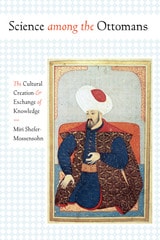
Science among the Ottomans
The Cultural Creation and Exchange of KnowledgeBy Miri Shefer-Mossensohn
University of Texas Press, 2015
Scholars have long thought that, following the Muslim Golden Age of the medieval era, the Ottoman Empire grew culturally and technologically isolated, losing interest in innovation and placing the empire on a path toward stagnation and decline. Science among the Ottomans challenges this widely accepted Western image of the nineteenth- and early twentieth-century Ottomans as backward and impoverished.
In the first book on this topic in English in over sixty years, Miri Shefer-Mossensohn contends that Ottoman society and culture created a fertile environment that fostered diverse scientific activity. She demonstrates that the Ottomans excelled in adapting the inventions of others to their own needs and improving them. For example, in 1877, the Ottoman Empire boasted the seventh-longest electric telegraph system in the world; indeed, the Ottomans were among the era’s most advanced nations with regard to modern communication infrastructure. To substantiate her claims about science in the empire, Shefer-Mossensohn studies patterns of learning; state involvement in technological activities; and Turkish- and Arabic-speaking Ottomans who produced, consumed, and altered scientific practices. The results reveal Ottoman participation in science to have been a dynamic force that helped sustain the six-hundred-year empire.
Six Turkish Filmmakers
Laurence Raw
University of Wisconsin Press, 2017
In analysis of and personal interviews with Dervis Zaim, Zeki Demirkubuz, Semih Kaplanoglu, Çagan Irmak, Tolga Örnek, and Palme d'Or winner Nuri Bilge Ceylan, Raw draws connections with Turkish theater, art, sculpture, literature, poetry, philosophy, and international cinema. A native of England and a twenty-five-year resident of Turkey, Raw interleaves his film discussion with thoughtful commentary on nationalism, gender, personal identity, and cultural pluralism.
Symbiotic Antagonisms
Competing Nationalisms in TurkeyAyse Kadioglu
University of Utah Press, 2011
Utah Series in Middle East Studies
Today, nationalism and nationalist sentiments are becoming more and more pronounced, creating a global emergence of ethno-nationalist and religious fundamentalist identity conflicts. In the post-9/11 era of international terrorism, it is appropriate to suggest that nationalism will retain its central place in politics and local and world affairs for the foreseeable future. It is in this vein that there has been a recent upsurge of interest concerning the power of nationalist tendencies as one of the dominant ideologies of modern times.
Symbiotic Antagonisms looks at the state-centric mode of modernization in Turkey that has constituted the very foundation on which nationalism has acquired its ideological status and transformative power. The book documents a symposium held at Sabanci University, presenting nationalism as a multidimensional, multiactor-based phenomenon that functions as an ideology, a discourse, and a political strategy. Turkish, Kurdish, and Islamic nationalisms are systematically compared in this timely and significant work.
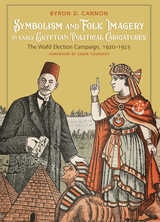
Symbolism and Folk Imagery in Early Egyptian Political Caricatures
The Wafd Election Campaign, 1920–1923Byron D. Cannon, Foreword by Samir Toubassy
University of Utah Press, 2019
Art is politics and politics is art in this study of post–World War I caricature art in Egypt and Egyptian politics. This book explores the complex meaning and significance of caricature art drawn to support the ascendant Egyptian Wafdpolitical party and its push for independence from British colonial control. The works of previously neglected Egyptian lithographers are also explored, especially those who adopted sophisticated European techniques while experimenting with a variety of new styles during a remarkable period in Egyptian history.
Caricature art by Wafd party artists was almostsui generis. It is distinguished especially by its sincere use of iconic, folkloric imagery, intended to rally nationalistic sentiments among an emerging Egyptian electorate that included many nonliterate citizens. Cannon’s research breathes new life into an influential yet largely forgotten artistic movement in Egypt, one that deserves recognition for its contribution to Egypt’s share of modern Middle East cultural history. Includes full color reproductions.