Results by title
77 books match the query 'Wars' and 13 start with s
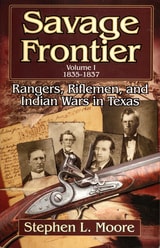
Savage Frontier Volume I
Rangers, Riflemen, and Indian Wars in Texas, 1835-1837Stephen L. Moore
University of North Texas Press, 2002
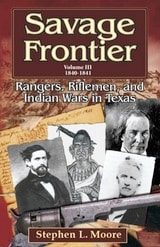
Savage Frontier Volume III
Rangers, Riflemen, and Indian Wars in Texas, 1840-1841Stephen L. Moore
University of North Texas Press, 2007
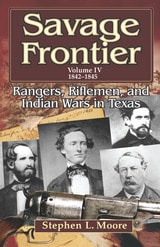
Savage Frontier Volume IV
Rangers, Riflemen, and Indian Wars in Texas, 1842-1845Stephen L. Moore
University of North Texas Press, 2002

Scouting with the Buffalo Soldiers
John P. Langellier
University of North Texas Press, 2020
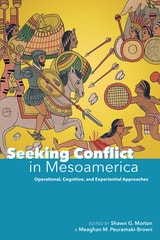
Seeking Conflict in Mesoamerica
Operational, Cognitive, and Experiential ApproachesShawn G. Morton
University Press of Colorado, 2019
Many studies have focused on the degree to which the prevalence, nature, and conduct of conflict has varied across time and space. This volume focuses not only on such operational considerations but on cognitive and experiential issues, analyzing how the Maya understood and explained conflict, what they recognized as conflict, how conflict was experienced by various groups, and the circumstances surrounding conflict. By offering an emic (internal and subjective) understanding alongside the more commonly researched etic (external and objective) perspective, contributors clarify insufficiencies and address lapses in data and analysis. They explore how the Maya defined themselves within the realm of warfare and examine the root causes and effects of intergroup conflict.
Using case studies from a wide range of time periods, Seeking Conflict in Mesoamerica provides a basis for understanding hostilities and broadens the archaeological record for the “seeking” of conflict in a way that has been largely untouched by previous scholars. With broad theoretical reach beyond Mesoamerican archaeology, the book will have wide interdisciplinary appeal and will be important to ethnohistorians, art historians, ethnographers, epigraphers, and those interested in human conflict more broadly.
Contributors:
Matthew Abtosway, Karen Bassie-Sweet, George J. Bey III, M. Kathryn Brown, Allen J. Christenson, Tomás Gallareta Negrón, Elizabeth Graham, Helen R. Haines, Christopher L. Hernandez, Harri Kettunen, Rex Koontz, Geoffrey McCafferty, Jesper Nielsen, Joel W. Palka, Kerry L. Sagebiel, Travis W. Stanton, Alexandre Tokovinine
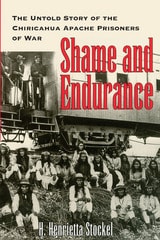
Shame and Endurance
The Untold Story of the Chiricahua Apache Prisoners of WarH. Henrietta Stockel
University of Arizona Press, 2004
First removed from Arizona to Florida, the prisoners were eventually relocated to Mount Vernon Barracks in Alabama, where, in the words of one Apache, "We didn’t know what misery was until they dumped us in those swamps." Pulmonary disease took its toll—by 1894, disease had killed nearly half of the Apaches—and after years of pressure from Indian rights activists and bureaucratic haggling, Fort Sill in Oklahoma was chosen as a more healthful location. Here they were given the opportunity to farm, and here Geronimo, who eventually converted to Christianity, died of pneumonia in 1909 at the age of 89, still a prisoner of war. In the meantime, many Apache children had been removed to Carlisle, Pennsylvania, for education—despite earlier promises that families would not be split up—and most eventually lost their cultural identity.
Henrietta Stockel has combed public records to reconstruct this story of American shame and Native endurance. Unabashedly speaking on behalf of the Apaches, she has framed these documents within a readable narrative to show how exasperated public officials, eager to openly demonstrate their superiority over "savages" who had successfully challenged the American military for years, had little sympathy for the consequences of their confinement. Although the Chiricahua Apaches were not alone in losing their ancestral homelands, they were the only American Indians imprisoned for so long a time in an environment that continually exposed them to illnesses against which they had no immunity, devastating families even more than warfare. Shame and Endurance records events that ought never to be repeated—and tells a story that should never be forgotten.
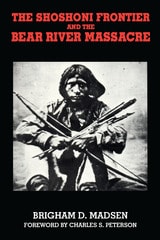
Shoshoni Frontier and Bear River Massacre
Brigham Madsen
University of Utah Press, 1985
Bear River was the culmination of events from nearly two decades of Indian-white interaction. The Shoshoni homelands encompassed a huge expanse of territory and were traversed by the main paths of western travel, forcing Indian-white encounters. Initially friendly and accommodating to white travelers in the 1840s, by the late 1850s resentment soared among the Indians as they were killed and their food stocks were consumed by emigrants and their livestock. The process of white appropriation of Indian lands reached crisis proportions in the Far West and Great Basin before it did on the Great Plains.
In the historiography of western Indians, few have appreciated the role of tribes inhabiting the regions of along the Oregon and California Trails. Madsen makes a compelling argument that precedents were established that were followed again and again on subsequent western Indian frontiers, offering a new view of early encounters in the Trans-Mississippi West. This detailed narrative of the events and conflicts that culminated in the massacre remains the definitive account of this bloody chapter in United States-Native American relations.
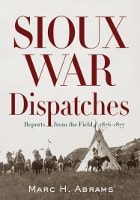
Sioux War Dispatches
Reports from the Field, 1876-1877Marc H. Abrams
Westholme Publishing, 2012
Rare, First-Hand Accounts from Newspaper Correspondents Describing the Course of America’s Largest Indian War, Compiled and Edited for the First Time in One Volume
“No one commands better the story of the Great Sioux War of 1876–1877 as presented in the nation’s newspapers than does Marc Abrams. Here is Abrams’s story of America’s greatest Indian war woven from those timely reports, augmented with insightful introductions and annotations. Abrams has produced a significant addition to the historiography of this endlessly fascinating struggle and its colorful personalities.” —Paul L. Hedren, author of After Custer: Loss and Transformation in Sioux Country
“Marc Abrams has provided an invaluable service to both scholars and lay readers in compiling this treasure trove of primary information. Like the correspondents he has come to know through his research, Marc has done the hard work; we need only read in comfort and benefit from his efforts.” —Douglas W. Ellison, author of Sole Survivor: An Examination of the Frank Finkel Narrative
“Marc Abrams’s book is an exciting and innovative approach that brings immediacy to the campaigns of Custer, Crook, and Miles, and teems with fascinating new detail. Sioux War Dispatches not only offers a gripping contemporary window into those times, it fills an important reference need as well.” —Jerome A. Greene, author of Stricken Field: The Little Bighorn Since 1876
Sioux War Dispatches: Reports from the Field, 1876-1877, tells the story of the Great Sioux War, including the battle of the Little Big Horn, primarily through the eyes of contemporary newspaper correspondents, both civilian and military. The volume begins with the Black Hills dilemma and the issue of the unceded territory (the disputed lands that were adjacent to the Great Sioux Reservation) and continues through to the spring of 1877 with the surrender of the legendary Sioux leader Crazy Horse. Along the way readers will learn about the Reynolds battle, the skirmish at Tongue River Heights, the battle of the Rosebud, the battle of the Little Big Horn, the skirmish at Warbonnet Creek, the fight at Slim Buttes, and more. In addition to numerous annotated excerpts from those who were there, are rare original dispatches, reprinted in full, that will take readers on a wild ride through several battles.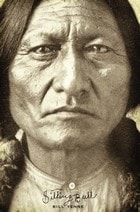
Sitting Bull
Bill Yenne
Westholme Publishing, 2008
An Acclaimed Biography of the Greatest American Indian Leader
Sitting Bull's name is still the best known of any American Indian leader, but his life and legacy remain shrouded with misinformation and half-truths. Sitting Bull's life spanned the entire clash of cultures and ultimate destruction of the Plains Indian way of life. He was a powerful leader and a respected shaman, but neither fully captures the enigma of Sitting Bull. He was a good friend of Buffalo Bill and skillful negotiator with the American government, yet erroneously credited with both murdering Custer at the Little Big Horn and with being the chief instigator of the Ghost Dance movement. The reality of his life, as Bill Yenne reveals in his absorbing new portrait, Sitting Bull, is far more intricate and compelling. Tracing Sitting Bull's history from a headstrong youth and his first contact with encroaching settlers, through his ascension as the spiritual and military leader of the Lakota, friendship with a Swiss-American widow from New York, and death at the hands of the Indian police on the eve of the massacre at Wounded Knee, Yenne scoured rare contemporary records and consulted Sitting Bull's own "Hieroglyphic Autobiography" in the course of his research. While Sitting Bull was the leading figure of Plains Indian resistance his message, as Yenne explains, was of self-reliance, not violence. At the Battle of the Little Bighorn, Sitting Bull was not confronting Custer as popular myth would have it, but riding through the Lakota camp making sure the most defenseless of his tribe--the children--were safe. In Sitting Bull we find a man who, in the face of an uncertain future, helped ensure the survival of his people.
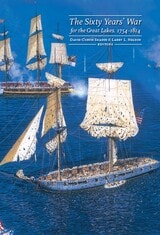
Sixty Years' War for the Great Lakes, 1754-1814
David Curtis Skaggs
Michigan State University Press, 2001
The Sixty Years' War for the Great Lakes contains twenty essays concerning not only military and naval operations, but also the political, economic, social, and cultural interactions of individuals and groups during the struggle to control the great freshwater lakes and rivers between the Ohio Valley and the Canadian Shield. Contributing scholars represent a wide variety of disciplines and institutional affiliations from the United States, Canada, and Great Britain.
Collectively, these important essays delineate the common thread, weaving together the series of wars for the North American heartland that stretched from 1754 to 1814. The war for the Great Lakes was not merely a sideshow in a broader, worldwide struggle for empire, independence, self-determination, and territory. Rather, it was a single war, a regional conflict waged to establish hegemony within the area, forcing interactions that divided the Great Lakes nationally and ethnically for the two centuries that followed.

Soldiers of the Virgin
The Moral Economy of a Colonial Maya RebellionKevin Gosner
University of Arizona Press, 1992
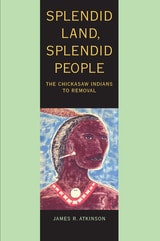
Splendid Land, Splendid People
The Chickasaw Indians to RemovalJames R. Atkinson
University of Alabama Press, 2003
Before the Chickasaws were removed to lands in Oklahoma in the 1800s, the heart of the Chickasaw Nation was located east of the Mississippi River in the upper watershed of the Tombigbee River in what is today northeastern Mississippi. Their lands had been called "splendid and fertile" by French governor Bienville at the time they were being coveted by early European settlers. The people were also termed “splendid” and described by documents of the 1700s as “tall, well made, and of an unparalleled courage. . . . The men have regular features, well-shaped and neatly dressed; they are fierce, and have a high opinion of themselves.”
The progenitors of the sociopolitical entity termed by European chroniclers progressively as Chicasa, Chicaca, Chicacha, Chicasaws, and finally Chickasaw may have migrated from west of the Mississippi River in prehistoric times. Or migrating people may have joined indigenous populations. Despite this longevity in their ancestral lands, the Chickasaw were the only one of the original "five civilized tribes" to leave no remnant community in the Southeast at the time of removal.
Atkinson thoroughly researches the Chickasaw Indians, tracing their history as far back as the documentation and archaeological record will allow. He historicizes from a Native viewpoint and outlines political events leading to removal, while addressing important issues such as slave-holding among Chickasaws, involvement of Chickasaw and neighboring Indian tribes in the American Revolution, and the lives of Chickasaw women.
Splendid Land, Splendid People will become a fundamental resource for current information and further research on the Chickasaw. A wide audience of librarians, anthropologists, historians, and general readers have long awaited publication of this important volume.
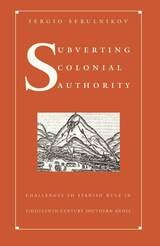
Subverting Colonial Authority
Challenges to Spanish Rule in Eighteenth-Century Southern AndesSergio Serulnikov
Duke University Press, 2003
Drawing on court records, government papers, personal letters, census documents, and other testimonies from Bolivian and Argentine archives, Subverting Colonial Authority addresses issues that illuminate key aspects of indigenous rebellion, European colonialism, and Andean cultural history. Serulnikov analyzes long-term patterns of social conflict rooted in local political cultures and regionally based power relations. He examines the day-to-day operations of the colonial system of justice within the rural villages as well as the sharp ideological and political strife among colonial ruling groups. Highlighting the emergence of radical modes of anticolonial thought and ethnic cooperation, he argues that Andean peasants were able to overcome entrenched tendencies toward internal dissension and fragmentation in the very process of marshaling both law and force to assert their rights and hold colonial authorities accountable. Along the way, Serulnikov shows, they not only widened the scope of their collective identities but also contradicted colonial ideas of indigenous societies as either secluded cultures or pliant objects of European rule.