Results by title
51 books match the query 'Woman' and 3 start with s
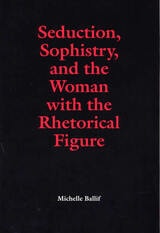
Seduction, Sophistry, and the Woman with the Rhetorical Figure
Michelle Ballif
Southern Illinois University Press, 2000
The rhetorical tradition, Michelle Ballif asserts, is based on the systematic exclusion of sophistry. In keeping with Aristotle’s prescription, rhetoric continues to be a counterpart to dialectic, a handmaiden to the pursuit of truth—even if that truth is merely probable.
According to Ballif, this search for truth manifests itself among current rhetoric and composition scholars in the form of an assumption that language is primarily communicative (i.e., that language can represent truth more or less faithfully). Ballif shows how invested we are in the notion of truth, in the idea that language represents truth, and in the assumption that the speaking/writing subject has, or should have, some essential relation to truth.
Provocatively, Ballif questions why the profession wants to retain these beliefs in the face of vociferous arguments from "new rhetorics" that the discipline no longer posits a foundational self or truth, and in the face of the poststructuralist critique, which has demonstrated that founding truth is always accomplished by first positing and then negating an “other.” As an alternative to this negative and violent rhetorical process, Ballif suggests a turn to sophistry as embodied in the figure of Woman, one with the power to seduce us (literally, to lead astray) from our truth and our demand for it.
This figuration of Woman, however, is not the dialectical other used to sustain the identity and privilege of Man. On the contrary, this Woman is an Other Woman: A Third Woman as a Third Sophistic practice that escapes Plato’s binary (philosophic rhetoric vs. sophistry) and renders the distinction between truth and deception incalculable. Ballif examines three figurations of the Third Woman as Third Sophistic as offered by Gorgias, Friedrich Nietzsche, and Jean Baudrillard.
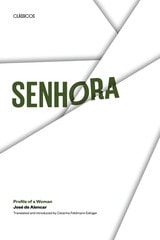
Senhora
Profile of a WomanBy José de Alencar
University of Texas Press, 1994
"It is a truth universally acknowledged . . ." that a single woman in possession of a good character but no fortune must be in want of a wealthy husband—that is, if she is the heroine of a nineteenth-century novel. Senhora, by contrast, turns the tables on this familiar plot. Its strong-willed, independent heroine Aurélia uses newly inherited wealth to "buy back" and exact revenge on the fiancé who had left her for a woman with a more enticing dowry.
This exciting Brazilian novel, originally published in 1875 and here translated into English for the first time, raises many questions about traditional gender relationships, the commercial nature of marriage, and the institution of the dowry. While conventional marital roles triumph in the end, the novel still offers realistic insights into the social and economic structure of Rio de Janeiro in the mid-1800s. With its unexpected plot, it also opens important new perspectives on the nineteenth-century Romantic novel.
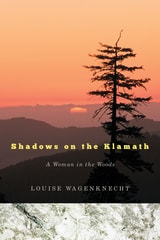
Shadows on the Klamath
A Woman in the WoodsLouise Wagenknecht
Oregon State University Press, 2021
With Shadows on the Klamath, Louise Wagenknecht completes her trilogy about life in remote northwestern California. In this new work, she recounts her years in the Forest Service, starting as a clerical worker on the Klamath National Forest before moving to a field position where she did everything from planting trees to fighting fires.
Her story is about a Forest Service in transition, as forest management practices began to shift. Not least among these changes was the presence of women in the ranks—a change that many in the Forest Service resisted. Wagenknecht blends the personal and professional to describe land management in the West and the people who do it—their friendships, rivalries, and rural communities.
Anyone with an interest in the Klamath-Siskiyou region, or the history of women in natural resource agencies, or the many issues associated with industrial forestry, should read this book for its valuable firsthand perspective. General readers interested in the rural West and personal memoir will also be richly rewarded.