Results by title
331 books match the query 'World Literature' and 20 start with s
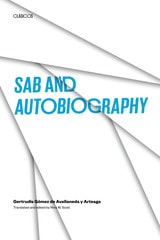
Sab and Autobiography
By Gertrudis Gómez de Avellaneda y Arteaga
University of Texas Press, 1993
Eleven years before Uncle Tom's Cabin fanned the fires of abolition in North America, an aristocratic Cuban woman told an impassioned story of the fatal love of a mulatto slave for his white owner's daughter. So controversial was Sab's theme of miscegenation and its parallel between the powerlessness and enslavement of blacks and the economic and matrimonial subservience of women that the book was not published in Cuba until 1914, seventy-three years after its original 1841 publication in Spain.
Also included in the volume is Avellaneda's Autobiography (1839), whose portrait of an intelligent, flamboyant woman struggling against the restrictions of her era amplifies the novel's exploration of the patriarchal oppression of minorities and women.

Sailing Against the Wind
A NovelJaan Kross
Northwestern University Press, 2012
Jaan Kross's historical novel Sailing Against the Wind fictionalizes the life of Bernhard Schmidt (1879–1935), an Estonian-born inventor. Schmidt lost an arm in his youth while experimenting with a homemade rocket, resulting in psychological trauma that would plague him for the rest of his life. Largely self-taught, Schmidt was driven to seek recognition of his talents.
He moved to Germany in the 1930s, where, after perfecting techniques for polishing lenses, he began developing ideas for improving astronomical telescopes. He was arrested for selling one to the Russians, and although he got off with only a warning, he later suffered a breakdown and was sent to a mental hospital, where he soon died. Sailing Against the Wind becomes a meditation on national identity, the relationship between history and the individual life, and the mechanisms of the historical novel as a genre.
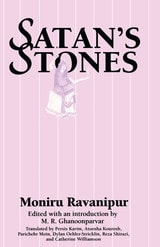
Satan's Stones
By Moniru Ravanipur
University of Texas Press, 1996
Women writers occupy prominent positions in late 20th century Iranian literature, despite the increased legal and cultural restrictions placed upon women since the 1978-1979 Islamic Revolution. One of these writers is Moniru Ravanipur, author of the critically acclaimed The Drowned and Heart of Steel.
Satan's Stones is the first English translation of her 1991 short story collection Sangha-ye Sheytan. Often set in the remote regions of Iran, these stories explore many facets of contemporary Iranian life, particularly the ever-shifting relations between women and men. Their bold literary experimentation marks a new style in Persian fiction akin to "magical realism."
Reports from Iran indicated that Satan's Stones had been banned there by government authorities. While its frank explorations of Iranian society may have offended Islamic leaders, they offer Western readers fresh perspectives on Iranian culture from one of the country's most distinguished writers.
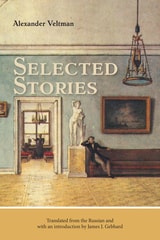
Selected Stories
A. F. Veltman
Northwestern University Press, 2026
In 1830s and ’40s Russia, A. F. Veltman’s eccentric writings were a fixture on the bookshelves of the reading public. In his era, his work influenced writers including Pushkin, Gogol, and Dostoevsky. The five stories collected here, united by themes of social satire, display Veltman’s characteristic pivots between the tragic, comic, and grotesque.
“Erotida” riffs on the genre of the society tale with linguistic puns and a bizarre plot resolution. In “Roland the Furious,” provincial officials mistake a traveler for a high-ranking government functionary. “Travel Impressions, and, among Other Things, a Pot of Geraniums” plays on the travelogue genre and includes what may be the first description in Russian literature of journey by railroad. “A Traveler from the Provinces; or, A Commotion in the Capital” parodies the Moscow literary salons of Veltman’s day. Finally, “It’s Not a House, but a Plaything!” toys with yet another storytelling convention of the time—the Russian folkloric tradition of “house spirits.”
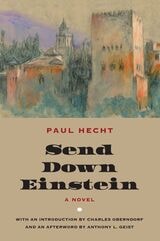
Send Down Einstein
Paul Hecht
Swan Isle Press, 2026
A comic and melancholy novel about translation and living between cultures, set during one historic day in Spain: February 21, 1981, the attempted coup against the newborn Spanish democracy.
Early one morning in 1981, Peter Carp, an American poet and translator living in Granada, wakes to the sounds of shouting and the revving of a motorcycle. These interruptions to Peter’s sleep provoke a series of interrelated thoughts, delivered with wry humor, about personal relations in Spain, gossip, the role of women in a patriarchal society, and the after-effects of expelling the Jewish population from Spain in 1492. We are introduced to Peter’s associative view of the world as he draws on a lifetime of reading poetry, of making sense of his own Jewish sensibility, and how it relates to the cultural history of the Spain he has come to love for its music, people, food, and language.
Peter lives in the home of Alberto, a professor of translation, who was once jailed under Franco’s regime. He has fallen in love with Ana, a young woman who is exploring the new freedoms of post-Franco Spain. Years ago, he had befriended flamenco singers of the Roma community, and his current task is to translate the flamenco lyrics he has collected, a process that challenges his understanding of Spanish and the capacity of language to convey meaning. His day brings him into contact with a wide range of Spaniards, including a gardener at the Alhambra, a group of children playing in the street, a professional beggar, a diverse range of personalities at a neighborhood bar before the midday dinner, and in the evening, a small band of fascist sympathizers encouraged by the attempted coup now taking place in the Spanish parliament.
With prose that mixes social observation, linguistic conjecture, and vivid description, Paul Hecht examines how living is itself a form of translation when moving from one language or culture to another, and how history can erupt into our own world. In Send Down Einstein, Hecht creates a tension between what we dream will happen and what actually does happen. In this bouillabaisse of emotion, the reader will taste how, for Peter Carp—with the right food and the best company—dreams, hope, and words can matter.
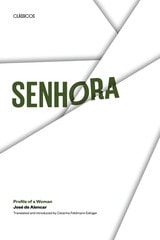
Senhora
Profile of a WomanBy José de Alencar
University of Texas Press, 1994
"It is a truth universally acknowledged . . ." that a single woman in possession of a good character but no fortune must be in want of a wealthy husband—that is, if she is the heroine of a nineteenth-century novel. Senhora, by contrast, turns the tables on this familiar plot. Its strong-willed, independent heroine Aurélia uses newly inherited wealth to "buy back" and exact revenge on the fiancé who had left her for a woman with a more enticing dowry.
This exciting Brazilian novel, originally published in 1875 and here translated into English for the first time, raises many questions about traditional gender relationships, the commercial nature of marriage, and the institution of the dowry. While conventional marital roles triumph in the end, the novel still offers realistic insights into the social and economic structure of Rio de Janeiro in the mid-1800s. With its unexpected plot, it also opens important new perspectives on the nineteenth-century Romantic novel.
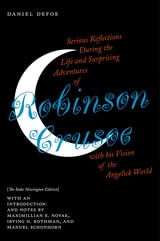
Serious Reflections During the Life and Surprising Adventures of Robinson Crusoe with his Vision of the Angelick World
The Stoke Newington EditionDaniel Defoe
Bucknell University Press, 2022
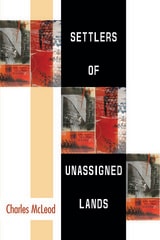
Settlers of Unassigned Lands
Charles McLeod
University of Michigan Press, 2015

Seven Days to the Funeral
Ján Rozner
Karolinum Press, 2024
Seven Days to the Funeral is the fictionalized memoir of Ján Rozner, a leading Slovak journalist, critic, dramaturg, and translator. Rozner and his wife Zora Jesenská were champions of the Prague Spring and were blacklisted after the Soviet-led invasion of Czechoslovakia in 1968. When Jesenská died in 1972, her funeral became a political event and attendees faced recriminations.
A painstaking account of the week after his wife’s death, Seven Days to the Funeral is a historical record of the devastating impact of the period after the invasion. Through ruthless portraits of key figures in Slovak culture, the book provides a fascinating cultural history of Slovakia from 1945 to 1972. It is also a moving love story of an unlikely couple. Although Rozner began the book in 1976, it was left unfinished upon his death. The book was published posthumously in 2009 by his second wife Sláva Roznerová.
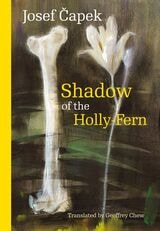
Shadow of the Holly-Fern
Josef Capek
Karolinum Press, 2026
The first English translation of Josef Capek’s classic novella explores what happens when a single violent act changes everything.
Two young poachers are caught by a gamekeeper and, in a moment of panic, shoot him. What began as a reckless adventure in pursuit of a deer becomes a desperate and increasingly hopeless flight through the forest.
Shadow of the Holly-Fern stands among the finest literary achievements of Josef Capek, the Czech painter and illustrator who died in a Nazi concentration camp in 1945 for his democratic convictions. The balladic novella is distinguished by its powerful portrayal of the fugitives’ inner lives; initially intoxicated by the beauty of the forest and a sense of freedom, they gradually succumb to mounting despair. Its intense focus on guilt and conscience recalls Crime and Punishment by Fyodor Dostoevsky, while its language remains intensely lyrical and evocative. First published in 1930, the book remains one of the enduring masterpieces of Czech literature and is presented here in English for the first time in a lucid translation by Geoffrey Chew.
Shamara and Other Stories
Svetlana Vasilenko
Northwestern University Press, 1999
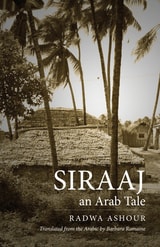
Siraaj
An Arab TaleBy Radwa Ashour
University of Texas Press, 2007
Set in the late nineteenth century on a mythical island off the coast of Yemen, Radwa Ashour's Siraaj: An Arab Tale tells the poignant story of a mother and son as they are drawn inextricably into a revolt against their island's despotic sultan.
Amina, a baker in the sultan's palace, anxiously awaits her son's return from a long voyage at sea, fearful that the sea has claimed Saïd just as it did his father and grandfather. Saïd, left behind in Alexandria by his ship as the British navy begins an attack on the city, slowly begins to make his way home, witnessing British colonial oppression along the way.
Saïd's return brings Amina only a short-lived peace. The lessons he learned from the Egyptians' struggle against the British have radicalized him. When Saïd learns the island's slave population is planning a revolt against the sultan's tyrannical rule, both he and Amina are soon drawn in.
Beautifully rendered from Arabic into English by Barbara Romaine, Radwa Ashour's novella speaks of the unity that develops among varied peoples as they struggle against a common oppressor and illuminates the rich cultures of both the Arab and African inhabitants of the island. Sub-Saharan African culture is a subject addressed by few Arabic novelists, and Radwa Ashour's novella does much to fill that void.
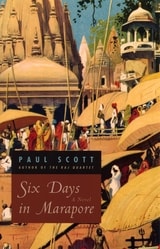
Six Days in Marapore
A NovelPaul Scott
University of Chicago Press, 1953
In this swiftly paced and lyrical novel about British expatriates at the time of Indian independence, Paul Scott grapples with the themes of race, possession, and history that dominate all four novels of his masterpiece, The Raj Quartet, especially The Jewel in the Crown. As always, Scott fills his book with vivid characters: the seductive, bigoted war widow; the sophisticated, wily Hindu politician; and the athletic young American who only gradually begins to understand the legacy of pain and hatred veiling the woman he has come to rescue. Set against the backdrop of a nation in violent transition—a climate of exhilaration and shifting loyalties—Six Days in Marapore unfolds amidst the possibility of reconciliation, freedom, and healing.

Skylark
Dezso Kosztolányi
Central European University Press, 1996
A masterpiece of twentieth-century Hungarian fiction, Kosztolányi's Skylark is a classic portrait of provincial life in the Austro-Hungarian monarchy. Set in the autumn of 1899, it focuses on one extraordinary week in the otherwise uneventful lives of an elderly Hungarian couple. Their ugly spinster daughter, nicknamed Skylark, has left them for an unprecedented holiday with relatives in the country. At first, the couple, whose entire existence revolves around their daughter, are devastated by her absence. Slowly, however, they rediscover the delights and diversions of small-town life, finally reaching the shocking conclusion that their daughter is a burden to them.
In this beautifully written tale Kosztolányi turns family sentiment on its head with an irony that is as telling now as it was nearly seventy years ago.

Somewhere
A NovelBy Paloma Vidal, translated by Jordan B. Jones
Amherst College Press, 2026
Sophocles II
Ajax, The Women of Trachis, Electra, Philoctetes, The TrackersEdited by Mark Griffith, Glenn W. Most, David Grene, and Richmond Lattimore
University of Chicago Press, 2013
Sophocles II contains the plays “Ajax,” translated by John Moore; “The Women of Trachis,” translated by Michael Jameson; “Electra,” translated by David Grene; “Philoctetes,” translated by David Grene; and “The Trackers,” translated by Mark Griffith.
Many years ago, the University of Chicago Press undertook a momentous project: a new translation of the Greek tragedies that would be the ultimate resource for teachers, students, and readers. They succeeded. Under the expert management of eminent classicists David Grene and Richmond Lattimore, those translations combined accuracy, poetic immediacy, and clarity of presentation to render the surviving masterpieces of Aeschylus, Sophocles, and Euripides in an English so lively and compelling that they remain the standard translations. The updated third editions of these classic works were designed to ensure that our Greek tragedies remain the leading English-language versions throughout the twenty-first century.
In this highly anticipated third edition, Mark Griffith and Glenn W. Most have carefully updated the translations to bring them even closer to the ancient Greek while retaining the vibrancy for which our English versions are famous. This edition also includes brand-new translations of Euripides’ Medea, The Children of Heracles, Andromache, and Iphigenia among the Taurians, fragments of lost plays by Aeschylus, and the surviving portion of Sophocles’s satyr-drama The Trackers. New introductions for each play offer essential information about its first production, plot, and reception in antiquity and beyond. In addition, each volume includes an introduction to the life and work of its tragedian, as well as notes addressing textual uncertainties and a glossary of names and places mentioned in the plays.
In addition to the new content, the volumes have been reorganized both within and between volumes to reflect the most up-to-date scholarship on the order in which the plays were originally written. The result is a set of handsome paperbacks destined to introduce new generations of readers to these foundational works of Western drama, art, and life.
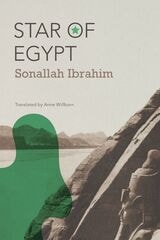
Star of August
Sonallah Ibrahim
Seagull Books, 2026
In the summer of 1965, a journalist newly released from prison finds himself stranded at the sprawling site of the Aswan High Dam, the flagship project of Gamal Abdel Nasser’s modern Egypt. Amid oppressive heat, unreliable transport, a mysterious epidemic, and the oppressive gaze of state surveillance, he confronts a dramatic transformation underway: villages erased, communities displaced, and a rich past disappearing beneath the waters of a new lake. As the journalist journeys south along the Nile, his observations illuminate a key moment in Cold War politics and a society wrestling with the promises and perils of progress.
Originally published in Arabic in 1974, Star of August is a masterwork by Sonallah Ibrahim—a writer who lived through these upheavals firsthand—and a timeless exploration of ideology, power, and the price of change.
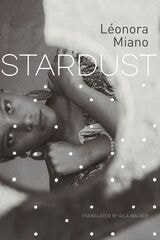
Stardust
Léonora Miano
Seagull Books, 2026
At just twenty-three, Louise finds herself stranded in a Paris shelter with her baby, Bliss, in her arms while battling homelessness, racism, and the struggles that come with being a female immigrant trying to keep her dignity alive. Yet amid the chaos, Louise encounters a fragile network of mothers and survivors from the Maghreb and sub-Saharan Africa, each carrying their own story of violence, addiction, and resilience.
Based on a pivotal moment in author Léonora Miano’s own life, Stardust is a luminous story of the quiet power of choosing life. The novel was first composed over twenty years ago and remained unpublished for years. Now, Miano invites readers into her world, shedding light on the invisible corners of French society and offering a moving meditation on motherhood, dignity, and renewal.
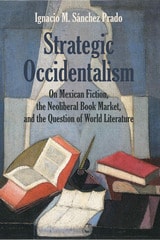
Strategic Occidentalism
On Mexican Fiction, the Neoliberal Book Market, and the Question of World LiteratureIgnacio M. Sánchez Prado
Northwestern University Press, 2018
In the course of this analysis, Ignacio M. Sánchez Prado engages with theories of world literature, proposing that “world literature” is a construction produced at various levels, including the national, that must be studied from its material conditions of production in specific sites. In particular, he argues that Mexican writers have engaged in a “strategic Occidentalism” in which their idiosyncratic connections with world literature have responded to dynamics different from those identified by world-systems or diffusionist theorists.
Strategic Occidentalism identifies three scenes in which a cosmopolitan aesthetics in Mexican world literature has been produced: Sergio Pitol’s translation of Eastern European and marginal British modernist literature; the emergence of the Crack group as a polemic against the legacies of magical realism; and the challenges of writers like Carmen Boullosa, Cristina Rivera Garza, and Ana García Bergua to the roles traditionally assigned to Latin American writers in world literature.

Sámi Folktales from the Near and Far Worlds
Just Knud Qvigstad
University of Minnesota Press, 2026
The most comprehensive collection of Sámi folktales ever translated into English
From the vast region of Northern Sápmi comes Sámi Folktales from the Near and Far Worlds, the most extensive compilation of Sámi narratives recorded from Sámi storytellers ever published in English translation. Comprising more than 300 folktales and legends from Northern Norway, including many from the coastal Sámi and the Skolt Sámi of Eastern Finnmark, this volume illuminates an oral storytelling tradition and shares narratives told by fishers, farmers, reindeer herders, lay preachers, and teachers from the interior plateaus and valleys to the Arctic fjords.
Originally recorded in the late nineteenth and early twentieth centuries by the Norwegian philologist Just Knud Qvigstad and the Sámi politician and folklorist Isak Saba, this collection spans centuries of storytelling in multiple genres, from migratory fairytales with kings and princesses to legends of ghosts and the Devil to fables with talking animals. A young lad from a poor family embarks on a quest through the wilderness to find treasure, receiving help from a wise female elder along his path. A Sámi boy falls in love with a háldi girl from another world, and they find a way to marry. A man carries sickness out of a village and stops the plague from spreading. Cunning foxes outsmart bears and humans alike. The villainous Chudes are tricked, foiled in their plans to steal from and kill the Sámi. People are turned into wolves, able to turn back only if they don’t taste the blood of a reindeer or if they are given cooked food. The ogre Stállu appears again and again, terrorizing the community until he’s outwitted or subdued. Rávgas, undead creatures of the sea, drag themselves out of the depths to lure others to their demise.
With historical context that reveals the cultural resilience of the Sámi people, Sámi Folktales from the Near and Far Worlds honors these traditional narratives, often overlooked in other folktale anthologies from the Nordic countries. Translator Barbara Sjoholm’s insightful introduction describes Qvigstad’s and Saba’s backgrounds and their work in gathering and translating these essential texts, and she introduces Sámi storytellers Johan Aikio, Efraim Pedersen, and Elen Utsi, who contributed dozens of stories.
An unprecedented trove of Sámi narratives, this expansive collection brings most of these tales to English readers for the first time, marking a major contribution to Indigenous folk literature and enhancing a broader understanding of Sámi and Nordic cultures.
Retail e-book files for this title are screen-reader friendly with images accompanied by short alt text and/or extended descriptions.