Results by title
139 books match the query 'World War, 1914-1918' and 8 start with s
Sailor Of The Air
The 1917-1919 Letters and Diary of USN CMM/A Irving Edward SheelyLawrence D. Sheely
University of Alabama Press, 1993
In the winter of 1917, with most of the world at war, twenty-three-year-old Irving Edward Sheely of Albany, New York, enlisted in Naval Aviation and began his training at Pensacola Naval Air Station. When Congress declared ware on Germany on April 6, 1917, the combined strength of aviation within the Navy and Marine Corps was 48 officers, 239 enlisted men, 54 airplanes, one airship, and one air station.
Secrets in a Dead Fish
The Spying Game in the First World WarMelanie King
Bodleian Library Publishing, 2014
Throughout World War I, spymasters and their networks of secret agents developed many clever—and sometimes comical—methods of covert communication. Stacks of bread in a bakery window, puffs of smoke from a chimney, and even woolen pullovers were all used to pass on secret messages that were decipherable only to the well-trained eye. Drawing on the memoirs of eight spies, Melanie King divulges these and other tricks of the trade while sharing details from their astonishing stories. Among her informants are British intelligence officers working undercover in Germany and France, including a former Metropolitan police officer who once hunted Jack the Ripper; a German secret service officer codenamed “Agricola;” an American newspaperman; and an Austrian agent who disguised himself during his career as everything from a Jewish peddler to a Russian officer.
A fascinating compendium of clever and long-forgotten ruses—interspersed with the stories of the spies themselves—Secrets in a Dead Fish sheds new light on the shadowy world of Great War espionage.
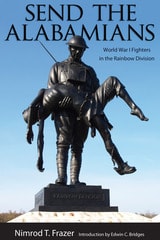
Send the Alabamians
World War I Fighters in the Rainbow DivisionNimrod T. Frazer
University of Alabama Press, 2014
The Remarkable Story of Alabama's Soldiers in America's Great War.
Send the Alabamians recounts the story of the 167th Infantry Regiment of the WWI Rainbow Division from their recruitment to their valiant service on the bloody fields of eastern France in the climactic final months of World War I.
To mark the centenary of World War I, Send the Alabamians tells the remarkable story of a division of Alabama recruits whose service Douglas MacArthur observed had not “been surpassed in military history.” The book borrows its title from a quip by American General Edward H. Plummer who commanded the young men during the inauspicious early days of their service. Impressed with their ferocity and esprit de corps but exasperated by their rambunctiousness, Plummer reportedly exclaimed: In time of war, send me all the Alabamians you can get, but in
time of peace, for Lord’s sake, send them to somebody else!
The ferocity of the Alabamians, so apt to get them in trouble at home, proved invaluable in the field. At the climactic Battle of Croix Rouge, the hot-blooded 167th exhibited unflinching valor and, in the face of machine guns, artillery shells, and poison gas, sustained casualty rates over 50 percent to dislodge and repel the deeply entrenched and heavily armed enemy.
Relying on extensive primary sources such as journals, letters, and military reports, Frazer draws a vivid picture of the individual soldiers who served in this division, so often overlooked but critical to the war’s success. After Gettysburg, the Battle of Croix Rouge is the most significant military engagement to involve Alabama soldiers in the state’s history. Families and genealogists will value the full roster of the 167th that accompanies the text.
Richly researched yet grippingly readable, Nimrod T. Frazer’s Send the Alabamians will delight those interested in WWI, the World Wars, Alabama history, or southern military history in general. Historians of the war, regimental historians, military history aficionados, and those interested in previously unexplored facets of Alabama history will prize this unique volume as well.
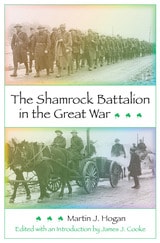
Shamrock Battalion in the Great War
Martin J. Hogan, Edited & Intro by James J. Cooke
University of Missouri Press, 2007
When Martin Hogan began training on a vacant lot to be a soldier, he had no idea that he was about to become part of one of the most famed fighting units of World War I. But soon he and other citizen soldiers from the Irish neighborhoods of New York City were locked in deadly combat with the German army.
Hogan’s book records his recollections of the 165th Infantry in World War I, a regiment in the famed Rainbow Division. Company K of the Third or Shamrock Battalion had a part in every fight, and those who survived had more wound stripes than did the soldiers of any other company in the American Expeditionary Forces. Few soldiers saw as much of the war in eighteen months as did young Martin Hogan, and in this stirring account he tells of his experiences with graphic power, humility, and humor.
Hogan depicts World War I at its most human level, with memories of combat in the trenches and on blood-soaked battlefields at St. Mihiel and in the Argonne Forest. His account tells us much about how unprepared for service the United States really was, with the National Guard woefully undersupplied and seriously undertrained. His experiences as a gassed, then wounded, soldier also show the reader a side of war that was far from glorious—in a time before penicillin, when the dangers of gangrene ran high—and his memoir conveys rare insight about conditions in American military hospitals where he found care.
This insider view of the frontline experience during the Great War, complete with well-known figures such as Chaplain Father Francis Duffy and Colonel “Wild Bill” Donovan, attests that the Rainbow Division “epitomized the best of the best spirit in the world—the American spirit.”
James Cooke’s new introduction to this edition places that renowned division in historical context. Now that other part-time American soldiers are facing new challenges abroad, Hogan’s account also attests that the National Guard, citizen soldiers who bore the brunt of much decisive fighting, measured up to the highest standards of professional fighting men.

Singing in the Age of Anxiety
Lieder Performances in New York and London between the World WarsLaura Tunbridge
University of Chicago Press, 2018
Laura Tunbridge explores the renewed vitality of this refugee musical form between the world wars, offering a fresh perspective on a period that was pervaded by anxieties of displacement. Through richly varied case studies, Singing in the Age of Anxiety traces how lieder were circulated, presented, and consumed in metropolitan contexts, shedding new light on how music facilitated unlikely crossings of nationalist and internationalist ideologies during the interwar period.
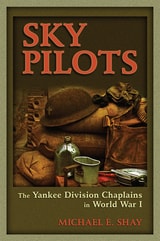
Sky Pilots
The Yankee Division Chaplains in World War IMichael E. Shay
University of Missouri Press, 2014
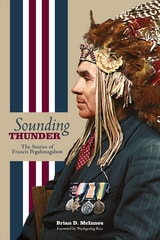
Sounding Thunder
The Stories of Francis PegahmagabowBrian D. McInnes
Michigan State University Press, 2016
Francis Pegahmagabow’s stories describe many parts of his life and are characterized by classic Ojibwe narrative. They reveal aspects of Francis’s Anishinaabe life and worldview. Interceding chapters by Brian McInnes provide valuable cultural, spiritual, linguistic, and historical insights that give a greater context and application for Francis’s words and world. Presented in their original Ojibwe as well as in English translation, the stories also reveal a rich and evocative relationship to the lands and waters of Georgian Bay.
In Sounding Thunder, Brian McInnes provides a new perspective on Pegahmagabow and his experience through a unique synthesis of Ojibwe oral history, historical record, and Pegahmagabow family stories.
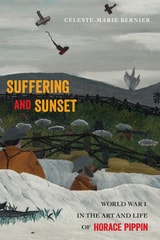
Suffering and Sunset
World War I in the Art and Life of Horace PippinCeleste-Marie Bernier
Temple University Press, 2017
For self-made artist and soldier Horace Pippin—who served in the 369th all-black infantry in World War I until he was wounded—war provided a formative experience that defined much of his life and work. His ability to transform combat service into canvases of emotive power, psychological depth, and realism showed not only how he viewed the world but also his mastery as a painter. In Suffering and Sunset, Celeste-Marie Bernier painstakingly traces Pippin’s life story of art as a life story of war.
Illustrated with more than sixty photographs, including works in various mediums—many in full color—this is the first intellectual history and cultural biography of Pippin. Working from newly discovered archives and unpublished materials, Bernier provides an in-depth investigation into the artist’s development of an alternative visual and textual lexicon and sheds light on his work in its aesthetic, social, and political contexts.
Suffering and Sunset illustrates Pippin’s status as a groundbreaking artist as it shows how this African American painter suffered from but also staged many artful resistances to racism in a white-dominated art world.