Results by title
28167 books match the query 'History' and 1838 start with s

Seven American Women Writers of the Twentieth Century
An IntroductionMaureen Howard, Editor
University of Minnesota Press, 1977
Seven American Women Writers of the Twentieth Century was first published in 1977. Minnesota Archive Editions uses digital technology to make long-unavailable books once again accessible, and are published unaltered from the original University of Minnesota Press editions.
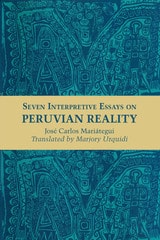
Seven Interpretive Essays on Peruvian Reality
By José Carlos Mariátegui
University of Texas Press, 1971
"Once again I repeat that I am not an impartial; objective critic. My judgments are nourished by my ideals, my sentiments, my passions. I have an avowed and resolute ambition: to assist in the creation of Peruvian socialism. I am far removed from the academic techniques of the university."—From the Author's Note
Jose Carlos Mariátegui was one of the leading South American social philosophers of the early twentieth century. He identified the future of Peru with the welfare of the Indian at a time when similar ideas were beginning to develop in Middle America and the Andean region. Generations of Peruvian and other Latin American social thinkers have been profoundly influenced by his writings.
Seven Interpretive Essays on Peruvian Reality (Siete ensayos de interpretación de la realidad peruana), first published in 1928, is Mariátegui's major statement of his position and has gone into many editions, not only in Peru but also in other Latin American countries. The topics discussed in the essays—economic evolution, the problem of the Indian, the land problem, public education, the religious factor, regionalism and centralism, and the literary process—are in many respects as relevant today as when the book was written.
Mariátegui's thinking was strongly tinged with Marxism. Because contemporary sociology, anthropology, and economics have been influenced by Marxism much more in Latin America than in North America, it is important that North Americans become more aware of Mariátegui's position and accord it its proper historical significance.
Jorge Basadre, the distinguished Peruvian historian, in an introduction written especially for this translation, provides an account of Mariátegui's life and describes the political and intellectual climate in which these essays were written.
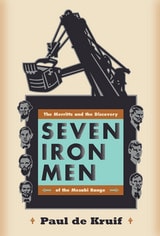
Seven Iron Men
The Merritts and the Discovery of the Mesabi RangePaul de Kruif
University of Minnesota Press, 2007
In the tradition of great American rags to riches stories, Seven Iron Men weaves together the history of how the seven Merritt brothers discovered iron ore on the Mesabi Range. In 1890 they were poised to become one of the wealthiest families in America but lost it all to industrialist John D. Rockefeller.
“The tale of their long and furious quest makes for one of the most melodramatic stories in American history. . . . The Merritts leap from the chronicle in all the colors of life—especially Lon, the king of them all, with his maudlin poetizing, his childlike faith in mankind, and his incredible tropical hat. It is a tale full of thrills, shot with sardonic humors.” —H. L. Mencken, The Nation
“Certainly it is no small contribution to the history of the American people to unfold the tale of the discovery and development of those huge iron deposits of the Mesabi Range flanking much of Lake Superior. To these perhaps quite as much as to any other one factor the country owes its industrial supremacy in the ago of steel.” —New York Herald Tribune
Paul de Kruif (1890–1971) was a microbiologist, served as a contributing editor to Reader’s Digest, and was the best-selling author of Microbe Hunters.
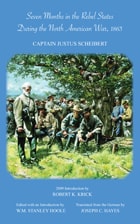
Seven Months in the Rebel States During the North American War, 1863
Captain Justus Scheibert, with a new introduction by Robert K. Krick
University of Alabama Press, 2009
Captain Scheibert’s book was available only in German until W. S. Hoole edited the present version.
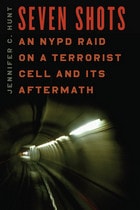
Seven Shots
An NYPD Raid on a Terrorist Cell and Its AftermathJennifer C. Hunt
University of Chicago Press, 2010
On July 31, 1997, a six-man Emergency Service team from the NYPD raided a terrorist cell in Brooklyn and narrowly prevented a suicide bombing of the New York subway that would have cost hundreds, possibly thousands of lives.
Seven Shots tells the dramatic story of that raid, the painstaking police work involved, and its paradoxical aftermath, which drew the officers into a conflict with other rank-and-file police and publicity-hungry top brass. Jennifer C. Hunt draws on her personal knowledge of the NYPD and a network of police contacts extending from cop to four-star chief, to trace the experience of three officers on the Emergency Service entry team and the two bomb squad detectives who dismantled the live device. She follows their lives for five years, from that near-fatal day in 1997, through their encounters inside the brutal world of departmental politics, and on to 9/11, when they once again put their lives at risk in the fight against terrorism, racing inside the burning towers and sorting through the ash, debris, and body parts. Throughout this fast paced narrative, Hunt maintains a strikingly fine-grained, street-level view, allowing us to understand the cops on their own terms—and often in their own words. The result is a compelling insider’s picture of the human beings who work in two elite units in the NYPD and the moral and physical danger and courage involved.
As gripping as an Ed McBain novel—and just as steeped in New York cop culture and personalities—Seven Shots takes readers on an unforgettable journey behind the shield and into the hearts of New York City police.
Seven Stories of Threatening Speech
Women's Suffrage Meets Machine CodeRuth A. Miller
University of Michigan Press, 2012
This book thus represents a radical methodological initiative not just for scholars of history and language but for specialists in law, political theory, political science, gender studies, semiotics, and science and technology studies. It takes posthumanist scholarship to an exciting and essential, if sometimes troubling, conclusion.
“It is an erudite work by a scholar of enormous talent, who advances a thesis that is richly insightful and deeply provocative.”—Mary Hawkesworth, Rutgers University
Seventeen Syllables and Other Stories
Yamamoto, Hisaye
Rutgers University Press, 2001
In addition to the contents of the original volume, this edition brings back into print the following works:
- Death Rides the Rails to Poston
- Eucalyptus
- A Fire in Fontana
- Florentine Gardens
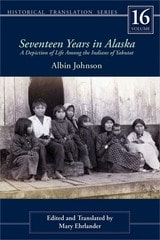
Seventeen Years in Alaska
A Depiction of Life Among the Indians of YakutatAlbin Johnson
University of Alaska Press, 2014
Seventeen Years in Alaska is Johnson’s eyewitness account of this tumultuous time. It is a captivating narrative of an ancient people facing rapid change and of the missionaries working to stem a corrupting tide. His journals offer a candid look at the beliefs and lives of missionaries, and they ultimately reveal the profound effect that he and other missionaries had on the Tlingit. Tracing nearly two decades of spiritual hopes and earthbound failures, Johnson’s memoir is a fascinating portrait of a rapidly changing world in one of the most far-flung areas of the globe.
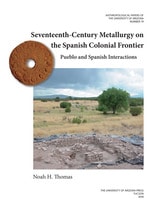
Seventeenth-Century Metallurgy on the Spanish Colonial Frontier
Pueblo and Spanish InteractionsNoah H. Thomas
University of Arizona Press, 2018
Using the ethnography of Pueblo peoples and seventh-century European manuals of metallurgy, Thomas addresses how the situated agency of indigenous practitioners incorporated within colonial industries shaped the metallurgy industry in the Spanish colonial period. The resulting analysis investigates how economic, technical, and social knowledge was communicated, contested, and transformed across the social and cultural boundaries present in early colonial communities. Viewing these transformations through an ethnohistorical lens, Thomas builds a social and historical context within which to understand the decisions made by colonial actors at the time.
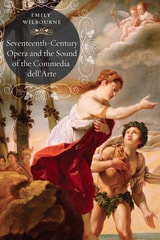
Seventeenth-Century Opera and the Sound of the Commedia dell’Arte
Emily Wilbourne
University of Chicago Press, 2016
Wilbourne considers a series of case studies structured around the most important and widely explored operas of the period: Monteverdi’s lost L’Arianna, as well as his Il Ritorno d’Ulisse and L’incoronazione di Poppea; Mazzochi and Marazzoli’s L’Egisto, ovvero Chi soffre speri; and Cavalli’s L’Ormindo and L’Artemisia. As she demonstrates, the sound-in-performance aspect of commedia dell’arte theater—specifically, the use of dialect and verbal play—produced an audience that was accustomed to listening to sonic content rather than simply the literal meaning of spoken words. This, Wilbourne suggests, shaped the musical vocabularies of early opera and facilitated a musicalization of Italian theater.
Highlighting productive ties between the two worlds, from the audiences and venues to the actors and singers, this work brilliantly shows how the sound of commedia performance ultimately underwrote the success of opera as a genre.
Seventh Generation Earth Ethics
Native Voices of WisconsinPatty Loew
Wisconsin Historical Society Press, 2025
Indigenous perspectives on sustainability, culture, and community
In this collection of twelve biographies, one from each of the Native nations in Wisconsin, author Patty Loew (Bad River Ojibwe) introduces readers to prominent figures in Native sustainability—people whose life’s work reflects the traditional ecological knowledge and cultural values of their people.
Born out of Loew’s thirty years as a journalist and historian, Seventh Generation Earth Ethics highlights individuals who helped to sustain and nurture their nations.
Walter Bresette, Red Cliff Ojibwe, community activist
Hilary Waukau, Menominee, environmental warrior
Frances Van Zile, Mole Lake (Sokaogon) Ojibwe, keeper of the water
James Schlender, Lac Courte Oreilles Ojibwe, treaty rights guardian
Jose Rose, Bad River Ojibwe, elder, environmentalist, and scholar
Dorothy Davids, Stockbridge-Munsee Community Band of Mohican Indians, educator
William Gollnick, Oneida, culture keeper
Thomas St. Germaine, Lac du Flambeau Ojibwe, attorney
Truman Lowe, Ho-Chunk, organic sculpture artist
Jenny and Mary Thunder, Forest County Potawatomi, medicine women
Wanda McFaggen, St. Croix Ojibwe, Tribal Historic Preservationist
Caroline Andler, Brothertown Indian Nation, genealogist
The indigenous people whose lives are depicted in Seventh Generation Earth Ethics understood the cultural gravity that kept their people rooted to their ancestral lands and acted in ways that ensured the growth and success of future generations.
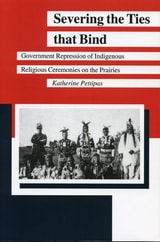
Severing the Ties that Bind
Government Repression of Indigenous Religious Ceremonies on the PrairiesKatherine Pettipas
University of Manitoba Press, 1994
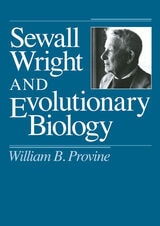
Sewall Wright and Evolutionary Biology
William B. Provine
University of Chicago Press, 1986
"In Sewall Wright and Evolutionary Biology . . . Provine has produced an intellectual biography which serves to chart in considerable detail both the life and work of one man and the history of evolutionary theory in the middle half of this century. Provine is admirably suited to his task. . . . The resulting book is clearly a labour of love which will be of great interest to those who have a mature interest in the history of evolutionary theory."-John Durant, ;ITimes Higher Education Supplement;X

Seward's Folly
A New Look at the Alaska PurchaseLee A. Farrow
University of Alaska Press, 2016
This book aims to correct that. Lee Farrow offers here a detailed account of just what the Alaska Purchase was, how it came about, its impact at the time, and more. Farrow shows why both America and Russia had plenty of good reasons to want the sale to occur, including Russia’s desire to let go of an unprofitable, hard-to-manage colony and the belief in the United States that securing Alaska could help the nation gain control of British Columbia and generate closer trade ties with Asia . Farrow also delves into the implications of the deal for foreign policy and international diplomacy far beyond Russia and the United States at a moment when the global balance of power was in question.
A thorough, readable retelling of a story we only think we know, Seward’s Folly will become the standard book on the Alaska Purchase.
Sewing the Fabric of Statehood
Garment Unions, American Labor, and the Establishment of the State of IsraelAdam Howard
University of Illinois Press, 2017
Sex Ed
Film, Video, and the Framework of DesireEberwein, Robert
Rutgers University Press, 1999
Eberwein starts his investigation in the silent and early sound eras with educational films used both to warn audiences about venereal disease and to provide basic contraception information. World War II movies, he states, waged their own war against venereal disease-in the armed services and at home. Newer works deal with birth control and focus in particular on AIDS.
Sex Ed also highlights the classroom. Eberwein draws connections between the earliest and most recent examples of educational films as he analyzes their ideological complexity. He concludes by examining marriage-manual films of the early 1970s and very recent videos for couples and individuals seeking instruction in sexual techniques to increase pleasure.
Sex Goes to School
Girls and Sex Education before the 1960sSusan K. Freeman
University of Illinois Press, 2007
Sex Isn't Real
The Invention of an Incoherent BinaryBeans Velocci
Duke University Press, 2026
Sex Itself
The Search for Male and Female in the Human GenomeSarah S. Richardson
University of Chicago Press, 2013
Sex Museums
The Politics and Performance of DisplayJennifer Tyburczy
University of Chicago Press, 2015
All museums are sex museums. In Sex Museums, Jennifer Tyburczy takes a hard look at the formation of Western sexuality—particularly how categories of sexual normalcy and perversity are formed—and asks what role museums have played in using display as a technique for disciplining sexuality. Most museum exhibits, she argues, assume that white, patriarchal heterosexuality and traditional structures of intimacy, gender, and race represent national sexual culture for their visitors. Sex Museums illuminates the history of such heteronormativity at most museums and proposes alternative approaches for the future of public display projects, while also offering the reader curatorial tactics—what she calls queer curatorship—for exhibiting diverse sexualities in the twenty-first century.
Tyburczy shows museums to be sites of culture-war theatrics, where dramatic civic struggles over how sex relates to public space, genealogies of taste and beauty, and performances of sexual identity are staged. Delving into the history of erotic artifacts, she analyzes how museums have historically approached the collection and display of the material culture of sex, which poses complex moral, political, and logistical dilemmas for the Western museum. Sex Museums unpacks the history of the museum and its intersections with the history of sexuality to argue that the Western museum context—from its inception to the present—marks a pivotal site in the construction of modern sexual subjectivity.
Sex Radicals and the Quest for Women's Equality
Joanne E. Passet
University of Illinois Press, 2003
In charting the growth of the sex radical movement, Joanne E. Passet draws on a host of documents from the period -- letters, periodicals, lectures, and pamphlets -- to establish a strong link between the rise of print culture and the freedom of citizens, especially women, to build geographically dispersed communities of ideas. She also advances models of sexuality that challenge the restrictive mores of society at large and shows that the majority of correspondents who participated in the sex radical movement resided in the Midwest and the Great Plains states, where ideas of individual freedom and sovereignty resonated particularly strongly.
Passet vividly demonstrates how this sex radical movement laid the foundations upon which later generations of women’s rights crusaders and feminists would build, placing discussions of sex and sexuality squarely in the public arena.
Sex Scandal
The Private Parts of Victorian FictionWilliam A. Cohen
Duke University Press, 1996
Scandal, then as now, makes public the secret indiscretions of prominent people, engrossing its audience in salacious details that violate the very code of propriety it aims to enforce. In narratives ranging from Great Expectations to the Boulton and Park sodomy scandal of 1870–71, from Eliot’s and Trollope’s novels about scandalous women to Oscar Wilde’s writing and his trials for homosexuality, Cohen shows how, in each instance, sexuality appears couched in coded terms. He identifies an assortment of cunning narrative techniques used to insinuate sex into Victorian writing, demonstrating that even as such narratives air the scandalous subject, they emphasize its unspeakable nature.
Written with an eye toward the sex scandals that still whet the appetites of consumers of news and novels, this work is suggestive about our own modes of imagining sexuality today and how we arrived at them. Sex Scandal will appeal to scholars and general readers interested in Victorian literature, the history of sexuality, gender studies, nineteenth-century Britain, and gay, lesbian, and queer studies.
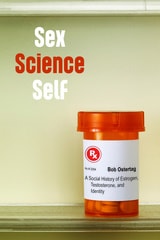
Sex Science Self
A Social History of Estrogen, Testosterone, and IdentityBob Ostertag
University of Massachusetts Press, 2016
Ostertag situates this history alongside the story of an increasingly visible and political lesbian, gay, bisexual, and transgender population. He persuasively argues that scholarship on the development of sex hormone chemicals does not take into account LGBT history and activism, nor has work in LGBT history fully considered the scientific research that has long attempted to declare a chemical essence of gender. In combining these histories, Ostertag reveals the complex motivations behind hormone research over generations and expresses concern about the growing profits from estrogen and testosterone, which now are marketed with savvy ad campaigns to increase their use across multiple demographics.
Ostertag does not argue against the use of pharmaceutical hormones. Instead he points out that at a time when they are increasingly available, it is more important than ever to understand the history and current use of these powerful chemicals so that everyone—within the LGBT community and beyond—can make informed choices.
In this short, thoughtful, and engaging book, Ostertag tells a fascinating story while opening up a wealth of new questions and debates about gender, sexuality, and medical treatments.
Sex Trafficking, Scandal, and the Transformation of Journalism, 1885-1917
Gretchen Soderlund
University of Chicago Press, 2013
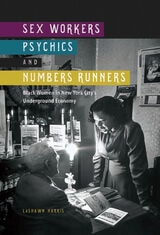
Sex Workers, Psychics, and Numbers Runners
Black Women in New York City's Underground EconomyLaShawn Harris
University of Illinois Press, 2016

Sex and Death on the Western Emigrant Trail
The Biology of Three American TragediesDonald K. Grayson
University of Utah Press, 2018
The plights of these emigrant groups have been addressed by different historians in different ways; this book is the first to examine the tragedies in terms of biology. Grayson shows that who lived or died can largely be explained by age, sex, and family ties. His investigation reveals what happens when our cultural mechanisms for dealing with famine and extreme cold are reduced to only what our bodies can provide within structured social contexts. His results are surprising and not always intuitive as he investigates who survived in these life threatening situations.
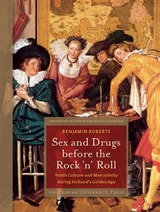
Sex and Drugs before Rock 'n' Roll
Youth Culture and Masculinity during Holland's Golden AgeBenjamin B. Roberts
Amsterdam University Press, 2012
Sex and Religion
Teachings and Taboos in the History of World FaithsDag Ølstein Endsjø
Reaktion Books, 2011
Sex and religion are inevitably and intricately linked. There are few realms of human experience other than sex in which religion has greater reach and influence. The role of religion, of any faith, to prohibit, regulate, condemn, and reward, is unavoidably prominent in questions of sex—namely with whom, when, how, and why. In Sex and Religion, Dag Øistein Endsjø examines the myriad and complex religious attitudes towards sex in cultures throughout the world.
Endsjø reflects on some of the most significantly problematic areas in the relationship between sex and religion—from sex before or outside of marriage to homosexuality. Through many examples from world religions, he outlines what people mean by sex in a religious context, with whom it’s permissible to have sex, how sex can be a directly religious experience, and what consequences there are for deviance, for both the individual and society. As Endsjø explains, while Buddhist monks call attention to gay sex as a holy mystery, the Christian church questions a homosexual’s place in the church. Some religions may believe that promiscuity leads to hurricanes and nuclear war, and in others God condemns interracial marriage. Sex and Religion reveals there is nothing natural or self-evident about the ways in which various religions prescribe or proscribe and bless or condemn different types of sexuality. Whether sex becomes sacred or abhorrent depends entirely on how a religion defines it.
Sex and Religion is a fascinating investigation of mores, meanings, rituals, and rules in many faiths around the globe, and will be of interest to anyone curious about the intersection of these fundamental aspects of human history and experience.
Sex and the Founding Fathers
The American Quest for a Relatable PastThomas A. Foster
Temple University Press, 2016
Biographers, journalists, and satirists have long used the subject of sex to define the masculine character and political authority of America's Founding Fathers. Tracing these commentaries on the Revolutionary Era's major political figures in Sex and the Founding Fathers, Thomas Foster shows how continual attempts to reveal the true character of these men instead exposes much more about Americans and American culture than about the Founders themselves.
Sex and the Founding Fathers examines the remarkable and varied assessments of the intimate lives of George Washington, Thomas Jefferson, John Adams, Benjamin Franklin, Alexander Hamilton, and Gouverneur Morris from their own time to ours. Interpretations can change radically; consider how Jefferson has been variously idealized as a chaste widower, condemned as a child molester, and recently celebrated as a multicultural hero.
Foster considers the public and private images of these generally romanticized leaders to show how each generation uses them to reshape and reinforce American civic and national identity.

Sex and the Gender Revolution, Volume 1
Heterosexuality and the Third Gender in Enlightenment LondonRandolph Trumbach
University of Chicago Press, 1998
In Sex and the Gender Revolution, Randolph Trumbach reconstructs the worlds of eighteenth-century prostitution, illegitimacy, sexual violence, and adultery. In those worlds the majority of men became heterosexuals by avoiding sodomy and sodomite behavior.
As men defined themselves more and more as heterosexuals, women generally experienced the new male heterosexuality as its victims. But women—as prostitutes, seduced servants, remarrying widows, and adulterous wives— also pursued passion. The seamy sexual underworld of extramarital behavior was central not only to the sexual lives of men and women, but to the very existence of marriage, the family, domesticity, and romantic love. London emerges as not only a geographical site but as an actor in its own right, mapping out domains where patriarchy, heterosexuality, domesticity, and female resistance take vivid form in our imaginations and senses.
As comprehensive and authoritative as it is eloquent and provocative, this book will become an indispensable study for social and cultural historians and delightful reading for anyone interested in taking a close look at sex and gender in eighteenth-century London.
Sex before Sex
Figuring the Act in Early Modern EnglandJames M. Bromley
University of Minnesota Press, 2013
What is sex exactly? Does everyone agree on a definition? And does that definition hold when considering literary production in other times and places? Sex before Sex makes clear that we cannot simply transfer our contemporary notions of what constitutes a sex act into the past and expect them to be true for the people who were then reading literature and watching plays. The contributors confront how our current critical assumptions about definitions of sex restrict our understanding of representations of sexuality in early modern England.
Drawing attention to overlooked forms of sexual activity in early modern culture, from anilingus and interspecies sex to “chin-chucking” and convivial drinking, Sex before Sex offers a multifaceted view of what sex looked like before the term entered history. Through incisive interpretations of a wide range of literary texts, including Romeo and Juliet, The Comedy of Errors, Paradise Lost, the figure of Lucretia, and pornographic poetry, this collection queries what might constitute sex in the absence of a widely accepted definition and how a historicized concept of sex affects the kinds of arguments that can be made about early modern sexualities.
Contributors: Holly Dugan, George Washington U; Will Fisher, CUNY–Lehman College; Stephen Guy-Bray, U of British Columbia; Melissa J. Jones, Eastern Michigan U; Thomas H. Luxon, Dartmouth College; Nicholas F. Radel, Furman U; Kathryn Schwarz, Vanderbilt U; Christine Varnado, U of Buffalo–SUNY.

Sex between Body and Mind
Psychoanalysis and Sexology in the German-speaking World, 1890s-1930sKatie Sutton
University of Michigan Press, 2019
This is the first book to closely examine vital encounters among this era’s German-speaking researchers across their emerging professional and disciplinary boundaries. Although psychoanalysis was often considered part of a broader “sexual science,” sexologists increasingly distanced themselves from its mysterious concepts and clinical methods. Instead, they turned to more pragmatic, interventionist therapies—in particular, to the burgeoning field of hormone research, which they saw as crucial to establishing their own professional relevance. As sexology and psychoanalysis diverged, heated debates arose around concerns such as the sexual life of the child, the origins and treatment of homosexuality and transgender phenomena, and female frigidity. This new story of the emergence of two separate approaches to the study of sex demonstrates that the distinctions between them were always part of a dialogic and competitive process. It fundamentally revises our understanding of the production of modern sexual subjects.
Sex in Middlesex
Popular Mores in a Massachusetts County, 1649-1699Roger Thompson
University of Massachusetts Press, 1986
Drawing on an extraordinary wealth of court records from Middlesex County of the Colony and Province of Massachusetts Bay, Sex in Middlesex offers a richly revisionist account of social and moral life in seventeenth-century New England. Social historian Roger Thompson brings to life the forgotten men and women of colonial Massachusetts to challenge some of the most entrenched assumptions about Puritan society. Examining cases of fornication, adultery, breach of promise, premarital pregnancy, and sexual deviance recorded between 1649 and 1699, Thompson argues that the Puritan social system was far less rigid, and the relations between the sexes far less coercively regulated, than the dominant historiographical tradition, shaped by scholars such as Perry Miller and Lawrence Stone, has suggested.
Rather than a community defined by patriarchal tyranny and punitive moral control, Thompson discovers in the Middlesex records a society characterized by a striking degree of tolerance, mutual regard, and practical common sense, animated by a genuinely popular Puritan piety. The goal of the courts was not punishment and exclusion, but confession, reform, and the reintegration of offenders into the community. Structured with methodological rigor and written with narrative verve, Sex in Middlesex is at once a work of quantitative social history and a gallery of vivid individual portraits.
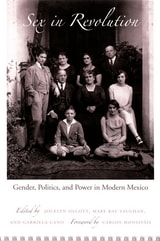
Sex in Revolution
Gender, Politics, and Power in Modern MexicoJocelyn Olcott, Mary Kay Vaughan, and Gabriela Cano, eds.
Duke University Press, 2006
Concentrating on episodes and phenomena that occurred between 1915 and 1950, the contributors deftly render experiences ranging from those of a transgendered Zapatista soldier to upright damas católicas and Mexico City’s chicas modernas pilloried by the press and male students. Women refashioned their lives by seeking relief from bad marriages through divorce courts and preparing for new employment opportunities through vocational education. Activists ranging from Catholics to Communists mobilized for political and social rights. Although forced to compromise in the face of fierce opposition, these women made an indelible imprint on postrevolutionary society.
These essays illuminate emerging practices of femininity and masculinity, stressing the formation of subjectivity through civil-society mobilizations, spectatorship and entertainment, and locales such as workplaces, schools, churches, and homes. The volume’s epilogue examines how second-wave feminism catalyzed this revolutionary legacy, sparking widespread, more radically egalitarian rural women’s organizing in the wake of late-twentieth-century democratization campaigns. The conclusion considers the Mexican experience alongside those of other postrevolutionary societies, offering a critical comparative perspective.
Contributors. Ann S. Blum, Kristina A. Boylan, Gabriela Cano, María Teresa Fernández Aceves, Heather Fowler-Salamini, Susan Gauss, Temma Kaplan, Carlos Monsiváis, Jocelyn Olcott, Anne Rubenstein, Patience Schell, Stephanie Smith, Lynn Stephen, Julia Tuñón, Mary Kay Vaughan
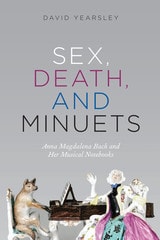
Sex, Death, and Minuets
Anna Magdalena Bach and Her Musical NotebooksDavid Yearsley
University of Chicago Press, 2019
Sex, Death, and Minuets offers the first in-depth study of these notebooks and their owner, reanimating Anna Magdalena as a multifaceted historical subject—at once pious and bawdy, spirited and tragic. In these pages, we follow Magdalena from young and flamboyant performer to bereft and impoverished widow—and visit along the way the coffee house, the raucous wedding feast, and the family home. David Yearsley explores the notebooks’ more idiosyncratic entries—like its charming ditties on illicit love and searching ruminations on mortality—against the backdrop of the social practices and concerns that women shared in eighteenth-century Lutheran Germany, from status in marriage and widowhood, to fulfilling professional and domestic roles, money, fashion, intimacy and sex, and the ever-present sickness and death of children and spouses. What emerges is a humane portrait of a musician who embraced the sensuality of song and the uplift of the keyboard, a sometimes ribald wife and oft-bereaved mother who used her cherished musical notebooks for piety and play, humor and devotion—for living and for dying.
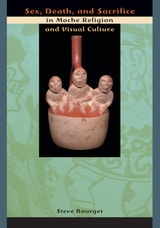
Sex, Death, and Sacrifice in Moche Religion and Visual Culture
By Steve Bourget
University of Texas Press, 2006
The Moche people who inhabited the north coast of Peru between approximately 100 and 800 AD were perhaps the first ancient Andean society to attain state-level social complexity. Although they had no written language, the Moche created the most elaborate system of iconographic representation of any ancient Peruvian culture. Amazingly realistic figures of humans, animals, and beings with supernatural attributes adorn Moche pottery, metal and wooden objects, textiles, and murals. These actors, which may have represented both living individuals and mythological beings, appear in scenes depicting ritual warfare, human sacrifice, the partaking of human blood, funerary rites, and explicit sexual activities.
In this pathfinding book, Steve Bourget raises the analysis of Moche iconography to a new level through an in-depth study of visual representations of rituals involving sex, death, and sacrifice. He begins by drawing connections between the scenes and individuals depicted on Moche pottery and other objects and the archaeological remains of human sacrifice and burial rituals. He then builds a convincing case for Moche iconography recording both actual ritual activities and Moche religious beliefs regarding the worlds of the living, the dead, and the afterlife. Offering a pioneering interpretation of the Moche worldview, Bourget argues that the use of symbolic dualities linking life and death, humans and beings with supernatural attributes, and fertility and social reproduction allowed the Moche to create a complex system of reciprocity between the world of the living and the afterworld. He concludes with an innovative model of how Moche cosmological beliefs played out in the realms of rulership and political authority.
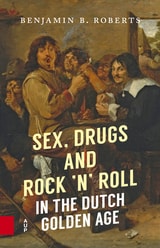
Sex, Drugs and Rock 'n' Roll in the Dutch Golden Age
Benjamin B. Roberts
Amsterdam University Press, 2018
With his engaging storytelling style and humorous anecdotes, Roberts convincingly reveals that deviant male youth behavior is common to all times, especially periods when youngsters have too much money and too much free time on their hands.
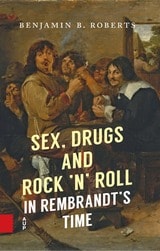
Sex, Drugs and Rock ’n’ Roll in Rembrandt’s Time
Benjamin B. Roberts
Amsterdam University Press, 2024
With his engaging storytelling-style filled with humorous anecdotes, Roberts convincingly shows how deviant male youth behavior is a feature of all ages, especially in periods when youngsters have too much free time and money.

Sex, France, and Arab Men, 1962–1979
Todd Shepard
University of Chicago Press, 2017
Sex, France, and Arab Men is a history of how and why—from the upheavals of French Algeria in 1962 through the 1970s—highly sexualized claims about Arabs were omnipresent in important public French discussions, both those that dealt with sex and those that spoke of Arabs. Shepard explores how the so-called sexual revolution took shape in a France profoundly influenced by the ongoing effects of the Algerian revolution. Shepard’s analysis of both events alongside one another provides a frame that renders visible the ways that the fight for sexual liberation, usually explained as an American and European invention, developed out of the worldwide anticolonial movement of the mid-twentieth century.
Sex, Power, and Slavery
Gwyn Campbell
Ohio University Press, 2014
Sexual exploitation was and is a critical feature of enslavement. Across many different societies, slaves were considered to own neither their bodies nor their children, even if many struggled to resist. At the same time, paradoxes abound: for example, in some societies to bear the children of a master was a potential route to manumission for some women. Sex, Power, and Slavery is the first history of slavery and bondage to take sexuality seriously.
Twenty-six authors from diverse scholarly backgrounds look at the vexed, traumatic intersections of the histories of slavery and of sexuality. They argue that such intersections mattered profoundly and, indeed, that slavery cannot be understood without adequate attention to sexuality. Sex, Power, and Slavery brings into conversation historians of the slave trade, art historians, and scholars of childhood and contemporary sex trafficking. The book merges work on the Atlantic world and the Indian Ocean world and enables rich comparisons and parallels between these diverse areas.
Contributors: David Brion Davis, Martin Klein, Richard Hellie, Abdul Sheriff, Griet Vankeerberghen, E. Ann McDougall, Matthew S. Hopper, Marie Rodet, George La Rue, Ulrike Schmieder, Tara Iniss, Mariana Candido, James Francis Warren, Johanna Ransmeier, Roseline Uyanga with Marie-Luise Ermisch, Francesca Ann Louise Mitchell, Shigeru Sato, Gabeba Baderoon, Charmaine Nelson, Ana Lucia Araujo, Brian Lewis, Ronaldo Vainfas, Salah Trabelsi, Joost Coté, Sandra Evers, and Subho Basu
Sex, Sickness, and Slavery
Illness in the Antebellum SouthMarli F. Weiner with Mazie Hough
University of Illinois Press, 2014
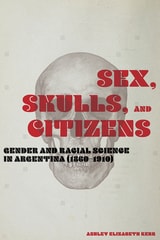
Sex, Skulls, and Citizens
Gender and Racial Science in Argentina (1860-1910)Ashley Elizabeth Kerr
Vanderbilt University Press, 2020
PROSE Awards Subject Category Finalist—Biological Anthropology, Ancient History, and Archaeology, 2021
Best Nineteenth-Century Book Award, Latin American Studies Association Nineteenth-Century Section, 2021
Analyzing a wide variety of late-nineteenth-century sources, Sex, Skulls, and Citizens argues that Argentine scientific projects of the era were not just racial encounters, but were also conditioned by sexual relationships in all their messy, physical reality.
The writers studied here (an eclectic group of scientists, anthropologists, and novelists, including Estanislao Zeballos, Lucio and Eduarda Mansilla, Ramón Lista, and Florence Dixie) reflect on Indigenous sexual practices, analyze the advisability and effects of interracial sex, and use the language of desire to narrate encounters with Indigenous peoples as they try to scientifically pinpoint Argentina's racial identity and future potential.
Kerr's reach extends into history of science, literary studies, and history of anthropology, illuminating a scholarly time and place in which the lines betwixt were much blurrier, if they existed at all.
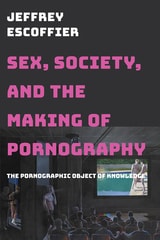
Sex, Society, and the Making of Pornography
The Pornographic Object of KnowledgeJeffrey Escoffier
Rutgers University Press, 2021

Sex-Life
A Critical Commentary on the History of SexualityDon Milligan
Pluto Press, 1993
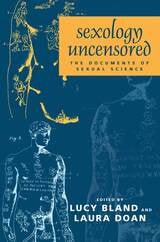
Sexology Uncensored
The Documents of Sexual ScienceEdited by Lucy Bland and Laura Doan
University of Chicago Press, 1998
Offering readers access to the primary materials on which contemporary sexology is founded, Sexology Uncensored is an invaluable record for all those interested in how we have come to think about sex and sexuality over the last hundred years.
Sexology in Culture and its companion Sexology Uncensored will interest all those concerned with understanding modern sexual discourse in its historical context.
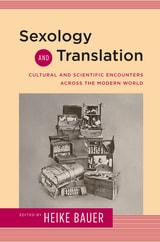
Sexology and Translation
Cultural and Scientific Encounters across the Modern WorldHeike Bauer
Temple University Press, 2015
Sexology and Translation is the first study of the contemporaneous emergence of sexology in Europe, Asia, and the Middle East. Heike Bauer and her contributors—historians, literary and cultural critics, and translation scholars—address the intersections between sexuality and modernity in a range of contexts during the period from the 1880s to the 1930s.
From feminist sexualities in modern Japan to Magnus Hirschfeld’s affective sexology, this book offers compelling new insights into how sexual ideas were formed in different contexts via a complex process of cultural negotiation. By focusing on issues of translation—the dynamic process by which ideas are produced and transmitted—the essays in Sexology and Translation provide an important corrective to the pervasive idea that sexuality is a “Western” construct that was transmitted around the world.
This volume deepens understanding of how the intersections between national and transnational contexts, between science and culture, and between discourse and experience, shaped modern sexuality.
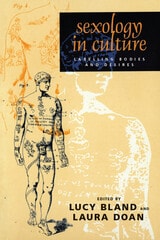
Sexology in Culture
Labelling Bodies and DesiresEdited by Lucy Bland and Laura Doan
University of Chicago Press, 1998
Lucy Bland and Laura Doan have brought together leading historians of sex, cultural and literary critics, and scholars in gay, lesbian, and queer studies, to reassess current debates on sexology in light of its history. They address issues such as the relation of "sexual science" to the law, government policy, journalism, eugenics programs, marriage and sex manuals, and literary representation. They also map out new readings of transsexuality and bisexuality, and the centrality of race within sexology.
Sexology in Culture and its companion Sexology Uncensored will interest all those concerned with understanding modern sexual discourse in its historical context.
Sexual Aim and Its Misses
On the Birth of the Sexual SubjectBenjamin Kahan
University of Chicago Press, 0
By shifting the study of sexuality to focus on “sexual aim,” we can understand the birth of the sexual subject—the historical emergence of an understanding of sexuality as an aspect of personhood.
Is it possible that half of the organization of modern sexuality has been forgotten? Historians of sexuality have thought about sexual desire almost exclusively in terms of the sexual object—the person to whom one is attracted. This book offers a history and theory of “sexual aim”—the what and how of desire—arguing that aim furnishes a constitutive and almost wholly ignored governing logic of sexuality.
The term “sexual aim” was coined by Sigmund Freud to describe “modes of gratification”—the sexual acts in which one finds pleasure, from kissing and copulation to voyeurism and fetishism. Benjamin Kahan repurposes this account to tell the complex story of how sexual aim catalyzed the formation of modern sexual identity and continues to operate as a powerful optic for understanding Euro-American sexualities.
Kahan focuses on nonnormative sexual aims, examining the histories of sadism, masochism, voyeurism, exhibitionism, and fetishism in order to articulate the relationship between sexual acts and sexuality. Drawing on diaries, court records, erotica, literary texts, marriage manuals, and medical treatises, Kahan vividly maps the emergence of the sexual subject from the early modern period through the twentieth century to furnish a new account of sexual modernity.

Sexual Borderlands
Constructing an American Sexual PastEdited by Kathleen Kennedy and Sharon Ullman
The Ohio State University Press, 2003
Sexual Encounters/Sexual Collisions
Alternative Sexualities in Colonial Mesoamerica, Volume 54Pete Sigal and John F. Chuchiak IV, eds.
Duke University Press, 0
One contributor considers a criminal case in seventeenth-century Mexico that demonstrates that the negotiation of homosexual identity was much more complex than the model of domination and submission often believed to structure Latin American male homosexual relationships. Another contributor examines how priests in Mayan communities attempted to use the confessional and confessional manuals to promote their own notions of sexual desire and ownership of indigenous women, only to have their efforts turned against them, with Mayan women using the texts to assert strategic dominance over the priests. Yet another essay, focusing on the treatment of a hermaphrodite in late colonial Guatemala, examines how the hermaphrodite’s traits undermined or called into question Enlightenment-era ideas about sex and gender.
Contributors. John F. Chuchiak IV, Martha Few, Kimberly Gauderman, Laura A. Lewis, Caterina Pizzigoni, Pete Sigal, Zeb Tortorici, Neil L. Whitehead