Results by title
28167 books match the query 'History' and 1838 start with s

Shakespearean Territories
Stuart Elden
University of Chicago Press, 2018

Shakespeare’s Legal Ecologies
Law and Distributed SelfhoodKevin Curran
Northwestern University Press, 2017
At the center of the book is Shakespeare’s fascination with questions that are fundamental to both law and philosophy: What are the sources of agency? What counts as a person? For whom am I responsible, and how far does that responsibility extend? What is truly mine? Curran guides readers through Shakespeare’s responses to these questions, paying careful attention to both historical and intellectual contexts.
The result is a book that advances a new theory of Shakespeare’s imaginative relationship to law and an original account of law’s role in the ethical work of his plays and sonnets. Readers interested in Shakespeare, theater and philosophy, law, and the history of ideas will find Shakespeare’s Legal Ecologies to be an essential resource.
Shakin' Up Race and Gender
Intercultural Connections in Puerto Rican, African American, and Chicano Narratives and Culture (1965–1995)By Marta E. Sánchez
University of Texas Press, 2006
The second phase of the civil rights movement (1965-1973) was a pivotal period in the development of ethnic groups in the United States. In the years since then, new generations have asked new questions to cast light on this watershed era. No longer is it productive to consider only the differences between ethnic groups; we must also study them in relation to one another and to U.S. mainstream society.
In "Shakin' Up" Race and Gender, Marta E. Sánchez creates an intercultural frame to study the historical and cultural connections among Puerto Ricans, African Americans, and Chicanos/as since the 1960s. Her frame opens up the black/white binary that dominated the 1960s and 1970s. It reveals the hidden yet real ties that connected ethnics of color and "white" ethnics in a shared intercultural history. By using key literary works published during this time, Sánchez reassesses and refutes the unflattering portrayals of ethnics by three leading intellectuals (Octavio Paz, Daniel Patrick Moynihan, and Oscar Lewis) who wrote about Chicanos, African Americans, and Puerto Ricans. She links their implicit misogyny to the trope of La Malinche from Chicano culture and shows how specific characteristics of this trope—enslavement, alleged betrayal, and cultural negotiation—are also present in African American and Puerto Rican cultures. Sánchez employs the trope to restore the agency denied to these groups. Intercultural contact—encounters between peoples of distinct ethnic groups—is the theme of this book.

Shaking the Tree
Readings from Nature in the History of LifeEdited by Henry Gee
University of Chicago Press, 2000
Shaking the Tree brings together nineteen review articles written for Nature over the past decade by many of the major figures in paleontology and evolution, from Stephen Jay Gould to Simon Conway Morris. Each article is brief, accessible, and opinionated, providing "shoot from the hip" accounts of the latest news and debates. Topics covered include major extinction events, homeotic genes and body plans, the origin and evolution of the primates, and reconstructions of phylogenetic trees for a wide variety of groups. The editor, Henry Gee, gives new commentary and updated references.
Shaking the Tree is a one-stop resource for engaging overviews of the latest research in the history of life on Earth.

Shaking the World for Jesus
Media and Conservative Evangelical CultureHeather Hendershot
University of Chicago Press, 2004
Thousands of products promoting the Christian faith are sold to millions of consumers each year through the Web, mail order catalogs, and even national chains such as Kmart and Wal-Mart. Heather Hendershot explores in this book the vast industry of film, video, magazines, and kitsch that evangelicals use to spread their message. Focusing on the center of conservative evangelical culture—the white, middle-class Americans who can afford to buy "Christian lifestyle" products—she examines the industrial history of evangelist media, the curious subtleties of the products themselves, and their success in the religious and secular marketplace.
To garner a wider audience, Hendershot argues, evangelicals have had to carefully temper their message. But in so doing, they have painted themselves into a corner. In the postwar years, evangelical media wore the message of salvation on its sleeve, but as the evangelical media industry has grown, many of its most popular products have been those with heavily diluted Christian messages. In the eyes of many followers, the evangelicals who purvey such products are sellouts—hucksters more interested in making money than spreading the word of God.
Working to understand evangelicalism rather than pass judgment on it, Shaking the World for Jesus offers a penetrating glimpse into a thriving religious phenomenon.
Shaky Colonialism
The 1746 Earthquake-Tsunami in Lima, Peru, and Its Long AftermathCharles F. Walker
Duke University Press, 2008
Through his ambitious rebuilding plan, the Viceroy sought to assert the power of the colonial state over the Church, the upper classes, and other groups. Agreeing with most inhabitants of the fervently Catholic city that the earthquake-tsunami was a manifestation of God’s wrath for Lima’s decadent ways, he hoped to reign in the city’s baroque excesses and to tame the city’s notoriously independent women. To his great surprise, almost everyone objected to his plan, sparking widespread debate about political power and urbanism. Illuminating the shaky foundations of Spanish control in Lima, Walker describes the latent conflicts—about class, race, gender, religion, and the very definition of an ordered society—brought to the fore by the earthquake-tsunami of 1746.

Shaky Foundations
The Politics-Patronage-Social Science Nexus in Cold War AmericaSolovey, Mark
Rutgers University Press, 2015
Numerous popular and scholarly accounts have exposed the deep impact of patrons on the production of scientific knowledge and its applications. Shaky Foundations provides the first extensive examination of a new patronage system for the social sciences that emerged in the early Cold War years and took more definite shape during the 1950s and early 1960s, a period of enormous expansion in American social science.
By focusing on the military, the Ford Foundation, and the National Science Foundation, Mark Solovey shows how this patronage system presented social scientists and other interested parties, including natural scientists and politicians, with new opportunities to work out the scientific identity, social implications, and public policy uses of academic social research. Solovey also examines significant criticisms of the new patronage system, which contributed to widespread efforts to rethink and reshape the politics-patronage-social science nexus starting in the mid-1960s.
Based on extensive archival research, Shaky Foundations addresses fundamental questions about the intellectual foundations of the social sciences, their relationships with the natural sciences and the humanities, and the political and ideological import of academic social inquiry.
Shall Not Be Denied
Women Fight for the VoteLibrary of Library of Congress
Rutgers University Press, 2019
Official Companion to the Library of Congress Exhibition.
The campaign for women’s suffrage—considered the largest reform movement in American history—lasted more than seven decades. The struggle was not for the fainthearted. For years, determined women organized, lobbied, paraded, petitioned, lectured, picketed, and faced imprisonment in pursuit of the right to vote. Drawing from the Library’s extensive collections of photographs, personal papers, and the organizational records of such figures as Susan B. Anthony, Elizabeth Cady Stanton, Mary Church Terrell, Carrie Chapman Catt, the National Woman’s Party, and the National American Woman Suffrage Association, Shall Not Be Denied traces the movement leading to the women’s rights convention at Seneca Falls, the contributions of suffragists who worked to persuade women that they deserved the same rights as men, the divergent political strategies and internal divisions they overcame, the push for a federal women’s suffrage amendment, and the legacy of the movement.
A companion to the exhibition staged by the Library of Congress, which opened on June 4, 2019—the 100th anniversary of the US Senate’s passage of the suffrage amendment that would become the 19th amendment—Shall Not Be Denied: Women Fight for the Vote is part of the national commemoration of the 100th anniversary of women’s suffrage.
Published by Rutgers University Press in association with the Library of Congress.
Shamanism and Vulnerability on the North and South American Great Plains
Kathleen Bolling Lowrey
University Press of Colorado, 2020
The book reveals the various ways in which anthropologists, historians, folklorists, and other writers have often misrepresented indigenous shamanism and revitalization movements by unconsciously projecting ideologies and assumptions derived from modern ‘contract societies’ onto ethnographic and historical realities. Lowrey also provides alternative ways of understanding indigenous American communities and their long histories of interethnic relations with expanding colonial and national states in the Americas. A creative historical and ethnographical reevaluation of the last few decades of scholarship on shamanism, disability, and dependence, Shamanism and Vulnerability on the North and South American Great Plains will be of interest to scholars of North and South American anthropology, indigenous history, American studies, and feminism.
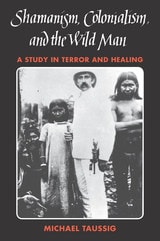
Shamanism, Colonialism, and the Wild Man
A Study in Terror and HealingMichael Taussig
University of Chicago Press, 1987
"This extraordinary book . . . will encourage ever more critical and creative explorations."—Fernando Coronil, [I]American Journal of Sociology[/I]
"Taussig has brought a formidable collection of data from arcane literary, journalistic, and biographical sources to bear on . . . questions of evil, torture, and politically institutionalized hatred and terror. His intent is laudable, and much of the book is brilliant, both in its discovery of how particular people perpetrated evil and others interpreted it."—Stehen G. Bunker, Social Science Quarterly
Shamanism, History, and the State
Nicholas Thomas and Caroline Humphrey, Editors
University of Michigan Press, 1994
The literature on shamanism and related topics is extensive, but has in general been biased toward curing and trance; the political and historical significance of shamanic activities has been largely neglected. The contributors to Shamanism, History, and the State—distinguished anthropologists and historians from England, Australia, and France—show that shamanism is not static and stable, but always changing as a result of political dynamics and historical processes. Contributors are Tamsyn Barton, Sysan Bayly, Mary Beard, Maurice Bloch, Peter Gow, Roberte N. Hamayon, Stephen Hugh-Jones, Caroline Humphrey, and Nicholas Thomas.
"The importance of this collection lies in the painstaking, many-sided ways in which it shows 'shamanism' to be a multifarious and continuously changing 'dialogue' or interaction with specific, local contexts. . . . Thus, rather than tackling the issue in principle, this collection tries to demonstrate through 'case studies' just how different 'shamanism' becomes if seen through a lens sensitive to history and the influence of institutions, such as the state, which seem far removed from it. I think the demonstrations add up to an impressive force." --Michael Taussig
"This new, ably edited volume provides . . . chapters that are rich in historic detail and that provide insights into general cultural processes and social interactions.

Shamans and Robots
On Ritual, the Placebo Effect, and Artificial ConsciousnessRoger Bartra
University of Minnesota Press, 2024
A profound exploration of the external influences that shape human consciousness, from healing rituals to digital devices
In this voyage through thousands of years of psychosomatic healing, distinguished anthropologist and sociologist Roger Bartra examines the placebo effect as a key to our understanding of human consciousness. Shamans and Robots demonstrates how biology and technology become intertwined within human culture by using the various histories of ritual and symbolic healing to speculate about future developments in artificial intelligence.
Charting the extensive history of the placebo effect through medieval healing, shamanism, and early psychoanalytic practices, Bartra posits that consciousness is not simply the province of the mind but something equally shaped by external systems and objects. He finds evidence of this “exocerebrum”—the extension of our brains outside the body—in the shamanistic concept of the placebo, in which external objects heal our bodies, and in modern technical devices like prostheses or robots, whose development of a mechanical consciousness would have to mimic, and in turn elucidate, the processes involved in the creation of consciousness in humans. Through this radical concept, he analyzes digital media’s relationship to the functions of the human brain and probes the possibility of artificial consciousness.
Both a look at the human body’s potential to restore itself and a profound reflection on the curative power of symbolic structures, Shamans and Robots explores how our technologies increasingly serve as extensions of our cognitive selves.
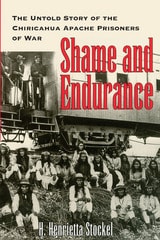
Shame and Endurance
The Untold Story of the Chiricahua Apache Prisoners of WarH. Henrietta Stockel
University of Arizona Press, 2004
First removed from Arizona to Florida, the prisoners were eventually relocated to Mount Vernon Barracks in Alabama, where, in the words of one Apache, "We didn’t know what misery was until they dumped us in those swamps." Pulmonary disease took its toll—by 1894, disease had killed nearly half of the Apaches—and after years of pressure from Indian rights activists and bureaucratic haggling, Fort Sill in Oklahoma was chosen as a more healthful location. Here they were given the opportunity to farm, and here Geronimo, who eventually converted to Christianity, died of pneumonia in 1909 at the age of 89, still a prisoner of war. In the meantime, many Apache children had been removed to Carlisle, Pennsylvania, for education—despite earlier promises that families would not be split up—and most eventually lost their cultural identity.
Henrietta Stockel has combed public records to reconstruct this story of American shame and Native endurance. Unabashedly speaking on behalf of the Apaches, she has framed these documents within a readable narrative to show how exasperated public officials, eager to openly demonstrate their superiority over "savages" who had successfully challenged the American military for years, had little sympathy for the consequences of their confinement. Although the Chiricahua Apaches were not alone in losing their ancestral homelands, they were the only American Indians imprisoned for so long a time in an environment that continually exposed them to illnesses against which they had no immunity, devastating families even more than warfare. Shame and Endurance records events that ought never to be repeated—and tells a story that should never be forgotten.
Shame
A Brief HistoryPeter Stearns
University of Illinois Press, 2017
Peter N. Stearns draws on his long career as a historian of emotions to provide the foundational text on shame’s history and how this history contributes to contemporary issues around the emotion. Summarizing current research, Stearns unpacks the major debates that surround this complex emotion. He also surveys the changing role of shame in the United States from the nineteenth century to today, including shame’s revival as a force in the 1960s and its place in today’s social media. Looking ahead, he maps the abundant opportunities for future historical research and historically informed interdisciplinary scholarship.
Written for interested readers and scholars alike, Shame combines significant new research with a wider synthesis.
Shameful Victory
The Los Angeles Dodgers, the Red Scare, and the Hidden History of Chavez RavineJohn H. M. Laslett
University of Arizona Press, 2015
John H. M. Laslett offers a new interpretation of the Chavez Ravine tragedy, paying special attention to the early history of the barrio, the reform of Los Angeles's destructive urban renewal policies, and the influence of the evictions on the collective memory of the Mexican American community.
In addition to examining the political decisions made by power brokers at city hall, Shameful Victory argues that the tragedy exerted a much greater influence on the history of the Los Angeles civil rights movement than has hitherto been appreciated. The author also sheds fresh light on how the community grew, on the experience of individual home owners who were evicted from the barrio, and on the influence that the event had on the development of recent Chicano/a popular music, drama, and literature.

Shamrock Battalion in the Great War
Martin J. Hogan, Edited & Intro by James J. Cooke
University of Missouri Press, 2007
When Martin Hogan began training on a vacant lot to be a soldier, he had no idea that he was about to become part of one of the most famed fighting units of World War I. But soon he and other citizen soldiers from the Irish neighborhoods of New York City were locked in deadly combat with the German army.
Hogan’s book records his recollections of the 165th Infantry in World War I, a regiment in the famed Rainbow Division. Company K of the Third or Shamrock Battalion had a part in every fight, and those who survived had more wound stripes than did the soldiers of any other company in the American Expeditionary Forces. Few soldiers saw as much of the war in eighteen months as did young Martin Hogan, and in this stirring account he tells of his experiences with graphic power, humility, and humor.
Hogan depicts World War I at its most human level, with memories of combat in the trenches and on blood-soaked battlefields at St. Mihiel and in the Argonne Forest. His account tells us much about how unprepared for service the United States really was, with the National Guard woefully undersupplied and seriously undertrained. His experiences as a gassed, then wounded, soldier also show the reader a side of war that was far from glorious—in a time before penicillin, when the dangers of gangrene ran high—and his memoir conveys rare insight about conditions in American military hospitals where he found care.
This insider view of the frontline experience during the Great War, complete with well-known figures such as Chaplain Father Francis Duffy and Colonel “Wild Bill” Donovan, attests that the Rainbow Division “epitomized the best of the best spirit in the world—the American spirit.”
James Cooke’s new introduction to this edition places that renowned division in historical context. Now that other part-time American soldiers are facing new challenges abroad, Hogan’s account also attests that the National Guard, citizen soldiers who bore the brunt of much decisive fighting, measured up to the highest standards of professional fighting men.

Shanghai Nightscapes
A Nocturnal Biography of a Global CityJames Farrer and Andrew David Field
University of Chicago Press, 2015
The book begins by examining the history of the jazz-age dance scenes that arose in the ballrooms and nightclubs of Shanghai’s foreign settlements. During its heyday in the 1930s, Shanghai was known worldwide for its jazz cabarets that fused Chinese and Western cultures. The 1990s have seen the proliferation of a drinking, music, and sexual culture collectively constructed to create new contact zones between the local and tourist populations. Today’s Shanghai night scenes are simultaneously spaces of inequality and friction, where men and women from many different walks of life compete for status and attention, and spaces of sociability, in which intercultural communities are formed. Shanghai Nightscapes highlights the continuities in the city’s nightlife across a turbulent century, as well as the importance of the multicultural agents of nightlife in shaping cosmopolitan urban culture in China’s greatest global city.
To listen to an audio diary of a night out in Shanghai with Farrer and Field, click here: http://n.pr/1VsIKAw.
Shanghai Rising
State Power and Local Transformations in a Global MegacityXiangming Chen
University of Minnesota Press, 2009
Analyzing a Chinese city’s dazzling rise to global megacity status
Until around 1990, Shanghai was China’s premier but sluggish industrial center. Now at the beginning of the twenty-first century, the joint impact of global forces and state power has turned Shanghai into a dynamic megacity. Shanghai’s remarkable growth in economy, infrastructure, and global presence has prompted questions about the Shanghai “miracle.” This collection places the city’s unprecedented rise in a rare comparative examination of U.S. cities, as well as with Asian megacities Singapore and Hong Kong, providing a nuanced account of how Shanghai’s politics, economy, society, and space have been transformed by macro- and micro-level forces.
Contributors: Stephen W. K. Chiu, Chinese U of Hong Kong; K. C. Ho, National U of Singapore; John D. Kasarda, U of North Carolina; Hanlong Lu, Shanghai Academy of Social Sciences; Tai-lok Lui, Chinese U of Hong Kong; Ann R. Markusen, U of Minnesota; Anthony M. Orum, U of Illinois, Chicago; Yuan Ren, Fudan U Shanghai; Saskia Sassen, Columbia U; Jiaming Sun, Texas A&M U, Commerce; Fulong Wu, Cardiff U; Pingkang Yu, George Washington U; Tingwei Zhang, U of Illinois, Chicago; Zhenhua Zhou, Development Research Center, Shanghai Municipal Government.
Shanghai and the Edges of Empires
Meng Yue
University of Minnesota Press, 2006
Calling into question conventional ways of conceptualizing modernity, colonialism, and intercultural relations, Meng Yue examines such cultural practices as the work of the commercial press, street theater, and literary arts, and shows that what appear to be minor cultural changes often signal the presence of larger political and economic developments. Engaging theories of modernity and postcolonial and global cultural studies, Meng Yue reveals the paradoxical interdependence between imperial and imperialist histories and the retranslation of culture that characterized the most notable result of China’s urban relocation—the emergence of the international city of Shanghai.
Meng Yue is assistant professor of East Asian languages and literature at the University of California, Irvine.
Shantytown Protest in Pinochet's Chile
Cathy Lisa Schneider
Temple University Press, 1995
Shaped by the State
Toward a New Political History of the Twentieth CenturyEdited by Brent Cebul, Lily Geismer, and Mason B. Williams
University of Chicago Press, 2019
Brent Cebul, Lily Geismer, and Mason B. Williams have brought together first-rate scholars from a wide range of subfields who are making structures of state power—not moments of crisis or partisan realignment—integral to their analyses. All of the contributors see political history as defined less by elite subjects than by tensions between state and economy, state and society, and state and subject—tensions that reveal continuities as much as disjunctures. This broader definition incorporates investigations of the crosscurrents of power, race, and identity; the recent turns toward the history of capitalism and transnational history; and an evolving understanding of American political development that cuts across eras of seeming liberal, conservative, or neoliberal ascendance. The result is a rich revelation of what political history is today.
Shaping American Catholicism
Maryland and New York, 1805-1915Robert Emmett Curran
Catholic University of America Press, 2012
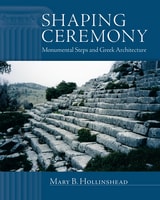
Shaping Ceremony
Monumental Steps and Greek ArchitectureMary B. Hollinshead
University of Wisconsin Press, 2014
The heart of the study is a close reading of thirty-eight sites with monumental steps from the sixth through second centuries B.C. Organized by century, the book tracks the development of built pathways and grandstands for crowds of worshippers as evidence of the Greeks' increasing awareness of the power of architecture to shape behavior and concentrate social energy. With photographs and illustrations of plans, Shaping Ceremony offers a clear account of how Greeks' adaptation of terrain for human use promoted social cohesion and integrated architectural compositions.

Shaping Roman Landscape
Ecocritical Approaches to Architecture and Wall Painting in Early Imperial ItalyMantha Zarmakoupi
J. Paul Getty Trust, The, 0
Landscape emerged as a significant theme in the Roman Late Republican and Early Imperial periods. Writers described landscape in texts and treatises, its qualities were praised and sought out in everyday life, and contemporary perceptions of the natural and built environment, as well as ideas about nature and art, were intertwined with architectural and decorative trends.
This illustrated volume examines how representations of real and depicted landscapes, and the merging of both in visual space, contributed to the creation of novel languages of art and architecture. Drawing on a diverse body of archaeological, art historical, and literary evidence, this study applies an ecocritical lens that moves beyond the limits of traditional iconography. Chapters consider, for example, how garden designs and paintings appropriated the cultures and ecosystems brought under Roman control and the ways miniature landscape paintings chronicled the transformation of the Italian shoreline with colonnaded villas, pointing to the changing relationship of humans with nature. Making a timely and original contribution to current discourses on ecology and art and architectural history, Shaping Roman Landscape reveals how Roman ideas of landscape, and the decorative strategies at imperial domus and villa complexes that gave these ideas shape, were richly embedded with meanings of nature, culture, and labor.
Shaping Science with Rhetoric
The Cases of Dobzhansky, Schrodinger, and WilsonLeah Ceccarelli
University of Chicago Press, 2001
In Shaping Science with Rhetoric, Leah Ceccarelli addresses such questions through close readings of three scientific monographs in their historical contexts—Theodosius Dobzhansky's Genetics and the Origin of Species (1937), which inspired the "modern synthesis" of evolutionary biology; Erwin Schrödinger's What Is Life? (1944), which catalyzed the field of molecular biology; and Edward O. Wilson's Consilience (1998), a so far not entirely successful attempt to unite the social and biological sciences. She examines the rhetorical strategies used in each book and evaluates which worked best, based on the reviews and scientific papers that followed in their wake.
Ceccarelli's work will be important for anyone interested in how interdisciplinary fields are formed, from historians and rhetoricians of science to scientists themselves.
Shaping Science
Organizations, Decisions, and Culture on NASA’s TeamsJanet Vertesi
University of Chicago Press, 2020
In Shaping Science, Janet Vertesi draws on a decade of immersive ethnography with NASA’s robotic spacecraft teams to create a comparative account of two great space missions of the early 2000s. Although these missions featured robotic explorers on the frontiers of the solar system bravely investigating new worlds, their commands were issued from millions of miles away by a very human team. By examining the two teams’ formal structures, decision-making techniques, and informal work practices in the day-to-day process of mission planning, Vertesi shows just how deeply entangled a team’s local organizational context is with the knowledge they produce about other worlds.
Using extensive, embedded experiences on two NASA spacecraft teams, this is the first book to apply organizational studies of work to the laboratory environment in order to analyze the production of scientific knowledge itself. Engaging and deeply researched, Shaping Science demonstrates the significant influence that the social organization of a scientific team can have on the practices of that team and the results they yield.
Shaping Society through Dance
Mestizo Ritual Performance in the Peruvian AndesZoila S. Mendoza
University of Chicago Press, 2000
In this fluid world, she argues, racial and ethnic identities are shaped more by notions of what is decent, elegant, and modern rather than by skin color or status. As the different troupes vie for the townspeople's recognition as the most "authentic" group, these notions are challenged and reworked. A fascinating look at a rich tradition, this innovative work is also a compelling example of the critical anthropology of performance.
Shaping Tradition
Women's Roles in Ceremonial Rituals of the AgwaguneDavid Uru Iyam
University of Wisconsin Press, 2021
Using this community as a case study, David Uru Iyam asserts that these women are not stereotypically submissive, oppressed, or passive. Agwagune women participate in male ceremonies by pretending to be unaware of them, concealing their authority under a veneer of secrecy. Instead of focusing on obvious male political power, Iyam highlights the overlooked domestic and public contributions of women that uphold—and change—entire social systems.
Shaping the Discourse on Space
Charity and Its Wards in Nineteenth-Century San Juan, Puerto RicoBy Teresita Martínez-Vergne
University of Texas Press, 1999
As an inchoate middle class emerged in Puerto Rico in the early nineteenth century, its members sought to control not only public space, but also the people, activities, and even attitudes that filled it. Their instruments were the San Juan town council and the Casa de Beneficencia, a state-run charitable establishment charged with responsibility for the poor.
In this book, Teresita Martínez-Vergne explores how municipal officials and the Casa de Beneficencia shaped the discourse on public and private space and thereby marginalized the worthy poor and vagrants, "liberated" Africans, indigent and unruly women, and destitute children. Drawing on extensive and innovative archival research, she shows that the men who comprised the San Juan ayuntamiento and the board of charity regulated the public discourse on topics such as education, religious orthodoxy, hygiene, and family life, thereby establishing norms for "correct" social behavior and chastising the "deviant" lifestyles of the working poor.
This research clarifies the ways in which San Juan's middle class defined itself in the midst of rapid social and economic change. It also offers new insights into notions of citizenship and the process of nation-building in the Caribbean.

Shaping the Motherhood of Indigenous Mexico
Vania Smith-Oka
Vanderbilt University Press, 2013
The cash transfer program is Oportunidades, which enrolls more than a fifth of Mexico's population. It expects mothers to become involved in their children's lives at three nodes--health, nutrition, and education. If women do not comply with the standards of modern motherhood, they are dropped from the program and lose the bi-monthly cash payments. Smith-Oka explores the everyday implementation of the program and its unintended consequences.
The mothers are often berated by clinicians for having too many children (Smith-Oka provides background on the history of eugenics and population control in Mexico) and for other examples of their "backward" ways. An entire chapter focuses on the humor indigenous women use to cope with disrespectful comments. Ironically, this form of resistance allows the women to accept the situation that controls their behavior.
Shaping the New Man
Youth Training Regimes in Fascist Italy and Nazi GermanyAlessio Ponzio
University of Wisconsin Press, 2017
Ponzio shows how the Italian Fascists' pedagogical practices influenced the origin and evolution of the Hitler Youth. He dissects similarities and differences in the training processes of the youth leaders of the Opera Nazionale Balilla, Gioventù Italiana del Littorio, and Hitlerjugend. And, he explores the transnational institutional interactions and mutual cooperation that flourished between Mussolini's and Hitler's youth organizations in the 1930s and 1940s.
Shaping the Public Good
Women Making History in the Pacific NorthwestSue Armitage
Oregon State University Press, 2015
Using the story of She Who Watches as her guide, Armitage shows that even though women were barred from positions of public authority until recently, they have always worked quietly and informally to assure the stability and security of their families and communities. Women’s community-building and cooperative skills have been decisive in developing the societies of the Pacific Northwest—Washington, Oregon, Idaho, western Montana, and British Columbia. Like She Who Watches, women have never been mere observers, but watchful guardians and active shapers of the public good.
Drawing on her three decades of research and teaching and based on hundreds of secondary sources, Armitage’s account explores the varied ways in which, beginning in the earliest times and continuing to the present, women of all races and ethnicities have made the history of our region. An accessible introduction for general readers and scholars alike, Shaping the Public Good restores a missing piece of Pacific Northwest history by demonstrating the part that women—“the famous, the forgotten, and all the women in between”—have always played in establishing their families and building communities.

Shared Land/Conflicting Identity
Trajectories of Israeli & Palestinian Symbol UseRobert C. Rowland
Michigan State University Press, 2002
Shared Land/Conflicting Identity: Trajectories of Israeli and Palestinian Symbol Use argues that rhetoric, ideology, and myth have played key roles in influencing the development of the 100-year conflict between first the Zionist settlers and the current Israeli people and the Palestinian residents in what is now Israel. The Israeli-Palestinian conflict is usually treated as an issue of land and water. While these elements are the core of the conflict, they are heavily influenced by the symbols used by both peoples to describe, understand, and persuade each other. The authors argue that symbolic practices deeply influenced the Oslo Accords, and that the breakthrough in the peace process that led to Oslo could not have occurred without a breakthrough in communication styles.
Rowland and Frank develop four crucial ideas on social development: the roles of rhetoric, ideology, and myth; the influence of symbolic factors; specific symbolic factors that played a key role in peace negotiations; and the identification and value of criteria for evaluating symbolic practices in any society.

Shared Secrets
The Queer World of Newbery Medalist Charles J. FingerElizabeth Findley Shores
University of Arkansas Press, 2021
Winner, 2023 Booker Worthern Literary Prize
For nearly a century, British expatriate Charles Joseph Finger (1867–1941) was best known as an award-winning author of children’s literature. In Shared Secrets, Elizabeth Findley Shores relates Finger’s untold story, exploring the secrets that connected the author to an international community of twentieth-century queer literati.
As a young man, Finger reveled in the easy homosociality of his London polytechnical school, where he launched a student literary society in the mold of the city’s private men’s clubs. Throughout his life, as he wandered from England to Patagonia to the United States, he tried to recreate similarly open spaces—such as Gayeta, his would-be art colony in Arkansas. But it was through his idiosyncratic magazine All’s Well that he constructed his most successful social network, writing articles filled with coded signals and winking asides for an inner circle of understanding readers.
Capitalizing on the publishing opportunities of the day, Finger used every means available to express his twin loves—literature and men. He produced an enormous body of work, and his short, semiautobiographical fiction won some critical acclaim. Ultimately, the children’s book that won Finger a Newbery Medal ushered him into the public eye, ending his development as an author of serious queer literature.
Shared Secrets is both the story of Finger’s remarkable, adventurous life and a rare look at a community of gay writers and artists who helped shaped twentieth-century American culture, even as they artfully concealed their own identities.

Shared Traditions
SOUTHERN HISTORY AND FOLK CULTURECharles Joyner
University of Illinois Press, 1999
By examining the mutual influence of history and folk culture, Shared Traditions reveals the essence of southern culture in the complex and dynamic interactions of descendants of Europeans, Africans, and Native Americans. The book covers a broad spectrum of southern folk groups, folklore expressions, and major themes of southern history, including antebellum society, slavery, the coming of the Civil War, economic modernization in the Appalachians and the Sea Islands, immigration, the civil rights movement, and the effects of cultural tourism.
Joyner addresses the convergence of African and European elements in the Old South and explores how specific environmental and demographic features shaped the acculturation process. He discusses divergent practices in worship services, funeral and burial services, and other religious ceremonies. He examines links between speech patterns and cultural patterns, the influence of Irish folk culture in the American South, and the southern Jewish experience. He also investigates points of intersection between history and legend and relations between the new social history and folklore.
Ranging from rites of power and resistance on the slave plantation to the creolization of language to the musical brew of blues, country, jazz, and rock, Shared Traditions reveals the distinctive culture born of a sharing by black and white southerners of their deep-rooted and diverse traditions.

Shareholder Democracies?
Corporate Governance in Britain and Ireland before 1850Mark Freeman, Robin Pearson, and James Taylor
University of Chicago Press, 2011
Understanding the challenges of corporate governance is central to our comprehension of the economic dynamics driving corporations today. Among the most important institutions in capitalism today, corporations and joint-stock companies had their origins in Europe during the seventeenth and eighteenth centuries. And as they became more prevalent, the issue of internal governance became more pressing. At stake—and very much contested—was the allocation of rights and obligations among shareholders, directors, and managers.
This comprehensive account of the development of corporate governance in Britain and Ireland during its earliest stages highlights the role of political factors in shaping the evolution of corporate governance as well as the important debates that arose about the division of authority and responsibility. Political and economic institutions confronted similar issues, including the need for transparency and accountability in decision making and the roles of electors and the elected, and this book emphasizes how political institutions—from election procedures to assemblies to annual reporting—therefore provided apt models upon which companies drew readily. Filling a gap in the literature on early corporate economy, this book provides insight into the origins of many ongoing modern debates.
Sharing the Balance of Power
An Examination of Shared Power in the Michigan House of Representatives, 1993-1994Daniel Loepp
University of Michigan Press, 1999
Like national politicians, state legislators all too often focus on partisanship instead of policy making, engaging themselves in rancorous debate that achieves little beyond gridlock. However, during one short period in Michigan's history, legislators stopped bickering and focused on forging compromise. Daniel Loepp's Sharing the Balance of Power chronicles the 87th Michigan Legislature (1993-1994), in which Republicans and Democrats successfully shared power.
In 1992, Michigan voters elected exactly fifty-five Republicans and fifty-five Democrats to the state house. As a result, the two parties each elected a co-speaker, and a shared power agreement was forged. Given the history of intense partisanship in the state house, political pundits predicted that any plan for shared power would disintegrate within months. What resulted instead was one of the most productive legislatures in Michigan history.
Author Daniel Loepp, chief of staff to Democratic Co-Speaker Curtis Hertel at the time, skillfully takes the reader "inside" the State Capitol, examining the key policy debates (including school finance reform), important personalities, and difficult negotiations. Loepp's balanced presentation is testimony to the two years of bi-partisan cooperation in which he took part.
In an age of public cynicism about the legislative process, Daniel Loepp offers the reader a refreshing story about two co-speakers and their 108 colleagues who came together in the spirit of bi-partisan representation to successfully serve their constituents, the people of Michigan.
Daniel Loepp is a partner in the firm of Karoub Associates, Michigan's oldest multi-client lobbying firm.
Sharing the Dance
Contact Improvisation and American CultureCynthia J. Novack
University of Wisconsin Press, 1990
While focusing on the changing practice of contact improvisation through two decades of social transformation, Novack’s work incorporates the history of rock dancing and disco, the modern and experimental dance movements of Merce Cunningham, Anna Halprin, and Judson Church, among others, and a variety of other physical activities, such as martial arts, aerobics, and wrestling.
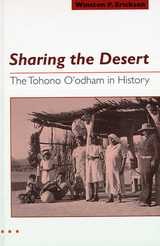
Sharing the Desert
The Tohono O'odham in HistoryWinston P. Erickson
University of Arizona Press, 1994

Sharing the Love of Gardening
The History of The Westport Garden ClubKristie C. Wolferman
University of Missouri Press, 2025
With the post-World War II housing boom, the nascent WGC became involved in landscaping projects aimed at beautifying Kansas City. These efforts continued when the WGC led re-landscaping efforts after the Great Flood of 1951. Early in their club’s history, the women of the WGC learned that collaboration with other organizations allowed them to have a greater impact on the causes about which they cared. They soon began working with city governments and park departments on both sides of the Missouri-Kansas state line, including with the Linda Hall Library and Arboretum, the Nelson-Atkins Museum of Art, and the Loose Park Garden Center.
In addition to being a thorough history of The Westport Garden Club—and the considerable influence that a small number of dedicated, educated women have had on it—Sharing the Love of Gardening is a book of stunning photography, showcasing previously unpublished images from the clubs’ archives and the original work of club member and professional photographer Marianne Kilroy.

Sharpening the Legal Mind
How to Think Like a LawyerWilliam Powers Jr, edited by John Deigh
University of Texas Press, 2023
The way lawyers think about the law can seem deeply mysterious. They see nuance and meaning in statutes and implications in judicial opinions that are opaque to the rest of us. Accessible and thought provoking, Sharpening the Legal Mind explains how lawyers analyze the cases and controversies that come before the courts.
Written by William Powers Jr., the former president of the University of Texas at Austin, this book is an authoritative introduction to the academic study of law and legal reasoning, including insights into the philosophy of law and the intellectual history of legal thought. Powers discusses the methods lawyers use to interpret the law, the relation between law and morals, and the role of courts in shaping the law. In eight chapters, he follows the historical debate on these issues and others through different generations and movements in American legal thought—formalism, realism, positivism—to critical legal studies and postmodern theory. The perfect read for anyone looking for a primer on legal reasoning, Sharpening the Legal Mind demystifies the debates and approaches to thinking like a lawyer that profoundly influence the rule of law in our lives.

Shattered Sense of Innocence
The 1955 Murders of Three Chicago ChildrenRichard C. Lindberg and Gloria Jean Sykes
Southern Illinois University Press, 2006
In October 1955, three Chicago boys were found murdered, their bodies naked and dumped in a ditch in Robinson Woods on the city’s Northwest Side. A community and a nation were shocked. In a time when such crimes against children were rare, the public was transfixed as local television stations aired stark footage of the first hours of the investigation. Life and Newsweek magazines published exclusive stories the following week. When Kenneth Hansen was convicted and sentenced for the murders, the case was considered solved—until questions were raised about Hansen’s presumed guilt.
Shattered Sense of Innocence: The 1955 Murders of Three Chicago Children tells the gripping story of the three murdered boys—thirteen-year-old John Schuessler, his eleven-year-old brother, Anton, and thirteen-year-old Bobby Peterson—and the quest to find and bring to justice their killer. Authors Richard C. Lindberg and Gloria Jean Sykes recount the bungled 1955 police investigation, the failures of multiple law enforcement agencies, and the subsequent convictions of Kenneth Hansen, in 1995 and 2002, and present new information concerning two suspects overlooked by police for five decades.
The authors deftly examine all sides of this tragic story, drawing on exclusive interviews with law enforcement agents, with horse trainers affiliated with the so-called horse mafia, and with the man convicted of the murders, Kenneth Hansen. This intensely intimate account offers a rare glimpse into one community and examines how these atrocious crimes altered public perceptions nationwide. Shattered Sense of Innocence, which is also a story of political controversy, a determined federal agent’s quest for justice, and a community’s loss of innocence, includes fifty illustrations.

Shawnee
Ceremonialism Native American TribeJames H. Howard
Ohio University Press, 1981
In this first comprehensive account of Shawnee culture, Dr. Howard assembled data concerning the tribe by utilizing published accounts, documents, maps, photographs, and paintings; and by visiting present-day Shawnees and participating in their ceremonies, games and everyday activities. The work is embellished with musical notations of Shawnee songs, maps, heirloom photographs and several photographs taken by the author during his fieldwork. Of particular interest is a remarkable series of paintings of Shawnee life by gifted Shawnee artist, Earnest Spybuck.

Shawnese Traditions
C. C. Trowbridge's AccountEdited by Vernon Kinietz and Erminie Voegelin
University of Michigan Press, 1939
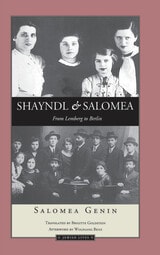
Shayndl and Salomea
From Lemberg to BerlinSalomea Genin
Northwestern University Press, 1997
Genin's richly detailed portrait shows the effects of a family's struggle—personal, religious, social, and for their very survival—against the shadow of the Nazi rise to power.

Shays' Rebellion
The Making of an Agrarian InsurrectionDavid P. Szatmary
University of Massachusetts Press, 1980
Shays' Rebellion: The Making of an Agrarian Insurrection is a landmark work of early American social and economic history that offers a comprehensive examination of one of the most consequential, and often misunderstood, uprisings in the history of the early American republic. Between 1786 and 1787, debt-ridden farmers across western Massachusetts, many of them veterans of the Revolutionary War, rose in armed protest against the state government's crushing tax and debt collection policies. Under the informal leadership of Daniel Shays, the rebels sought to prevent court foreclosures on their farms, demand tax relief, and reform a judicial system they saw as serving the interests of wealthy creditors at the expense of ordinary citizens. The uprising—ultimately suppressed by a privately funded state militia—sent shockwaves through the young nation, alarming leading figures including George Washington and James Madison, and powerfully accelerating the movement toward a stronger central government and the drafting of the U.S. Constitution.
Szatmary frames the rebellion not as an isolated outbreak of lawlessness, but as a deeply rooted agrarian insurrection produced by the collision of two fundamentally different economic worlds in post-Revolutionary New England. His analysis begins by establishing the divergent economic realities of the region: on one side, the commercial and mercantile economy of New England's coastal towns, driven by creditors, merchants, and professional elites integrated into transatlantic trade networks; on the other, the subsistence farming communities of the interior, whose inhabitants operated largely outside the cash economy and bore a disproportionate burden of wartime debt and postwar taxation. Drawing on this structural conflict, Szatmary traces the chain of debt that left rural farmers increasingly unable to meet their obligations, the escalating cycle of court actions and property seizures that pushed them toward organized resistance, and the government's responses, ultimately military, to the protests.
The book is also attentive to the rebellion's broader political consequences, examining how Shays' Rebellion transformed the national debate about governance, federal authority, and the relationship between popular democracy and social order in the new republic. Described by one reviewer as a "well-balanced" study that "classifies Shays' Rebellion as the historical watershed it truly is," the book remains a standard reference in the historiography of the Early American Republic, the Articles of Confederation period, and the origins of the Constitutional Convention.
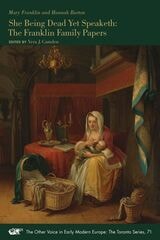
She Being Dead Yet Speaketh
The Franklin Family PapersMary Franklin and Hannah Burton
Iter Press, 2020
Collected for the first time, this volume of the Franklin Family Papers offers rare insight into the personal lives of three generations of dissenting women.

She Came from Mariupol
Natascha Wodin
Michigan State University Press, 2022

She Devils at the Door
Eliza Smith Brown
Carnegie Mellon University Press, 2023
Sometimes troublemakers emerge from the most unlikely of places. This true story follows the lives of two daughters of the Gilded Age—Lucy and Eliza Kennedy—who were educated at Vassar College and became leaders of the suffrage movement. Then, after the Nineteenth Amendment was passed in 1920, they spent the next forty years fighting corruption in politics and government.
Tenacious, smart, and witty, they captivated crowds, disarmed their opponents, and instilled particular dread among the corrupt politicians who were the unfortunate targets of their nonpartisan crusade. Their entry across the threshold of Pittsburgh’s City-County Building would reportedly invoke a flurry of hushed warnings through the halls: “The She Devils are at the door!” Together, Lucy and Eliza fought for the vote, empowered women to use it wisely, forced a mayor out of office in disgrace, took control of the city budget, exposed a series of scandals, spearheaded police reform, and launched a campaign that would eventually clear Pittsburgh of its smoky veil.
Featuring the true story of two powerful women, this book comes at a propitious time, reminding us how far women have come and how vigilant we must remain.
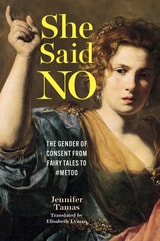
She Said No
The Gender of Consent from Fairy Tales to #MeTooJennifer Tamas
University of Delaware Press, 2027
She Said NO investigates the gender inequality in the authority to speak—and therefore to refuse—that prevailed in the establishment and interpretation of the French classics. By selecting authors deemed essential to French cultural heritage and erasing the works of women writers, this biased canon has systematically undervalued female agency—even in well-known works by both men and women, such as Beauty and the Beast, The Princess of Clèves, and "Little Red Riding Hood." With this book, Jennifer Tamas fills a striking gap in early modern French studies by conceptualizing consent in a society where being a woman made it structurally difficult to say "no." Yet, women did refuse. The history Tamas explores is one of forgotten, erased, misunderstood, or inadmissible refusals, and how they have been obscured. The #MeToo movement has brought questions of female agency and consent to the fore, and this book retraces an "archive of refusal" to serve as a source of inspiration for contemporary feminist discourse and to change our reception of the French canon.