Results by title
18284 books match the query 'United States' and 1181 start with s

Sophonisba Breckinridge
Championing Women's Activism in Modern AmericaAnya Jabour
University of Illinois Press, 2019
Sorting Sexualities
Expertise and the Politics of Legal ClassificationStefan Vogler
University of Chicago Press, 2021
In this rich ethnographic study, Vogler reveals how different legal arenas take dramatically different approaches to classifying sexuality and use those classifications to legitimate different forms of social control. By delving into the histories behind these diverging classification practices and analyzing their contemporary reverberations, Vogler shows how the science of sexuality is far more central to state power than we realize.

Soul Power
Culture, Radicalism, and the Making of a U.S. Third World LeftCynthia A. Young
Duke University Press, 2006
Young analyzes a range of U.S. figures and organizations, examining how each deployed Third World discourse toward various cultural and political ends. She considers a trip that LeRoi Jones, Harold Cruse, and Robert F. Williams made to Cuba in 1960; traces key intellectual influences on Angela Y. Davis’s writing; and reveals the early history of the hospital workers’ 1199 union as a model of U.S. Third World activism. She investigates Newsreel, a late 1960s activist documentary film movement, and its successor, Third World Newsreel, which produced a seminal 1972 film on the Attica prison rebellion. She also considers the L.A. Rebellion, a group of African and African American artists who made films about conditions in the Watts neighborhood of Los Angeles. By demonstrating the breadth, vitality, and legacy of the work of U.S. Third World Leftists, Soul Power firmly establishes their crucial place in the history of twentieth-century American struggles for social change.

Soul Serenade
King Curtis and His Immortal SaxophoneTimothy R. Hoover
University of North Texas Press, 2022
Soul on Soul
The Life and Music of Mary Lou WilliamsTammy L. Kernodle
University of Illinois Press, 2020
The jazz musician-composer-arranger Mary Lou Williams spent her sixty-year career working in—and stretching beyond—a dizzying range of musical styles. Her integration of classical music into her works helped expand jazz's compositional language. Her generosity made her a valued friend and mentor to the likes of Thelonious Monk, Charlie Parker, and Dizzy Gillespie. Her late-in-life flowering of faith saw her embrace a spiritual jazz oriented toward advancing the civil rights struggle and helping wounded souls.
Tammy L. Kernodle details Williams's life in music against the backdrop of controversies over women's place in jazz and bitter arguments over the music's evolution. Williams repeatedly asserted her artistic and personal independence to carve out a place despite widespread bafflement that a woman exhibited such genius. Embracing Williams's contradictions and complexities, Kernodle also explores a personal life troubled by lukewarm professional acceptance, loneliness, relentless poverty, bad business deals, and difficult marriages.
In-depth and epic in scope, Soul on Soul restores a pioneering African American woman to her rightful place in jazz history.
Sound Diplomacy
Music and Emotions in Transatlantic Relations, 1850-1920Jessica C. E. Gienow-Hecht
University of Chicago Press, 2009
Sound Experiments
The Music of the AACMPaul Steinbeck
University of Chicago Press, 2022
Founded on Chicago’s South Side in 1965 and still thriving today, the Association for the Advancement of Creative Musicians (AACM) is the most influential collective organization in jazz and experimental music. In Sound Experiments, Paul Steinbeck offers an in-depth historical and musical investigation of the collective, analyzing individual performances and formal innovations in captivating detail. He pays particular attention to compositions by Muhal Richard Abrams and Roscoe Mitchell, the Association’s leading figures, as well as Anthony Braxton, George Lewis (and his famous computer-music experiment, Voyager), Wadada Leo Smith, and Henry Threadgill, along with younger AACM members such as Mike Reed, Tomeka Reid, and Nicole Mitchell.
Sound Experiments represents a sonic history, spanning six decades, that affords insight not only into the individuals who created this music but also into an astonishing collective aesthetic. This aesthetic was uniquely grounded in nurturing communal ties across generations, as well as a commitment to experimentalism. The AACM’s compositions broke down the barriers between jazz and experimental music and made essential contributions to African American expression more broadly. Steinbeck shows how the creators of these extraordinary pieces pioneered novel approaches to instrumentation, notation, conducting, musical form, and technology, creating new soundscapes in contemporary music.

Sounding Latin Music, Hearing the Americas
Jairo Moreno
University of Chicago Press, 2023
Many in the United States believe Latin American musicians make “Latin music”—which carries with it a whole host of assumptions, definitions, and contradictions. In their own countries, these expatriate musicians might generate immense national pride or trigger suspicions of “national betrayals.” The making, sounding, and hearing of “Latin music” brings into being the complex array of concepts that constitute “Latin Americanism”—its fissures and paradoxes, but also its universal aspirations. Taking as its center musicians from or with declared roots in Latin America, Jairo Moreno presents us with an innovative analysis of how and why music emerges as a necessary but insufficient shorthand for defining and understanding Latin American, Latinx, and American experiences of modernity.
This close look at the growth of music-making by Latin American and Spanish-speaking musicians in the United States at the turn of the twenty-first century reveals diverging understandings of music’s social and political possibilities for participation and belonging. Through the stories of musicians—Rubén Blades, Shakira, Arturo O’Farrill and the Afro-Latin Jazz Orchestra, and Miguel Zenón—Sounding Latin Music, Hearing the Americas traces how artists use music to produce worlds and senses of the world at the ever-transforming conjunction of Latin America and the United States.
Sounding Real
Musicality and American Fiction at the Turn of the Twentieth CenturyCristina L. Ruotolo
University of Alabama Press, 2013
Sounding Together
Collaborative Perspectives on U.S. Music in the 21st CenturyCharles Hiroshi Garrett and Carol J. Oja, Editors
University of Michigan Press, 2021
Sounding Together: Collaborative Perspectives on U.S. Music in the Twenty-21st Century is a multi-authored, collaboratively conceived book of essays that tackles key challenges facing scholars studying music of the United States in the early twenty-first century. This book encourages scholars in music circles and beyond to explore the intersections between social responsibility, community engagement, and academic practices through the simple act of working together. The book’s essays—written by a diverse and cross-generational group of scholars, performers, and practitioners—demonstrate how collaboration can harness complementary skills and nourish comparative boundary-crossing through interdisciplinary research. The chapters of the volume address issues of race, nationalism, mobility, cultural domination, and identity; as well as the crisis of the Trump era and the political power of music. Each contribution to the volume is written collaboratively by two scholars, bringing together contributors who represent a mix of career stages and positions. Through the practice of and reflection on collaboration, Sounding Together breaks out of long-established paradigms of solitude in humanities scholarship and works toward social justice in the study of music.

Sounding for Cool
Donald Morrill
Michigan State University Press, 2002
Sounding for Cool is about self-transformation, about growing up on one’s own as a product of contemporary America, and about how to become not just a man, but a contributing adult in society. Donald Morrill presents the day-to-day lives of seven young men (white, black, Hispanic, immigrant, middle-class, thick-headed, poor, and smart), who for various reasons have become homeless. Placed in a Transitional Living Program facility (TLP) by the courts, these men must learn to navigate in the world of “normal” values and reasonable rules. Streetwise and callow, trained to seek shortcuts or to make excuses, they struggle with the structures and assumptions inherent in living a law-abiding, bill-paying life. While sorting out their souls, they learn how to connect with others.
In turn, Sounding for Cool scrutinizes the staff of the TLP, one woman and three men, who variously come to terms with their lives by settling accounts from the past. As a TLP volunteer, Donald Morrill often finds himself bridging the gap between staff and client. In the process of telling their stories, he chronicles his own journey to understand the past. Ultimately, Sounding for Cool asks the enduring questions, “Who am I in the world and what can I become?”

Soundless Roar
Stories, Poems, and DrawingsAva Kadishson Schieber
Northwestern University Press, 2002
Schieber's drawings, paintings, poetry, and prose are all intimate reflections of one another. Her experience forged the unusual sense of time that shapes Schieber's stories. In her preface, Phyllis Lassner writes: "The timetable of Ava's stories often consists of circles within circles, of patterns of an intertwined past, the past present of hiding, and the present looking back at those distinctly separate but inseparable pasts."
Sounds from the Other Side
Afro–South Asian Collaborations in Black Popular MusicElliott H. Powell
University of Minnesota Press, 2020
A sixty-year history of Afro–South Asian musical collaborations
From Beyoncé’s South Asian music–inspired Super Bowl Halftime performance, to jazz artists like John and Alice Coltrane’s use of Indian song structures and spirituality in their work, to Jay-Z and Missy Elliott’s high-profile collaborations with diasporic South Asian artists such as the Panjabi MC and MIA, African American musicians have frequently engaged South Asian cultural productions in the development of Black music culture. Sounds from the Other Side traces such engagements through an interdisciplinary analysis of the political implications of African American musicians’ South Asian influence since the 1960s.
Elliott H. Powell asks, what happens when we consider Black musicians’ South Asian sonic explorations as distinct from those of their white counterparts? He looks to Black musical genres of jazz, funk, and hip hop and examines the work of Miles Davis, John Coltrane, Rick James, OutKast, Timbaland, Beyoncé, and others, showing how Afro–South Asian music in the United States is a dynamic, complex, and contradictory cultural site where comparative racialization, transformative gender and queer politics, and coalition politics intertwine. Powell situates this cultural history within larger global and domestic sociohistorical junctures that link African American and South Asian diasporic communities in the United States.
The long historical arc of Afro–South Asian music in Sounds from the Other Side interprets such music-making activities as highly political endeavors, offering an essential conversation about cross-cultural musical exchanges between racially marginalized musicians.

Sounds of Crossing
Music, Migration, and the Aural Poetics of Huapango ArribeñoAlex E. Chávez
Duke University Press, 2017

Sounds of the New Deal
The Federal Music Project in the WestPeter Gough
University of Illinois Press, 2015
From the onset, administrators and artists debated whether to represent highbrow, popular, or folk music in FMP activities. Though the administration privileged using "good" music to educate the public, in the West local preferences regularly trumped national priorities and allowed diverse vernacular musics to be heard. African American and Hispanic music found unprecedented popularity while the cultural mosaic illuminated by American folksong exemplified the spirit of the Popular Front movement. These new musical expressions combined the radical sensibilities of an invigorated Left with nationalistic impulses. At the same time, they blended traditional patriotic themes with an awareness of the country's varied ethnic musical heritage and vast--but endangered--store of grassroots music.

Sounds of the New Deal
The Federal Music Project in the WestPeter Gough
University of Illinois Press, 2015

Soundtracks of Asian America
Navigating Race through Musical PerformanceGrace Wang
Duke University Press, 2015

Soundworks
Race, Sound, and Poetry in ProductionAnthony Reed
Duke University Press, 2021

South Carolina Provincials
Loyalists in British Service During the American RevolutionJim Piecuch
Westholme Publishing, 2026
In South Carolina Provincials: Loyalists in British Service During the American Revolution, historian Jim Piecuch provide the first comprehensive history of those South Carolinians who took up arms to assist the British during their attempt to quell the rebellion in the South. Based on primary source research including records rarely consulted, the result provides a much clearer picture of the American Revolution at the local level in Georgia, Florida, and the Carolinas.
South Jersey Towns
History and LegendsMcMahon, William
Rutgers University Press, 1973
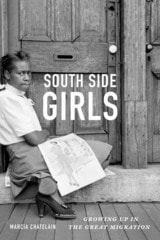
South Side Girls
Growing Up in the Great MigrationMarcia Chatelain
Duke University Press, 2015
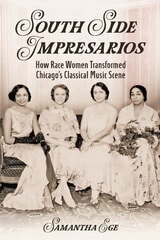
South Side Impresarios
How Race Women Transformed Chicago's Classical Music SceneSamantha Ege
University of Illinois Press, 2024
Ege focuses on composers like Florence Price, Nora Holt, and Margaret Bonds not as anomalies but as artists within an expansive cultural flowering. Overcoming racism and sexism, Black women practitioners instilled others with the skill and passion to make classical music while Race women like Maude Roberts George, Estella Bonds, Neota McCurdy Dyett, and Beulah Mitchell Hill built and fostered institutions central to the community. Ege takes readers inside the backgrounds, social lives, and female-led networks of the participants while shining a light on the scene’s audiences, supporters, and training grounds. What emerges is a history of Black women and classical music in Chicago and the still-vital influence of the world they created.
A riveting counter to a history of silence, South Side Impresarios gives voice to an overlooked facet of the Black Chicago Renaissance.
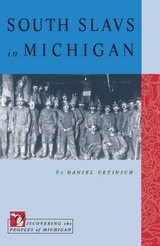
South Slavs in Michigan
Daniel Cetinich
Michigan State University Press, 2003
The South Slavs of Michigan—Slovenes, Croats, Serbs, Macedonians, and Bosnian Muslims—are a microcosm of the immigration waves of southern and eastern Europeans who came to the United States between 1880 and 1924. History has almost forgotten these immigrants, who were instrumental in developing the large urban centers of Michigan and the United States, and who specifically contributed to development of the auto industry and struck in 1913–1914 for better working conditions in the copper mines of the Upper Peninsula. While labor problems were the primary obstacles confronting Michigan’s South Slavs, the painful process of acculturation has since dimmed their very real accomplishments. As Daniel Cetinich shows, South Slavs helped shape both a regional and national civilization in North America with their hands, backs, feet, and the labor organizations they helped create.
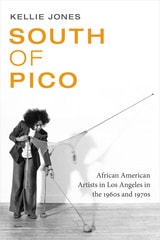
South of Pico
African American Artists in Los Angeles in the 1960s and 1970sKellie Jones
Duke University Press, 2017
In South of Pico Kellie Jones explores how the artists in Los Angeles's black communities during the 1960s and 1970s created a vibrant, productive, and engaged activist arts scene in the face of structural racism. Emphasizing the importance of African American migration, as well as L.A.'s housing and employment politics, Jones shows how the work of black Angeleno artists such as Betye Saar, Charles White, Noah Purifoy, and Senga Nengudi spoke to the dislocation of migration, L.A.'s urban renewal, and restrictions on black mobility. Jones characterizes their works as modern migration narratives that look to the past to consider real and imagined futures. She also attends to these artists' relationships with gallery and museum culture and the establishment of black-owned arts spaces. With South of Pico, Jones expands the understanding of the histories of black arts and creativity in Los Angeles and beyond.

Southern Capitalism
The Political Economy of North Carolina, 1880–1980Philip J. Wood
Duke University Press, 1986
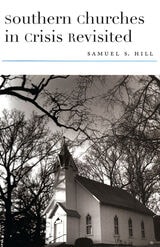
Southern Churches in Crisis Revisited
Samuel S. Hill
University of Alabama Press, 1999
Hill’s landmark work in southern religious history returns to print updated and expanded—and compellingly relevant.
In 1966, Samuel S. Hill’s Southern Churches in Crisis argued that southern Protestantism, a cornerstone of white southern society and culture, was shirking its moral duty by refusing to join in the fight for racial justice. Hill predicted that the church was risking its standing in southern society and that it would ultimately decline in influence and power. A groundbreaking study at the time, Hill’s book helped establish southern religious history as a field of scholarly inquiry. Three decades later, Southern Churches in Crisis continues to be widely read, quoted, and cited.
In Southern Churches in Crisis Revisited, which reprints the 1966 text in full, Hill reexamines his earlier predictions in an introductory essay that also describes how the study of religion in the South has become a major field of scholarly inquiry. Hill skillfully engages his critics by integrating new perspectives and recent scholarship. He suggests new areas for exploration and provides a selected bibliography of key studies in southern religious history published in the three decades subsequent to the original appearance of this groundbreaking work.

Southern Crucifix, Southern Cross
Catholic-Protestant Relations in the Old SouthAndrew Henry Stern
University of Alabama Press, 2012
In sharp contrast to many long-standing presumptions about mistrust or animosity between these two groups, this study proposes that Catholic and Protestant interactions in the South were characterized more by cooperation than by conflict.

Southern Exposure
Making the South Safe for DemocracyStetson Kennedy
University of Alabama Press, 2011
Using thorough and stark statistics, Kennedy describes a South emerging from World War II, coming to grips with the racism and feudalism that had held it back for generations. He includes an all-out Who’s Who, based on his own undercover investigations, of the "hate-mongers, race-racketeers, and terrorists who swore that apartheid must go on forever." The first paperback edition brings to a new generation of readers Kennedy’s searing profile of Dixie before the civil rights movement.
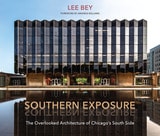
Southern Exposure
The Overlooked Architecture of Chicago's South SideLee Bey; Foreword by Amanda Willliams
Northwestern University Press, 2019
Inspired by Bey’s 2017 Chicago Architecture Biennial exhibition, Southern Exposure visits sixty sites, including lesser-known but important work by luminaries such as Jeanne Gang, Frank Lloyd Wright, and Eero Saarinen, as well as buildings by pioneering black architects such as Walter T. Bailey, John Moutoussamy, and Roger Margerum.
Pushing against the popular narrative that depicts Chicago’s South Side as an architectural wasteland, Bey shows beautiful and intact buildings and neighborhoods that reflect the value—and potential—of the area. Southern Exposure offers much to delight architecture aficionados and writers, native Chicagoans and guests to the city alike.

Southern Fried
Going Whole Hog in a State of WonderRex Nelson
Butler Center for Arkansas Studies, 2016
For decades, Rex Nelson has been traveling Arkansas. He learned to love the back roads, small towns, and people of the state while going on trips with his father, who sold athletic supplies to high schools. They sat in old Depression-era gyms built by the Works Progress Administration, ate in small-town cafes, and waded in streams on warm spring days.
Throughout his career as a sportswriter, political writer, senior staff member in the governor’s office, presidential appointee to the Delta Regional Authority, and now corporate communications director for Simmons Bank, Nelson has written millions of words about Arkansas and its people.
In this collection of columns from the Arkansas Democrat-Gazette, Nelson brings to life the personalities, communities, festivals, and tourist attractions that make Arkansas unique. As he says, “Arkansas is a hard place to explain to outsiders. We’re mostly Southern but also a bit Midwestern and a tad Southwestern. The Ozarks are different from the pine woods of the Gulf Coastal Plain, and the Delta is different from the Ouachitas. Invariably, though, those who take the time to get off the main roads and get to know the real Arkansas are entranced by the place.”
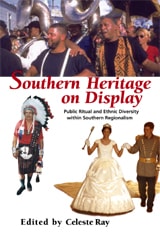
Southern Heritage on Display
Public Ritual and Ethnic Diversity within Southern RegionalismEdited by Celeste Ray
University of Alabama Press, 2002
W. J. Cash's 1941 observation that “there are many Souths and many cultural traditions among them” is certainly validated by this book. Although the Civil War and its “lost cause” tradition continues to serve as a cultural root paradigm in celebrations, both uniting and dividing loyalties, southerners also embrace a panoply of public rituals—parades, cook-offs, kinship homecomings, church assemblies, music spectacles, and material culture exhibitions—that affirm other identities. From the Appalachian uplands to the Mississippi Delta, from Kentucky bluegrass to Carolina piedmont, southerners celebrate in festivals that showcase their diverse cultural backgrounds and their mythic beliefs about themselves.
The ten essays of this cohesive, interdisciplinary collection present event-centered research from various fields of study—anthropology, geography, history, and literature—to establish a rich, complex picture of the stereotypically “Solid South.” Topics include the Mardi Gras Indian song cycle as a means of expressing African-American identity in New Orleans; powwow performances and Native American traditions in southeast North Carolina; religious healings in southern Appalachian communities; Mexican Independence Day festivals in central Florida; and, in eastern Tennessee, bonding ceremonies of melungeons who share Indian, Scots Irish, Mediterranean, and African ancestry. Seen together, these public heritage displays reveal a rich “creole” of cultures that have always been a part of southern life and that continue to affirm a flourishing regionalism.
This book will be valuable to students and scholars of cultural anthropology, American studies, and southern history; academic and public libraries; and general readers interested in the American South. It contributes a vibrant, colorful layer of understanding to the continuously emerging picture of complexity in this region historically depicted by simple stereotypes.
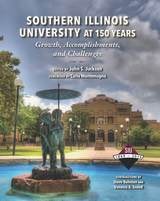
Southern Illinois University at 150 Years
Growth, Accomplishments, and ChallengesEdited by John S. Jackson with a Foreword by Carlo Montemagno and Contributions by Steve Buhman and Vanessa A. Sneed
Southern Illinois University Press, 2019
Chapters reflect on SIU’s successful athletics program, the various colleges and departments within the university, the diverse holdings and collections of the library, the unique innovative research enterprises, and special programs such as the Paul Simon Public Policy Institute and Touch of Nature Environmental Center.
Although SIU may be a typical large public university in many ways, its unique location, history, and culture have made it a distinct institution of higher education. Located close to the Shawnee National Forest and Giant City State Park, the landscape is an indelible part of SIU, contributing to both the beauty of the university grounds and the campus culture.
The university’s sesquicentennial provides a wonderful opportunity to revisit all that makes SIU amazing. Illustrated with 306 photographs of theater and music performances, art, sports, past and present students, faculty, staff, administration, politicians, community members, successful alums, distinguished visitors, and patrons of the university buildings, and landscapes, Southern Illinois University at 150 Years captures the university’s story in all its vivid color.
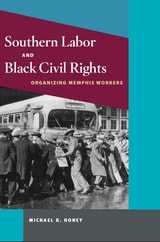
Southern Labor and Black Civil Rights
Organizing Memphis WorkersMichael K. Honey
University of Illinois Press, 1993
Winner of the Charles S. Sydnor Award, given by the Southern Historical Association, 1994. Winner of the James A. Rawley Prize given by the Organization of American Historians, 1994. Winner of the Herbert G. Gutman Award for an outstanding book in American social history.

Southern Migrants, Northern Exiles
Chad Berry
University of Illinois Press, 2000
Southern out-migration drew millions of southern workers to the steel mills, automobile factories, and even agricultural fields and orchards of Ohio, Indiana, Michigan, and Illinois. Through vivid oral histories, Chad Berry explores the conflict between migrants' economic success and their "spiritual exile" in the North. He documents the tension between factory owners who welcomed cheap, naive southern laborers and local "native" workers who greeted migrants with suspicion and hostility. He examines the phenomenon of "shuttle migration," in which migrants came north to work during the winter and returned home to plant spring crops on their southern farms. He also explores the impact of southern traditions--especially the southern evangelical church and "hillbilly" music--brought north by migrants.
Berry argues that in spite of being scorned by midwesterners for violence, fecundity, intoxication, laziness, and squalor, the vast majority of southern whites who moved to the Midwest found the economic prosperity they were seeking. By allowing southern migrants to assess their own experiences and tell their own stories, Southern Migrants, Northern Exiles refutes persistent stereotypes about migrants' clannishness, life-style, work ethic, and success in the North.

Southern Paiute
A PortraitLogan Hebner
Utah State University Press, 2010
Now little recognized by their neighbors, Southern Paiutes once had homelands that included much of the vast Colorado Plateau, Great Basin, and Mojave Desert. From the Four Corners’ San Juan River to California’s lower Colorado, from Death Valley to Canyonlands, from Capitol Reef to the Grand Canyon, Paiutes lived in many small, widespread communities. They still do, but the communities are fewer, smaller, and mostly deprived of the lands and resources that sustained traditional lives.
To portray a people and the individuals who comprise it, William Logan Hebner and Michael L. Plyler relay Paiute voices and reveal Paiute faces, creating a space for them to tell their stories and stake claim to who they once were and now are.
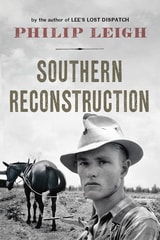
Southern Reconstruction
Philip Leigh
Westholme Publishing, 0
The Reconstruction Era—the years immediately following the Civil War when Congress directed the reintegration of the former Confederate states into the Union—remains, as historian Eric Foner suggests, “America’s unfinished revolution.” But Reconstruction is more than a story of great racial injustice; it has left a complex legacy involving both blacks and whites, Southerners and Northerners, that is reflected today by the fact that many of the states with the highest rates of poverty were part of the former Confederacy. In Southern Reconstruction, Philip Leigh examines Federal wartime legislation in order to broaden our understanding of Reconstruction, revealing how it led to African Americans being used as political pawns, first to ensure continued Republican rule, and finally to be blamed for the South’s hardships in order to draw poor whites away from Populism and back to the aristocratic white Democratic banner.
Civil War laws, such as the Confiscation Acts, Pacific Railroad Acts, Homestead Act, Legal Tender Act, National Banking Act, and Veterans Pensions Acts, transformed America’s banking system, built a railroad web, and launched the Gilded Age in the North and West, but it also created a dubious alliance between banks and government, sparked corruption, purposely depressed Southern industry, trapped Southern farmers—both black and white—in endless annual peonage cycles, and failed to provide lands for freedmen. While Reconstruction was intended to return the South to the Union, it could not be effective with laws that abetted Southern poverty, disfranchised many whites, fostered racial animosity to a point where lynchings and Jim Crow laws erupted, and lined the pockets of wealthy or politically well-connected business leaders outside of the region.
Southern Religion and Christian Diversity in the Twentieth Century
Wayne Flynt, Foreword by Charles A. Israel and John Giggie
University of Alabama Press, 2016
Essays by the distinguished historian of southern religion Wayne Flynt, that illuminate the often overlooked complexity among southern Protestants.
Throughout its dramatic history, the American South has wrestled with issues such as poverty, social change, labor reform, civil rights, and party politics, and Flynt’s writing reaffirms religion as the lens through which southerners understand and attempt to answer these contentious questions. In Southern Religion and Christian Diversity in the Twentieth Century, however, Flynt gently but persuasively dispels the myth—comforting to some and dismaying to others—of religion in the South as an inert cairn of reactionary conservatism.
Flynt introduces a wealth of stories about individuals and communities of faith whose beliefs and actions map the South’s web of theological fault lines. In the early twentieth century, North Carolinian pastor Alexander McKelway became a relentless crusader against the common practice of child labor. In 1972, Rev. Dr. Ruby Kile, in a time of segregated churches led by men, took the helm of the eight-member Powderly Faith Deliverance Center in Jefferson County, Alabama and built the fledgling group into a robust congregation with more than 700 black and white worshippers. Flynt also examines the role of religion in numerous pivotal court cases, such as the US Supreme Court school prayer case Engel v. Vitale, whose majority opinion was penned by Justice Hugo Black, an Alabamian. These fascinating case studies and many more illuminate a religious landscape of far more varied texture and complexity than is commonly believed.
Southern Religion and Christian Diversity in the Twentieth Century offers much to readers and scholars interested in the South, religion, and theology. Writing with his hallmark wit, warmth, and erudition, Flynt’s Southern Religion and Christian Diversity in the Twentieth Century is a vital record of gospel-inspired southerners whose stories revivify sclerotic assumptions about the narrow conformity of southern Christians.

Southern Rivers
Restoring America's Freshwater BiodiversityR. Scot Duncan
University of Alabama Press, 2024
Explores the Southeast’s imperiled river systems and solutions for preserving them in the face of habitat loss, climate change, and extinction
Southern Rivers, by award-winning nature writer and biologist R. Scot Duncan, is a thoroughly crafted exploration of the perilous state of the Southeast’s rivers and the urgent need to safeguard their vitality. The region’s rivers are the epicenter of North American freshwater biodiversity and are the top global hotspot for important aquatic animals including mussels, turtles, snails, crayfish, and fish, many of which have made important contributions to southern life and culture.
Centuries of commercial development have impaired the region’s river systems, sacrificing biodiversity and compromising the rivers’ ability to provide resources essential to human life: drinking water, waste disposal, irrigation, navigation, recreation, power production, and more. Now, increased heat and drought caused by climate change are lowering water levels. As such threats increase, it may seem necessary to choose between nature conservation and human needs, but Duncan persuasively demonstrates that this is a false choice. Conservation enhances human life.
In the same engaging voice of an expert friend that won over thousands of readers of his earlier book, Southern Wonder: Alabama’s Surprising Biodiversity, Duncan explains the task of managing southeastern rivers and how river water quality affects the daily lives of the millions who hold these historic waterways dear. He shows how managing rivers wisely can meet the needs of biodiversity and humanity both. With Americans increasingly anxious about the onset of climate change and the accelerating extinction crisis, Southern Rivers illuminates actionable solutions.
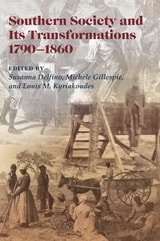
Southern Society and Its Transformations, 1790-1860
Edited by Susanna Delfino, Michele Gillespie & Louis M. Kyriakoudes
University of Missouri Press, 2011
The nine essays that comprise Southern Society and Its Transformations explore new territory in the study of the slave-era South, conveying how modernization took shape across the region and exploring the social processes involved in its economic developments. The book is divided into four parts, each analyzing a different facet of white southern life. The first outlines the legal dimensions of race relations, exploring the effects of lynching and the significance of Georgia’s vagrancy laws. Part II presents the advent of the market economy and its effect on agriculture in the South, including the beginning of frontier capitalism. The third section details the rise of a professional middle class in the slave era and the conflicts provoked. The book’s last section deals with the financial aspects of the transformation in the South, including the credit and debt relationships at play and the presence of corporate entrepreneurship.
Between the dawn of the nation and the Civil War, constant change was afoot in the American South. Scholarship has only begun to explore these progressions in the past few decades and has given too little consideration to the economic developments with respect to the working-class experience. These essays show that a new generation of scholars is asking fresh questions about the social aspects of the South’s economic transformation. Southern Society and Its Transformations is a complex look at how whole groups of traditionally ignored white southerners in the slave era embraced modernizing economic ideas and actions while accepting a place in their race-based world. This volume will be of interest to students of Southern and U.S. economic and social history.
Southern Stalemate
Five Years without Public Education in Prince Edward County, VirginiaChristopher Bonastia
University of Chicago Press, 2011
Southern Unionist Pamphlets and the Civil War
Edited by Jon L. Wakelyn
University of Missouri Press, 1999
During the Civil War, many southerners expressed serious opposition to secession and openly entreated their fellow southerners to maintain support for the Union. A number of these unionists actively opposed the Confederacy while remaining within its borders; others fled their homes and the South, becoming exiles in northern cities and the border slave states. The southern unionist leaders used their oral and written communication skills to proclaim their opposition to the Confederacy, often producing pamphlets that circulated in the North, in the border states, and in the heart of the Confederacy itself. Jon L. Wakelyn unites the voices of these southern unionists in the first comprehensive collection of their written arguments—Southern Unionist Pamphlets and the Civil War.
Including eighteen pamphlets and a discussion of twenty-two others, this book provides a magnificent representation of the southern unionists and their concerns. Written between 1861 and 1865, the pamphlets were compiled by local and national political leaders, including three federal congressmen and future vice president and president Andrew Johnson, as well as concerned private citizens and members of the military and clergy. Except for Florida, South Carolina, and Georgia, all Confederate and border slave states are represented in this collection.
The topics discussed and the events described in the pamphlets cover a wide range of subjects. The authors discuss their motivation to remain loyal to the union, the actions of their friends and enemies, the perilous life of unionists behind military lines, their continued support for the federal government, and their hopes for a restored Union. Aware that their northern allies would read these pamphlets, the unionists also wrote to solicit northern aid, to renew efforts to defeat the Confederacy, and to gain sympathy for the plight of their people behind enemy lines.
A remarkable collection of primary source material, Southern Unionist Pamphlets and the Civil War provides the most detailed study of the internal resistance to the Confederacy available to date. Students, scholars, and general readers alike will find this volume an invaluable resource for Civil War studies.
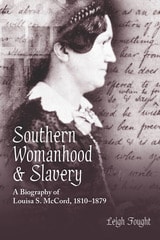
Southern Womanhood and Slavery
A Biography of Louisa S. McCord, 1810-1879Leigh Fought
University of Missouri Press, 2018
Southern Womanhood and Slavery is the first full-length biography of Louisa S. McCord, one of the most intriguing intellectuals in antebellum America. The daughter of South Carolina planter and politician Langdon Cheves, and an essayist in her own right, McCord supported unregulated free trade and the perpetuation of slavery and opposed the advancement of women’s rights. This study examines the origins of her ideas.
Leigh Fought constructs an exciting narrative that follows McCord from her childhood as the daughter of a state representative and president of the Bank of the United States through her efforts to accept her position as wife and mother, her career as an author and plantation mistress, and the Union invasion of South Carolina during the Civil War, to the end of her life in the emerging New South. Fought analyzes McCord’s poetry, letters, and essays in an effort to comprehend her acceptance of slavery and the submission of women. Fought concludes that McCord came to a defense of slavery through her experience with free labor in the North, which also reinforced her faith in the paternalist model for preserving social order.
McCord’s life as a writer on “unfeminine” subjects, her reputation as strong-minded and masculine, her late marriage, her continued ownership of her plantation after marriage, and her position as the matron of a Civil War hospital contradicted her own philosophy that women should remain the quiet force behind their husbands. She lived during a time of social flux in which free labor, slavery, and the role of women underwent dramatic changes, as well as a time that enabled her to discover and pursue her intellectual ambitions. Fought examines the conflict that resulted when those ambitions clashed with McCord’s role as a woman in the society of the South.
McCord’s voice was an interesting, articulate, and necessary feminine addition to antebellum white ideology. Moreover, her story demonstrates the ways in which southern women negotiated through patriarchy without surrendering their sense of self or disrupting the social order. Engaging and very readable, Southern Womanhood and Slavery will be of special interest to students of southern history and women’s studies, as well as to the general reader.
Southern Workers and the Search for Community
Spartanburg County, South CarolinaG. C. Waldrep III
University of Illinois Press, 2000
Spartanburg County, South Carolina, offered an example of the enduring legacy of the southern textile industry, company-owned mill villages, and union struggles of the 1930s. G. C. Waldrep illuminates the complex meshing of community ties and traditions with the goals and ideals of unionism. Unions aligned with a social vision of mutuality, equality, and interdependency already established in mill villages. But because companies owned the villages, labor conflicts involved not only work issues like wages and hours but virtually every other aspect of life. In documenting the high stakes of labor protest, Waldrep shows how the erosion or outright destruction of community undermined the ability of workers to respond to the assaults of employers overwhelmingly supported by government agencies and agents.
Beautifully written and persuasively argued, Southern Workers and the Search for Community opens the gates of southern company towns to illuminate the human issues behind the mechanics of labor.

Sovereign Erotics
A Collection of Two-Spirit LiteratureEdited by Qwo-Li Driskill, Daniel Heath Justice, Deborah Miranda, and Lisa Tatonetti
University of Arizona Press, 2011
This landmark collection strives to reflect the complexity of identities within Native Gay, Lesbian, Bisexual, Transgender, Queer, and Two-Spirit (GLBTQ2) communities. Gathering together the work of established writers and talented new voices, this anthology spans genres (fiction, nonfiction, poetry, and essay) and themes (memory, history, sexuality, indigeneity, friendship, family, love, and loss) and represents a watershed moment in Native American and Indigenous literatures, Queer studies, and the intersections between the two.
Collaboratively, the pieces in Sovereign Erotics demonstrate not only the radical diversity among the voices of today’s Indigenous GLBTQ2 writers but also the beauty, strength, and resilience of Indigenous GLBTQ2 people in the twenty-first century.
Contributors: Indira Allegra, Louise Esme Cruz, Paula Gunn Allen, Qwo-Li Driskill, Laura Furlan, Janice Gould, Carrie House, Daniel Heath Justice, Maurice Kenny, Michael Koby, M. Carmen Lane, Jaynie Lara, Chip Livingston, Luna Maia, Janet McAdams, Deborah Miranda, Daniel David Moses, D. M. O’Brien, Malea Powell, Cheryl Savageau, Kim Shuck, Sarah Tsigeyu Sharp, James Thomas Stevens, Dan Taulapapa McMullin, William Raymond Taylor, Joel Waters, and Craig Womack
Sovereign Traces, Volume 1
Not (Just) (An)OtherGordon D. Henry Jr.
Michigan State University Press, 2018
Sovereign of the Market
The Money Question in Early AmericaJeffrey Sklansky
University of Chicago Press, 2017
Jeffrey Sklansky’s wide-ranging study comprises three chronological parts devoted to major episodes in the career of the money question. First, the fight over the innovation of paper money in colonial New England. Second, the battle over the development of commercial banking in the new United States. And third, the struggle over the national banking system and the international gold standard in the late nineteenth century. Each section explores a broader problem of power that framed each conflict in successive phases of capitalist development: circulation, representation, and association. The three parts also encompass intellectual biographies of opposing reformers for each period, shedding new light on the connections between economic thought and other aspects of early American culture. The result is a fascinating, insightful, and deeply considered contribution to the history of capitalism.
Sovereign, Settler, Leaker, Lie
Forms of the Secret in US Political RhetoricAtilla Hallsby
The Ohio State University Press, 2026
In Sovereign, Settler, Leaker, Lie, Atilla Hallsby argues that secrets play a pivotal role in organizing political discourse in the United States. Hallsby takes up contemporary case studies—ranging from the Valerie Plame scandal during the George W. Bush presidency, to the use of Saul Alinsky’s name as a partisan codeword for politicizing Obama’s Blackness, to Chelsea Manning’s public naming and outing—to show how dramatic revelations increasingly fail to produce meaningful change and instead reproduce entrenched racial, gendered, and colonial hierarchies.
The core feature of these interlinked moments of crisis is the secret: a rhetorical patterning of political life organized by specific forms, each one lending a familiar shape to the shadows of American empire. These forms, theorized here as tropes, connect decades of secrets, linking the George W. Bush administration’s War on Terror to the Trump-era reemergence of “deep state” conspiracy theories. As an extension of secrecy and surveillance studies, and with the aim of attaining a more accountable and just form of US governmentality, Sovereign, Settler, Leaker, Lie explains how still-unfolding political realities in the United States emerged, transformed, and regenerate.

Sovereignty, Inc.
Three Inquiries in Politics and EnjoymentWilliam Mazzarella, Eric L. Santner, and Aaron Schuster
University of Chicago Press, 2020
Drawing on anthropology, political theory, philosophy, psychoanalysis, and theater, William Mazzarella, Eric L. Santner, and Aaron Schuster show how politics in the age of Trump functions by mobilizing a contradictory and convoluted enjoyment, an explosive mixture of drives and fantasies that eludes existing portraits of our era. The current political moment turns out to be not so much exceptional as exceptionally revealing of the constitutive tension between enjoyment and economy that has always been a key component of the social order. Santner analyzes the collective dream-work that sustains a new sort of authoritarian charisma or mana, a mana-facturing process that keeps us riveted to an excessively carnal incorporation of sovereignty. Mazzarella examines the contemporary merger of consumer brand and political brand and the cross-contamination of politics and economics, warning against all too easy laments about the corruption of politics by marketing. Schuster, focusing on the extreme theatricality and self-satirical comedy of the present, shows how authority reasserts itself at the very moment of distrust and disillusionment in the system, profiting off its supposed decline. A dazzling diagnostic of our present, Sovereignty, Inc., forces us to come to terms with our complicity in Trump’s political presence and will immediately take its place in discussions of contemporary politics.

Soviet Jewry in the 1980s
The Politics of Anti-Semitism and Emigration and the Dynamics of ResettlementRobert O. Freedman, ed.
Duke University Press, 1989

Soviet-American Relations After the Cold War
Robert Jervis and Seweryn Bialer, eds.
Duke University Press, 1991
Moving beyond the boundaries of traditional studies of international relations, the contributors here focus on such topics as public opinion and the relationship of domestic policy to foreign policy. Other areas of consideration include the Soviet-U.S. relationship and the Third World and East Asia, the role of the United Nations in Soviet and American policy in the 1990s, international environmental protection, and the Soviet opening to nonprovocative defense. A final section concludes with policy choices for the future regarding security strategies and prospects for peace.
Contributors. Seweryn Bialer, Robert Dallek, Charles Gati, Toby Trister Gati, Colin S. Gray, Ole R. Holsti, Robert Jervis, Alexander J. Motyl, John Mueller, Eric A. Nordlinger, George H. Quester, Harold H. Sanders, Glenn E. Schweitzer, Jack Snyder, Donald S. Zagoria, William Zimmerman