Results by title
28167 books match the query 'History' and 1838 start with s

Smoking Privileges
Psychiatry, the Mentally Ill, and the Tobacco Industry in AmericaHirshbein, Laura D
Rutgers University Press, 2015

Smoky, the Dog That Saved My Life
The Bill Wynne StoryNancy Roe Pimm
Ohio University Press, 2019
World War II soldier Bill Wynne met Smoky while serving in New Guinea, where the dog, who was smaller than Wynne’s army boot, was found trying to scratch her way out of a foxhole. After he adopted her, she served as the squadron mascot and is credited as being the first therapy dog for the emotional support she provided the soldiers. When they weren’t fighting, Bill taught Smoky hundreds of tricks to entertain the troops. Smoky became a war hero herself at an airstrip in Luzon, the Philippines, where she helped save forty airplanes and hundreds of soldiers from imminent attack.
After the war, Bill worked as a Hollywood animal trainer and then returned to his hometown of Cleveland, Ohio. He and Smoky continued to perform their act, even getting their own TV show, How to Train Your Dog with Bill Wynne and Smoky.
Nancy Roe Pimm presents Bill and Smoky’s story to middle-grade readers in delightful prose coupled with rich archival illustrations. Children will love learning about World War II from an unusual perspective, witnessing the power of the bond between a soldier and his dog, and seeing how that bond continued through the exciting years following the war.
Smoldering Ashes
Cuzco and the Creation of Republican Peru, 1780-1840Charles F. Walker
Duke University Press, 1999
Peru’s Indian majority and non-Indian elite were both opposed to Spanish rule, and both groups participated in uprisings during the late colonial period. But, at the same time, seething tensions between the two groups were evident, and non-Indians feared a mass uprising. As Walker shows, this internal conflict shaped the many struggles to come, including the Tupac Amaru uprising and other Indian-based rebellions, the long War of Independence, the caudillo civil wars, and the Peru-Bolivian Confederation. Smoldering Ashes not only reinterprets these conflicts but also examines the debates that took place—in the courts, in the press, in taverns, and even during public festivities—over the place of Indians in the republic. In clear and elegant prose, Walker explores why the fate of the indigenous population, despite its participation in decades of anticolonial battles, was little improved by republican rule, as Indians were denied citizenship in the new nation—an unhappy legacy with which Peru still grapples.
Informed by the notion of political culture and grounded in Walker’s archival research and knowledge of Peruvian and Latin American history, Smoldering Ashes will be essential reading for experts in Andean history, as well as scholars and students in the fields of nationalism, peasant and Native American studies, colonialism and postcolonialism, and state formation.
Smoldering City
Chicagoans and the Great Fire, 1871-1874Karen Sawislak
University of Chicago Press, 1995
In a detailed account, drawn on memoirs, private correspondences, and other documents, Sawislak chronicles years of widespread, sometimes bitter, social and political conflict in the fire's wake, from fights over relief soup kitchens to cries against profiteering and marches on city hall by workers burned out of their homes. She shows how through the years of rebuilding the people of Chicago struggled to define civic order—and the role that "good citizens" would play within it. As they rebuilt, she writes, Chicagoans confronted hard questions about charity and social welfare, work and labor relations, morality, and the limits of state power. Their debates in turn exposed the array of values and interests that different class, ethnic, and religious groups brought to these public discussions.
"Sawislak combines the copious detail of a historian with the vivid portrayals of a storyteller in her investigation of the infamous Chicago fire. . . . Highlighted by historical maps, plates and engravings, with an epilogue and notes, Smoldering City presents an extremely thorough and engaging study of this extraordinary disaster."—Publishers Weekly

Smollett's Britain
Jeremy Black
St. Augustine's Press, 2022
Smoothing the Jew
"Abie the Agent" and Ethnic Caricature in the Progressive EraJeffrey A. Marx
Rutgers University Press, 2024
Smoothing the Jew investigates how Jewish artists of the time attempted to “smooth over” these demeaning portrayals by focusing on the first Jewish comic strip published in English, Harry Hershfield’s Abie the Agent. Jeffrey Marx demonstrates how Hershfield created a Jewish protagonist who in part reassured nativists of the Jews’ ability to assimilate into American society while also encouraging immigrants and their children that, over time, they would be able to adopt American customs without losing their distinctly Jewish identity.

Smothered and Covered
Waffle House and the Southern ImaginaryTy Matejowsky
University of Alabama Press, 2023
A critical meditation of the iconic 24-7 roadside chain and its place in the southern imaginary
Waffle House has long been touted as an icon of the American South. The restaurant’s consistent foregrounding as a resonant symbol of regional character proves relevant for understanding much about the people, events, and foodways shaping the sociopolitical contours of today’s Bible Belt. Whether approached as a comedic punchline on the Internet, television, and other popular media or elevated as a genuine touchstone of messy American modernity, Waffle House, its employees, and everyday clientele do much to transcend such one-dimensional characterizations, earning distinction in ways that regularly go unsung.
Smothered and Covered: Waffle House and the Southern Imaginary is the first book to socioculturally assess the chain within the field of contemporary food studies. In this groundbreaking work, Ty Matejowsky argues that Waffle House’s often beleaguered public persona is informed by various complexities and contradictions. Critically unpacking the iconic eatery from a less reductive perspective offers readers a more realistic and nuanced portrait of Waffle House, shedding light on how it both reflects and influences a prevailing southern imaginary—an amorphous and sometimes conflicting collection of images, ideas, attitudes, practices, linguistic accents, histories, and fantasies that frames understandings about a vibrant if also paradoxical geographic region.
Matejowsky discusses Waffle House’s roots in established southern foodways and traces the chain’s development from a lunch-counter restaurant that emerged across the South. He also considers Waffle House’s place in American and southern popular culture, highlighting its myriad depictions in music, television, film, fiction, stand-up comedy, and sports. Altogether, Matejowsky deftly and persuasively demonstrates how Waffle House serves as a microcosm of today’s South with all the accolades and criticisms this distinction entails.

Smuggler's Woods
Jaunts and Journeys in Colonial and Revolutionary New JerseyPierce, Arthur
Rutgers University Press, 1964

Smugglers Secessionists & Loyal Citizens
On The Ghana-Togo FrontierPaul Nugent
Ohio University Press, 2002
Paul Nugent contends that whatever the origins of partition, border peoples quickly became knowing and active participants in the shaping of this international boundary. The study itself straddles the conventional divide between social and political history and offers a reconstruction of a long-range history of smuggling and a reappraisal of Ewe identity.
Addressing topics such as imperialism, cocoa, the Customs Preventive Service, Christianity, and Ewe unification, this study will be of interest to scholars and to others concerned with issues of criminality, identity, and the state.
Smugglers, Brothels, and Twine
Historical Perspectives on Contraband and Vice in North America’s BorderlandsEdited by Elaine Carey and Andrae M. Marak
University of Arizona Press, 2011
By studying the historical flows of contraband and vice across North American borders, the contributors seek to bring a greater understanding of borderlanders, the actual agents of historical change who often remain on the periphery of most historical analyses that focus on the state or on policy.
To examine the political, economic, and social shifts resulting from the transnational movement of goods, people, and ideas, these contributions employ the analytical categories of race, class, modernity, and gender that underlie this evolution. Chapters focus on the ways power relations created opportunities for engaging in “deviance,” thus questioning the constructs of economic reality versus concepts of criminal behavior. Looking through the lens of transnational flows of contraband and vice, the authors develop a new understanding of nation, immigration, modernization, globalization, consumer society, and border culture.

Smut and Sandwiches
A History of Stag FilmRussell Sheaffer
Duke University Press, 2027

Snake's Daughter
The Roads in and out of WarGail Hosking Gilberg
University of Iowa Press, 1997
Gail Hosking Gilberg's father was a hero, a valiant soldier decorated posthumously with the Medal of Honor, a man who served his country throughout his entire adult life. But Charles Hosking was a mystery to his daughter. He was killed in Vietnam a week after her seventeenth birthday. She buried the war, the protests, the medal, and her military upbringing along with her father, so much so that she felt cut off from herself. It took more than twenty years for her to recognize the stirrings of a father and a daughter not yet at peace.
Gilberg began a journey—two journeys really—to find out who her father was and in the process to find herself. She explored her buried rage, shame, and silence, and examined how war had shaped her life. In studying the photo albums that her father had left behind, Gilberg found that the photographs demanded that she give voice to her feelings, then release her silent words, words that had no meaning in war for her father yet had all the meaning in the world for her. The result was an epiphany. The photographs became the roads she took in and out of war, and her words brought her father home. Snake's Daughter reveals the crossroads where a soldier father's life and a daughter's life connect.
Snake's Daughter is an arresting and anguished narrative that gives voice to an experience Gail Hosking Gilberg shares with thousands of Americans, including military “brats” whose parents served their country and often gave their lives in the process.

Snapshots and Short Notes
Images and Messages of Early Twentieth-Century Photo PostcardsKenneth Wilson
University of North Texas Press, 2020
Snapshots of Intellectual Life in Contemporary PR China, Volume 35
Arif Dirlik, special issue editor
Duke University Press, 0
Contributors: Chris King Chi Chan, Chu Yiu-Wai, Alexander Day, Arif Dirlik, Han Shaogong, Pun Ngai, Fengzhen Wang, Wang Hui, Wang Shaoguang, Shaobo Xie, Yu Keping

Snow on the Cane Fields
Women’s Writing and Creole SubjectivityJudith Raiskin
University of Minnesota Press, 1995
Snow on the Cane Fields was first published in 1995. Minnesota Archive Editions uses digital technology to make long-unavailable books once again accessible, and are published unaltered from the original University of Minnesota Press editions.
In a probing analysis of creole women's writing over the past century, Judith Raiskin explores the workings and influence of cultural and linguistic colonialism. Tracing the transnational and racial meanings of creole identity, Raiskin looks at four English-speaking writers from South Africa and the Caribbean: Olive Schreiner, Jean Rhys, Michelle Cliff, and Zoë Wicomb. She examines their work in light of the discourses of their times: nineteenth-century "race science" and imperialistic rhetoric, turn-of-the-century anti-Semitic sentiment and feminist pacifism, postcolonial theory, and apartheid legislation.
In their writing and in their multiple identities, these women highlight the gendered nature of race, citizenship, culture, and the language of literature. Raiskin shows how each writer expresses her particular ambivalences and divided loyalties, both enforcing and challenging the proprietary British perspective on colonial history, culture, and language. A new perspective on four writers and their uneasy places in colonial culture, Snow on the Cane Fields reveals the value of pursuing a feminist approach to questions of national, political, and racial identity.
Judith Raiskin is assistant professor of women's studies at the University of California, Santa Barbara.
Snowshoeing Through Sewers
Adventures in New York City, New Jersey, and PhiladelphiaMichael Aaron Rockland
Rutgers University Press, 2008
In these ten alternately poetic and comic tales of adventure in the New York/Philadelphia corridor, the most densely populated chunk of America, Rockland walks and bikes areas meant only for cars and paddles through waters capable of dissolving canoes. He hikes the length of New York's Broadway, camps in New York City, treks across Philadelphia, pedals among the tractor trailers of Route 1 in New Jersey, and paddles around Manhattan and through the dark tunnels under Trenton.
Whereas Henry David Thoreau built his cabin on Walden Pond to get out of town, for Rockland, the challenge is to head into town. As he writes, "in the late twentieth century, a weed and trash-filled city lot . . . may be a better place than the wilderness to contemplate one's relationship to nature."

So Black and Blue
Ralph Ellison and the Occasion of CriticismKenneth W. Warren
University of Chicago Press, 2003
What would it mean to read Invisible Man as a document of Jim Crow America? Using Ralph Ellison's classic novel and many of his essays as starting points, Kenneth W. Warren illuminates the peculiar interrelation of politics, culture, and social scientific inquiry that arose during the post-Reconstruction era and persisted through the Civil Rights movement. Warren argues that Ellison's novel expresses the problem of who or what could represent and speak for the Negro in an age of limited political representation.
So Black and Blue shows that Ellison's successful transformation of these limits into possibilities has also, paradoxically, cast a shadow on the postsegregation world. What can be the direction of African American culture once the limits that have shaped it are stricken down? Here Warren takes up the recent, ongoing, and often contradictory veneration of Ellison's artistry by black writers and intellectuals to reveal the impoverished terms often used in discussions about the political and cultural future of African Americans. Ultimately, by showing what it would mean to take seriously the idea of American novels as creatures of their moment, Warren questions whether there can be anything that deserves the label of classic American literature.

So Far from Allah, So Close to Mexico
Middle Eastern Immigrants in Modern MexicoBy Theresa Alfaro-Velcamp
University of Texas Press, 2007
Middle Eastern immigration to Mexico is one of the intriguing, untold stories in the history of both regions. In So Far from Allah, So Close to Mexico, Theresa Alfaro-Velcamp presents the fascinating findings of her extensive fieldwork in Mexico as well as in Lebanon and Syria, which included comprehensive data collection from more than 8,000 original immigration cards as well as studies of decades of legal publications and the collection of historiographies from descendents of Middle Eastern immigrants living in Mexico today.
Adding an important chapter to studies of the Arab diaspora, Alfaro-Velcamp's study shows that political instability in both Mexico and the Middle East kept many from fulfilling their dreams of returning to their countries of origin after realizing wealth in Mexico, in a few cases drawing on an imagined Phoenician past to create a class of economically powerful Lebanese Mexicans. She also explores the repercussions of xenophobia in Mexico, the effect of religious differences, and the impact of key events such as the Mexican Revolution.
Challenging the post-revolutionary definitions of mexicanidad and exposing new aspects of the often contradictory attitudes of Mexicans toward foreigners, So Far from Allah, So Close to Mexico should spark timely dialogues regarding race and ethnicity, and the essence of Mexican citizenship.

So Great Was the Slaughter
Market Hunters, Sportsmen, and Wildlife Conservation in ArkansasBuckley T. Foster
University of Alabama Press, 2025
Winner of the 2026 J.G. Ragsdale Book Award
So Great Was the Slaughter reveals the untold story of Arkansas conservation pioneers who saved the state’s game and fish populations. As Arkansas entered the twentieth century, the national demand for meat combined with the ability to ship millions of animals to hungry cities like New Orleans, Memphis, and Chicago had driven many species, including bison and passenger pigeons, to extinction in Arkansas. Many others, including deer, bear, turkey, quail, and fish, were in danger of disappearing.
In response, an unlikely coalition of Arkansas sportsmen, hunters, and conservationists created a vision for conservation legislation, game laws, and the establishment of fish hatcheries and wildlife refuges. With support from influential outsiders like E. A. McIlhenny and the United States Biological Survey, they waged a long battle against entrenched political and commercial interests.
Buckley Foster’s meticulous research reveals how these pioneers fought to save the state’s wildlife resources from destruction and laid the foundations for sustainable, modern wildlife management in Arkansas. So Great Was the Slaughter will fascinate hunters, conservationists, historians, and those interested in the history of wildlife conservation and conflicts between market hunters and sportsmen in the United States and the American South.
So Much Stuff
How Humans Discovered Tools, Invented Meaning, and Made More of EverythingChip Colwell
University of Chicago Press, 2023
Over three million years ago, our ancient ancestors realized that rocks could be broken into sharp-edged objects for slicing meat, making the first knives. This discovery resulted in a good meal and eventually changed the fate of our species and our planet.
With So Much Stuff, archaeologist Chip Colwell sets out to investigate why humankind went from self-sufficient primates to nonstop shoppers, from needing nothing to needing everything. Along the way, he uncovers spectacular and strange points around the world—an Italian cave with the world’s first known painted art, a Hong Kong skyscraper where a priestess channels the gods, and a mountain of trash that rivals the Statue of Liberty. Through these examples, Colwell shows how humanity took three leaps that led to stuff becoming inseparable from our lives, inspiring a love affair with things that may lead to our downfall. Now, as landfills brim and oceans drown in trash, Colwell issues a timely call to reevaluate our relationship with the things that both created and threaten to undo our overstuffed planet.
So Much to Be Angry About
Appalachian Movement Press and Radical DIY Publishing, 1969–1979Shaun Slifer
West Virginia University Press, 2021
In a remarkable act of recovery, So Much to Be Angry About conjures an influential but largely obscured strand in the nation’s radical tradition—the “movement” printing presses and publishers of the late 1960s and 1970s, and specifically Appalachian Movement Press in Huntington, West Virginia, the only movement press in Appalachia. More than a history, this craft- and activist-centered book positions the frontline politics of the Appalachian Left within larger movements in the 1970s. As Appalachian Movement Press founder Tom Woodruff wrote: “Appalachians weren’t sitting in the back row during this struggle, they were driving the bus.”
Emerging from the Students for a Democratic Society chapter at Marshall University, and working closely with organizer and poet Don West, Appalachian Movement Press made available an eclectic range of printed material, from books and pamphlets to children’s literature and calendars. Many of its publications promoted the Appalachian identity movement and “internal colony” theory, both of which were cornerstones of the nascent discipline of Appalachian studies. One of its many influential publications was MAW, the first feminist magazine written by and for Appalachian women.
So Much to Be Angry About combines complete reproductions of five of Appalachian Movement Press’s most engaging publications, an essay by Shaun Slifer about his detective work resurrecting the press’s history, and a contextual introduction to New Left movement publishing by Josh MacPhee. Amply illustrated in a richly produced package, the volume pays homage to the graphic sensibility of the region’s 1970s social movements, while also celebrating the current renaissance of Appalachia’s DIY culture—in many respects a legacy, Slifer suggests, of the movement publishing documented in his book.
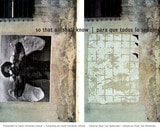
So That All Shall Know/Para que todos lo sepan
Photographs by Daniel Hernández-Salazar [Fotografías por Daniel Hernández-Salazar]Edited by/editado por Oscar Iván Maldonado
University of Texas Press, 2007
How does an artist respond to the horrors of war and the genocide of his or her people? Can art play a role in the fight for justice? These are key questions for understanding the work of Guatemalan photographer Daniel Hernández-Salazar. Since the 1980s, Hernández-Salazar has created both documentary and aesthetic works that confront the state-sponsored terrorism and mass killings of Guatemala's long civil war (1962-1996). His photographic polyptych (4-panel image) "Clarification" became the icon for the Recovery of Historical Memory project of the Archbishopric of Guatemala, as well as a rallying symbol for Guatemalans. Broadening his crusade for justice in the twenty-first century, Hernández-Salazar is now also using the shouting angel of his polyptych (entitled "So That All Shall Know") to challenge the forgetting and/or erasure of painful history in many parts of the world, including Mexico, Japan, the United States, Canada, and Argentina.
So That All Shall Know is a powerful, comprehensive overview of the work of Daniel Hernández-Salazar on recent Guatemalan history. Portfolios of images present his early photojournalistic work documenting the Guatemalan genocide; his Eros + Thanatos series that responds aesthetically to the destruction of war; and his Street Angel project, which uses his image "So That All Shall Know" to protest against injustice and historical forgetting around the world. Accompanying the images are bilingual English-Spanish essays by four scholars who discuss the development of Hernández-Salazar's art in the context of contemporary photography, the social and political conditions that inspire his work, and the broader questions that arise when artists engage in social struggle.
Introduced by Nobel Peace Laureate Rigoberta Menchú Tum, So That All Shall Know is a moving testament to the horrors of genocide and the power of art to give voice to the silenced and presence to the disappeared.
So We Died
A Memoir of Life and Death in the Ghetto of Šiauliai, LithuaniaLevi Shalit, translated and edited by Veronica Belling, Ellen Cassedy, and Andrew Cassel, introduction by Veronica Belling, afterword by Justin Cammy
University of Alabama Press, 2025
In the shadow of death, Levi Shalit wrote to remember—so we would never forget.
So We Died: A Memoir of Life and Death in the Ghetto of Šiauliai, Lithuania (Azoy zaynen mir geshtorbn) is a powerful eyewitness account of the Shavl ghetto during the Nazi occupation of Lithuania. Written in Yiddish by Levi Shalit and available now for the first time in English, the work fills a stark void in historical records.
Shalit divided his work into four sections. In the first, he describes the German invasion of Šiauliai, the murder of thousands of Jews in the city and surrounding countryside, and the forced relocation of the surviving Jews into the Shavl ghetto. In the second, he describes daily life in the ghetto in engrossing detail. In the third, titled “The Masada Book,” Shalit describes ghetto residents’ attempt to organize a resistance group of which he himself was a member. In the fourth, he narrates the transformation of the ghetto into a concentration camp and the seizure and deportation of the community’s children.
Few accounts of the Shavl ghetto survived the war. Shalit’s work offers English-language readers a rare insight into a vital chapter of history. The translators artfully reveal Shalit’s literary prowess and the ways he illuminated the Shavl ghetto’s daily struggles, false hopes, and atrocities.
More than an account of a previously overlooked episode in Holocaust history, So We Died is a testament to the enduring power of the human spirit in the face of unspeakable tragedy. It offers keen insight into a time of war, fascism, and resistance. A must-read for anyone seeking understanding and remembrance.
Soapbox Rebellion
The Hobo Orator Union and the Free Speech Fights of the Industrial Workers of the World, 1909-1916Matthew S. May
University of Alabama Press, 2013

Soapy
A Biography of G. Mennen WilliamsThomas J. Noer
University of Michigan Press, 2005
---George McGovern
"Soapy Williams had a deep talent not only to compel but on occasion to repel."
---John Kenneth Galbraith
"Thomas Noer has written a model biography of a fascinating political figure. He brings Williams to life with all his contradictions, old-fashioned qualities, and admirable idealism."
---Robert Divine, George W. Littlefield Professor Emeritus in American History, University of Texas
"G. Mennen 'Soapy' Williams was not only a giant in the 20th century history of the Michigan Democratic Party, the history of the state of Michigan and our nation-he was a giant ahead of his time. Throughout his long and extremely distinguished career as Governor of Michigan, Assistant Secretary of State for African Affairs and Chief Justice of the Michigan Supreme Court, Soapy maintained an unwavering commitment to equality, justice and civil rights for all people."
---Senator Carl Levin
In this first complete biography of G. Mennen "Soapy" Williams, author Thomas Noer brings to life the story of one of the most controversial and colorful politicians in twentieth-century American politics and a giant in the Michigan Democratic Party.
In 1948, winning a stunning upset, Williams became Michigan's second Democratic governor since the Civil War and was reelected five times. He served under Kennedy and Johnson as Assistant Secretary of State for Africa, briefly held the post of U.S. Ambassador to the Philippines, and was a member of the Michigan Supreme Court from 1970 to 1986, serving as Chief Justice in his last term.
Sporting his instantly recognizable trademark green and white polka-dot bow tie, Williams was a flamboyant character. He was also known for his energetic campaign style: he could say "hello" in seventeen languages, would shake hands with as many as five thousand factory workers a day, and made seemingly endless diplomatic trips to Africa. All of this captured the attention of the media and the public and made Williams into a celebrity.
Beneath his showy public persona, however, Williams also made important contributions to American diplomatic and political history. He built an unrivaled political machine in Michigan, bringing organized labor, African Americans, and ethnic groups into a new coalition; influenced the shift in American policy toward support for African independence; and wrote landmark decisions as a jurist on the Michigan Supreme Court.
The fascinating story of a complex and complicated man, Soapy will introduce one of the great American political figures of the twentieth century to a new generation of readers.
Sobral Pinto, "The Conscience of Brazil"
Leading the Attack against Vargas (1930-1945)By John W. F. Dulles
University of Texas Press, 2002
Praised by his admirers as "one of those rare heroic figures out of Plutarch" and as "an intrepid Don Quixote," Brazilian lawyer Heráclito Fontoura Sobral Pinto (1893-1991) was the most consistently forceful opponent of dictator Getúlio Vargas. Through legal cases, activism in Catholic and lawyers' associations, newspaper polemics, and a voluminous correspondence, Sobral Pinto fought for democracy, morality, and justice, particularly for the downtrodden.
This book is the first of a projected two-volume biography of Sobral Pinto. Drawing on Sobral's vast correspondence, which was not previously available to researchers, John W. F. Dulles confirms that Sobral Pinto was a true reformer, who had no equal in demonstrating courage and vehemence when facing judges, tribunals, and men in power. He traces the leading role that Sobral played in opposing the Vargas regime from 1930 to 1945 and sheds light on the personalities and activities of powerful figures in the National Security Tribunal, the police, the censorship bureau, and the Catholic Church.
In addition to the many details that this volume adds to Brazilian history, it illuminates the character of a man who sacrificed professional advancement and emolument in the interest of fighting for justice and charity. Thus, it will be important reading not only for students of Brazilian history, but also for a wider audience dedicated to the crusade for human rights and political freedom and the reformers who carry on that struggle.

Soccer
Jean-Philippe Toussaint
Rutgers University Press, 2019
Soccer takes readers on an idiosyncratic journey that delves deep into the author’s childhood memories, but also transports us to World Cup matches in Japan, Germany, South Africa, and Brazil. Along the way, it kicks around such provocative questions as: How does soccer fandom both support and transcend nationalism? How are our memories of soccer matches both collective and distinctly personal? And how can a game this beautiful and this ephemeral be adequately captured in words?
Part travelogue, part memoir, and part philosophical essay, Soccer is entirely unique, a thrilling departure from the usual clichés of sports writing. Even readers with little knowledge of the game will be enthralled by Touissant’s profound musings and lyrical prose.

Soccer in American Culture
The Beautiful Game’s Struggle for StatusG. Edward White
University of Missouri Press, 2023
In Soccer in American Culture: The Beautiful Game’s Struggle for Status, G. Edward White seeks to answer two questions. The first is why the sport of soccer failed to take root in the United States when it spread from England around much of the rest of the world in the late nineteenth and twentieth centuries. The second is why the sport has had a significant renaissance in America since the last decade of the twentieth century, to the point where it is now the 4th largest participatory sport in the United States and is thriving, in both men’s and women’s versions, at the high school, college, and professional levels.
White considers the early history of “Association football” (soccer) in England, the persistent struggles by the sport to establish itself in America for much of the twentieth century, the role of public high schools and colleges in marginalizing the sport, the part played by FIFA, the international organization charged with developing soccer around the globe, in encumbering the development of the sport in the United States, and the unusual history of women’s soccer in America, which evolved in the twentieth century from a virtually nonexistent sport to a major factor in the emergence of men’s—as well as women's—soccer in the U.S. in the twentieth century.
Incorporating insights from sociology and economics, White explores the multiple factors that have resulted in the sport of soccer struggling to achieve major status in America and why it currently has nothing like the cultural impact of other popular American sports—baseball and American football— which can be seen by the comparative lack of attention paid to it in sports media, its low television ratings, and virtually nonexistent radio broadcast coverage.

Soccer in a Football World
The Story of America's Forgotten GameDavid Wangerin
Temple University Press, 2008
David Beckham’s arrival in Los Angeles represents the latest attempt to jump-start soccer in the United States where, David Wangerin says, it “remains a minority sport.” With the rest of the globe so resolutely attached to the game, why is soccer still mostly dismissed by Americans?
Calling himself “a soccer fan born in the wrong country at nearly the wrong time,” Wangerin writes with wit and passion about the sport’s struggle for acceptance in Soccer in a Football World. A Wisconsin native, he traces the fragile history of the game from its early capitulation to gridiron on college campuses to the United States’ impressive performance at the 2002 World Cup. Placing soccer in the context of American sport in general, he chronicles its enduring struggle alongside the country’s more familiar pursuits and recounts the shifting attitudes toward the “foreign” game. His story is one that will enrich the perspective of anyone whose heart beats for the sport, and is curious as to where the game has been in America—and where it might be headed.
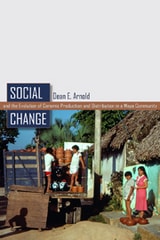
Social Change and the Evolution of Ceramic Production and Distribution in a Maya Community
Dean E. Arnold
University Press of Colorado, 2008
Dean E. Arnold made ten visits to Ticul, Yucatan, Mexico, witnessing the changes in transportation infrastructure, the use of piped water, and the development of tourist resorts. Even in this context of social change and changes in the demand for pottery, most of the potters in 1997 came from the families that had made pottery in 1965. This book traces changes and continuities in that population of potters, in the demand and distribution of pottery, and in the procurement of clay and temper, paste composition, forming, and firing.
In this volume, Arnold bridges the gap between archaeology and ethnography, using his analysis of contemporary ceramic production and distribution to generate new theoretical explanations for archaeologists working with pottery from antiquity. When the descriptions and explanations of Arnold’s findings in Ticul are placed in the context of the literature on craft specialization, a number of insights can be applied to the archaeological record that confirm, contradict, and nuance generalizations concerning the evolution of ceramic specialization. This book will be of special interest to anthropologists, archaeologists, and ethnographers.

Social Contracts Under Stress
The Middle Classes of America, Europe, and Japan at the Turn of the CenturyOlivier Zunz
Russell Sage Foundation, 2002

Social Control in Europe
Volume 1, 1500–1800Herman Roodenburg and Pieter Spierenburg
The Ohio State University Press, 2004

Social Control in Europe
Volume 2, 1800–2000Clive Emsley, Eric Johnson, and Pieter Spierenburg
The Ohio State University Press, 2004
The essays in this volume explore the various means by which communities in nineteenth- and twentieth-century Europe were subjected to forms of discipline, noting how the communities themselves generated their own forms of internal control. In addition, the essays discuss various policing institutions, exploring in particular the question of how liberal and totalitarian regimes differed in their styles of control, repression, and surveillance.
Social Controversy and Public Address in the 1960s and Early 1970s
A Rhetorical History of the United States, Volume IXRichard J. Jensen
Michigan State University Press, 2017

Social Currents in Eastern Europe
The Sources and Consequences of the Great TransformationSabrina P. Ramet
Duke University Press, 1994
Ramet draws on interviews conducted over a ten-year period with individuals active in arenas for social change—intellectual dissent, feminism, religious activism, youth cultures and movements, and trade unionism—in eight East European countries: East Germany, Poland, Czechoslovakia, Hungary, Yugoslavia, Romania, Bulgaria, and Albania. She shows how the processes leading to the ultimate collapse of communism began more than a decade earlier and how they were necessarily manifested in spheres as diverse as religion and rock music.
Ramet also examines the consequences of the "Great Transformation" and analyzes the numerous unresolved problems that these societies currently confront, whether it be in the arena of economics, political legitimation, or the challenges of establishing a civil society free of chauvinism.

Social Darwinism
Science and Myth in Anglo-American Social ThoughtRobert C. Bannister
Temple University Press, 1989

Social Democracy in Manitoba
A History of the CCF/NDPNelson Wiseman
University of Manitoba Press, 1983
Social Figures
George Eliot, Social History, and Literary RepresentationDaniel Cottom
University of Minnesota Press, 1987
Centers on the discourse of the liberal intellectual as exemplified in the novels of George Eliot, whose awareness of her aesthetic and social task was keener than that of most Victorian writers.
“…Daniel Cottom has produced a readable, well-researched, and thoroughly referenced work that speaks to a broad scholarly audience composed of philosophers, psychologists, sociolinguists, literary critics, historians, sociologists, and anthropologists, to name but a few.” Anthropology and Humanism Quarterly
Social Formation and Symbolic Landscape
Denis E. Cosgrove
University of Wisconsin Press, 1998
Hailed as a landmark in its field since its first publication in 1984, Denis E. Cosgrove’s Social Formation and Symbolic Landscape has been influential well beyond geography. It has continued to spark lively debate among historians, geographers, art historians, social theorists, landscape architects, and others interested in the social and cultural politics of landscape.
Social History and African Environments
William Beinart
Ohio University Press, 2003
The explosion of interest in African environmental history has stimulated research and writing on a wide range of issues facing many African nations.
This collection represents some of the finest studies to date. The general topics include African environmental ideas and practices; colonial science, the state and African responses; and settlers and Africans' culture and nature. The contributors are Emmanuel Kreike, Karen Middleton, Innocent Pikirayi, Terence Ranger, JoAnn McGregor, Helen Tilley, Grace Garswell, John McCracken, Ingrid Yngstrom, David Bunn, Sandra Swart, Robert J. Gordon, and Jane Carruthers.
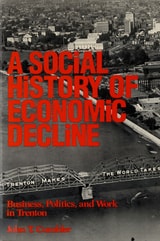
Social History of Economic Decline
Business, Politics, and Work in TrentonCumbler, John T.
Rutgers University Press, 1989
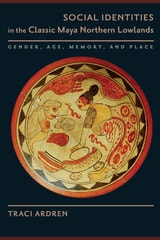
Social Identities in the Classic Maya Northern Lowlands
Gender, Age, Memory, and PlaceBy Traci Ardren
University of Texas Press, 2015
Using new archaeological data from four major cities of the Classic Maya world, this book explores how gender, age, familial and community memories, and the experience of living in an urban setting interacted to form social identities.
Social Identities in the Classic Maya Northern Lowlands plumbs the archaeological record for what it can reveal about the creation of personal and communal identities in the Maya world. Using new primary data from her excavations at the sites of Yaxuna, Chunchucmil, and Xuenkal, and new analysis of data from Dzibilchaltun in Yucatan, Mexico, Traci Ardren presents a series of case studies in how social identities were created, shared, and manipulated among the lowland Maya.
Ardren argues that the interacting factors of gender, age, familial and community memories, and the experience of living in an urban setting were some of the key aspects of Maya identities. She demonstrates that domestic and civic spaces were shaped by gender-specific behaviors to communicate and reinforce gendered ideals. Ardren discusses how child burials disclose a sustained pattern of reverence for the potential of childhood and the power of certain children to mediate ancestral power. She shows how small shrines built a century after Yaxuna was largely abandoned indicate that its remaining residents used memory to reenvision their city during a time of cultural reinvention. And Ardren explains how Chunchucmil’s physical layout of houses, plazas, and surrounding environment denotes that its occupants shared an urban identity centered in the movement of trade goods and economic exchange. Viewing this evidence through the lens of the social imaginary and other recent social theory, Ardren demonstrates that material culture and its circulations are an integral part of the discourse about social identity and group membership.
Social Inequality in Oaxaca
A History of Resistance and ChangeArthur Murphy
Temple University Press, 1991
Social Justice for Women
The International Labor Organization and WomenCarol Riegelman Lubin and Anne Winslow
Duke University Press, 1990
Carol Riegelman Lubin, a staff member of ILO for seventeen years, and Anne Winslow, for twenty-two years editor for the Carnegie Endowment, explore the important role played by women of the American and British trade union movement in the founding of the ILO. In surveying the organization’s history and structure, they ask how the ILO’s concern with women has manifested over the years, if it was faithful to its constitution, how it dealt with conflicting needs of women from industrialized nations and Third World countries, and what its relationship was to the international feminist movement. Drawing on case studies and analyses of literature on women and work, the authors identify the role of other international organizations in response to the ILO in fostering, or sometimes hindering, women’s development in the labor area.
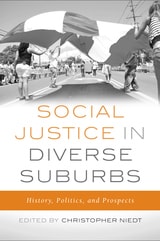
Social Justice in Diverse Suburbs
History, Politics, and ProspectsChristopher Niedt
Temple University Press, 2013
Editor Christopher Niedt and his contributors shed light on organizing and conflict in the suburbs with historical and contemporary case studies. Chapters address topical issues ranging from how suburbanites actively fought school segregation to industrial pollution and displacement along the suburban-rural fringe. Social Justice in Diverse Suburbs also considers struggles for integration and environmental justice as well as efforts to preserve suburban history and organize immigrant communities.
Contributors include: Douglas R. Appler, Aaron Cavin, Nancy A. Denton, Lisa Feldstein, Casey Gallagher, Anne Galletta, Joseph Gibbons, Robert Gioielli, Lucas Owen Kirkpatrick, JoAnna Mitchell-Brown, Manuel Pastor, john a. powell, Jason Reece, Alex Schafran, June Williamson, and the editor.
Social Knowledge Creation in the Humanities
Volume 1Edited by Alyssa Arbuckle, Aaron Mauro, and Daniel Powell
Iter Press, 2017
The ubiquity of social media has transformed the scope and scale of scholarly communication in the arts and humanities. The consequences of this new participatory and collaborative environment for humanities research has allowed for fresh approaches to communicating research. Social Knowledge Creation takes up the norms and customs of online life to reorient, redistribute, and oftentimes flatten traditional academic hierarchies. This book discusses the implications of how humanists communicate with the world and looks to how social media shapes research methods. This volume addresses peer-review, open access publishing, tenure and promotion, mentorship, teaching, collaboration, and interdisciplinarity as a comprehensive introduction to these rapidly changing trends in scholarly communication, digital pedagogy, and educational technology. Collaborative structures are rapidly augmenting disciplinary focus of humanities curriculum and the public impact of humanities research teams with new organizational and disciplinary thinking. Social Knowledge Creation represents a particularly dynamic and growing field in which the humanities seeks to find new ways to communicate the legacy and traditions of humanities based inquiry in a 21st century context.
New Technologies in Medieval and Renaissance Studies Volume 7.
Edited by Alyssa Arbuckle, Aaron Mauro, and Daniel Powell
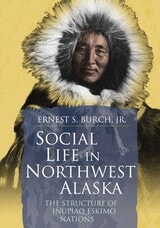
Social Life in Northwest Alaska
The Structure of Inupiaq Eskimo NationsErnest Burch Jr.
University of Alaska Press, 2006
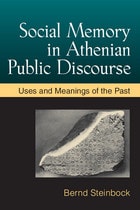
Social Memory in Athenian Public Discourse
Uses and Meanings of the PastBernd Steinbock
University of Michigan Press, 2013
Integrating literary, epigraphic, and archaeological evidence with recent scholarship on memory, identity, rhetoric, and international relations, Social Memory in Athenian Public Discourse: Uses and Meanings of the Past enhances our understanding of both the function of memory in Athenian public discourse and the history of Athenian-Theban relations. It should be of interest not only to students of Greek history and oratory but to everybody interested in memory studies, Athenian democracy, and political decision making.
Social Organization in South China, 1911–1949
The Case of Kuan Lineage in K’ai-p’ing CountyYuen-fong Woon
University of Michigan Press, 1984

Social Origins Of Religion
Roger Bastide
University of Minnesota Press, 2003