Results by title
1677 books match the query 'Archaeology' and 101 start with s
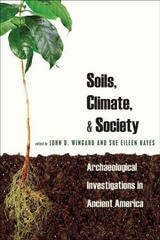
Soils, Climate and Society
Archaeological Investigations in Ancient AmericaJohn D. Wingard
University Press of Colorado, 2013
The volume traces the origins of agriculture, the transition to agrarian societies, the sociocultural implications of agriculture, agriculture's effects on population, and the theory of carrying capacity, considering the relation of agriculture to the profound social changes that it wrought in the New World. Soil science plays a significant, though varied, role in each case study, and is the common component of each analysis. Soil chemistry is also of particular importance to several of the studies, as it determines the amount of food that can be produced in a particular soil and the effects of occupation or cultivation on that soil, thus having consequences for future cultivators.
Soils, Climate and Society demonstrates that renewed investigation of agricultural production and demography can answer questions about the past, as well as stimulate further research. It will be of interest to scholars of archaeology, historical ecology and geography, and agricultural history.
Soldiers, Cities, and Civilians in Roman Syria
Nigel Pollard
University of Michigan Press, 2000
Nigel Pollard is currently a Research Assistant at the Institute of Archaeology, University of Oxford.
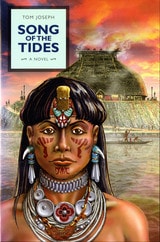
Song of Tides
Tom Joseph
University of Alabama Press, 2008
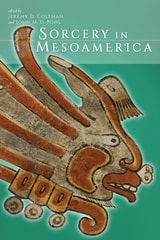
Sorcery in Mesoamerica
Jeremy D. Coltman and John M. D. Pohl
University Press of Colorado, 2020
In each chapter, preeminent scholars of ritual and belief ask very different questions about what exactly sorcery is in Mesoamerica. Contributors consider linguistic and visual aspects of sorcery and witchcraft, such as the terminology in Aztec semantics and dictionaries of the Kaqchiquel and K’iche’ Maya. Others explore the practice of sorcery and witchcraft, including the incorporation by indigenous sorcerers in the Mexican highlands of European perspectives and practices into their belief system. Contributors also examine specific deities, entities, and phenomena, such as the pantheistic Nahua spirit entities called forth to assist healers and rain makers, the categorization of Classic Maya Wahy (“co-essence”) beings, the cult of the Aztec goddess Cihuacoatl, and the recurring relationship between female genitalia and the magical conjuring of a centipede throughout Mesoamerica.
Placing the Mesoamerican people in a human context—as engaged in a rational and logical system of behavior—Sorcery inMesoamerica is the first comprehensive study of the subject and an invaluable resource for students and scholars of Mesoamerican culture and religion.
Contributors:
Lilián González Chévez, John F. Chuchiak IV, Jeremy D. Coltman, Roberto Martínez González, Oswaldo Chinchilla Mazariegos, Cecelia F. Klein, Timothy J. Knab, John Monaghan, Jesper Nielsen, John M. D. Pohl, Alan R. Sandstrom, Pamela Effrein Sandstrom, David Stuart
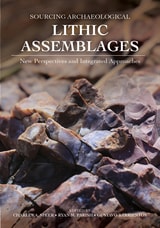
Sourcing Archeological Lithic Assemblages
New Perspectives and Integrated ApproachesEdited by Charles Speer, Ryan M. Parish, and Gustavo Barrientos
University of Utah Press, 2022
For most of our existence, humans have manipulated stone into tools that are essential for survival. Generally resistant to degradation, stone tools comprise a large portion of the material culture found at archaeological sites worldwide. Recovery of stone tools during archaeological excavation indicates the location where they were discarded, often tied to where they were used. “Sourcing” refers to attempts to determine the origin of the raw materials used to produce these tools. Knowing the beginning and end points of a tool’s use-life, as well as the likely paths it took between those two locations, can offer insight into trade and procurement patterns. The scholars gathered in this volume employ a variety of unique approaches to real-life contexts in multiple geographic regions. These studies illustrate the numerous, robust options available to archaeologists and researchers today, as well as the problems that must be faced and resolved.
Part 1 of the book explores technological approaches to sourcing in conjunction with innovative survey strategies. The chapters describe a particular method while often offering suggestions for improving the chemical analysis. Part 2 focuses on region-specific and methodological sourcing applications. In a concluding review, Michael D. Glascock critiques each of the chapters and presents his views, developed across 40 years of work in the field, on sourcing raw materials. Broadly, these contributions demonstrate how knowledge of lithic sources, geologic processes, the nature of variation, and regional availability can provide a more thorough understanding of past peoples.
Sourcing Prehistoric Ceramics at Chodistaas Pueblo, Arizona
The Circulation of People and Pots in the Grasshopper RegionMaría Nieves Zedeño
University of Arizona Press, 1994
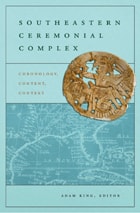
Southeastern Ceremonial Complex
Chronology, Content, ContestEdited by Adam King
University of Alabama Press, 2007
A timely, comprehensive reevaluation of the Southeastern Ceremonial Complex.
One of the most venerable concepts in Southeastern archaeology is that of the Southern Cult. The idea has its roots in the intensely productive decade (archaeologically) of the 1930s and is fundamentally tied to yet another venerable concept—Mississippian culture. The last comprehensive study of the melding of these two concepts into the term Southeastern Ceremonial Complex (SECC) is more than two decades old, yet our understanding of the objects, themes, and artistic styles associated with the SECC have changed a great deal. New primary data have come to light that bear directly on the complex, requiring a thorough reanalysis of both concepts and dating. Recent publications have ignited many debates about the dating and the nature of the SECC.
This work presents new data and new ideas on the temporal and social contexts, artistic styles, and symbolic themes included in the complex. It also demonstrates that engraved shell gorgets, along with other SECC materials, were
produced before A.D. 1400.
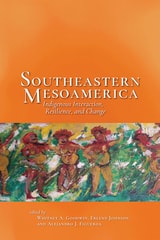
Southeastern Mesoamerica
Indigenous Interaction, Resilience, and ChangeWhitney A. Goodwin
University Press of Colorado, 2020
Drawing on archaeological evidence ranging back to the late Pleistocene as well as extensive documentation from the historic period, contributors show how Southeastern Mesoamericans created unique identities, strategically incorporating cosmopolitan influences from cultures to the north and south with their own long-lived traditions. These populations developed autochthonous forms of monumental architecture and routes and methods of exchange and had distinct social, cultural, political, and economic traits. They also established unique long-term human-environment relations that were the result of internal creativity and inspiration influenced by local social and natural trajectories.
Southeastern Mesoamerica calls upon archaeologists, anthropologists, historians, ethnohistorians, and others working in Mesoamerica, Central America, and other cultural boundaries around the world to reexamine the role Indigenous resilience and agency play in these areas and in the cultural developments and interactions that occur within them.
Contributors: Edy Barrios, Christopher Begley, Walter Burgos, Mauricio Díaz García, William R. Fowler, Rosemary A. Joyce, Gloria Lara-Pinto, Eva L. Martínez, William J. McFarlane, Cameron L. McNeil, Lorena D. Mihok, Pastor Rodolfo Gómez Zúñiga, Timothy Scheffler, Edward Schortman, Russell Sheptak, Miranda Suri, Patricia Urban, Antolín Velásquez, E. Christian Wells
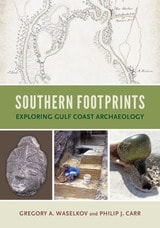
Southern Footprints
Exploring Gulf Coast ArchaeologyGregory A. Waselkov and Philip J. Carr
University of Alabama Press, 2024
Unearthing the Gulf Coast’s past—one footprint at a time.
Southern Footprints celebrates more than fifty years of archaeological research along the Gulf Coast by the University of South Alabama and the Center for Archaeological Studies. Archaeologists Gregory A. Waselkov and Philip J. Carr, the former and current directors of the center, present the “greatest hits” that have transformed knowledge of human history on the Alabama and Mississippi Gulf Coast from the Ice Age until recently. Each archaeological site, from surface collections to premiere archaeological preserves, such as Old Mobile and Holy Ground, offers clues to the past.
The chapters in this collection are arranged chronologically and survey the history and archaeology of a wide range of significant sites, including the Gulf Shores canoe canal, Bottle Creek Mounds, Old Mobile, Fort Mims, Spanish Fort, Spring Hill College, and Mobile River Bridge.
Waselkov and Carr take care to acknowledge in these stories populations who have been historically underdocumented, now recognizing the contributions of Native Americans and African Americans that have been uncovered through archaeology. The authors reveal the dire impacts of climate change, environmental disasters, development, and neglect—and convey their urgency to protect these areas of shared history—as a result of the meticulous excavation, analysis, and preservation of artifacts from these sites. Color photographs showcase the archaeology as it unfolds, often with the help of dedicated volunteers. Southern Footprints will serve as an indispensable reference on the rich Gulf Coast heritage for all to appreciate.
Southern Paiute Ethnography
UUAP 69Isabel T. Kelly
University of Utah Press, 1964
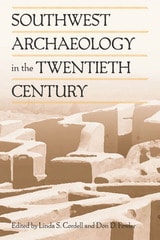
Southwest Archaeology in the Twentieth Century
Linda S Cordell
University of Utah Press, 2011
With contributions from well-known archaeologists, Southwest Archaeology in the Twentieth Century reviews the histories of major archaeological topics of the region during the twentieth century, with particular attention to the vast changes in southwestern archaeology during the later decades of the century. Included are the huge influence of field schools, the rise of cultural resource management (CRM), the uses and abuses of ethnographic analogy, the intellectual contexts of archaeology in Mexico, and current debates on agriculture, sedentism, and political complexity.
By looking back at the previous century of study, this book provides an authoritative retrospective of intellectual trends as well as a synthesis of current themes in the arena of the American Southwest.
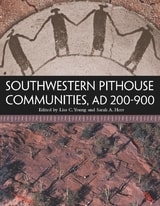
Southwestern Pithouse Communities, AD 200-900
Edited by Lisa C. Young and Sarah A. Herr
University of Arizona Press, 2012
Pithouses are the earliest identifiable domestic architecture in many areas of the world, and can provide insights into the origins of communities--a fundamental component of past and present societies. In this book, Lisa Young and Sarah Herr invite archaeologists to explore the development of communities using information from pithouse sites in the American Southwest.
Using regional and topical syntheses to investigate the formation of pithouse communities, contributors to this volume examine the complex relationship between the economic transition to agricultural dependence and the social changes associated with sedentism. They discover that during this transformation, peoples' relationship with the landscape changed in ways that affected their use of space, community organization, and cultural identity.
Employing various theoretical perspectives, these contributions analyze changes in pithouses, site layout, communal architecture, and settlement patterns to investigate the development of place-based communities. Chapters look at community formation strategies in populous regions like the northern San Juan Basin, the southern Colorado Plateau, Mimbres/southern Mogollon, and Hohokam Basin and Range and compare them with social structures in more sparsely populated regions like the northeast Hohokam peripheries, the Arizona Transition Zone, the Cibola region, southeast New Mexico, and the northern Rio Grande. The book also includes thematic discussions of panregional economic change, the complex relationship between house and household, and the demographic shifts accompanying the Neolithic Demographic Transition.
An essential book for students and archaeologists interested in the origins of communities, Southwestern Pithouse Communities is also an important comparative resource for scholars interested in social change during the transition to settled village life.
Space-Time Perspectives on Early Colonial Moquegua
Prudence M. Rice
University Press of Colorado, 2024
Space-Time Perspectives on Early Colonial Moquegua looks at the encounters between existing populations and newcomers from successive waves of colonization, from indigenous expansion states (Wari, Tiwanaku, and Inka) to the foreign Spaniards, and the way each group “re-spatialized” the landscape according to its own political and economic ends. Viewing these spatializations from political, economic, and religious perspectives, Rice considers both the ideological and material occurrences.
Concluding with a special focus on the multiple space-time considerations involved in Spanish-inspired ceramics from the region, Space-Time Perspectives on Early Colonial Moquegua integrates the local and rural with the global and urban in analyzing the events and processes of colonialism. It is a vital contribution to the literature of Andean studies and will appeal to students and scholars of archaeology, historical archaeology, history, ethnohistory, and globalization.
Spanish-Guarani Relations in Early Colonial Paraguay
Elman R. Service
University of Michigan Press, 1954
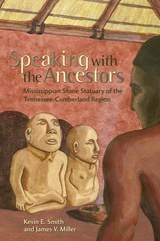
Speaking with the Ancestors
Mississippian Stone Statuary of the Tennessee-Cumberland RegionKevin E. Smith and James V. Miller
University of Alabama Press, 2008
When European explorers began their initial forays into southeastern North America in the 16th and 17th centuries they encountered what they called temples and shrines of native peoples, often decorated with idols in human form made of wood, pottery, or stone. The idols were fascinating to write about, but having no value to explorers searching for gold or land, there are no records of these idols being transported to the Old World, and mention of them seems to cease about the 1700s. However, with the settling of the fledgling United States in the 1800s, farming colonists began to unearth stone images in human form from land formerly inhabited by the native peoples. With little access to the records of the 16th and 17th centuries, debate and speculation abounded by the public and scholars alike concerning their origin and meaning.
During the last twenty years the authors have researched over 88 possible examples of southeastern Mississippian stone statuary, dating as far back as 1,000 years ago, and discovered along the river valleys of the interior Southeast. Independently and in conjunction, they have measured, analyzed, photographed, and traced the known history of the 42 that appear in this volume. Compiling the data from both early documents and public and private collections, the authors remind us that the statuary should not be viewed in isolation, but rather as regional expressions of a much broader body of art, ritual, and belief.
Spear-Won Land
Sardis from the King's Peace to the Peace of ApameaEdited by Andrea M. Berlin and Paul J. Kosmin
University of Wisconsin Press, 2019
The contributors to this volume are members of the Hellenistic Sardis Project, a research collaboration between long-standing expedition members and scholars keenly interested in the site. These new discussions on the pre-Roman history of Sardis restore the city in the scholarship of the Hellenistic East and will be enlightening to scholars of classical archaeology.
Spirit Lands of the Eagle and Bear
Numic Archaeology and Ethnohistory in the Rocky Mountains and BorderlandsRobert H. Brunswig
University Press of Colorado, 2020
New research into Numic archaeology, ethnohistory, and ethnography is significantly changing the understanding of migratory patterns, cultural interactions, chronology, and shared cultural-religious practices of regionally defined Numic branches and non-Numic populations of the American West. Contributors examine case studies of Ute and Shoshone material culture (ceramics, lithics, features and structures, trade and seasonal migration), chronology (dendrochronology, radiocarbon dating, thermoluminescence), and subsistence systems (hunting camps, game drives, faunal and botanical evidence of food sources). They also delineate different hunter-gatherer “ethnic groups” who co-occupied or interacted within one another’s territories through trade, raiding, or seasonal subsistence migrations, such as the Late Fremont/Ute and the Shoshone or the early Navajo/Ute and the Shoshone.
With a strong emphasis on diverse cases and new and original archaeological, ethnohistoric, and ethnographic lines of evidence, Spirit Lands of the Eagle and Bear interweaves anthropological theory and innovative applications of leading-edge scientific methodologies and technologies. The book presents a cross-section of field, laboratory, and ethnohistoric studies—including indigenous consultation—that explore past, recent, and ongoing developments in Numic cultural history and prehistory. It will be of interest to scholars of Southwestern archaeology, as well as private and government cultural resource specialists and museum staff.
Contributors:
Richard Adams, John Cater, Christine Chady, David Diggs, Rand Greubel, John Ives, Byron Loosle, Curtis Martin, Sally McBeth, Lindsay Montgomery, Bryon Schroeder, Matthew Stirn

Spirits of Earth
The Effigy Mound Landscape of Madison and the Four LakesRobert A. Birmingham
University of Wisconsin Press, 2010
St Peter-On-The-Wall
Landscape and Heritage on the Essex CoastEdited by Johanna Dale
University College London, 2023
The Chapel of St Peter-on-the-Wall, built on the ruins of a Roman fort, dates from the mid-seventh century and is one of the oldest largely intact churches in England. It stands in splendid isolation on the shoreline at the mouth of the Blackwater Estuary in Essex, where the land meets and interpenetrates with the sea and the sky. This book brings together contributors from across the arts, humanities, and social sciences to uncover the premodern contexts and modern resonances of this medieval building and its landscape setting. In analyzing the significance of the chapel and surrounding landscape over more than a thousand years, this collection additionally contributes to wider debates about the relationship between space and place, and particularly the interfaces between both medieval and modern cultures and also heritage and the natural environment.
Stability and Change in Guale Indian Pottery, A.D. 1300-1702
Rebecca Saunders
University of Alabama Press, 2000
Through a comprehensive study of changing pottery attributes, Saunders documents the clash of Spanish and Native American cultures in the 16th-century southeastern United States.
By studying the ceramic traditions of the Guale Indians, Rebecca Saunders provides evidence of change in Native American lifeways from prehistory through European contact and the end of the Mission period. The Guale were among the first southeastern groups to come into contact with Spanish and French colonists, and they adapted various strategies in order to ensure their own social survival. That adaptation is reflected, Saunders shows, in the changing attributes of pottery recovered on archaeological sites on the coasts of Georgia and Florida.
Saunders traces the evolution of Guale pottery from the late prehistoric Irene phase through the Mission period at the three archaeological sites. She uses both technological and stylistic attributes to monitor change, paying particular attention to changes in execution and frequency of the filfot cross—a stylized cross that is a symbol of Guale cosmology. The frequency of this symbol in different ceramic components, according to Saunders, is a measure of change in the worldview of the missionized Guale. Although the symbol abruptly changed after the first Spanish contact, it showed remarkable stability through the Mission period, suggesting that traditional craft training and production remained strong despite high mortality rates and frequent relocation.
Only after 1684, when the Guale were relocated to Amelia Island in present-day Florida, did the use of the cross motif decline, suggesting that the Guale who remained in Spanish territory may have conceived of their place in the cosmos differently from their forebears or their contemporaries who fled to the interior.
Standards of Pottery Description
Benjamin March
University of Michigan Press, 1934
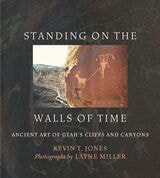
Standing on the Walls of Time
Ancient Art of Utah's Cliffs and CanyonsKevin T. Jones and Layne Miller
University of Utah Press, 2019
Miller’s photographs include many rare and relatively unknown panels and represent a lifetime of work by someone intimately familiar with the Colorado Plateau. The photos highlight the astonishing variety of rock art as well as the variability within traditions and time periods. Jones’s essays furnish general information about previous Colorado Plateau cultures and shine a light on rock art as art. The book emphasizes the exquisite artistry of these ancient works and their capacity to reach through the ages to envelop and inspire viewers.
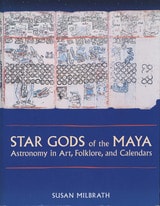
Star Gods of the Maya
Astronomy in Art, Folklore, and CalendarsBy Susan Milbrath
University of Texas Press, 2000
Observations of the sun, moon, planets, and stars played a central role in ancient Maya lifeways, as they do today among contemporary Maya who maintain the traditional ways. This pathfinding book reconstructs ancient Maya astronomy and cosmology through the astronomical information encoded in Precolumbian Maya art and confirmed by the current practices of living Maya peoples.
Susan Milbrath opens the book with a discussion of modern Maya beliefs about astronomy, along with essential information on naked-eye observation. She devotes subsequent chapters to Precolumbian astronomical imagery, which she traces back through time, starting from the Colonial and Postclassic eras. She delves into many aspects of the Maya astronomical images, including the major astronomical gods and their associated glyphs, astronomical almanacs in the Maya codices [painted books], and changes in the imagery of the heavens over time. This investigation yields new data and a new synthesis of information about the specific astronomical events and cycles recorded in Maya art and architecture. Indeed, it constitutes the first major study of the relationship between art and astronomy in ancient Maya culture.
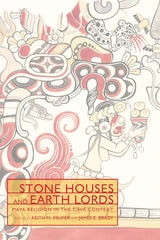
Stone Houses and Earth Lords
Maya Religion in the Cave ContextKeith M. Prufer
University Press of Colorado, 2021
Demonstrating the importance of these subterranean spaces to Maya archaeology, contributors provide interpretations of archaeological remains that yield insights into Maya ritual and cosmology. Compiling the best current scholarship in this fast-growing area of research, Stone Houses and Earth Lords is a vital reference for Mayanists, Mesoamerican specialists, and others interested in the human use of caves in the New World. Contributors include: Juan Luis Bonor, James E. Brady, Robert Burnett, Allan B. Cobb, Pierre Robert Colas, Cesar Espinosa, Sergio Garza, David M. Glassman, Christina T. Halperin, Amalia Kenward, Andrew Kindon, Patricia McAnany, Christopher Morehart, Holley Moyes, Vanessa A. Owen, Shankari Patel, Polly Peterson, Keith M. Prufer, Timothy. W. Pugh, Frank Saul, Julie Saul, Ann M. Scott, Andrea Stone, and Vera Tiesler.
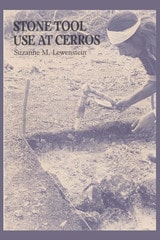
Stone Tool Use at Cerros
The Ethnoarchaeological and Use-Wear EvidenceBy Suzanne M. Lewenstein
University of Texas Press, 1987
For centuries scholars have pondered and speculated over the uses of the chipped stone implements uncovered at archaeological sites. Recently a number of researchers have attempted to determine prehistoric tool function through experimentation and through observation of the few remaining human groups who still retain this knowledge. Learning how stone tools were made and used in the past can tell us a great deal about ancient economic systems, exchange networks, and the social and political structure of prehistoric societies.
Suzanne M. Lewenstein used the artifacts from Cerros, an important Late Preclassic (200 BC–AD 200) Mayan site in northern Belize, to study stone tool function. Through a comprehensive program of experimentation with stone tool replicas, she was able not only to infer the tasks performed by individual tool specimens but also to recognize a wide variety of past activities for which stone tools were used.
Unlike previous works that focused on hunter-gatherer groups, Stone Tool Use at Cerros is the first comprehensive experimental study of tool use in an agricultural society. The lithic data are used in an economic interpretation of a lowland Mayan community within a hierarchically complex society.
Apart from its significance to Mayan studies, this innovative work offers the beginnings of a reference collection of identifiable tool functions that may be documented for sedentary, complex society. It will be of major interest to all archaeologists and anthropologists, as well as those interested in economic specialization and artisanry in complex societies.
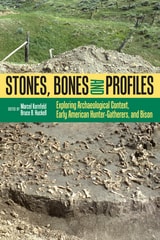
Stones, Bones, and Profiles
Exploring Archaeological Context, Early American Hunter-Gatherers, and BisonMarcel Kornfeld
University Press of Colorado, 2016
Stones, Bones, and Profiles addresses key and cutting-edge research of three pillars of hunter-gatherer archaeology. Stones and bones—flaked stone tools and the bones of the prey animals—are the objects most commonly recovered from hunter-gatherer archaeological sites, and profiles represent the geologic context of the archeological record. Together they constitute the foundations of much of early archaeology, from the appearance of the earliest humans to the advent of the Neolithic.
The volume is divided into three sections: Peopling of North America and Paleoindians, Geoarchaeology, and Bison Bone Bed Studies. The first section dissects established theories about the Paleoindians, including the possibility that human populations were in North America before Clovis and the timing of the opening of the Alberta Corridor. The second section provides new perspectives on the age and contexts of several well-known New World localities such as the Lindenmeier Folsom and the UP Mammoth sites, as well as a synthesis of the geoarchaeology of the Rocky Mountains' Bighorn region that addresses significant new data and summarizes decades of investigation. The final section, Bison Bone Bed Studies, consists of groundbreaking zooarchaeological studies offering new perspectives on bison taxonomy and procurement.
Stones, Bones, and Profiles presents new data on Paleoindian archaeology and reconsiders previous sites and perspectives, culminating in a thought-provoking and challenging contribution to the ongoing study of Paleoindians around the world.
Contributors: Leland Bement, Jack W. Brink, John Carpenter, Brian Carter, Thomas J. Connolly, Linda Scott Cummings, Loren G. Davis, Allen Denoyer, Stuart J. Fiedel, Judson Byrd Finley, Andrea Freeman, C. Vance Haynes Jr., Bryan Hockett, Vance T. Holliday, Dennis L. Jenkins, Thomas A. Jennings, Eileen Johnson, George T. Jones, Oleksandra Krotova, Patrick J. Lewis, Vitaliy Logvynenko, Ian Luthe, Katelyn McDonough, Lance McNees, Fred L. Nials, Patrick W. O’Grady, Mary M. Prasciunas, Karl J. Reinhard, Michael Rondeau, Guadalupe Sanchez, William E. Scoggin, Ashley M. Smallwood, Iryna Snizhko, Thomas W. Stafford Jr., Mark E. Swisher, Frances White, Eske Willerslev, Robert M. Yohe II, Chad Yost
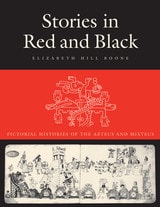
Stories in Red and Black
Pictorial Histories of the Aztecs and MixtecsBy Elizabeth Hill Boone
University of Texas Press, 2000
Winner, Arvey Award, Association for Latin American Art, 2001
Honorable Mention, Honorable Mention, George Wittenborn Memorial Book Award, Art Libraries Society of North America, 2001
The Aztecs and Mixtecs of ancient Mexico recorded their histories pictorially in images painted on hide, paper, and cloth. The tradition of painting history continued even after the Spanish Conquest, as the Spaniards accepted the pictorial histories as valid records of the past. Five Pre-Columbian and some 150 early colonial painted histories survive today.
This copiously illustrated book offers the first comprehensive analysis of the Mexican painted history as an intellectual, documentary, and pictorial genre. Elizabeth Hill Boone explores how the Mexican historians conceptualized and painted their past and introduces the major pictorial records: the Aztec annals and cartographic histories and the Mixtec screenfolds and lienzos.
Boone focuses her analysis on the kinds of stories told in the histories and on how the manuscripts work pictorially to encode, organize, and preserve these narratives. This twofold investigation broadens our understanding of how preconquest Mexicans used pictographic history for political and social ends. It also demonstrates how graphic writing systems created a broadly understood visual "language" that communicated effectively across ethnic and linguistic boundaries.
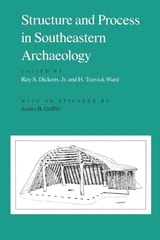
Structure and Process in Southeastern Archaeology
Edited by Roy Dickens Jr and H. Trawick Ward
University of Alabama Press, 1985
A Dan Josselyn Memorial Publication
Within the general structure-and-process theme of this compendium, the authors have focused on either intrasite problems (those dealing with the formation and structure of a site, type of site, or type of feature) or intersite problems (those dealing with behavioral organization and process as developed from comparative site data). These papers, from a broad range of specialists, present a comprehensive study of southeastern archaeology.
Structure and Process in Southeastern Archaeology is a foundational work that reshapes how scholars understand the cultural and social dynamics of prehistoric communities in the Southeastern United States. Roy S. Dickens, Jr. and H. Trawick Ward bring together decades of fieldwork, theoretical insight, and regional expertise to explore how ancient societies organized themselves, interacted, and evolved over time. Rather than focusing solely on artifacts or isolated site reports, this volume emphasizes the broader patterns—both structural and processual—that define the archaeological record of the Southeast.
Through a careful synthesis of settlement data, material culture, and environmental context, the authors reveal how social organization, political structures, and cultural practices were deeply embedded in the landscape. Their approach integrates processual archaeology with a nuanced understanding of regional variation, offering readers a dynamic view of how prehistoric communities adapted to changing conditions and interacted across space and time.
This book is particularly valuable for archaeologists, anthropologists, and historians seeking to move beyond descriptive accounts toward more interpretive frameworks. It provides a model for analyzing archaeological data in ways that illuminate the lived experiences of ancient peoples, making it a vital resource for both academic research and classroom instruction. The authors’ clear writing and thoughtful analysis make complex ideas accessible without sacrificing scholarly rigor.
Whether you're studying Mississippian chiefdoms, Woodland period settlements, or the broader cultural landscapes of the American South, Structure and Process in Southeastern Archaeology offers essential tools for understanding the past. It stands as a testament to the importance of theory-driven, context-rich archaeological interpretation.
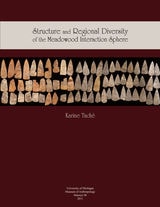
Structure and Regional Diversity in the Meadowood Interaction Sphere
Karine Taché
University of Michigan Press, 2011
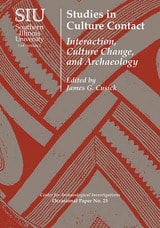
Studies in Culture Contact
Interaction, Culture Change, and ArchaeologyEdited by James G. Cusick
Southern Illinois University Press, 1998
People have long been fascinated about times in human history when different cultures and societies first came into contact with each other, how they reacted to that contact, and why it sometimes occurred peacefully and at other times was violent or catastrophic.
Studies in Culture Contact: Interaction, Culture Change, and Archaeology, edited by James G. Cusick,seeks to define the role of culture contact in human history, to identify issues in the study of culture contact in archaeology, and to provide a critical overview of the major theoretical approaches to the study of culture and contact.
In this collection of essays, anthropologists and archaeologists working in Europe and the Americas consider three forms of culture contact—colonization, cultural entanglement, and symmetrical exchange. Part I provides a critical overview of theoretical approaches to the study of culture contact, offering assessments of older concepts in anthropology, such as acculturation, as well as more recently formed concepts, including world systems and center-periphery models of contact. Part II contains eleven case studies of specific contact situations and their relationships to the archaeological record, with times and places as varied as pre- and post-Hispanic Mexico, Iron Age France, Jamaican sugar plantations, European provinces in the Roman Empire, and the missions of Spanish Florida.
Studies in Culture Contact provides an extensive review of the history of culture contact in anthropological studies and develops a broad framework for studying culture contact’s role, moving beyond a simple formulation of contact and change to a more complex understanding of the amalgam of change and continuity in contact situations.
Studies in the Archeological History of the Deh Luran Plain
The Excavation of Chagha SefidFrank Hole
University of Michigan Press, 1977
Studies in the Natural Radioactivity of Prehistoric Materials
Edited by Arthur J. Jelinek and James E. Fitting
University of Michigan Press, 1965
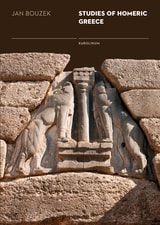
Studies of Homeric Greece
Jan Bouzek
Karolinum Press, 2018

Studying Technological Change
A Behavioral ApproachMichael Brian Schiffer
University of Utah Press, 2011
Studying Technological Change synthesizes nearly four decades of research by Michael Brian Schiffer, a cofounder of the field of behavioral archaeology. This new book asks historical and scientific questions about the interaction of people with artifacts during all times and in all places. The book is not about the history or prehistory of technology, nor is it a catalog of methods and techniques for inferring how specific technologies were made or used. Rather, it supplies conceptual tools that can be used to help craft an explanation of any technological change in any society.
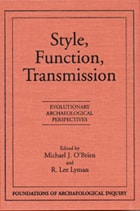
Style, Function, Transmission
Evolutionary Archaeological PerspectivesMichael J O'Brien
University of Utah Press, 2003
Darwin's theory of evolutionary descent with modification rests in part on the notion that there is heritable continuity affected by transmission between ancestor and descendant. It is precisely this continuity that allows one to trace hylogenetic histories between fossil taxa of various ages and recent taxa. Darwin was clear that were an analyst to attempt such tracings, then the anatomical characters of choice are those least influenced by natural selection, or what are today referred to as adaptively neutral traits. The transmission of these traits is influenced solely by such mechanisms as drift and not by natural selection.
The application of Darwin's theory to archaeological phenomena requires that the theory be retooled to accommodate artifacts. One aspect that has undergone this retooling concerns cultural transmission, the mechanism that affects heritable continuity between cultural phenomena. Archaeologists have long traced what is readily interpreted as heritable continuity between artifacts, but the theory underpinning their tracings is seldom explicit. Thus what have been referred to as artifacts styles underpin such tracings because styles are adaptively neutral. Other traits are referred to as functional.
In their introduction to Style, Function, Transmission, Michael O’Brien and R. Lee Lyman outline in detail the interrelations of a theory of cultural descent with modification and the concepts of drift, style, and function. The chapters in the volume specifically address the issues of selection and drift and their relation to style and function. In non-polemic presentations, contributors specify empirical implications of aspects of cultural transmission for evolutionary lineages of artifacts and then present archaeological data for those implications.
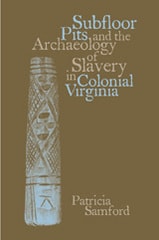
Subfloor Pits and the Archaeology of Slavery in Colonial Virginia
Patricia Samford
University of Alabama Press, 2007
Enslaved Africans and their descendants comprised a significant portion of colonial Virginia populations, with most living on rural slave quarters adjacent to the agricultural fields in which they labored. Archaeological excavations into these home sites have provided unique windows into the daily lifeways and culture of these early inhabitants.
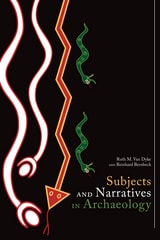
Subjects and Narratives in Archaeology
Ruth M. Van Dyke
University Press of Colorado, 2015
Seeking to move beyond the customary limits of archaeological prose and representation, Subjects and Narratives in Archaeology presents archaeology in a variety of nontraditional formats. The volume demonstrates that visual art, creative nonfiction, archaeological fiction, video, drama, and other artistic pursuits have much to offer archaeological interpretation and analysis.
Chapters in the volume are augmented by narrative, poetry, paintings, dialogues, online databases, videos, audio files, and slideshows. The work will be available in print and as an enhanced ebook that incorporates and showcases the multimedia elements in archaeological narrative. While exploring these new and not-so-new forms, the contributors discuss the boundaries and connections between empirical data and archaeological imagination.
Both a critique and an experiment, Subjects and Narratives in Archaeology addresses the goals, advantages, and difficulties of alternative forms of archaeological representation. Exploring the idea that academically sound archaeology can be fun to create and read, the book takes a step beyond the boundaries of both traditional archaeology and traditional publishing.
Sudden Shelter
UUAP 103Jesse D. Jennings
University of Utah Press, 1980
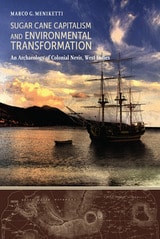
Sugar Cane Capitalism and Environmental Transformation
An Archaeology of Colonial Nevis, West IndiesMarco G. Meniketti
University of Alabama Press, 2015
In this deeply researched and multifaceted study, Marco G. Meniketti demonstrates how the landscape of the small Caribbean island of Nevis preserves and reveals artifacts and evidence of the highly complex and interrelated seventeenth- to nineteenth-century “Atlantic Economy,” comprising early capitalist sugar production, the African slave trade, and European settlement.
Sugar Cane Capitalism and Environmental Transformation is based on twelve seasons of meticulous archaeological field work and documentary research. Although Nevis was once a bustling hub of the British colonial project, the emigration of emancipated slaves and abandonment by European planters left large swathes of Nevis vacant. Reclaimed by forests and undisturbed by later waves of economic development, the island—dotted with fascinating ruins, debris from the sugar industry, windmills, chimneys, and multistoried great house—provided Meniketti with an ideal subject for archaeological inquiry.
Through intensive archaeological and landscape surveys of multiple key plantation sites, Meniketti traces the development of Nevis from its initial European settlement in 1627 to its central role as a British mercantile hub and a laboratory and prototype of capitalist sugar cultivation. His nuanced analysis explains the backdrop of European political and economic rivalries, of which the colonial agro-industrial enterprises were the physical manifestations, and makes telling comparisons with Dutch and French archaeological sites. The work also compares and contrasts the adoption of capitalist modes of sugar production and socialization at wealthy and middling plantation sites.
Supported with a wealth of photos, tables, and maps, Sugar Cane Capitalism and Environmental Transformation offers a vital case study of one island whose environment and archaeological record illuminates the complex webs of Atlantic history.

Sugarcane and Rum
The Bittersweet History of Labor and Life on the Yucatán PeninsulaJohn R. Gust and Jennifer P. Mathews
University of Arizona Press, 2020
While the Yucatán Peninsula of Mexico may conjure up images of vacation getaways and cocktails by the sea, these easy stereotypes hide a story filled with sweat and toil. The story of sugarcane and rum production in the Caribbean has been told many times. But few know the bittersweet story of sugar and rum in the jungles of the Yucatán Peninsula during the nineteenth century. This is much more than a history of coveted commodities. The unique story that unfolds in John R. Gust and Jennifer P. Mathews’s new history Sugarcane and Rum is told through the lens of Maya laborers who worked under brutal conditions on small haciendas to harvest sugarcane and produce rum.
Gust and Mathews weave together ethnographic interviews and historical archives with archaeological evidence to bring the daily lives of Maya workers into focus. They lived in a cycle of debt, forced to buy all of their supplies from the company store and take loans from the hacienda owners. And yet they had a certain autonomy because the owners were so dependent on their labor at harvest time. We also see how the rise of cantinas and distilled alcohol in the nineteenth century affected traditional Maya culture and that the economies of Cancún and the Mérida area are predicated on the rum-influenced local social systems of the past. Sugarcane and Rum brings this bittersweet story to the present and explains how rum continues to impact the Yucatán and the people who have lived there for millennia.
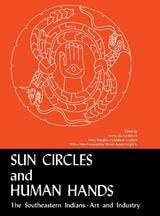
Sun Circles and Human Hands
The Southeastern Indians Art and IndustriesEdited by Emma Lila Fundaburk and Mary Douglass Fundaburk Foreman
University of Alabama Press, 2001
This classic compendium of ancient Indian artifacts from the entire southeastern United States remains an indispensable reference source for professionals and enthusiasts alike.
From utilitarian arrowheads to beautiful stone effigy pipes to ornately-carved shell disks, the photographs and drawings in Sun Circles and Human Hands present the archaeological record of the art and native crafts of the prehistoric southeastern Indians. Painstakingly compiled in the 1950s by two sisters who traveled the eastern United States interviewing archaeologists and collectors and visiting the major repositories, Sun Circles and Human Hands is remarkable for its breadth of illustration of Indian-made artifacts and its comprehensive documentation. Although research over the last 50 years has disproven many of the early theories reported in the text—which were not the editors' theories but those of the archaeologists of the day—the excellent illustrations of objects no longer available for examination have more than validated the lasting worth of this popular book.
Broadly acclaimed when it first appeared, this new printing has the added value of Knight's foreword, which places the work in its proper context. Useful to museums, state and national parks, school libraries, gift stores, archaeological agencies, and private collections, Sun Circles and Human Hands is a rich pictorial survey accessible to anyone interested in early American Indian culture.
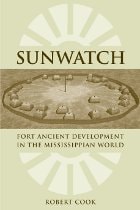
SunWatch
Fort Ancient Development in the Mississippian WorldRobert Cook
University of Alabama Press, 2007
The last prehistoric cultures to inhabit the Middle Ohio Valley (ca. A.D. 1000–1650) are referred to as Fort Ancient societies, which exhibited a wide variety of Mississippian period characteristics. What is less well-known and little understood are the social processes by which Mississippian characteristics spread to Fort Ancient communities. Through a comprehensive study of SunWatch, one of the few thoroughly excavated Fort Ancient settlements, the author focuses on the development of village social structure within a broad geographic and temporal framework, recognizing border areas as particularly dynamic contexts of social change. As a fundamental study of social patterning of Fort Ancient villages, this work reveals the interrelationships of small social units in culture change and social structure development and provides a full reconsideration of the Mississippian dimensions of Fort Ancient societies and a model for future investigations of larger patterning in the lateprehistory of the region.
Supplement to the Handbook of Middle American Indians, Volume 1
ArchaeologyVictoria Reifler Bricker, general editor; Jeremy A. Sabloff, volume editor
University of Texas Press, 1982
The sixteen-volume Handbook of Middle American Indians, completed in 1976, has been acclaimed the world over as the most valuable resource ever produced for those involved in the study of Mesoamerica. When it was determined in 1978 that the Handbook should be updated periodically, Victoria Reifler Bricker, well-known cultural anthropologist, was selected to be series editor.
This first volume of the Supplement is devoted to the dramatic changes that have taken place in the field of archaeology. The volume editor, Jeremy A. Sabloff, has gathered together detailed reports from the directors of many of the most significant archaeological projects of the mid-twentieth century in Mesoamerica, along with discussions of three topics of general interest (the rise of sedentary life, the evolution of complex culture, and the rise of cities).
Supplement to the Handbook of Middle American Indians, Volume 5
EpigraphyEdited by Victoria Reifler Bricker
University of Texas Press, 1991
In 1981, under the editorship of Victoria Bricker, UT Press began to issue supplemental volumes to the classic sixteen-volume work Handbook of Middle American Indians. These supplements are intended to update scholarship in various areas and to cover topics of current interest that may not have been included in the original Handbook.
This volume is designed to recognize the important role that epigraphy has come to play in Middle American scholarship and to document significant achievements in three areas: dynastic history, phonetic decipherment, and calendrics. The book covers four of the major pre-Columbian scripts in the region (Zapotec, Mixtec, Aztec, and Maya) and one that is relatively unknown (Tlapanec).
Surplus
The Politics of Production and the Strategies of Everyday LifeChristopher T. Morehart
University Press of Colorado, 2015
The concept of surplus captures the politics of production and also conveys the active material means by which people develop the strategies to navigate everyday life. Surplus: The Politics of Production and the Strategies of Everyday Life examines how surpluses affected ancient economies, governments, and households in civilizations across Mesoamerica, the Southwest United States, the Andes, Northern Europe, West Africa, Mesopotamia, and eastern Asia.
A hallmark of archaeological research on sociopolitical complexity, surplus is central to theories of political inequality and institutional finance. This book investigates surplus as a macro-scalar process on which states or other complex political formations depend and considers how past people—differentially positioned based on age, class, gender, ethnicity, role, and goal—produced, modified, and mobilized their social and physical worlds.
Placing the concept of surplus at the forefront of archaeological discussions on production, consumption, power, strategy, and change, this volume reaches beyond conventional ways of thinking about top-down or bottom-up models and offers a comparative framework to examine surplus, generating new questions and methodologies to elucidate the social and political economies of the past.
Contributors include Douglas J. Bolender, James A. Brown, Cathy L. Costin, Kristin De Lucia, Timothy Earle, John E. Kelly, Heather M. L. Miller, Christopher R. Moore, Christopher T. Morehart, Neil L. Norman, Ann B. Stahl, Victor D. Thompson, T. L. Thurston, and E. Christian Wells.
Surveying The Archaeology Of Northwest Mexico
Gilliam E Newell
University of Utah Press, 2003
Archaeology in the Southwest is increasingly directing its attention south of the international border as it becomes clear that a picture of the pre-hispanic Southwest is incomplete without taking the Mexican Northwest into account.
Surveying the Archaeology of Northwest Mexico presents an overview of recent work in Sonora and Chihuahua, comprising a sort of professional tour of the area. The chapters offer fresh insights into the formation of centers such as Paquimé, Cerro de Trincheras, and the Rio Sonora cabaceras. Contributors explore relations between these centers, individual internal organization of the various identifiable polities, and the relation of the whole northwest Mexican region to better-known adjacent ones. The volume underscores that northwest Mexico was not a dependent hinterland but was inhabited by many independent groups throughout prehistory.
Surviving Spanish Conquest
Indian Fight, Flight, and Cultural Transformation in Hispaniola and Puerto RicoKaren F. Anderson-Córdova
University of Alabama Press, 2017
In Surviving Spanish Conquest: Indian Fight, Flight, and Cultural Transformation in Hispaniola and Puerto Rico, Karen F. Anderson-Córdova draws on archaeological, historical, and ethnohistorical sources to elucidate the impacts of sixteenth-century Spanish conquest and colonization on indigenous peoples in the Greater Antilles. Moving beyond the conventional narratives of the quick demise of the native populations because of forced labor and the spread of Old World diseases, this book shows the complexity of the initial exchange between the Old and New Worlds and examines the myriad ways the indigenous peoples responded to Spanish colonization.
Focusing on Hispaniola and Puerto Rico, the first Caribbean islands to be conquered and colonized by the Spanish, Anderson-Córdova explains Indian sociocultural transformation within the context of two specific processes, out-migration and in-migration, highlighting how population shifts contributed to the diversification of peoples. For example, as the growing presence of “foreign” Indians from other areas of the Caribbean complicated the variety of responses by Indian groups, her investigation reveals that Indians who were subjected to slavery, or the “encomienda system,” accommodated and absorbed many Spanish customs, yet resumed their own rituals when allowed to return to their villages. Other Indians fled in response to the arrival of the Spanish.
The culmination of years of research, Surviving Spanish Conquest deftly incorporates archaeological investigations at contact sites copious use of archival materials, and anthropological assessments of the contact period in the Caribbean. Ultimately, understanding the processes of Indian-Spanish interaction in the Caribbean enhances comprehension of colonization in many other parts of the world. Anderson-Córdova concludes with a discussion regarding the resurgence of interest in the Taíno people and their culture, especially of individuals who self-identify as Taíno. This volume provides a wealth of insight to historians, anthropologists, archaeologists, and those interested in early cultures in contact.
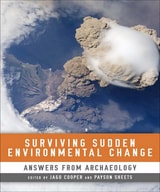
Surviving Sudden Environmental Change
Answers From ArchaeologyJago Cooper
University Press of Colorado, 2012
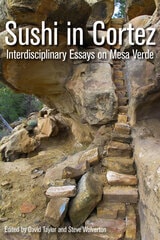
Sushi in Cortez
Interdisciplinary Essays on Mesa VerdeDavid Taylor and Steve Wolverton
University of Utah Press, 2015
The Mesa Verde region is one of the most popular tourist destinations in the world and is an area fraught with complexities, anomalies, and layers of histories. Sushi in Cortez is a collection of essays by an interdisciplinary group of academics, artists, and cultural observers that explores this diverse landscape and heritage by combining and sharing the differing perspectives provided by various disciplines. Poetry, film, environmental philosophy, nature photography, native Pueblo perspectives, and archaeology are used to touch on the common questions people ask about the value of their work and lives as well as the value of visiting ancient sites such as Mesa Verde. The authors share personal stories about the difficulties, joys, confusions, and epiphanies they experienced as they crossed the boundaries of their professional lives, coming to understand how incomplete any single rendition of place can be. Find additional images on our website www.uofupress.com.
Take a look inside the authors’ Mesa Verde experience in this short film,“Location Fracture” by Melinda Levin.
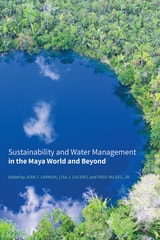
Sustainability and Water Management in the Maya World and Beyond
Jean T. Larmon
University Press of Colorado, 2021
The volume focuses primarily on the Precolumbian Maya but offers several analogous case studies outside the ancient Maya world that illustrate the pervasiveness of water’s role in sustainability, including an ethnographic study of the sustainability of small-scale, farmer-managed irrigation systems in contemporary New Mexico and the environmental consequences of Angkor’s growth into the world’s most extensive preindustrial settlement. The archaeological record offers rich data on past politics of climate change, while epigraphic and ethnographic data show how integrated the ideological, political, and environmental worlds of the Maya were.
While Sustainability and Water Management in the Maya World and Beyond stresses how lessons from the past offer invaluable insight into current approaches of adaptation, it also advances our understanding of those adaptations by making the inevitable discrepancies between past and present climate change less daunting and emphasizing the sustainable negotiations between humans and their surroundings that have been mediated by the changing climate for millennia. It will appeal to students and scholars interested in climate change, sustainability, and water management in the archaeological record.
Contributors: Mary Jane Acuña, Wendy Ashmore, Timothy Beach, Jeffrey Brewer, Christopher Carr, Adrian S. Z. Chase, Arlen F. Chase, Diane Z. Chase, Carlos R. Chiriboga, Jennifer Chmilar, Nicholas Dunning, Maurits W. Ertsen, Roland Fletcher, David Friedel, Robert Griffin, Joel D. Gunn, Armando Anaya Hernández, Christian Isendahl, David Lentz, Sheryl Luzzadder-Beach, Dan Penny, Kathryn Reese-Taylor, Michelle Rich, Cynthia Robin, Sylvia Rodríguez, William Saturno, Vernon Scarborough, Payson Sheets, Liwy Grazioso Sierra, Michael Smyth, Sander van der Leeuw, Andrew Wyatt