Results by title
3258 books match the query 'Art' and 185 start with s
Shadows, Specters, Shards
Making History in Avant-Garde FilmJeffrey Skoller
University of Minnesota Press, 2005

Shaker Vision
Seeing Beauty in Early AmericaJoseph Manca
University of Massachusetts Press, 2019
In Shaker Vision, Joseph Manca explores original texts, especially diaries and travel journals, and material culture to demonstrate that Shakers enjoyed a remarkably deep experience of the visual world. Shakers shared tastes with mainstream Americans and often employed a similar aesthetic vocabulary, but all within a belief system that made them distinct. In addition to their well-known ascetic architecture, furniture, and handicraft styles, they expressed themselves through ornate and detailed spiritual art and in vivid, visionary experiences. Based on firsthand accounts of the believers themselves, this richly illustrated volume will dramatically change how we assess the visual world of this uniquely American religious sect.

Shape of Things
A Philosophy of DesignVilém Flusser
Reaktion Books, 1999

Shapely Bodies
The Image of Porcelain in Eighteenth-Century FranceChristine A. Jones
University of Delaware Press, 2013
Shapely Bodies: The Image of Porcelain in Eighteenth-Century France constructs the first cultural history of porcelain making in France. It takes its title from two types of “bodies” treated in this study: the craft of porcelain making shaped clods of earth into a clay body to produce high-end commodities and the French elite shaped human bodies into social subjects with the help of makeup, stylish patterns, and accessories. These practices crossed paths in the work of artisans, whose luxury objects reflected and also influenced the curves of fashion in the eighteenth century.
French artisans began trials to reproduce fine Chinese porcelain in the 1660s. The challenge proved impossible until they found an essential ingredient, kaolin, in French soil in the 1760s. Shapely Bodies differs from other studies of French porcelain in that it does not begin in the 1760s at the Sèvres manufactory when it became technically possible to produce fine porcelain in France, but instead ends there. Without the secret of Chinese porcelain, artisans in France turned to radical forms of experimentation. Over the first half of the eighteenth century, they invented artificial alternatives to Chinese porcelain, decorated them with French style, and, with equal determination, shaped an identity for their new trade that distanced it from traditional guild-crafts and aligned it with scientific invention. The back story of porcelain making before kaolin provides a fascinating glimpse into the world of artisanal innovation and cultural mythmaking.
To write artificial porcelain into a history of “real” porcelain dominated by China, Japan, and Meissen in Saxony, French porcelainiers learned to describe their new commodity in language that tapped into national pride and the mythic power of French savoir faire. Artificial porcelain cut such a fashionable image that by the mid-eighteenth century, Louis XV appropriated it for the glory of the crown. When the monarchy ended, revolutionaries reclaimed French porcelain, the fruit of a century of artisanal labor, for the Republic. Tracking how the porcelain arts were depicted in documents and visual arts during one hundred years of experimentation, Shapely Bodies reveals the politics behind the making of French porcelain’s image.
Published by University of Delaware Press. Distributed worldwide by Rutgers University Press.
Shaping Global Cultures through Screenwriting
Women Who Write Our WorldsEdited by Rose Ferrell and Rosanne Welch
Intellect Books, 2025
Shaping Global Culture through Screenwriting is a powerful testament to the undeniable impact of an international collection of female screenwriters. Spanning film, television, virtual reality, games, and digital media, these case studies showcase instances when women filmmakers used screenwriting to challenge injustice and give voice to communities around the world.
Divided into sections that seek to overcome global disparities in wealth and power, the book views screenwriting as activism, shifting attitudes, and altering lived experiences. Whether about gender and race or war and colonization, each chapter exposes the deep connections between storytelling and social change. More than just a study of the craft, this book is a celebration of the women writers who use their artistic lens to educate and empower others. Geared toward readers interested in screenwriting, media studies, sociology, women’s studies, and a wide range of humanities subjects, including history and population studies, Shaping Global Culture through Screenwriting brings long-overdue attention to the vital role women take in shaping the global cultural landscape.
Shaping Roman Landscape
Ecocritical Approaches to Architecture and Wall Painting in Early Imperial ItalyMantha Zarmakoupi
J. Paul Getty Trust, The, 0
Landscape emerged as a significant theme in the Roman Late Republican and Early Imperial periods. Writers described landscape in texts and treatises, its qualities were praised and sought out in everyday life, and contemporary perceptions of the natural and built environment, as well as ideas about nature and art, were intertwined with architectural and decorative trends.
This illustrated volume examines how representations of real and depicted landscapes, and the merging of both in visual space, contributed to the creation of novel languages of art and architecture. Drawing on a diverse body of archaeological, art historical, and literary evidence, this study applies an ecocritical lens that moves beyond the limits of traditional iconography. Chapters consider, for example, how garden designs and paintings appropriated the cultures and ecosystems brought under Roman control and the ways miniature landscape paintings chronicled the transformation of the Italian shoreline with colonnaded villas, pointing to the changing relationship of humans with nature. Making a timely and original contribution to current discourses on ecology and art and architectural history, Shaping Roman Landscape reveals how Roman ideas of landscape, and the decorative strategies at imperial domus and villa complexes that gave these ideas shape, were richly embedded with meanings of nature, culture, and labor.

Shaping the Netherlandish Canon
Karel Van Mander's Schilder-BoeckWalter S. Melion
University of Chicago Press, 1992
of Italian art, Karel van Mander's Schilder-Boeck (or
Book on Picturing) has long been recognized for its critical
and historical influence—and yet, until now, no
comprehensive account of the book's conception, aims, and
impact has been available. In this in-depth analysis of the
content and context of Van Mander's work, Walter S. Melion
reveals the Schilder-Boeck's central importance to an
understanding of northern Renaissance and Baroque art.
By interpreting the terminology employed in the
Schilder-Boeck, Melion establishes the text's
relationship to past and contemporary art theory. Van Mander
is seen here developing his critical categories and then
applying them to Ancient, Italian, and Netherlandish artists
in order to mark changes within a culture and to characterize
excellence for each region. Thus Melion demonstrates how Van
Mander revised both the structure and critical language of
Vasari's Lives to refute the Italian's claims for the
superiority of the Tuscan style, and to clarify northern
artistic traditions and the concerns of Netherlandish
artists. A much needed corrective to the view that Dutch art
of the period was lacking in theory, Melion's work offers a
compelling account of a sixteenth- and seventeenth-century
theoretical and critical perspective and shows how this
perspective suggests a rereading of northern art.
Walter S. Melion is assistant professor of art history
at The Johns Hopkins University.
Sheer Presence
The Veil in Manet’s ParisMarni Reva Kessler
University of Minnesota Press, 2006

Sherwood Anderson and Other Famous Creoles
A Gallery of Contemporary New OrleansDrawings by William Spratling<br>Text by William Faulkner
University of Texas Press, 1966
"When Bill Faulkner came to New Orleans he was a skinny little guy, three years older than I, and was not taken very seriously except by a few of us." Thus the late William Spratling, popularly known as the Taxco "Silver King," recalled the mid-1920's, when Faulkner, a young man fresh from Oxford, Mississippi, roomed with Spratling in Pirates Alley.
"By the time I would be up, say at seven, Bill would already be out on the little balcony over the garden tapping away on his portable, an invariable glass of alcohol-and-water at hand."
A result of their friendship was a book depicting "various people who were then engaged … with the arts in New Orleans." It was based on firsthand observation.
"There were casual parties with wonderful conversation and with plenty of grand, or later to be grand, people." Some of the names, in addition to Sherwood Anderson, were Horace Liveright, Carl Van Doren, Carl Sandberg, John Dos Passos, Anita Loos, and Oliver La Farge.
Spratling supplied sharp caricatures of the people and Faulkner contributed succinct captions and a Foreword. It was all "sort of a private joke," but the four hundred copies were sold within a week and the original edition is now a collector's item. This book is a charming reminder of exciting days and talented people.

Shifting Memories
The Nazi Past in the New GermanyKlaus Neumann
University of Michigan Press, 2000
The case studies address, for example, the legacy of the so-called Celler Hasenjagd (the hunting down of concentration camp prisoners who survived an Allied air raid in April 1945 in a town in Lower Saxony); efforts by the City of Hildesheim to memorialize the Kristallnacht pogrom; attempts by Italian, Jewish, and Sinti survivors to commemorate their suffering in two West German towns; the posthumous reputation of a German communist imprisoned in Buchenwald and credited with having saved the lives of 159 Jewish children; and the public memories of the Ravensbrück and Buchenwald concentration camps in East Germany.
Directed at an audience curious about contemporary Germany, this book will appeal to those interested in issues of public and social memory, and in the legacy of Auschwitz.
Klaus Neumann is a historian who has taught in universities in Germany and Australia and written about social memories in the Pacific Islands, Australia, and Germany. Previous books include Not the Way It Really Was and Rabaul Yu Swit Moa Yet. He lives in Richmond, Australia.
Shine
The Visual Economy of Light in African Diasporic Aesthetic PracticeKrista Thompson
Duke University Press, 2015

Shooting Cowboys and Indians
Silent Western Films, American Culture, and the Birth of HollywoodAndrew Brodie Smith
University Press of Colorado, 2003
Tracing the western from its hazy silent-picture origins in the 1890s to the advent of talking pictures in the 1920s, Smith examines the ways in which silent westerns contributed to the overall development of the film industry.
Focusing on such early important production companies as Selig Polyscope, New York Motion Picture, and Essanay, Smith revises current thinking about the birth of Hollywood and the establishment of Los Angeles as the nexus of filmmaking in the United States. Smith also reveals the role silent westerns played in the creation of the white male screen hero that dominated American popular culture in the twentieth century.
Illustrated with dozens of historic photos and movie stills, this engaging and substantive story will appeal to scholars interested in Western history, film history, and film studies as well as general readers hoping to learn more about this little-known chapter in popular filmmaking.
Shooting Women
Behind the Camera, Around the WorldHarriet Margolis, Alexis Krasilovsky and Julia Stein
Intellect Books, 2015

Shopping
Material Culture PerspectivesDeborah C. Andrews
University of Delaware Press, 2015
Published by University of Delaware Press. Distributed worldwide by Rutgers University Press.

Showing Out
Fashion in HarlemPeter "Souleo" Wright
Rutgers University Press, 2027
Showing Out: Fashion in Harlem explores the unprecedented and enduring impact of the Harlem Institute of Fashion (HIF) on American culture and style. Founded in 1966 by Lois K. Alexander-Lane, HIF produced legendary fashion shows for the annual HARLEM WEEK festival. With their eye-catching costumes, dramatic runway presentations, and embrace of the local community, the shows became one of HIF’s most popular and successful initiatives, spotlighting the underrepresented talents of Black fashion designers, models, and administrators. Tracing HIF’s legacy within the larger narrative of fashion history, Showing Out uses fashion shows as a portal, showcasing previously unpublished archival photos; first-hand accounts from HIF alumni, and contemporary collectives that continue to celebrate the Black contribution to fashion. In the wake of Black Lives Matter, anti-DEI policies, and ongoing political and racial turmoil, Showing Out is the much-needed voice of inspiration to reshape the narrative around fashion.
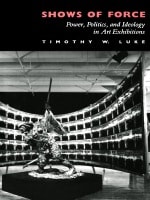
Shows of Force
Power, Politics, and Ideology in Art ExhibitionsTimothy W. Luke
Duke University Press, 1992
The first section, “Envisioning a Past, Imagining the West,” looks at art exhibitions devoted to artworks about or from the American West. Luke shows how these exhibitions—displaying nineteenth- and early-twentieth century works by artists such as George Caleb Bingham, Frederic Remington, Frederic Edwin Church, and Georgia O’Keefe—express contemporary political agendas in the way the portray “the past” and shape new visions of “the West.”
In “Developing the Present, Defining a World,” Luke considers artists from the post-1945 era, including Ilya Kabokov, Hans Haacke, Sue Coe, Roger Brown, and Robert Longo. Recent art exhibits, his analysis reveals, attempt to develop politically charged conceptions of the present, which in turn struggle to define the changing contemporary world and art’s various roles within it.
Luke brings to light the contradictions encoded in the exhibition of art and, in doing so, illuminates the political realities and cultural ideologies of the present. Shows of Force offers a timely and surely controversial contribution to current discussions of the politics of exhibiting art.
Signs and Images
Writings on Art, Cinema and PhotographyRoland Barthes
Seagull Books, 2016
Roland Barthes was a restless, protean thinker. A constant innovator—often as a daring smuggler of ideas from one discipline to another—he first gained an audience with his pithy essays on mass culture and then went on to produce some of the most suggestive and stimulating cultural criticism of the late twentieth century, including Empire of Signs, The Pleasure of the Text, and Camera Lucida. In 1976, this one-time structuralist outsider was elected to a chair at France’s preeminent Collège de France, where he chose to style himself as a professor of literary semiology until his death in 1980.
The greater part of Barthes’s published writings has been available to a French audience since 2002, but now, translator Chris Turner presents a collection of essays, interviews, prefaces, book reviews, and other journalistic material for the first time in English and divided into five themed volumes. Volume four, Signs and Images, gathers pieces related to his central concerns—semiotics, visual culture, art, cinema, and photography—and features essays on Marthe Arnould, Lucien Clergue, Daniel Boudinet, Richard Avedon, Bernard Faucon, and many more.
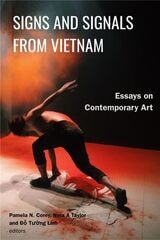
Signs and Signals from Vietnam
Essays on Contemporary ArtEdited by Pamela N. Corey, Nora A. Taylor, and Do Tuong Linh
National University of Singapore Press, 2026
The first English-language volume on Vietnamese contemporary art.
Contemporary art in Vietnam is a dynamic field shaped by memory, history, and experimentation. Over the last thirty years, Vietnamese artists have come to command international recognition, even as a growing domestic market for contemporary art fosters alternative infrastructures of collection and exhibition. Signs and Signals from Vietnam brings together artists, curators, and academics to examine artistic practice and contemporary art histories in Vietnam today.
Moving beyond familiar North-South or diasporic-national divides, the essays represent the perspectives of Vietnamese, Vietnamese diasporic, and non-Vietnamese writers of different generations, affiliations, and positionalities. Contributors trace the inventive ways artists work with language, narrative, performance, and archival practice to communicate through their art. Key themes running through the volume represent the predominant concerns of Vietnamese artists over the past three decades, including the enduring impact of socialist paradigms in contemporary art, gender, diaspora, memory, and the environment. Together, these essays demonstrate how contemporary art can convey lesser-known histories, contested narratives, and personal perspectives.

Simulacra and Simulation
Jean Baudrillard
University of Michigan Press, 1994

Single Lives
Modern Women in Literature, Culture, and FilmKatherine Fama
Rutgers University Press, 2022
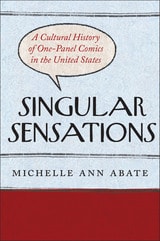
Singular Sensations
A Cultural History of One-Panel Comics in the United StatesMichelle Ann Abate
Rutgers University Press, 2024
Shortlisted for the 2024 Eisner Award for Best Academic/Scholarly Book
What do The Family Circus, Ziggy, and The Far Side have in common? They are all single-panel comics, a seemingly simple form that cartoonists have used in vastly different ways.
Singular Sensations is the first book-length critical study to examine this important but long-neglected mode of cartoon art. Michelle Ann Abate provides an overview of how the American single-panel comic evolved, starting with Thomas Nast’s political cartoons and R.F. Outcault’s groundbreaking Yellow Kid series in the nineteenth century. In subsequent chapters, she explores everything from wry New Yorker cartoons to zany twenty-first-century comics like Bizarro. Offering an important corrective to the canonical definition of comics as “sequential art,” Abate reveals the complexity, artistry, and influence of the single-panel art form.
Engaging with a wide range of historical time periods, sociopolitical subjects, and aesthetic styles, Singular Sensations demonstrates how comics as we know and love them would not be the same without single-panel titles. Abate’s book brings the single-panel comic out of the margins and into the foreground.
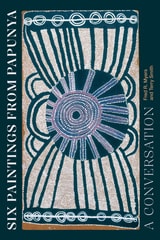
Six Paintings from Papunya
A ConversationFred R. Myers and Terry Smith
Duke University Press, 2024
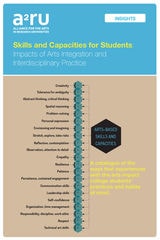
Skills and Capacities for Students
Impacts of Arts Integration and Interdisciplinary PracticeGabriel Harp
A2RU Intervals, 2020

Slavery and the Invention of Dutch Art
Caroline Fowler
Duke University Press, 2025
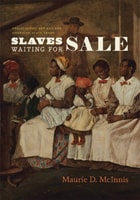
Slaves Waiting for Sale
Abolitionist Art and the American Slave TradeMaurie D. McInnis
University of Chicago Press, 2011
In 1853, Eyre Crowe, a young British artist, visited a slave auction in Richmond, Virginia. Harrowed by what he witnessed, he captured the scene in sketches that he would later develop into a series of illustrations and paintings, including the culminating painting, Slaves Waiting for Sale, Richmond, Virginia.

Sleep with Spectators
Feminist Performance and PracticeDanielle Drees
University of Minnesota Press, 2026
A rejuvenating look at sleep’s integral role in feminist practice, critique, and imagination
Inequality is notoriously exhausting to confront, but through theater, performance art, and theory, feminist artists and thinkers have explored a radical counter to this exhaustion: sleep. Centering creative work on this restorative practice, Sleep with Spectators is a refreshing and visionary counterhistory of feminism that offers sleep as a tool for imagining new ways of living—ones that prioritize not only rest but also care and interdependence.
Taking performance as a unique means of perceiving private and unconscious aspects of daily life, Danielle Drees draws from opera, plays, and avant-garde theater to find instances of sleep and sleeplessness as novel embodiments of core feminist concerns. Among her subjects are Sarah Kane’s free verse text 4.48 Psychosis; María Irene Fornés’s queer drama of racial–sexual transformation, Enter THE NIGHT; and Regina José Galindo’s America’s Family Prison, in which Galindo, her partner, and their baby spent twenty-four hours in a “family-sized” cell rented from a private prison outfitter. Adeptly engaging this fascinating collection of international archival material through the lenses of Marxist feminism, trans and queer studies, and disability studies, Sleep with Spectators illuminates how sleep performances reveal and critique inequalities rooted in gender, sexuality, race, class, and disability.
Idiosyncratic and interdisciplinary, Sleep with Spectators charts an original path through the feminist performance archive, presenting new ways of indexing injustice and interrogating the political conditions of rest.
Retail e-book files for this title are screen-reader friendly.
Sleeping Beauty
A One-Artist DictionaryJohn Sparagana and Mieke Bal
University of Chicago Press, 2008
Bal contributes twenty-six essays, one for each letter of the alphabet, which borrow their organizing principle from the dictionary but reach far beyond the utilitarian purpose of a reference volume. Each one enters deeply into Sparagana’s work, illuminating concepts from Abstract to Zestful that inform, underlie, and lend meaning to the exquisitely ruined images he creates by crinkling glossy images from fashion magazines until their sheen disappears and they become soft and elastic. Unmooring the magazine page from its familiar context, these beautiful rags are rendered poetic by Sparagana’s unique art of subtraction, which physically rubs away not only ink and material, but also transience and commercial usefulness.
Just as Sparagana’s work intervenes in existing images, so, too, do Bal’s explorations qualify existing concepts. But together, in this inaugural volume in the new series Project Tango: Artists and Writers Together, they have given rise to something wholly new: a prophetic one-artist dictionary that simultaneously reenvisions the untapped interactions of images with words and the potential forms of the book itself.

Smoothing the Jew
"Abie the Agent" and Ethnic Caricature in the Progressive EraJeffrey A. Marx
Rutgers University Press, 2024
Smoothing the Jew investigates how Jewish artists of the time attempted to “smooth over” these demeaning portrayals by focusing on the first Jewish comic strip published in English, Harry Hershfield’s Abie the Agent. Jeffrey Marx demonstrates how Hershfield created a Jewish protagonist who in part reassured nativists of the Jews’ ability to assimilate into American society while also encouraging immigrants and their children that, over time, they would be able to adopt American customs without losing their distinctly Jewish identity.

Snow Fleas and Chickadees
Everyday Observations in the SierraEve Quesnel
University of Nevada Press, 2025
Quesnel embraces the notion that to simply walk in one’s neighborhood is to familiarize oneself with the local flora and fauna, drawing attention to everyday things too often neglected. She argues that we can be complacent with what surrounds us, but with careful observation and research, we become acutely aware—and in awe of—nature’s everyday activities. The black bear’s hibernation techniques and mountain chickadee’s caching methods reveal just two of nature’s wily ways. Quesnel chases other curiosities as well, asking, “How does a spider create an orb web?” or, “How does a boulder the size of a small car end up alone in the woods?” In the introduction, she writes, “It is this ‘un-peeling’ of layers in nature that opens up our world.”
For anyone interested in nature writing, whether an armchair explorer, outdoor enthusiast, or science aficionado, Snow Fleas and Chickadees provides an entertaining and engaging discovery of the picturesque Sierra Nevada.
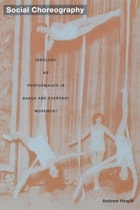
Social Choreography
Ideology as Performance in Dance and Everyday MovementAndrew Hewitt
Duke University Press, 2005
Hewitt focuses on the period between the mid-nineteenth century and the early twentieth and considers dancers and social theorists in Germany, Britain, France, and the United States. Analyzing the arguments of writers including Friedrich Schiller, Theodor Adorno, Hans Brandenburg, Ernst Bloch, and Siegfried Kracauer, he reveals in their thinking about the movement of bodies a shift from an understanding of play as the condition of human freedom to one prioritizing labor as either the realization or alienation of embodied human potential. Whether considering understandings of the Charleston, Isadora Duncan, Nijinsky, or the famous British chorus line the Tiller Girls, Hewitt foregrounds gender as he uses dance and everyday movement to rethink the relationship of aesthetics and social order.

Social Fabric
Art and Activism in Contemporary BrazilEdited by Maria Emilia Fernandez, Adele Nelson, and MacKenzie Stevens
University of Texas Press, 2023
Social Fabric: Art and Activism in Contemporary Brazil brings together the work of ten artists who reflect upon the long-standing histories of oppressive power structures in the territory now known as Brazil. Blurring the line between art and activism and spanning installation, painting, performance, photography, sculpture, and video, these artists contribute to local and global conversations about the state of democracy, racial injustice, and the violence inflicted by the nation-state. This first English-language, book-length study of contemporary Brazilian art in relationship to activism assembles artist-authored texts, interviews, essays, and a conceptual mapping of Brazilian history to illuminate the function of art as a platform for critical engagement with the historical, political, and cultural configurations of a particular place. By refusing to remain neutral, these artists create spaces of vibrant and vital community and self-construction to explore how healing and justice may be possible, especially in the Black, LGBTQIA+, and Indigenous communities to which many of them belong.

Social Formation and Symbolic Landscape
Denis E. Cosgrove
University of Wisconsin Press, 1998
Hailed as a landmark in its field since its first publication in 1984, Denis E. Cosgrove’s Social Formation and Symbolic Landscape has been influential well beyond geography. It has continued to spark lively debate among historians, geographers, art historians, social theorists, landscape architects, and others interested in the social and cultural politics of landscape.

Socialist Realism without Shores
Thomas Lahusen and Evgeny Dobrenko, eds.
Duke University Press, 1997
The contributors here argue that socialist realism has never been a monolithic art form. Essays demonstrate, among other things, that its literature could accommodate psychoanalytic criticism; that its art and architecture could affect the aesthetic dictates of Moscow that made "Soviet" art paradoxically heterogeneous; and that its aesthetics could accommodate both high art and crafted kitsch. Socialist Realism without Shores also addresses the critical discourse provoked by socialist realism—Stalinist aesthetics, "anthropological" readings; ideology critique and censorship; and the sublimely ironic approaches adapted from sots art, the Soviet version of postmodernism.
Contributors. Antoine Baudin, Svetlana Boym, Greg Castillo, Katerina Clark, Evgeny Dobrenko, Boris Groys, Hans Günther, Julia Hell, Leonid Heller, Mikhail Iampolski, Thomas Lahusen, Régine Robin, Yuri Slezkine, Lily Wiatrowski Phillips, Xudong Zhang, Sergei Zimovets
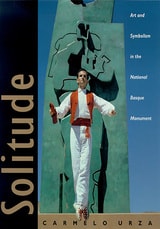
Solitude
Art And Symbolism In The National Basque MonumentCarmelo Urza
University of Nevada Press, 1993
Urza discusses the genesis of the National Basque Monument to the Basque Sheepherder that is located in Reno, Nevada. He also describes the competition held to determine the monument's design and the debates arising from the modern sculpture created by renowned Basque artist Nestor Basterrextea. Urza examines the arguments of those who favored the selection of a figurative, traditional symbol and those who preferred a modern, forward-looking symbol. He utilizes this discussion to explore the evolution of Basque ethnicity and its relationship to society.
Some Things Don’t Burn
Art, Activism, and Arson at the Bugle AmericanAurore Sibley
Wisconsin Historical Society Press, 2026
A fierce, vibrant portrait of a newspaper that refused to go up in smoke.
From 1970 to 1978, the Bugle American wasn’t just an alternative newspaper―it was the sparkplug that propelled Milwaukee’s emergence as an influential cultural hub. With its incisive political coverage, razor-sharp cartoons, and in-depth reporting on the city’s explosive music scene, the Bugle American was a lifeline for artists, activists, and readers from Milwaukee to Madison hungry for independent journalism.
Then, on a cold night in February 1975, everything nearly ended. A firebomb ripped through the Bugle American offices, endangering the lives of staff and burning the building to the ground. The crime was never solved. But the paper didn’t die. Supported by a stunned but determined community―and high-profile allies including Leonard Cohen and George Reedy―the Bugle American rose from the ashes to publish the very next week.
In Some Things Don’t Burn: Art, Activism, and Arson at the Bugle American, author Aurore Sibley tells the full story of this influential underground paper: its founding ideals, its creative energy, its brushes with fame, and its lasting impact. With access to rare materials and family insights―her parents met at the Bugle American, and her father served as one of its editors―Sibley layers investigative research with personal narrative, exploring how revisiting the past helped her reconcile with her father’s complicated life and death.
Featuring dozens of photographs and illustrations, including cartoons and sketches by renowned underground artist and Bugle American co-founder Denis Kitchen, this book brings readers inside the quirky, passionate, and often chaotic world of a newsroom fighting to stay alive and independent.
A gripping story of art, activism, community, and resilience, Some Things Don’t Burn reminds us that while buildings can be destroyed, the ideals that ignite a movement are much harder to extinguish.

Something All Our Own
The Grant Hill Collection of African American ArtGrant Hill
Duke University Press, 2003
The forty-six pieces documented here include thirteen works that span the career of the great Romare Bearden, from his 1941 gouache painting Serenade to the important collages of the 1980s. Hill’s fascination with artists’ depiction of women is represented in Elizabeth Catlett’s lithographs, many of them from the 1992 series “For My People,” and her sculptures in stone, bronze, and onyx. In addition to these two giants of twentieth-century art, the Hill Collection features pieces by Phoebe Beasley, Arthello Beck Jr., John Biggers, Malcolm Brown, John Coleman, Edward Jackson, and Hughie Lee Smith.
Hill began collecting art in the early 1990s after learning from his parents to appreciate artworks not only as objects of beauty but as expressions of heritage and culture. According to the internationally known curator Alvia J. Wardlaw, he is part of an emerging group of young African American collectors who have “raised the bar for others.” Hill writes, “Getting to know yourself means understanding your background and appreciating those who have come before you. My father has a saying he uses in speeches: ‘To be ignorant of your past is to remain a boy. ‘The interest in my heritage as an African American is reflected in this collection.”
Something All Our Own features Wardlaw’s essay on the history of African American collecting. It also features articles about Bearden and Catlett by the scholars Elizabeth Alexander and Beverly Guy-Sheftall and reflections about Hill by the historian John Hope Franklin, Duke’s basketball coach Mike Krzyzewski, and the sportswriter William C. Rhoden. Hill and his father, the NFL great Calvin Hill, contribute a dialogue that explores their motivations for collecting art.
At the heart of the book are the exquisite color photographs of the forty-six artworks included in the exhibition, with commentary by Wardlaw and by Hill himself.
As a star athlete, Grant Hill is well aware that African Americans who excel in sports and entertainment are more broadly recognized than their counterparts in artistic fields. He strives to inspire young people to explore their heritage and broaden their concept of excellence by learning more about African American art. By sharing his artworks with collectors and fans, Hill reminds us that while the jump shot is ephemeral, art is enduring.

Sonic Flux
Sound, Art, and MetaphysicsChristoph Cox
University of Chicago Press, 2018
Through the philosophical analysis of works by John Cage, Maryanne Amacher, Max Neuhaus, Christian Marclay, and many others, Sonic Flux contributes to the development of a materialist metaphysics and poses a challenge to the prevailing positions in cultural theory, proposing a realist and materialist aesthetics able to account not only for sonic art but for artistic production in general.
Sons And Daughters Of Los
Culture And Community In L.A.David James
Temple University Press, 2003

Sophie Taeuber-Arp and the Avant-Garde
A BiographyRoswitha Mair
University of Chicago Press, 2018
Now Roswitha Mair has brought us the first biography of this unique polymath, illuminating not just Tauber-Arp’s own life and work, but also the various milieux and movements in which she traveled. No fan of the Dadaists and their legacy will want to miss this first English-language translation.
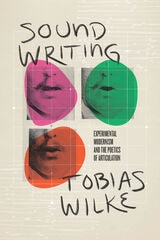
Sound Writing
Experimental Modernism and the Poetics of ArticulationTobias Wilke
University of Chicago Press, 2022
Avant-garde writers and artists of the twentieth century radically reconceived poetic language, appropriating scientific theories and techniques as they turned their attention to the physical process of spoken language. This modernist “sound writing” focused on the bodily production of speech, which it rendered in poetic, legible, graphic form.
Modernist sound writing aims to capture the acoustic phenomenon of vocal articulation by graphic means. Tobias Wilke considers sound writing from its inception in nineteenth-century disciplines like physiology and experimental phonetics, following its role in the aesthetic practices of the interwar avant-garde and through to its reemergence in the postwar period. These projects work with the possibility of crossing over from the audible to the visible, from speech to notation, from body to trace. Employing various techniques and concepts, this search for new possibilities played a central role in the transformation of poetry into a site of radical linguistic experimentation. Considering the works of writers and artists—including Raoul Hausmann, Kurt Schwitters, Viktor Shklovsky, Hugo Ball, Charles Olson, and Marshall McLuhan—Wilke offers a fresh look at the history of the twentieth-century avant-garde.

Source
Notes in the History of Art, volume 40 number 3 (Spring 2021)The University of Chicago Press
University of Chicago Press Journals, 2021
Source
Notes in the History of Art, volume 40 number 4 (Summer 2021)The University of Chicago Press
University of Chicago Press Journals, 2021
Source
Notes in the History of Art, volume 41 number 1 (Fall 2021)The University of Chicago Press
University of Chicago Press Journals, 2021
Source
Notes in the History of Art, volume 41 number 2 (Winter 2022)The University of Chicago Press
University of Chicago Press Journals, 2022
Source
Notes in the History of Art, volume 41 number 3 (Spring 2022)The University of Chicago Press
University of Chicago Press Journals, 2022
Source
Notes in the History of Art, volume 41 number 4 (Summer 2022)The University of Chicago Press
University of Chicago Press Journals, 2022
Source
Notes in the History of Art, volume 42 number 1 (Fall 2022)The University of Chicago Press
University of Chicago Press Journals, 2022
Source
Notes in the History of Art, volume 42 number 2 (Winter 2023)The University of Chicago Press
University of Chicago Press Journals, 2023
Source
Notes in the History of Art, volume 42 number 4 (Summer 2023)The University of Chicago Press
University of Chicago Press Journals, 2023
Source
Notes in the History of Art, volume 43 number 1 (Fall 2023)The University of Chicago Press
University of Chicago Press Journals, 2023