Results by title
28164 books match the query 'History' and 1838 start with s

Safety Net
Welfare and Social Security, 1929-1979Coll, Blanche D
Rutgers University Press, 1995
Beginning with the stock market crash of 1929, Blanche Coll documents the evolution of the federal and state government policymaking for welfare and Social Security, our "safety net." As Coll points out, the policies that determine who is "entitled" to aid, how standard dollar amounts are set, child support responsibilities, the equitable fiscal division between state, federal, and local governments, and the resulting impact on the poorÐÐparticularly women and children of all racesÐÐhave fluctuated throughout the history of welfare.
Coll shows how demographic patterns, the definition of a family, the relative health of the economy, and Presidents' political agendas all deeply affect the system of entitlements to Social Security and welfare, the kernal of the American welfare state.
Safety Net is the only comprehensive history of modern welfare in the United States. Clearly written and unpolemical, it is based on a wealth of primary sources, interviews with key policymakers, and the authoritative analysis of a trained historian who served as a research administrator in the federal government through Democractic and Republican administrations. Saftey Net will be indispensable reading for everyone concerned with contemporary debates about welfare and Social Security.

Sagebrush Collaboration
How Harney County Defeated the Takeover of the Malheur Wildlife RefugePeter Walker
Oregon State University Press, 2018
Every American is co-owner of the most magnificent estate in the world—federal public forests, grazing lands, monuments, national parks, wildlife refuges, and other public places. The writer Wallace Stegner famously referred to public lands as “America’s best idea,” but there have always been some who oppose the idea for ideological reasons, or because they have a vested economic interest. In the current decade, federal public lands have been under physical threat as never before, with armed standoffs and takeovers that the US government has proved stunningly unsuccessful at prosecuting in federal courts.
One such incident was the takeover of the Malheur National Wildlife Refuge in Harney County, Oregon, in 2016. Armed militants seized the headquarters of the refuge for forty-one days and occupied the community for three months. Militants threatened and harassed local residents, pledging to “give back” the land to unnamed “rightful owners” in their effort to enact a fringe interpretation of the US Constitution.
Drawing on more than two years of intensive fieldwork, Sagebrush Collaboration shows that the militants failed in their objectives because the sensible and hardworking citizens of Harney County had invested decades in collaboratively solving the very problems that the militia used to justify their anti–federal government revolution.
In Sagebrush Collaboration, Peter Walker offers the first book-length study of why the 2016 takeover of the Malheur National Wildlife Refuge failed. His nuanced and deeply researched account provides the full context for the takeover, including the response from local and federal officials and the grassroots community resistance. It will be essential reading for years to come for anyone who wants to understand the ongoing battle over the future of America’s public lands.

Sagebrush Trilogy
Dwayne Kling
University of Nevada Press, 1990
A comprehensive treatise on the life and works of Idah Meacham Strobridge, an American writer and bookbinder known primarily for a trio of works about the Great Basin.
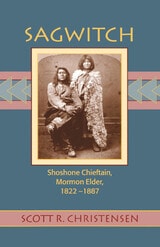
Sagwitch
Shoshone Chieftan, Mormon Elder 1822-1887Scott Christensen
Utah State University Press, 1999
The Northwestern Shoshone knew as home the northern Great Salt Lake, Bear River, Cache, and Bear Lake valleys of northern Utah. Sagwitch was born at a time when his people traded with the mountain men. In the late 1850s, wagons brought Mormon farmers to settle in Cache Valley, the Northwestern Shoshone heartland. Emigrants and settlers reduced Shoshone access to traditional village sites and food resources. Relationships with the Mormons were mostly good but often strained, and the Shoshone treatment of migrants, who now traveled north and south as well as west and east through the area, was increasingly opportunistic. It only took a few violent incidents for a zealous army colonel to seek severe punishment of the Northwestern Shoshone on a winter morning in 1863. The Bear River Massacre was among the bloodiest engagements of America's Indian wars. Hundreds of Shoshone, including Sagwitch's wife and two sons, died; Sagwitch was wounded but escaped. The band was shattered, other chiefs dead.
The following years were very hard for the survivors. The federal government negotiated a treaty with them but failed to get Sagwitch's signature when, en route to the sessions, he was arrested and then wounded by a white assassin. With the world around him changed, Sagwitch sought accommodation with the most immediate threat to his people's traditional way of survival—the Mormons occupying the Shoshone's valleys.
This, then, is also the story of the conversion of Sagwitch and his band to the Mormon Church. Though not without problems, that conversion was long lasting and thorough. Sagwitch and other Shoshone would demonstrate in important ways their new religious devotion. With the assistance of Mormon leaders, they established the Washakie community in northern Utah. Though efforts to secure a land base had an uneven history, they partly succeeded, and the story of these Shoshone's attempts at rural farming diverged significantly from what happened on government reservations. When Sagwitch died, his death went almost unnoticed outside of Washakie, but his children and grandchildren continued to be important voices among a people who, after experiencing near annihilation, survived in the new world into which Sagwitch led them.
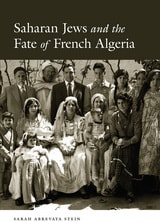
Saharan Jews and the Fate of French Algeria
Sarah Abrevaya Stein
University of Chicago Press, 2014
Drawing on materials from thirty archives across six countries, Stein tells the story of colonial imposition on a desert community that had lived and traveled in the Sahara for centuries. She paints an intriguing historical picture—of an ancient community, trans-Saharan commerce, desert labor camps during World War II, anthropologist spies, battles over oil, and the struggle for Algerian sovereignty. Writing colonialism and decolonization into Jewish history and Jews into the French Saharan one, Saharan Jews and the Fate of French Algeria is a fascinating exploration not of Jewish exceptionalism but of colonial power and its religious and cultural differentiations, which have indelibly shaped the modern world.

Saharan Winds
Energy Systems and Aeolian Imaginaries in Western SaharaAllan, Joanna
West Virginia University Press, 2024
Winner, ASLE-UKI Critical Book Prize, 2025
Finalist, Ecocritical Book Award, 2025, Association for the Study of Literature and Environment (ASLE)
Longlisted, Bread and Roses Award for Radical Publishing, 2025
Saharan Winds contributes to a fairer energy horizon by illuminating the role of imaginaries--how we understand energy sources such as wind and the meanings we attach to wind--in determining the wider politics, whether oppressive or just, associated with energy systems. This book turns to various cultures and communities across different time periods in one space, Western Sahara, to explore how wind imaginaries affect the development, management, and promotion of windfarms; the distribution of energy that windfarms produce; and, vitally, the type of politics mediated by all these elements combined. Highlighting the wind-fueled oppression of colonial energy systems, the book shows the potential offered by nomadic, Indigenous wind imaginaries for contributing to a fairer energy future.

Sail, Steam, and Diesel
Moving Cargo on the Great LakesEric Hirsimaki
Michigan State University Press, 2024

Sailing Close to the Clouds
Selected Worlds of Lucian of SamosataLucian of Samosata
University of Chicago Press, 0
Approachable translations and discussions of Lucian that reveal his world-building, world-bending, and multiversal thinking.
Lucian of Samosata was ahead of his time. A rhetorician and writer active in the second century CE, he was one of the earliest known worldbuilders and science-fiction enthusiasts. Popular and prolific in antiquity—more than eighty texts attributed to him have come down to us today, including satires, dialogues, and part of a fictional work called True History—Lucian crafted astonishing tales that unfold on the surface of the moon or other planets, high above in Earth’s atmosphere, or through the eyes of underworld inhabitants or other entities who view mortal humans as otherworldly beings.
Ideal for readers interested in science fiction, fantasy, and mythology, this accessible collection offers a guided journey through Lucian’s many worlds. Bringing together fresh vernacular translations of eight works with substantial discussion, this selection showcases Lucian as a proto-multiversal thinker, presenting multiform narratives that herald developments in modern genres ranging from literature and film to gaming and fan fiction. Translator and editor Cynthia Polsley introduces each with a short excerpt from another piece of classical literature, showing how other ancient authors—including Homer, Ovid, and Vergil—influenced Lucian’s literary landscapes or were inspired by him in turn.

Sailing into History
Great Lakes Bulk Carriers of the Twentieth Century and the Crews Who Sailed ThemFrank Boles
Michigan State University Press, 2017

Sailing to Freedom
Maritime Dimensions of the Underground RailroadEdited by Timothy D. Walker
University of Massachusetts Press, 2021
With innovative scholarship and thorough research, Sailing to Freedom highlights little-known stories and describes the less-understood maritime side of the Underground Railroad, including the impact of African Americans' paid and unpaid waterfront labor. These ten essays reconsider and contextualize how escapes were managed along the East Coast, moving from the Carolinas, Virginia, and Maryland to safe harbor in northern cities such as Philadelphia, New York, New Bedford, and Boston.
In addition to the volume editor, contributors include David S. Cecelski, Elysa Engelman, Kathryn Grover, Megan Jeffreys, Cheryl Janifer LaRoche, Mirelle Luecke, Cassandra Newby-Alexander, Michael D. Thompson, and Len Travers.
Sailing to the Far Horizon
The Restless Journey and Tragic Sinking of a Tall ShipPamela Sisman Bitterman
University of Wisconsin Press, 2004

Sailor Of The Air
The 1917-1919 Letters and Diary of USN CMM/A Irving Edward SheelyLawrence D. Sheely
University of Alabama Press, 1993
In the winter of 1917, with most of the world at war, twenty-three-year-old Irving Edward Sheely of Albany, New York, enlisted in Naval Aviation and began his training at Pensacola Naval Air Station. When Congress declared ware on Germany on April 6, 1917, the combined strength of aviation within the Navy and Marine Corps was 48 officers, 239 enlisted men, 54 airplanes, one airship, and one air station.
Saint Dominic and His Mission
Augustin Laffay
Catholic University of America Press, 2025
Saint Joseph and the Carmelite Reform of Saint Teresa of Avila
Father, Teacher of Prayer, Intercessor in Every NeedJoseph F. Chorpenning, OSFS
Catholic University of America Press, 2024

Saint Katharine
The Life of Katharine DrexelCordelia Frances Biddle
Westholme Publishing, 2015
When Katharine Drexel was born in 1858, her grandfather, financier Francis Martin Drexel, had a fortune so vast he was able to provide a loan of sixty million dollars to the Union’s cause during the Civil War. Her uncle and mentor, Anthony, established Drexel University to provide instruction to the working class regardless of race, religion, or gender. Her stepmother was Emma Bouvier whose brother, John, became the great-grandfather of Jacqueline Bouvier Kennedy Onassis. Katharine Drexel’s family were American royalty. As a Philadelphia socialite, “Kitty,” as she was often called, adored formal balls and teas, rowing regattas, and sailing races. She was beautiful, intelligent, and high-spirited. But when her stepmother died in 1883, and her father two years later, a sense of desolation nearly overwhelmed her. She was twenty-seven and in possession of a staggering inheritance. Approached for aid by the Catholic Indian Missions, she surprised her family by giving generously of money and time. It was during this period of acute self-examination that she journeyed to Rome for a private audience with Pope Leo XIII. With characteristic energy and fervor, she detailed the plight of the Native Americans, and begged for additional missionaries to serve them. His reply astonished her. “Why not, my child, yourself become a missionary?”
In Saint Katharine: The Life of Katharine Drexel, Cordelia Frances Biddle recounts the extraordinary story of a Gilded Age luminary who became a selfless worker for the welfare and rights of America’s poorest persons. After years of supporting efforts on behalf of African Americans and American Indians, Katharine finally decided to follow her inner voice and profess vows. The act made headlines. Like her father and grandfather, she was a shrewd businessperson; she retained her financial autonomy and established her own order, the Sisters of the Blessed Sacrament. Until her death in 1955, she devoted herself and her inheritance to building much-needed schools in the South and Southwest, despite threats from the Ku Klux Klan and others. Pragmatic, sometimes willful, ardent, and a charismatic leader, Katharine Drexel was an indefatigable champion of justice and parity. When illness incapacitated her in later years, divine radiance was said to emanate from her, a radiance that led to her canonization on October 1, 2000.

Saint-Simon and the Court of Louis XIV
Emmanuel Le Roy Ladurie
University of Chicago Press, 2001
Saint-Simon and the Court of Louis XIV, expertly translated by Arthur Goldhammer, is a historical essay about court life, built with the wide range of tools Ladurie so expertly employs: ethnography, history, literary criticism, and historiography. Ladurie recreates a world in which man is most definitely born unequal, a world circumscribed entirely by purity of bloodline, which nonetheless directly preceded the birth of democratic thought and political action. Locked into a virtual caste system, courtiers formed within their ranks cabals, factions, and groups bonded by common ideological principles in order to survive the political order of the court. Thus Saint-Simon and the Court of Louis XIV is not only about Saint-Simon's place in this constellation but also the constellation itself and how understanding it forces us to a reevaluation of political life in France during the Old Regime.
Including a biographical sketch of Saint-Simon and more than 30 illustrations of court life and its members, Saint-Simon and the Court of Louis XIV will delight those interested in French history as well as instruct those interested in political history.

Sainted Women of the Dark Ages
Jo Ann McNamara, John E. Halborg, and Gordon Whatley, eds.
Duke University Press, 1992
Three of these holy women were queens who turned to religion only after a period of intense worldly activity. Others were members of the Carolingian family, deeply implicated in the political ambitions of their male relatives. Some were partners in the great Irish missions to the pagan countryside and others worked for the physical salvation of the poor. From the peril and suffering of their lives they shaped themselves as paragons of power and achievement. Beloved by their sisters and communities for their spiritual gifts, they ultimately brought forth a new model of sanctity.
These biographies are unusually authentic. At least two were written by women who knew their subjects, while others reflect the direct testimony of sisters within the cloister walls. Each biography is accompanied by an introduction and notes that clarify its historical context. This volume will be an excellent source for students and scholars of women's studies and early medieval social, religious, and political history.
Saints Observed
Studies of Mormon Village Life, 1850-2005Howard M. Bahr
University of Utah Press, 2014

Saints Without Halos
The Human Side of Mormon HistoryLeonard J Arrington
Signature Books, 1981
Saints of the Christianization Age of Central Europe
Tenth to Eleventh CenturiesCristian Gaspar
Central European University Press, 2012

Saints, Sinners, and Sovereign Citizens
The Endless War over the West's Public LandsJohn L. Smith
University of Nevada Press, 2026
The grazing rights battle between Nevada rancher Cliven Bundy and the federal government, resulting in a tense, armed standoff between Bundy’s supporters and federal law enforcement officers, garnered international media attention in 2014. Saints, Sinners, and Sovereign Citizens places the Bundy conflict into the larger context of the Sagebrush Rebellion and the long struggle over the use of federal public lands in the American West.
Author John L. Smith skillfully captures the drama of the Bundy legal tangle amid the current political climate. Although no shots were fired during the standoff itself, just weeks later self-proclaimed Bundy supporters murdered two Las Vegas police officers and a civilian. In Eastern Oregon, other Bundy supporters occupied the federal offices of the Malheur National Wildlife Refuge, and one of them died in a hail of bullets.
While examining the complex history of federal public land policies, Smith exposes both sides of this story. He shows that there are passionate true believers on opposite sides of the insurrection, along with government agents and politicians in Washington complicit in efforts to control public lands for their wealthy allies and campaign contributors. With the promise of billions of dollars in natural resource profits and vast tracts of environmentally sensitive lands hanging in the balance, the West’s latest range war is the most important in the nation’s history. This masterful exposé raises serious questions about the fate of America’s public lands and the vehement arguments that are framing the debate from all sides.
Salamander
The Story of the Mormon Forgery MurdersLinda Sillitoe
Signature Books, 2006
What was the “salamander letter” and why were so many people determined to possess—and to conceal—it? Why was this one of the most unusual cases in American forensic history?
A skilled con artist by anyone’s assessment, Mark Hofmann eluded exposure by police and document authenticators—the FBI, Library of Congress, the LDS historical department, and polygraph experts—until George Throckmorton discovered the telltale microscopic alligatoring that was characteristic of the forgeries. What ensued was a suspense-ridden cat-and-mouse game between seasoned prosecutors and a clever, homicidal criminal. In the end, this story only verifies that some facts are indeed stranger than fiction.
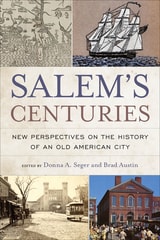
Salem's Centuries
New Perspectives on the History of an Old American CityEdited by Donna A. Seger and Brad Austin
Temple University Press, 2026
In advance of the city’s quadricentennial, the editors and contributors highlight the depth and diversity of Salem’s history, including stories of indigenous peoples, early settlers, African Americans, and immigrants, spanning from the American and industrial revolutions to World War II and the present. Chronologically arranged by century, chapters examine how Salem’s history has been lost or distorted in its public presentations over time.
Salem’s Centuries is a fresh look at an old American city. And yes, it includes the accused witches.
Contributors: Kimberly S. Alexander, Emerson W. Baker, Aviva Chomsky, Andrew Darien, Elizabeth Duclos-Orsello, Theresa Giard, Marilyn Hayward, Bethany Jay, Michele Louro, Elizabeth McKeigue, Robert W. McMicken, Dane A. Morrison, Maria Pride, J.D. Scrimgeour, Margo Shea, Hans Schwartz, Brian Valimont, Maryann Zujewski, and the editors
In the series History and the Public

Sales and Celebrations
Retailing and Regional Identity in Western New York State, 1920–1940Sarah Elvins
Ohio University Press, 2004
Between the two world wars, the retail world experienced tremendous changes. New forms of competition, expanded networks of communication and transportation, and the proliferation of manufactured goods posed challenges to department store and small shopkeeper alike.
In western New York, and in Buffalo and Rochester in particular, retailers were a crucial part of urban life, acting as cultural brokers and civic leaders. They were also cultivators of area pride. Even as they adopted the latest merchandising techniques or stocked the newest items, merchants emphasized their local roots and their ability to put a local spin on national trends and innovations. Regional identity became a powerful selling tool not only during the prosperity of the 1920s but also through the economic crisis of the Great Depression.
Sales and Celebrations explains how local traditions and institutions affected the evolution of American consumer culture. It expands our understanding of American consumerism, demonstrating that local particularities and loyalties could often coexist with, and occasionally challenge, the spread of mass consumption. In her award-winning study, Professor Sarah Elvins provides new insight into the relationship between America’s largest metropolises and its smaller centers. Retailers in Buffalo and Rochester did not simply imitate the practices of their counterparts in Manhattan and Chicago; they highlighted their unique ability to serve the wants and needs of their particular markets.
By drawing attention to this persistent power of the local, Sales and Celebrations illuminates a neglected aspect of the story of American culture in the interwar period.
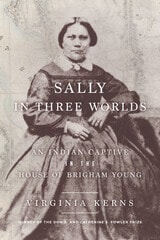
Sally in Three Worlds
An Indian Captive in the House of Brigham YoungVirginia Kerns
University of Utah Press, 2021
In this remarkable and deeply felt book, Virginia Kerns uncovers the singular and forgotten life of a young Indian woman who was captured in 1847 in what was then Mexican territory. Sold to a settler, a son-in-law of Brigham Young, the woman spent the next thirty years as a servant to Young’s family. Sally, as they called her, lived in the shadows, largely unseen. She was later remembered as a “wild” woman made “tame” who happily shed her past to enter a new and better life in civilization.
Drawing from a broad range of primary sources, Kerns retrieves Sally from obscurity and reconstructs her complex life before, during, and after captivity. This true story from the American past resonates deeply in the current moment, attentive as it is to killing epidemics and racial injustices. In telling Sally’s story, Kerns presents a new narrative of the American West.

Salmon, People, and Place
A Biologist's Search for Salmon RecoveryJim Lichatowich
Oregon State University Press, 2013
In Salmon, People, and Place, acclaimed fisheries biologist Jim Lichatowich eloquently exposes the misconceptions underlying salmon management and recovery programs that have fueled the catastrophic decline in Northwest salmon populations for more than a century. These programs will continue to fail, he suggests, so long as they regard salmon as products and ignore their essential relationship with their habitat.
But Lichatowich offers hope. In Salmon, People, and Place he presents a concrete plan for salmon recovery, one based on the myriad lessons learned from past mistakes. What is needed to successfully restore salmon, Lichatowich states, is an acute commitment to healing the relationships among salmon, people, and place.
A significant contribution to the literature on Pacific salmon, Salmon, People, and Place: A Biologist’s Search for Salmon Recovery is an essential read for anyone concerned about the fate of this Pacific Northwest icon.

Salsa Consciente
Politics, Poetics, and Latinidad in the Meta-BarrioAndrés Espinoza Agurto
Michigan State University Press, 2021
Salt Lantern
Traces of an American FamilyWilliam Towner Morgan
University of Iowa Press, 1997
Salt and State
An Annotated Translation of the <em>Songshi</em> Salt Monopoly TreatiseCecilia Lee-fang Chien
University of Michigan Press, 2004

Salt as a Factor in the Confederacy
Ella Lonn
University of Alabama Press, 1965
It is only when a prime necessity thrusts itself upon public attention by its absence that a person ceases to take it for granted. Only when he no longer has it, does he realize what an important ingredient for his palate and digestion is plain, ordinary salt, necessary alike for man and beast. He then recalls that the salt licks and salt springs have from the earliest times been centers of interest and development.
The author has searched into the archives of most of the states of the old confederacy, and also into departments of knowledge remote from her own, so that she has had to delve into geological libraries, consult colleagues in the fields of chemistry and physiology, and do more sums in arithmetic than have fallen to her lot since she was in the primary school. But it has been a pleasant and profitable search.
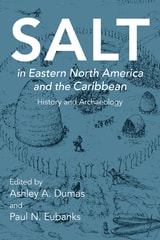
Salt in Eastern North America and the Caribbean
History and ArchaeologyEdited by Ashley A. Dumas and Paul N. Eubanks
University of Alabama Press, 2021
Case studies examining the archaeological record of an overlooked mineral
Salt, once a highly prized trade commodity essential for human survival, is often overlooked in research because it is invisible in the archaeological record. Salt in Eastern North America and the Caribbean: History and Archaeology brings salt back into archaeology, showing that it was valued as a dietary additive, had curative powers, and was a substance of political power and religious significance for Native Americans. Major salines were embedded in collective memories and oral traditions for thousands of years as places where physical and spiritual needs could be met. Ethnohistoric documents for many Indian cultures describe the uses of and taboos and other beliefs about salt.
The volume is organized into two parts: Salt Histories and Salt in Society. Case studies from prehistory to post-Contact and from New York to Jamaica address what techniques were used to make salt, who was responsible for producing it, how it was used, the impact it had on settlement patterns and sociopolitical complexity, and how economies of salt changed after European contact. Noted salt archaeologist Heather McKillop provides commentary to conclude the volume.
.
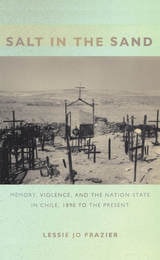
Salt in the Sand
Memory, Violence, and the Nation-State in Chile, 1890 to the PresentLessie Jo Frazier
Duke University Press, 2007
Analyzing multiple memories of state violence, Frazier innovatively shapes social and cultural theory to interpret a range of sources, including local and national government archives, personal papers, popular literature and music, interviews, architectural and ceremonial commemorations, and her ethnographic observations of civic associations, women's and environmental groups, and human rights organizations. A masterful integration of extensive empirical research with sophisticated theoretical analysis, Salt in the Sand is a significant contribution to interdisciplinary scholarship on human rights, democratization, state formation, and national trauma and reconciliation.
Saltillo, 1770-1810
Town and Region in the Mexican NorthLeslie S. Offutt
University of Arizona Press, 2001
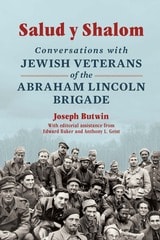
Salud y Shalom
Conversations with Jewish Veterans of the Abraham Lincoln BrigadeJoseph Butwin
University of Illinois Press, 2025
Joseph Butwin’s oral history presents conversations with ten Jewish veterans of the ALB. Recorded from 1992–94 in the wake of European communism’s collapse, the interviews explore the milieus that formed the volunteers. Immigrants established the secular Yiddish-speaking socialism that became a part of many Jewish American communities. Their children, reacting to economic depression and the rise of fascism, enlisted in the ALB. Butwin follows their stories from their youthful motives and choices through their lives as Jews and leftists, and records the reckonings that took place as they reflected on their past.
Insightful and revealing, Salud y Shalom explores the forces of identity and history that led young Jewish leftists to fight fascism.
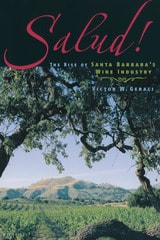
Salud!
The Rise Of Santa Barbara's Wine IndustryVictor W. Geraci
University of Nevada Press, 2018
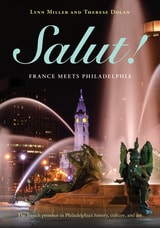
Salut!
France Meets PhiladelphiaLynn Miller and Therese Dolan
Temple University Press, 2021
One highly visible example of French influence on the city of Philadelphia is the Benjamin Franklin Parkway, modeled on the Champs-Élysées. In Salut!, Lynn Miller and Therese Dolan trace the fruitful, three-centuries-long relationship between the City of Brotherly Love and France. This detailed volume illustrates the effect of Huguenots settling in Philadelphia and 18-year-old William Penn visiting Paris, all the way up through more recent cultural offerings that have helped make the city the distinctive urban center it is today.
Salut! provides a magnifique history of Philadelphia seen through a particular cultural lens. The authors chronicle the French influence during colonial and revolutionary times. They highlight the contributions of nineteenth-century French philanthropists, such as Stephen Girard and the Dupont family. And they showcase the city’s vibrant visual arts community featuring works from the Philadelphia Museum of Art, the Rodin Museum, the Barnes Foundation, and the Joan of Arc sculpture, as well as studies of artists Thomas Eakins, Mary Cassatt, and Henry Ossawa Tanner. There is also a profile of renowned Le Bec-Fin chef Georges Perrier, who made Philadelphia a renowned culinary destination in the twentieth century.
With lavish illustrations and enthusiastic text, Salut!celebrates a potpourri of all things French in the Philadelphia region.
Salvage Archaeology in Painted Rocks Reservoir, Western Arizona
William W. Wasley and Alfred E. Johnson
University of Arizona Press, 1965
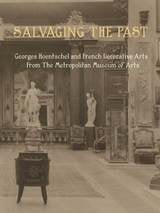
Salvaging the Past
Georges Hoentschel and French Decorative Arts from The Metropolitan Museum of Art, 1907-2013Daniëlle O. Kisluk-Grosheide
Bard Graduate Center, 2013

Salvation in New England
Selections from the Sermons of the First PreachersEdited by Phyllis M. Jones and Nicholas R. Jones
University of Texas Press, 1977
The sermon as crafted by the early New England preachers was the most prominent literary form of its day, yet the earliest Puritan texts have as a rule been available only in rare-book collections. This anthology of sermons of the first generation of preachers fills a serious gap in American literature. The preachers collected here, the most widely published of their time, were among the eighty or more who emigrated to Massachusetts Bay during the 1630s. They are John Cotton of Boston, Thomas Shepard of Cambridge, and Thomas Hooker of Hartford, the three foremost "lights of the western churches," and two eminent colleagues, Peter Bulkeley of Concord and John Davenport, first of New Haven and later of Boston.
The selections are chosen to be representative of the lengthy works from which they are drawn, to reflect the major concerns and styles of the preachers' work as a whole, and to demonstrate the genre of the sermon as developed by the early American Puritans. Not only does this anthology represent an important contribution to literary history, but the sermons also illustrate a doctrine uniquely elaborated in this period—a consistent and emphatic narrative, mythlike in its repetition and heroics, of the progress of the soul from a state of nature to a state of salvation. This theme may be seen as a three-stage-development, although individual sermons may vary. These stages—preparation, vocation, and regeneration—determine the order of the selections.
The editors' introductory material supplies a comprehensive and thorough discussion of the early New England sermons, concentrating on their role, history, structure, style, and subject matter. A separate essay on the texts of the sermons describes the relationship between the early printed versions and their form as delivered in the pulpit. The introduction preceding each selection presents original research on the historical circumstances of the preaching and publication of the work from which the sermon is drawn. The editors have also provided brief biographies of the preacfiers represented here, an annotated list of recommended background reading, and the most exhaustive checklist available of authoritative editions of the sermons of these five preachers.
This book will be useful to colonial specialists as well as to students of early American literature, religion, and history. The texts are critically edited for readability, with modernized spelling and annotations of unfamiliar phrases and allusions.
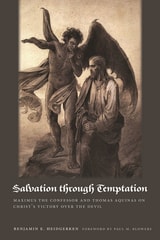
Salvation through Temptation
Maximus the Confessor and Thomas Aquinas on Christ's Victory over the DevilBenjamin E. Heidgerken
Catholic University of America Press, 2021

Sam Houston's Texas
Photographs and text by Sue Flanagan
University of Texas Press, 1964
When Sam Houston crossed the Red River for the first time in 1832, he termed Texas the "finest portion of the Globe that has ever blessed my vision." He soon made it his "abiding place" and became a lifelong traveller in his adopted country. By carriage and muleback his diplomatic, military, political, and personal activities took him over what is now the eastern half of the state—and he fell in love with every foot of it. With panoramic vision and broad descriptive power, he expressed his lasting affection for the country in everything he said and wrote.
Sue Flanagan, having read every available word by and about Houston and having followed the trail of every trip he made in Texas, here presents the Texas which Houston knew—through his picturesque language and through the camera's carefully focused lens. Her story provides continuity for Houston's activities and perspective for her photographs; it also provides an expression of Houston's views in his own forthright and emphatic manner.
But the essence of this book is its 113 photographs. The face of Texas east of San Antonio is pictured in all its varied features. With great patience and discernment, Sue Flanagan brought to bear all the skills of her artistic photography to capture the landscapes, buildings, and objects in the most revealing light and in the best atmospheric conditions for catching the appropriate mood. These spots in nature which Houston saw, these objects which he knew, these houses where he was entertained and where he lived—all are tangible reminders of "this colorful, cagey, and controversial man," this Texas hero whose life was a tragedy in divided loyalties.
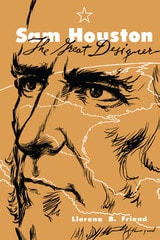
Sam Houston, the Great Designer
By Llerena B. Friend
University of Texas Press, 1954
This biography of Sam Houston goes beyond the romantic frontier life of the "buckskin hero from Tennessee" to examine seriously his role as an American statesman.

Same-Sex Dynamics among Nineteenth-Century Americans
A MORMON EXAMPLED. Michael Quinn
University of Illinois Press, 1996
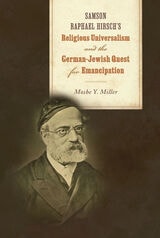
Samson Raphael Hirsch's Religious Universalism and the German-Jewish Quest for Emancipation
Moshe Y. Miller
University of Alabama Press, 0
An account of how Rabbi Samson Raphael Hirsch promulgated an inclusive vision of Judaism in the context of advancing the civic equality of German Jews in the nineteenth century
In Samson Raphael Hirsch’s Religious Universalism and the German-Jewish Quest for Emancipation, Moshe Miller contends that nineteenth-century German Jews of all denominations actively sought acceptance within German society and aspired to achieve full emancipation from the many legal strictures on their status as citizens and residents. While non-Orthodox Jews sought a large measure of cultural assimilation, Orthodox Jews were content with more delimited acculturation, but they were no less enthusiastic about achieving emancipation and acceptance in German society. There was one issue, though, which was seen by non-Jewish critics of emancipation as a barrier to granting civic rights to Jews: namely, the alleged tribalism of Judaism and the supposedly chauvinistic notion of Jews as “the Chosen People.”
These charges could not go unanswered, and in the writings of Rabbi Samson Raphael Hirsch (1808–1888), the leading thinker of the Orthodox camp, they did not. Hirsch stressed the universalism of the Jewish ethic and the humanistic concern for the welfare of all mankind, which he believed was one of the core teachings of Judaism. His colleagues in the German Orthodox rabbinate largely concurred with Hirsch’s assessment. Samson Raphael Hirsch’s Religious Universalism and the German-Jewish Quest for Emancipation places Hirsch’s views in their historical context and provides a detailed account of his attitude toward non-Jews and the Christianity practiced by the vast majority of nineteenth-century Europeans.
Samuel Bronfman
The Life and Times of Seagram’s Mr. SamMichael R. Marrus
Brandeis University Press, 1991

Samuel Pepys’ Naval Papers
A Bodleian Library SourcebookEdited by Justin Reay
Bodleian Library Publishing, 0
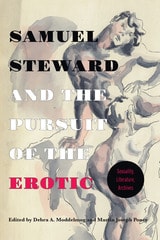
Samuel Steward and the Pursuit of the Erotic Sexuality, Literature, Archives
Sexuality, Literature, ArchivesEdited by Debra A. Moddelmog and Martin Joseph Ponce
The Ohio State University Press, 2017
With work by prominent scholars in queer, transgender, and sexuality studies, and with topics such as the queer archive, hoarding, masochism, the queer mystery, race and desire, sexology, and gay pornography, Samuel Steward and the Pursuit of the Erotic will appeal to a wide range of readers across a variety of disciplines invested in queer experience. Closing on a personal recollection from one of Steward’s last close friends, the volume will also appeal to readers interested in the personal aspects of this fascinating, idiosyncratic figure’s multifaceted life.

Samurai among Panthers
Richard Aoki on Race, Resistance, and a Paradoxical LifeDiane C. Fujino
University of Minnesota Press, 2012
An iconic figure of the Asian American movement, Richard Aoki (1938–2009) was also, as the most prominent non-Black member of the Black Panther Party, a key architect of Afro-Asian solidarity in the 1960s and ’70s. His life story exposes the personal side of political activism as it illuminates the history of ethnic nationalism and radical internationalism in America.
A reflection of this interconnection, Samurai among Panthers weaves together two narratives: Aoki’s dramatic first-person chronicle and an interpretive history by a leading scholar of the Asian American movement, Diane C. Fujino. Aoki’s candid account of himself takes us from his early years in Japanese American internment camps to his political education on the streets of Oakland, to his emergence in the Black Panther Party. As his story unfolds, we see how his parents’ separation inside the camps and his father’s illegal activities shaped the development of Aoki’s politics. Fujino situates his life within the context of twentieth-century history—World War II, the Cold War, and the protests of the 1960s. She demonstrates how activism is both an accidental and an intentional endeavor and how a militant activist practice can also promote participatory democracy and social service.
The result of these parallel voices and analysis in Samurai among Panthers is a complex—and sometimes contradictory—portrait of a singularly extraordinary activist and an expansion and deepening of our understanding of the history he lived.
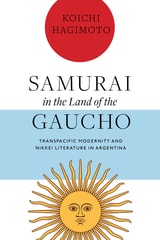
Samurai in the Land of the Gaucho
Transpacific Modernity and Nikkei Literature in ArgentinaKoichi Hagimoto
Vanderbilt University Press, 2023
In the early twentieth century, historical imaginings of Japan contributed to the Argentine vision of “transpacific modernity." Intellectuals such as Eduardo Wilde and Manuel Domecq García celebrated Japanese customs and traditions as important values that can be integrated into Argentine society. But a new generation of Nikkei or Japanese Argentines is rewriting this conventional narrative in the twenty-first century. Nikkei writers such as Maximiliano Matayoshi and Alejandra Kamiya are challenging the earlier, unapologetic view of Japan based on their own immigrant experiences.
Compared to the experience of political persecution against Japanese immigrants in Brazil and Peru, the Japanese in Argentina generally lived under a more agreeable sociopolitical climate. In order to understand the "positive" perception of Japan in Argentine history and literature, Samurai in the Land of the Gaucho turns to the current debate on race in Argentina, particularly as it relates to the discourse of whiteness. One of the central arguments is that Argentina's century-old interest in Japan represents a disguised method of (re)claiming its white, Western identity.
Through close readings of diverse genres (travel writing, essay, novel, short story, and film) Samurai in the Land of the Gaucho yields a multi-layered analysis in order to underline the role Japan has played in both defining and defying Argentine modernity from the twentieth century to the present.

Samurai with Telephones
Anachronism in Japanese LiteratureChristopher Smith
University of Michigan Press, 2024
From the modern period, this volume examines literature by Mori Ōgai and Ōe Kenzaburō, manga by Tezuka Osamu, art by Murakami Takashi, and a variety of other pop cultural works. Turning to the Early Modern period (Edo period, 1600–1868), which produced a literature rich with playful anachronism, he also examines several Kabuki and Bunraku plays, kibyōshi comic books, and gōkan illustrated novels. In analyzing these works, he draws a distinction between anachronisms that attempt to hide their work on history and convincingly rewrite it and those conspicuous anachronisms that highlight and disrupt the construction of historical narratives.