Results by title
1445 books match the query 'Life Sciences' and 70 start with s
Species Diversity in Ecological Communities
Edited by Robert E. Ricklefs and Dolph Schluter
University of Chicago Press, 1993
The authors use new theoretical developments, analyses, and case studies to explore the large-scale mechanisms that generate and maintain diversity. Case studies of various regions and organisms consider how local and regional processes interact to determine patterns of species richness. The contributors emphasize the fact that ecological processes acting quickly on a local scale do not erase the effects of regional and historical events that occur more slowly and less frequently.
This book compels scientists to rethink the foundations of community ecology and sets the stage for further research using comparative, experimental, geographical, and historical data.
Species and Speciation in the Fossil Record
Edited by Warren D. Allmon and Margaret M. Yacobucci
University of Chicago Press, 2016
After outlining views of the Modern Synthesis of evolutionary disciplines and detailing the development within paleobiology of quantitative methods for documenting and analyzing variation within fossil assemblages, contributors explore the challenges of recognizing and defining species from fossil specimens—and offer potential solutions. Addressing both the tempo and mode of speciation over time, they show how with careful interpretation and a clear species concept, fossil species may be sufficiently robust for meaningful paleobiological analyses. Indeed, they demonstrate that the species concept, if more refined, could unearth a wealth of information about the interplay between species origins and extinctions, between local and global climate change, and greatly deepen our understanding of the evolution of life.
Spider Webs
Behavior, Function, and EvolutionWilliam Eberhard
University of Chicago Press, 2020
As Eberhard reveals, the extraordinary diversity of webs includes ingenious solutions to gain access to prey in esoteric habitats, from blazing hot and shifting sand dunes (to capture ants) to the surfaces of tropical lakes (to capture water striders). Some webs are nets that are cast onto prey, while others form baskets into which the spider flicks prey. Some aerial webs are tramways used by spiders searching for chemical cues from their prey below, while others feature landing sites for flying insects and spiders where the spider then stalks its prey. In some webs, long trip lines are delicately sustained just above the ground by tiny rigid silk poles.
Stemming from the author’s more than five decades observing spider webs, this book will be the definitive reference for years to come.
Squid Empire
The Rise and Fall of the CephalopodsDanna Staaf
University Press of New England, 2017
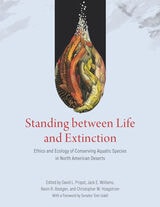
Standing between Life and Extinction
Ethics and Ecology of Conserving Aquatic Species in North American DesertsEdited by David L. Propst, Jack E. Williams, Kevin R. Bestgen, and Christopher W. Hoagstrom
University of Chicago Press, 2020
A precursor to this book, Battle Against Extinction, laid out the scope of the problem and related conservation activities through the late 1980s. Since then, many nascent conservation programs have matured, and researchers have developed new technologies, improved and refined methods, and greatly expanded our knowledge of the myriad influences on the ecology and dynamics of these species. Standing between Life and Extinction brings the story up to date. While the future for some species is more secure than thirty years ago, others are less fortunate. Calling attention not only to iconic species like the razorback sucker, Gila trout, and Devils Hole pupfish, but also to other fishes and obscure and fascinating invertebrates inhabiting intermittent aquatic habitats, this book explores the scientific, social, and political challenges of preserving these aquatic species and their habitats amid an increasingly charged political discourse and in desert regions characterized by a growing human population and rapidly changing climate.
Stations in the Field
A History of Place-Based Animal Research, 1870-1930Raf De Bont
University of Chicago Press, 2015
Raf De Bont’s Stations in the Field focuses on the early history of biological field stations and the role these played in the rise of zoological place-based research. Beginning in the 1870s, a growing number of biological field stations were founded—first in Europe and later elsewhere around the world—and thousands of zoologists received their training and performed their research at these sites. Through case studies, De Bont examines the material and social context in which field stations arose, the actual research that was produced in these places, the scientific claims that were developed there, and the rhetorical strategies that were deployed to convince others that these claims made sense. From the life of parasitic invertebrates in northern France and freshwater plankton in Schleswig-Holstein, to migratory birds in East Prussia and pest insects in Belgium, De Bont’s book is fascinating tour through the history of studying nature in nature.

Stinging Trees and Wait-a-Whiles
Confessions of a Rainforest BiologistWilliam Laurance
University of Chicago Press, 2000
The book is his record of the time he spent in this remote area and his run-ins with plant, animal, and human species alike. Laurance lived in a tiny town of loggers and farmers, and he witnessed firsthand the impact of conservation issues on individual lives. He found himself at the center of a bitter battle over conservation strategies and became not only the subject of small-town gossip but also the object of many residents' hatred. Keeping ahead of his high-spirited young volunteers, hounded by the drug-sniffing local policeman, and all the while trying to further his own research amid natural and unnatural obstacles, Laurance offers us a personal and hilarious account of fieldwork and life in the Australian outpost of Millaa Millaa. Stinging Trees and Wait-a-Whiles is a biology lesson, a conservation primer, and an utterly energetic story about an impressionable young man who wound up at the epicenter of an issue that tore a small town apart.
Stitching the West Back Together
Conservation of Working LandscapesEdited by Susan Charnley, Thomas E. Sheridan, and Gary P. Nabhan
University of Chicago Press, 2014
Featuring contributions from an impressive array of scientists, conservationists, scholars, ranchers, and foresters, Stitching the West Back Together explores that expanded, inclusive vision of environmentalism as it delves into the history and evolution of Western land use policy and of the working landscapes themselves. Chapters include detailed case studies of efforts to promote both environmental and economic sustainability, with lessons learned; descriptions of emerging institutional frameworks for conserving Western working landscapes; and implications for best practices and policies crucial to the future of the West’s working forests and rangelands. As economic and demographic forces threaten these lands with fragmentation and destruction, this book encourages a hopeful balance between production and conservation on the large, interconnected landscapes required for maintaining cultural and biological diversity over the longterm.
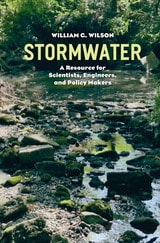
Stormwater
A Resource for Scientists, Engineers, and Policy MakersWilliam G. Wilson
University of Chicago Press, 2016
As Wilson shows, rivers of runoff flowing from manmade surfaces—such as roads, sidewalks, and industrial sites—carry a glut of sediments and pollutants. Unlike soil, pavement does not filter or biodegrade these contaminants. Oil, pesticides, road salts, metals, automobile chemicals, and bacteria all pour into stormwater systems. Often this runoff discharges directly into waterways, uncontrolled and untreated, damaging valuable ecosystems. Detailing the harm that can be caused by this urban runoff, Wilson also outlines methods of control, from restored watersheds to green roofs and rain gardens, and, in so doing, gives hope in the face of an omnipresent threat. Illustrated throughout, Stormwater will be an essential resource for urban planners and scientists, policy makers, citizen activists, and environmental educators in the stormy decades to come.
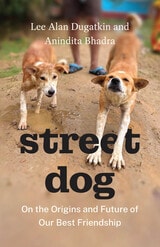
Street Dog
On the Origins and Future of Our Best FriendshipLee Alan Dugatkin and Anindita Bhadra
University of Chicago Press, 0
A fascinating look at the lives of the world’s largest dog population—street dogs—offering essential insights into your dog’s behavior and the mysterious origins of human-dog cooperation.
Today, there are close to a billion dogs on the planet. Some twenty thousand years ago, there were none. How did dogs originate from wolves? And how did we begin our best friendship? Although we can’t go back in time, we can study modern dogs for clues. Of today’s dogs, about eighty percent are street dogs, which don’t live in human homes, but near them, existing in a space between wild and domesticated.
This fascinating and eye-opening book offers us a chance to meet these street dogs and, through them, to imagine the earliest stages of human-canine companionship and collaboration. Award-winning author and animal behaviorist Lee Alan Dugatkin and world canine expert Anindita Bhadra take us from the hallways of Bhadra’s Dog Lab onto the bustling streets of Kolkata, India, where we encounter the intelligent, resourceful, and sometimes mischievous street dogs that have lived alongside humans for hundreds of dog generations. By observing these street dogs’ social structures, survival strategies, and personalities—and comparing them to foxes, wolves, and house dogs, among other species—we learn a lot about canine behavior. Take, for example, Bhadra’s discovery that, no matter how vital food is to a street dog, when given a choice between a meal and a gentle carress, dogs choose love over the food. We also learn that many dogs prefer yellow to other colors; that dog grandmoms may adopt unrelated puppies; and that dog genes harbor a mutation that, in humans, is associated with extreme friendliness. We even begin to understand why dogs pee on, well, everything—particularly on other dog pee.
Watching dogs live independent lives alongside humans, we also start to wonder, as Bhadra does, about the origins of human-dog cooperation. She persuades us that early dogs and humans likely protected each other, as many still do today, and that street dogs may help us to imagine our ancestors’ interactions with the earliest proto-dogs. In their engaging exploration, Dugatkin and Bhadra show that getting to know street dogs may help us understand the past, present, and future of our unique interspecies relationship.
Studying Animal Behavior
Autobiographies of the FoundersEdited by Donald A. Dewsbury
University of Chicago Press, 1989
Stung!
On Jellyfish Blooms and the Future of the OceanLisa-ann Gershwin
University of Chicago Press, 2013
Styles of Scientific Thought
The German Genetics Community, 1900-1933Jonathan Harwood
University of Chicago Press, 1992
The first book-length treatment of genetics in Germany, Styles of Scientific Thought demonstrates the influence of culture on science by comparing the American with the German scientific traditions. Harwood examines the structure of academic and research institutions, the educational backgrounds of geneticists, and cultural traditions, among many factors, to explain why the American approach was much more narrowly focussed than the German.
This tremendously rich book fills a gap between histories of the physical sciences in the Weimar Republic and other works on the humanities and the arts during the intellectually innovative 1920s, and it will interest European historians, as well as sociologists and philosophers of science.
Subjects of the World
Darwin's Rhetoric and the Study of Agency in NaturePaul Sheldon Davies
University of Chicago Press, 2009
Being human while trying to scientifically study human nature confronts us with our most vexing problem. Efforts to explicate the human mind are thwarted by our cultural biases and entrenched infirmities; our first-person experiences as practical agents convince us that we have capacities beyond the reach of scientific explanation. What we need to move forward in our understanding of human agency, Paul Sheldon Davies argues, is a reform in the way we study ourselves and a long overdue break with traditional humanist thinking.
Davies locates a model for change in the rhetorical strategies employed by Charles Darwin in On the Origin of Species. Darwin worked hard to anticipate and diminish the anxieties and biases that his radically historical view of life was bound to provoke. Likewise, Davies draws from the history of science and contemporary psychology and neuroscience to build a framework for the study of human agency that identifies and diminishes outdated and limiting biases. The result is a heady, philosophically wide-ranging argument in favor of recognizing that humans are, like everything else, subjects of the natural world—an acknowledgement that may free us to see the world the way it actually is.
Suicidal
Why We Kill OurselvesJesse Bering
University of Chicago Press, 2018
Bering survived. And in addition to relief, the fading of his suicidal thoughts brought curiosity. Where had they come from? Would they return? Is the suicidal impulse found in other animals? Or is our vulnerability to suicide a uniquely human evolutionary development? In Suicidal, Bering answers all these questions and more, taking us through the science and psychology of suicide, revealing its cognitive secrets and the subtle tricks our minds play on us when we’re easy emotional prey. Scientific studies, personal stories, and remarkable cross-species comparisons come together to help readers critically analyze their own doomsday thoughts while gaining broad insight into a problem that, tragically, will most likely touch all of us at some point in our lives. But while the subject is certainly a heavy one, Bering’s touch is light. Having been through this himself, he knows that sometimes the most effective response to our darkest moments is a gentle humor, one that, while not denying the seriousness of suffering, at the same time acknowledges our complicated, flawed, and yet precious existence.
Authoritative, accessible, personal, profound—there’s never been a book on suicide like this. It will help you understand yourself and your loved ones, and it will change the way you think about this most vexing of human problems.
Sustaining Wildlands
Integrating Science and Community in Prince William SoundEdited by Aaron J. Poe and Randy Gimblett
University of Arizona Press, 2017
Nearly three decades later, changes in recreation use run counter to what was initially expected. Instead of avoiding Prince William Sound, tourists and visitors flock there. Economic revitalization efforts have resulted in increased wilderness access as new commercial enterprises offer nature tourism in remote bays and fjords. This increased visitation has caused concerns that the wilderness may again be threatened—not by oil but rather by the very humans seeking those wilderness experiences.
In Sustaining Wildlands, scientists and managers, along with local community residents, address what has come to be a central paradox in public lands management: the need to accommodate increasing human use while reducing the environmental impact of those activities. This volume draws on diverse efforts and perspectives to dissect this paradox, offering an alternative approach where human use is central to sustaining wildlands and recovering a damaged ecosystem like Prince William Sound.
Contributors:
Brad A. Andres, Chris Beck, Nancy Bird, Dale J. Blahna, Harold Blehm, Sara Boario, Bridget A. Brown, Courtney Brown, Greg Brown, Milo Burcham, Kristin Carpenter, Ted Cooney, Patience Andersen Faulkner, Maryann Smith Fidel, Jessica B. Fraver, Jennifer Gessert, Randy Gimblett, Michael I. Goldstein, Samantha Greenwood, Lynn Highland, Marybeth Holleman, Shay Howlin, Tanya Iden, Robert M. Itami, Lisa Jaeger, Laura A. Kennedy, Spencer Lace, Nancy Lethcoe, Kate McLaughlin, Rosa H. Meehan, Christopher Monz, Karen A. Murphy, Lisa Oakley, Aaron J. Poe, Chandra B. Poe, Karin Preston, Jeremy Robida, Clare M. Ryan, Gerry Sanger, Bill Sherwonit, Lowell H. Suring, Paul Twardock, Sarah Warnock, and Sadie Youngstrom
Swimming Science
Optimizing Training and PerformanceEdited by G. John Mullen
University of Chicago Press, 2018
Writing to competitive and novice swimmers alike, contributors to this volume break down every aspect of the sport. Swimming Science covers physiology, psychology, and safety, as well as hydrodynamics, nutrition, and technique. Each chapter examines these topics through a series of practical questions. What are the forces acting on you when you swim, and how do your muscles best generate propulsion against those forces? How much protein, salt, and iron should a swimmer consume, and how does energy from carbohydrates compare to energy from fats? How important is the “swimmer’s physique” in competitive swimming, and is technique or strength more necessary for generating speed? These questions are examined with the aid of explanatory diagrams and illustrations, and the book can be used to search for particular topics, or read straight through for a comprehensive overview.
Whether you are a competitive swimmer looking to optimize your performance or just beginning to dip a toe into the sport, Swimming Science is a must-read.
Swordfish
A Biography of the Ocean GladiatorRichard Ellis
University of Chicago Press, 2013
Synthetic
How Life Got MadeSophia Roosth
University of Chicago Press, 2017
In Synthetic: How Life Got Made, cultural anthropologist Sophia Roosth reveals how synthetic biologists make new living things in order to understand better how life works. The first book-length ethnographic study of this discipline, Synthetic documents the social, cultural, rhetorical, economic, and imaginative transformations biology has undergone in the post-genomic age. Roosth traces this new science from its origins at MIT to start-ups, laboratories, conferences, and hackers’ garages across the United States—even to contemporary efforts to resurrect extinct species. Her careful research reveals that rather than opening up a limitless new field, these biologists’ own experimental tactics circularly determine the biological features, theories, and limits they fasten upon. Exploring the life sciences emblematic of our time, Synthetic tells the origin story of the astonishing claim that biological making fosters biological knowing.
Systematics and Conservation of African Plants
Proceedings of the 18th AETFAT Congress, Yaoundé, CameroonEdited by Xander van der Burgt
Royal Botanic Gardens, Kew, 2010
An edited volume based on the proceedings of the eighteenth Association for the Taxonomic Study of the Flora of Tropical Africa Congress held in Yaoundé, Cameroon, Systematics and Conservation of African Plants includes one hundred research papers in separate sections on taxonomy, phytogeography, ethnobotany, and the conservation and sustainable use of African plants. Topics covered include recent advances in reproductive biology, vegetation, and Podostometaceae in Africa. A separate section on African floras reflects the present state of knowledge and progress towards our understanding and documentation of the plants of Africa.