Results by title
8812 books match the query 'Political Science' and 537 start with s

Seamus Heaney
Searches For AnswersEugene O'Brien
Pluto Press, 2003

Searching for Democracy
Women, Domestic Work, and Social Reproduction in Latin AmericaLeda M. Pérez
Temple University Press, 2026
How can we achieve lasting social and political equality for women? Leda Pérez tackles this thorny question in Searching for Democracy by interrogating egalitarianism in Latin America, where nearly 20% of women work in domestic service. She examines how women’s participation in society, labor, and politics continues to be conditioned by their relationship to domestic and care work.
Pérez argues that women’s relationship to these spheres of life is indicative of a nation’s development and democracy. She provides a comparative focus on the socio-cultural valuation of this labor and the experiences of women in Bolivia, Chile, Peru, and Uruguay, among other countries. Pérez asserts that it is only by changing sociocultural views on this “women’s work” that nations can create political change, foster equitable legislation, and ensure implementation of effective policies that benefit women.
Searching for Democracy shows why real and lasting equality cannot be achieved without fully enfranchising women in the lowest tiers of employment and closing the equality gap among women. Pérez’s models for gender equality are relevant for women around the world.

Searching for Home Abroad
Japanese Brazilians and TransnationalismJeffrey Lesser, ed.
Duke University Press, 2003
The concepts of home and diaspora are engaged and debated throughout the volume. Drawing on numerous sources—oral histories, interviews, private papers, films, myths, and music—the contributors highlight the role ethnic minorities have played in constructing Brazilian and Japanese national identities. The essayists consider the economic and emotional motivations for migration as well as a range of fascinating cultural outgrowths such as Japanese secret societies in Brazil. They explore intriguing paradoxes, including the feeling among many Japanese-Brazilians who have migrated to Japan that they are more "Brazilian" there than they were in Brazil. Searching for Home Abroad will be of great interest to scholars of immigration and ethnicity in the Americas and Asia.
Contributors. Shuhei Hosokawa, Angelo Ishi, Jeffrey Lesser, Daniel T. Linger, Koichi Mori, Joshua Hotaka Roth, Takeyuki (Gaku) Tsuda, Keiko Yamanaka, Karen Tei Yamashita

Searching for Life's Meaning
Changes and Tensions in the Worldviews of Chinese Youth in the 1980sLuo Xu
University of Michigan Press, 2002
Drawing on his own experience as a teacher at Capital Normal University in Beijing, China during the 1980s, as well as exhaustive research, Luo Xu investigates the social and political climate of 1980s China in order to help better define the culture that ultimately drove the events at Tiananmen. Supporting his arguments with solid primary source documents, Xu contends that the contemplation of the meaning of life, along with other philosophical questions, were integral components of the general social crisis leading up to the movement of 1989.
Elegantly written and accessible to a general readership, this study will also be useful to specialists. Searching for Life's Meaning is a concise but detailed introduction to the mentalities of the Chinese generation presently assuming leadership in China. It should be valuable reading in courses on Chinese history and politics, and will be of interest to scholars in the related fields of Asian studies, anthropology, cultural studies, and youth studies. The book will also appeal to business- people and other professionals concerned with managing relations with the world's fastest growing polity.
Luo Xu is Assistant Professor of History, State University of New York College at Cortland.
Searching for a Different Future
The Rise of a Global Middle Class in MoroccoShana Cohen
Duke University Press, 2004
Cohen delves into the rupture that has occurred between the middle class, the individual, and the nation in Morocco and elsewhere around the world. Combining institutional economic analysis with cultural theory and ethnographic observation including interviews with seventy young adults in Casablanca and Rabat, she reveals how young, urban, educated Moroccans conceive of their material, social, and political conditions. She finds that, for the most part, they perceive improvement in their economic and social welfare apart from the types of civic participation commonly connected with nationalism and national identity. In answering classic sociological questions about how the evolution of capitalism influences identity, Cohen sheds new light on the measurable social and economic consequences of globalization and on its less tangible effects on individuals’ perception of their place in society and prospects in life.

Season of Rains
Africa in the WorldStephen Ellis
University of Chicago Press, 2012
Secessionist Rule
Protracted Conflict and Configurations of Non-State AuthorityFranziska Smolnik
Campus Verlag, 2016
Second Front Now--1943
An Opportunity DelayedWalter Scott Dunn
University of Alabama Press, 2009
Addresses head-on the central issue of invasion timing in the Allied European strategy of World War II
In Second Front Now – 1943: An Opportunity Delayed, military historian Walter S. Dunn offers a sharply argued and meticulously researched reassessment of one of the most consequential strategic debates of World War II: the decision not to launch a full-scale Allied invasion of Western Europe in 1943. At a time when Nazi Germany was stretched across multiple fronts and the Soviet Union bore the brunt of the fighting in the East, the question of when—and where—to open a Second Front in Europe became a defining issue among Allied leaders.
Dunn explores the complex interplay of military planning, political caution, logistical constraints, and inter-Allied tensions that led Britain and the United States to postpone a cross-Channel invasion. Drawing from official records, wartime correspondence, and operational analyses, he reconstructs the strategic environment of 1943 and challenges the conventional wisdom that the delay was inevitable—or even prudent. Instead, Dunn presents a compelling case that an earlier invasion may have been both feasible and decisive, potentially shortening the war and altering the balance of postwar power.
With clarity and analytical rigor, the book examines the competing priorities of Churchill, Roosevelt, and Stalin, the influence of Mediterranean operations, and the evolving capabilities of Allied forces. It also considers the broader implications of the delay, including its impact on Soviet–Western relations and the shaping of the Cold War order that followed.
Blending narrative accessibility with scholarly depth, Second Front Now – 1943 is essential reading for students, historians, and anyone interested in the strategic decisions that defined the Allied path to victory. Dunn invites readers to reconsider a pivotal “missed moment” in history—and to reflect on how differently the war, and the world, might have unfolded.
Second Tier Cities
Rapid Growth beyond the MetropolisAnn Markusen
University of Minnesota Press, 1999
Analyzes and compares the rapid growth of medium-sized cities.
Over the past thirty years, transnational investment, trade, and government policies have encouraged the decentralization of national economies, disrupting traditional patterns of urban and regional growth. Many smaller cities-such as Seattle, Washington; Campinas, Brazil; Oita, Japan; and Kumi, Korea-have grown markedly faster than the largest metropolitan regions. These “second tier cities” are home to specialized industrial complexes that have taken root, provided significant job growth, and attracted mobile capital and labor.
The culmination of an ambitious five-year, fourteen-city research project conducted by an international team of economists and geographers, Second Tier Cities examines the potential of these new regions to balance uneven regional development, create good, stable jobs, and moderate hyper-urbanization. Comparing across national borders, the contributors describe four types of second tier cities: Marshallian industrial districts, hub-and-spoke cities, satellite platforms, and government-anchored complexes. They find that both industrial and regional policies have been important contributors to the rise of second tier cities, though the former often trump the latter. Lessons for local, national, and international policymakers are drawn. The authors are critical of devolution and argue that it must be accompanied by strong labor and environmental standards and mechanisms to overcome differential regional resource endowments.Contributors: Clelio Campolina Diniz, U Federal de Minas Gerais, Brazil; Masatomi Funaba, Kobe U of Commerce, Japan; Elyse Golob, NYC Economic Development Goup; Mia Gray, Cambridge U; Jun Ho Jeong, Oxford U; Sam Ock Park, Seoul National U; Mohammad Razavi; Fabiana Borges T. Santos, U Federal de Minas Gerais, Brazil; and Masayuki Sasaki, Kanzawa U, Japan.
Second Verse, Same as the First
The 2012 Presidential Election in the SouthScott E. Buchanan
University of Arkansas Press, 2014

Second in Command
Reevaluating the Role of Vice Presidents and Running Mates in Modern American PoliticsEdited by Karine Prémont and Christopher J. Devine
University of Michigan Press, 2026
In recent years, the office of the vice president has become a focal point of presidential politics and governance. From the emergence of the modern vice presidency under Walter Mondale to Mike Pence’s and Kamala Harris’s dramatic influence on the outcome of the 2020 election, Second in Command explores how vice presidents and vice-presidential candidates have shaped the direction of the country and changed American politics. The frenzy of speculation surrounding the “veepstakes” every four years and extensive media coverage of the vice-presidential debate may seem odd, given the vice presidency’s limited constitutional powers and dismal public reputation.
Dispelling the myth that the vice presidency is a powerless or merely ceremonial role, Second in Command draws on the multidisciplinary expertise of more than a dozen leading vice-presidential scholars to reveal the complex, consequential, and often misunderstood nature of the office. With accessible language and vivid examples, it traces the transformation of vice-presidential power over the past half-century, reveals the evolving electoral significance of vice-presidential running mates, and highlights the need for a deeper public understanding of these pivotal figures. Chapters employ a range of qualitative and quantitative methodologies, including elite interviews, archival research, case studies, and advanced statistical modeling to cover topics such as gender and media effects in running mate selection and the representation of vice presidents in popular culture. This book offers a fresh, engaging, and essential perspective on a vital institution at the heart of American democracy.

Second-Place Mo
Morris Udall ’76 and the Twilight of Democratic LiberalismJon Krampner
Michigan State University Press, 2027
Second-Place Mo examines the rightward drift of the Democratic Party that began in earnest with Jimmy Carter’s defeat of Morris “Mo” Udall for the Democratic presidential nomination in 1976—a turning point that set the party toward a free-market economy and away from economic liberalism.
The candidacy of Mo Udall, a congressman from Arizona, was the first time in almost a century that a member of the House of Representatives had a chance to become president; it also promised a continuation of the Democrats’ tradition of New Deal liberalism, which had been the party’s guiding star since the 1930s. But the Udall campaign was rocked by events beyond its control, its own mistakes, and the whirlwind candidacy of Jimmy Carter, who went on to win the nomination and the presidency.
Mo Udall chalked up eight second-place primary finishes without a victory. His candidacy was memorable for his dogged persistence, sunny good humor, and unabashed liberalism. This book chronicles a Democratic primary filled with memorable candidates, including the militarist and arch-Zionist Scoop Jackson; the newly minted more-populist-than-thou Fred Harris; the Hamlet-like figures of Birch Bayh and Hubert Humphrey; the fading, injured apostle of the Confederate South, George Wallace; the affable yet ineffective Kennedy in-law, Sargent Shriver; the anti-abortion housewife from Long Island, Ellen McCormack; and others. All are vividly brought to life—including Jimmy Carter, a thrower of sharp elbows before he became the beloved, humanitarian former president—set against the backdrop of Udall’s doomed effort.
Second-Place Mo examines why Udall’s 1976 campaign failed and what lessons his near misses hold for contemporary politics. Along the way, it recovers a figure whose principled liberalism and self-deprecating humor offer an instructive contrast to the politics of our own moment.

Secret Power
WikiLeaks and Its EnemiesStefania Maurizi
Pluto Press, 2022
*Winner of the European Award for Investigative And Judicial Journalism 2021*
*Winner of the Premio Alessandro Leogrande Award for Investigative Journalism 2022*
*Winner of the Premio Angelo Vassallo Award 2022*
'I want to live in a society where secret power is accountable to the law and to public opinion for its atrocities, where it is the war criminals who go to jail, not those who have the conscience and courage to expose them.'
It is 2008, and Stefania Maurizi, an investigative journalist with a growing interest in cryptography, starts looking into the little-known organisation WikiLeaks. Through hushed meetings, encrypted files and explosive documents, what she discovers sets her on a life-long journey that takes her deep into the realm of secret power.
Working closely with WikiLeaks' founder Julian Assange and his organisation for her newspaper, Maurizi has spent over a decade investigating state criminality protected by thick layers of secrecy, while also embarking on a solitary trench warfare to unearth the facts underpinning the cruel persecution of Assange and WikiLeaks.
With complex and disturbing insights, Maurizi’s tireless journalism exposes atrocities, the shameful treatment of Chelsea Manning and Edward Snowden, on up to the present persecution of WikiLeaks: a terrifying web of impunity and cover-ups.
At the heart of the book is the brutality of secret power and the unbearable price paid by Julian Assange, WikiLeaks and truthtellers.

Secret Service
National Security in an Age of Open InformationJonathan Evans
Haus Publishing, 2020

Secrets I Won't Take with Me
Home, War, and the Struggle for Peace in IsraelYossi Beilin
University of Alabama Press, 2025
An Israeli political leader’s riveting first-hand account of pivotal moments from recent Israeli history, including the Oslo Peace Accords, the founding of the Birthright Initiative, the assassination of Yitzhak Rabin, the rise of the Israeli far right, and more
In Secrets I Won't Take with Me, Yossi Beilin, a key Israeli political and ministerial leader, offers an intimate and candid memoir that chronicles pivotal events in the nation’s recent history. From the crucible of its founding to the complexities of the modern era, Beilin reveals an insider’s perspective and previously undocumented insights about the events that have and continue to shape Israel.
Beginning his career as an academic and a journalist, Beilin became the spokesperson of the Labor Party in 1977. Among his many career highlights include the chairmanship of the Meretz-Yachad Party, Minister of Justice, Minister of Religious Affairs, and Deputy Finance Minister, and perhaps most significantly, as Deputy Foreign Minister during the Israel-PLO Oslo Peace Accords. As a key architect of the Oslo Peace Accords, he shares unprecedented details of the negotiations that defined an era.
Beyond diplomacy, Beilin illuminates his role in shaping Israel’s identity, from steering Israel away from its alliance with apartheid South Africa to the foundation of the influential Birthright program. With unflinching honesty, Beilin navigates the triumphs and tragedies of a nation, from the euphoria of the Six-Day War to the heartbreak of Yitzhak Rabin’s assassination. A deeply personal memoir of one man’s life interwoven with a nation’s, Beilin’s stunning account of his career serves as a masterful tour d’horizon of Israel’s recent past and evolving future.

Secrets and Truths
Ethnography in the Archive of Romania's Secret PoliceKatherine Verdery
Central European University Press, 2014

Sectors of Mutual Benefit in U.S.-Soviet Relations
Nish Jamgotch Jr., editor
Duke University Press, 1985
Without minimizing the enormous dangers of ongoing strategic military competition, the contributors attempt to determine which sectors of U.S.-Soviet relations have yielded the most significant mutual benefits. They raise questions about where U.S. policy has gone wrong, where it has been effective, and how safe we are in forecasting the continuation of those cooperative relationships.

Secular Faith
How Culture Has Trumped Religion in American PoliticsMark A. Smith
University of Chicago Press, 2015
Mark A. Smith provocatively argues that religion is not nearly the unchanging conservative influence in American politics that we have come to think it is. In fact, in the long run, religion is best understood as responding to changing political and cultural values rather than shaping them. Smith makes his case by charting five contentious issues in America’s history: slavery, divorce, homosexuality, abortion, and women’s rights. For each, he shows how the political views of even the most conservative Christians evolved in the same direction as the rest of society—perhaps not as swiftly, but always on the same arc. During periods of cultural transition, Christian leaders do resist prevailing values and behaviors, but those same leaders inevitably acquiesce—often by reinterpreting the Bible—if their positions become no longer tenable. Secular ideas and influences thereby shape the ways Christians read and interpret their scriptures.
So powerful are the cultural and societal norms surrounding us that Christians in America today hold more in common morally and politically with their atheist neighbors than with the Christians of earlier centuries. In fact, the strongest predictors of people’s moral beliefs are not their religious commitments or lack thereof but rather when and where they were born. A thoroughly researched and ultimately hopeful book on the prospects for political harmony, Secular Faith demonstrates how, over the long run, boundaries of secular and religious cultures converge.

Secular Missionaries
Americans and African Development in the 1960sLarry Grubbs
University of Massachusetts Press, 2010

Secular Morality and International Security
American and British Decisions about WarMaria Fanis
University of Michigan Press, 2011
“[Fanis] demonstrates an impressive ability to travel nimbly between abstract theoretical concepts and a messy reality. In each one of the case study chapters, her analysis is rich, thoughtful, and imaginative.”
—Ido Oren, University of Florida

Secular Power Europe and Islam
Identity and Foreign PolicySarah Wolff
University of Michigan Press, 2021
Secular Power Europe and Islam argues that secularism is not the central principle of international relations but should be considered as one belief system that influences international politics. Through an exploration of Europe’s secular identity, an identity that is seen erroneously as normative, author Sarah Wolff shows how Islam confronts the EU’s existential anxieties about its security and its secular identity. Islam disrupts Eurocentric assumptions about democracy and revolution and human rights. Through three case studies, Wolff encourages the reader to unpack secularism as a bedrock principle of IR and diplomacy. This book argues that the EU’s interest and diplomacy activities in relation to religion, and to Islam specifically, is shaped by the insistence on a European secular identity, which should be reconsidered in areas of religion and foreign policy.
Secular Powers
Humility in Modern Political ThoughtJulie E. Cooper
University of Chicago Press, 2013
Contemporary understandings of secularism, Cooper contends, have been shaped by a limited understanding of it as a shift from vulnerability to power. But the works of the foundational thinkers of secularism tell a different story. Analyzing the writings of Hobbes, Spinoza, and Rousseau at the moment of secularity’s inception, she shows that all three understood that acknowledging one’s limitations was a condition of successful self-rule. And while all three invited humans to collectively build and sustain a political world, their invitations did not amount to self-deification. Cooper establishes that secular politics as originally conceived does not require a choice between power and vulnerability. Rather, it challenges us—today as then—to reconcile them both as essential components of our humanity.
Secularism as Misdirection
Critical Thought from the Global SouthNivedita Menon
Duke University Press, 2024
Secularizing Islamists?
Jama'at-e-Islami and Jama'at-ud-Da'wa in Urban PakistanHumeira Iqtidar
University of Chicago Press, 2011
Secularizing Islamists? provides an in-depth analysis of two Islamist parties in Pakistan, the highly influential Jama‘at-e-Islami and the more militant Jama‘at-ud-Da‘wa, widely blamed for the November 2008 terrorist attack in Mumbai, India. Basing her findings on thirteen months of ethnographic work with the two parties in Lahore, Humeira Iqtidar proposes that these Islamists are involuntarily facilitating secularization within Muslim societies, even as they vehemently oppose secularism.
This book offers a fine-grained account of the workings of both parties that challenges received ideas about the relationship between the ideology of secularism and the processes of secularization. Iqtidar particularly illuminates the impact of women on Pakistani Islamism, while arguing that these Islamist groups are inadvertently supporting secularization by forcing a critical engagement with the place of religion in public and private life. She highlights the role that competition among Islamists and the focus on the state as the center of their activity plays in assisting secularization. The result is a significant contribution to our understanding of emerging trends in Muslim politics.

Secure the Base
Making Africa Visible in the GlobeNgugi wa Thiong’o
Seagull Books, 2016
Ngũgĩ's fiction has been met with wide acclaim, but his nonfiction work, while equally brilliant, is more difficult to find. Secure the Base changes this by bringing together for the first time essays spanning nearly three decades. Originating as disparate lectures and texts, this complete volume will remind readers anew of Ngũgĩ's power and importance. Written in a personal and accessible style, the book covers a range of issues, including the role of the intellectual, the place of Asia in Africa, labor and political struggles in an era of rampant capitalism, and the legacies of slavery and prospects for peace. At a time when Africa looms large in our discussions of globalization, Secure the Base is mandatory reading.

Securing Approval
Domestic Politics and Multilateral Authorization for WarTerrence L. Chapman
University of Chicago Press, 2011
Among the most momentous decisions that leaders of a state are called upon to make is whether or not to initiate warfare. How their military will fare against the opponent may be the first consideration, but not far behind are concerns about domestic political response and the reaction of the international community.
Securing Approval makes clear the relationship between these two seemingly distinct concerns, demonstrating how multilateral security organizations like the UN influence foreign policy through public opinion without ever exercising direct enforcement power. While UN approval of a proposed action often bolsters public support, its refusal of endorsement may conversely send a strong signal to domestic audiences that the action will be exceedingly costly or overly aggressive. With a cogent theoretical and empirical argument, Terrence L. Chapman provides new evidence for how multilateral organizations matter in security affairs as well as a new way of thinking about the design and function of these institutions.

Securing Religious Liberty
Principles for Judicial Interpretation of the Religion ClausesJesse H. Choper
University of Chicago Press, 1995
Choper's guidelines are designed to provide maximum protection for religious freedom without granting anyone an advantage, inflicting a disadvantage, or causing an unfair burden. Though not calling for the wholesale overturning of judicial precedents or established social practices, the standards he proposes would result in significant—and controversial—modifications to existing doctrines and customs. Choper argues, for instance, that while vocal prayer and Bible reading in public schools should continue to be prohibited, we can and should allow for silent prayer and objective courses in creation science. His standards would also, among other things, eliminate the tax exemption on property used exclusively for religious purposes while allowing parochial schools to receive public funds for the non-religious component of their education.

Securing the Future
Investing in Children From Birth to CollegeSheldon Danziger
Russell Sage Foundation, 2000

Securing the Sacred
Religion, National Security, and the Western StateRobert M. Bosco
University of Michigan Press, 2014
Despite significant theoretical distinctions between securitization on the domestic and the international levels, he finds that the outcome of addressing religion within the context of security hinges upon partnerships. Whereas states may harness the power of international allies, they cannot often find analogous domestic allies; therefore, states that attempt to securitize religion at home are more vulnerable to counterattack and more likely to abandon their efforts. Securing the Sacred makes a significant contribution to the fields of political theory, international relations, Islamic studies, and security/military studies.
Securitizing Youth
Young People’s Roles in the Global Peace and Security AgendaMarisa O. Ensor
Rutgers University Press, 2021

Security Integration in Europe
How Knowledge-based Networks Are Transforming the European UnionMai'a K. Davis Cross
University of Michigan Press, 2013
The European Union has made remarkable, unprecedented advances in both external and internal security integration. "Epistemic communities" of ambassadors, military generals, scientists, and other experts who supersede national governments in the diplomacy of security decision making are taking advantage of their shared expertise, common culture, professional norms, and frequent meetings to forge new levels of collaboration. Mai'a K. Davis Cross brings together numerous personal interviews and recent government documents across five separate case studies to construct a microsociological account of how EU governance really works and what future role the EU is likely to play internationally.

Security V. Liberty
Conflicts Between National Security and Civil Liberties in American HistoryDaniel Farber
Russell Sage Foundation, 2008
Security. Cooperation. Governance.
The Canada-United States Open Border ParadoxChristian Leuprecht and Todd Hataley, Editors
University of Michigan Press, 2023
The book’s findings show that border governance straddles multiple regional, sectoral, and security scales in ways rarely documented in such detail. These developments have precipitated an Open Border Paradox: extensive, regionally varied flows of trade and people have resulted in a series of nested but interdependent security regimes that function on different scales and vary across economic and policy sectors. These realities have given rise to regional and sectoral specialization in related security regimes. For instance, just-in-time automotive production in the Great Lakes region varies considerably from the governance of maritime and intermodal trade (and port systems) on the Atlantic and Pacific coasts, which in turn is quite different from commodity-based systems that manage diverse agricultural and food trade in the Canadian Prairies and US Great Plains.
The paradox of open borders and their legitimacy is a function of robust bilateral and multilevel governance based on effective partnerships with substate governments and the private sector. Effective policy accounts for regional variation in integrated binational security and trade imperatives. At the same time, binational and continental policies are embedded in each country’s trade and security relationships beyond North America.
See Jane Run
How Women Politicians Matter for Young PeopleDavid E. Campbell and Christina Wolbrecht
University of Chicago Press, 2025
The definitive analysis of how the presence of women politicians affects young people.
From Kamala Harris to Nikki Haley, women in public life are widely expected to inspire young people, especially girls, to follow in their footsteps. See Jane Run provides the definitive analysis of women politicians as role models. With wide-ranging data and attention to gender, race, and party, David E. Campbell and Christina Wolbrecht find that women in politics help convince young people, regardless of gender, that women are capable of political leadership. For young women, women role models enhance faith in democracy and inspire political engagement, including running for office themselves. As role models, women politicians help ensure a more inclusive democracy.
Seeds of Change
The Story of ACORN, America's Most Controversial Antipoverty Community Organizing GroupJohn Atlas
Vanderbilt University Press, 2010
Seeds of Change goes beyond the headlines of the last Presidential campaign to describe what really happened in ACORN's massive voter registration drives, why it triggered an unrelenting attack by Fox News and the Republican Party, and how it confronted its internal divisions and scandals.
Based on Atlas's own eyewitness original reporting, as the only journalist to have access to ACORN's staff and board meetings, this book documents the critical transition from founder Wade Rathke, a white New Orleans radical to Bertha Lewis, a Brooklyn African American activist.
The story begins in the 1970s, when a small group of young men and women, led by a charismatic college dropout, began a quest to help the powerless help themselves. In a tale full of unusual characters and dramatic conflicts, the book follows the ups and downs of ACORN's organizers and members as they confront big corporations and unresponsive government officials in Albuquerque, Brooklyn, Chicago, Detroit, Little Rock, New Orleans, Philadelphia, and the Twin Cities.
The author follows the course of local and national campaigns to organize unions, fight the subprime mortgage crisis, promote living wages for working people, struggle for affordable housing and against gentrification, and help Hurricane Katrina's survivors return to New Orleans.
The book dispels the conservative myth that we can only help the poor through private soup kitchens and charity and the liberal myth that the solution rests simply with more government services. Seeds of Change, not only provides a gripping look at ACORN's four decades of effective organizing, but also offers a hopeful analysis of the potential for a revival of real American democracy.
An offering of The Progressive Book Club.
Seeds of Hate
How America's Flawed Middle East Policy Ignited the JihadLawrence Pintak
Pluto Press, 2003
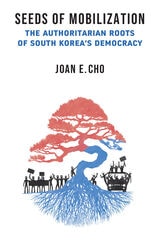
Seeds of Mobilization
The Authoritarian Roots of South Korea's DemocracyJoan E. Cho
University of Michigan Press, 2024
By using original subnational protest event datasets, government publications, oral interviews, and publications from labor and student movement organizations, Joan E. Cho takes a long view of democratization that incorporates the decades before and after South Korea’s democratic transition. She demonstrates that Korea’s democratization resulted from a combination of factors from below and from above, and that authoritarian development itself was a hidden root cause of democratic development in South Korea. Seeds of Mobilization shows how socioeconomic development did not create a steady pressure toward democracy but acted as a “double-edged sword” that initially stabilized autocratic regimes before destabilizing them over time.
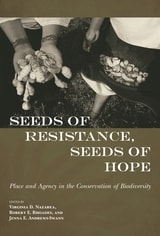
Seeds of Resistance, Seeds of Hope
Place and Agency in the Conservation of BiodiversityEdited by Virginia D. Nazarea, Robert E. Rhoades, and Jenna E. Andrews-Swann
University of Arizona Press, 2013
This broad collection brings to the table a bag full of tools from anthropology, sociology, genetics, plant breeding, education, advocacy, and social activism. By design, multiple voices are included. They cross or straddle disciplinary, generational, national, and political borders. Contributors demonstrate the importance of cultural memory in the persistence of traditional or heirloom crops, as well as the agency exhibited by displaced and persecuted peoples in place-making and reconstructing nostalgic landscapes (including gardens from their homelands). Contributions explore local initiatives to save native and older seeds, the use of modern technologies to conserve heirloom plants, the bioconservation efforts of indigenous people, and how genetically modified organisms (GMOs) have been successfully combated. Together they explore the conservation of biodiversity at different scales, from different perspectives, and with different theoretical and methodological approaches. Collectively, they demonstrate that there is reason for hope.
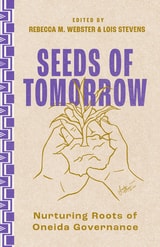
Seeds of Tomorrow
Nurturing Roots of Oneida GovernanceEdited by Rebecca M. Webster and Lois Stevens
University of Wisconsin Press, 2026
This indispensable and unique volume is at once a history of and a pathfinder for the future of the Great Law, the governing principles behind the long-standing Haudenosaunee Confederacy. Focused on the Duck Creek Oneida people of Wisconsin, Seeds of Tomorrow draws together a wide range of tribal voices, from elders and community members to young people and academic experts. This collection chronicles the history of the Haudenosaunee Confederacy’s revolutionary governing principles, outlines the current state of tribal government, and proposes a vision for a political future that draws on traditional Indigenous practices and knowledge. This guide toward stronger sovereignty, revitalized community ties, and a healthier and more self-determined future based on traditional structures of governance is indigenization in practice: a model not just for Duck Creek Oneida but for Indigenous nations everywhere.
Contributors: Kenzie Allen, Marley Atkinson, Marena Bridges, Robert “Bob” Brown, Breann Clark, Julie Clark, Carol Cornelius, Margaret Cornelius, Randy Cornelius, Michele Doxtater, Richard “Lotni” Elm-Hill, Jennifer “Jen” Falck, William Gollnick, Joie Guiterrez, Gerald L. Hill, Jo Anne House, Toni M. House, Nicholas Metoxen, Paul Ninham, Saniya Ninham, John III Powless, Mark Powless, Nina Powless, Artley Skenandore, Lois Stevens, Vernon Stevens, Amelia “Mia” Webster, Grace Webster, Hunter D. Webster, Rebecca M. Webster, Arthur Wilbur, Jameson Wilson

Seeing Like a Citizen
Decolonization, Development, and the Making of Kenya, 1945–1980Kara Moskowitz
Ohio University Press, 2019
In Seeing Like a Citizen, Kara Moskowitz approaches Kenya’s late colonial and early postcolonial eras as a single period of political, economic, and social transition. In focusing on rural Kenyans—the vast majority of the populace and the main targets of development interventions—as they actively sought access to aid, she offers new insights into the texture of political life in decolonizing Kenya and the early postcolonial world.
Using multisited archival sources and oral histories focused on the western Rift Valley, Seeing Like a Citizen makes three fundamental contributions to our understanding of African and Kenyan history. First, it challenges the widely accepted idea of the gatekeeper state, revealing that state control remained limited and that the postcolonial state was an internally varied and often dissonant institution. Second, it transforms our understanding of postcolonial citizenship, showing that its balance of rights and duties was neither claimed nor imposed, but negotiated and differentiated. Third, it reorients Kenyan historiography away from central Kenya and elite postcolonial politics. The result is a powerful investigation of experiences of independence, of the meaning and form of development, and of how global political practices were composed and recomposed on the ground in local settings.
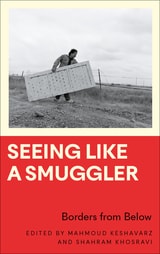
Seeing Like a Smuggler
Borders from BelowMahmoud Keshavarz and Shahram Khosravi
Pluto Press, 2022
Stories of smuggling as acts of resistance and decolonization.
'This conceptually vivid book refreshes our vision' - Ruth Wilson Gilmore
The word smuggler often unleashes a simplified, negative image painted by the media and the authorities. Such state-centric perspectives hide many social, political, and economic relations generated by smuggling. This book looks at the practice through the eyes of the smugglers, revealing how their work can be productive, subversive, and deeply sociopolitical.
By tracing the illegalized movement of people and goods across borders, Seeing Like a Smuggler shows smuggling as a contradiction within the nation-state system, and in a dialectical relation with the national order of things. It raises questions about how smuggling engages and unsettles the ethics, materialities, visualities, histories, and the colonial power relations that form borders and bordering.
Covering a wide spectrum of approaches from personal reflections and ethnographies to historical accounts, cultural analysis, and visual essays, the book spans the globe from Colombia to Ethiopia, Singapore to Guatemala, Afghanistan to Zimbabwe, and from Kurdistan to Bangladesh, to show how people deal with global inequalities and the restrictions of poverty and immobility.

Seeing Red
Anger, Sentimentality, and American IndiansCari M. Carpenter
The Ohio State University Press, 2008

Seeing Through The Media
Jeffords, Susan
Rutgers University Press, 1994
Looking to old and new technologies for mass communication-from CNN to comic books, from international news agencies to tabloids, from bomb sights to the Super Bowl-the essays in this collection show the ways in which public information is shaped, packaged, and disseminated.

Seeing Through The Media
The Persian Gulf WarJeffords, Susan
Rutgers University Press, 1994
Looking to old and new technologies for mass communication-from CNN to comic books, from international news agencies to tabloids, from bomb sights to the Super Bowl-the essays in this collection show the ways in which public information is shaped, packaged, and disseminated.
Seeking Mandela
Peacemaking Between Israelis And PalestiniansHeribert Adam and Kogila Moodley
Temple University Press, 2005
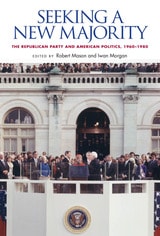
Seeking a New Majority
The Republican Party and American Politics, 1960-1980Robert Mason
Vanderbilt University Press, 2013
Seeking a New Majority assembles an international group of scholars to move beyond the ideas and activities of party leaders who have hitherto received the bulk of historical attention. It illuminates how the Republican Party expanded its regional base, especially in the South, appealed to new constituencies ranging from blue-collar workers to Christian fundamentalists, and enhanced the political appeal of conservatism. It also examines how Republicans engaged in a remarkable organizational and intellectual mobilization to challenge Democratic Party dominance--in search of a new majority.

Seeking the Best Master
State Ownership in the Varieties of CapitalismMiklós Szanyi
Central European University Press, 2020

Seized with the Temper of the Times
Identity and Rebellion in Pre-Revolutionary AmericaAbby Chandler
Westholme Publishing, 2023
In Seized with the Temper of the Times Identity and Rebellion in Pre-Revolutionary America, historian Abby Chandler explores, as never before, the complex local and transatlantic tensions which infused the early imperial crisis. She argues that colonial responses to the Stamp Act were rooted in local tensions and that the Regulator Rebellion was fueled by trans-Atlantic tensions. These two paradoxes, a local crisis cast as imperial affair and an imperial affair cast as local crisis, tell a very different story than the one to which we are accustomed. Without pre-existing local tensions, the fury of the Stamp Act crisis might not have spilled over during the summer of 1765, and, without the added strains of the imperial crisis, the Regulator Rebellion might not have lasted for five years. The questions about the intersecting roles of local and imperial/federal interests and identities raised during both the Stamp Act crisis and the Regulator Rebellion would also continue to inform political thought in Rhode Island and North Carolina in the coming decades. Both colonies had long histories of challenges to their autonomy and their residents embraced the coming revolution before many of their counterparts, but they would also be reluctant participants in the rising union envisioned by the framers of the Constitution.
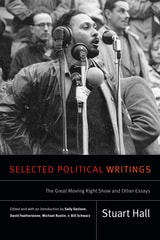
Selected Political Writings
The Great Moving Right Show and Other EssaysStuart Hall
Duke University Press, 2017