Results by title
1668 books match the query 'Popular culture' and 125 start with s
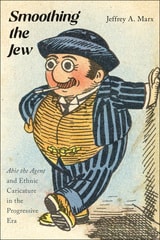
Smoothing the Jew
"Abie the Agent" and Ethnic Caricature in the Progressive EraJeffrey A. Marx
Rutgers University Press, 2024
Smoothing the Jew investigates how Jewish artists of the time attempted to “smooth over” these demeaning portrayals by focusing on the first Jewish comic strip published in English, Harry Hershfield’s Abie the Agent. Jeffrey Marx demonstrates how Hershfield created a Jewish protagonist who in part reassured nativists of the Jews’ ability to assimilate into American society while also encouraging immigrants and their children that, over time, they would be able to adopt American customs without losing their distinctly Jewish identity.

Smothered and Covered
Waffle House and the Southern ImaginaryTy Matejowsky
University of Alabama Press, 2023
A critical meditation of the iconic 24-7 roadside chain and its place in the southern imaginary
Waffle House has long been touted as an icon of the American South. The restaurant’s consistent foregrounding as a resonant symbol of regional character proves relevant for understanding much about the people, events, and foodways shaping the sociopolitical contours of today’s Bible Belt. Whether approached as a comedic punchline on the Internet, television, and other popular media or elevated as a genuine touchstone of messy American modernity, Waffle House, its employees, and everyday clientele do much to transcend such one-dimensional characterizations, earning distinction in ways that regularly go unsung.
Smothered and Covered: Waffle House and the Southern Imaginary is the first book to socioculturally assess the chain within the field of contemporary food studies. In this groundbreaking work, Ty Matejowsky argues that Waffle House’s often beleaguered public persona is informed by various complexities and contradictions. Critically unpacking the iconic eatery from a less reductive perspective offers readers a more realistic and nuanced portrait of Waffle House, shedding light on how it both reflects and influences a prevailing southern imaginary—an amorphous and sometimes conflicting collection of images, ideas, attitudes, practices, linguistic accents, histories, and fantasies that frames understandings about a vibrant if also paradoxical geographic region.
Matejowsky discusses Waffle House’s roots in established southern foodways and traces the chain’s development from a lunch-counter restaurant that emerged across the South. He also considers Waffle House’s place in American and southern popular culture, highlighting its myriad depictions in music, television, film, fiction, stand-up comedy, and sports. Altogether, Matejowsky deftly and persuasively demonstrates how Waffle House serves as a microcosm of today’s South with all the accolades and criticisms this distinction entails.
Snapshot Versions of Life
Richard Chalfen
University of Wisconsin Press, 1987
Chalfen’s “Polaroid People” are recognizable—if ironically viewed—relatives, uncles, aunts, and All-American kids. As members of “Kodak Culture” they watch home movies, take pictures of newborn babies, and even, in their darker moments, scratch out the faces of disliked relatives in group photographs. He examines who shoots these photos and why, as well as how they think (or don’t) of planning, editing, and exhibiting their shots. Chalfen’s analysis reveals the culturally structured behavior underlying seemingly spontaneous photographic activities.

Soccer
Jean-Philippe Toussaint
Rutgers University Press, 2019
Soccer takes readers on an idiosyncratic journey that delves deep into the author’s childhood memories, but also transports us to World Cup matches in Japan, Germany, South Africa, and Brazil. Along the way, it kicks around such provocative questions as: How does soccer fandom both support and transcend nationalism? How are our memories of soccer matches both collective and distinctly personal? And how can a game this beautiful and this ephemeral be adequately captured in words?
Part travelogue, part memoir, and part philosophical essay, Soccer is entirely unique, a thrilling departure from the usual clichés of sports writing. Even readers with little knowledge of the game will be enthralled by Touissant’s profound musings and lyrical prose.

Soccer in Mind
A Thinking Fan's Guide to the Global GameAndrew M. Guest
Rutgers University Press, 2022
This book provides a thinking fan’s guide to the world’s most popular game, proposing a way of engaging soccer that sparks intellectual curiosity and employs critical consciousness. Using stories and data, along with ideas from sociology, psychology, and across the social sciences, it provides readers with new ways of understanding fanaticism, peak performance, talent development, and more. Drawing on concepts ranging from cognitive bias to globalization, it illuminates meanings of the game for players and fans while investigating impacts on our lives and communities. While it considers soccer cultures across the globe, the book also analyzes what makes U.S. soccer culture special, including its embrace of the women’s game.
As a scholar, former minor league player and coach, and fan, Andrew Guest offers a distinctive perspective on soccer in society. Whatever name you call it, and whatever your interest in it, Soccer in Mind will enrich your own view of the one truly global game.
Soccer's Neoliberal Pitch
The Sport's Power, Profit, and Discursive PoliticsJohn M. Sloop
University of Alabama Press, 2023
A powerful cultural critique of soccer’s public rhetoric
American sports agnostics might raise an eyebrow at the idea that soccer represents a staging ground for cultural, social, and political possibility. It is just another game, after all, in a society where mass-audience spectator sports largely avoid any political stance other than a generic, corporate-friendly patriotism. But John M. Sloop picks up on the work of Laurent Dubois and others to see in American soccer—a sport that has achieved immense participation and popularity despite its struggle to establish major league status—a game that permits surprisingly diverse modes of thinking about national identity because of its marginality.
As a rhetorician who draws on both critical theory and culture, Sloop seeks to read soccer as the game intersects with gender, race, sexuality, and class. The result of this engagement is a sense of both enormous possibility and real constraint. If American soccer offers more possibility because of its marginality, looking at how those possibilities are constrained can provide valuable insights into neoliberal logics of power, profit, politics, and selfhood.
In Soccer’s Neoliberal Pitch, Sloop analyzes a host of soccer-adjacent phenomena: the equal pay dispute between the US women’s national team and the US Soccer Federation, the significance of hooligan literature, the introduction of English soccer to American TV audiences, the strange invisibility of the Mexican soccer league despite its consistent high TV ratings, and the reading of US national teams as “underdogs” despite the nation’s quasi-imperial dominance of the Western hemisphere. An invaluable addition to a growing bookshelf on soccer titles, Soccer’s Neoliberal Pitch serves as a model for critical cultural work with sports, with appeal to not only sports studies, but cultural studies, communication, and even gender studies classrooms.
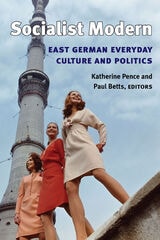
Socialist Modern
East German Everyday Culture and PoliticsKatherine Pence & Paul Betts, editors
University of Michigan Press, 2008
The reunification of Germany in 1989 may have put an end to the experiment in East German communism, but its historical assessment is far from over. Where most of the literature over the past two decades has been driven by the desire to uncover the relationship between power and resistance, complicity and consent, more recent scholarship tends to concentrate on the everyday history of East German citizens.
This volume builds on the latest literature by exploring the development and experience of life in East Germany, with a particular view toward addressing the question: What did modernity mean for the East German state and society? As such, the collection moves beyond the conceptual divide between state-level politics and everyday life to sharply focus on the specific contours of the GDR's unique experiment in Cold War socialism. What unites all the essays is the question of how the very tensions around "socialist modernity" shaped the views, memories, and actions of East Germans over four decades.
"An impressive volume drawing together rich, diverse essays by some of the most interesting, well-known, and experienced scholars on the GDR in the field, on both sides of the Atlantic."
---Dr. Jan Palmowski, Senior Lecturer in European Studies at King's College London, and Review Editor for German History
"Delving into many sides of the GDR modern, Pence and Betts present both new empirical evidence and offer insightful theoretical perspectives. The idea of the 'Socialist Modern' provides an excellent conceptual framework; the focus on culture fills a hole in the literature, the introduction is theoretically sophisticated and well-grounded in the historiography, and the span and heterogeneity of the articles are impressive."
---Donna Harsch, Associate Professor of History, Carnegie Mellon University
Katherine Pence is Assistant Professor of History, Baruch College, City University of New York.
Paul Betts is Reader in Modern German History, University of Sussex, Brighton, England.
Contributors
Daphne Berdahl
Paul Betts
Alon Confino
Greg Eghigian
Dagmar Herzog
Young-Sun Hong
Thomas Lindenberger
Alf Lüdtke
Ina Merkel
Katherine Pence
Judd Stitziel
Dorothee Wierling

Society, Culture, and the State in Germany, 1870-1930
Geoff Eley, Editor
University of Michigan Press, 1997
Some Kind of Mirror
Creating Marilyn MonroeKonkle, Amanda
Rutgers University Press, 2019
Some Kind of Mirror offers the first extended scholarly analysis of Marilyn Monroe’s film performances, examining how they united the contradictory discourses about women’s roles in 1950s America. Amanda Konkle suggests that Monroe’s star persona resonated with audiences precisely because it engaged with the era’s critical debates regarding femininity, sexuality, marriage, and political activism. Furthermore, she explores how Monroe drew from the techniques of Method acting and finely calibrated her performances to better mirror her audience’s anxieties and desires.
Drawing both from Monroe’s filmography and from 1950s fan magazines, newspaper reports, and archived film studio reports, Some Kind of Mirror considers how her star persona was coauthored by the actress, the Hollywood publicity machine, and the fans who adored her. It is about why 1950s America made Monroe a star, but it is also about how Marilyn defined an era.
Something Completely Different
British Television And American CultureJeffrey S. Miller
University of Minnesota Press, 2000
The first comprehensive study of the influence British programming had on American television.
The first comprehensive study of the influence British programming had on American television.
Between Emma Peel and the Ministry of Silly Walks, British television had a significant impact on American popular culture in the 1960s and 1970s. In Something Completely Different, Jeffrey Miller offers the first comprehensive study of British programming on American television, discussing why the American networks imported such series as The Avengers and Monty Python’s Flying Circus; how American audiences received these uniquely British shows; and how the shows’ success reshaped American television.Miller’s lively analysis covers three genres: spy shows, costume dramas, and sketch comedies. In addition to providing his close readings of the series themselves, Miller considers the networks’ packaging of the programs for American viewers and the influences that led to their acceptance, including the American television industry’s search for new advertising revenue and the creation of PBS.Something Completely Different concludes with a discussion of the American programs and genres that owed their existence to British progenitors. Miller convincingly argues that much of what came to define American television by 1980 was in fact British in origin, a contention that casts a new light on traditional discussions of American cultural imperialism.ISBN 0-8166-3240-5 Cloth £31.00 $44.95xxISBN 0-8166-3241-3 Paper £12.50 $17.95x208 Pages 17 black-and-white photos 5 7/8 x 9 JanuaryTranslation inquiries: University of Minnesota Press
Something More than Night
The Case of Raymond ChandlerPeter Wolfe
University of Wisconsin Press, 1985

Sonic Multiplicities
Hong Kong Pop and the Global Circulation of Sound and ImageYiu Fai Chow and Jeroen de Kloet
Intellect Books, 2013
Sons And Daughters Of Los
Culture And Community In L.A.David James
Temple University Press, 2003
Sounding the Center
History and Aesthetics in Thai Buddhist PerformanceDeborah Wong
University of Chicago Press, 2001
Drawing on her extensive fieldwork, Wong lays out the ritual in detail: the way it is enacted, the foods and objects involved, and the people who perform it, emphasizing the way the performers themselves discuss and construct aspects of the ceremony.

Sounds English
TRANSNATIONAL POPULAR MUSICNabeel Zuberi
University of Illinois Press, 2001
Zuberi looks at how the sounds, images, and lyrics of English popular music generate and critique ideas of national belonging, recasting the social and even the physical landscapes of cities like Manchester and London. The Smiths and Morrissey play on romanticized notions of the (white) English working class, while the Pet Shop Boys map a "queer urban Britain" in the AIDS era. The techno-culture of raves and dance clubs incorporates both an anti-institutional do-it-yourself politics and emergent leisure practices, while the potent mix of technology and creativity in British black music includes local conditions as well as a sense of global diaspora. British Asian musicians, drawing on Afrodiasporic and South Asian traditions, seek a sense of place in Britain as commercial interests try to pin down an image of them to market.
Sounds English shows how popular music complicates cherished notions of Englishness as it activates cultural outsiders and taps into a sense of not belonging. Alert and readable, Zuberi's wide-ranging discussion includes the performers Oasis, Blur, Tricky, Massive Attack, Goldie, A Guy Called Gerald, Roni Size, Bally Sagoo, Funˆdaˆmental, Echobelly, Cornershop, Talvin Singh, and others.
Sounds of the Citizens
Dancehall and Community in JamaicaAnne M. Galvin
Vanderbilt University Press, 2014
Galvin highlights the unique alliance between the dancehall industry and community development efforts. As the central role of the state in supporting communities has diminished, the rise of private efforts such as dancehall becomes all the more crucial. The tension, however, between those involved in the industry and those within the neighborhoods is palpable and often dangerous. Amidst all this, individual Jamaicans interact with the dancehall industry and its culture to find their own paths of employment, social identity, and sexual mores.
As Sounds of the Citizens illustrates, the world of entertainment in Jamaica is serious business and uniquely positioned as a powerful force within the community.
Sowing the American Dream
How Consumer Culture Took Root in the Rural MidwestDavid Blanke
Ohio University Press, 2000
From 1840 to 1900, midwestern Americans experienced firsthand the profound economic, cultural, and structural changes that transformed the nation from a premodern, agrarian state to one that was urban, industrial, and economically interdependent. Midwestern commercial farmers found themselves at the heart of these changes. Their actions and reactions led to the formation of a distinctive and particularly democratic consumer ethos, which is still being played out today.
By focusing on the consumer behavior of midwestern farmers, Sowing the American Dream provides illustrative examples of how Americans came to terms with the economic and ideological changes that swirled around them. From the formation of the Grange to the advent of mail-order catalogs, the buying patterns of rural midwesterners set the stage for the coming century.
Carefully documenting the rise and fall of the powerful purchasing cooperatives, David Blanke explains the shifting trends in collective consumerism, which ultimately resulted in a significant change in the way that midwestern consumers pursued their own regional identity, community, and independence.

Space
A MemoirJesse Lee Kercheval
University of Wisconsin Press, 2014
Speak Peace
Words of Wisdom, Work, and WonderLynette Ford
Parkhurst Brothers, Inc., 2019
Speaking Truths
Young Adults, Identity, and Spoken Word ActivismValerie Chepp
Rutgers University Press, 2022
Drawing upon detailed observations and in-depth interviews, Chepp tells the story of a diverse group of young adults from Washington, D.C. who use spoken word to create a more just and equitable world. Outlining the contours of this approach, she interrogates spoken word activism’s emphasis on personal storytelling and “truth,” the strategic uses of aesthetics and emotions to politically engage across difference, and the significance of healing in sustainable movements for change. Weaving together their poetry and personally told stories, Chepp shows how poets tap into the beautiful, emotional, personal, and therapeutic features of spoken word to empathically connect with others, advance intersectional and systemic analyses of inequality, and make social justice messages relatable across a diverse public. By creating allies and forging connections based on friendship, professional commitments, lived experiences, emotions, artistic kinship, and political views, this activist approach is highly integrated into the everyday lives of its practitioners, online and face-to-face.
Chepp argues that spoken word activism is a product of, and a call to action against, the neoliberal era in which poets have come of age, characterized by widening structural inequalities and increasing economic and social vulnerability. She illustrates how this deeply personal and intimate activist approach borrows from, builds upon, and diverges from previous social movement paradigms. Spotlighting the complexity and mutual influence of modern-day activism and the world in which it unfolds, Speaking Truths contributes to our understanding of contemporary social change-making and how neoliberalism has shaped this political generation’s experiences with social injustice.
Specular City
The Transformation Of Culture, ConsumptionLaura Podalsky
Temple University Press, 2004
Speculative Blackness
The Future of Race in Science FictionAndré M. Carrington
University of Minnesota Press, 2016
In Speculative Blackness, André M. Carrington analyzes the highly racialized genre of speculative fiction—including science fiction, fantasy, and utopian works, along with their fan cultures—to illustrate the relationship between genre conventions in media and the meanings ascribed to blackness in the popular imagination.
Carrington’s argument about authorship, fandom, and race in a genre that has been both marginalized and celebrated offers a black perspective on iconic works of science fiction. He examines the career of actor Nichelle Nichols, who portrayed the character Uhura in the original Star Trek television series and later became a recruiter for NASA, and the spin-off series Star Trek: Deep Space Nine, set on a space station commanded by a black captain. He recovers a pivotal but overlooked moment in 1950s science fiction fandom in which readers and writers of fanzines confronted issues of race by dealing with a fictitious black fan writer and questioning the relevance of race to his ostensible contributions to the 'zines. Carrington mines the productions of Marvel comics and the black-owned comics publisher Milestone Media, particularly the representations of black sexuality in its flagship title, Icon. He also interrogates online fan fiction about black British women in Buffy the Vampire Slayer and the Harry Potter series.
Throughout this nuanced analysis, Carrington theorizes the relationship between race and genre in cultural production, revealing new understandings of the significance of blackness in twentieth-century American literature and culture.

Spirit Possession in Buddhist Southeast Asia
Worlds Ever More EnchantedEdited by Bénédicte Brac de la Perrière and Peter A. Jackson
National University of Singapore Press, 2022

Spoiler Alert
A Critical GuideAaron Jaffe
University of Minnesota Press, 2019
All of this information at our fingertips—and we might not need any of it
Concurrent with the compulsory connectivity of the digital age is the rise of the spoiler. The inevitability of information has changed the critical quality of modernity, leaving us with acute vertigo—a feeling that nothing new is left out there. Encompassing memes and trigger warnings, Vilem Flusser and Thomas Pynchon, Spoiler Alert wrangles with the state of surprise in post-historical times. Aaron Jaffe delivers a timely corrective to post-critical modes of reading that demonstrates the dangers of forfeiting critical suspicion.
Forerunners: Ideas First
Short books of thought-in-process scholarship, where intense analysis, questioning, and speculation take the lead

Sponsored Identities
Cultural Politics in Puerto RicoArlene Davila
Temple University Press, 1997
Author Arlene Davila focuses on the Institute for Puerto Rican Culture, the government institution charged with defining authenticated views of national identity since the 1950s, and on popular festival organizers to illuminate contestations over appropriate representations of culture in the increasingly mass-mediated context of contemporary Puerto Rico. She examines the creation of an essentialist view of nationhood based on a peasant culture and a "unifying" Hispanic heritage, and the ways in which grassroots organizations challenge and reconfigure definitions of national identity through their own activities and representations.
Davila pays particular attention to the increasing prominence of corporate sponsorship in determining what is distinguished as authentic "Puerto Rican culture" and discusses the politicization of culture as a discourse to debate and legitimize conflicting claims from selling commercial product to advocating divergent status options for the island. In so doing, Davila illuminates the prospects for cultural identities in an increasingly transnational context by showing the growth of cultural nationalism to be intrinsically connected to forms of political action directed to the realm of culture and cultural politics. This in-depth examination also makes clear that despite contemporary concerns with "authenticity," commercialism is an inescapable aspect of all cultural expression on the island.

Spoon River America
Edgar Lee Masters and the Myth of the American Small TownJason Stacy
University of Illinois Press, 2021
A literary and cultural milestone, Spoon River Anthology captured an idea of the rural Midwest that became a bedrock myth of life in small-town America. Jason Stacy places the book within the atmosphere of its time and follows its progress as the poetry took root and thrived. Published by Edgar Lee Masters in 1915, Spoon River Anthology won praise from modernists while becoming an ongoing touchstone for American popular culture. Stacy charts the ways readers embraced, debated, and reshaped Masters's work in literary controversies and culture war skirmishes; in films and other media that over time saw the small town as idyllic then conflicted then surreal; and as the source of three archetypes—populist, elite, and exile—that endure across the landscape of American culture in the twenty-first century.
A wide-ranging reconsideration of a literary landmark, Spoon River America tells the story of how a Midwesterner's poetry helped change a nation's conception of itself.

Sports Immortals
Deifying the American AthletePeter Williams
University of Wisconsin Press, 1994

Sports Movies
Lester D. Friedman
Rutgers University Press, 2020
In Sports Movies, Lester D. Friedman describes the traditional formulas that have made these movies such crowd-pleasers, including stock figures like the disgraced athlete on a quest for redemption, or the wise old coaches who help mentor the heroes to victory. He also explores how the genre’s attitudes have changed over time, especially in key issues like class, race, masculinity, and women in sports.
Along the way, he takes stock of sports films from the dawn of cinema’s silent era to the present day, including classic baseball movies like Pride of the Yankees and Bull Durham, basketball movies like Hoosiers and He’s Got Game, football movies like Friday Night Lights and Rudy, and boxing movies like Raging Bull and Million Dollar Baby. As Friedman’s analyses reveal, not only do sports movies influence our perceptions about the drama of real-life sports, but they also help to shape our attitudes toward the competitive ethos in American life.

Sports
The First Five MillenniaAllen Guttmann
University of Massachusetts Press, 2004
From ancient Egyptian archery and medieval Japanese football to contemporary American baseball, every sport has been shaped by—and in turn has helped shape—the culture of which it is part. Yet as Allen Guttmann shows in this far-ranging study, for all their differences sports have followed a similar historical trajectory from traditional to modern forms.
In Sports: The First Five Millennia, Guttmann traces this evolution across continents, cultures, and historical epochs to construct a single comprehensive narrative of the world's sports.

Squee from the Margins
Fandom and RaceRukmini Pande
University of Iowa Press, 2018
Rukmini Pande’s examination of race in fan studies is sure to make an immediate contribution to the growing field. Until now, virtually no sustained examination of race and racism in transnational fan cultures has taken place, a lack that is especially concerning given that current fan spaces have never been more vocal about debating issues of privilege and discrimination.
Pande’s study challenges dominant ideas of who fans are and how these complex transnational and cultural spaces function, expanding the scope of the field significantly. Along with interviewing thirty-nine fans from nine different countries about their fan practices, she also positions media fandom as a postcolonial cyberspace, enabling scholars to take a more inclusive view of fan identity. With analysis that spans from historical to contemporary, Pande builds a case for the ways in which non-white fans have always been present in such spaces, though consistently ignored.
Stage Blood
Vampires of the 19th Century StageRoxana Stuart
University of Wisconsin Press, 1994

Staged Readings
Contesting Class in Popular American Theater and Literature, 1835-75Michael D’Alessandro
University of Michigan Press, 2022
Based in the historical archive, Staged Readings presents a panoramic display of mid-century leisure and entertainment. It examines best-selling novels, such as Harriet Beecher Stowe’s Uncle Tom’s Cabin and George Lippard’s The Quaker City. But it also analyzes a series of sensational melodramas, parlor theatricals, doomsday speeches, tableaux vivant displays, curiosity museum exhibits, and fake volcano explosions. These oft-overlooked spectacles capitalized on consumers’ previous cultural encounters and directed their social identifications. The book will be particularly appealing to those interested in histories of popular theater, literature and reading, social class, and mass culture.

Stagestruck
Theater, AIDS, and the Marketing of Gay AmericaSarah Schulman
Duke University Press, 1998
Closely recounting her discovery of the ways in which Rent took materials from her own novel, Schulman takes us on her riveting and infuriating journey through the power structures of New York theater and media, a journey she pursued to seek legal restitution and make her voice heard. Then, to provide a cultural context for the emergence of Rent—which Schulman experienced first-hand as a weekly theater critic for the New York Press at the time of Rent’s premiere—she reveals in rich detail the off- and off-off-Broadway theater scene of the time. She argues that these often neglected works and performances provide more nuanced and accurate depictions of the lives of gay men, Latinos, blacks, lesbians and people with AIDS than popular works seen in full houses on Broadway stages. Schulman brings her discussion full circle with an incisive look at how gay and lesbian culture has become rapidly commodified, not only by mainstream theater productions such as Rent but also by its reduction into a mere demographic made palatable for niche marketing. Ultimately, Schulman argues, American art and culture has made acceptable a representation of “the homosexual” that undermines, if not completely erases, the actual experiences of people who continue to suffer from discrimination or disease. Stagestruck’s message is sure to incite discussion and raise the level of debate about cultural politics in America today.
Staging Masculinity
The Rhetoric of Performance in the Roman WorldErik Gunderson
University of Michigan Press, 2000
Staging Place
The Geography of Modern DramaUna Chaudhuri
University of Michigan Press, 1997
Chaudhuri starts with a discussion of a "poetics of exile" in early modern drama, where the figure of home is constructed as a locus of two conflicting impulses: the desire to find a stable site for individual identity and the desire to deterritorialize the self. By mid-century, she argues, a new discourse of "failed homecoming" begins to displace this geopathic model and replace the poetics of exile with a grim anti-poetics of immigration. She then employs postmodern and postcolonial theories of place and culture to define the emerging multiculturalism as a creative reworking of the figures of home, homecoming, homelessness, immigration and exile.
"This is a book of real originality. Its treatment of space in modern drama is elegant and powerful. . . ." --William B. Worthen, Northwestern University
"Staging Place is a powerfully written book, deft in its handling of familiar and unfamiliar plays alike and eclectic in its use of theatrical sources." --Essays in Theatre/ Études théâtrales
"This sophisticated and well-written study for graduate students and their teachers explores modern drama's preoccupation with the seemingly irreconcilable discontinuities between the notions of home and homelessness, belonging and exile. . . . The readings of individual plays are fresh and invigorating. . . ." --Choice
Una Chaudhuri is Associate Professor of English, New York University.
Staging Resistance
Essays on Political TheaterJeanne Colleran and Jenny S. Spencer, Editors
University of Michigan Press, 1998
Stand-up Comedy in Theory, or, Abjection in America
John Limon
Duke University Press, 2000
Limon begins with stand-up comics in the 1950s and 1960s—Lenny Bruce, Carl Reiner, Mel Brooks, Mike Nichols, Elaine May—when the norm of the profession was the Jewish, male, heterosexual comedian. He then moves toward the present with analyses of David Letterman, Richard Pryor, Ellen DeGeneres, and Paula Poundstone. Limon incorporates feminist, race, and queer theories to argue that the “comedification” of America—stand-up comedy’s escape from its narrow origins—involves the repossession by black, female, queer, and Protestant comedians of what was black, female, queer, yet suburbanizing in Jewish, male, heterosexual comedy. Limon’s formal definition of stand-up as abject art thus hinges on his claim that the great American comedians of the 1950s and 1960s located their comedy at the place (which would have been conceived in 1960 as a location between New York City or Chicago and their suburbs) where body is thrown off for the mind and materiality is thrown off for abstraction—at the place, that is, where American abjection has always found its home.

Star Wars Multiverse
Carmelo Esterrich
Rutgers University Press, 2021
Star Wars may have started out as a film about a Manichean battle between good and evil, but as countless filmmakers, novelists, animators, fan artists and even cosplayers have taken the opportunity to play in the fictional world George Lucas created, it has expanded into something far greater, resulting in a richly layered and diverse Star Wars multiverse.
Drawing from a full range of Star Wars media, including comics, children’s books, fan films, and television shows like Clone Wars and The Mandalorian, Carmelo Esterrich explores how these stories set in a galaxy far far away reflect issues that hit closer to home. He examines what they have to say about political oppression, authoritarianism, colonialism, discrimination, xenophobia, and perpetual war. Yet he also investigates subtler ways in which the personal is political within the multiverse, including its articulations of gender and sexuality, its cultural hierarchies of language use, and its complex relationships between humans, droids and myriad species. This book demonstrates that the Star Wars multiverse is not just a stage for thrilling interstellar battles, but also an exciting space for interpretation and discovery.

Star Wars after Lucas
A Critical Guide to the Future of the GalaxyDan Golding
University of Minnesota Press, 2019
Politics, craft, and cultural nostalgia in the remaking of Star Wars for a new age
A long time ago, in a galaxy far, far away—way back in the twenty-first century’s first decade—Star Wars seemed finished. Then in 2012 George Lucas shocked the entertainment world by selling the franchise, along with Lucasfilm, to Disney. This is the story of how, over the next five years, Star Wars went from near-certain extinction to what Wired magazine would call “the forever franchise,” with more films in the works than its first four decades had produced.
Focusing on The Force Awakens (2015), Rogue One (2016), The Last Jedi (2017), and the television series Rebels (2014–18), Dan Golding explores the significance of pop culture nostalgia in overcoming the skepticism, if not downright hostility, that greeted the Star Wars relaunch. At the same time he shows how Disney, even as it tapped a backward-looking obsession, was nonetheless creating genuinely new and contemporary entries in the Star Wars universe.
A host of cultural factors and forces propelled the Disney-engineered Star Wars renaissance, and all figure in Golding’s deeply informed analysis: from John Williams’s music in The Force Awakens to Peter Cushing’s CGI face in Rogue One, to Carrie Fisher’s passing, to the rapidly changing audience demographic. Star Wars after Lucas delves into the various responses and political uses of the new Star Wars in a wider context, as in reaction videos on YouTube and hate-filled, misogynistic online rants. In its granular textual readings, broad cultural scope, and insights into the complexities of the multimedia galaxy, this book is as entertaining as it is enlightening, an apt reflection of the enduring power of the Star Wars franchise.
Star Worlds
Freedom Versus Control in Online GameworldsWilliam Sims Bainbridge
University of Michigan Press, 2016
The four “star worlds” explored in this book illustrate the dilemmas concerning the role of technology as liberator or oppressor in our postindustrial society, and represent computer simulations of future possibilities of human experience. Bainbridge considers the relationship between a real person and the role that person plays, the relationship of an individual to society, and the relationship of human beings to computing technology. In addition to collecting ethnographic and quantitative data about the social behavior of other players, he has immersed himself in each of these worlds, role-playing 14 avatars with different skills and goals to gain new insights into the variety of player experience from a personal perspective.
Stardust Monuments
The Saving and Selling of HollywoodAlison Trope
Dartmouth College Press, 2012
Starting Over
Feminism and the Politics of Cultural CritiqueJudith Newton
University of Michigan Press, 1994
State Work
Public Administration and Mass IntellectualityStefano Harney
Duke University Press, 2002
State Work begins with an ethnographic account of Harney’s work as a midlevel manager within an Ontario government initiative charged with leading the province’s efforts to combat racism. Through readings of material such as The X-Files and Law & Order, Harney then reviews how popular images of the state and government labor are formed within American culture and how these ideas shape everyday life. He highlights the mutually dependent roles played in state work by the citizenry and civil servants. Using as case studies Al Gore’s National Partnership for Reinventing Government and a community-policing project in New York City, Harney also critiques public management literature and performance measurement theories. He concludes his study with a look at the motivations of state workers.
State of Minds
Texas Culture and Its DiscontentsBy Don Graham
University of Texas Press, 2011
John Steinbeck once famously wrote that "Texas is a state of mind." For those who know it well, however, the Lone Star State is more than one mind-set, more than a collection of clichés, more than a static stereotype. There are minds in Texas, Don Graham asserts, and some of the most important are the writers and filmmakers whose words and images have helped define the state to the nation, the world, and the people of Texas themselves. For many years, Graham has been critiquing Texas writers and films in the pages of Texas Monthly and other publications. In State of Minds, he brings together and updates essays he published between 1999 and 2009 to paint a unique, critical picture of Texas culture.
In a strong personal voice—wry, humorous, and ironic—Graham offers his take on Texas literary giants ranging from J. Frank Dobie to Larry McMurtry and Cormac McCarthy and on films such as The Alamo, The Last Picture Show, and Brokeback Mountain. He locates the works he discusses in relation to time and place, showing how they sprang (or not) from the soil of Texas and thereby helped to define Texas culture for generations of readers and viewers—including his own younger self growing up on a farm in Collin County. Never shying from controversy and never dull, Graham's essays in State of Minds demolish the notion that "Texas culture" is an oxymoron.
Stay Tuned
Listening to the Network EraPatrick Sullivan
Rutgers University Press, 2026
Since the 1950s, television flooded the American soundscape with not just pictures but sounds, a constant aural stream infiltrating domestic life. In Stay Tuned, Patrick Sullivan treats network-era television sound not as background noise or auxiliary signal but as a formative texture of aesthetic life in postwar America. He theorizes how television’s sonic forms—asynchronous audiovisuals, noises, affective rhythms, what he collectively terms “network aurality”—trouble traditional aesthetic theory. Stay Tuned takes up critiques of television sound and repurposes them as evidence of a deeper philosophical discomfort: Namely, that television sound does something to aesthetic categories that they weren’t built to handle. From the laugh track to the cartoon “boinks,” from noises to the jingle, Sullivan reads television sounds not as cultural detritus but as formal interventions—forcing a redefinition of what aesthetics means when form is mass-produced, commercial, and built for syndication. What emerges is not just a new theory and history of television sound but a reimagined account of aesthetic experience itself—expanded, recalibrated, and a little wacky.
Staying Tuned
Contemporary Soap Opera CriticismSuzanne Frentz
University of Wisconsin Press, 1992
A growing body of scholarly literature exists now to provide insights and suggest answers to the question of why so many continually return to the routine tragedies of daytime drama. Each of our chapters explores an aspect of soap opera which contributes to the endurance of the genre.
Stellar Transformations
Movie Stars of the 2010sSteven Rybin
Rutgers University Press, 2022
Stephen King's America
Jonathan P. Davis
University of Wisconsin Press, 1994
Stephen King's America aims to heighten awareness of the numerous American issues that resonate throughout King's fiction, issues that bear universal application to the evolution of the human condition.
Steppin' Out
New York Nightlife and the Transformation of American CultureLewis A. Erenberg
University of Chicago Press, 1984
Stewards of the House
Detective Fiction of Jonathan LatimerBill Brubaker
University of Wisconsin Press, 1993
Jonathan Latimer (1906-1983) wrote nine detective novels. He also wrote or co-wrote 20 film scripts, including such noir classics as the second version of Dasheill Hammett's The Glass Key, Kenneth Fearing's The Big Clock, and Cornell Woolrich's The Night Has a Thousand Eyes. Moving to television writing, he scripted 45 original stories and adapted 50 Eric Stanley Gardner novels for the Perry Mason series.