Results by title
1201 books match the query 'Race relations' and 77 start with s
Southern Insurgency
The Coming of the Global Working ClassImmanuel Ness
Pluto Press, 2015
The product of extensive firsthand field research, Southern Insurgency paints a picture of the new industrial proletariat in the Global South—a group that lives a precarious, frightening existence yet at the same time offers hope for new approaches to solidarity and the anti-capitalist struggle.
Southern Stalemate
Five Years without Public Education in Prince Edward County, VirginiaChristopher Bonastia
University of Chicago Press, 2011
Sparks from the Anvil of Oppression
Philadelphia's African Methodists and Southern Migrants, 1890-1940Robert Gregg
Temple University Press, 1998
Spatializing Blackness
Architectures of Confinement and Black Masculinity in ChicagoRashad Shabazz
University of Illinois Press, 2015
A geographic study of race and gender, Spatializing Blackness casts light upon the ubiquitous--and ordinary--ways carceral power functions in places where African Americans live. Moving from the kitchenette to the prison cell, and mining forgotten facts from sources as diverse as maps and memoirs, Rashad Shabazz explores the myriad architectures of confinement, policing, surveillance, urban planning, and incarceration. In particular, he investigates how the ongoing carceral effort oriented and imbued black male bodies and gender performance from the Progressive Era to the present. The result is an essential interdisciplinary study that highlights the racialization of space, the role of containment in subordinating African Americans, the politics of mobility under conditions of alleged freedom, and the ways black men cope with--and resist--spacial containment.
A timely response to the massive upswing in carceral forms within society, Spatializing Blackness examines how these mechanisms came to exist, why society aimed them against African Americans, and the consequences for black communities and black masculinity both historically and today.
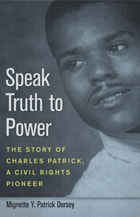
Speak Truth to Power
The Story of Charles Patrick, a Civil Rights PioneerMignette Y. Patrick Dorsey
University of Alabama Press, 2010
"Patrick did not intend to become a civil rights pioneer, but a minor dispute over a parking spot led to his arrest, beating while in custody, and eventual legal tribulations. His daughter's account of his ordeal is well researched, beautifully narrated, and extremely informative." —Journal of Southern History
On December 11, 1954, Charles Patrick drove to downtown Birmingham to buy a Boy Scout uniform for his son. Christmas traffic around the downtown department stores was heavy, and Patrick circled unsuccessfully until at last a streetside spot opened up and he began to pull in. As he did so, he was cut off by a woman who ordered him out of the way, as she was the wife of a city police officer. Patrick pulled away, remarking, "Ma’am, he doesn’t own the streets of Birmingham."
Normal low-level urban hassle? Not in 1954 Birmingham, when the woman was white and Patrick black. The woman reported to her husband that a black man had sassed her, and Patrick was summarily arrested, charged with disorderly conduct, and placed in a cell where he was beaten by the husband and another police officer.
Usually that would have been the end of it, but Patrick was not the sort of man to meekly endure an injustice. He found an attorney, went to court to fight the charges, and brought his assailants to justice--as whites, blacks, politicians and the press offered public support.
This book tells the story of Patrick’s quest for justice in segregated Alabama on the eve of the civil rights movement and represents a telling instance of the growing determination of African Americans to be treated fairly, part of the broadening and deepening stream of resolve that led to the widespread activism of the civil rights movement.
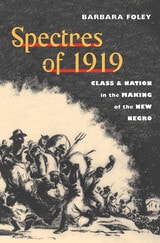
Spectres of 1919
Class and Nation in the Making of the New NegroBarbara Foley
University of Illinois Press, 2002
A look at the violent “Red Summer of 1919” and its intersection with the highly politicized New Negro movement and the Harlem Renaissance
With the New Negro movement and the Harlem Renaissance, the 1920s was a landmark decade in African American political and cultural history, characterized by an upsurge in racial awareness and artistic creativity. In Spectres of 1919 Barbara Foley traces the origins of this revolutionary era to the turbulent year 1919, identifying the events and trends in American society that spurred the black community to action and examining the forms that action took as it evolved.
Unlike prior studies of the Harlem Renaissance, which see 1919 as significant mostly because of the geographic migrations of blacks to the North, Spectres of 1919 looks at that year as the political crucible from which the radicalism of the 1920s emerged. Foley draws from a wealth of primary sources, taking a bold new approach to the origins of African American radicalism and adding nuance and complexity to the understanding of a fascinating and vibrant era.
Staking Claim
Settler Colonialism and Racialization in Hawai'iJudy Rohrer
University of Arizona Press, 2016
Author Judy Rohrer brings together an analysis of racial formation and colonization in the islands through a study of legal cases, contemporary public discourse (local media and literature), and Hawai‘i scholarship. Her analysis exposes how racialization works to obscure—with the ultimate goal of eliminating—native Hawaiian indigeneity, homeland, nation, and sovereignty.
Staking Claim argues that the dual settler colonial processes of racializing native Hawaiians (erasing their indigeneity), and indigenizing non-Hawaiians, enable the staking of non-Hawaiian claims to Hawai‘i. It encourages us to think beyond a settler-native binary by analyzing the ways racializations of Hawaiians and various non-Hawaiian settlers and arrivants bolster settler colonial claims, structures, and white supremacist ideologies.
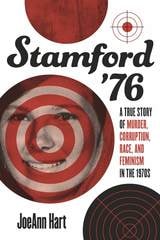
Stamford '76
A True Story of Murder, Corruption, Race, and Feminism in the 1970sJoeAnn Hart
University of Iowa Press, 2019
Looking back at what might have happened in 1976, the author discovers a Bicentennial year steeped in recession, racism, and unrelenting violence. It was also a time of flourishing second-wave feminism, when young women were encouraged to do anything, if only they knew how. Stamford was in the midst of urban renewal, destroying historically black neighborhoods to create space for corporations escaping a bankrupt and dangerous New York City, just forty miles away. Organized crime followed the money, infiltrating Stamford at all levels. The author reveals how racism, misogyny, the economy, and corruption affected the young people’s daily lives, and helped lead Margo and Howie to their deaths.
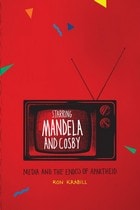
Starring Mandela and Cosby
Media and the End(s) of ApartheidRon Krabill
University of Chicago Press, 2010
During the worst years of apartheid, the most popular show on television in South Africa—among both Black and White South Africans—was The Cosby Show. Why did people living under a system built on the idea that Black people were inferior and threatening flock to a show that portrayed African Americans as comfortably mainstream? Starring Mandela and Cosby takes up this paradox, revealing the surprising impact of television on racial politics.
The South African government maintained a ban on television until 1976, and according to Ron Krabill, they were right to be wary of its potential power. The medium, he contends, created a shared space for communication in a deeply divided nation that seemed destined for civil war along racial lines. At a time when it was illegal to publish images of Nelson Mandela, Bill Cosby became the most recognizable Black man in the country, and, Krabill argues, his presence in the living rooms of white South Africans helped lay the groundwork for Mandela’s release and ascension to power.
Weaving together South Africa’s political history and a social history of television, Krabill challenges conventional understandings of globalization, offering up new insights into the relationship between politics and the media.
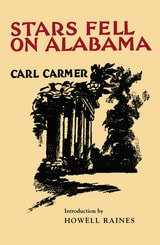
Stars Fell on Alabama
Carl Carmer
University of Alabama Press, 2000
A timeless journey into the heart and folklore of Alabama.
Stars Fell on Alabama is a landmark work of Southern literature that transports readers to Alabama during the early 20th century. Written by Carl Carmer, this evocative narrative blends memoir, travel writing, and folklore to paint a rich portrait of a region steeped in tradition and complexity. Carmer captures the rhythms of rural life, the haunting beauty of the landscape, and the voices of its people—farmers, musicians, storytellers—whose tales reveal the cultural fabric of the Deep South. From ghost stories and folk songs to accounts of social customs and racial tensions, this book offers an unflinching yet affectionate look at Alabama’s heritage. Both a historical document and a literary masterpiece, Stars Fell on Alabama remains essential reading for anyone interested in Southern history, American folklore, and the enduring power of storytelling.
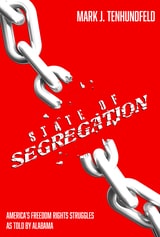
State of Segregation
America’s Freedom Rights Struggles as Told by AlabamaMark J. Tenhundfeld
University of Alabama Press, 2026
A revealing legal journey through Alabama’s civil rights battles, exposing systemic discrimination and the enduring fight for justice via landmark Supreme Court cases
State of Segregation: America’s Freedom Rights Struggles, as Told by Alabama by Mark J. Tenhundfeld offers a compelling exploration of Alabama’s civil rights and civil liberties history through the lens of thirty-two pivotal US Supreme Court cases. Each case, rooted in Alabama’s social and legal conflicts, reveals the persistent struggle to fulfill the Constitution’s promises of equal protection and due process. From early twentieth-century challenges to the Alabama Constitution of 1901 to contemporary battles over gerrymandering, Tenhundfeld traces how discrimination was embedded in the state’s institutions—and how it was contested.
State of Segregation uniquely blends legal analysis, historical narrative, and social commentary to expose the deep-rooted systems of racial, gender, and class-based discrimination in Alabama. Tenhundfeld argues that while discrimination is the most defining feature of Alabama’s past, it remains the most difficult to confront. By illuminating the legal strategies used to uphold and dismantle injustice, State of Segregation contributes to the broader understanding of how historical inequities continue to shape modern society.
Accessible to general readers and scholars alike, this work stands apart by combining Alabama history, civil rights struggles, and Supreme Court jurisprudence into a single, powerful narrative. It offers both cautionary tales about the fragility of freedom and enduring lessons for today’s social justice advocates.

States of Grace
Senegalese in Italy and the New European ImmigrationDonald Martin Carter
University of Minnesota Press, 1997
States of Grace was first published in 1997. Minnesota Archive Editions uses digital technology to make long-unavailable books once again accessible, and are published unaltered from the original University of Minnesota Press editions.
Leaving their depleted fields for better prospects, Senegalese immigrants have made their way to Italy in significant numbers. What this migration means, in the context of both the migratory traditions and conditions of Africa and the history and future of the European nation-state, is the subject of this timely and ambitious book.
Focusing on Turin, the northern Italian point of entry for so many Senegalese, States of Grace chronicles the arrival and formation of a transnational African Islamic community in a largely Catholic Western European country, one that did not have immigrant legislation until 1991. With no colonial relation to Italy, the Senegalese represent the vanguard of population movements expanding outside of the arch of former colonial powers.
Donald Martin Carter locates the Senegalese migration in the context of past African internal and international migration and of present crises in West African agriculture. He also shows how the Senegalese migration, constituting a "phenomenon" and catalyzing new immigration restrictions among European states, calls into question the European interstate system, the future of the nation-state, and the nature of its relationship with non-European states.
Throughout Europe, protectionist immigration policies are often crafted in chauvinist and racist tones in which "migrants" is a euphemism for blacks, Arabs, and Asians. States of Grace uses Senegalese migration to demonstrate that racial conceptions are crucial to understanding the classifications of non-national "outside" and internal "other." The book is a bracing encounter with the ever-increasing cultural and ethnic heterogeneity that is the new and pressing reality of European society.
Donald Martin Carter is visiting assistant professor of anthropology at Johns Hopkins University.
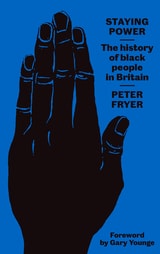
Staying Power
The History of Black People in BritainPeter Fryer
Pluto Press, 2018
Stretching back to the Roman conquest, encompassing the court of Henry VIII, and following a host of characters from the pioneering nurse and war hero Mary Seacole to the abolitionist Olaudah Equiano, Peter Fryer paints a picture of two thousand years of black presence in Britain. By rewriting black Britons into British history, showing where they influenced political traditions, social institutions, and cultural life, Staying Power presented a radical challenge to racist and nationalist agendas. This edition includes a new foreword by Gary Younge examining the book’s continued significance in shaping black British identity today, alongside the now-classic introduction by Paul Gilroy.
Stealing Indian Women
Native Slavery in the Illinois CountryCarl J. Ekberg
University of Illinois Press, 2009
Steve Biko
Lindy Wilson
Ohio University Press, 2011
Steve Biko inspired a generation of black South Africans to claim their true identity and refuse to be a part of their own oppression. Through his example, he demonstrated fearlessness and self-esteem, and he led a black student movement countrywide that challenged and thwarted the culture of fear perpetuated by the apartheid regime. He paid the highest price with his life. The brutal circumstances of his death shocked the world and helped isolate his oppressors.
This short biography of Biko shows how fundamental he was to the reawakening and transformation of South Africa in the second half of the twentieth century—and just how relevant he remains. Biko’s understanding of black consciousness as a weapon of change could not be more relevant today to “restore people to their full humanity.”
As an important historical study, this book’s main sources were unique interviews done in 1989—before the end of apartheid—by the author with Biko’s acquaintances, many of whom have since died.
Sticky Rice
A Politics of Intraracial DesireCynthia Wu
Temple University Press, 2018
Cynthia Wu’s provocative Sticky Rice examines representations of same-sex desires and intraracial intimacies in some of the most widely read pieces of Asian American literature. Analyzing canonical works such as John Okada’s No-No Boy, Monique Truong’s The Book of Salt, H. T. Tsiang’s And China Has Hands, and Lois-Ann Yamanaka’s Blu’s Hanging, as well as Philip Kan Gotanda’s play, Yankee Dawg You Die, Wu considers how male relationships in these texts blur the boundaries among the homosocial, the homoerotic, and the homosexual in ways that lie beyond our concepts of modern gay identity.
The “sticky rice” of Wu’s title is a term used in gay Asian American culture to describe Asian American men who desire other Asian American men. The bonds between men addressed in Sticky Rice show how the thoughts and actions founded by real-life intraracially desiring Asian-raced men can inform how we read the refusal of multiple normativities in Asian Americanist discourse. Wu lays bare the trope of male same-sex desires that grapple with how Asian America’s internal divides can be resolved in order to resist assimilation.
Still The Big News
Racial Oppression In AmericaBob Blauner
Temple University Press, 2001
Blauner launched his concept of internal colonialism in the turbulent 1960's, a period in which many Americans worried that racial conflicts would propel the country into another civil war. The notion that the systematic oppression of people of color in the United States resembles the situation of colonized populations in Third World countries still informs much of the academic research on race as well as public discourse. Indeed, today's critical race and whiteness studies are deeply indebted to Blauner's work on internal colonialism and the pervasiveness of white privilege. Offering a radical perspective on the United States' racial landscape, Bob Blauner forcefully argues that we ignore the persistence of oppression and our continuing failure to achieve equality at our own peril.

Still the Arena of Civil War
Violence and Turmoil in Reconstruction Texas, 1865-1874Kenneth W. Howell
University of North Texas Press, 2012
Strange Future
Pessimism and the 1992 Los Angeles RiotsMin Hyoung Song
Duke University Press, 2005
Song considers works that address the riots and often the traumatic place of the Korean American community within them: the independent documentary Sa-I-Gu (Korean for April 29, the date the riots began), Chang-rae Lee’s novel Native Speaker, the commercial film Strange Days, and the experimental drama of Anna Deavere Smith, among many others. He describes how cultural producers have used the riots to examine the narrative of national decline, manipulating language and visual elements, borrowing and refashioning familiar tropes, and, perhaps most significantly, repeatedly turning to metaphors of bodily suffering to convey a sense of an unraveling social fabric. Song argues that these aesthetic experiments offer ways of revisiting the traumas of the past in order to imagine more survivable futures.
Strangers in the Land
Patterns of American Nativism, 1860-1925Higham, John
Rutgers University Press, 1988

Strong Inside
Perry Wallace and the Collision of Race and Sports in the SouthAndrew Maraniss
Vanderbilt University Press, 2024
2015 RFK Book Awards Special Recognition
2015 Lillian Smith Book Award
2015 AAUP Books Committee "Outstanding" Title
When Strong Inside was first published ten years ago, no one could have predicted the impact the book would have on Vanderbilt University, Nashville, and communities across the nation. What began as a biography of Perry Wallace—the first African American basketball player in the Southeastern Conference (SEC)—became a catalyst for meaningful change and reconciliation between Wallace and the city that had rejected him. In this tenth-anniversary edition, scholars of race and sports Louis Moore and Derrick E. White provide a new foreword that places the story in the context of the study of sports and society, and author Andrew Maraniss adds a concluding chapter filling readers in on how events unfolded between Strong Inside’s publication in 2014 and Perry Wallace’s death in 2017 and exploring Wallace’s continuing legacy.
Wallace entered kindergarten the year that Brown v. Board of Education upended “separate but equal.” As a twelve-year-old, he sneaked downtown to watch the sit-ins at Nashville’s lunch counters. A week after Martin Luther King Jr.’s “I Have a Dream” speech, Wallace entered high school, and later saw the passage of the Civil Rights and Voting Rights acts. On March 19, 1966, his Pearl High School basketball team won Tennessee’s first integrated state tournament—the same day Adolph Rupp’s all-white Kentucky Wildcats lost to the all-Black Texas Western Miners in an iconic NCAA title game.
The world seemed to be opening up at just the right time, and when Vanderbilt recruited him, Wallace courageously accepted the assignment to desegregate the SEC. His experiences on campus and in the hostile gymnasiums of the Deep South turned out to be nothing like he ever imagined.

Strong Inside
Perry Wallace and the Collision of Race and Sports in the SouthAndrew Maraniss
Vanderbilt University Press, 2014
2015 RFK Book Awards Special Recognition
2015 Lillian Smith Book Award
2015 AAUP Books Committee "Outstanding" Title
Based on more than eighty interviews, this fast-paced, richly detailed biography of Perry Wallace, the first African American basketball player in the SEC, digs deep beneath the surface to reveal a more complicated and profound story of sports pioneering than we've come to expect from the genre. Perry Wallace's unusually insightful and honest introspection reveals his inner thoughts throughout his journey.
Wallace entered kindergarten the year that Brown v. Board of Education upended "separate but equal." As a 12-year-old, he sneaked downtown to watch the sit-ins at Nashville's lunch counters. A week after Martin Luther King Jr.'s "I Have a Dream" speech, Wallace entered high school, and later saw the passage of the Civil Rights and Voting Rights acts. On March 16, 1966, his Pearl High School basketball team won Tennessee's first integrated state tournament--the same day Adolph Rupp's all-white Kentucky Wildcats lost to the all-black Texas Western Miners in an iconic NCAA title game.
The world seemed to be opening up at just the right time, and when Vanderbilt recruited him, Wallace courageously accepted the assignment to desegregate the SEC. His experiences on campus and in the hostile gymnasiums of the Deep South turned out to be nothing like he ever imagined.
On campus, he encountered the leading civil rights figures of the day, including Stokely Carmichael, Martin Luther King Jr., Fannie Lou Hamer, and Robert Kennedy--and he led Vanderbilt's small group of black students to a meeting with the university chancellor to push for better treatment.
On the basketball court, he experienced an Ole Miss boycott and the rabid hate of the Mississippi State fans in Starkville. Following his freshman year, the NCAA instituted "the Lew Alcindor rule," which deprived Wallace of his signature move, the slam dunk.
Despite this attempt to limit the influence of a rising tide of black stars, the final basket of Wallace's college career was a cathartic and defiant dunk, and the story Wallace told to the Vanderbilt Human Relations Committee and later The Tennessean was not the simple story of a triumphant trailblazer that many people wanted to hear. Yes, he had gone from hearing racial epithets when he appeared in his dormitory to being voted as the university's most popular student, but, at the risk of being labeled "ungrateful," he spoke truth to power in describing the daily slights and abuses he had overcome and what Martin Luther King had called "the agonizing loneliness of a pioneer."

Structures of Indifference
An Indigenous Life and Death in a Canadian CityMary Jane Logan McCallum
University of Manitoba Press, 2018
Sueños Americanos
Barrio Youth Negotiating Social and Cultural IdentitiesJulio Cammarota
University of Arizona Press, 2012
For nearly a decade Julio Cammarota interviewed and observed Latino youth between the ages of seventeen and twenty-four who lived in a barrio in a city on the California coast. He conducted forty life interviews, selecting six people to investigate in depth. Twenty of the study participants worked at a fast-food restaurant, while the other twenty worked at a community cultural center.
Focusing on the experiences of his subjects in the primary settings of family, work, and school, Cammarota structured his research to examine how Latino youth negotiate myriad social conditions and hostile economic and political pressures in their daily lives. His extensive interviews and incisive analyses illuminate the complex relationships among low-wage employment, cultural standards, education, class oppression, and gender expectations.
Among other topics, Cammarota investigates how working affects Latino education; how gender influences social relationships and life choices; how Latinos and Latinas try to maintain their distinct ethnic identity while attempting to transcend marginalization; whether the Latino culture helps young people work hard for their families and for a better future; and how the connections and disconnections among work, family, and school constitute formative processes that shape the cultural identities of Latino youth.
One of the most extensive studies of barrio youth available, Sueños Americanos concludes with a discussion of social justice education for Latino youth and how this educational approach meets their academic needs while providing opportunities for self-determination and community activism.
Suffering for Territory
Race, Place, and Power in ZimbabweDonald S. Moore
Duke University Press, 2005
Moore makes a significant contribution to postcolonial theory with his conceptualization of “entangled landscapes” by articulating racialized rule, situated sovereignties, and environmental resources. Fusing Gramscian cultural politics and Foucault’s analytic of governmentality, he enlists ethnography to foreground the spatiality of power. Suffering for Territory demonstrates how emplaced micro-practices matter, how the outcomes of cultural struggles are contingent on the diverse ways land comes to be inhabited, labored upon, and suffered for.
Sunbelt Diaspora
Race, Class, and Latino Politics in Puerto Rican OrlandoBy Patricia Silver
University of Texas Press, 2020
2021 — Silver Medal, Raul Yzaguirre Best Political/Current Affairs Book – International Latino Book Awards, Latino Literacy Now
An in-depth look at an emerging Latino presence in Orlando, Florida, where Puerto Ricans and others navigate differences of race, class, and place of origin in their struggle for social, economic, and political belonging.
Puerto Ricans make up half of Orlando-area Latinos, arriving from Puerto Rico as well as from other long-established diaspora communities to a place where Latino politics has long been about Cubans in Miami. Together with other Latinos from multiple places, Puerto Ricans bring diverse experiences of race and class to this Sunbelt city. Tracing the emergence of the Puerto Rican and Latino presence in Orlando from the 1940s through an ethnographic moment of twenty-first-century electoral redistricting, Sunbelt Diaspora provides a timely prism for viewing how differences of race, class, and place play out in struggles to claim political, social, and economic ground for Latinos.
Drawing on over a decade of ethnographic, oral history, and archival research, Patricia Silver situates her findings in Orlando’s historically black-white racial landscape, post-1960s claims to “color-blindness,” and neoliberal celebrations of individualism. Through the voices of diverse participants, Silver brings anthropological attention to the question of how social difference affects collective identification and political practice. Sunbelt Diaspora asks what constitutes community and how criteria for membership and legitimate representation are negotiated.
Survival Pending Revolution
The History of the Black Panther PartyPaul Alkebulan
University of Alabama Press, 2007