Results by title
28167 books match the query 'History' and 1838 start with s
Social Origins of the Iranian Revolution
Parsa, Misagh
Rutgers University Press, 1989
Existing theories of revolution explain earlier revolutions better than the Iranian revolution. In Iran most of the protest was in urban areas, the peasants never played a major role, and power was transferred to the clergy, not to an intelligentsia. In the 1970s, oil revenues increased, the economy developed rapidly but unevenly, and the state's expanded intervention undermined market forces and politicized capital accumulation. Systematic repression of workers, aid to the upper class, and attacks on secular and religious opposition showed that the state was serving the interests of particular groups. When the state tried to check high inflation by imposing price controls on bazaaris (merchants, shopkeepers, artisans), their protests forced the state to introduce reforms, providing an opportunity for industrial workers, white-collar workers, intellectuals, and the clergy to mobilize against the state. Thus, structural features rendered the state vulnerable to challenge and attack.
Parsa's thorough explanation of the collective actions of each major group in Iran in the three decades prior to the revolution shows how a coalition of classes and groups, using mosques as safe gathering places and led by a segment of the clergy, brought down the monarch of 1979. In the years since the revolution, the conflicts that existed before the revolution seem to be reemerging, in slightly altered form. The clergy now has control, and the state has become centrally and powerfully involved in the economy of the country.

Social Research for our Times
Thomas Coram Research Unit past, Present and FutureEdited by Claire Cameron, Alison Koslowski, Alison Lamont, and Peter Moss
University College London, 2023
For fifty years, researchers at UCL’s Thomas Coram Research Unit have been undertaking ground-breaking policy-relevant social research. Their main focus has been social issues affecting children, young people, and families and the services provided for them. Social Research for our Times brings together different generations of researchers from the Unit to share some of the most important results of their studies.
Two sections focus on the main findings and conclusions from research into children and children services and on family life, minoritized groups, and gender. A third section is devoted to the innovative methods that have been developed and used to undertake research in these complex areas. Running through the book is a key strategic question: what should be the relationship between research and policy? Or put another way, what does “policy-relevant research” mean? This perennial question has gained new importance in the post-COVID, post-Brexit world that we have entered, making this text a timely intervention for sharing decades of experience. Taking a unique opportunity to reflect on the research context as well as research findings, this book will be of interest to researchers, teachers, students, and those involved in policy-making both in and beyond dedicated research units, and it can be read as a whole or sampled for individual standalone chapters.
Social Science for What?
Philanthropy and the Social Question in a World Turned Rightside UpAlice O'Connor
Russell Sage Foundation, 2007

Social Science in America
The First Two Hundred YearsEdited by Charles M. Bonjean, Louis Schneider, and Robert L. Lineberry
University of Texas Press, 1976
This outstanding symposium concerns the development of the social sciences in the United States over its first two hundred years and was brought together by the editors of Social Science Quarterly as the journal's contribution to the nation's Bicentennial celebration.
Six prominent scholars representing history, economics, sociology, political science, anthropology, and geography were invited to write essays about the general topic of the progress of the social sciences, and to pursue original lines of thought as well. Each was asked to address three key questions regarding their own discipline: (1) the distinctive contributions made to each discipline by American scholars; (2) the impact of these contributions upon American society; and (3) the relationship of these contributions to the character or nature of life in the United States. The result is a coherent collection of considerable breadth and exceptional quality.
The essays include "Time's American Adventures: American History and Historical Writing since 1776" by William Goetzmann; "Economics: Its Direct and Indirect Impact in America, 1776-1976" by Joseph J. Spengler; "Sociology in America: The Experience of Two Centuries" by Robin M. Williams; "Understanding Political Life in America: The Contribution of Political Science" by Heinz Eulau; "Anthropology in America" by Walter Goldschmidt; and "Geography As a Social Science: Recent American Experience" by Kevin Cox.

Social Science in the Crucible
The American Debate over Objectivity and Purpose, 1918–1941Mark C. Smith
Duke University Press, 1994
Mark C. Smith first provides a historical overview of the controversy over the nature and future of the social sciences in early twentieth-century America and, then through a series of intellectual biographies, offers an intensive study of the work and lives of major figures who participated in this debate. Using an extensive range of materials, from published sources to manuscript collections, Smith examines "objectivists"—economist Wesley Mitchell and political scientist Charles Merriam—and the more "purposive thinkers"—historian Charles Beard, sociologist Robert Lynd, and political scientist and neo-Freudian Harold Lasswell. He shows how the debate over objectivity and social purpose was central to their professional and personal lives as well as to an understanding of American social science between the two world wars. These biographies bring to vivid life a contentious moment in American intellectual history and reveal its significance in the shaping of social science in this country.
Social Science in the Making
Essays on the Russell Sage Foundation, 1907-1972David C. Hammack
Russell Sage Foundation, 1994
Social Singing among the Mapuche
Mischa Titiev
University of Michigan Press, 1949
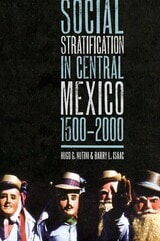
Social Stratification in Central Mexico, 1500-2000
By Hugo G. Nutini and Barry L. Isaac
University of Texas Press, 2009
In Aztec and colonial Central Mexico, every individual was destined for lifelong placement in a legally defined social stratum or estate. Social mobility became possible after independence from Spain in 1821 and increased after the 1910–1920 Revolution. By 2000, the landed aristocracy that was for long Mexico's ruling class had been replaced by a plutocracy whose wealth derives from manufacturing, commerce, and finance—but rapid growth of the urban lower classes reveals the failure of the Mexican Revolution and subsequent agrarian reform to produce a middle-class majority. These evolutionary changes in Mexico's class system form the subject of Social Stratification in Central Mexico, 1500–2000, the first long-term, comprehensive overview of social stratification from the eve of the Spanish Conquest to the end of the twentieth century.
The book is divided into two parts. Part One concerns the period from the Spanish Conquest of 1521 to the Revolution of 1910. The authors depict the main features of the estate system that existed both before and after the Spanish Conquest, the nature of stratification on the haciendas that dominated the countryside for roughly four centuries, and the importance of race and ethnicity in both the estate system and the class structures that accompanied and followed it. Part Two portrays the class structure of the post-revolutionary period (1920 onward), emphasizing the demise of the landed aristocracy, the formation of new upper and middle classes, the explosive growth of the urban lower classes, and the final phase of the Indian-mestizo transition in the countryside.
Social Theory and the Study of Israelite Religion
Essays in Retrospect and ProspectSaul M. Olyan
SBL Press, 2012

Social Trust in the Nordic World
Gert Tinggaard Svendsen and Christian Bjørnskov
University of Wisconsin Press, 2023
Is the Nordic countries’ high level of social trust just as important for creating prosperity and happiness within a population as other, more tangible economic factors? If so, where does this stock of social trust in Scandinavia come from? Does it help to explain the development of the universal welfare states and their surprisingly high business competitiveness? Can other nations learn from the region and apply that knowledge to settings where social trust levels are low or in danger of being eroded?
Social trust has proven economic value, and Gert Tinggaard Svendsen warns that its benefits should never be taken for granted. Trust can dissolve and vanish quickly, and once gone, it is very difficult to rebuild. Governments and corporations are gradually increasing their control over people’s public and private lives, with predictably worrying results. When people feel taken advantage of or lied to, public confidence evaporates. Since strong social cohesion drives long-term prosperity, Nordic exceptionalism on maintaining and restoring trust offers valuable lessons.

Socialism and Modernity
Peter Beilharz
University of Minnesota Press, 2009
This first collection of Peter Beilharz's highly influential thought traces the themes and problems, manifestations, and trajectories of socialism and modernity as they connect and shift over a twenty-year period. Woven throughout Beilharz's analysis is the urgent question of modern utopia: how do we imagine freedom and equality in modernity?
The essays in this volume explore the relationship between socialism and modernity across the United States, Europe, and Australia from the mid-1980s to the turn of the twenty-first century, a time that witnessed the global triumph of capitalism and the dramatic turn away from Marxism and socialism to modernity as the dominant perspective. According to Beilharz, we have seen the expansion of a kind of Weberian Marxism, with the concept of revolution giving way to the idea of pluralized forms of power and the idea of rupture giving way to the postmodern sense of difference. These changes come together with the discourse of modernism, both aesthetic and technological.
Socialism and modernity, Beilharz argues, are fundamentally interrelated. In correcting the conflation of Marxism, Bolshevism, and socialism that occludes contemporary political thinking, he reopens a space for discussion of what socialist politics might look like now-in the postcommunist-postcolonial-postmodern moment.
Socialism and War
Essays, Documents, ReviewsF. A. Hayek
University of Chicago Press, 1997
Opening with Hayek's arguments against market socialism, the volume continues with his writings on the economics of war, many in response to the proposals made in John Maynard Keynes's famous pamphlet, How to Pay for the War. The last section presents articles that anticipated The Road to Serfdom, Hayek's classic meditation on the dangers of collectivism. An appendix contains a number of topical book reviews written by Hayek during this crucial period, and a masterful introduction by the volume editor, Bruce Caldwell, sets Hayek's work in context.
Socialism and War will interest not just fans of The Road to Serfdom, but anyone concerned with the ongoing debates over the propriety of government intervention in the economy.
"When he wrote The Road to Serfdom, [Hayek's] was a voice in the wilderness. Now the fight [has] been taken up by people all over the world, by institutions and movements, and the ideas that seemed so strange to many in 1944 can be found from scholarly journals to television programs."—Thomas Sowell, Forbes
"Intellectually [Hayek] towers like a giant oak in a forest of saplings."—Chicago Tribune
"Each new addition to The Collected Works of F. A. Hayek, the University of Chicago's painstaking series of reissues and collections, is a gem."—Liberty on Volume IX of The Collected Works of F. A. Hayek
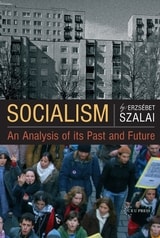
Socialism
An Analysis of its Past and FutureErzsébet Szalai
Central European University Press, 2005

Socialism
What Went WrongIrwin Silber
Pluto Press, 1994
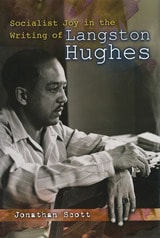
Socialist Joy in the Writing of Langston Hughes
Jonathan Scott
University of Missouri Press, 2007
Jonathan Scott has written the first book-length study to analyze the extraordinary range of Hughes’s creative output, showing that his unassailable reputation as one of America’s finest “folk poets” barely scratches the surface of his oeuvre. Scott offers a robust account of the relations between Hughes and political activism to show that Hughes’s direct involvement with the U.S. socialist movement of the 1920s and 1930s was largely responsible for the variety of his writing. Scott also contends that the goal of overthrowing white oppression produced a “socialist joy” that would express itself repeatedly in Hughes’s work during the anticommunist crusades of the 1950s and 1960s.
In his provocative study, Scott explores four areas of Hughes’s intellectual work: his relationship with Afro-Caribbean arts, Soviet Russia, and the Harlem Renaissance; his postwar newspaper writing for the African American press; his extensive cultural work as an anthologist; and his writings for young people. Through these analyses, Scott proposes the concept of “red, white, and black” as an alternative paradigm for appreciating Hughes in particular and the American scene in general.
Scott views Hughes not simply as a great author but as an American working-class intellectual trickster whose eccentric projects require a redefinition of the very concept of authorship. By focusing on Hughes’s intellectual method, Scott also contests the notion of reducing all African Americans to one undifferentiated social status beneath that of any class within the white oppressing group—a hallmark of racial oppression that has diminished, in the U.S. academy, Hughes’s international status.
As Scott persuasively argues, it is only through an understanding of Hughes’s literary method that we can undertake a thorough account of his prolific production during the cold war era. His book situates Hughes’s life and work in their proper contexts, both reconfirming Hughes’s reputation as an intellectual of the American Left and establishing his long-denied place in American studies as the most well-rounded writer of his time.
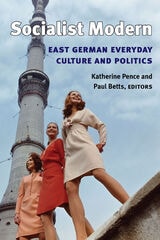
Socialist Modern
East German Everyday Culture and PoliticsKatherine Pence & Paul Betts, editors
University of Michigan Press, 2008
The reunification of Germany in 1989 may have put an end to the experiment in East German communism, but its historical assessment is far from over. Where most of the literature over the past two decades has been driven by the desire to uncover the relationship between power and resistance, complicity and consent, more recent scholarship tends to concentrate on the everyday history of East German citizens.
This volume builds on the latest literature by exploring the development and experience of life in East Germany, with a particular view toward addressing the question: What did modernity mean for the East German state and society? As such, the collection moves beyond the conceptual divide between state-level politics and everyday life to sharply focus on the specific contours of the GDR's unique experiment in Cold War socialism. What unites all the essays is the question of how the very tensions around "socialist modernity" shaped the views, memories, and actions of East Germans over four decades.
"An impressive volume drawing together rich, diverse essays by some of the most interesting, well-known, and experienced scholars on the GDR in the field, on both sides of the Atlantic."
---Dr. Jan Palmowski, Senior Lecturer in European Studies at King's College London, and Review Editor for German History
"Delving into many sides of the GDR modern, Pence and Betts present both new empirical evidence and offer insightful theoretical perspectives. The idea of the 'Socialist Modern' provides an excellent conceptual framework; the focus on culture fills a hole in the literature, the introduction is theoretically sophisticated and well-grounded in the historiography, and the span and heterogeneity of the articles are impressive."
---Donna Harsch, Associate Professor of History, Carnegie Mellon University
Katherine Pence is Assistant Professor of History, Baruch College, City University of New York.
Paul Betts is Reader in Modern German History, University of Sussex, Brighton, England.
Contributors
Daphne Berdahl
Paul Betts
Alon Confino
Greg Eghigian
Dagmar Herzog
Young-Sun Hong
Thomas Lindenberger
Alf Lüdtke
Ina Merkel
Katherine Pence
Judd Stitziel
Dorothee Wierling

Socialist Realism without Shores
Thomas Lahusen and Evgeny Dobrenko, eds.
Duke University Press, 1997
The contributors here argue that socialist realism has never been a monolithic art form. Essays demonstrate, among other things, that its literature could accommodate psychoanalytic criticism; that its art and architecture could affect the aesthetic dictates of Moscow that made "Soviet" art paradoxically heterogeneous; and that its aesthetics could accommodate both high art and crafted kitsch. Socialist Realism without Shores also addresses the critical discourse provoked by socialist realism—Stalinist aesthetics, "anthropological" readings; ideology critique and censorship; and the sublimely ironic approaches adapted from sots art, the Soviet version of postmodernism.
Contributors. Antoine Baudin, Svetlana Boym, Greg Castillo, Katerina Clark, Evgeny Dobrenko, Boris Groys, Hans Günther, Julia Hell, Leonid Heller, Mikhail Iampolski, Thomas Lahusen, Régine Robin, Yuri Slezkine, Lily Wiatrowski Phillips, Xudong Zhang, Sergei Zimovets
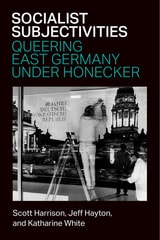
Socialist Subjectivities
Queering East Germany under HoneckerScott Harrison, Jeff Hayton, and Katharine White, Editors
University of Michigan Press, 2025
Whether one was an apparatchik, artist, or alcoholic, the everyday interactions, experiences, and rituals of late socialism proved crucial to establishing the conditions around which subjecthood was constructed. Despite stereotypes of apathy and inertia, East Germans lent a considerable dynamism to their society, and by generating a cacophony of opinions and a heterogeneity of ideas, they constantly transformed state socialism. By foregrounding socialist subjects and the iterative nature of socialism during these decades, this volume paints a richer portrait of East Germany—one that illuminates how East Germans imagined their futures in a society whose collapse they could not foresee.

Socializing Medicine
Health Humanities and East Asian MediaEdited by Pao-chen Tang, Yuqian Yan, and Ling Zhang
Hong Kong University Press, 2025
Socializing Medicine explores the intersections of medicine, health, and East Asian media. Interweaving archival research, audiovisual analyses, and theoretical insights from the emerging field of Health Humanities, the contributors reveal the multifaceted ways in which mass media—including photography, film, television, and live streaming—has been deployed as a tool for controlling medicine and health, privileging those with power and authority since the early twentieth century. Adopting anti-colonial and anti-capitalist perspectives, the contributors in this volume challenge the dominant mediations of health against the backdrop of imperialism, Cold War geopolitical tensions, and neoliberal capitalism. Collectively, they advocate for alternative understandings of medical culture through media productions that envision accessible and equitable healthcare practices.

Societies in Eclipse
Archaeology of the Eastern Woodlands Indians, A.D. 1400-1700Edited by David S. Brose, C. Wesley Cowan, and Robert C. Mainfort
University of Alabama Press, 2001
After establishing the distribution of prehistoric and historic populations from the northeastern Appalachian forests to the southern trans-Mississippian prairies, the contributors consider the archaeological and cultural record of several specific groups, including Mohawk and Onondaga, Monacan, Coosa, and Calusa. For each, they present new evidence of cultural changes prior to European contact, including populations movements triggered by the Little Ice Age (AD 1550–1770), shifting exchange and warfare networks, geological restriction of effective maize subsistence, and use of empty hunting territories as buffers between politically unstable neighbors. The contributors also trace European influences, including the devastation caused by European-introduced epidemics and the paths of European trade goods that transformed existing Native American-exchange networks.
While the profound effects of European explorers, missionaries, and traders on Eastern Woodlands tribes cannot be denied, the archaeological evidence suggests that several indigenous societies were already in the process of redefinition prior to European contact. The essays gathered here show that, whether formed in response to natural or human forces, cultural change may be traced through archaeological artifacts, which play a critical role in answering current questions regarding cultural persistence.

Society, Culture, and the State in Germany, 1870-1930
Geoff Eley, Editor
University of Michigan Press, 1997
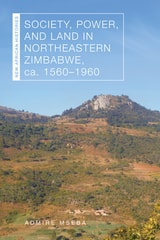
Society, Power, and Land in Northeastern Zimbabwe, ca. 1560–1960
Admire Mseba
Ohio University Press, 2024
This book refocuses attention on how regimes of power rooted in kinship, gender, generation, and status have, individually and in combination, informed access to land in precolonial northeastern Zimbabwe. It then examines how these regimes of power interacted with colonial policies to inform the African experience in colonial Zimbabwe. Further, the book places land and the ability to ensure its fecundity at the center of the making and moderation of precolonial political power and how this power was impacted by the imposition of colonial rule.
Tracing the dynamics of land and power from precolonial times, together with their entanglement with colonial policies, is important, for this relationship is almost always neglected by both scholars and policymakers drawn to the high drama of colonial and postcolonial politics of land. This oversight has real consequences on our understandings of landed inequalities and how they are addressed. When Zimbabwe’s postcolonial state focused on colonially induced racialized land inequalities, its land reform efforts left older forms of landed inequalities based on gender, generation, and ideas of belonging intact. The book, which details these inequalities, reminds Zimbabweans and others that if the quest for equity espoused in postcolonial land reforms is to be meaningful, it must be attentive to both colonially induced inequalities and those enduring disparities that predated, were deepened by, and outlived colonial rule. At the same time, Zimbabweans who now live with a postcolonial state that is increasingly centralizing power over land may well learn from past societies’ creative efforts to limit the authority of their leaders.
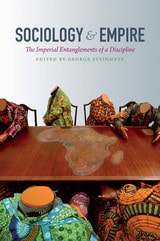
Sociology and Empire
The Imperial Entanglements of a DisciplineGeorge Steinmetz, ed.
Duke University Press, 2013
The collection has a threefold agenda: to trace an intellectual history of sociology as it pertains to empire; to offer empirical studies based around colonies and empires, both past and present; and to provide a theoretical basis for future sociological analyses that may take empire more fully into account. In the 1940s, the British Colonial Office began employing sociologists in its African colonies. In Nazi Germany, sociologists played a leading role in organizing the occupation of Eastern Europe. In the United States, sociology contributed to modernization theory, which served as an informal blueprint for the postwar American empire. This comprehensive anthology critiques sociology's disciplinary engagement with colonialism in varied settings while also highlighting the lasting contributions that sociologists have made to the theory and history of imperialism.
Contributors. Albert Bergesen, Ou-Byung Chae, Andy Clarno, Raewyn Connell, Ilya Gerasimov, Julian Go, Daniel Goh, Chandan Gowda, Krishan Kumar, Fuyuki Kurasawa, Michael Mann, Marina Mogilner, Besnik Pula, Anne Raffin, Emmanuelle Saada, Marco Santoro, Kim Scheppele, George Steinmetz, Alexander Semyonov, Andrew Zimmerman
Sociology in America
A HistoryEdited by Craig Calhoun
University of Chicago Press, 2007
Though the word “sociology” was coined in Europe, the field of sociology grew most dramatically in America. Despite that disproportionate influence, American sociology has never been the subject of an extended historical examination. To remedy that situation—and to celebrate the centennial of the American Sociological Association—Craig Calhoun assembled a team of leading sociologists to produce Sociology in America.
Rather than a story of great sociologists or departments, Sociology in America is a true history of an often disparate field—and a deeply considered look at the ways sociology developed intellectually and institutionally. It explores the growth of American sociology as it addressed changes and challenges throughout the twentieth century, covering topics ranging from the discipline’s intellectual roots to understandings (and misunderstandings) of race and gender to the impact of the Depression and the 1960s.
Sociology in America will stand as the definitive treatment of the contribution of twentieth-century American sociology and will be required reading for all sociologists.
Contributors:
Andrew Abbott, Daniel Breslau, Craig Calhoun, Charles Camic, Miguel A. Centeno, Patricia Hill Collins, Marjorie L. DeVault, Myra Marx Ferree, Neil Gross, Lorine A. Hughes, Michael D. Kennedy, Shamus Khan, Barbara Laslett, Patricia Lengermann, Doug McAdam, Shauna A. Morimoto, Aldon Morris, Gillian Niebrugge, Alton Phillips, James F. Short Jr., Alan Sica, James T. Sparrow, George Steinmetz, Stephen Turner, Jonathan VanAntwerpen, Immanuel Wallerstein, Pamela Barnhouse Walters, Howard Winant
Sociology on Film
Postwar Hollywood's Prestige CommodityCagle, Chris
Rutgers University Press, 2016

Sociopolitical Aspects of Canal Irrigation in the Valley of Oaxaca
Susan H. Lees
University of Michigan Press, 1973
Socrates and the Jews
Hellenism and Hebraism from Moses Mendelssohn to Sigmund FreudMiriam Leonard
University of Chicago Press, 2012
"What has Athens to do with Jerusalem?” Asked by the early Christian Tertullian, the question was vigorously debated in the nineteenth century. While classics dominated the intellectual life of Europe, Christianity still prevailed and conflicts raged between the religious and the secular. Taking on the question of how the glories of the classical world could be reconciled with the Bible, Socrates and the Jews explains how Judaism played a vital role in defining modern philhellenism.
Socrates of Constantinople
Historian of Church and StateTheresa Urbainczyk
University of Michigan Press, 1997
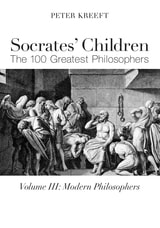
Socrates' Children
Modern: The 100 Greatest PhilosophersPeter Kreeft
St. Augustine's Press, 2016
This is the third of a four-volume history of philosophy . . . on ancient, medieval, modern, and contemporary philosophy. After the fourth volume is produced in paper, a one-volume clothbound edition, containing all four paperbound editions, will be published.
Kreeft focuses on the “big ideas” that have influenced present people and present times, and includes relevant biographical data, proportionate to its importance for each thinker. Moreover, the aim of the work is to stimulate philosophizing, controversy, and argument. It uses ordinary language and logic, not jargon and symbolic logic, and it is commonsensical (like Aristotle) and existential in the sense that it sees philosophy as something to be lived and experienced in life. Philosophy, after all, is not about philosophy but reality . . . about wisdom, life and death, good
and evil, and God.
Kreeft seeks to be simple and direct and clear. But it is not dumbed down and patronizing. It will stretch the reader, but it is meant for beginnings, not just scholars. It can be used for college classes or do-it-yourselfers. It emphasizes surprises; remember, “philosophy begins in wonder.” And it includes visual aids: charts, cartoons, line drawings, and drawings of each philosopher.

Soda Goes Pop
Pepsi-Cola Advertising and Popular MusicJoanna K. Love
University of Michigan Press, 2019
Soda Goes Pop investigates these and other vital questions around the evolving relationships between popular music and corporate advertising. Joanna K. Love joins musical analysis, historical research, and cultural theory to trace parallel shifts in these industries over eight decades. In addition to scholarly and industry resources, she draws on first-hand accounts, pop culture magazines, trade press journals, and other archival materials. Pepsi’s longevity as an influential American brand, its legendary commercials, and its pioneering, relentless pursuit of alliances with American musical stars makes the brand a particularly instructive point of focus. Several of the company’s most famous ad campaigns are prime examples of the practice of redaction, whereby marketers select, censor, and restructure musical texts to fit commercial contexts in ways that revise their aesthetic meanings and serve corporate aims. Ultimately, Love demonstrates how Pepsi’s marketing has historically appropriated and altered images of pop icons and the meanings of hit songs, and how these commercials shaped relationships between the American music business, the advertising industry, and corporate brands.
Soda Goes Pop is a rich resource for scholars and students of American studies, popular culture, advertising, broadcast media, and musicology. It is also an accessible and informative book for the general reader, as Love’s musical and theoretical analyses are clearly presented for non-specialist audiences and readers with varying degrees of musical knowledge.
Sodomy in Reformation Germany and Switzerland, 1400-1600
Helmut Puff
University of Chicago Press, 2003
Written with precision and meticulously researched, this revealing study will interest historians of gender, sexuality, and religion, as well as scholars of medieval and early modern history and culture.

Sofia Petrovna
Lydia Chukovskaya
Northwestern University Press, 1989
Soft Canons
American Women WritersKaren L. Kilcup
University of Iowa Press, 1999
Soft Corruption
How Unethical Conduct Undermines Good Government and What To Do About ItSchluter, William E
Rutgers University Press, 2017
In this searing personal narrative, the former state senator recounts his fight to expose and reform these acts of government misconduct. Not afraid to cite specific cases of soft corruption in New Jersey politics, he paints a vivid portrait of public servants who care more about political power and personal gain than the public good. By recounting events that he witnessed firsthand in the Garden State, he provides dramatic illustrations of ills that afflict American politics nationwide.
As he identifies five main forms of soft corruption, Schluter diagnoses the state government’s ethical malaise, and offers concrete policy suggestions for how it might be cured. Not simply a dive through the muck of New Jersey politics, Soft Corruption is an important first step to reforming our nation’s political system, a book that will inspire readers to demand that our elected officials can and must do better.
Visit: www.softcorruption.com (http://www.softcorruption.com)
Soil and Soul
How Russia’s Minority Communities Create Meaning and IdentityEdited by Yana Hashamova and Gulnaz Sharafutdinova
University of Wisconsin Press, 2027
By landmass, Russia is the world’s largest country, due largely to centuries of military expansion, imperial rule, and colonization. As a result, it contains people of many ethnicities, nationalities, religions, and languages. Yet Russia’s non-Russian, Indigenous, and minority communities have often been marginalized by state policy and underrepresented in scholarship. Soil and Soul explores how these communities sustain distinct forms of identity and belonging not only through discourse or state institutions but also through embodied relations with land, nature, and animals. These local practices complicate and unsettle state-centered narratives of Russian cultural superiority by showing how meaning and identity are created through relationships with the nonhuman world. Drawing on decolonial, anthropological, environmental, sociological, linguistic, and geographic approaches, this volume reframes minority agency as ecosocial practice embedded in local ecologies, everyday life, and postimperial power asymmetries.
Contributors: Megan Dixon, Yana Hashamova, Kristina Kovalskaya, Jesko Schmoller, Gulnaz Sharafutdinova, Laura Siragusa, Zoia Tarasova, Baasanjav Terbish

Sojiji
Discipline, Compassion, and Enlightenment at a Japanese Zen TempleJoshua A. Irizarry
University of Michigan Press, 2022
Based on more than fifteen years of fieldwork, interviews, and archival research, Sōjiji: Discipline, Compassion, and Enlightenment at a Japanese Zen Temple immerses the reader in the lives and experiences of the different groups that comprise Sōjiji's contemporary religious community. Through clear and accessible prose, ethnographically-grounded analysis, and emotionally compelling stories, the reader will explore the rich pastiche of daily life and ritual activity at a major Japanese Zen temple in institutional, historical, and social context through the lived practices of its community of clergy, practitioners, parishioners, and visitors.

Sojourner Truth's America
Margaret Washington
University of Illinois Press, 2009
Sojourner in the Promised Land
Forty Years among the MormonsJan Shipps
University of Illinois Press, 2001
Sojourners in a Strange Land
Jesuits and Their Scientific Missions in Late Imperial ChinaFlorence C. Hsia
University of Chicago Press, 2009
Though Jesuits assumed a variety of roles as missionaries in late imperial China, their most memorable guise was that of scientific expert, whose maps, clocks, astrolabes, and armillaries reportedly astonished the Chinese. But the icon of the missionary-scientist is itself a complex myth. Masterfully correcting the standard story of China Jesuits as simple conduits for Western science, Florence C. Hsia shows how these missionary-scientists remade themselves as they negotiated the place of the profane sciences in a religious enterprise.
Sojourners in a Strange Land develops a genealogy of Jesuit conceptions of scientific life within the Chinese mission field from the sixteenth through eighteenth centuries. Analyzing the printed record of their endeavors in natural philosophy and mathematics, Hsia identifies three models of the missionary man of science by their genres of writing: mission history, travelogue, and academic collection. Drawing on the history of early modern Europe’s scientific, religious, and print culture, she uses the elaboration and reception of these scientific personae to construct the first collective biography of the Jesuit missionary-scientist’s many incarnations in late imperial China.
Sojourning for Freedom
Black Women, American Communism, and the Making of Black Left FeminismErik S. McDuffie
Duke University Press, 2011
Soknopaiou Nesos
The University of Michigan Excavations at Dime in 1931-32Edited by Arthur E. R. Boak
University of Michigan Press, 1935
Sol Butler
An Olympian's Odyssey through Jim Crow AmericaBrian Hallstoos
University of Illinois Press, 2026

Solar Adobe
Energy, Ecology, and Earthen ArchitectureAlbert Narath
University of Minnesota Press, 2024
How a centuries-old architectural tradition reemerged as a potential solution to the political and environmental crises of the 1970s
Against the backdrop of a global energy crisis, a widespread movement embracing the use of raw earth materials for building construction emerged in the 1970s. Solar Adobe examines this new wave of architectural experimentation taking place in the United States, detailing how an ancient tradition became a point of convergence for issues of environmentalism, architecture, technology, and Indigenous resistance.
Utilized for centuries by the Pueblo people of the American Southwest and by Spanish colonialists, adobe construction found renewed interest as various groups contended with the troubled legacies of modern architecture and an increasingly urgent need for sustainable design practices. In this period of critical experimentation, design networks that included architects, historians, counterculture communities, government weapons labs, and Indigenous activists all looked to adobe as a means to address pressing environmental and political issues.
Albert Narath charts the unique capacities of adobe construction across a wide range of contexts, consistently troubling simple distinctions between traditional and modern technologies, high design and vernacular architecture. Drawing insightful parallels between architecture, environmentalism, and movements for Indigenous sovereignty, Solar Adobe stresses the importance of considering the history of the built environment in conjunction with architecture’s larger impact on the natural world.
Sold American
The Story of Alaska Natives and Their Land 1867-1959Donald Craig Mitchell
University of Alaska Press, 2003
Don Mitchell's companion volume, Take My Land, Take My Life, concludes that story by describing the events that in 1971 resulted in Congress's enactment of the Alaska Native Claims Settlement Act, the most generous aboriginal land claims settlement in the nation's history. Insightful and drawn from years of painstaking research of primary source materials, Sold American and Take My Land, Take My Life are an indispensable resource for readers who are interested in the history of the nation's largest state and of the federal government's involvement with Alaska's indigenous peoples.
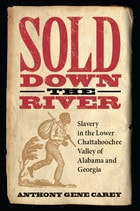
Sold Down the River
Slavery in the Lower Chattahoochee Valley of Alabama and GeorgiaAnthony Gene Carey
University of Alabama Press, 2023
Examines a small part of slavery’s North American domain, the lower Chattahoochee River Valley between Alabama and Georgia
In the New World, the buying and selling of slaves and of the commodities that they produced generated immense wealth, which reshaped existing societies and helped build new ones. From small beginnings, slavery in North America expanded until it furnished the foundation for two extraordinarily rich and powerful slave societies, the United States of America and then the Confederate States of America. The expansion and concentration of slavery into what became the Confederacy in 1861 was arguably the most momentous development after nationhood itself in the early history of the American republic.
This book examines a relatively small part of slavery’s North American domain, the lower Chattahoochee river Valley between Alabama and Georgia. Although geographically at the heart of Dixie, the valley was among the youngest parts of the Old South; only thirty-seven years separate the founding of Columbus, Georgia, and the collapse of the Confederacy. In those years, the area was overrun by a slave society characterized by astonishing demographic, territorial, and economic expansion. Valley counties of Georgia and Alabama became places where everything had its price, and where property rights in enslaved persons formed the basis of economic activity. Sold Down the River examines a microcosm of slavery as it was experienced in an archetypical southern locale through its effect on individual people, as much as can be determined from primary sources.
Published in cooperation with the Historic Chattahoochee Commission and the Troup County Historical Society.

Soldaderas in the Mexican Military
Myth and HistoryBy Elizabeth Salas
University of Texas Press, 1990
Since pre-Columbian times, soldiering has been a traditional life experience for innumerable women in Mexico. Yet the many names given these women warriors—heroines, camp followers, Amazons, coronelas, soldadas, soldaderas, and Adelitas—indicate their ambivalent position within Mexican society. In this original study, Elizabeth Salas explores the changing role of the soldadera, both in reality and as a cultural symbol, from pre-Columbian times up to the present day.
Drawing on military archival data, anthropological studies, and oral history interviews, Salas first explores the real roles played by Mexican women in armed conflicts. She finds that most of the functions performed by women easily equate to those performed by revolutionaries and male soldiers in the quartermaster corps and regular ranks. She then turns her attention to the soldadera as a continuing symbol in Mexican and Chicano culture, examining the image of the soldadera in literature, corridos, art, music, and film.
Challenging many traditional stereotypes, Salas finds that the fundamental realities of war link all Mexican women, regardless of time period, social class, or nom de guerre.
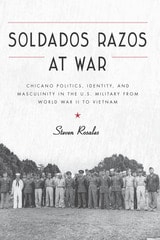
Soldados Razos at War
Chicano Politics, Identity, and Masculinity in the U.S. Military from World War II to VietnamSteven Rosales
University of Arizona Press, 2017
What were the catalysts that motivated Mexican American youth to enlist or readily accept their draft notices in World War II, Korea, or Vietnam? In Soldados Razos at War, historian and veteran Steven Rosales chronicles the experiences of Chicano servicemen who fought for the United States, explaining why these men served, how they served, and the impact of their service on their identity and political consciousness.
As a social space imbued with its own martial and masculine ethos, the U.S. military offers an ideal way to study the aspirations and behaviors that carried over into the civilian lives of these young men. A tradition of martial citizenship forms the core of the book. Using rich oral histories and archival research, Rosales investigates the military’s transformative potential with a particular focus on socioeconomic mobility, masculinity, and postwar political activism across three generations.
The national collective effort characteristic of World War II and Korea differed sharply from the highly divisive nature of American involvement in Vietnam. Thus, for Mexican Americans, military service produced a wide range of ideological reactions, with the ideals of each often in opposition to the others. Yet a critical thread connecting these diverse outcomes was a redefined sense of self and a willingness to engage in individual and collective action to secure first-class citizenship.
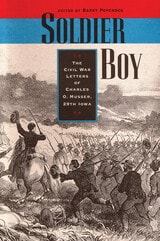
Soldier Boy
The Civil War Letters of Charles O. Musser, 29th IowaBarry Popchock
University of Iowa Press, 2008
Soldier Boy makes a significant contribution to the literature of the common soldier in the Civil War. Moreover, it takes a rare look at the Trans-Mississippi theater, which has traditionally been undervalued by historians.
Always Musser dutifully wrote and mailed his letters home. With a commendable eye for historical detail, he told of battles and marches, guerrilla and siege warfare, camp life and garrison soldiering, morale and patriotism, Copperheads and contraband, and Lincoln's reelection and assassination, creating a remarkable account of activities in this almost forgotten backwater of the war.

Soldier Field
A Stadium and Its CityLiam T. A. Ford
University of Chicago Press, 2009
Sports fans nationwide know Soldier Field as the home of the Chicago Bears. For decades its signature columns provided an iconic backdrop for gridiron matches. But few realize that the stadium has been much more than that. Soldier Field: A Stadium and Its City explores how this amphitheater evolved from a public war memorial into a majestic arena that helped define Chicago.
Chicago Tribune staff writer Liam Ford led the reporting on the stadium’s controversial 2003 renovation—and simultaneously found himself unearthing a dramatic history. As he tells it, the tale of Soldier Field truly is the story of Chicago, filled with political intrigue and civic pride. Designed by Holabird and Roche, Soldier Field arose through a serendipitous combination of local tax dollars, City Beautiful boosterism, and the machinations of Mayor “Big Bill” Thompson. The result was a stadium that stood at the center of Chicago’s political, cultural, and sporting life for nearly sixty years before the arrival of Walter Payton and William “The Refrigerator” Perry.
Ford describes it all in the voice of a seasoned reporter: the high school football games, track and field contests, rodeos, and even NASCAR races. Photographs, including many from the Chicago Park District’s own collections, capture these remarkable scenes: the swelling crowds at ethnic festivals, Catholic masses, and political rallies. Few remember that Soldier Field hosted Billy Graham and Martin Luther King Jr., Judy Garland and Johnny Cash—as well as Grateful Dead’s final show.
Soldier Field captures the dramatic history of Chicago’s stadium on the lake and will captivate sports fans and historians alike.
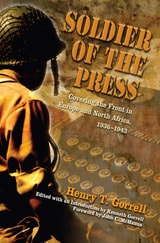
Soldier of the Press
Covering the Front in Europe and North Africa, 1936-1943Henry T. Gorrell, Edited & Intro by Kenneth Gorrell, & Foreword by John C. McManus
University of Missouri Press, 2009