Results by title
22279 books match the query 'Social Science' and 1635 start with s
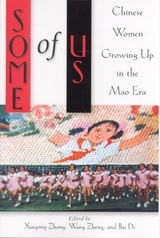
Some of Us
Chinese Women Growing Up in the Mao EraZhong, Xueping
Rutgers University Press, 2001
What does it mean to have grown up female in the Mao era? How can the remembered details of everyday life help shed light upon those turbulent times?
Some of Us is a collection of memoirs by nine Chinese women who grew up during the Mao era. All hail from urban backgrounds and all have obtained their Ph.D.s in the United States; thus, their memories are informed by intellectual training and insights that only distance can allow. Each of the chapters—arranged by the age of the author—is crafted by a writer who reflects back to that time in a more nuanced manner than has been possible for Western observers. The authors attend to gender in a way that male writers have barely noticed and reflect on their lives in the United States.
The issues explored here are as varied as these women’s lives: The burgeoning rebellion of a young girl in northeast China. A girl’s struggles to obtain for herself the education her parents inspired her to attain. An exploration of gender and identity as experienced by two sisters.
Some of Us offers insight into a place and time when life was much more complex than Westerners have allowed. These eloquent writings shatter our stereotypes of persecution, repression, victims, and victimizers. Together, these multi-faceted memoirs offer the reader new perspectives as they daringly explore difficult—and fascinating—issues.
Somebody Told Me
The Newspaper Stories of Rick BraggRick Bragg
University of Alabama Press, 2000
Over the past twenty years, writer Rick Bragg has earned legions of fans with his award-winning newspaper stories and with his critically aclaimed memoir All Over but the Shoutin'. His unique storytelling talent and his sympathy for the day-to-day struggles of everyday people set him apart from journalists who focus on political intrigue and the foibles of the rich and famous.
This collection showcases Bragg's talent for turning seemingly ordinary situations into extraordinary stories by bringing together more than sixty of his most recent feature articles, most of them written for the New York Times. Bragg explores such questions as: What happens to someone released from prison for a crime he didn't commit? Who takes care of the graves of poor people? What keeps an elderly woman from selling her land for a tidy profit? Bragg's curiosity often leads him to society's margins, where he wins the confidence of those who have good reason to mistrust others.
Bragg has reported on some of the most newsworthy tragedies in the nation, and his unfolding coverage of events such as the Oklahoma City bombing and the Susan Smith child murders is included here. Once again, though, his special ability to connect with people allows him accesss and perspectives that many other reporters do not achieve.
Whether he's profiling the sheriff who broke the Smith case or relating the efforts of Alabama churchgoers to understand a Sunday morning tornado strike, Bragg writes with genuine compassion and sentiment but without being sensationalist. He looks where others don’t and gets behind the headlines to the people standing there stunned and often, until he finds them, voiceless. When asked how he came up with his remarkable stories, Bragg has his answer down pat: “Somebody told me.”
Somebody's Children
The Politics of Transracial and Transnational AdoptionLaura Briggs
Duke University Press, 2012
The dramatic expansion of transracial and transnational adoption since the 1950s, Briggs argues, was the result of specific and profound political and social changes, including the large-scale removal of Native children from their parents, the condemnation of single African American mothers in the context of the civil rights struggle, and the largely invented "crack babies" scare that inaugurated the dramatic withdrawal of benefits to poor mothers in the United States. In Guatemala, El Salvador, and Argentina, governments disappeared children during the Cold War and then imposed neoliberal economic regimes with U.S. support, making the circulation of children across national borders easy and often profitable. Concluding with an assessment of present-day controversies surrounding gay and lesbian adoptions and the struggles of immigrants fearful of losing their children to foster care, Briggs challenges celebratory or otherwise simplistic accounts of transracial and transnational adoption by revealing some of their unacknowledged causes and costs.
Someone
The Pragmatics of Misfit Sexualities, from Colette to Hervé GuibertMichael Lucey
University of Chicago Press, 2019
In Someone, Michael Lucey considers characters from twentieth-century French literary texts whose sexual forms prove difficult to conceptualize or represent. The characters expressing these “misfit” sexualities gravitate towards same-sex encounters. Yet they differ in subtle but crucial ways from mainstream gay or lesbian identities—whether because of a discordance between gender identity and sexuality, practices specific to a certain place and time, or the fleetingness or non-exclusivity of desire. Investigating works by Simone de Beauvoir, Colette, Jean Genet, and others, Lucey probes both the range of same-sex sexual forms in twentieth-century France and the innovative literary language authors have used to explore these evanescent forms.
As a portrait of fragile sexualities that involve awkward and delicate maneuvers and modes of articulation, Someone reveals just how messy the ways in which we experience and perceive sexuality remain, even to ourselves.
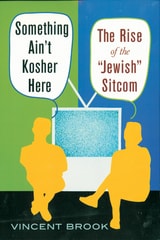
Something Ain't Kosher Here
The Rise of the 'Jewish' SitcomBrook, Vincent
Rutgers University Press, 2003
From 1989 through 2002 there was an unprecedented surge in American sitcoms featuring explicitly Jewish lead characters, thirty-two compared to seven in the previous forty years. Several of these—Mad About You, The Nanny, and Friends—were among the most popular and influential of all shows over this period; one program—Seinfeld—has been singled out as the “defining” series of the nineties. In addition, scriptwriters have increasingly created “Jewish” characters, although they may not be perceived to be by the show’s audience, Rachel Green on Friends being only one example.
In Something Ain’t Kosher Here, Vincent Brook asks two key questions: Why has this trend appeared at this particular historical moment and what is the significance of this phenomenon for Jews and non-Jews alike? He takes readers through three key phases of the Jewish sitcom trend: The early years of television before and after the first Jewish sitcom, The Goldbergs’, appeared; the second phase in which America found itself “Under the Sign of Seinfeld”; and the current era of what Brook calls “Post- Jewishness.”
Interviews with key writers, producers, and “showrunners” such as David Kohan, (Will and Grace), Marta Kauffman (Friends and Dream On), Bill Prady (Dharma and Greg), Peter Mehlman and Carol Leifer (Seinfeld), and close readings of individual episodes and series provoke the inescapable conclusion that we have entered uncharted “post-Jewish” territory. Brook reveals that the acceptance of Jews in mainstream white America at the very time when identity politics have put a premium on celebrating difference reinforces and threatens the historically unique insider/outsider status of Jews in American society. This paradox upsets a delicate balance that has been a defining component of American Jewish identity.
The rise of the Jewish sitcom represents a broader struggle in which American Jews and the TV industry, if not American society as a whole, are increasingly operating at cross-purposes— torn between the desire to celebrate unique ethnic identities, yet to assimilate: to assert independence, yet also to build a consensus to appeal to the widest possible audience. No reader of this book will ever be able to watch these television programs in quite the same way again.
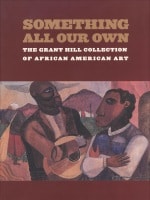
Something All Our Own
The Grant Hill Collection of African American ArtGrant Hill
Duke University Press, 2003
The forty-six pieces documented here include thirteen works that span the career of the great Romare Bearden, from his 1941 gouache painting Serenade to the important collages of the 1980s. Hill’s fascination with artists’ depiction of women is represented in Elizabeth Catlett’s lithographs, many of them from the 1992 series “For My People,” and her sculptures in stone, bronze, and onyx. In addition to these two giants of twentieth-century art, the Hill Collection features pieces by Phoebe Beasley, Arthello Beck Jr., John Biggers, Malcolm Brown, John Coleman, Edward Jackson, and Hughie Lee Smith.
Hill began collecting art in the early 1990s after learning from his parents to appreciate artworks not only as objects of beauty but as expressions of heritage and culture. According to the internationally known curator Alvia J. Wardlaw, he is part of an emerging group of young African American collectors who have “raised the bar for others.” Hill writes, “Getting to know yourself means understanding your background and appreciating those who have come before you. My father has a saying he uses in speeches: ‘To be ignorant of your past is to remain a boy. ‘The interest in my heritage as an African American is reflected in this collection.”
Something All Our Own features Wardlaw’s essay on the history of African American collecting. It also features articles about Bearden and Catlett by the scholars Elizabeth Alexander and Beverly Guy-Sheftall and reflections about Hill by the historian John Hope Franklin, Duke’s basketball coach Mike Krzyzewski, and the sportswriter William C. Rhoden. Hill and his father, the NFL great Calvin Hill, contribute a dialogue that explores their motivations for collecting art.
At the heart of the book are the exquisite color photographs of the forty-six artworks included in the exhibition, with commentary by Wardlaw and by Hill himself.
As a star athlete, Grant Hill is well aware that African Americans who excel in sports and entertainment are more broadly recognized than their counterparts in artistic fields. He strives to inspire young people to explore their heritage and broaden their concept of excellence by learning more about African American art. By sharing his artworks with collectors and fans, Hill reminds us that while the jump shot is ephemeral, art is enduring.
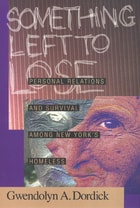
Something Left To Lose
Personal Relations and Survival among New York's HomelessGwendolyn Dordick
Temple University Press, 1997
In Something Left to Lose, Gwendolyn A. Dordick gives us a dramatic portrait of the social and personal lives of the homeless. Through her extensive "hanging out" with homeless people, Dordick came to a profound understanding of the web of relationships that provides complex social structure in situations where, to the casual eye, there appears to be only chaos and paralysis.
The author shows us that improvising shelter means working hard to co-exist with others. Lacking conventional private dwellings, the homeless find or create shelter in unconventional places -- on street corners adjoining bus stations, on empty lots of land, or in shelters, public or private -- and negotiate the rules of these places with authorities, passersby, and fellow homeless.
The different environments lead to quite different social relations. The Armory, for example, is a frightening place, thanks to the authoritarian attitudes of the employees and cliques of homeless people in charge. In the Shanty, on the other hand, the difficult issues are those of a self-governing community concerned about safety -- controlling the drug use of some residents, deciding who is allowed to tap into the electricity, and worrying about intruders.
In all settings, daily life for people without homes, like daily life for people with homes, if full of the concerns of personal relationships. How will we share our goods and emotions, speak respectfully to each other, love and joke and work out our disputes, and act in a trustworthy fashion?
This book is also a miniature research odyssey, complete with moments of fear, frustration, blunders, distrust, and trust. In order to gather these interviews, Dordick had to not only win the the confidence of the homeless people she visited (the women at the Station thought she was interested in their boyfriends) but also negotiate with unsympathetic police and shelters employees or defy them.
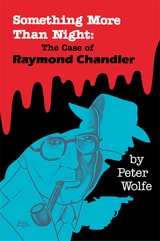
Something More than Night
The Case of Raymond ChandlerPeter Wolfe
University of Wisconsin Press, 1985
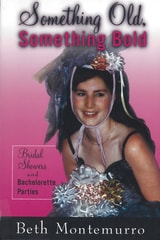
Something Old, Something Bold
Bridal Showers and Bachelorette PartiesMontemurro, Beth
Rutgers University Press, 2006
Weddings in the United States are often extravagant, highly ritualized, and costly affairs. In this book, Beth Montemurro takes a fresh look at the wedding process, offering a perspective not likely to be found in the many planning books and magazines readily available to the modern bride. Montemurro draws upon years of ethnographic research to explore what prenuptial events mean to women participants and what they tell us about the complexity and ambiguity of gender roles. Through the bachelorette party and the bridal shower, the bride-to-be is initiated into the role of wife by her friends and family, who present elaborate scenarios that demonstrate both what she is sacrificing and what she is gaining.
Montemurro argues that American society at the turn of the twenty-first century is still married to traditional conceptions of masculinity and femininity and that prenuptial rituals contribute to the stabilization of gender inequalities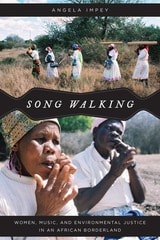
Song Walking
Women, Music, and Environmental Justice in an African BorderlandAngela Impey
University of Chicago Press, 2018
This book links ethnomusicological research to larger themes of international development, environmental conservation, gender, and local economic access to resources. By demonstrating that development processes are essentially cultural processes and revealing how music fits within this frame, Song Walking testifies to the affective, spatial, and economic dimensions of place, while contributing to a more inclusive and culturally apposite alignment between land and environmental policies and local needs and practices.
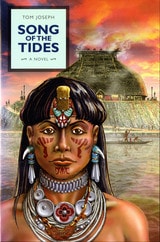
Song of Tides
Tom Joseph
University of Alabama Press, 2008
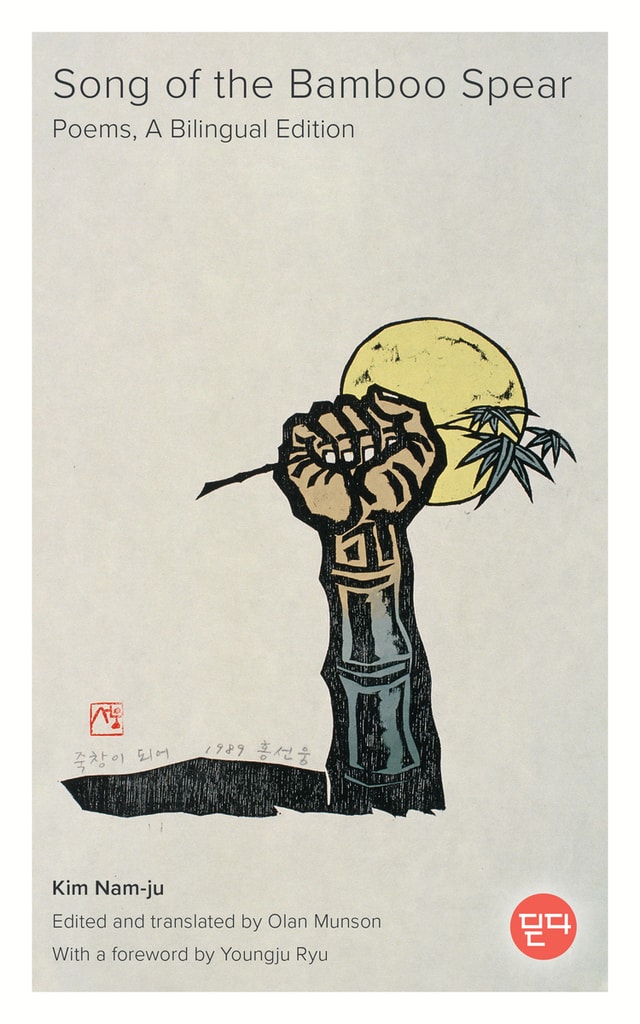
Song of the Bamboo Spear
Poems, A Bilingual EditionNam-ju Kim (1945–1994)
Rutgers University Press, 2027
This book debuts selected poetry by Kim Nam-ju (1946–1994) in English translation, along with the original Korean. Referred to as the “Che Guevara of South Korea,” and self-described a “warrior poet,” Kim Nam-ju remains, to this day, an enduring voice of the 1970s and 80s cultures of anti-authoritarian resistance in South Korea. Kim was arrested in 1979 for his involvement with the “South Josǒn” National Liberation Front, a leftist underground group organizing against the Yushin regime. Kim wrote prolifically while in prison (1979-1988), at times by etching his poems into scraps of foil, milk carton, or cigarette packages. The work he produced in prison alone totals around 360 poems. This bilingual volume selects 65 poems from Kim's oeuvre, sampling across many different chapters of the poet’s career. Readers will find autobiographical reflections on his childhood, love poems, missives from the prison cell, commemorations of the Kwangju Uprising, the poet’s calls to arms, and more.
이 책은 김남주 시인(1946~1994)의 시 65편을 한국어 원문과 함께 영문 번역으로 처음 선보인다. ‘한국의 체 게바라’로 불리며 스스로를 ‘전사 시인’이라 칭했던 김남주는 오늘날까지도 한국의 1970·80년대 반독재 저항운동을 대표하는 사라지지 않는 목소리로 남아 있다. 김남주는 유신정권에 맞서 결성된 좌파 지하조직 ‘남조선민족해방전선준비위원회’에 가담한 혐의로 1979년에 체포되었다. 1979년부터 1988년에 이르는 수감 기간에도 꾸준히 창작 활동을 이어갔으며, 때로는 은박지 조각이나 우유곽, 담뱃갑 등에 시를 새겨 집필하기도 하였다. 이 시기에 쓴 작품만 해도 360여 편에 이른다. 이 영역시집은 시인의 전체 작품 중에서 65편의 시를 엄선하여 시인의 생애와 창작 활동의 다양한 시기를 아우르는 시적 여정을 한눈에 보여준다. 독자들은 시인의 어린 시절에 대한 자전적인 회고, 사랑의 시, 옥중 서한, 5·18 광주항쟁을 추모하는 시, 민중의 투쟁을 촉구하는 시 등 다양한 작품을 만나볼 수 있을 것이다.
English-Korean Bilingual Edition
영-한 이중언어판
This book is published with the support of the Literature Translation Institute of Korea (LTI Korea)
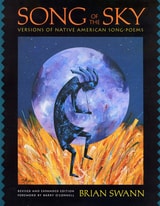
Song of the Sky
Versions of Native American Song-PoemsBrian Swann
University of Massachusetts Press, 1993
“Swann's ‘concrete’ renderings of the poems are visually striking and are meant to embody the notions of silence and cycle that are so important in Native American culture. . . . [He] does a fine job of encouraging readers to return to return to these original songs and poems from a culture that most latter-day Americans know far too little about.”—Anne Bromley, Georgia Review
Based on the work of anthropologist collectors, this compendium of more than 100 Native American chants and songs revises and updates a prior edition out of print since 1989. ‘These poems are not translations,’ argues Swann. They're versions that have gone through ‘a series of mediations and filters and exist somewhere between the individual lyric voice’ and a diverse, multileveled Native American imaginative-mystical identity. Whether versions, translations, or poems, whether sung at a Crazy Dance, potlatch, corn-grinding, or curative or marriage ceremony, whether celebrating buffalo, maize, red fox, or tobacco, these works capture the ‘otherness’ of the primeval spirit of the Native American fusion of natural and supernatural, animal and deity. Originally performed aloud, these ‘verbal artifacts’—which are sometimes breathtakingly pure, sometimes obscure—reveal that there can be no conventional or single notion of ‘the Indian.’”—Library Journal

Song-Poems from Xanadu
J. I. Crump
University of Michigan Press, 1993

Song-Poems from Xanadu
J. I. Crump
University of Michigan Press, 1993

Songprints
The Musical Experience of Five Shoshone WomenJudith Vander
University of Illinois Press, 1988
Perspectives on the twentieth-century lives of Shoshone women musicians
The musical lives of Native American women have experienced a century of cultural change and constancy. Judith Vander takes readers to the Shoshone of Wyoming's Wind River Reservation to meet five generations of Shoshone women. Vander’s conversations with Emily, Angelina, Alberta, Helene, and Lenore capture their distinct personalities as they share their thoughts, feelings, and attitudes toward their music.
Vander transcribes and analyzes seventy-five songs that the women sing. Each woman possesses a unique songprint—a repertoire distinctive to her culture, age, and personality. As Vander shows, the context of Shoshone social and religious ceremonies offers insights into the rise of the Native American Church, the emergence and popularity of the contemporary powwow, and the changing, enlarging role of women. In addition, two eyewitnesses accounts of Ghost Dance songs and performances elaborate on the function and meaning of the Ghost Dance among the Wind River Shoshones.
2nd Place from the Pauline Alderman Prize for New Scholarship on Women in Music from the International Congress on Women in Music. Winner of an ASCAP Deems Taylor Award, 1989.

Songs At the River's Edge
Stories From a Bangladeshi VillageKaty Gardner
Pluto Press, 1997
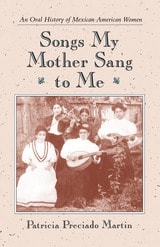
Songs My Mother Sang to Me
An Oral History of Mexican American WomenPatricia Preciado Martin
University of Arizona Press, 1992
Martin's quest took her to ranches, mining towns, and cities throughout southern Arizona, for she sought to document as varied an experience of the contributions of Mexican American women as possible. The interviews covered family history and genealogy, childhood memories, secular and religious traditions, education, work and leisure, environment and living conditions, rites of passage, and personal values. Each of the ten oral histories reflects not only the spontaneity of the interview and personality of each individual, but also the friendship that grew between Martin and her subjects.
Songs My Mother Sang to Me collects voices not often heard and brings to print accounts of social change never previously recorded. These women document more than the details of their own lives; in relating the histories of their ancestors and communities, they add to our knowledge of the culture and contributions of Mexican American people in the Southwest.
Songs for Dead Parents
Corpse, Text, and World in Southwest ChinaErik Mueggler
University of Chicago Press, 2017
Drawing on more than twenty years of fieldwork in a mountain community in Yunnan Province, Songs for Dead Parents shows how people view the dead as both material and immaterial, as effigies replace corpses, tombstones replace effigies, and texts eventually replace tombstones in a long process of disentangling the dead from the shared world of matter and memory. It is through these processes that people envision the cosmological underpinnings of the world and assess the social relations that make up their community. Thus, state interventions aimed at reforming death practices have been deeply consequential, and Mueggler traces the transformations they have wrought and their lasting effects.
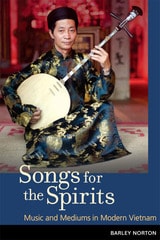
Songs for the Spirits
Music and Mediums in Modern VietnamBarley Norton
University of Illinois Press, 2008
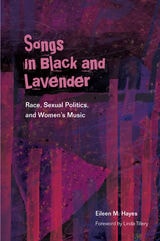
Songs in Black and Lavender
Race, Sexual Politics, and Women's MusicEileen M. Hayes, Foreword by Linda Tillery
University of Illinois Press, 2010
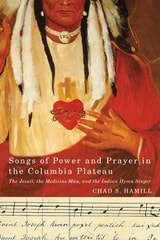
Songs of Power and Prayer in the Columbia Plateau
The Jesuit, the Medicine Man, and the Indian Hymn SingerChad S. Hamill
Oregon State University Press, 2012
In Chad Hamill’s narrative, a Jesuit and his two Indian “grandfathers”—one a medicine man, the other a hymn singer—engage in a collective search for the sacred. The priest becomes a student of the medicine man. The medicine man becomes a Catholic. The Indian hymn singer brings indigenous songs to the Catholic mass. Using song as a thread, these men weave together two worlds previously at odds, realizing a promise born two centuries earlier within the prophecies of Circling Raven and Shining Shirt.
Songs of Power and Prayer reveals how song can bridge worlds: between the individual and Spirit, the Jesuits and the Indians. Whether sung in an indigenous ceremony or adapted for Catholic Indian services, song abides as a force that strengthens Native identity and acts as a conduit for power and prayer.
A First Peoples: New Directions in Indigenous Studies book
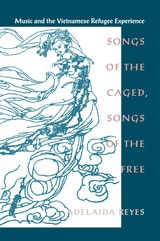
Songs of the Caged, Songs of the Free
Music and the Vietnamese Refugee ExperienceAdelaida Reyes
Temple University Press, 1999
The Vietnamese refugee experience calls attention to issues commonly raised by migration: the redefinition of group relations, the reformulation of identity, and the reconstruction of social and musical life in resettlement. Fifteen years ago, Adelaida Reyes began doing fieldwork on the musical activities of Vietnamese refugees. She entered the emotion-driven world of forced migrants through expressive culture; learned to see the lives of refugee-resettlers through the music they made and enjoyed; and, in turn, gained a deeper understanding of their music through knowledge of their lives.
In Songs of the Caged, Songs of the Free, Reyes brings history, politics, and decades of research to her study of four resettlement communities, including refugee centers in Palawan and Bataan; the early refugee community in New Jersey; and the largest of all Vietnamese communities -- Little Saigon, in southern California's Orange County.
Looking closely at diasporic Vietnamese in each location, Reyes demonstrates that expressive culture provides a valuable window into the refugee experience. Showing that Vietnamese immigrants deal with more than simply a new country and culture in these communities, Reyes considers such issues as ethnicity, socio-economic class, and differing generations. She considers in her study music of all kinds -- performed and recorded, public and private -- and looks at music as listened to and performed by all age groups, including church music, club music, and music used in cultural festivals. Moving from traditional folk music to elite and modern music and from the recording industry to pirated tapes. Reyes looks at how Vietnamese in exile struggled, in different ways, to hold onto a part of their home culture and to assimilate into their new, most frequently American, culture.
Songs of the Caged, Songs of the Free will attract the attention of readers in Asian American studies, Asian studies, music, and ethnomusicology.
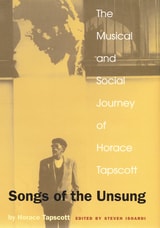
Songs of the Unsung
The Musical and Social Journey of Horace TapscottHorace Tapscott
Duke University Press, 2001

Songs that Make the Road Dance
Courtship and Fertility Music of the Tz'utujil MayaBy Linda O'Brien-Rothe
University of Texas Press, 2015
An important and previously unexplored body of esoteric ritual songs of the Tz’utujil Maya of Santiago Atitlán, Guatemala, the “Songs of the Old Ones” are a central vehicle for the transmission of cultural norms of behavior and beliefs within this group of highland Maya. Ethnomusicologist Linda O’Brien-Rothe began collecting these songs in 1966, and she has amassed the largest, and perhaps the only significant, collection that documents this nearly lost element of highland Maya ritual life.
This book presents a representative selection of the more than ninety songs in O’Brien-Rothe’s collection, including musical transcriptions and over two thousand lines presented in Tz’utujil and English translation. (Audio files of the songs can be downloaded from the UT Press website.) Using the words of the “songmen” who perform them, O’Brien-Rothe explores how the songs are intended to move the “Old Ones”—the ancestors or Nawals—to favor the people and cause the earth to labor and bring forth corn. She discusses how the songs give new insights into the complex meaning of dance in Maya cosmology, as well as how they employ poetic devices and designs that place them within the tradition of K’iche’an literature, of which they are an oral form. O’Brien-Rothe identifies continuities between the songs and the K’iche’an origin myth, the Popol Vuh, while also tracing their composition to the late sixteenth and early seventeenth centuries by their similarities with the early chaconas that were played on the Spanish guitarra española, which survives in Santiago Atitlán as a five-string guitar.
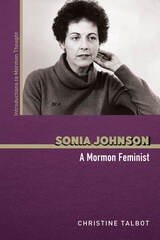
Sonia Johnson
A Mormon FeministChristine Talbot
University of Illinois Press, 2024
Few figures in the history of the Church of Jesus Christ of Latter-day Saints provoke such visceral responses as Sonia Johnson. Her unrelenting public support of the Equal Rights Amendment (ERA) made her the face of LDS feminism while her subsequent excommunication roiled the faith community.
Christine Talbot tells the story of Sonia’s historic confrontation with the Church within the context of the faith’s first large-scale engagement with the feminist movement. A typical if well-educated Latter-day Saints homemaker, Sonia was moved to action by the all-male LDS leadership’s opposition to the ERA and a belief the Church should stay out of politics. Talbot uses the activist’s experiences and criticisms to explore the ways Sonia’s ideas and situation sparked critical questions about LDS thought, culture, and belief. She also illuminates how Sonia’s excommunication shaped LDS feminism, the Church’s antagonism to feminist critiques, and the Church itself in the years to come.
A revealing and long-overdue account, Sonia Johnson explores the life, work, and impact of the LDS feminist.
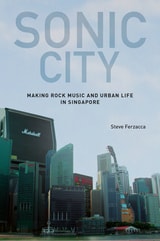
Sonic City
Making Rock Music and Urban Life in SingaporeSteve Ferzacca
National University of Singapore Press, 2020
Grounded in debates from sound studies, Ferzacca draws on Bruno Latour’s ideas of the social—continually emergent, constantly in-the-making, “associations of heterogeneous elements” of human and non-human “mediators and intermediaries”—to portray a community entangled in the confounding relations between vernacular and national heritage projects. Music shops, music gear, music genres, sound, urban space, neighborhoods, State presence, performance venues, practice spaces, regional travel, local, national, regional, and sonic histories afford expected and unexpected opportunities for work, play, and meaning, in the contemporary music scene in this Southeast Asian city-state. The emergent quality of this deep sound is fiercely cosmopolitan, yet entirely Singaporean. What emerges is a vernacular heritage drawing upon Singapore’s unique place in Southeast Asian and world history.

Sonic Flux
Sound, Art, and MetaphysicsChristoph Cox
University of Chicago Press, 2018
Through the philosophical analysis of works by John Cage, Maryanne Amacher, Max Neuhaus, Christian Marclay, and many others, Sonic Flux contributes to the development of a materialist metaphysics and poses a challenge to the prevailing positions in cultural theory, proposing a realist and materialist aesthetics able to account not only for sonic art but for artistic production in general.
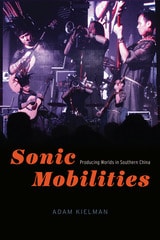
Sonic Mobilities
Producing Worlds in Southern ChinaAdam Kielman
University of Chicago Press, 2022
Guangzhou is a large Chinese city like many others. With a booming economy and abundant job opportunities, it has become a magnet for rural citizens seeking better job prospects as well as global corporations hoping to gain a foothold in one of the world’s largest economies. This openness and energy have led to a thriving popular music scene that is every bit the equal of Beijing’s. But the musical culture of Guangzhou expresses the city’s unique cosmopolitanism. A port city that once played a key role in China’s maritime Silk Road, Guangzhou has long been an international hub. Now, new migrants to the city are incorporating diverse Chinese folk traditions into the musical tapestry.
In Sonic Mobilities, ethnomusicologist Adam Kielman takes a deep dive into Guangzhou's music scene through two bands, Wanju Chuanzhang (Toy Captain) and Mabang (Caravan), that express ties to their rural homelands and small-town roots while forging new cosmopolitan musical connections. These bands make music that captures the intersection of the global and local that has come to define Guangzhou, for example by writing songs with a popular Jamaican reggae beat and lyrics in their distinct regional dialects mostly incomprehensible to their audiences. These bands create a sound both instantly recognizable and totally foreign, international and hyper-local. This juxtaposition, Kielman argues, is an apt expression of the demographic, geographic, and political shifts underway in Guangzhou and across the country. Bridging ethnomusicology, popular music studies, cultural geography, and media studies, Kielman examines the cultural dimensions of shifts in conceptualizations of self, space, publics, and state in a rapidly transforming the People’s Republic of China.

Sonic Multiplicities
Hong Kong Pop and the Global Circulation of Sound and ImageYiu Fai Chow and Jeroen de Kloet
Intellect Books, 2013
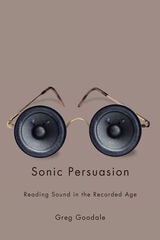
Sonic Persuasion
Reading Sound in the Recorded AgeGreg Goodale
University of Illinois Press, 2011

Sonic Strategies
Performing Mexico's War on Drugs, Mourning, and FeminicideChristina Baker
Vanderbilt University Press, 2023
In Sonic Strategies, author Christina Baker highlights the tactics employed by contemporary performance artists in Mexico in response to the violence surrounding the nation’s War on Drugs. The introduction opens with a description of the 2007 reenactment of the Grito, or “cry,” of independence, a moment fraught with sonic sparring, setting the stage for how each subsequent chapter focuses on themes related to war and violence. Each chapter focuses on the works of one or more performance artist, and taken together, the case studies illuminate how critiques of the nation’s rising death tolls, governmental corruption, and gendered violence very literally sound, whether in Música de balas, a post-dramatic piece by Hugo Salcedo; the lamentations of the nation’s Antigones in works by Violeta Luna and Lukas Avendaño; satirical revisions of Mexican Golden Age film in the cabaret piece Nosotras las proles; or the story of transfeminicide in César Enríquez’s La Prietty Guoman by way of US pop music.
Written in an accessible style grounded in theater studies but interdisciplinary by design, Sonic Strategies will appeal to literary critics, students, musicologists, and theater and performance scholars alike. By paying close attention to planned and spontaneous sounds within live and textual experiences, Sonic Strategies contends that conscientious listening reveals dynamic practices that reside beyond the linguistic and embodied gesture.
Sonora Yaqui Language Structures
John M. Dedrick and Eugene H. Casad
University of Arizona Press, 1999
The book includes useful sections on quantifiers and adverbial and deictic particles, often inadequately treated in reference grammars. A section on auxiliary verbs and well-documented information on voice, aspect, and other features of verbal inflection provide readers with useful data for particular lines of linguistic inquiry. Each grammatical point is illustrated by example sentences distinguished by their naturalness and cultural relevance. At the end of the book, a Yaqui text provides a sample of connected sentences in a natural context.
Sonora Yaqui Language Structures is a valuable source not only for research on this language family but also for anthropological studies of the Arizona-Sonora cultural region. In addition, it documents an indigenous language for future generations of Yaqui speakers.
Sonoran Desert Bestiary
A More-than-Natural HistoryText by Gary Paul Nabhan; Illustrations by Robert J. Long
University of Arizona Press, 2026
The Sonoran Desert has many marvelous and well-known creatures such as the javelina and the coyote, often found on postcards and lawn ornaments. But what about the lesser-known creatures—the ones that are underfoot yet unseen, that lurk only in the shadows and in our imaginations? In this collection of essays, prose poems, and illustrations, naturalist Gary Paul Nabhan and artist Robert J. Long team up to celebrate these unsung beings of the Sonoran Desert.
This desert bestiary includes creatures whose existence lies largely in traditional story and belief, as well as creatures whose life cycles are so cryptic they seem mythic, such as the walking catfish and the carbunco. Positioned at the dynamic intersection of folklore and natural history, the book reflects on the reasons why human imaginations over the ages have reached into this realm of seldom seen but often intuited animals. Focusing on small animals and charismatic mini-fauna, Nabhan expands our understanding of the natural world by delightfully describing the interactions between animals and plants.
This more-than-natural history is for anyone who finds joy in the marvels of the natural world.
Sonorous Passages
Black Maternal Soundings and the Liberation ImaginaryMeina Yates-Richard
Duke University Press, 2026
Sons And Daughters Of Los
Culture And Community In L.A.David James
Temple University Press, 2003
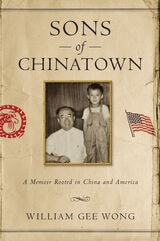
Sons of Chinatown
A Memoir Rooted in China and AmericaWilliam Gee Wong
Temple University Press, 2024
As Pop grappled with the systemic racism towards Asians during the exclusion era, Wong wistfully depicts Pop’s efforts to establish a family business and build a life for his family in segregated Oakland. As the exclusion law ended in 1943, young William was assimilating into American life and developing his path as a journalist. Writing for the Wall Street Journal, Oakland Tribune, and Asian American periodicals, Wong chronicled Asian American experiences while honoring Chinese American history and identity, but he too faced discrimination.
Sons of Chinatown poignantly weaves these father and son stories together with admiration and righteous anger. Through the mirrored lens of his father, Wong reflects on the hardships Asian Americans endured—and continue to face—with American exceptionalism. Wong’s inspiring memoir provides a personal history that also raises the question of whether America welcomes or repels immigrants.
Sons of the Shaking Earth
Eric Wolf
University of Chicago Press, 1962

Sons, Daughters, and Sidewalk Psychotics
Mental Illness and Homelessness in Los AngelesNeil Gong
University of Chicago Press, 2024
Drawing on the nuanced experiences of patients and care providers, Sons, Daughters, and Sidewalk Psychotics introduces readers to two drastically different forms of community psychiatric services: public safety net clinics focused on keeping people housed and out of jail and elite private care trying to push clients toward respectable futures.
In downtown Los Angeles, many people in psychiatric crisis only receive help after experiencing homelessness or arrest. Public providers engage in guerrilla social work to secure housing and safety, but these programs are rarely able to deliver true rehabilitation for psychological distress and addiction. Patients are free to refuse treatment or use illegal drugs—so long as they do so away from public view. Across town in West LA or Malibu, wealthy people diagnosed with serious mental illness attend luxurious treatment centers. Programs may offer yoga and organic meals alongside personalized therapeutic treatments, but patients can feel trapped, as their families pay exorbitantly to surveil and “fix” them. Meanwhile, middle-class families—stymied by private insurers, unable to afford elite providers, and yet not poor enough to qualify for social services—struggle to find care at all.
Examining this divergent treatment of people facing similar mental struggles, Gong raises provocative questions about urban policy, individual freedom, and what it would take to create a fundamentally different psychiatric system—one that will meet the needs of patients, their loved ones, and society at large.
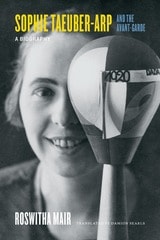
Sophie Taeuber-Arp and the Avant-Garde
A BiographyRoswitha Mair
University of Chicago Press, 2018
Now Roswitha Mair has brought us the first biography of this unique polymath, illuminating not just Tauber-Arp’s own life and work, but also the various milieux and movements in which she traveled. No fan of the Dadaists and their legacy will want to miss this first English-language translation.
Sorcery And Shamanism
Donald Joralemon
University of Utah Press, 1993
The curanderos of northern Peru, traditional healing specialists who invoke Jesus Christ and the saints with a mescaline sacrament and a shamanic rattle, are not vestigial curiosities nor are their patients rural illiterates without access to "modern medicine." Instead, many of these shamans have thriving urban practices with clients from all levels of society.
Sorcery and Shamanism documents the lives and rituals of twelve curanderos, offering a perspective on their curing role and shared knowledge. Authors Donald Joralemon and Douglas Sharon also consider the therapeutic experiences of over one hundred patients, including case histories and follow-ups. They offer a broad view of the shamans’ work in modern Peruvian society, particularly in connection with gender-based conflicts.
The significant work goes a long way toward dispelling the stereotype of shamans as enigmatic and wise, showing them to be pragmatic curers confronting the health effects of everyday aggressions and betrayals.
Sorcery and Sovereignty
Taxation, Power, and Rebellion in South Africa, 1880–1963Sean Redding
Ohio University Press, 2006
Rebellions broke out in many areas of South Africa shortly after the institution of white rule in the late nineteenth century and continued into the next century. However, distrust of the colonial regime reached a new peak in the mid-twentieth century, when revolts erupted across a wide area of rural South Africa. All these uprisings were rooted in grievances over taxes. Rebels frequently invoked supernatural powers for assistance and accused government officials of using witchcraft to enrich themselves and to harm ordinary people.
As Sean Redding observes in Sorcery and Sovereignty, beliefs in witchcraft and supernatural powers were part of the political rhetoric; the system of taxation—with all its prescribed interactions between ruler and ruled—was intimately connected to these supernatural beliefs.
In this fascinating study, Redding examines how black South Africans’ beliefs in supernatural powers, along with both economic and social change in the rural areas, resulted in specific rebellions and how gender relations in black South African rural families changed. Sorcery and Sovereignty explores the intersection of taxation, political attitudes, and supernatural beliefs among black South Africans, shedding light on some of the most significant issues in the history of colonized Africa.
Sorcery in Mesoamerica
Jeremy D. Coltman and John M. D. Pohl
University Press of Colorado, 2020
In each chapter, preeminent scholars of ritual and belief ask very different questions about what exactly sorcery is in Mesoamerica. Contributors consider linguistic and visual aspects of sorcery and witchcraft, such as the terminology in Aztec semantics and dictionaries of the Kaqchiquel and K’iche’ Maya. Others explore the practice of sorcery and witchcraft, including the incorporation by indigenous sorcerers in the Mexican highlands of European perspectives and practices into their belief system. Contributors also examine specific deities, entities, and phenomena, such as the pantheistic Nahua spirit entities called forth to assist healers and rain makers, the categorization of Classic Maya Wahy (“co-essence”) beings, the cult of the Aztec goddess Cihuacoatl, and the recurring relationship between female genitalia and the magical conjuring of a centipede throughout Mesoamerica.
Placing the Mesoamerican people in a human context—as engaged in a rational and logical system of behavior—Sorcery inMesoamerica is the first comprehensive study of the subject and an invaluable resource for students and scholars of Mesoamerican culture and religion.
Contributors:
Lilián González Chévez, John F. Chuchiak IV, Jeremy D. Coltman, Roberto Martínez González, Oswaldo Chinchilla Mazariegos, Cecelia F. Klein, Timothy J. Knab, John Monaghan, Jesper Nielsen, John M. D. Pohl, Alan R. Sandstrom, Pamela Effrein Sandstrom, David Stuart

Sorcery in the Black Atlantic
Edited by Luis Nicolau Parés and Roger Sansi
University of Chicago Press, 2011
Most scholarship on sorcery and witchcraft has narrowly focused on specific times and places, particularly early modern Europe and twentieth-century Africa. And much of that research interprets sorcery as merely a remnant of premodern traditions. Boldly challenging these views, Sorcery in the Black Atlantic takes a longer historical and broader geographical perspective, contending that sorcery is best understood as an Atlantic phenomenon that has significant connections to modernity and globalization.
A distinguished group of contributors here examine sorcery in Brazil, Cuba, South Africa, Cameroon, and Angola. Their insightful essays reveal the way practices and accusations of witchcraft spread throughout the Atlantic world from the age of discovery up to the present, creating an indelible link between sorcery and the rise of global capitalism. Shedding new light on a topic of perennial interest, Sorcery in the Black Atlantic will be provocative, compelling reading for historians and anthropologists working in this growing field.
Sorting Sexualities
Expertise and the Politics of Legal ClassificationStefan Vogler
University of Chicago Press, 2021
In this rich ethnographic study, Vogler reveals how different legal arenas take dramatically different approaches to classifying sexuality and use those classifications to legitimate different forms of social control. By delving into the histories behind these diverging classification practices and analyzing their contemporary reverberations, Vogler shows how the science of sexuality is far more central to state power than we realize.
Soul Covers
Rhythm and Blues Remakes and the Struggle for Artistic Identity (Aretha Franklin, Al Green, Phoebe Snow)Michael Awkward
Duke University Press, 2007
Awkward sees Franklin’s early album Unforgettable: A Tribute to Dinah Washington, released shortly after Washington’s death in 1964, as an attempt by a struggling young singer to replace her idol as the acknowledged queen of the black female vocal tradition. He contends that Green’s album Call Me (1973) reveals the performer’s attempt to achieve formal coherence by uniting seemingly irreconcilable aspects of his personal history, including his career in popular music and his religious yearnings, as well as his sense of himself as both a cosmopolitan black artist and a forlorn country boy. Turning to Snow’s album Second Childhood (1976), Awkward suggests that through covers of blues and soul songs, Snow, a white Jewish woman from New York, explored what it means for non-black enthusiasts to perform works considered by many to be black cultural productions. The only book-length examination of the role of remakes in American popular music, Soul Covers is itself a refreshing new take on the lives and work of three established soul artists.
Soul Power
Culture, Radicalism, and the Making of a U.S. Third World LeftCynthia A. Young
Duke University Press, 2006
Young analyzes a range of U.S. figures and organizations, examining how each deployed Third World discourse toward various cultural and political ends. She considers a trip that LeRoi Jones, Harold Cruse, and Robert F. Williams made to Cuba in 1960; traces key intellectual influences on Angela Y. Davis’s writing; and reveals the early history of the hospital workers’ 1199 union as a model of U.S. Third World activism. She investigates Newsreel, a late 1960s activist documentary film movement, and its successor, Third World Newsreel, which produced a seminal 1972 film on the Attica prison rebellion. She also considers the L.A. Rebellion, a group of African and African American artists who made films about conditions in the Watts neighborhood of Los Angeles. By demonstrating the breadth, vitality, and legacy of the work of U.S. Third World Leftists, Soul Power firmly establishes their crucial place in the history of twentieth-century American struggles for social change.
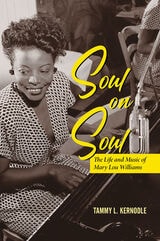
Soul on Soul
The Life and Music of Mary Lou WilliamsTammy L. Kernodle
University of Illinois Press, 2020
The jazz musician-composer-arranger Mary Lou Williams spent her sixty-year career working in—and stretching beyond—a dizzying range of musical styles. Her integration of classical music into her works helped expand jazz's compositional language. Her generosity made her a valued friend and mentor to the likes of Thelonious Monk, Charlie Parker, and Dizzy Gillespie. Her late-in-life flowering of faith saw her embrace a spiritual jazz oriented toward advancing the civil rights struggle and helping wounded souls.
Tammy L. Kernodle details Williams's life in music against the backdrop of controversies over women's place in jazz and bitter arguments over the music's evolution. Williams repeatedly asserted her artistic and personal independence to carve out a place despite widespread bafflement that a woman exhibited such genius. Embracing Williams's contradictions and complexities, Kernodle also explores a personal life troubled by lukewarm professional acceptance, loneliness, relentless poverty, bad business deals, and difficult marriages.
In-depth and epic in scope, Soul on Soul restores a pioneering African American woman to her rightful place in jazz history.
Soulful Bobcats
Experiences of African American Students at Ohio University, 1950–1960Carl H. Walker
Ohio University Press, 2013
During the 1950s, when less than 20 percent of American high school graduates attended college, a group of ambitious young African Americans enrolled at Ohio University, a predominantly white school in Athens, Ohio. Because they were a tiny, barely tolerated minority, they banded together, supported each other, and formed lasting bonds. Years later, at a series of “Soulful Reunions,” they recalled the joys and challenges of living on a white campus before the civil rights era, and eighteen of them decided to share their stories.
The authors of the eighteen autobiographical sketches in Soulful Bobcats were a diverse group. They were athletes, rhetoricians, musicians, and actresses; they aspired to professions in the military, business, education, government, architecture, and the arts. Some grew up in poor families, while others enjoyed the comforts of the middle class. But they had several things in common. They all came from families that believed education was important. They had been taught to avoid trouble, to persist despite setbacks, and to expect to encounter prejudice and even discrimination.
The authors vividly describe instances in which they were humiliated—by other students, by professors, or by townspeople—as well as the few occasions when violence seemed inevitable. In addition, they describe their “first,” including becoming the first African American students at Ohio University to be awarded scholarships for their prowess in football, basketball, track, and tennis; the first to compete for titles such as “Mr. Fraternity” or “Queen of the Military Ball”; the first to appear in theatrical performances alongside their white schoolmates. They also tell of their success in providing a social life for themselves by organizing two Greek letter fraternities and one sorority, holding their own off-campus dances, and joining the few campus organizations that were open to them. Above all, their stories speak to a resilience that allowed these “Soulful Bobcats” to learn from their experiences at Ohio University, to engage in meaningful careers, and to lead rich, fulfilling lives.
Soulside
Inquiries into Ghetto Culture and CommunityUlf Hannerz
University of Chicago Press, 2004
Originally published 35 years ago, Soulside became an urban anthropological classic. The book helped to dispel many false impressions about ghetto life and questioned the idea, precipitated in the influential Moynihan Report and in notions of a "culture of poverty," that the poor had chosen to lead the lives they do. Raising central moral and political questions about American society in a turbulent period, Soulside became an example of public engagement in anthropology. In a new afterword, Ulf Hannerz discusses the book's place in the debates of the time and its relevance to current arguments in anthropology.