Results by title
22279 books match the query 'Social Science' and 1635 start with s
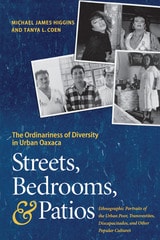
Streets, Bedrooms, and Patios
The Ordinariness of Diversity in Urban OaxacaBy Michael James Higgins and Tanya L. Coen
University of Texas Press, 2000
Diversity characterizes the people of Oaxaca, Mexico. Within this city of half a million, residents are rising against traditional barriers of race and class, defining new gender roles, and expanding access for the disabled. In this rich ethnography of the city, Michael Higgins and Tanya Coen explore how these activities fit into the ordinary daily lives of the people of Oaxaca.
Higgins and Coen focus their attention on groups that are often marginalized—the urban poor, transvestite and female prostitutes, discapacitados (the physically challenged), gays and lesbians, and artists and intellectuals. Blending portraits of and comments by group members with their own ethnographic observations, the authors reveal how such issues as racism, sexism, sexuality, spirituality, and class struggle play out in the people's daily lives and in grassroots political activism. By doing so, they translate the abstract concepts of social action and identity formation into the actual lived experiences of real people.
Streets, Railroads, and the Great Strike of 1877
David O. Stowell
University of Chicago Press, 1999
Whereas most historians treat the event solely as a massive labor strike that targeted the railroads, David O. Stowell examines America's predicament more broadly to uncover the roots of this rebellion. He studies the urban origins of the Strike in three upstate New York cities—Buffalo, Albany, and Syracuse. He finds that locomotives rumbled through crowded urban spaces, sending panicked horses and their wagons careening through streets. Hundreds of people were killed and injured with appalling regularity. The trains also disrupted street traffic and obstructed certain forms of commerce. For these reasons, Stowell argues, The Great Strike was not simply an uprising fueled by disgruntled workers. Rather, it was a grave reflection of one of the most direct and damaging ways many people experienced the Industrial Revolution.
"Through meticulously crafted case studies . . . the author advances the thesis that the strike had urban roots, that in substantial part it represented a community uprising. . . .A particular strength of the book is Stowell's description of the horrendous accidents, the toll in human life, and the continual disruption of craft, business, and ordinary movement engendered by building railroads into the heart of cities."—Charles N. Glaab, American Historical Review
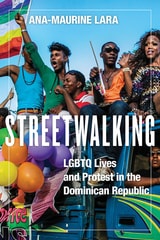
Streetwalking
LGBTQ Lives and Protest in the Dominican RepublicAna-Maurine Lara
Rutgers University Press, 2021
Streetwalking: LGBTQ Lives and Protest in the Dominican Republic is an exploration of the ways that lesbian, gay, bisexual, trans and queer persons exercise power in a Catholic Hispanic heteropatriarchal nation-state, namely the Dominican Republic. Lara presents the specific strategies employed by LGBTQ community leaders in the Dominican Republic in their struggle for subjectivity, recognition, and rights. Drawing on ethnographic encounters, film and video, and interviews, LGBTQ community leaders teach readers about streetwalking, confrontación, flipping the script, cuentos, and the use of strategic universalisms in the exercise of power and agency. Rooted in Maria Lugones's theorization of streetwalker strategies and Audre Lorde's theorization of silence and action, this text re-imagines the exercise and locus of power in examples provided by the living, thriving LGBTQ community of the Dominican Republic.
Streetwise
How Taxi Drivers Establish Customer's TrustworthinessDiego Gambetta
Russell Sage Foundation, 2005
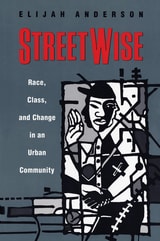
Streetwise
Race, Class, and Change in an Urban CommunityElijah Anderson
University of Chicago Press, 1990
"The sharpness of his observations and the simple clarity of his prose recommend his book far beyond an academic audience. Vivid, unflinching, finely observed, Streetwise is a powerful and intensely frightening picture of the inner city."—Tamar Jacoby, New York Times Book Review
"The book is without peer in the urban sociology literature. . . . A first-rate piece of social science, and a very good read."—Glenn C. Loury, Washington Times
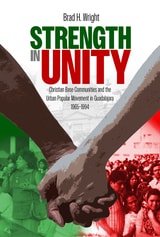
Strength in Unity
Christian Base Communities and the Urban Popular Movement in Guadalajara, 1965–1994Brad H. Wright
University of Alabama Press, 2026
Examines how poor and working-class communities in Guadalajara organized through faith, education, and culture to claim dignity, justice, and the right to the city.
Strength in Unity: Christian Base Communities and the Urban Popular Movement in Guadalajara, 1965–1994 presents the grassroots history of Guadalajara’s urban popular movement, centering the voices and struggles of poor and working-class communities, especially women, who organized for dignity, justice, and the right to the city. Brad H. Wright brings to light the transformative role of Christian base communities and Freirean popular education as incubators of political consciousness and collective action in the face of authoritarian repression and neoliberal coaptation.
Drawing from oral histories, personal archives, and the records of the Sagrado Corazón nuns, Wright reconstructs a powerful counternarrative to dominant portrayals of marginalized populations as “apathetic” and “uneducated.” Strength in Unity reveals a vibrant culture of resistance where women led campaigns for basic services, built schools, and demanded access to transportation, using tools such as community newspapers, street theater, and music to mobilize and sustain solidarity.
This deeply researched and compellingly told history challenges conventional accounts of urban development and social movements in Latin America. Strength in Unity is essential reading for scholars, students, and activists interested in grassroots organizing, liberation theology, and the enduring power of community-led change.
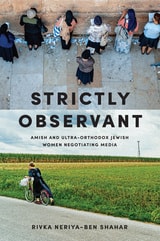
Strictly Observant
Amish and Ultra-Orthodox Jewish Women Negotiating MediaRivka Neriya-Ben Shahar
Rutgers University Press, 2024
The Amish and ultra-Orthodox Jewish communities have typically been associated with strict religious observance, a renunciation of worldly things, and an obedience of women to men. Women’s relationship to media in these communities, however, betrays a more nuanced picture of the boundaries at play and women’s roles in negotiating them.
Strictly Observant presents a compelling ethnographic study of the complex dynamic between women in both the Pennsylvanian Old Order Amish and Israeli ultra-Orthodox Jewish communities and contemporary media technologies. These women regularly establish valuable social, cultural, and religious capital through the countless decisions for use and nonuse of media that they make in their daily lives, and in ways that challenge the gender hierarchies of each community. By exhibiting a deep awareness of how media can be managed to increase their social and religious reputations, these women prompt us to reconsider our outmoded understanding of the Amish and ultra-Orthodox Jewish communities, the role that women play in these communities as agents of change, and our own relationship to media today.
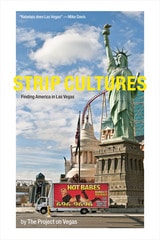
Strip Cultures
Finding America in Las VegasThe Project on Vegas
Duke University Press, 2015

Stripped and Script
Loyalist Women Writers of the American RevolutionKacy Dowd Tillman
University of Massachusetts Press, 2019
Strolling in the Ruins
The Caribbean's Non-sovereign Modern in the Early Twentieth CenturyFaith Smith
Duke University Press, 2023
Strong Hearts and Healing Hands
Southern California Indians and Field Nurses, 1920–1950Clifford E. Trafzer
University of Arizona Press, 2021
Over time, field nurses and Native people formed a positive working relationship that resulted in the decline of mortality from infectious diseases. Many Native Americans accepted and used Western medicine to fight pathogens, while also continuing Indigenous medicine ways. Nurses helped control tuberculosis, measles, influenza, pneumonia, and a host of gastrointestinal sicknesses. In partnership with the community, nurses quarantined people with contagious diseases, tested for infections, and tracked patients and contacts. Indians turned to nurses and learned about disease prevention. With strong hearts, Indians eagerly participated in the tuberculosis campaign of 1939–40 to x-ray tribal members living on twenty-nine reservations. Through their cooperative efforts, Indians and health-care providers decreased deaths, cases, and misery among the tribes of Southern California.
Strong Hearts, Wounded Souls
Native American Veterans of the Vietnam WarBy Tom Holm
University of Texas Press, 1996
At least 43,000 Native Americans fought in the Vietnam War, yet both the American public and the United States government have been slow to acknowledge their presence and sacrifices in that conflict. In this first-of-its-kind study, Tom Holm draws on extensive interviews with Native American veterans to tell the story of their experiences in Vietnam and their readjustment to civilian life.
Holm describes how Native American motives for going to war, experiences of combat, and readjustment to civilian ways differ from those of other ethnic groups. He explores Native American traditions of warfare and the role of the warrior to explain why many young Indian men chose to fight in Vietnam. He shows how Native Americans drew on tribal customs and religion to sustain them during combat. And he describes the rituals and ceremonies practiced by families and tribes to help heal veterans of the trauma of war and return them to the "white path of peace."
This information, largely unknown outside the Native American community, adds important new perspectives to our national memory of the Vietnam war and its aftermath.

Strong Interaction
Thomas Spence Smith
University of Chicago Press, 1992
Blending physiology and psychology with historical examples of social change and a sophisticated new model of social systems, this book contributes to our understanding how societies are possible.
Strong Religion
The Rise of Fundamentalisms around the WorldGabriel A. Almond, R. Scott Appleby, and Emmanuel Sivan
University of Chicago Press, 2003
To answer questions like these, Strong Religion draws on the results of the Fundamentalism Project, a decade-long interdisciplinary study of antimodernist, antisecular militant religious movements on five continents and within seven world religious traditions. The authors of this study analyze the various social structures, cultural contexts, and political environments in which fundamentalist movements have emerged around the world, from the Islamic Hamas and Hizbullah to the Catholic and Protestant paramilitaries of Northern Ireland, and from the Moral Majority and Christian Coalition of the United States to the Sikh radicals and Hindu nationalists of India. Offering a vividly detailed portrait of the cultures that nourish such movements, Strong Religion opens a much-needed window onto different modes of fundamentalism and identifies the kind of historical events that can trigger them.

Strong Voices, Weak History
Early Women Writers and Canons in England, France, and ItalyPamela J Benson and Victoria Kirkham, Editors
University of Michigan Press, 2005
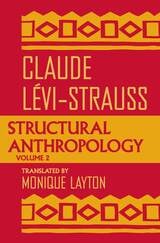
Structural Anthropology, Volume 2
Claude Lévi-Strauss
University of Chicago Press, 1983
"Structural Anthropology, Volume II is a diverse collection. [It is] a useful 'sampler' that gives a reader the full range of Lévi-Strauss's interests."—Daniel Bell, New York Times Book Review
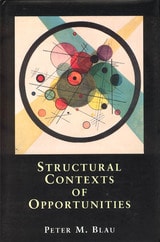
Structural Contexts of Opportunities
Peter M. Blau
University of Chicago Press, 1994
Blau begins by outlining the influences of population structures on intergroup relations and then examining the implications these influences have on occupational opportunities. He looks at the many groups within which an individual is likely to socialize—family, ethnic group, socioeconomic class—and the distance away from these groups an individual is likely to move. Blau demonstrates how such factors affect social mobility, which, in turn, influences membership and structures several types of organizations.
Blau then moves on to interpersonal relationships and analyzes the social exchanges in them that reveal the ultimate effects of ethnic, socioeconomic, and other aspects of population structures. He defines two types of power: influence in direct interpersonal exchange, and large-scale domination (economic or political) of groups without personal contact.
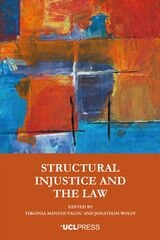
Structural Injustice and the Law
Edited by Virginia Mantouvalou and Jonathan Wolff
University College London, 2024
Structural Injustice and the Law presents theoretical approaches and case studies demonstrating how the concept of structural injustice can aid legal analysis, and how legal reform can reduce, or even eliminate, some forms of structural injustice. The interdisciplinary topics discussed here in the book include domination, equality, human rights law, legal status, labor law, criminal justice, domestic homicide reviews, homelessness, regulatory public bodies, and the films of Ken Loach. Drawn together, these subjects build an invaluable resource for legal theorists exploring how to use the concept of structural injustice and political philosophers looking for nuanced accounts of the law’s role both in creating and mitigating structural injustice.
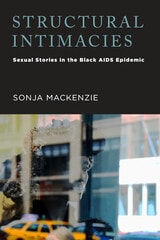
Structural Intimacies
Sexual Stories in the Black AIDS EpidemicMackenzie, Sonja
Rutgers University Press, 2013
Sonja Mackenzie elegantly argues that structural vulnerability is felt—quite literally—in the blood, in the possibilities and constraints on sexual lives, and in the rhetorics of their telling. The circulation of structural intimacies in daily life and in the political domain reflects possibilities for seeking what Mackenzie calls intimate justice at the nexus of cultural, economic, political, and moral spheres. Structural Intimacies presents a compelling case: in an era of deepening medicalization of HIV/AIDS, public health must move beyond individual-level interventions to community-level health equity frames and policy changes

Structural Patterns and Proportions in Vergil's Aeneid
A Study in Mathematical CompositionGeorge E. Duckworth
University of Michigan Press, 1962
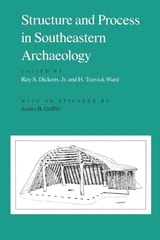
Structure and Process in Southeastern Archaeology
Edited by Roy Dickens Jr and H. Trawick Ward
University of Alabama Press, 1985
A Dan Josselyn Memorial Publication
Within the general structure-and-process theme of this compendium, the authors have focused on either intrasite problems (those dealing with the formation and structure of a site, type of site, or type of feature) or intersite problems (those dealing with behavioral organization and process as developed from comparative site data). These papers, from a broad range of specialists, present a comprehensive study of southeastern archaeology.
Structure and Process in Southeastern Archaeology is a foundational work that reshapes how scholars understand the cultural and social dynamics of prehistoric communities in the Southeastern United States. Roy S. Dickens, Jr. and H. Trawick Ward bring together decades of fieldwork, theoretical insight, and regional expertise to explore how ancient societies organized themselves, interacted, and evolved over time. Rather than focusing solely on artifacts or isolated site reports, this volume emphasizes the broader patterns—both structural and processual—that define the archaeological record of the Southeast.
Through a careful synthesis of settlement data, material culture, and environmental context, the authors reveal how social organization, political structures, and cultural practices were deeply embedded in the landscape. Their approach integrates processual archaeology with a nuanced understanding of regional variation, offering readers a dynamic view of how prehistoric communities adapted to changing conditions and interacted across space and time.
This book is particularly valuable for archaeologists, anthropologists, and historians seeking to move beyond descriptive accounts toward more interpretive frameworks. It provides a model for analyzing archaeological data in ways that illuminate the lived experiences of ancient peoples, making it a vital resource for both academic research and classroom instruction. The authors’ clear writing and thoughtful analysis make complex ideas accessible without sacrificing scholarly rigor.
Whether you're studying Mississippian chiefdoms, Woodland period settlements, or the broader cultural landscapes of the American South, Structure and Process in Southeastern Archaeology offers essential tools for understanding the past. It stands as a testament to the importance of theory-driven, context-rich archaeological interpretation.
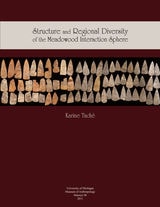
Structure and Regional Diversity in the Meadowood Interaction Sphere
Karine Taché
University of Michigan Press, 2011
Structured Luck
Downstream Effects of the U.S. Diversity Visa ProgramOnoso Imoagene
Russell Sage Foundation, 2024
Combining ethnographic observation in Africa and interviews with immigrants, their family members, and friends from Ghana and Nigeria, Imoagene demonstrates that the visa program is a process of “structured luck,” from how people hear about the lottery, who registers for it, and who participates in it to the application requirements for the visa. In Ghana and Nigeria, people often learn about the lottery through friends, colleagues, or relatives who persuade them to enter for the perceived benefits of receiving a visa: opportunities for upward mobility, permanent legal status, and the ability to bring along family members. Though anyone can enter the lottery, not everyone who wins obtains a visa. The visa application process requires proof of a high school diploma or artisan skills, a medical exam, a criminal background check, an interview with U.S. consular officers, and payment of fees. Such requirements have led to the growth of visa entrepreneurs, who often charge exorbitant fees to steer immigrants through the process. Visa recipients who were on track to obtain university degrees at home often leave in the middle of their studies for the United States but struggle to continue their education due to high U.S. tuition costs. And though their legal status allows them to escape the demoralizing situations that face the undocumented, these immigrants lack the social support that the government sometimes provides for refugees and other migrants. Ultimately, Imoagene notes, the real winner of the visa lottery is not the immigrants themselves but the United States, which benefits from their relatively higher levels of education. Consequently, she argues, the U.S. must do more to minimize the visa program’s negative consequences.
Structured Luck illuminates the trauma, resilience, and determination of immigrants who come to the United States through the Diversity Visa Program and calls for the United States to develop policies that will better integrate them into society.
Structuring Diversity
Ethnographic Perspectives on the New ImmigrationEdited by Louise Lamphere
University of Chicago Press, 1992
Struggles for the Human
Violent Legality and the Politics of RightsLara Montesinos Coleman
Duke University Press, 2024
Struggling Giants
City-Region Governance in London, New York, Paris, and TokyoPaul Kantor
University of Minnesota Press, 2012
Throughout the past thirty years a small number of city-regions have achieved unprecedented global status in the world economy while undergoing radical changes. Struggling Giants examines the transformation of four of the most significant metropolises: London, New York, Paris, and Tokyo. This volume analyzes the thorniest issues these sprawling city-regions have faced, including ameliorating social problems through public policies, the effect of globalization on local governance, and the relationships between local, regional, and national institutions.
Three critical themes frame Struggling Giants. The first is the continuing struggle for governability in the midst of regional governmental fragmentation. The second theme is how the city-regions fight to manage powerful political biases. Policy-making is often selective, the authors find, and governments are more responsive to economic exigencies than to social or environmental needs. Finally, these city-regions are shown to be strong economic leaders in part because they are able to change—although the authors reveal that pragmatism and piecemeal policy solutions can still prevail.
Stuart Hall's Voice
Intimations of an Ethics of Receptive GenerosityDavid Scott
Duke University Press, 2017
Stuck in Place
Urban Neighborhoods and the End of Progress toward Racial EqualityPatrick Sharkey
University of Chicago Press, 2013
In the 1960s, many believed that the civil rights movement’s successes would foster a new era of racial equality in America. Four decades later, the degree of racial inequality has barely changed. To understand what went wrong, Patrick Sharkey argues that we have to understand what has happened to African American communities over the last several decades. In Stuck in Place, Sharkey describes how political decisions and social policies have led to severe disinvestment from black neighborhoods, persistent segregation, declining economic opportunities, and a growing link between African American communities and the criminal justice system.
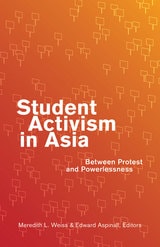
Student Activism in Asia
Between Protest and PowerlessnessMeredith L. Weiss
University of Minnesota Press, 2012
Since World War II, students in East and Southeast Asia have led protest movements that toppled authoritarian regimes in countries such as Indonesia, South Korea, and Thailand. Elsewhere in the region, student protests have shaken regimes until they were brutally suppressed—most famously in China’s Tiananmen Square and in Burma. But despite their significance, these movements have received only a fraction of the notice that has been given to American and European student protests of the 1960s and 1970s. The first book in decades to redress this neglect, Student Activism in Asia tells the story of student protest movements across Asia.
Taking an interdisciplinary, comparative approach, the contributors examine ten countries, focusing on those where student protests have been particularly fierce and consequential: China, Japan, Hong Kong, Taiwan, South Korea, Indonesia, Burma, Malaysia, Thailand, and the Philippines. They explore similarities and differences among student movements in these countries, paying special attention to the influence of four factors: higher education systems, students’ collective identities, students’ relationships with ruling regimes, and transnational flows of activist ideas and inspirations.
The authors include leading specialists on student activism in each of the countries investigated. Together, these experts provide a rich picture of an important tradition of political protest that has ebbed and flowed but has left indelible marks on Asia’s sociopolitical landscape.
Contributors: Patricio N. Abinales, U of Hawaii, Manoa; Prajak Kongkirati, Thammasat U, Thailand; Win Min, Vahu Development Institute; Stephan Ortmann, City U of Hong Kong; Mi Park, Dalhousie U, Canada; Patricia G. Steinhoff, U of Hawaii, Manoa; Mark R. Thompson, City U of Hong Kong; Teresa Wright, California State U, Long Beach.
Studies In Italian American Folklore
Luisa Del Giudice
Utah State University Press, 1994
Studies in Culture Contact
Interaction, Culture Change, and ArchaeologyEdited by James G. Cusick
Southern Illinois University Press, 1998
People have long been fascinated about times in human history when different cultures and societies first came into contact with each other, how they reacted to that contact, and why it sometimes occurred peacefully and at other times was violent or catastrophic.
Studies in Culture Contact: Interaction, Culture Change, and Archaeology, edited by James G. Cusick,seeks to define the role of culture contact in human history, to identify issues in the study of culture contact in archaeology, and to provide a critical overview of the major theoretical approaches to the study of culture and contact.
In this collection of essays, anthropologists and archaeologists working in Europe and the Americas consider three forms of culture contact—colonization, cultural entanglement, and symmetrical exchange. Part I provides a critical overview of theoretical approaches to the study of culture contact, offering assessments of older concepts in anthropology, such as acculturation, as well as more recently formed concepts, including world systems and center-periphery models of contact. Part II contains eleven case studies of specific contact situations and their relationships to the archaeological record, with times and places as varied as pre- and post-Hispanic Mexico, Iron Age France, Jamaican sugar plantations, European provinces in the Roman Empire, and the missions of Spanish Florida.
Studies in Culture Contact provides an extensive review of the history of culture contact in anthropological studies and develops a broad framework for studying culture contact’s role, moving beyond a simple formulation of contact and change to a more complex understanding of the amalgam of change and continuity in contact situations.
Studies in the Archeological History of the Deh Luran Plain
The Excavation of Chagha SefidFrank Hole
University of Michigan Press, 1977
Studies in the Economics of Aging
Edited by David A. Wise
University of Chicago Press, 1994
Studies in the Natural Radioactivity of Prehistoric Materials
Edited by Arthur J. Jelinek and James E. Fitting
University of Michigan Press, 1965
Studies of Homeric Greece
Jan Bouzek
Karolinum Press, 2018
Studies on the Abuse and Decline of Reason
Text and DocumentsF. A. Hayek
University of Chicago Press, 2010
Hayek argues that the vast number of elements whose interactions create social structures and institutions make it unlikely that social science can predict precise outcomes. Instead, he contends, we should strive to simply understand the principles by which phenomena are produced. For Hayek this modesty of aspirations went hand in hand with his concern over widespread enthusiasm for economic planning. As a result, these essays are relevant to ongoing debates within the social sciences and to discussion about the role government can and should play in the economy.
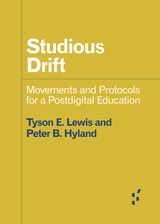
Studious Drift
Movements and Protocols for a Postdigital EducationPeter Hyland
University of Minnesota Press, 2022
What kind of university is possible when digital tools are not taken for granted, but hacked for a more experimental future?
The global pandemic has underscored contemporary reliance on digital environments. This is particularly true among schools and universities, which, in response, shifted much of their instruction online. Because the rise of e-learning logics, ed-tech industries, and enterprise learning-management systems all threaten to further commodify and instrumentalize higher education, these technologies and platforms have to be creatively and critically struggled over.
Studious Drift intervenes in this struggle by reviving the relationship between studying and the generative space of the studio in service of advancing educational experimentation for a world where digital tools have become a permanent part of education. Drawing on Alfred Jarry’s pataphysics, the “science of imaginary solutions,” this book reveals how the studio is a space-time machine capable of traveling beyond the limits of conventional online learning to redefine education as interdisciplinary, experimental, public study.

Studs, Tools, and the Family Jewels
Metaphors Men Live ByPeter F. Murphy
University of Wisconsin Press, 2001
Peter F. Murphy's purpose in this book is not to shock but rather to educate, provoke discussion, and engender change. Looking at the sexual metaphors that are so pervasive in American culture—jock, tool, shooting blanks, gang bang, and others even more explicit—he argues that men are trapped and damaged by language that constantly intertwines sexuality and friendship with images of war, machinery, sports, and work.
These metaphors men live by, Murphy contends, reinforce the view that relationships are tactical encounters that must be won, because the alternative is the loss of manhood. The macho language with which men cover their fear of weakness is a way of bonding with other men. The implicit or explicit attacks on women and gay men that underlie this language translate, in their most extreme forms, into actual violence. Murphy also believes, however, that awareness of these metaphorical power plays is the basis for behavioral change: "How we talk about ourselves as men can alter the way we live as men."
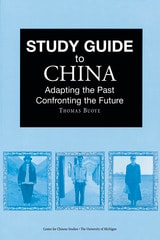
Study Guide to China
Adapting the Past, Confronting the FutureThomas Buoye
University of Michigan Press, 2003
Each section, in addition to essay and excerpts, also includes a bibliography of additional topical works as well as suggestions for complementary video and internet teaching resources.
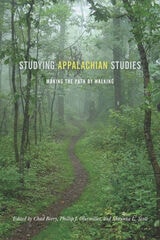
Studying Appalachian Studies
Making the Path by WalkingEdited by Chad Berry, Phillip J. Obermiller, and Shaunna L. Scott
University of Illinois Press, 2015
Essayists argue for Appalachian Studies' integration with kindred fields like African American studies, women's studies, and Southern studies, and they urge those involved in the field to globalize the perspective of Appalachian Studies; to commit to continued applied, participatory action, and community-based research; to embrace more fully the field's capacity for bringing about social justice; to advocate for a more accurate understanding of Appalachia and its people; and to understand and overcome the obstacles interdisciplinary studies face in the social and institutional construction of knowledge.
Contributors: Chris Baker, Chad Berry, Donald Edward Davis, Amanda Fickey, Chris Green, Erica Abrams Locklear, Phillip J. Obermiller, Douglas Reichert Powell, Michael Samers, Shaunna L. Scott, and Barbara Ellen Smith.
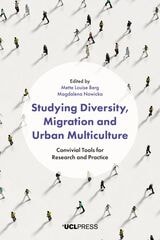
Studying Diversity, Migration and Urban Multiculture
Convivial Tools for Research and PracticeEdited by Mette Louise Berg and Magdalena Nowicka
University College London, 2019
Drawing on a range of innovative and participatory methods, each chapter examines conviviality in different cities across the United Kingdom. The contributors ask how the research process itself can be made more convivial and show how power relations between researchers, those researched, and research users can be reconfigured—in the process producing much needed new knowledge and understanding about urban diversity, multiculturalism and conviviality. Examples include embroidery workshops with diverse faith communities, arts work with child language brokers in schools, and life story and walking methods with refugees. Studying Diversity, Migration and Urban Multiculture is interdisciplinary in scope and includes contributions from sociologists, anthropologists, and social psychologists, as well as chapters by practitioners and activists. It provides fresh perspectives on methodological debates in qualitative social research, and will be of interest to scholars, students, practitioners, activists, and policymakers who work on migration, urban diversity, conviviality and conflict, and integration and cohesion.
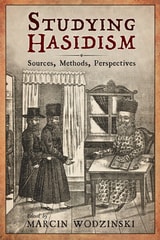
Studying Hasidism
Sources, Methods, PerspectivesMarcin Wodzinski
Rutgers University Press, 2019
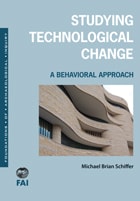
Studying Technological Change
A Behavioral ApproachMichael Brian Schiffer
University of Utah Press, 2011
Studying Technological Change synthesizes nearly four decades of research by Michael Brian Schiffer, a cofounder of the field of behavioral archaeology. This new book asks historical and scientific questions about the interaction of people with artifacts during all times and in all places. The book is not about the history or prehistory of technology, nor is it a catalog of methods and techniques for inferring how specific technologies were made or used. Rather, it supplies conceptual tools that can be used to help craft an explanation of any technological change in any society.
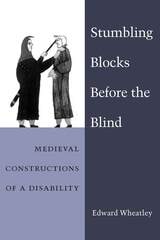
Stumbling Blocks Before the Blind
Medieval Constructions of a DisabilityEdward Wheatley
University of Michigan Press, 2010
"Bold, deeply learned, and important, offering a provocative thesis that is worked out through legal and archival materials and in subtle and original readings of literary texts. Absolutely new in content and significantly innovative in methodology and argument, Stumbling Blocks Before the Blind offers a cultural geography of medieval blindness that invites us to be more discriminating about how we think of geographies of disability today."
---Christopher Baswell, Columbia University
"A challenging, interesting, and timely book that is also very well written . . . Wheatley has researched and brought together a leitmotiv that I never would have guessed was so pervasive, so intriguing, so worthy of a book."
---Jody Enders, University of California, Santa Barbara
Stumbling Blocks Before the Blind presents the first comprehensive exploration of a disability in the Middle Ages, drawing on the literature, history, art history, and religious discourse of England and France. It relates current theories of disability to the cultural and institutional constructions of blindness in the eleventh through fifteenth centuries, examining the surprising differences in the treatment of blind people and the responses to blindness in these two countries. The book shows that pernicious attitudes about blindness were partially offset by innovations and ameliorations---social; literary; and, to an extent, medical---that began to foster a fuller understanding and acceptance of blindness.
A number of practices and institutions in France, both positive and negative---blinding as punishment, the foundation of hospices for the blind, and some medical treatment---resulted in not only attitudes that commodified human sight but also inhumane satire against the blind in French literature, both secular and religious. Anglo-Saxon and later medieval England differed markedly in all three of these areas, and the less prominent position of blind people in society resulted in noticeably fewer cruel representations in literature.
This book will interest students of literature, history, art history, and religion because it will provide clear contexts for considering any medieval artifact relating to blindness---a literary text, a historical document, a theological treatise, or a work of art. For some readers, the book will serve as an introduction to the field of disability studies, an area of increasing interest both within and outside of the academy.
Edward Wheatley is Surtz Professor of Medieval Literature at Loyola University, Chicago.
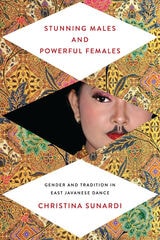
Stunning Males and Powerful Females
Gender and Tradition in East Javanese DanceChristina Sunardi
University of Illinois Press, 2015
Christina Sunardi ventures into the regency of Malang in east Java to study and perform with dancers. Through formal interviews and casual conversation, Sunardi learns about their lives and art. Her work shows how performers continually transform dance traditions to negotiate, and renegotiate, the boundaries of gender and sex--sometimes reinforcing lines of demarcation, sometimes transgressing them, and sometimes doing both simultaneously. But Sunardi's investigation moves beyond performance. It expands notions of the spiritual power associated with female bodies and feminine behavior, and the ways women, men, and waria (males who dress and live as female) access the magnetic power of femaleness.
A journey into understudied regions and ideas, Stunning Males and Powerful Females reveals how performances seemingly fixed by tradition are instead dynamic environments for cultural negotiation and change surrounding questions of sex and gender.
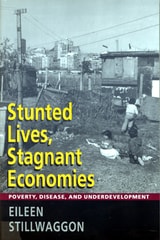
Stunted Lives, Stagnant Economies
Poverty, Disease, and UnderdevelopmentStillwaggon, Eileen
Rutgers University Press, 1998
This is a fascinating, lively, and well-written book. The author has a clear message which she states at the beginning, namely, that health is primarily an economic, not a medical problem, and she follows that to the end.Keith Griffin, University of California, Riverside
Houses made of rags and flattened soda cans, filthy water that breeds disease, counterfeit medicines, no access to decent medical care how can children growing up in such an environment become productive workers contributing to a developing economy?
Stunted Lives, Stagnant Economies describes in vivid detail the living conditions of the poor in developing countries and the diseases and injuries that result from this environment of need. Most of the diseases that affect the poor cholera, summer diarrhea, tuberculosis, lice, worms, leprosy result from the poverty of their environment. Poverty also determines the availability and effectiveness of the medical response. Using Argentina as a case study, Eileen Stillwaggon argues that making good health available to everyone is not a scientific problem but an economic one.
The debt crisis of the 1980s and the subsequent structural adjustment policies adopted by most developing countries exacerbated the problems faced by the poor. What kind of future can a nation build when the health of the majority of the population its workforceÑis at risk or compromised because social services have been reduced? Without adequate health care and social services, people cannot live up to their potential, and the spiral of poverty continues. But there are ways to fight this cycle of poverty.
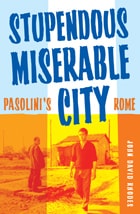
Stupendous, Miserable City
Pasolini’s RomeJohn David Rhodes
University of Minnesota Press, 2007
John David Rhodes places the city of Rome at the center of this original and in-depth examination of the work of Italian director Pier Paolo Pasolini—but it’s not the classical Rome you imagine. Stupendous, Miserable City situates Pasolini within the history of twentieth-century Roman urban development. The book focuses first on the Fascist period, when populations were moved out of the urban center and into public housing on the periphery of the city, called the borgate, and then turns to the progressive social housing experiments of the 1950s. These environments were the settings of most of Pasolini’s films of the early to mid-1960s.
Discussing films such as Accattone, Mamma Roma, and The Hawks and the Sparrows, Rhodes shows how Pasolini used the borgate to critique Roman urban planning and neorealism and to draw attention to the contemptuous treatment of Rome’s poor. To Pasolini, the borgate, rich in human incident, linguistic difference, and squalor, “were life”—and now his passion can be appreciated fully for the first time.
Carefully tracing Pasolini’s surprising engagement with this part of Rome and looking beyond his films to explore the interrelatedness of all of Pasolini’s artistic output in the 1950s and 1960s—including his poetry, fiction, and journalism—Rhodes opens up completely new ways of understanding Pasolini’s work and proves how connected Pasolini was to the political and social upheavals in Italy at the time.
John David Rhodes is lecturer in literature and visual culture at the University of Sussex.
Stuttering Meets Sterotype, Stigma, and Discrimination
An Overview of Attitude ResearchKenneth O. St. Louis
West Virginia University Press, 2015
Stuttering Meets Stereotype, Stigma, and Discrimination: An Overview of Attitude Research is the only reference work to date devoted entirely to the topic of stuttering attitudes. It features comprehensive review chapters by St. Louis, Boyle and Blood, Gabel, Langevin, and Abdalla; an annotated bibliography by Hughes; and experimental studies by other seasoned and new researchers. The book leads the reader through a maze of research efforts, emerging with a clear understanding of the important issues involved and ideas of where to go next. Importantly, the evidence base for stuttering attitude research extends beyond research in this fluency disorder to such areas as mental illness, obesity, and race. Thus, although of interest primarily to those who work, interact, or otherwise deal with stuttering, the book has potential for increasing understanding, ameliorating negative attitudes, and informing research on any of a host of other stigmatized conditions.
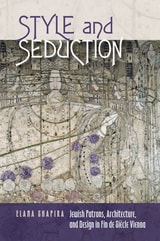
Style and Seduction
Jewish Patrons, Architecture, and Design in Fin de Siècle ViennaElana Shapira
Brandeis University Press, 2016
Style, Function, Transmission
Evolutionary Archaeological PerspectivesMichael J O'Brien
University of Utah Press, 2003
Darwin's theory of evolutionary descent with modification rests in part on the notion that there is heritable continuity affected by transmission between ancestor and descendant. It is precisely this continuity that allows one to trace hylogenetic histories between fossil taxa of various ages and recent taxa. Darwin was clear that were an analyst to attempt such tracings, then the anatomical characters of choice are those least influenced by natural selection, or what are today referred to as adaptively neutral traits. The transmission of these traits is influenced solely by such mechanisms as drift and not by natural selection.
The application of Darwin's theory to archaeological phenomena requires that the theory be retooled to accommodate artifacts. One aspect that has undergone this retooling concerns cultural transmission, the mechanism that affects heritable continuity between cultural phenomena. Archaeologists have long traced what is readily interpreted as heritable continuity between artifacts, but the theory underpinning their tracings is seldom explicit. Thus what have been referred to as artifacts styles underpin such tracings because styles are adaptively neutral. Other traits are referred to as functional.
In their introduction to Style, Function, Transmission, Michael O’Brien and R. Lee Lyman outline in detail the interrelations of a theory of cultural descent with modification and the concepts of drift, style, and function. The chapters in the volume specifically address the issues of selection and drift and their relation to style and function. In non-polemic presentations, contributors specify empirical implications of aspects of cultural transmission for evolutionary lineages of artifacts and then present archaeological data for those implications.