Results by title
5159 books match the query 'Biography' and 320 start with s
Shared Secrets
The Queer World of Newbery Medalist Charles J. FingerElizabeth Findley Shores
University of Arkansas Press, 2021
Winner, 2023 Booker Worthern Literary Prize
For nearly a century, British expatriate Charles Joseph Finger (1867–1941) was best known as an award-winning author of children’s literature. In Shared Secrets, Elizabeth Findley Shores relates Finger’s untold story, exploring the secrets that connected the author to an international community of twentieth-century queer literati.
As a young man, Finger reveled in the easy homosociality of his London polytechnical school, where he launched a student literary society in the mold of the city’s private men’s clubs. Throughout his life, as he wandered from England to Patagonia to the United States, he tried to recreate similarly open spaces—such as Gayeta, his would-be art colony in Arkansas. But it was through his idiosyncratic magazine All’s Well that he constructed his most successful social network, writing articles filled with coded signals and winking asides for an inner circle of understanding readers.
Capitalizing on the publishing opportunities of the day, Finger used every means available to express his twin loves—literature and men. He produced an enormous body of work, and his short, semiautobiographical fiction won some critical acclaim. Ultimately, the children’s book that won Finger a Newbery Medal ushered him into the public eye, ending his development as an author of serious queer literature.
Shared Secrets is both the story of Finger’s remarkable, adventurous life and a rare look at a community of gay writers and artists who helped shaped twentieth-century American culture, even as they artfully concealed their own identities.
Shared Selves
Latinx Memoir and Ethical Alternatives to HumanismSuzanne Bost
University of Illinois Press, 2019
Sharing Fencelines
Linda Hussa
University of Utah Press, 2002
In the lightly-populated northwestern corner of Nevada, a former geologist and rural schoolteacher, a published poet and ranch owner, and an artist and environmentalist make for an intriguing—perhaps even unlikely—trio of friends. In this evocative collection of personal essays, each offers her voice as a testament to the joys and struggles of creating a home and connecting to the land and the people who live there.
Stories of ranch hands and Ladies’ Clubs, raising chickens and raising children, pulling up roots and planting dreams tumble together in a mélange of lives lived well and thoughtfully. Sharing Fencelines is as much about art as it is about activism, as much about personal growth as it is about growing community. What these women offer us is the sweet taste of what is possible, and the blended harmony of their voices echoes across the mountains and washes and deserts, resonating in our own hearts, our own homes.
Carolyn Dufurrena’s "The Flying Heart Museum" pays homage to a layered landscape of unique individuals—not the least of which are her students, searching for themselves in the Nevada wilderness: "You know how your spirit betrays you when you’re not thinking to protect yourself. Jose has been dreaming, doodling away, and his pencil has discovered this flying heart, as big as the Puritan meetinghouse....He has drawn the log cabin around the heart, and labeled it. At recess I ask him, gently, 'So, Jose, what’s in there, in your Flying Heart Museum?'"
In "Shared Fencelines," Linda Hussa reveals the mystery of horses, the gift of water, and the serendipity of love: "My first hurt came from a horse when I tried to shinny up the feathered leg of our old gelding as I’d seen my brother and sister do. Twelve hundred pounds of him stepped on my bare foot. Mom carried her shrieking two-year-old to the house...she cut off the dangling nail saying Popeye didn’t mean to, he just didn’t notice my little foot. Then she cradled my face in her cool hands and said she hoped I would forgive him and we could be friends again."
"Fire Hall" by Sophie Sheppard paints a picture of a families and communities forged against the backdrop of a rugged, rural life: "Here, when there is a funeral, the whole town comes. First to arrive are the older women, vestiges of the Lake City Ladies Club that was disbanded a few years ago because most of the younger women have jobs and no longer stay at home. At the potluck funeral dinner everyone will file in together: the women unfamiliar in dresses ordered from catalogs, the mens' hatless foreheads glowing pale in contrast to the tan of their freshly shaven jaws, the younger people that I won’t recognize."
Shattered Applause
The Lives of Eva Le GallienneRobert A. Schanke. Foreword by May Sarton
Southern Illinois University Press, 1992
This comprehensive biography of the actress film critic Rex Reed called “a national treasure” draws on Robert A. Schanke’s interviews and correspondence not only with Eva Le Gallienne but also with more than one hundred of her colleagues and friends, including Glenda Jackson, Burgess Meredith, Eli Wallach, Peter Falk, Ellen Burstyn, Anne Jackson, Farley Granger, Jane Alexander, Uta Hagen, and Rosemary Harris. Forty-two illustrations offer highlights of Le Gallienne’s many notable performances in such plays as Hedda Gabler, Liliom, The Cherry Orchard, Peter Pan, Camille, Mary Stuart, The Royal Family,and The Dream Watcher.
Behind her public role as a famous actress and as the founding and maintaining force of the first civic repertory theatre in the United States, Eva Le Gallienne led a private life complicated by her identity as a lesbian. Schanke considers Le Gallienne’s sexuality and how it played a role in the struggles, defeats, and triumphs that combined to inspire her greatness. Shattered Applause, a finalist for the Lambda Literary Award for Lesbian Nonfiction, tells a fascinating story that also serves as a barometer of the changing values, tastes, and attitudes of American society.
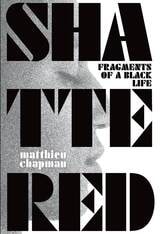
Shattered
Fragments of a Black LifeMatthieu Chapman
West Virginia University Press, 2023
From a distance, Matthieu Chapman’s life and accomplishments serve as an example of racial progress in America: the first in his family to go to college, he earns two master’s degrees and a doctorate and then becomes a professor of theater. Despite his personal and academic success, however, the specter of antiblackness continues to haunt his every moment and interaction.
Told through fragments, facets, shards, slivers, splinters, and absences, Shattered places Chapman’s own story in dialogue with US history and structural analysis of race to relay the experience of being very alive in a demonstrably antiblack society—laying bare the impact of the American way on black bodies, black psyches, and black lives. From the Church of Jesus Christ of Latter-day Saints to the offices of higher education, from a Loyal White Knights flyer on his windshield to a play with black students written by a black playwright, Chapman’s life story embodies the resistance that occurs, the shattering, collapsing, and reconfiguring of being that happens in the collisions between conceptions of blackness. Shattered is a heartrending and thought-provoking challenge to narratives of racial progress and postracial America—an important reminder that systemic antiblack racism affects every black person regardless of what they achieve in spite of it.
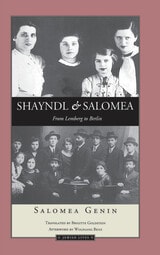
Shayndl and Salomea
From Lemberg to BerlinSalomea Genin
Northwestern University Press, 1997
Genin's richly detailed portrait shows the effects of a family's struggle—personal, religious, social, and for their very survival—against the shadow of the Nazi rise to power.
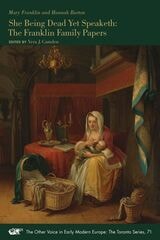
She Being Dead Yet Speaketh
The Franklin Family PapersMary Franklin and Hannah Burton
Iter Press, 2020
Collected for the first time, this volume of the Franklin Family Papers offers rare insight into the personal lives of three generations of dissenting women.
She Came from Mariupol
Natascha Wodin
Michigan State University Press, 2022
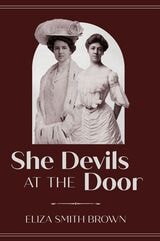
She Devils at the Door
Eliza Smith Brown
Carnegie Mellon University Press, 2023
Sometimes troublemakers emerge from the most unlikely of places. This true story follows the lives of two daughters of the Gilded Age—Lucy and Eliza Kennedy—who were educated at Vassar College and became leaders of the suffrage movement. Then, after the Nineteenth Amendment was passed in 1920, they spent the next forty years fighting corruption in politics and government.
Tenacious, smart, and witty, they captivated crowds, disarmed their opponents, and instilled particular dread among the corrupt politicians who were the unfortunate targets of their nonpartisan crusade. Their entry across the threshold of Pittsburgh’s City-County Building would reportedly invoke a flurry of hushed warnings through the halls: “The She Devils are at the door!” Together, Lucy and Eliza fought for the vote, empowered women to use it wisely, forced a mayor out of office in disgrace, took control of the city budget, exposed a series of scandals, spearheaded police reform, and launched a campaign that would eventually clear Pittsburgh of its smoky veil.
Featuring the true story of two powerful women, this book comes at a propitious time, reminding us how far women have come and how vigilant we must remain.
Shelf Life
Essays, Memoirs, and an InterviewThom Gunn
University of Michigan Press, 1993
Gunn’s criticism communicates his own enthusiasm for poetry. He tries to show his readers how to get a first foothold into the work of some of his favorite poets, whether Wyatt or Whitman, Mina Loy or Robert Creeley.
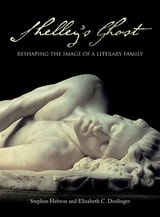
Shelley's Ghost
Reshaping the Image of a Literary FamilyStephen Hebron and Elizabeth C. Denlinger
Bodleian Library Publishing, 2010
It is difficult to think of a family more endowed with literary genius than the Shelley family—from the Romantic poet Percy Bysshe Shelley and his wife, novelist Mary Shelley, to Mary’s parents, William Godwin and Mary Wollstonecraft—all were authors in their own right. Using extensive archival material, Shelley’s Ghost explores the making of this remarkable literary family’s reputation.
Drawing on the Bodleian Library’s outstanding collection of letters, poetry manuscripts, rare printed books, portraits, and other personalia—including Shelley’s working notebooks, Keats’s letters to Shelley, William Godwin’s diary, and the original manuscript of Mary Shelley’s Frankenstein—Stephen Hebron charts the history of this talented yet troubled family. After Percy Bysshe Shelley’s drowning in 1822, Mary published various manuscripts relating to both her husband’s and her father’s lives, and passed this historical legacy to her son, Sir Percy Florence Shelley and his wife, Lady Jane Shelley. As guardians of the archive until they bequeathed it to the Bodleian in 1892, Sir Percy Florence and Lady Jane helped shape the posthumous reputations of these writers. An afterword by Elizabeth Denlinger of the New York Public Library offers an additional perspective, exploring material relating to the Shelley family that slipped beyond the family’s control.
An unparalleled look at one of the most significant families of British Romantic literature, Shelley’s Ghost will be welcomed by scholars and the many fans of this enduring literacy legacy.
Shelter
Bobby Burns
University of Arizona Press, 1998
Shelter is filled with the sights and sounds of homelessness. Shelter life is patterned by meals provided by church volunteers, lines for soap and clean towels, the repeated meticulous washing of hands by an obsessive-compulsive resident, the rare pleasure of a fried chicken dinner, the illicit smell of marijuana within the shelter. Burns witnesses the residents' struggles with drugs, alcohol, and disability, and he wonders daily whether he will have the courage to emerge from this life. Bobby's diary expresses the full range of emotions of a homeless person: anger, self-pity, pride, humility, shame, depression, and optimism. These are not contradictions; taken together they represent the real feelings provoked by homelessness.
But with rare inner courage, Bobby stokes the fires of hope within himself, marking the days in his journal to keep himself from sliding deeper into a spiral of despair. Bobby confronts his own stereotypes about the homeless and learns firsthand what it means to struggle daily for survival and for dignity. He learns greater courage and he learns greater kindness. He is given food and a bed for 41 days, but he finds shelter on his own, deep within himself.

Shelter and Storm
At Home in the Driftlessdean
University of Minnesota Press, 2025
Living mindfully with nature during a time of uncertainty
In the midst of the environmental crises of the early twenty-first century, Tamara Dean sought a way to live lightly on the planet. Her quest drew her to a landscape unlike any other: the Driftless area of Wisconsin, a region untouched by glaciers, marked by steep hills and deeply carved valleys, capped with forests and laced with cold, spring-fed streams. There, she confronted, in ways large and small, the challenges of meeting basic needs while facing the ravages of climate change—an experience at once soul-stirring and practical that she recounts in Shelter and Storm.
Dean’s boundless curiosity and gift for storytelling imbue these essays with urgency and a sense of adventure. She invites readers to share in her discoveries while hunting for water, learning that a persistent weed could be food, or burning a hayfield to recreate a prairie. Contending with the fallout of fires, floods, and tornadoes, she offers responses to natural disasters that reflect the importance of community, now and for generations to come. Whether tracking down a rare, blue-glowing firefly, engineering a beaver-friendly waterway to appease a dying neighbor, or building a house of earthen blocks, Dean unites personal experience with science and history, presenting a perspective as informative as it is compelling.
Keenly attentive to the stakes for our planet’s future—and the implications of extreme weather, shifting agricultural practices, and political divides—Shelter and Storm illuminates a thoughtful way forward for anyone concerned about climate change and its far-reaching consequences or for anyone searching, as Dean has, for a more sustainable way to live.
Retail e-book files for this title are screen-reader friendly.
Shepherd
A MemoirRichard Gilbert
Michigan State University Press, 2014
Sherman's Forgotten General
Henry W. SlocumBrian C. Melton
University of Missouri Press, 2007
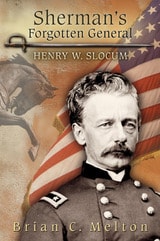
Henry Warner Slocum, a Union major general who was a corps and army commander in the Civil War, served from the first call for troops until he stood with William Tecumseh Sherman to receive Joseph E. Johnston’s surrender after Appomattox. He saw action at Bull Run, Chancellorsville, and Gettysburg, and by the end of the war he had taken command of the Army of Georgia, yet historians have largely overlooked this key commander.
Brian Melton has written the first scholarly account of this important general—the first full-length biography in nearly a century—who as one of Sherman’s most trusted commanders exercised significant influence during the Civil War. Although Slocum is remembered primarily for his lackluster performance at Gettysburg, Melton discloses that there is more to him than current history credits, offering a holistic account of his life to show that his career was much more significant than has been supposed.
Slocum took on the characteristics of the leaders he served, and Melton reveals how Slocum’s attitudes and tactics changed dramatically between commanders to explain why he proved to be of little help to George McClellan and almost a liability while serving under “Fighting Joe” Hooker and yet was an effective commander under Sherman. Slocum became Sherman’s “left arm” and adapted so thoroughly to his style of generalship that he anticipated the general’s intentions on two important occasions, and Melton contends that Slocum was a much more important contributor to the success of Sherman’s later campaigns than has been acknowledged, becoming at times more aggressive and driving than Sherman himself.
Melton ultimately considers Slocum’s fate as one of the forgotten generals of the Civil War—brought on largely by his joining the Democratic Party in 1865—and demonstrates why previous simplistic depictions of Slocum miss the mark. By providing the first detailed look at this important second-tier commander, Sherman’s Forgotten General illuminates the influences, events, and individuals of Slocum’s career to show that, while he may not have changed the course of the war, he played a conspicuous and important role in its successful execution that has long deserved to be recognized.
Sherman
A Soldier's Passion for OrderJohn F. Marszalek
Southern Illinois University Press, 1993
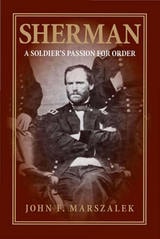
Sherman: A Soldier’s Passion for Order is the premier biography of William Tecumseh Sherman, the Civil War commander known for his “destructive war” policy against Confederates and as a consummate soldier. This updated edition of John F. Marszalek’s award-winning book presents the general as a complicated man who, fearing anarchy, searched for the order that he hoped would make his life a success.
Sherman was profoundly influenced by the death of his father and his subsequent relationship with the powerful Whig politician Thomas Ewing and his family. Although the Ewings treated Sherman as one of their own, the young Sherman was determined to make it on his own. He graduated from West Point and moved on to service at military posts throughout the South. This volume traces Sherman’s involvement in the Mexican War in the late 1840s, his years battling prospectors and deserting soldiers in gold-rush California, and his 1850 marriage to his foster sister, Ellen. Later he moved to Louisiana, and, after the state seceded, Sherman returned to the North to fight for the Union.
Sherman covers the general’s early Civil War assignments in Kentucky and Missouri and his battles against former Southern friends there, the battle at Shiloh, and his rise to become second only to Grant among the Union leadership. Sherman’s famed use of destructive war, controversial then and now, is examined in detail. The destruction of property, he believed, would convince the Confederates that surrender was their best option, and Sherman’s successful strategy became the stuff of legend.
This definitive biography, which includes forty-six illustrations, effectively refutes misconceptions surrounding the controversial Union general and presents Sherman the man, not the myth.
Sherwood Anderson
A Writer in America, Volume 1Walter B. Rideout
University of Wisconsin Press, 2006
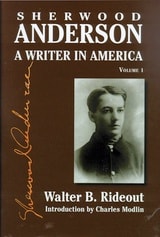
Sherwood Anderson: A Writer in America is the definitive biography of this major American writer of novels and short stories, whose work includes the modern classic Winesburg, Ohio. In the first volume of this monumental two-volume work, Walter Rideout chronicles the life of Anderson from his birth and his early business career through his beginnings as a writer and finally to his move in the mid-1920s to “Ripshin,” his house near Marion, Virginia. The second volume will cover Anderson’s return to business pursuits, his extensive travels in the South touring factories, which resulted in his political involvement in labor struggles and several books on the topic, and finally his unexpected death in 1941.
No other existing Anderson biography, the most recent of which was published nearly twenty years ago, is as thoroughly researched, so extensively based on primary sources and interviews with a range of Anderson friends and family members, or as complete in its vision of the man and the writer. The result is an unparalleled biography—one that locates the private man, while astutely placing his life and writings in a broader social and political context.
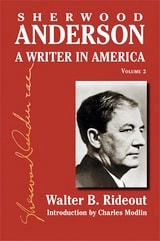
Sherwood Anderson
A Writer in America, Volume 2Walter B. Rideout
University of Wisconsin Press, 2006
Walter Rideout’s Sherwood Anderson: A Writer in America is a seminal work that reintroduces us to this important, yet recently neglected, American writer, giving him long overdue attention. This second volume of the monumental two-volume work covers Anderson’s life after his move in the mid-1920s to “Ripshin,” his house near Marion, Virginia (where Volume 1 ended.) The second volume covers his return to business pursuits; his extensive travels in the South touring factories, which resulted in his political involvement in labor struggles and several books on the topic; and finally his unexpected death in 1941.
No other existing Anderson biography, the most recent of which was published nearly twenty years ago, is as thoroughly researched, so extensively based on primary sources and interviews with a range of Anderson’s friends and family members, or as complete in its vision of the man and the writer. Rideout uncovers much new information about events and people in Anderson’s life and provides a new perspective on many of his works. This two-volume biography presents Anderson’s many remarkable attributes more clearly than ever before, while astutely placing his life and writings in the broader social, political, and artistic movements of his times.
Outstanding Book, selected by the American Association of School Librarians, and Best Books for General Audiences, selected by the Public Library Association
Outstanding Academic Title, Choice Magazine
Winner, Biography Award, Society of Midland Authors
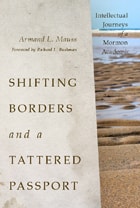
Shifting Borders and a Tattered Passport
Intellectual Journeys of a Mormon AcademicArmand L. Mauss
University of Utah Press, 2012
The life of a Mormon intellectual in the secular academic community is likely to include some contradictions between belief, scholarship, and the changing times. In his memoir, Armand L. Mauss recounts his personal and intellectual struggles—inside and outside the LDS world—from his childhood to his days as a graduate student at UC Berkeley in the 1960s through his many years as a professor.
As an important and influential observer and author in the Mormon intellectual world, Mauss has witnessed how, in attempting to suppress independent and unsponsored scholarship during the final decades of the twentieth century, LDS leaders deliberately marginalized important intellectual support and resources that could have helped, in the twenty-first century, to refurbish the public image of the church. As a sociologist, he notes how the LDS Church, as a large, complex organization, strives to adjust its policies and practices in order to maintain an optimal balance between unique, appealing claims on the one hand and public acceptance on the other. He also discusses national and academic controversies over the New Religious Movements of the 1960s and 1970s. Writing in clear language, Mauss shows how he has navigated the boundaries where his faith and academic life intersect, and reveals why a continuing commitment to the LDS Church must be a product of choice more than of natural or supernatural “proof.”
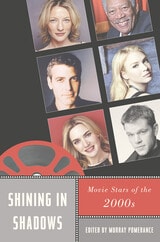
Shining in Shadows
Movie Stars of the 2000sPomerance, Murray
Rutgers University Press, 2012
In the 2000s, new technologies transformed the experiences of movie-going and movie-making, giving us the first generation of stars to be just as famous on the computer screen as on the silver screen.
Shining in Shadows examines a wide range of Hollywood icons from a turbulent decade for the film industry and for America itself. Perhaps reflecting our own cultural fragmentation and uncertainty, Hollywood’s star personas sent mixed messages about Americans’ identities and ideals. Disheveled men-children like Will Ferrell and Jack Black shared the multiplex with debonair old-Hollywood standbys like George Clooney and Morgan Freeman. Iconic roles for women ranged from Renee Zellweger’s dithering romantics to Tina Fey’s neurotic professionals to Hilary Swank’s vulnerable boyish characters. And in this age of reality TV and TMZ, stars like Jennifer Aniston and “Brangelina” became more famous for their real-life romantic dramas—at the same time that former tabloid fixtures like Johnny Depp and Robert Downey Jr. reinvented themselves as dependable leading men. With a multigenerational, international cast of stars, this collection presents a fascinating composite portrait of Hollywood stardom today.
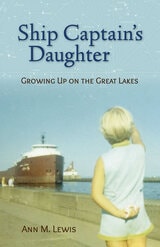
Ship Captain's Daughter
Growing Up on the Great LakesAnn Michler Lewis
Wisconsin Historical Society Press, 2015
Ann Lewis's childhood was marked by an unusual rhythm. Each year the thawing and freezing of the Great Lakes signaled the beginning and end of the shipping season, months of waiting that were punctuated by brief trips to various ports to meet her father, the captain.
With lively storytelling and vivid details, Lewis captures the unusual life of shipping families whose days and weeks revolved around the shipping industry on the Great Lakes. She paints an intriguing and affectionate portrait of her father, a talented pianist whose summer job aboard an ore freighter led him to a life on the water. Working his way up from deckhand to ship captain, Willis Michler became the master of thirteen ships over a span of twenty-eight years. From the age of twelve, Ann accompanied the captain to the ports of Milwaukee, Chicago, Toledo, and Cleveland on the lower Great Lakes. She describes sailing through stormy weather and starry nights, visiting the engine room, dining at the captain's table, and wheeling the block-long ship with her father in the pilot house. Through her mother's stories and remarks, Lewis also reveals insights into the trials and rewards of being a ship captain's wife. The book is enhanced by the author's vintage snapshots, depicting this bygone lifestyle.
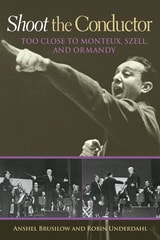
Shoot the Conductor
Too Close to Monteux, Szell, and OrmandyAnshel Brusilow
University of North Texas Press, 2015
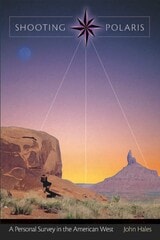
Shooting Polaris
A Personal Survey in the American WestJohn Hales
University of Missouri Press, 2005
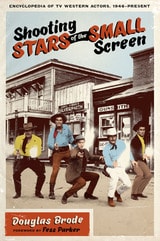
Shooting Stars of the Small Screen
Encyclopedia of TV Western Actors, 1946–PresentBy Douglas Brode
University of Texas Press, 2009
Since the beginning of television, Westerns have been playing on the small screen. From the mid-1950s until the early 1960s, they were one of TV's most popular genres, with millions of viewers tuning in to such popular shows as Rawhide, Gunsmoke, and Disney's Davy Crockett. Though the cultural revolution of the later 1960s contributed to the demise of traditional Western programs, the Western never actually disappeared from TV. Instead, it took on new forms, such as the highly popular Lonesome Dove and Deadwood, while exploring the lives of characters who never before had a starring role, including anti-heroes, mountain men, farmers, Native and African Americans, Latinos, and women.
Shooting Stars of the Small Screen is a comprehensive encyclopedia of more than 450 actors who received star billing or played a recurring character role in a TV Western series or a made-for-TV Western movie or miniseries from the late 1940s up to 2008. Douglas Brode covers the highlights of each actor's career, including Western movie work, if significant, to give a full sense of the actor's screen persona(s). Within the entries are discussions of scores of popular Western TV shows that explore how these programs both reflected and impacted the social world in which they aired. Brode opens the encyclopedia with a fascinating history of the TV Western that traces its roots in B Western movies, while also showing how TV Westerns developed their own unique storytelling conventions.
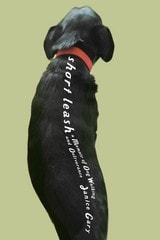
Short Leash
A Memoir of Dog Walking and DeliveranceJanice Gary
Michigan State University Press, 2013
Janice Gary never walked alone without a dog - a big dog. Once, she was an adventurer, a girl who ran off to California with big dreams and hopes of leaving her past behind. But after a brutal rape, her youthful bravado vanished, replaced by a crippling need for safety. When she rescues a gangly Lab-Rottweiler pup,Gary is sure she’s found her biggest protector yet. But after Barney is attacked by a vicious dog, he becomes a clone of his attacker, trying to kill any dog that comes near him. Walking with Barney is impossible. Yet walking without him is unthinkable.
After years of being exiled by her terror and Barney’s defensiveness, Janice risks taking her dog to a park near the Chesapeake Bay. There, she begins the messy, lurching process of walking into her greatest fears. As the leash of the past unravels, Barney sheds the defensive behaviors that once shackled him and Gary steps out of the self-imposed isolation that held her captive for three decades. Beautifully written, Short Leash is much more than a “dog story” or a book about recovering from trauma. It is a moving tale of love and loss, the journey of a broken soul finding itsway toward wholeness.
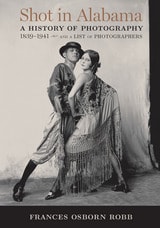
Shot in Alabama
A History of Photography, 1839–1941, and a List of PhotographersFrances Osborn Robb
University of Alabama Press, 2016
A landmark study of vernacular and professional photography, from 1839 to 1941, that frames Alabama’s history through its images.
Shot in Alabama by Frances Osborn Robb is a visual and textual narrative of Alabama’s photographic history from 1839 to 1941. It describes the phenomenon of photography as practiced in Alabama as a major cultural force, paying close attention to the particular contexts from which each image emerges and the fragments of microhistory that each image documents.
Presented chronologically—from the very first photograph ever taken in the state to the appearance of cameras as commonplace possessions in mid-twentieth-century households—Robb draws into sharp relief the eras of daguerreotypes, Civil War photography, photographic portraiture at the end of the nineteenth century, urban and rural photography in the early twentieth century, WPA photography during the Great Depression, postcards and tourist photography, and pre–World War II illustrated books and art photographs. Robb also examines a wide spectrum of vernacular photography: Alabama-made photographs of everyday people and places, the photographs that fill dresser drawers and shoeboxes, a vast array of unusual images against which Alabama’s more typical iconography can be measured.
She also chronicles the work of hundreds of photographers—black and white, amateur and professional, women and men—some little-known outside their communities, some of them the medium’s most important practitioners. “Who Shot Alabama?” is an accompanying appendix that includes 1,400 photographers by name, working dates, and location—a resource that will help countless individuals, families, and archives identify the specific Alabama photographers whose names appear on family photographs or those in institutional collections.
Shot in Alabama is an insightful document of photography as both a communicator and creator of social, cultural, economic, and visual history. It highlights the very personal worlds rendered by individual photographs as well as the larger panorama of Alabama history as seen through the photographs collectively. A landmark work of research, curation, and scholarship, it fills the void of published history on Alabama photography and is an invaluable resource for historians, archivists, librarians, collectors, hobbyists, and readers with an interest in Alabama history or historic photography. Shot in Alabama is a book that all Alabamians will want on their coffee tables.
Shouting Down the Silence
A Biography of Stanley ElkinDavid C. Dougherty
University of Illinois Press, 2010
Show Me the Bone
Reconstructing Prehistoric Monsters in Nineteenth-Century Britain and AmericaGowan Dawson
University of Chicago Press, 2016
Show Me the Bone tells the story of the rise and fall of this famous claim, tracing its fortunes from Europe to America and showing how it persisted in popular science and literature and shaped the practices of paleontologists long after the method on which it was based had been refuted. In so doing, Gowan Dawson reveals how decisively the practices of the scientific elite were—and still are—shaped by their interactions with the general public.
Show Us How You Do It
Marshall Keeble and the Rise of Black Churches of Christ in the United States, 1914-1968Edward J. Robinson
University of Alabama Press, 2008

Showers of Blessings
Myrtle Lawrence, Notable Sharecropper and Union OrganizerElizabeth Anne Payne
University of Arkansas Press, 2023
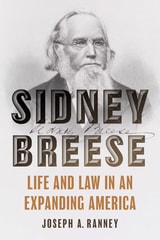
Sidney Breese
Life and Law in an Expanding AmericaJoseph A. Ranney
University of Illinois Press, 2026
Born in New York, Breese moved to Illinois in 1818. An ambitious personality combined with acumen in law, politics, and business boosted Breese into the state’s frontier elite and involved him in the political controversies that roiled the Jacksonian Era. First a circuit court judge, Breese rose to the state Supreme Court before his election to the US Senate in 1842. Breese focused his senatorial energies on westward expansion and transforming the nation into a world power—ambitions symbolized by his pivotal role in the creation of the Illinois Central Railroad. After returning to the state Supreme Court, Breese ruled on essential cases that enshrined expansionist jurisprudence in American law and regulated the growing power of corporations in post–Civil War America.
A first full-length biography, Sidney Breese places the life of an overlooked figure within legal and Illinois history.
Signifying Bodies
Disability in Contemporary Life WritingG. Thomas Couser
University of Michigan Press, 2010
"Thomas Couser's Signifying Bodies comes at a crucial moment when debates about physician assisted suicide, genetic engineering, and neo-natal screening are raising the question of what constitutes a 'life worth living' for persons with disabilities. Couser's work engages these debates by exploring the extensive number of personal narratives by or about persons with disabilities. As Couser brilliantly demonstrates through synoptic readings, these works challenge the 'preferred rhetorics' by which such narratives are usually written (triumphalist, gothic, nostalgic) while making visible the variegated nature of embodied life."
---Michael Davidson, University of California, San Diego
"Signifying Bodies shows us that life writing about disability is . . . everywhere. . . . From obituary to documentary film to ethnography to literary memoir to the law, the book casts a wide net, detailing how various written and filmed responses to disability both enact and resist conventional narrative patterns. [This] not only broadens our idea about where to look for life writing, but also demonstrates how thoroughly stereotypes about disability mediate our social and artistic languages---even when an author has (so-called) the best intentions."
---Susannah B. Mintz, Skidmore College
Memoirs have enjoyed great popularity in recent years, experiencing significant sales, prominent reviews, and diverse readerships. Signifying Bodies shows that at the heart of the memoir phenomenon is our fascination with writing that focuses on what it means to live in, or be, an anomalous body---in other words, what it means to be disabled. Previous literary accounts of the disabled body have often portrayed it as a stable entity possibly signifying moral deviance or divine disfavor, but contemporary writers with disabilities are defining themselves and depicting their bodies in new ways. Using the insights of disability studies and source material ranging from the Old and New Testaments to the works of authors like Lucy Grealy and Simi Linton and including contemporary films such as Million Dollar Baby, G. Thomas Couser sheds light on a broader cultural phenomenon, exploring topics such as the ethical issues involved in disability memoirs, the rhetorical patterns they frequently employ, and the complex relationship between disability narrative and disability law.
G. Thomas Couser is Professor of English at Hofstra University.
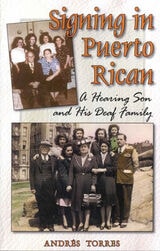
Signing in Puerto Rican
A Hearing Son and His Deaf FamilyAndrés Torres
Gallaudet University Press, 2009
The only child of deaf Puerto Rican immigrants, Andrés Torres grew up in New York City in a large, extended family that included several deaf aunts and uncles. In Signing in Puerto Rican: A Hearing Son and His Deaf Family, he opens a window into the little known culture of Deaf Latinos chasing the immigrant American dream. Like many children of deaf adults (codas), Torres loved his parents deeply but also longed to be free from being their interpreter to the hearing world. Torres’s story is unique in that his family communicated in three languages. The gatherings of his family reverberated with “deaf talk,” in sign, Spanish, and English. What might have struck outsiders as a strange chaos of gestures and mixed spoken languages was just normal for his family.
Torres describes his early life as one of conflicting influences in his search for identity. His parents’ deep involvement in the Puerto Rican Society for the Catholic Deaf led him to study for the priesthood. He later left the seminary as his own ambitions took hold. Torres became very active in the Puerto Rico independence party against the backdrop of the Civil Rights movement and protest against the Vietnam War. Throughout these defining events, Torres’s journey never took him too far from his Deaf Puerto Rican family roots and the passion of arms, hands, and fingers filling the air with simultaneous translation and understanding.
Silent Alarm
On the Edge with a Deaf EMTSteven L. Schrader
Gallaudet University Press, 1995
For 15 years, Steven Schrader worked as a firefighter and an Emergency Medical Technician (EMT) in Atlanta, Georgia. There, he faced the day-to-day stress created by having to deal with nonstop human catastrophe, one moment administering to terribly hurt accident victims, the next talking down a suicidal person from a rooftop. Added to these difficulties were his own personal struggles, not the least being the bias he experienced because of his severe hearing loss. Silent Alarm presents his no-frills, stunning account of survival in a profession with a notoriously high burn-out rate, and the good that he did as a topnotch EMT.
Schrader makes palpable the constant tension of being the first summoned to life-or-death situations, and he also outlines the grim reality of being an EMT in dangerous parts of the community. “Always wear a bulletproof vest; keep a weapon (out of sight of the supervisors, of course); never, never stand in front of a door when knocking,” are just a few of his rules for the street.
Despite these cautions, time and again he and his partners plunged into danger to save children, elderly citizens, indigents, criminals, and any other persons they found at risk. His hearing loss occasionally hindered him, and sometimes saved him, but, mostly, as it should, it became part of the background to the astonishing compassion in the stories he tells.
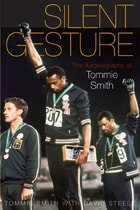
Silent Gesture
The Autobiography of Tommie SmithTommie Smith with David Steele
Temple University Press, 2008
n 1968, Tommie Smith and his teammate John Carlos won the gold and silver medals, respectively, for the 200 meter dash. Receiving their medals on the dais, they raised their fists and froze a moment in time that will forever be remembered as a powerful day of protest. In this, his autobiography, Smith tells the story of that moment, and of his life before and after it, to explain what that moment meant to him.
In Silent Gesture, Smith recounts his life before and after the 1968 Olympics: his life-long commitment to athletics, education, and human rights. He dispels some of the myths surrounding his and Carlos' act on the dais -- contrary to legend, Smith wasn't a member of the Black Panthers, but a member of the US Olympic Project for Human Rights -- and describes in detail the planning and risks involved in his protest. Smith also details his many years after Mexico City of devotion to human rights, athletics, and education. A unique resource for anyone concerned with international sports, history, and the African American experience, Silent Gesture contributes a complete picture of one of the most famous moments in sports history, and of a man whose actions always matched his words.
Silent Observer
Christy MacKinnon
Gallaudet University Press, 1993
Silent Observer is an affectionate, poignant memoir of childhood as seen through the eyes of a vivacious young girl. Teachers, parents, and children will share in their enjoyment of this beautiful, sensitive story of a harder but wonderful time that has passed.
Silver Saga
The Story of Caribou, Colorado, Revised EditionDuane A. Smith
University Press of Colorado, 2002

Simon Baruch
Rebel in the Ranks of Medicine, 1840-1921Patricia Spain Ward
University of Alabama Press, 1994
Recounts the remarkable life of a Prussian/Polish Jew who immigrated to the United States as a teenager in the 1850s and became one of the nation’s best-known physicians by the turn of the century
After medical study in South Carolina and Virginia on the eve of the Civil War, Simon Baruch served the Confederacy as a surgeon for three years, twice undergoing capture and internment. Despite economic hardships while practicing in South Carolina during Reconstruction, he helped to reactivate the State Medical Association and served as president of the State Board of Health.
In 1881 he joined the exodus of southern physicians and scientists of that period, taking up residence in New York City, where he rose to prominence through his advocacy of surgery in one of the early operations for appendicitis and through is role as the protective physician in a widely publicized “child cruelty” case involving the musical prodigy, Josef Hofmann. Baruch became a leader in the nationwide movement to establish free public baths for tenement dwellers and in the development of expert medical journalism. Although his advocacy of such natural remedies as water, fresh air, and diet often made him appear unaccountably iconoclastic to his contemporaries, he has gained posthumous recognition as a pioneer in physical medicine.
Bernard N. Baruch, one of his four sons, has memorialized this work through endowments for research and instruction in physical medicine and rehabilitation. Ward reconstructs the life of a medical student in the South at the opening of the Civil War, the adventures of a Confederate surgeon, and the difficulties of a practitioner in Reconstruction South Carolina. Simon Baruch’s physician’s registers and his correspondence with colleagues afford the reader an immediate sense of the therapeutic dilemmas facing physicians and patients of his era. Baruch’s experiences while establishing himself in New York City after 1881 reflect the challenges facing those trying to break into what was then the nation’s medical capital—as well as that city’s rich opportunities and heady intellectual atmosphere. His energetic campaign for free public baths illustrates one of the most colorful chapters of American social history, as immigrants flooded the cities at the turn of the century. As medical editor of the New York Sun from 1912 to 1918, Baruch touched on most of the health concerns of that period and a few—such as handgun control—that persist to this day.
Simple Story Of A Soldier
Life And Service in the 2d Mississippi InfantrySamuel W. Hankins
University of Alabama Press, 2004
This fast-paced memoir was written in 1905 by 61-year-old Samuel W. Hankins while he was living in the Soldiers Home in Gulfport, Mississippi. It vividly details his years as a Confederate rifleman from the spring of 1861, when at a mere sixteen years of age he volunteered for the 2d Mississippi Infantry, through the end of the war in 1865, when he was just twenty years old and maimed for life.
The 2d Mississippi was part of the Army of Northern Virginia and as such saw action at Bull Run/Manassas, Seven Pines and the Peninsular Campaign, and Gettysburg. Besides being hospitalized with measles, suffering severely frostbitten feet, and being wounded by a minié ball at Railroad Cut, Hankins was captured by Federal forces and sent to a prisoner of war camp on David’s Island, New York. Later, he was transferred to a South Carolina hospital, returned home on furlough, joined a cavalry unit that fought at Atlanta. He was stationed in Selma, Alabama, when the war ended.
The strength of Hankins’s text lies in his straightforward narrative style virtually free of Lost Cause sentiment. Both Union and Confederate veterans could relate to his stories because so many of them had faced similar challenges during the war. Full of valuable information on a common soldier’s experience, the memoir still conjures the sights, sounds, and smells of warfare.
Sin and Salvation in Early Modern France
Three Women’s StoriesMarguerite d'Auge, Renée Burlamacchi, and Jeanne du Laurens
Iter Press, 2017
The texts available here in English for the first time open a window into the lives of three early modern Frenchwomen as they explore the common themes of family, memory, sin, and salvation. The Regrets of Marguerite d’Auge (1600), the Memoirs of Renée Burlamacchi (1623), and the Genealogy of Jeanne du Laurens (1631), taken from different genres of historical writings, raise important questions: Why and how did female authorship find its way into the historical record? How did these voices escape the censorship and prejudice against female publication? In a time of extreme religious conflict, how did these women convey their views on controversial issues such as primacy of grace, indulgences, and salvation without disrupting the gender expectations of the era?
Sing a Sad Song
The Life of Hank WilliamsRoger M. Williams
University of Illinois Press, 1981
Sing a Sad Songs tells the story of Hank Williams's rise from impoverished Alabama roots, his coming of age during and after World War II, his meteoric climb to national acclaim and star status on the Grand Ole Opry, his star-crossed marriages and recurring health problems, the chronic bouts with alcoholism and the alienation it caused in those he loved and sang for, and finally his tragic death at twenty-nine and subsequent emergence as a folk hero.
In addition, the book includes an essential discography compiled by Bob Pinson of the Country Music Foundation.

Singers Die Twice
A Journey to the Land of DhrupadPeter Pannke
Seagull Books, 2013
Sir Aurel Stein
Archaeological ExplorerJeannette Mirsky
University of Chicago Press, 1977
"[Mirsky] has digested the correspondence, and she quotes so skillfully that her book will save many people the trouble of reading Stein's own exhaustive and exhausting volumes. Definitive."—Larry McMurtry, Washington Post
"A first-rate and unique biography of one of the more significant explorers of Central Asia and the Indo-Iranian borderlands. . . . Mirsky has recreated not only the life of an intrepid explorer but the spirit of the times."—Choice
"Mirsky has performed a signal service in distilling the life, travels, and letters of Aurel Stein into a manageable, graceful, and meaningful synthesis."—Theodore A. Wertime, Technology and Culture

Sir Charles Wheatstone FRS, 1802-1875
Brian Bowers
The Institution of Engineering and Technology, 2001

Sir Gardner Wilkinson and His Circle
By Jason Thompson
University of Texas Press, 1992
Following in the footsteps of Napoleon's army, Europeans invaded Egypt in the early nineteenth century to gaze in wonder at the massive, inscrutable remains of its ancient civilizations. One of these travelers was a twenty-four-year-old Englishman, John Gardner Wilkinson. His copious observations of ancient and modern Egyptian places, artifacts, and lifeways, recorded in such widely read publications as Manners and Customs of the Ancient Egyptians and Handbook for Travellers in Egypt, made him the leading early Victorian authority on ancient Egypt and paved the way for thc scientific study of Egyptology.
In this first full-scale biography of Wilkinson (1797-1875), Jason Thompson skillfully portrays both the man and his era. He follows Wilkinson during his initial sojourn in Egypt (1821-1833) as Wilkinson immersed himself in a contemporary Egyptian lifestyle and in study of its ancient past. He shows Wilkinson in his circle of friends—among them Edward William Lane, Robert Hay and Frederick Catherwood. And he traces how Wilkinson continued to use his Egyptian material in the decades following his return to England.
With the rise of professional Egyptology in the middle and later nineteenth century, Sir Gardner Wilkinson came to be viewed as an amateur and his popularity diminished. Drawing upon recently opened sources, Thompson returns Wilkinson to his rightful place within centuries of Egyptian scholarship and assesses both the vision and the limitations of his work. The result is a compelling portrait of a Victorian "gentleman-scholar" and his cultural milieu.
Sir John Templeton
Supporting Scientific Research For Spiritual DiscoveriesRobert Herrmann
Templeton Press, 2004
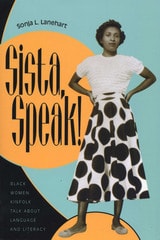
Sista, Speak!
Black Women Kinfolk Talk about Language and LiteracyBy Sonja L. Lanehart
University of Texas Press, 2002
2003 — Honorable Mention, Myers Outstanding Book Award – The Gustavus Myers Center for the Study of Bigotry and Human Rights in North America
The demand of white, affluent society that all Americans should speak, read, and write "proper" English causes many people who are not white and/or middle class to attempt to "talk in a way that feel peculiar to [their] mind," as a character in Alice Walker's The Color Purple puts it. In this book, Sonja Lanehart explores how this valorization of "proper" English has affected the language, literacy, educational achievements, and self-image of five African American women—her grandmother, mother, aunt, sister, and herself.
Through interviews and written statements by each woman, Lanehart draws out the life stories of these women and their attitudes toward and use of language. Making comparisons and contrasts among them, she shows how, even within a single family, differences in age, educational opportunities, and social circumstances can lead to widely different abilities and comfort in using language to navigate daily life. Her research also adds a new dimension to our understanding of African American English, which has been little studied in relation to women.
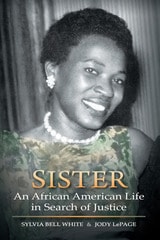
Sister
An African American Life in Search of JusticeSylvia Bell White and Jody LePage
University of Wisconsin Press, 2013
Winner, Wisconsin Historical Society Book Award of Merit
Sisters for Justice
Small Acts in the Transformation of Apartheid South AfricaCatherine Higgs
University of Wisconsin Press, 2025
Based on extensive oral history interviews with white and Black sisters as well as deep archival research, this groundbreaking book reveals a largely untold story, nested within the broader literature of women’s activism in South Africa. The result is a new perspective that expands and intensifies our understanding of a dramatic period during which individual actions, in the aggregate, contributed to social change.
Sites
A Third MemoirWallace Fowlie
Duke University Press, 1987