Results by title
4531 books match the query 'Cultural & Ethnic Studies' and 296 start with s

Shrinking Wealth
Psychoanalyzing Elites in São PauloAna Y. Ramos-Zayas
Duke University Press, 2027

Shugendo
Essays on the Structure of Japanese Folk ReligionMiyake Hitoshi; Edited and with an Introduction by H. Byron Earhart
University of Michigan Press, 2001

Side Dishes
Latina American Women, Sex, and Cultural ProductionFitch, Melissa A
Rutgers University Press, 2009
Side Dishes considers feminist pornography and literary representations of masturbation, bisexuality, lesbianism, and sexual fantasies; the treatment of lust in stand-up comedy and science fiction; critical issues in leading feminist journals; and portrayals of sexuality in four contemporary Latin American films. Melissa A. Fitch concludes with a look at the rise of women's and gender studies programs in Latin America.

Side Dishes
Latina American Women, Sex, and Cultural ProductionFitch, Melissa A
Rutgers University Press, 2009
Side Dishes considers feminist pornography and literary representations of masturbation, bisexuality, lesbianism, and sexual fantasies; the treatment of lust in stand-up comedy and science fiction; critical issues in leading feminist journals; and portrayals of sexuality in four contemporary Latin American films. Melissa A. Fitch concludes with a look at the rise of women's and gender studies programs in Latin America.

Sideways Developments
Queer and Trans Aesthetics of Global Hong KongKai Hang Cheang
University of Michigan Press, 2026
In this moment of multiple crises, Sideways Developments offers a timely hermeneutic and theory of solidarity and sustainability. The book tracks how sideways aesthetics have evolved from a feature of LGBTQ+ plots, performance, and nonlinear approaches to space-time to a form of togetherness that links postcolonial Hong Kong with struggles worldwide. Using what Cheang terms intersectional formalism as an analytical tool, the book provides a multilayered examination of the alternative pathways exemplified by queer and trans resilience and regeneration.

Sideways Selves
Travesti and Jotería Struggles Across the AméricasPJ DiPietro
University of Texas Press, 2025
2026 Sylvia Rivera Award in Transgender Studies, The Center for LGBTQ Studies (CLAGS), CUNY
How trans and non-binary networks engage in decoloniality across hemispheres.
A deeply informed, theoretically rich work of inquiry and critique, Sideways Selves learns from two communities of migrants as they contest their marginalization under the colonial regime of gender—colonial because, as PJ DiPietro affirms, Indigenous and Afro-diasporic conceptions of embodiment have been displaced by the European-Christian order of gender. Following gender-nonconforming Aymara, Kolla, and mixed-race exiles in Buenos Aires and K’iche’, Nahua, and Central American migrants in the San Francisco Bay Area, DiPietro takes stock of a collective, transnational effort to reimagine ideas of personhood and kinship that gender makes unthinkable.
The communities DiPietro studies create new kinds of identities, collective and genderless in nature. Their ways of thinking and doing, though radical, are motivated by old wisdom, storytelling, healing, and religion—brujería, curanderismo, Voudoun, and other practices that colonialism, capitalism, and the nation-state have unsuccessfully tried to erase. In equal measures philosophical and ethnographic, Sideways Selves witnesses and listens as these displaced people—displaced from their homes and from the moral geography of the West—show us what a just, decolonial world could actually be.

Sierra Leone's Settler Women Traders
Women on the Afro-European FrontierE. Frances White
University of Michigan Press, 1987

Signifying Europe
Johan Fornäs
Intellect Books, 2012
Signifying Europe provides a systematic overview of the wide range of symbols used to represent Europe and Europeanness, both by the political elite and the broader public. Through a critical interpretation of the meanings of the various symbols—and their often contradictory or ambiguous dimensions—Johan Fornäs uncovers illuminating insights into how Europe currently identifies itself and is identified by others outside its borders. While the focus is on the European Union’s symbols, those symbols are also interpreted in relation to other symbols of Europe. Offering insight into the cultural dimensions of European unification, this volume will appeal to students, scholars, and politicians interested in European policy issues, cultural studies, and postnational cultural identity.

Signifying Without Specifying
Racial Discourse in the Age of ObamaLi, Stephanie
Rutgers University Press, 2011
On the campaign trail, Barack Obama faced a difficult task—rallying African American voters while resisting his opponents’ attempts to frame him as “too black” to govern the nation as a whole. Obama’s solution was to employ what Toni Morrison calls “race-specific, race-free language,” avoiding open discussions of racial issues while using terms and references that carried a specific cultural resonance for African American voters.
Stephanie Li argues that American politicians and writers are using a new kind of language to speak about race. Challenging the notion that we have moved into a “post-racial” era, she suggests that we are in an uneasy moment where American public discourse demands that race be seen, but not heard. Analyzing contemporary political speech with nuanced readings of works by such authors as Toni Morrison, Jhumpa Lahiri, and Colson Whitehead, Li investigates how Americans of color have negotiated these tensions, inventing new ways to signal racial affiliations without violating taboos against open discussions of race.

Signing in Puerto Rican
A Hearing Son and His Deaf FamilyAndrés Torres
Gallaudet University Press, 2009
The only child of deaf Puerto Rican immigrants, Andrés Torres grew up in New York City in a large, extended family that included several deaf aunts and uncles. In Signing in Puerto Rican: A Hearing Son and His Deaf Family, he opens a window into the little known culture of Deaf Latinos chasing the immigrant American dream. Like many children of deaf adults (codas), Torres loved his parents deeply but also longed to be free from being their interpreter to the hearing world. Torres’s story is unique in that his family communicated in three languages. The gatherings of his family reverberated with “deaf talk,” in sign, Spanish, and English. What might have struck outsiders as a strange chaos of gestures and mixed spoken languages was just normal for his family.
Torres describes his early life as one of conflicting influences in his search for identity. His parents’ deep involvement in the Puerto Rican Society for the Catholic Deaf led him to study for the priesthood. He later left the seminary as his own ambitions took hold. Torres became very active in the Puerto Rico independence party against the backdrop of the Civil Rights movement and protest against the Vietnam War. Throughout these defining events, Torres’s journey never took him too far from his Deaf Puerto Rican family roots and the passion of arms, hands, and fingers filling the air with simultaneous translation and understanding.
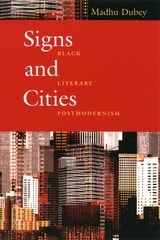
Signs and Cities
Black Literary PostmodernismMadhu Dubey
University of Chicago Press, 2003
Dubey shows how black novelists from the last three decades have reconsidered the modern urban legacy and thus articulated a distinctly African-American strain of postmodernism. She argues that novelists such as Octavia Butler, Samuel Delany, Toni Morrison, Gloria Naylor, Ishmael Reed, Sapphire, and John Edgar Wideman probe the disillusionment of urban modernity through repeated recourse to tropes of the book and scenes of reading and writing. Ultimately, she demonstrates that these writers view the book with profound ambivalence, construing it as an urban medium that cannot recapture the face-to-face communities assumed by oral and folk forms of expression.
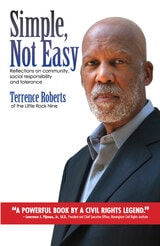
Simple Not Easy
Reflections on community social responsibility and toleranceTerrence Roberts
Parkhurst Brothers, Inc., 2010
HE MADE HISTORY. HE TELLS THE TRUTHS HE KNOWS.
LEAD TITLE/Our National Conversation Series
----Margot Stern Strom, Executive Director, Facing History and Ourselves, Inc.
"Terrence Roberts challenges all of us to make the world more inclusive by adjusting our 'mental maps.' He reminds us that we will not achieve that long-sought beloved community until we recognize the value of each individual-until we affirm each other. Simple, NotEasy is one trailblazer's mingling of history and contemporary mattersto engage a new conversations on community, social responsibility and tolerance. A powerful book by a civil rights legend."
--- Lawrence J. Pijeaux, Jr., Ed.D.,

Sing and Sing On
Sentinel Musicians and the Making of the Ethiopian American DiasporaKay Kaufman Shelemay
University of Chicago Press, 2022
Sing and Sing On is the first study of the forced migration of musicians out of the Horn of Africa dating from the 1974 Ethiopian revolution, a political event that overthrew one of the world’s oldest monarchies and installed a brutal military regime. Musicians were among the first to depart the region, their lives shattered by revolutionary violence, curfews, and civil war. Reconstructing the memories of forced migration, Sing and Sing On traces the challenges musicians faced amidst revolutionary violence and the critical role they played in building communities abroad.
Drawing on the recollections of dozens of musicians, Sing and Sing On details personal, cultural, and economic hardships experienced by musicians who have resettled in new locales abroad. Kay Kaufman Shelemay highlights their many artistic and social initiatives and the ways they have offered inspiration and leadership within and beyond a rapidly growing Ethiopian American diaspora. While musicians held this role as sentinels in Ethiopian culture long before the revolution began, it has taken on new meanings and contours in the Ethiopian diaspora. The book details the ongoing creativity of these musicians while exploring the attraction of return to their Ethiopian homeland over the course of decades abroad. Ultimately, Shelemay shows that musicians are uniquely positioned to serve this sentinel role as both guardians and challengers of cultural heritage.

Singing Paths
The Nomadic Sensibility of Mongolian Urtyn duuSunmin Yoon
University of Illinois Press, 2027
Enlightening and evocative, Singing Paths offers an eyewitness look at a rarely explored musical tradition.

Sissy Insurgencies
A Racial Anatomy of Unfit ManlinessMarlon B. Ross
Duke University Press, 2022
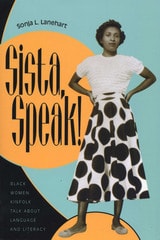
Sista, Speak!
Black Women Kinfolk Talk about Language and LiteracyBy Sonja L. Lanehart
University of Texas Press, 2002
2003 — Honorable Mention, Myers Outstanding Book Award – The Gustavus Myers Center for the Study of Bigotry and Human Rights in North America
The demand of white, affluent society that all Americans should speak, read, and write "proper" English causes many people who are not white and/or middle class to attempt to "talk in a way that feel peculiar to [their] mind," as a character in Alice Walker's The Color Purple puts it. In this book, Sonja Lanehart explores how this valorization of "proper" English has affected the language, literacy, educational achievements, and self-image of five African American women—her grandmother, mother, aunt, sister, and herself.
Through interviews and written statements by each woman, Lanehart draws out the life stories of these women and their attitudes toward and use of language. Making comparisons and contrasts among them, she shows how, even within a single family, differences in age, educational opportunities, and social circumstances can lead to widely different abilities and comfort in using language to navigate daily life. Her research also adds a new dimension to our understanding of African American English, which has been little studied in relation to women.
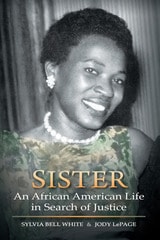
Sister
An African American Life in Search of JusticeSylvia Bell White and Jody LePage
University of Wisconsin Press, 2013
Winner, Wisconsin Historical Society Book Award of Merit
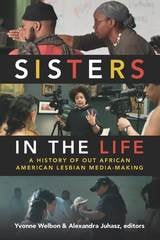
Sisters in the Life
A History of Out African American Lesbian Media-MakingYvonne Welbon and Alexandra Juhasz, editors
Duke University Press, 2018
Contributors. Jennifer DeVere Brody, Jennifer DeClue, Raul Ferrera-Balanquet, Alexis Pauline Gumbs, Thomas Allen Harris, Devorah Heitner, Pamela L. Jennings, Alexandra Juhasz, Kara Keeling, Candace Moore, Marlon Moore, Michelle Parkerson, Roya Rastegar, L. H. Stallings, Yvonne Welbon, Patricia White, Karin D. Wimbley
Sistuhs in the Struggle
An Oral History of Black Arts Movement Theater and PerformanceLa Donna L. Forsgren
Northwestern University Press, 2021
Outstanding Academic Title, CHOICE
The first oral history to fully explore the contributions of black women intellectuals to the Black Arts Movement, Sistuhs in the Struggle reclaims a vital yet under-researched chapter in African American, women’s, and theater history. This groundbreaking study documents how black women theater artists and activists—many of whom worked behind the scenes as directors, designers, producers, stage managers, and artistic directors—disseminated the black aesthetic and emboldened their communities.
Drawing on nearly thirty original interviews with well-known artists such as Ntozake Shange and Sonia Sanchez as well as less-studied figures including distinguished lighting designer Shirley Prendergast, dancer and choreographer Halifu Osumare, and three-time Tony-nominated writer and composer Micki Grant, La Donna L. Forsgren centers black women’s cultural work as a crucial component of civil rights and black power activism. Sistuhs in the Struggle is an essential collection for theater scholars, historians, and students interested in learning how black women’s art and activism both advanced and critiqued the ethos of the Black Arts and Black Power movements.

Sites of Slavery
Citizenship and Racial Democracy in the Post–Civil Rights ImaginationSalamishah Tillet
Duke University Press, 2012

Sites of Translation
What Multilinguals Can Teach Us about Digital Writing and RhetoricLaura Gonzales
University of Michigan Press, 2018
Winner of the 2016 Sweetland Digital Rhetoric Collaborative Book Prize
Sites of Translation illustrates the intricate rhetorical work that multilingual communicators engage in as they translate information for their communities. Blending ethnographic and empirical methods from multiple disciplines, Laura Gonzales provides methodological examples of how linguistic diversity can be studied in practice, both in and outside the classroom, and provides insights into the rhetorical labor that is often unacknowledged and made invisible in multilingual communication. Sites of Translation is relevant to researchers and teachers of writing as well as technology designers interested in creating systems, pedagogies, and platforms that will be more accessible and useful to multilingual audiences. Gonzales presents multilingual communication as intellectual labor that should be further valued in both academic and professional spaces, and supported by multilingual technologies and pedagogies that center the expertise of linguistically diverse communicators.

Six Paintings from Papunya
A ConversationFred R. Myers and Terry Smith
Duke University Press, 2024

Skin Acts
Race, Psychoanalysis, and the Black Male PerformerMichelle Ann Stephens
Duke University Press, 2014
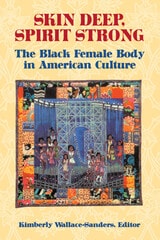
Skin Deep, Spirit Strong
The Black Female Body in American CultureKimberly Wallace-Sanders, Editor
University of Michigan Press, 2002
The collection blends original and classic essays to reveal the interconnections among art, literature, public policy, the history of medicine, and theories about sexuality with regard to bodies that are both black and female. Contributors include Rachel Adams, Elizabeth Alexander, Lisa Collins, Bridgette Davis, Lisa E.Farrington, Anne Fausto-Sterling, Beverly Guy-Sheftall, Evelynn Hammonds, Terri Kapsalis, Jennifer L. Morgan, Siobhan B. Somerville, Kimberly Wallace-Sanders, Carla Williams, and Doris Witt.
Skin Deep, Spirit Strong: The Black Female Body in American Culture will appeal to both the academic reader attempting to integrate race into discussion about the female body and to the general reader curious about the history of black female representation.
Kimberly Wallace-Sanders is Assistant Professor, Graduate Institute of Liberal Arts and Institute of Women's Studies, Emory University.
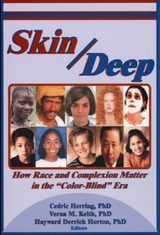
Skin Deep
How Race and Complexion Matter in the "Color-Blind" EraEdited by Cedric Herring, Verna M. Keith, and Hayward Derrick Horton
University of Illinois Press, 2004
Written by some of the nation's leading thinkers on race and colorism, these essays ask whether skin tone differentiation is imposed upon communities of color from the outside or is an internally-driven process aided and abetted by community members themselves. They also question whether the stratification process is the same for African Americans, Hispanics, and Asian Americans.
Skin Deep addresses such issues as the relationship between skin tone and self esteem, marital patterns, interracial relationships, socioeconomic attainment, and family racial identity and composition. The essays also grapple with emerging issues such as biracialism, color-blind racism, and 21st century notions of race.
Skin and Starch
Manioc and Worldmaking in the CaribbeanIsabel Bradley
Duke University Press, 2027
Skin and Starch
Manioc and Worldmaking in the CaribbeanIsabel Bradley
Duke University Press, 2027
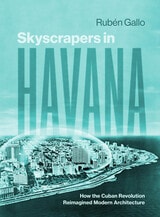
Skyscrapers in Havana
How the Cuban Revolution Reimagined Modern ArchitectureRubén Gallo
University of Chicago Press, 2027
Why Havana attracted the most important architects in the 1950s, and how the Cuban Revolution transformed the uses of these impressive skyscrapers.
During the 1950s, Havana’s Vedado district became an epicenter of modern architecture. Architects from around the world—including Mies van der Rohe, Richard Neutra, and Josep Lluis Sert—worked in Cuba and helped make Havana one of the most modern capitals in Latin America. After the Cuban Revolution, the buildings designed during Cuba’s American-influenced hyper-capitalist past had to be reimagined, about what use what use could luxury hotels, private condominiums, and golf clubs could have in a socialist society. Writers and artists from around the world including Simone de Beauvoir, Agnès Varda, Allen Ginsberg, Graham Greene, and Gabriel García Márquez flocked to Havana to witness the first socialist experiment in the Americas and marveled at the modern towers. French philosopher Jean-Paul Sartre wrote about “Skyscrapers in Havana” for his first journalistic piece about his trip. In contrast, modern architects abandoned Cuba after the Revolution: not even those designers who had built projects there set foot in the island again.
Considering Havana’s architecture as part of a larger Cuban modernity, Gallo places built projects in dialogue with film, literature, and other cultural texts, revealing how poets, novelists, filmmakers, and designers theorized the city’s urban fabric. Skyscrapers in Havana features six chapters, each devoted to an iconic modernist structure, as well as five shorter meditations on the architects, including Le Corbusier, who had the opportunity to go to Cuba after the Revolution but decided to stay away.

Slavery and Secession in Arkansas
A Documentary HistoryJames J. Gigantino
University of Arkansas Press, 2015
The absorbing documents collected in Slavery and Secession in Arkansas trace Arkansas’s tortuous road to secession and war. Drawn from contemporary pamphlets, broadsides, legislative debates, public addresses, newspapers, and private correspondence, these accounts show the intricate twists and turns of the political drama in Arkansas between early 1859 and the summer of 1861. From an early warning of what Republican political dominance would mean for the South, through the initial rejection of secession, to Arkansas’s final abandonment of the Union, readers, even while knowing the eventual outcome, will find the journey both suspenseful and informative.
Revealing both the unique features of the secession story in Arkansas and the issues that Arkansas shared with much of the rest of the South, this collection illustrates how Arkansans debated their place in the nation and, specifically, how the defense of slavery—as both an assurance of continued economic progress and a means of social control—remained central to the decision to leave the Union and fight alongside much of the South for four bloody years of civil war.

Slavery and Utopia
The Wars and Dreams of an Amazonian World TransformerBy Fernando Santos-Granero,
University of Texas Press, 2018
In the first half of the twentieth century, a charismatic Peruvian Amazonian indigenous chief, José Carlos Amaringo Chico, played a key role in leading his people, the Ashaninka, through the chaos generated by the collapse of the rubber economy in 1910 and the subsequent pressures of colonists, missionaries, and government officials to assimilate them into the national society. Slavery and Utopia reconstructs the life and political trajectory of this leader whom the people called Tasorentsi, the name the Ashaninka give to the world-transforming gods and divine emissaries that come to this earth to aid the Ashaninka in times of crisis.
Fernando Santos-Granero follows Tasorentsi’s transformations as he evolved from being a debt-peon and quasi-slave to being a slave raider; inspirer of an Ashaninka movement against white-mestizo rubber extractors and slave traffickers; paramount chief of a multiethnic, anti-colonial, and anti-slavery uprising; and enthusiastic preacher of an indigenized version of Seventh-Day Adventist doctrine, whose world-transforming message and personal influence extended well beyond Peru’s frontiers. Drawing on an immense body of original materials ranging from archival documents and oral histories to musical recordings and visual works, Santos-Granero presents an in-depth analysis of chief Tasorentsi’s political discourse and actions. He demonstrates that, despite Tasorentsi’s constant self-reinventions, the chief never forsook his millenarian beliefs, anti-slavery discourse, or efforts to liberate his people from white-mestizo oppression. Slavery and Utopia thus convincingly refutes those who claim that the Ashaninka proclivity to messianism is an anthropological invention.

Slavery at Sea
Terror, Sex, and Sickness in the Middle PassageSowande M Mustakeem
University of Illinois Press, 2016
Sowande' Mustakeem's groundbreaking study goes inside the Atlantic slave trade to explore the social conditions and human costs embedded in the world of maritime slavery. Mining ship logs, records and personal documents, Mustakeem teases out the social histories produced between those on traveling ships: slaves, captains, sailors, and surgeons. As she shows, crewmen manufactured captives through enforced dependency, relentless cycles of physical, psychological terror, and pain that led to the the making--and unmaking--of enslaved Africans held and transported onboard slave ships. Mustakeem relates how this process, and related power struggles, played out not just for adult men, but also for women, children, teens, infants, nursing mothers, the elderly, diseased, ailing, and dying. Mustakeem offers provocative new insights into how gender, health, age, illness, and medical treatment intersected with trauma and violence transformed human beings into the world's most commercially sought commodity for over four centuries.
Slavery in the Great Lakes Region of East Africa
Henri Médard
Ohio University Press, 2007
Slavery in the Great Lakes Region of East Africa is a collection of ten studies by the most prominent historians of the region. Slavery was more important in the Great Lakes region of Eastern Africa than often has been assumed, and Africans from the interior played a more complex role than was previously recognized. The essays in this collection reveal the connections between the peoples of the region as well as their encounters with the conquering Europeans. The contributors challenge the assertion that domestic slavery increased in Africa as a result of the international trade. Slavery in this region was not a uniform phenomenon and the line between enslaved and non-slave labor was fine. Kinship ties could mark the difference between free and unfree labor. Social categories were not always clear-cut and the status of a slave could change within a lifetime.
Contents:
- Introduction by Henri Médard
- Language Evidence of Slavery to the Eighteenth Century by David Schoenbrun
- The Rise of Slavery & Social Change in Unyamwezi 1860–1900 by Jan-Georg Deutsch
- Slavery & Forced Labour in the Eastern Congo 1850–1910 by David Northrup
- Legacies of Slavery in North West Uganda ‘The One-Elevens’ by Mark Leopold
- Human Booty in Buganda: The Seizure of People in War, c.1700–c.1900 by Richard Reid
- Stolen People & Autonomous Chiefs in Nineteenth-Century Buganda by Holly Hanson
- Women’s Experiences of Slavery in Late Nineteenth- & Early Twentieth-Century Uganda by Michael W. Tuck
- Slavery & Social Oppression in Ankole 1890–1940 by Edward I. Steinhart
- The Slave Trade in Burundi & Rwanda at the Beginning of German Colonisation 1890–1906 by Jean-Pierre Chretien
- Bunyoro & the Demography of Slavery Debate by Shane Doyle
Slavery's Slaughterhouse
Legacies of Animal Agriculture and Chattel SlaverySamantha Janaki Pergadia
Duke University Press, 2027

Slavery, Emancipation and Colonial Rule in South Africa
Wayne Dooling
Ohio University Press, 2008

Slaves and Slaveholders in Bermuda, 1616-1782
Virginia Bernhard
University of Missouri Press, 1999
Slaves and Slaveholders in Bermuda, 1616-1782, offers a fresh perspective on the complex relationship between racism and slavery in the often overlooked second-oldest English colony in the New World. As the first blacks were brought onto the islands not specifically for slave labor, but for their expertise as pearl divers and cultivators of West Indies plants, Bermuda's racial history began to unfold much differently from that of the Caribbean islands or of the North American mainland.
Bermuda's history records the arrival of the first blacks, the first English law passed to control the behavior of the "Negroes," and the creation of ninety-nine-year indentures for black and Indian servants. When the inevitable reality of slavery took hold in Bermuda, slaveholders realized that they, like their slaves, were not free. Slavery dictated and strained the relationships between whites and blacks, but in this smallest of English colonies it differed from slavery elsewhere because of the uniquely close master-slave relations created by Bermuda's size and maritime economy.
At only twenty-one square miles in area, Bermuda saw slaves and slaveholders working and living closer together than in other societies. The emphasis on maritime pursuits offered slaves a degree of autonomy and a sense of identity unequaled in other English colonies. This groundbreaking history of Bermuda's slavery reveals fewer runaways, less-violent rebellions, and relatively milder punishments for offending slaves.
Bernhard delves into the origins of Bermuda's slavery, its peculiar nature, and its effects on blacks and whites. The study is based on archival research drawn from wills and inventories, laws and court cases, governors' reports and council minutes. Intended as an introduction to both the history of the islands and the rich sources for further research, this book will prove invaluable to scholars of slavery, as well as those interested in historical archaeology, anthropology, maritime history, and colonial history.

Slaves of the State
Black Incarceration from the Chain Gang to the PenitentiaryDennis Childs
University of Minnesota Press, 2015
The Thirteenth Amendment to the United States Constitution, passed in 1865, has long been viewed as a definitive break with the nation’s past by abolishing slavery and ushering in an inexorable march toward black freedom. Slaves of the State presents a stunning counterhistory to this linear narrative of racial, social, and legal progress in America.
Dennis Childs argues that the incarceration of black people and other historically repressed groups in chain gangs, peon camps, prison plantations, and penitentiaries represents a ghostly perpetuation of chattel slavery. He exposes how the Thirteenth Amendment’s exception clause—allowing for enslavement as “punishment for a crime”—has inaugurated forms of racial capitalist misogynist incarceration that serve as haunting returns of conditions Africans endured in the barracoons and slave ship holds of the Middle Passage, on plantations, and in chattel slavery.
Childs seeks out the historically muted voices of those entombed within terrorizing spaces such as the chain gang rolling cage and the modern solitary confinement cell, engaging the writings of Toni Morrison and Chester Himes as well as a broad range of archival materials, including landmark court cases, prison songs, and testimonies, reaching back to the birth of modern slave plantations such as Louisiana’s “Angola” penitentiary.
Slaves of the State paves the way for a new understanding of chattel slavery as a continuing social reality of U.S. empire—one resting at the very foundation of today’s prison industrial complex that now holds more than 2.3 million people within the country’s jails, prisons, and immigrant detention centers.
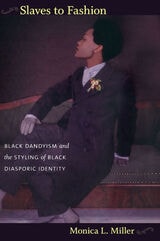
Slaves to Fashion
Black Dandyism and the Styling of Black Diasporic IdentityMonica L. Miller
Duke University Press, 2009
Dandyism was initially imposed on black men in eighteenth-century England, as the Atlantic slave trade and an emerging culture of conspicuous consumption generated a vogue in dandified black servants. “Luxury slaves” tweaked and reworked their uniforms, and were soon known for their sartorial novelty and sometimes flamboyant personalities. Tracing the history of the black dandy forward to contemporary celebrity incarnations such as Andre 3000, Miller explains how black people became arbiters of style and how they have historically used the dandy’s signature tools—clothing, gesture, and wit—to break down limiting identity markers and propose new ways of fashioning political and social possibility in the black Atlantic world. With an aplomb worthy of her iconographic subject, she considers the black dandy in relation to nineteenth-century American literature and drama, W. E. B. Du Bois’s reflections on black masculinity and cultural nationalism, the modernist aesthetics of the Harlem Renaissance, and representations of black cosmopolitanism in contemporary visual art.
Slaves, Peasants, and Rebels
Reconsidering Brazilian SlaveryStuart B. Schwartz
University of Illinois Press, 1992
Once preoccupied with Brazilian slavery as an economic system, historians shifted their attention to examine the nature of life and community among enslaved people. Stuart B. Schwartz looks at this change while explaining why historians must continue to place their ethnographic approach in the context of enslavement as an oppressive social and economic system. Schwartz demonstrates the complexity of the system by reconsidering work, resistance, kinship, and relations between enslaved persons and peasants. As he shows, enslaved people played a role in shaping not only their lives but Brazil’s institutionalized system of slavery by using their own actions and attitudes to place limits on slaveholders.
A bold analysis of changing ideas in the field, Slaves, Peasants, and Rebels provides insights on how the shifting power relationship between enslaved people and slaveholders reshaped the contours of Brazilian society.
Slim's Table
Race, Respectability, and MasculinityMitchell Duneier
University of Chicago Press, 1992
"Slim's Table is an astonishment. Duneier manages to fling open windows of perception into what it means to be working-class black, how a caring community can proceed from the most ordinary transactions, all the while smashing media-induced stereotypes of the races and race relations."—Citation for Chicago Sun Times Chicago Book of the Year Award
"An instant classic of ethnography that will provoke debate and provide insight for years to come."—Michael Eric Dyson, Chicago Tribune
"Mr. Duneier sees the subjects of his study as people and he sees the scale of their lives as fully human, rather than as diminished versions of grander lives lived elsewhere by people of another color. . . . A welcome antidote to trends in both journalism and sociology."—Roger Wilkins, New York Times Book Review
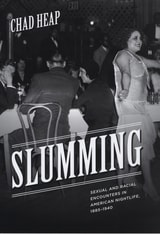
Slumming
Sexual and Racial Encounters in American Nightlife, 1885-1940Chad Heap
University of Chicago Press, 2009
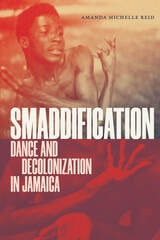
Smaddification
Dance and Decolonization in JamaicaAmanda Michelle Reid
Duke University Press, 2026

Small Well Lane
A Contemporary Chinese Play and Oral HistoryLi Longyun
University of Michigan Press, 2002
This authoritative translation by Hong Jiang and Timothy Cheek is accompanied by notes and annotations to help readers not familiar with China's modern history. A special appendix and ten photographs bring to life the culture of Beijing's famous back alleys.
This edition of Small Well Lane provides readers, and especially students of modern Chinese history, politics, and literature, with a compelling story of the human experience of Mao's revolution in China. It will be of interest to students of modern China and specialists in Chinese history and literature as well as to the general reader.
Li Longyun is a professional playwright working at the Beijing People's Art Theater. Hong Jiang is Assistant Professor of Chinese Language and Literature, Colorado College. Timothy Cheek is Associate Professor of History, Colorado College.

Smuggled Chinese
Ko-Lin Chin
Temple University Press, 1999
When the Golden Venture ran aground off New York's coast in 1993 and ten of the 260 Chinese on board drowned, the public outcry about human smuggling became front-page news. Probing into the causes and consequences of this clandestine traffic, Ko-lin Chin has interviewed more than 300 people -- smugglers, immigrants, government officials, and business owners -- in the United States, China, and Taiwan. Their poignant and chilling testimony describes a flourishing industry in which smugglers -- big and little snakeheads -- command fees as high as $30,000 to move desperate but hopeful men and women around the world. For many who survive the hunger, filthy and crowded conditions, physical and sexual abuse, and other perils of the arduous journey, life in the United States, specifically in New York's Chinatown, is a disappointment if not a curse. Few will return to China, though, because their families depend on the money and status gained by having a relative in the States.
In Smuggled Chinese, Ko-lin Chin puts a human face on this intractable international problem, showing how flaws in national policies and lax law enforcement perpetuate the cycle of desperation and suffering. He strongly believes, however, that the problem of human smuggling will continue as long as China's citizens are deprived of fundamental human rights and economic security.
Smuggled Chinese will engage readers interested in human rights, Asian and Asian American studies, urban studies, and sociology.

So Unimaginable a Price
Baldwin and the Black AtlanticJohn E. Drabinski
Northwestern University Press, 2026
James Baldwin’s nonfiction offers some of the most important and challenging thinking on the experience of race, history, and memory in the Black Atlantic world. Yet much of the scholarly literature on Baldwin’s writing reads his work from inside the sociocultural context of the United States, alongside key interlocutors like Richard Wright, Ralph Ellison, and Lorraine Hansberry. So Unimaginable a Price: Baldwin and the Black Atlantic shifts the critical frame, examining Baldwin’s work as part of a midcentury moment across the wider Atlantic world and tying his reflections to those of thinkers in the Caribbean and Africa to underscore the widening sense, as well as the particularity, of his critical claims. Who is Baldwin to the Atlantic world? And who, then, is Baldwin to the United States? John E. Drabinski recasts Baldwin as a Black Atlantic writer whose unique qualities as a thinker are enhanced by their similarities and differences with fellow writers of liberation in the global Black world.
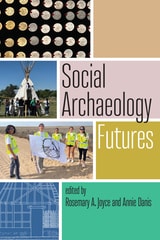
Social Archaeology Futures
Rosemary A. Joyce
University Press of Colorado, 2027
Social Archaeology Futures brings together archaeologists from the Mediterranean, North America, and Latin America to consider what a “social archaeology” should be after the emergence of strong commitments to community engagement and ethical conduct in the field, establishing archaeology as a practice that both presents research and theories about people in the past and engages with people in the present to whom those findings matter. These rich narratives present a cutting-edge approach from established and emerging scholars, bridging the gap between the scholarly project of knowledge production and the social projects of care and repair.
What archaeologists say matters because they shape ideas about what is natural, what “past” led to the present, and how people’s identities took form. This leads to concerns with ethical approaches to representation, to amending the fractures archaeology has produced in previous periods, and to ensuring that communities that are sources of information also benefit from the knowledge produced. Contributors share an understanding of the historical development of social life as an outcome of the decisions and dispositions of living people. Reaching beyond archaeology to natural science, social science, humanities, and the arts, they demonstrate the continued and expanding relevance of archaeological work in transdisciplinary, not merely interdisciplinary, contexts.
Social Archaeology Futures broadens concepts around who counts as a participant in the archaeological process and what counts as archaeology, extending the understanding of the practice well beyond the idea of excavation and lab analysis to include community events, reconsideration of museum collections and archives, and engagement in storytelling. Social archaeology is the future of archaeology, making this volume of considerable interest to students, scholars, and general readers interested in anthropology, art history, heritage studies, and museum studies.

Social Causes of Environmental Destruction in Latin America
Michael Painter and William H. Durham, Editors
University of Michigan Press, 1995
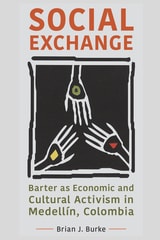
Social Exchange
Barter as Economic and Cultural Activism in Medellín, ColombiaBrian J. Burke
Rutgers University Press, 2022

Social Functions of Language in a Mexican-American Community
George Carpenter Barker
University of Arizona Press, 1972
Data were drawn from observational studies of individuals and families; observation of group activities; and observation of, supplemented by questionnaires on, the cultural interests of Mexican children and their families. Some conclusions of the study were that Spanish came to be identified in the Mexican community as the language of intimate and family relations, while English came to be identified as the language of formal social relations and of all relations with Anglos. It was also found that the younger American-born group reject both Spanish and English in favor of their own language, Pachuco. Tables depicting the characteristics of 20 families, the language usage of families, and the language usage in personal relationships of English and Spanish are included. Suggestions for further research are made.
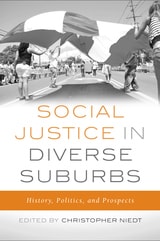
Social Justice in Diverse Suburbs
History, Politics, and ProspectsChristopher Niedt
Temple University Press, 2013
Editor Christopher Niedt and his contributors shed light on organizing and conflict in the suburbs with historical and contemporary case studies. Chapters address topical issues ranging from how suburbanites actively fought school segregation to industrial pollution and displacement along the suburban-rural fringe. Social Justice in Diverse Suburbs also considers struggles for integration and environmental justice as well as efforts to preserve suburban history and organize immigrant communities.
Contributors include: Douglas R. Appler, Aaron Cavin, Nancy A. Denton, Lisa Feldstein, Casey Gallagher, Anne Galletta, Joseph Gibbons, Robert Gioielli, Lucas Owen Kirkpatrick, JoAnna Mitchell-Brown, Manuel Pastor, john a. powell, Jason Reece, Alex Schafran, June Williamson, and the editor.
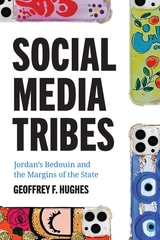
Social Media Tribes
Jordan's Bedouin and the Margins of the StateGeoffrey F. Hughes
University of Texas Press, 2026
An examination of the uses of social media in Jordan through the experiences of Bedouin tribespeople.
It has become something of a cliché to say that social media is making us tribal. But what do self-styled tribespeople themselves think about social media, and how might they help us better understand the role of the internet in our current political moment? Drawing on in-depth ethnographic fieldwork among Bedouin in Jordan, Social Media Tribes underscores the varied but broadly intelligible ways in which distinctive groups domesticate social media to suit their needs.
Organized around key concepts in Bedouin life (including tribalism, envy, and mercy), Social Media Tribes moves between Facebook-mediated tribal truces, upstart online media platforms, palatial urban villas where self-appointed sheikhs dispense justice, and street clashes organized over WhatsApp in rural communities ignored by state development projects. A meticulous researcher and insightful participant-observer, Geoffrey Hughes reframes social media as part of a global renegotiation of the state-society divide that both preceded the emergence of social media platforms and, in turn, feeds off of them. In this telling, the internet represents a new frontier that, like older frontiers, heralds both novel freedoms and novel forms of social control.