Results by title
1927 books match the query 'Technology & Engineering' and 153 start with s
Spacecraft Technology
The early yearsMark Williamson
The Institution of Engineering and Technology, 2006
Sparks Flew
WOSU's Century on the AirThomas M. Rieland
The Ohio State University Press, 2019
Sparks Flew is a rich story of creative, tenacious men and women working in a new medium that commercial enterprises soon dominated. At any moment in time, educational broadcasting could have failed if not for a few land-grant institutions like The Ohio State University and prominent stations like WOSU that supported the medium. Sparks Flew is the untold story, a century in the making, of one institution and one educational station that represent the roots of today’s public broadcasting system.
Speaking for the River
Confronting Pollution on the Willamette, 1920s-1970sJames V. Hillegas-Elting
Oregon State University Press, 2018
Willamette River cleanup efforts between 1926 and 1975 centered on a struggle between abatement advocates and the two primary polluters in the watershed, the City of Portland and the pulp and paper industry. Beginning in 1926, clean streams advocates created ad hoc groups of public health experts, sanitary engineers, conservationists, sportsmen, and others to pressure Portland officials and industry representatives to cease polluting the river. By the late 1960s, these grassroots initiatives found political footholds at the state level. As governor between 1967 and 1975, Tom McCall took the issue of environmental protection personally, providing the charisma and leadership that was needed to finally make substantive progress toward cleaning the Willamette.
Speaking for the River is the first book to describe the historical roots of Willamette River pollution, providing important context for understanding the political, fiscal, and technological antecedents to the present-day conundrum. Hillegas-Elting’s contribution to the academic literature on environmental and urban history in Oregon will be welcomed by policy makers, environmentalists, and concerned citizens alike.

Spectral Theory and Excitation of Open Structures
Victor P. Shestopalov
The Institution of Engineering and Technology, 1996
Spectrum and Network Measurements
Robert A. Witte
The Institution of Engineering and Technology, 2001
Spectrum and Network Measurements
Robert A. Witte
The Institution of Engineering and Technology, 2014
Spherical Near-field Antenna Measurements
J.E. Hansen
The Institution of Engineering and Technology, 1988
Spread Spectrum in Communication
R. Skaug
The Institution of Engineering and Technology, 1985
Spread Spectrum in Mobile Communication
Olav Berg
The Institution of Engineering and Technology, 1998
Spying with Maps
Surveillance Technologies and the Future of PrivacyMark Monmonier
University of Chicago Press, 2002
Despite our apprehension about surveillance technology, Spying with Maps is not a jeremiad, crammed with dire warnings about eyes in the sky and invasive tracking. Monmonier's approach encompasses both skepticism and the acknowledgment that geospatial technology brings with it unprecedented benefits to governments, institutions, and individuals, especially in an era of asymmetric warfare and bioterrorism. Monmonier frames his explanations of what this new technology is and how it works with the question of whether locational privacy is a fundamental right. Does the right to be left alone include not letting Big Brother (or a legion of Little Brothers) know where we are or where we've been? What sacrifices must we make for homeland security and open government?
With his usual wit and clarity, Monmonier offers readers an engaging, even-handed introduction to the dark side of the new technology that surrounds us—from traffic cameras and weather satellites to personal GPS devices and wireless communications.
Standard Codecs
Image compression to advanced video codingMohammed Ghanbari
The Institution of Engineering and Technology, 2003
Standard Codecs
Image compression to advanced video codingMohammed Ghanbari
The Institution of Engineering and Technology, 2011
Star Worlds
Freedom Versus Control in Online GameworldsWilliam Sims Bainbridge
University of Michigan Press, 2016
The four “star worlds” explored in this book illustrate the dilemmas concerning the role of technology as liberator or oppressor in our postindustrial society, and represent computer simulations of future possibilities of human experience. Bainbridge considers the relationship between a real person and the role that person plays, the relationship of an individual to society, and the relationship of human beings to computing technology. In addition to collecting ethnographic and quantitative data about the social behavior of other players, he has immersed himself in each of these worlds, role-playing 14 avatars with different skills and goals to gain new insights into the variety of player experience from a personal perspective.
Statistical Techniques for High-Voltage Engineering
W. Hauschild
The Institution of Engineering and Technology, 1992
Steam-Powered Knowledge
William Chambers and the Business of Publishing, 1820-1860Aileen Fyfe
University of Chicago Press, 2012
With the overwhelming amount of new information that bombards us each day, it is perhaps difficult to imagine a time when the widespread availability of the printed word was a novelty. In early nineteenth-century Britain, print was not novel—Gutenberg’s printing press had been around for nearly four centuries—but printed matter was still a rare and relatively expensive luxury. All this changed, however, as publishers began employing new technologies to astounding effect, mass-producing instructive and educational books and magazines and revolutionizing how knowledge was disseminated to the general public.
Stepping Motors
A guide to theory and practicePaul Acarnley
The Institution of Engineering and Technology, 2002
Stimson's Introduction to Airborne Radar
George W. Stimson
The Institution of Engineering and Technology, 2014
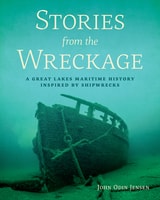
Stories from the Wreckage
A Great Lakes Maritime History Inspired by ShipwrecksJohn Odin Jensen
Wisconsin Historical Society Press, 2019
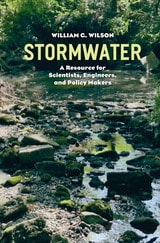
Stormwater
A Resource for Scientists, Engineers, and Policy MakersWilliam G. Wilson
University of Chicago Press, 2016
As Wilson shows, rivers of runoff flowing from manmade surfaces—such as roads, sidewalks, and industrial sites—carry a glut of sediments and pollutants. Unlike soil, pavement does not filter or biodegrade these contaminants. Oil, pesticides, road salts, metals, automobile chemicals, and bacteria all pour into stormwater systems. Often this runoff discharges directly into waterways, uncontrolled and untreated, damaging valuable ecosystems. Detailing the harm that can be caused by this urban runoff, Wilson also outlines methods of control, from restored watersheds to green roofs and rain gardens, and, in so doing, gives hope in the face of an omnipresent threat. Illustrated throughout, Stormwater will be an essential resource for urban planners and scientists, policy makers, citizen activists, and environmental educators in the stormy decades to come.
Strained Silicon Heterostructures
Materials and devicesC.K. Maiti
The Institution of Engineering and Technology, 2001
Strapdown Inertial Navigation Technology
David Titterton
The Institution of Engineering and Technology, 2004

Strata
William Smith’s Geological MapsEdited by the Oxford University Museum of Natural History
University of Chicago Press, 2020
This sumptuous volume begins with an introduction by Douglas Palmer that places Smith’s work in the context of earlier, concurrent, and subsequent ideas regarding the structure and natural processes of the earth, geographical mapping, and biostratigraphical theories. The book is then organized into four parts, each beginning with four sheets from Smith’s hand-colored, 1815 strata map, accompanied by related geological cross-sections and county maps, and followed by fossil illustrations by Smith contemporary James Sowerby, all organized by strata. Essays between each section explore the aims of Smith’s work and its application in the fields of mining, agriculture, cartography and hydrology. Strata concludes with reflections on Smith’s later years as an itinerant geologist and surveyor, plagiarism by a rival, receipt of the first Wollaston Medal in recognition of his achievements, and the influence of his geological mapping and biostratigraphical theories on the sciences—all of which culminated in the establishment of the modern geological timescale.
Featuring a foreword by Robert Macfarlane, Strata is a glorious testament to the lasting geological and illustrative genius of William Smith, a collection as colossal and awe-inspiring as the layers of the Earth themselves.

Strike From the Sky
The History of Battlefield Air Attack, 1910-1945Richard P. Hallion, foreword by R. A. Mason
University of Alabama Press, 2010
The definitive history of how air power transformed the battlefield between two world wars.
Strike from the Sky: The History of Battlefield Air Attack, 1910–1945 is a comprehensive examination of the emergence and evolution of battlefield aviation during the first half of the twentieth century. Written by renowned aviation historian Richard P. Hallion, the book traces the development of air-ground warfare from the earliest military use of aircraft in combat through the decisive campaigns of World War II. Combining operational history with analysis of doctrine, technology, and leadership, Hallion reveals how battlefield air attack became a critical element of modern military strategy.
The study explores major conflicts including the First World War, the Spanish Civil War, colonial campaigns, and the global battles of World War II. Hallion examines the evolution of close air support, air interdiction, reconnaissance, command and control systems, and the aircraft that carried out these missions. He also analyzes how military organizations adapted to the challenges of integrating air and ground forces, creating doctrines that continue to influence military operations today.
Strike from the Sky demonstrates how advances in aviation transformed the battlefield and altered the conduct of war. It remains an essential resource for understanding the origins of modern air power and the technological and strategic innovations that reshaped twentieth-century combat.
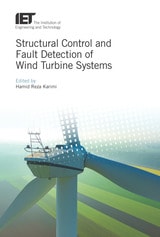
Structural Control and Fault Detection of Wind Turbine Systems
Hamid Reza Karimi
The Institution of Engineering and Technology, 2019
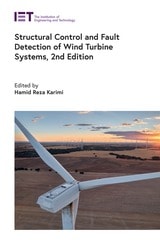
Structural Control and Fault Detection of Wind Turbine Systems
Hamid Reza Karimi
The Institution of Engineering and Technology, 2025
Structures in the Stream
Water, Science, and the Rise of the U.S. Army Corps of EngineersBy Todd Shallat
University of Texas Press, 1994
As the Mississippi and other midwestern rivers inundated town after town during the summer of 1993, concerned and angry citizens questioned whether the very technologies and structures intended to "tame" the rivers did not, in fact, increase the severity of the floods. Much of the controversy swirled around the apparent culpability of the U.S. Army Corps of Engineers, the builder of many of the flood control systems that failed.
In this book, Todd Shallat examines the turbulent first century of the dam and canal building Corps and follows the agency's rise from European antecedents through the boom years of river development after the American Civil War. Combining extensive research with a lively style, Shallat tells the story of monumental construction and engineering fiascoes, public service and public corruption, and the rise of science and the army expert as agents of the state.
More than an institutional history, Structures in the Stream offers significant insights into American society, which has alternately supported the public works projects that are a legacy of our French heritage and opposed them based on the democratic, individualist tradition inherited from Britain. It will be important reading for a wide audience in environmental, military, and scientific history, policy studies, and American cultural history.
Summa Technologiae
Stanislaw Lem
University of Minnesota Press, 2014
The Polish writer Stanislaw Lem is best known to English-speaking readers as the author of the 1961 science fiction novel Solaris, adapted into a meditative film by Andrei Tarkovsky in 1972 and remade in 2002 by Steven Soderbergh. Throughout his writings, comprising dozens of science fiction novels and short stories, Lem offered deeply philosophical and bitingly satirical reflections on the limitations of both science and humanity.
In Summa Technologiae—his major work of nonfiction, first published in 1964 and now available in English for the first time—Lem produced an engaging and caustically logical philosophical treatise about human and nonhuman life in its past, present, and future forms. After five decades Summa Technologiae has lost none of its intellectual or critical significance. Indeed, many of Lem’s conjectures about future technologies have now come true: from artificial intelligence, bionics, and nanotechnology to the dangers of information overload, the concept underlying Internet search engines, and the idea of virtual reality. More important for its continued relevance, however, is Lem’s rigorous investigation into the parallel development of biological and technical evolution and his conclusion that technology will outlive humanity.
Preceding Richard Dawkins’s understanding of evolution as a blind watchmaker by more than two decades, Lem posits evolution as opportunistic, shortsighted, extravagant, and illogical. Strikingly original and still timely, Summa Technologiae resonates with a wide range of contemporary debates about information and new media, the life sciences, and the emerging relationship between technology and humanity.
Superconducting Magnetic Energy Storage in Power Grids
Mohd. Hasan Ali
The Institution of Engineering and Technology, 2022
Surface Passivation of Industrial Crystalline Silicon Solar Cells
Joachim John
The Institution of Engineering and Technology, 2019
Surge Protection for Low Voltage Systems
Alain Rousseau
The Institution of Engineering and Technology, 2022
Surge Protection for Low Voltage Systems
Alain Rousseau
The Institution of Engineering and Technology, 2026
Surveillance and Diagnostics of Next Generation Nuclear Reactors
Imre Pázsit
The Institution of Engineering and Technology, 2025
Surveillance, Transparency, and Democracy
Public Administration in the Information AgeAkhlaque Haque
University of Alabama Press, 2015
Exploring the delicate balance between technological innovation, government transparency, and democratic freedom.
In this well-informed yet anxious age, public administrators have constructed vast cisterns that collect and interpret a meteoric shower of facts. Akhlaque Haque demonstrates that this pervasive use and increasing dependence on information technology (IT) enables sophisticated and well-intentioned public services that nevertheless risk deforming public policy decision-making and sees a contradiction inherent in a public that seeks services that require a level of data collection that in turn triggers fears of a tyrannical police state.
The author posits that IT’s potential as a tool for human development depends on how civil servants and citizens actively engage in identifying desired outcomes, map IT solutions to those outcomes, and routinize the applications of those solutions. This leads to his call for the development of entrepreneurs who generate innovative solutions to critical human needs and problems. In his powerful summary, he recaps possible answers to the question: What is the best way a public institution can apply technology to improving the human condition?
Engrossing, challenging, and timely, Surveillance, Transparency, and Democracy is essential reading for both policy makers as well as the great majority of readers and citizens engaged in contemporary arguments about the role of government, public health and security, individual privacy, data collection, and surveillance.
Surveying in Early America
The Point of Beginning, An Illustrated HistoryDan Patterson; Clinton Terry
Ohio University Press, 2020
Published by the University of Cincinnati Press
In Surveying in Early America: The Point of Beginning, An Illustrated History, award-winning photographer Dan Patterson and American historian Clinton Terry vividly examine the profession of surveying in the eighteenth century. Retracing the steps Washington and other surveyors took to map the Ohio River Valley, readers are immersed in historically accurate details of early surveying techniques and practices. Terry's narrative describes the practice of land and survey measurement—methods that did not substantially change until the invention of GPS technology 200 years later. Over 100 full color photographs exclusively shot for the book depict authentic and historically accurate reproductions of tools along with early American reenactors to provide an interpretive look at surveying as a primary means to building the American nation. Working with the Department of the Geographer, Patterson restages actual expeditions, brilliantly displaying the techniques and instruments Washington would have employed 260 years ago. Through the lens of Patterson's camera and Terry's accompanying narrative, readers see what Washington saw as he learned his trade, explored the vast American wilderness, and occasionally laid personal claim to great expanses of land along the way.
Surviving the Age of Virtual Reality
Thomas Langan
University of Missouri Press, 2000
As the technological phenomenon known as the worldwide web permeates civilization, it creates some cultures and destroys others. In this pioneering book, philosopher Thomas Langan explores "virtual reality"Can inherently contradictory phrase"and the effects of technology on our very being. In our present-day high- technology environment, making simple, everyday decisions is difficult because the virtual world we've created doesn't necessarily operate according to the old "common sense." To retain our intellectual fitness, we must, Langan argues, consider these essential questions: If virtual reality is, in fact, reality, what is this life that we are caught up in? What is being within the context of virtual reality? How can we establish a system for distinguishing truth from fiction?
Although technology minimizes distances between people and makes the information they seek more accessible, it simultaneously blurs the line dividing fact from falsehood and real from virtual. An individual's intellectual survival is threatened as technological advancement challenges our collective understanding of what reality is. Because much of the information that is presented as fact simply works to fulfill a specific agenda, we cannot accept as truth everything that appears on the internet or in the media. To survive, we must learn to manage our lives and resources despite the flood of information we are bombarded with daily.
Addressing the general educated reader, Surviving the Age of Virtual Reality expertly interweaves the worlds of technology and philosophy, pushing the analysis of this technological and human phenomenon to new depths.
Swarm Intelligence
Applications, Volume 3Ying Tan
The Institution of Engineering and Technology, 2018
Swarm Intelligence
Innovation, new algorithms and methods, Volume 2Ying Tan
The Institution of Engineering and Technology, 2018
Swarm Intelligence
Principles, current algorithms and methods, Volume 1Ying Tan
The Institution of Engineering and Technology, 2018
Switched Currents
An analogue technique for digital technologyC. Toumazou
The Institution of Engineering and Technology, 1993
Switching Codes
Thinking Through Digital Technology in the Humanities and the ArtsEdited by Thomas Bartscherer and Roderick Coover
University of Chicago Press, 2011
Half a century into the digital era, the profound impact of information technology on intellectual and cultural life is universally acknowledged but still poorly understood. The sheer complexity of the technology coupled with the rapid pace of change makes it increasingly difficult to establish common ground and to promote thoughtful discussion.
Responding to this challenge, Switching Codes brings together leading American and European scholars, scientists, and artists—including Charles Bernstein, Ian Foster, Bruno Latour, Alan Liu, and Richard Powers—to consider how the precipitous growth of digital information and its associated technologies are transforming the ways we think and act. Employing a wide range of forms, including essay, dialogue, short fiction, and game design, this book aims to model and foster discussion between IT specialists, who typically have scant training in the humanities or traditional arts, and scholars and artists, who often understand little about the technologies that are so radically transforming their fields. Switching Codes will be an indispensable volume for anyone seeking to understand the impact of digital technology on contemporary culture, including scientists, educators, policymakers, and artists, alike.
Symbolic Methods in Control System Analysis and Design
Neil Munro
The Institution of Engineering and Technology, 1999
Synchronized Phasor Measurements for Smart Grids
Dusmanta Kumar Mohanta
The Institution of Engineering and Technology, 2017
Synchronized Phasor Measurements for Smart Grids
Maddikara Jaya Bharata Reddy
The Institution of Engineering and Technology, 2025
Synchronous Reluctance Machines
Analysis, optimization and applicationsNicola Bianchi
The Institution of Engineering and Technology, 2022
Synchrophasor Technology
Real-time operation of power networksNand Kishor
The Institution of Engineering and Technology, 2023
Synergetic Energy Systems
Integrating storage and demand-side managementPriya Bhagavathy
The Institution of Engineering and Technology, 2026
Synthetic
How Life Got MadeSophia Roosth
University of Chicago Press, 2017
In Synthetic: How Life Got Made, cultural anthropologist Sophia Roosth reveals how synthetic biologists make new living things in order to understand better how life works. The first book-length ethnographic study of this discipline, Synthetic documents the social, cultural, rhetorical, economic, and imaginative transformations biology has undergone in the post-genomic age. Roosth traces this new science from its origins at MIT to start-ups, laboratories, conferences, and hackers’ garages across the United States—even to contemporary efforts to resurrect extinct species. Her careful research reveals that rather than opening up a limitless new field, these biologists’ own experimental tactics circularly determine the biological features, theories, and limits they fasten upon. Exploring the life sciences emblematic of our time, Synthetic tells the origin story of the astonishing claim that biological making fosters biological knowing.
SysML for Systems Engineering
Jon Holt
The Institution of Engineering and Technology, 2008
SysML for Systems Engineering
A model-based approachJon Holt
The Institution of Engineering and Technology, 2013
System Design with Memristor Technologies
Lauren Guckert
The Institution of Engineering and Technology, 2018