Results by title
22279 books match the query 'Social Science' and 1635 start with s
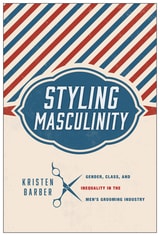
Styling Masculinity
Gender, Class, and Inequality in the Men's Grooming IndustryBarber, Kristen
Rutgers University Press, 2016
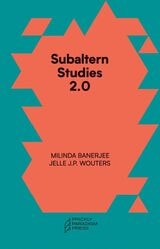
Subaltern Studies 2.0
Being against the CapitaloceneMilinda Banerjee and Jelle J.P. Wouters
Prickly Paradigm Press, 2022
State and Capital reign over the Age of Sorrow. We face inequality, pandemics, ethnocide, climate crisis, and mass extinction. Our desire for security and power governs us as State. Our desire for possessions governs us as Capital. Our desires imprison and rule us beings as Unbeing. Yet, from Nagaland to New Zealand, Bhutan to Bolivia, a second wave of anti-colonial revolutions has begun. Arising from assemblies of humans and other-than-humans, these revolutions replace possessive individualism with non-exploitative interdependence. Naga elders, Bhutanese herders and other indigenous communities, feminists, poets, seers, yaks, cranes, vultures, and fungi haunt this pamphlet. The original Subaltern Studies narrated how Indian peasant communities destroyed the British empire. Subaltern Studies 2.0 prophesies the multi-being demos and liberates Being from Unbeing. Re-kin, Re-nomad, Re-animate, Re-wild! The Animist Revolution has come.
Subalternity and Representation
Arguments in Cultural TheoryJohn Beverley
Duke University Press, 1999
Dismissed by some as simply another new fashion in the critique of culture and by others as a postmarxist heresy, subaltern studies began with the work of Ranajit Guha and the South Asian Subaltern Studies collective in the 1980s. Beverley’s focus on Latin America, however, is evidence of the growing province of this field. In assessing subaltern studies’ purposes and methods, the potential dangers it presents, and its interactions with deconstruction, poststructuralism, cultural studies, Marxism, and political theory, Beverley builds his discussion around a single, provocative question: How can academic knowledge seek to represent the subaltern when that knowledge is itself implicated in the practices that construct the subaltern as such? In his search for answers, he grapples with a number of issues, notably the 1998 debate between David Stoll and Rigoberta Menchú over her award-winning testimonial narrative, I, Rigoberta Menchú. Other topics explored include the concept of civil society, Florencia Mallon’s influential Peasant and Nation, the relationship between the Latin American “lettered city” and the Túpac Amaru rebellion of 1780–1783, the ideas of transculturation and hybridity in postcolonial studies and Latin American cultural studies, multiculturalism, and the relationship between populism, popular culture, and the “national-popular” in conditions of globalization.
This critique and defense of subaltern studies offers a compendium of insights into a new form of knowledge and knowledge production. It will interest those studying postcolonialism, political science, cultural studies, and Latin American culture, history, and literature.

Subalternity, Antagonism, Autonomy
Constructing the Political SubjectMassimo Modonesi
Pluto Press, 2013
In this bold and innovative book, Massimo Modonesi weaves together theory and political practice by relating the concepts of subalternity, antagonism and autonomy to contemporary movements in Latin America and elsewhere.
In a sophisticated account, Modonesi reconstructs the debates between Marxist authors and schools of thought in order to sketch out informed strategies of resistance. He reviews the works of Gramsci, Negri, Castoriadis and Lefort, and engages with the arguments made by E. P. Thompson, Spivak, Laclau and Mouffe.
Subalternity, Antagonism, Autonomy firmly roots key theoretical arguments from a range of critical thinkers within specific political movements in order to recover these concepts as analytical instruments which can help to guide contemporary struggles.

Subfloor Pits and the Archaeology of Slavery in Colonial Virginia
Patricia Samford
University of Alabama Press, 2007
Enslaved Africans and their descendants comprised a significant portion of colonial Virginia populations, with most living on rural slave quarters adjacent to the agricultural fields in which they labored. Archaeological excavations into these home sites have provided unique windows into the daily lifeways and culture of these early inhabitants.
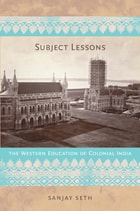
Subject Lessons
The Western Education of Colonial IndiaSanjay Seth
Duke University Press, 2007
Drawing on history, political science, anthropology, and philosophy, Seth interprets the debates and controversies that came to surround western education. Central among these were concerns that Indian students were acquiring western education by rote memorization—and were therefore not acquiring “true knowledge”—and that western education had plunged Indian students into a moral crisis, leaving them torn between modern, western knowledge and traditional Indian beliefs. Seth argues that these concerns, voiced by the British as well as by nationalists, reflected the anxiety that western education was failing to produce the modern subjects it presupposed. This failure suggested that western knowledge was not the universal epistemology it was thought to be. Turning to the production of collective identities, Seth illuminates the nationalists’ position vis-à-vis western education—which they both sought and criticized—through analyses of discussions about the education of Muslims and women.
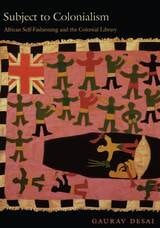
Subject to Colonialism
African Self-Fashioning and the Colonial LibraryGaurav Desai
Duke University Press, 2001
Presenting colonialism not as a singular, monolithic structure but rather as a practice frought with contradictions and tensions, Desai works to historicize the foundation of postcolonialism by decentering both canonical texts and privileged categories of analysis such as race, capitalism, empire, and nation. To achieve this, he focuses on texts that construct or reform—rather than merely reflect—colonialism, placing explicit emphasis on processes, performances, and the practices of everyday life. Reading these texts not merely for the content of their assertions but also for how they were created and received, Desai looks at works such as Jomo Kenyatta’s ethnography of the Gikuyu and Akiga Sai’s history of the Tiv and makes a particular plea for the canonical recuperation of African women’s writing.
Scholars in African history, literature, and philosophy, postcolonial studies, literary criticism, and anthropology will welcome publication of this book.
Subject to Death
Life and Loss in a Buddhist WorldRobert Desjarlais
University of Chicago Press, 2016
Subject to Reality
Women and Documentary FilmShilyh Warren
University of Illinois Press, 2019
Shilyh Warren reopens this understudied period and links it to a neglected era of women's filmmaking that took place from 1920 to 1940, another key period of thinking around documentary, race, and gender. Drawing women’s cultural expression during these two explosive times into conversation, Warren reconsiders key debates about subjectivity, feminism, realism, and documentary and their lasting epistemological and material consequences for film and feminist studies. She also excavates the lost ethnographic history of women's documentary filmmaking in the earlier era and explores the political and aesthetic legacy of these films in more explicitly feminist periods like the Seventies.
Filled with challenging insights and new close readings, Subject to Reality sheds light on a profound and unexamined history of feminist documentaries while revealing their influence on the filmmakers of today.
Subjective Lives and Economic Transformations in Mongolia
Life in the GapRebecca M. Empson
University College London, 2020
Subjects and Narratives in Archaeology
Ruth M. Van Dyke
University Press of Colorado, 2015
Seeking to move beyond the customary limits of archaeological prose and representation, Subjects and Narratives in Archaeology presents archaeology in a variety of nontraditional formats. The volume demonstrates that visual art, creative nonfiction, archaeological fiction, video, drama, and other artistic pursuits have much to offer archaeological interpretation and analysis.
Chapters in the volume are augmented by narrative, poetry, paintings, dialogues, online databases, videos, audio files, and slideshows. The work will be available in print and as an enhanced ebook that incorporates and showcases the multimedia elements in archaeological narrative. While exploring these new and not-so-new forms, the contributors discuss the boundaries and connections between empirical data and archaeological imagination.
Both a critique and an experiment, Subjects and Narratives in Archaeology addresses the goals, advantages, and difficulties of alternative forms of archaeological representation. Exploring the idea that academically sound archaeology can be fun to create and read, the book takes a step beyond the boundaries of both traditional archaeology and traditional publishing.
Subjects of the Sun
Solar Energy in the Shadows of Racial CapitalismMyles Lennon
Duke University Press, 2025

Subjects on Display
Psychoanalysis, Social Expectation, and Victorian FemininityBeth Newman
Ohio University Press, 2004
Subjects on Display explores a recurrent figure at the heart of many nineteenth-century English novels: the retiring, self-effacing woman who is conspicuous for her inconspicuousness. Beth Newman draws upon both psychoanalytic theory and recent work in social history as she argues that this paradoxical figure, who often triumphs over more dazzling, eye-catching rivals, is a response to the forces that made personal display a vexed issue for Victorian women. Chief among these is the changing socioeconomic landscape that made the ideal of the modest woman outlive its usefulness as a class signifier even as it continued to exert moral authority.
This problem cannot be grasped in its full complexity, Newman shows, without considering how the unstable social meanings of display interacted with psychical forces-specifically, the desire to be seen by others that is central to both masculine and feminine subjectivity. This desire raises an issue that feminist theorists have been reluctant to address: the importance of pleasure in being the object of the look. Their reluctance is characteristic of cultural theory, which has tended to equate subjectivity with the position of the observer rather than the observed.
Through a consideration of fiction by Charlotte Brontë, Charles Dickens, George Eliot, and Henry James, Newman shifts the inquiry toward the observed in the experience of being seen. In the process she reopens the question of the gaze and its relation to subjectivity.
Subjects on Display will appeal to scholars and students in several disciplines as it returns psychoanalysis to a central position within literary and cultural studies.
Subjunctive Aesthetics
Mexican Cultural Production in the Era of Climate ChangeCarolyn Fornoff
Vanderbilt University Press, 2024
Honorable Mention, LASA Environment Best Book Prize, Latin American Studies Association–Environment Section, 2025
During the twenty-first century, Mexico has escalated extractive concessions at the same time that it has positioned itself as an international leader in the fight against climate change. Cultural production emergent from this contradiction frames this impasse as a crisis of imagination. Subjunctive Aesthetics studies how contemporary writers, filmmakers, and visual artists grapple with the threat that climate change and extractivist policies pose to Mexico's present and future. It explores how artists rise to the challenge of envisioning alternative forms of territoriality (ways of being in relation to the environment) through strategies ranging from rewriting to counterfactual speculation.
Whereas ecocritical studies have often focused on art's evidentiary role—its ability to visualize and prove the urgency of environmental damage—author Carolyn Fornoff argues that what unites the artists under consideration is their use of more hypothetical, uncertain representational modes, or "subjunctive aesthetics." In English, the subjunctive is a grammatical mode that articulates the imagined, desired, and possible. In the Spanish language, it is even more widely used to express doubts, denials, value judgments, and emotions. Each chapter of Subjunctive Aesthetics takes up one of these modalities to examine how Mexican artists, writers, and filmmakers activate approaches to the planet not just as it is, but as it could be or should be.

Subprime Health
Debt and Race in U.S. MedicineNadine Ehlers
University of Minnesota Press, 2017
From race-based pharmaceutical prescriptions and marketing, to race-targeted medical “hot spotting” and the Affordable Care Act, to stem-cell trial recruitment discourse, Subprime Health is a timely examination of race-based medicine as it intersects with the concept of debt.
The contributors to this volume propose that race-based medicine is inextricable from debt in two key senses. They first demonstrate how the financial costs related to race-based medicine disproportionately burden minorities, as well as how monetary debt and race are conditioned by broader relations of power. Second, the contributors investigate how race-based medicine is related to the concept of indebtedness and is often positioned as a way to pay back the debt that the medical establishment—and society at large—owes for the past and present neglect and abuses of many communities of color. By approaching the subject of race-based medicine from an interdisciplinary perspective—critical race studies, science and technology studies, public health, sociology, geography, and law—this volume moves the discussion beyond narrow and familiar debates over racial genomics and suggests fruitful new directions for future research.
Contributors: Ruha Benjamin, Princeton U; Catherine Bliss, U of California, San Francisco; Khiara M. Bridges, Boston U; Shiloh Krupar, Georgetown U; Jenna M. Loyd, U of Wisconsin–Milwaukee; Anne Pollock, Georgia Tech.
Substance and Seduction
Ingested Commodities in Early Modern MesoamericaEdited by Stacey Schwartzkopf and Kathryn E. Sampeck
University of Texas Press, 2017
Chocolate and sugar, alcohol and tobacco, peyote and hallucinogenic mushrooms—these seductive substances have been a nexus of desire for both pleasure and profit in Mesoamerica since colonial times. But how did these substances seduce? And when and how did they come to be desired and then demanded, even by those who had never encountered them before? The contributors to this volume explore these questions across a range of times, places, and peoples to discover how the individual pleasures of consumption were shaped by social, cultural, economic, and political forces.
Focusing on ingestible substances as a group, which has not been done before in the scholarly literature, the chapters in Substance and Seduction trace three key links between colonization and commodification. First, as substances that were taken into the bodies of both colonizers and colonized, these foods and drugs participated in unexpected connections among sites of production and consumption; racial and ethnic categories; and free, forced, and enslaved labor regimes. Second, as commodities developed in the long transition from mercantile to modern capitalism, each substance in some way drew its enduring power from its ability to seduce: to stimulate bodies; to alter minds; to mark class, social, and ethnic boundaries; and to generate wealth. Finally, as objects of scholarly inquiry, each substance rewards interdisciplinary approaches that balance the considerations of pleasure and profit, materiality and morality, and culture and political economy.
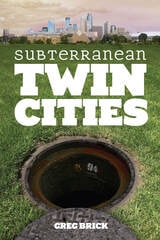
Subterranean Twin Cities
Greg Brick
University of Minnesota Press, 2009
We tend to send things underground that we are not interested in ever seeing again. Sewage. Garbage. In the past, we have used the underground to age such provisions as cheese and beer. In Subterranean Twin Cities, geologist, historian, and urban speleologist Greg Brick takes us on an adventurous, educational, and—thankfully—sanitary tour beneath the streets and into the myriad tunnels, caves, and industrial spaces that make up the Twin Cities’ fascinating and surprisingly vast underground landscape.
In this groundbreaking tour, the first of its kind of the Twin Cities, Brick mines the stories that lie below the city surface. Beginning with an accessible history on the geology of the area—including the giant cone-shaped mollusk Endoceras, whose thirteen-foot-long fossils are found in the Mississippi gorge—Brick guides us into a series of astounding firsthand expeditions. We follow him into St. Paul’s historic Carver’s Cave, with its stories of sunken treasure; through the many caves constructed for brewing, cheese ripening, and mushroom farming; and into the world of nineteenth-century show caves for tourists. We even find ourselves in the “Shangri-la” of urban caves: the extensive Schiek’s Cave seventy-five feet beneath the busy streets of downtown Minneapolis.
From spending the onset of Y2K in Carver’s Cave (just in case) to long hours wading in underground rivers, Brick proves himself a knowledgeable, wry, and daring guide. Subterranean Twin Cities shines a headlamp (with extra batteries, of course) into the captivating labyrinths beneath the Twin Cities and reminds us that what we see aboveground is really only half of the story.
Suburban Dreams
Imagining and Building the Good LifeGreg Dickinson
University of Alabama Press, 2014
2016 CHOICE OUTSTANDING ACADEMIC TITLE AND JANE JACOBS URBAN COMMUNICATION BOOK AWARD FINALIST
Explores how the suburban imaginary, composed of the built environment and imaginative texts, functions as a resource for living out the “good life”
Starting with the premise that suburban films, residential neighborhoods, chain restaurants, malls, and megachurches are compelling forms (topos) that shape and materialize the everyday lives of residents and visitors, Greg Dickinson’s Suburban Dreams offers a rhetorically attuned critical analysis of contemporary American suburbs and the “good life” their residents pursue.
Dickinson’s analysis suggests that the good life is rooted in memory and locality, both of which are foundations for creating a sense of safety central to the success of suburbs. His argument is situated first in a discussion of the intersections among buildings, cities, and the good life and the challenges to these relationships wrought by the twentieth and twenty-first centuries. The argument then turns to rich, fully-embodied analyses of suburban films and a series of archetypal suburban landscapes to explore how memory, locality, and safety interact in constructing the suburban imaginary. Moving from the pastoralism of residential neighborhoods and chain restaurants like Olive Garden and Macaroni Grill, through the megachurch’s veneration of suburban malls to the mixed-use lifestyle center’s nostalgic invocation of urban downtowns, Dickinson complicates traditional understandings of the ways suburbs situate residents and visitors in time and place.
The analysis suggests that the suburban good life is devoted to family. Framed by the discourses of consumer culture, the suburbs often privilege walls and roots to an expansive vision of worldliness. At the same time, developments such as farmers markets suggest a continued striving by suburbanites to form relationships in a richer, more organic fashion.
Dickinson’s work eschews casually dismissive attitudes toward the suburbs and the pursuit of the good life. Rather, he succeeds in showing how by identifying the positive rhetorical resources the suburbs supply, it is in fact possible to engage with the suburbs intentionally, thoughtfully, and rigorously. Beyond an analysis of the suburban imaginary, Suburban Dreams demonstrates how a critical engagement with everyday places can enrich daily life. The book provides much of interest to students and scholars of rhetoric, communication studies, public memory, American studies, architecture, and urban planning.

Suburban Plots
Men at Home in Nineteenth-Century American Print CultureMaura D'Amore
University of Massachusetts Press, 2014
In Suburban Plots, Maura D'Amore explores how Henry David Thoreau, Henry Ward Beecher, Donald Grant Mitchell, Nathaniel Hawthorne, Nathaniel Parker Willis, and others utilized the pen to plot opportunities for a new sort of male agency grounded, literarily and spatially, in a suburbanized domestic landscape. D'Amore uncovers surprising narratives that do not fit easily into standard critical accounts of midcentury home life. Taking men out of work spaces and locating them in the domestic sphere, these writers were involved in a complex process of portraying men struggling to fulfill fantasies outside of their professional lives, in newly emerging communities. These representations established the groundwork for popular conceptions of suburban domestic life that remain today.
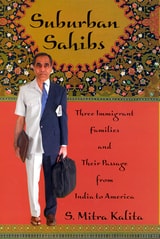
Suburban Sahibs
Kalita, S. Mitra
Rutgers University Press, 2003
In this updated edition, journalist S. Mitra Kalita shows that although the reception from long-time residents has not been entirely welcoming, Indians have come to achieve economic success and their desire for political and social parity continues to grow stronger. She traces the evolution of the suburb from a destination for new arrivals to a launching pad for them.
In the late nineteenth century, tourists descended upon Edison to gawk at its Christmas lights displays. Today, thousands of Indians from all over the United States arrive in the same bedroom community to celebrate their own festivals of lights and colors. Suburban Sahibs attempts to answer the question of how and why they arrived, and offers a window into what America has become: a nation of suburbs as well as a nation of immigrants.
Suburban Urbanities
Suburbs and the Life of the High StreetEdited by Laura Vaughan
University College London, 2015
Subversive Archaism
Troubling Traditionalists and the Politics of National HeritageMichael Herzfeld
Duke University Press, 2021
Subversive Habits
Black Catholic Nuns in the Long African American Freedom StruggleShannen Dee Williams
Duke University Press, 2022

Subversive Stages
Theater in Pre- and Post-Communist Hungary, Romania and BulgariaIleana Alexandra Orlich
Central European University Press, 2017
Subverted Kinship
Nurturing and Inhabiting Gender in Amerindian PhilosophyDiego Madi Dias
HAU, 2020
Subway City
Riding the Trains, Reading New YorkBrooks, Michael
Rutgers University Press, 1997
None of the world's great cities is as closely identified with its subway as New York. Its trains provide much more than just rapid transit. They give New Yorkers a powerful symbol of their metropolis, one that they use to express both their hopes and their fears for the urban future.
Subway City explores New York's transit system as both fact and metaphor. Brooks traces the development of the subway from its inception as the newest and most efficient public transportation system to its decline as an overcrowded and dangerous part of city life. The crowded cars gave Harold Lloyd material for comedy, fueled William Randolph Hearst's crusade against the Traction Trust, and convinced Lewis Mumford that the subway was a futile effort to solve the city's problems. Brooks explores films which have dramatized the dangers lurking below ground, and examines the infamous Bernhard Goetz shooting that made the subway a symbol of urban decay. More hopefully, he describes the Metropolitan Transportation Authority's station improvements and ambitious programs for Music Underground, Poetry in Transit, and Arts-in-Transit, as keys to the city's renewal.
Succeeding Generations
On the Effects of Investments in ChildrenRobert Haveman
Russell Sage Foundation, 1994

Success Won't Save Us
How Asian Americans Can Fight White SupremacyPawan Dhingra
Duke University Press, 2027
Successful Aging as a Contemporary Obsession
Global PerspectivesLamb, Sarah
Rutgers University Press, 2017
The contributors to Successful Aging as a Contemporary Obsession explore how the successful aging movement is playing out across five continents. Their chapters investigate a variety of people, including Catholic nuns in the United States; Hindu ashram dwellers; older American women seeking plastic surgery; aging African-American lesbians and gay men in the District of Columbia; Chicago home health care workers and their aging clients; Mexican men foregoing Viagra; dementia and Alzheimer sufferers in the United States and Brazil; and aging policies in Denmark, Poland, India, China, Japan, and Uganda. This book offers a fresh look at a major cultural and public health movement of our time, questioning what has become for many a taken-for-granted goal—aging in a way that almost denies aging itself.

Succession to High Office in Botswana
Three Case StudiesJack Parson
Ohio University Press, 1990
Sucking Salt
Caribbean Women Writers, Migration, and SurvivalMeredith M. Gadsby
University of Missouri Press, 2006

Sudden Deaths in St. Louis
Coroner Bias in the Gilded AgeSarah E. Lirley
Southern Illinois University Press, 2024
Honorable Mention, 2025 Society of Midland Authors Award in History!
A social history of death investigations in the urban Midwest
The scene of myriad grisly deaths, late nineteenth-century St. Louis was a hotbed for homicide, suicide, alcoholism, abortion, and workplace accidents. The role of the city’s Gilded Age coroners has not been fully examined, contextualized, or interrogated until now. Sarah E. Lirley investigates the process in which these outcomes were determined, finding coroners’ rulings were not uniform, but rather varied by who was conducting the inquest. These fascinating case studies explore the lives of the deceased, as well as their families, communities, press coverage of the events, and the coroners themselves.
Sudden Deaths in St. Louis is a study of 120 coroners’ inquests conducted between 1875 and 1885. Each chapter analyzes the typical versus the atypical in verdicts of death. At the time, inaccurate findings and cursory investigations fueled criticisms of coroner’s offices for employing poorly trained laymen. The coroners featured in this book had the power to shape public perception of the deceased, and they often relied on preexisting reputations to determine cause of death. For instance, women who worked as prostitutes were likely to be ruled as suicides, whether or not that was actually the case, and women who were respected members of their communities, particularly mothers, frequently received rulings of suicide caused by insanity. Verdicts also depended in part on availability of witnesses, including family members, to determine whether another person could be held liable for the death. Lirley’s book highlights the stories of ordinary men and women whose lives were tragically cut short, and the injustice they received even after death.
Sudden Shelter
UUAP 103Jesse D. Jennings
University of Utah Press, 1980
Suddenly Diverse
How School Districts Manage Race and InequalityErica O. Turner
University of Chicago Press, 2020
Suddenly Diverse is an ethnographic account of two school districts in the Midwest responding to rapidly changing demographics at their schools. It is based on observations and in-depth interviews with school board members and superintendents, as well as staff, community members, and other stakeholders in each district: one serving “Lakeside,” a predominately working class, conservative community and the other serving “Fairview,” a more affluent, liberal community. Erica O. Turner looks at district leaders’ adoption of business-inspired policy tools and the ultimate successes and failures of such responses. Turner’s findings demonstrate that, despite their intentions to promote “diversity” or eliminate “achievement gaps,” district leaders adopted policies and practices that ultimately perpetuated existing inequalities and advanced new forms of racism.
While suggesting some ways forward, Suddenly Diverse shows that, without changes to these managerial policies and practices and larger transformations to the whole system, even district leaders’ best efforts will continue to undermine the promise of educational equity and the realization of more robust public schools.

Suddenly Jewish
Jews Raised as Gentiles Discover Their Jewish RootsBarbara Kessel
Brandeis University Press, 2007
Sueños Americanos
Barrio Youth Negotiating Social and Cultural IdentitiesJulio Cammarota
University of Arizona Press, 2012
For nearly a decade Julio Cammarota interviewed and observed Latino youth between the ages of seventeen and twenty-four who lived in a barrio in a city on the California coast. He conducted forty life interviews, selecting six people to investigate in depth. Twenty of the study participants worked at a fast-food restaurant, while the other twenty worked at a community cultural center.
Focusing on the experiences of his subjects in the primary settings of family, work, and school, Cammarota structured his research to examine how Latino youth negotiate myriad social conditions and hostile economic and political pressures in their daily lives. His extensive interviews and incisive analyses illuminate the complex relationships among low-wage employment, cultural standards, education, class oppression, and gender expectations.
Among other topics, Cammarota investigates how working affects Latino education; how gender influences social relationships and life choices; how Latinos and Latinas try to maintain their distinct ethnic identity while attempting to transcend marginalization; whether the Latino culture helps young people work hard for their families and for a better future; and how the connections and disconnections among work, family, and school constitute formative processes that shape the cultural identities of Latino youth.
One of the most extensive studies of barrio youth available, Sueños Americanos concludes with a discussion of social justice education for Latino youth and how this educational approach meets their academic needs while providing opportunities for self-determination and community activism.
Suffering Made Real
American Science and the Survivors at HiroshimaM. Susan Lindee
University of Chicago Press, 1994
Suffering Made Real is the first comprehensive history of the ABCC's research on how radiation affected the survivors of the atomic bomb. Arguing that Cold War politics and cultural values fundamentally shaped the work of the ABCC, M. Susan Lindee tells the compelling story of a project that raised disturbing questions about the ethical implications of using human subjects in scientific research.
How did the politics of the emerging Cold War affect the scientists' biomedical research and findings? How did the ABCC document and publicly present the effects of radiation? Why did the ABCC refuse to provide medical treatment to the survivors? Through a detailed examination of ABCC policies, archival materials, the minutes of committee meetings, newspaper accounts, and interviews with ABCC scientists, Lindee explores how political and cultural interests were reflected in the day-to-day operations of this controversial research program.
Set against a period of conflicting views of nuclear weapons and nuclear power, Suffering Made Real follows the course of a politically charged research program and reveals in detail how politics and cultural values can shape the conduct, results, and uses of science.
Suffering Sappho!
Lesbian Camp in American Popular CultureBarbara Jane Brickman
Rutgers University Press, 2024
Offering the first major consideration of lesbian camp in American popular culture, Suffering Sappho! traces a larger-than-life lesbian menace across midcentury media forms to propose five prototypical queer icons—the sicko, the monster, the spinster, the Amazon, and the rebel. On the pages of comics and sensational pulp fiction and the dramas of television and drive-in movies, Barbara Jane Brickman discovers evidence not just of campy sexual deviants but of troubling female performers, whose failures could be epic but whose subversive potential could inspire.
Supplemental images of interest related to this title: George and Lomas; Connie Minerva; Cat On Hot Tin; and Beulah and Oriole.


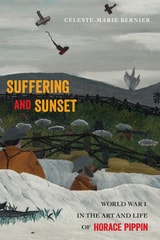
Suffering and Sunset
World War I in the Art and Life of Horace PippinCeleste-Marie Bernier
Temple University Press, 2017
For self-made artist and soldier Horace Pippin—who served in the 369th all-black infantry in World War I until he was wounded—war provided a formative experience that defined much of his life and work. His ability to transform combat service into canvases of emotive power, psychological depth, and realism showed not only how he viewed the world but also his mastery as a painter. In Suffering and Sunset, Celeste-Marie Bernier painstakingly traces Pippin’s life story of art as a life story of war.
Illustrated with more than sixty photographs, including works in various mediums—many in full color—this is the first intellectual history and cultural biography of Pippin. Working from newly discovered archives and unpublished materials, Bernier provides an in-depth investigation into the artist’s development of an alternative visual and textual lexicon and sheds light on his work in its aesthetic, social, and political contexts.
Suffering and Sunset illustrates Pippin’s status as a groundbreaking artist as it shows how this African American painter suffered from but also staged many artful resistances to racism in a white-dominated art world.

Suffragettes in the Land of the Tsars
Jessie Kenney’s Diary of Revolutionary RussiaLee Farrow
Central European University Press, 2026

Sugar Bush Babies
Stories of My Ojibwe GrandmotherJanis A. Fairbanks
University of Minnesota Press, 2025
A memoir of lessons learned from an Ojibwe grandmother during the time of Relocation
Why, her mother asked, did Janis keep running away from kindergarten? She wanted to go home. But not to the house they had just moved to in Duluth, with its gravel yard and traffic noise. She was a country girl, and home was the log cabin among the wildflowers on the Leech Lake Indian Reservation in Bena, Minnesota. Knowing they were now going to stay in the city, Janis’s parents offered her a compromise: during the summer, Janis could leave the bustle of Duluth and live with her grandmother on the Fond du Lac Reservation, listening to stories, learning Ojibwe, and finding her place in the world. In Sugar Bush Babies, Janis A. Fairbanks returns to that time of Relocation, dislocation, and discovery, taking us home with her through stories of childhood and lessons learned at her grandmother’s knee, enveloped in love and tradition.
Through the eyes of a child and the teachings of an elder, Fairbanks revisits her life during Indian Relocation from reservations to urban areas, from Ojibwe villages to white communities whose ideas about Indians came from Hollywood Westerns. Recalling her early childhood at Leech Lake, her school days in Duluth, and her summers in Fond du Lac, Janis brings the gifts of living history full circle, continuing the traditions of carrying family lore, women’s wisdom, and Indigenous culture from generation to generation.
There are tales told at nighttime or during thunderstorms; lessons in Native medicine; stories of Grandma’s recollections of boarding school, Daddy’s days as a lumberjack, and Mother’s special powers; memories of wash days and dancing, of powwows and Girl Scout camp, of snaring rabbits, selling lilacs, and attending the circus. A lyrical memoir, Sugar Bush Babies conveys the eloquence of women speaking and sharing through generations and the lasting power of tradition.
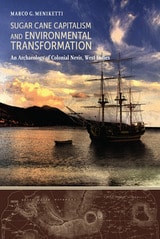
Sugar Cane Capitalism and Environmental Transformation
An Archaeology of Colonial Nevis, West IndiesMarco G. Meniketti
University of Alabama Press, 2015
In this deeply researched and multifaceted study, Marco G. Meniketti demonstrates how the landscape of the small Caribbean island of Nevis preserves and reveals artifacts and evidence of the highly complex and interrelated seventeenth- to nineteenth-century “Atlantic Economy,” comprising early capitalist sugar production, the African slave trade, and European settlement.
Sugar Cane Capitalism and Environmental Transformation is based on twelve seasons of meticulous archaeological field work and documentary research. Although Nevis was once a bustling hub of the British colonial project, the emigration of emancipated slaves and abandonment by European planters left large swathes of Nevis vacant. Reclaimed by forests and undisturbed by later waves of economic development, the island—dotted with fascinating ruins, debris from the sugar industry, windmills, chimneys, and multistoried great house—provided Meniketti with an ideal subject for archaeological inquiry.
Through intensive archaeological and landscape surveys of multiple key plantation sites, Meniketti traces the development of Nevis from its initial European settlement in 1627 to its central role as a British mercantile hub and a laboratory and prototype of capitalist sugar cultivation. His nuanced analysis explains the backdrop of European political and economic rivalries, of which the colonial agro-industrial enterprises were the physical manifestations, and makes telling comparisons with Dutch and French archaeological sites. The work also compares and contrasts the adoption of capitalist modes of sugar production and socialization at wealthy and middling plantation sites.
Supported with a wealth of photos, tables, and maps, Sugar Cane Capitalism and Environmental Transformation offers a vital case study of one island whose environment and archaeological record illuminates the complex webs of Atlantic history.
Sugar Girls & Seamen
A Journey into the World of Dockside Prostitution in South AfricaHenry Trotter
Ohio University Press, 2011
Sugar Girls and Seamen illuminates the shadowy world of dockside prostitution in South Africa, focusing on the women of Cape Town and Durban who sell their hospitality to foreign sailors.
Dockside “sugar girls” work at one of the busiest cultural intersections in the world. Through their continual interactions with foreign seamen, they become major traffickers in culture, ideas, languages, styles, goods, currencies, genes, and diseases. Many learn the seamen’s languages, develop emotional relationships with them, have their babies, and become entangled in vast webs of connection. Henry Trotter argues that these South African women are the ultimate cosmopolitans, the unsung sirens of globalization.
Based on research at the seamen’s nightclubs, plus countless interviews with sugar girls, sailors, club owners, cabbies, bouncers, and barmaids, this book provides a comprehensive account of dockside prostitution at the southern tip of Africa. Through stories, analysis, and firsthand experiences, it reveals this gritty world in all its raw vitality and fragile humanity. Sugar Girls and Seamen is simultaneously racy and light, critical and profound.

Sugar and Slavery in Puerto Rico
The Plantation Economy of Ponce, 1800–1850Francisco A. Scarano
University of Wisconsin Press, 1984
This important study of Ponce, a major sugar-producing district in Puerto Rico, examines in detail the processes by which a predominantly peasant economy an society was transformed into a plantation system. Scarano’s work, one of the first full investigations into Puerto Rico’s nineteenth-century economic history, dispels the long-held belief that slavery was an inconsequential factor in this society; indeed, he finds that the new plantation system was fully dependent on African slave labor, and that the initial stimuli for economic change came from immigrants.
Sugar and Tension
Diabetes and Gender in Modern IndiaWeaver, Lesley Jo
Rutgers University Press, 2019

Sugar's Life in the Hood
The Story of a Former Welfare MotherBy Sugar Turner and Tracy Bachrach Ehlers
University of Texas Press, 2002
All her life, Sugar Turner has had to hustle to survive. An African American woman living in the inner city, she has been a single mother juggling welfare checks, food stamps, boyfriends and husbands, illegal jobs, and home businesses to make ends meet for herself and her five children. Her life's path has also wandered through the wilderness of crack addiction and prostitution, but her strong faith in God and her willingness to work hard for a better life pulled her through. Today, Turner is off welfare and is completing her education. She is computer literate, holds a job in the local school system, has sent three of her children to college, and is happily married.
In this engrossing book, Sugar Turner collaborates with anthropologist Tracy Bachrach Ehlers in telling her story. Through conversations with Ehlers, diary entries, and letters, Turner vividly and openly describes all aspects of her life, including motherhood, relationships with men, welfare and work, and her attachment to her friends, family, and life in the "hood." Ehlers also gives her reactions to Turner's story, discussing not only how it belies the "welfare queen" stereotype, but also how it forced her to confront her own lingering confusions about race, her own bigotry.
What emerges from this book is a fascinating story of two women from radically different backgrounds becoming equal witnesses to each other's lives. By allowing us into the real world of an inner-city African American mother, they replace with compassion and insight the stereotypes, half-truths, and scorn that too often dominate public discourse.
Sugarcane and Rum
The Bittersweet History of Labor and Life on the Yucatán PeninsulaJohn R. Gust and Jennifer P. Mathews
University of Arizona Press, 2020
While the Yucatán Peninsula of Mexico may conjure up images of vacation getaways and cocktails by the sea, these easy stereotypes hide a story filled with sweat and toil. The story of sugarcane and rum production in the Caribbean has been told many times. But few know the bittersweet story of sugar and rum in the jungles of the Yucatán Peninsula during the nineteenth century. This is much more than a history of coveted commodities. The unique story that unfolds in John R. Gust and Jennifer P. Mathews’s new history Sugarcane and Rum is told through the lens of Maya laborers who worked under brutal conditions on small haciendas to harvest sugarcane and produce rum.
Gust and Mathews weave together ethnographic interviews and historical archives with archaeological evidence to bring the daily lives of Maya workers into focus. They lived in a cycle of debt, forced to buy all of their supplies from the company store and take loans from the hacienda owners. And yet they had a certain autonomy because the owners were so dependent on their labor at harvest time. We also see how the rise of cantinas and distilled alcohol in the nineteenth century affected traditional Maya culture and that the economies of Cancún and the Mérida area are predicated on the rum-influenced local social systems of the past. Sugarcane and Rum brings this bittersweet story to the present and explains how rum continues to impact the Yucatán and the people who have lived there for millennia.

Sugarless
A NovelJames Magruder
University of Wisconsin Press, 2009
After he brings two girls in speech class to tears by reading a story aloud, Rick is coaxed onto the interscholastic forensics team to perform an eight-minute dramatic interpretation of The Boys in the Band, the controversial sixties play about homosexuality. Unexpectedly successful at this oddball event, Rick begins winning tournaments and making friends with his teammates.
Rick also discovers the joys of sex—with a speech coach from a rival school—just as his mother, reacting to a deteriorating home environment, makes an unnerving commitment to Christ. The newly confident Rick assumes this too shall pass—until the combined forces of family, sex, and faith threaten to undo him at the state meet in Peoria.
James Magruder’s Sugarless offers a ruefully entertaining take on the simultaneous struggles of coming-out, coming-of-age, and coming-to-Jesus.
Sukeroku’s Double Identity
The Dramatic Structure of Edo KabukiBarbara E. Thornbury
University of Michigan Press, 1982
Summa Technologiae
Stanislaw Lem
University of Minnesota Press, 2014
The Polish writer Stanislaw Lem is best known to English-speaking readers as the author of the 1961 science fiction novel Solaris, adapted into a meditative film by Andrei Tarkovsky in 1972 and remade in 2002 by Steven Soderbergh. Throughout his writings, comprising dozens of science fiction novels and short stories, Lem offered deeply philosophical and bitingly satirical reflections on the limitations of both science and humanity.
In Summa Technologiae—his major work of nonfiction, first published in 1964 and now available in English for the first time—Lem produced an engaging and caustically logical philosophical treatise about human and nonhuman life in its past, present, and future forms. After five decades Summa Technologiae has lost none of its intellectual or critical significance. Indeed, many of Lem’s conjectures about future technologies have now come true: from artificial intelligence, bionics, and nanotechnology to the dangers of information overload, the concept underlying Internet search engines, and the idea of virtual reality. More important for its continued relevance, however, is Lem’s rigorous investigation into the parallel development of biological and technical evolution and his conclusion that technology will outlive humanity.
Preceding Richard Dawkins’s understanding of evolution as a blind watchmaker by more than two decades, Lem posits evolution as opportunistic, shortsighted, extravagant, and illogical. Strikingly original and still timely, Summa Technologiae resonates with a wide range of contemporary debates about information and new media, the life sciences, and the emerging relationship between technology and humanity.