Results by title
22279 books match the query 'Social Science' and 1635 start with s
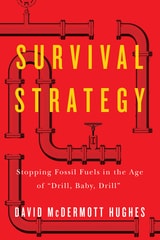
Survival Strategy
Stopping Fossil Fuels in the Age of "Drill, Baby, Drill"David McDermott Hughes
Rutgers University Press, 2027
In the United States, the climate movement has, so far, failed in the all-important task of shutting down fossil fuels. David McDermott Hughes offers a plan for a more daring form of climate politics, recommending that the climate movement adopt a strategy of mass blockades and sabotage against functioning fossil fuel infrastructure. Ideally, the saboteurs would not get caught—but if they did, in their trials they could appeal to the little-known power of jury nullification to avoid prison and to make pipelines unprotectable.
Climate change is no longer a technical problem that can simply be fixed. It is now a political predicament that must be faced. Elected politicians—even those who support renewable energy—remain committed to the extraction of petroleum and methane. No one with political power is even attempting to do the one thing that must be done: shut down fossil fuels. With trepidation, Hughes offers the last resort against the approaching climate catastrophe.
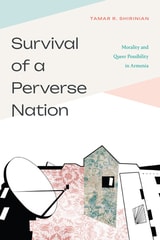
Survival of a Perverse Nation
Morality and Queer Possibility in ArmeniaTamar R. Shirinian
Duke University Press, 2024

Survival
Dislocation and Repair in BurmaFrançois Robinne
National University of Singapore Press, 2027
Captures the tenuous reality of daily life for those in and outside Burma.
In the wake of the military coup of February 2021, a new and unsettling reality has emerged in Burma. Unlike previous uprisings, this time the junta's reach extends beyond marginalized groups and ethnic territories to target the entire spectrum of civil society—urban and rural, young and old, across all groups, faiths, and social classes. The "Spring Revolution" sees Generation Z not only resisting authoritarian rule but also striving to forge a new societal vision.
In the face of totalitarian desocialization, a complex dance of dislocation and repair unfolds, within, outside, and along Burma's international borders. Survival takes a multi-sited approach to explore these dynamics: we hear from asylum seekers in France, the undocumented in Thailand, resistance leaders in constant motion, and, through the medium of the handphone, from within Burma. The result that emerges is a compelling picture of the individual struggle in an unforgiving situation, of interest to anyone who seeks a grounded understanding of the conflict—and what might emerge from it. Highly engaged yet academically rigorous, this compelling book also opens new spaces for understanding the complications of migration in today’s world.
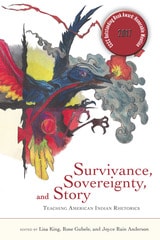
Survivance, Sovereignty, and Story
Teaching American Indian RhetoricsLisa King
Utah State University Press, 2015
Focusing on the importance of discussions about sovereignty and of the diversity of Native American communities, Survivance, Sovereignty, and Story offers a variety of ways to teach and write about indigenous North American rhetorics.
These essays introduce indigenous rhetorics, framing both how and why they should be taught in US university writing classrooms. Contributors promote understanding of American Indian rhetorical and literary texts and the cultures and contexts within which those texts are produced. Chapters also supply resources for instructors, promote cultural awareness, offer suggestions for further research, and provide examples of methods to incorporate American Indian texts into the classroom curriculum.
Survivance, Sovereignty, and Story provides a decolonized vision of what teaching rhetoric and writing can be and offers a foundation to talk about what rhetoric and pedagogical practice can mean when examined through American Indian and indigenous epistemologies and contemporary rhetorics.
Contributors include Joyce Rain Anderson, Resa Crane Bizzaro, Qwo-Li Driskill, Janice Gould, Rose Gubele, Angela Haas, Jessica Safran Hoover, Lisa King, Kimberli Lee, Malea D. Powell, Andrea Riley-Mukavetz, Gabriela Raquel Ríos, and Sundy Watanabe.

Survived by One
The Life and Mind of a Family Mass MurdererRobert E. Hanlon, PhD with Thomas V. Odle
Southern Illinois University Press, 2013
On November 8, 1985, 18-year-old Tom Odle brutally murdered his parents and three siblings in the small southern Illinois town of Mount Vernon, sending shockwaves throughout the nation. The murder of the Odle family remains one of the most horrific family mass murders in U.S. history. Odle was sentenced to death and, after seventeen years on death row, expected a lethal injection to end his life. However, Illinois governor George Ryan’s moratorium on the death penalty in 2000, and later commutation of all death sentences in 2003, changed Odle’s sentence to natural life.
The commutation of his death sentence was an epiphany for Odle. Prior to the commutation of his death sentence, Odle lived in denial, repressing any feelings about his family and his horrible crime. Following the commutation and the removal of the weight of eventual execution associated with his death sentence, he was confronted with an unfamiliar reality. A future. As a result, he realized that he needed to understand why he murdered his family. He reached out to Dr. Robert Hanlon, a neuropsychologist who had examined him in the past. Dr. Hanlon engaged Odle in a therapeutic process of introspection and self-reflection, which became the basis of their collaboration on this book.
Hanlon tells a gripping story of Odle’s life as an abused child, the life experiences that formed his personality, and his tragic homicidal escalation to mass murder, seamlessly weaving into the narrative Odle’s unadorned reflections of his childhood, finding a new family on death row, and his belief in the powers of redemption.
As our nation attempts to understand the continual mass murders occurring in the U.S., Survived by One sheds some light on the psychological aspects of why and how such acts of extreme carnage may occur. However, Survived by One offers a never-been-told perspective from the mass murderer himself, as he searches for the answers concurrently being asked by the nation and the world.
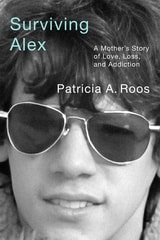
Surviving Alex
A Mother’s Story of Love, Loss, and AddictionPatricia A. Roos
Rutgers University Press, 2024
Weaving together a personal narrative and a sociological perspective, Surviving Alex movingly describes how even children from “good families” fall prey to addiction, and recounts the hellish toll it takes on families. Drawing from interviews with Alex’s friends, family members, therapists, teachers, and police officers—as well as files from his stays in hospitals, rehab facilities, and jails—Roos paints a compelling portrait of a young man whose life veered between happiness, anxiety, success, and despair. And as she explores how a punitive system failed her son, she calls for a community of action that would improve care for substance users and reduce addiction, realigning public health policy to address the overdose crisis.
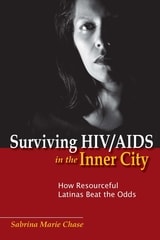
Surviving HIV/AIDS in the Inner City
How Resourceful Latinas Beat the OddsChase, Sabrina
Rutgers University Press, 2011
Based on her work with minority women living in Newark, New Jersey, Sabrina Marie Chase illuminates the hidden traps and land mines burdening our current health care system as a whole. For the women she studied, alliances with doctors, nurses, and social workers could literally mean the difference between life and death. By applying the theories of sociologist Pierre Bourdieu to the day-to-day experiences of HIV-positive Latinas, Chase explains why some struggled and even died while others flourished and thrived under difficult conditions. These gripping, true-life stories advocate for those living with chronic illness who depend on the health care "safety net." Through her exploration of life and death among Newark's resourceful women, Chase provides the groundwork for inciting positive change in the U.S. health care system.

Surviving Literary Suicide
Jeffrey Berman
University of Massachusetts Press, 1999
An exploration of the relationship between literature and life, this study examines the effect on readers of “suicidal literature”—novels and poems that depict, and sometimes glorify, the act of suicide. Beginning with a discussion of the growing incidence of suicide in American culture, Jeffrey Berman investigates the portrayal of suicide in the works of four authors who later took their own lives—Virginia Woolf, Ernest Hemingway, Sylvia Plath, and Anne Sexton— and two who did not—Kate Chopin and William Styron. In each case Berman discusses the writer's shifting attitude toward suicide, the tendency of critics to romanticize fictional suicide, and the impact of writing about suicide on the artist's own life. At the same time, Berman draws on his experiences as a teacher of these writings, analyzing student reactions to “literary suicide” as recorded in class diaries—responses ranging from grief and confusion to anger and guilt. By looking at the connection between real and imagined suicide, Berman seeks to shed fresh light on a subject long enshrouded in silence, fear, and mystery.
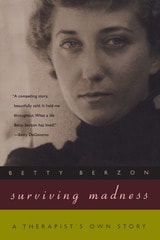
Surviving Madness
A Therapist's Own StoryBetty Berzon
University of Wisconsin Press, 2002
Betty Berzon, renowned psychotherapist and author of the bestselling book Permanent Partners, tells her own incredible story here. Berzon’s journey from psychiatric patient on suicide watch—her wrists tethered to the bed rails in a locked hospital ward—to her present role as a groundbreaking therapist and gay pioneer makes for purely compelling reading.
Berzon is recognized today as a trailblazing co-founder of a number of important lesbian and gay organizations and one of the first therapists to focus on means of developing healthy gay relationships and overcoming homophobia. Her sometimes bumpy road to success never fails to fascinate. Along the way she encounters such luminaries as Anaïs Nin, Eleanor Roosevelt, the Sitwells, Evelyn Hooker, and Paul Monette. Her recollections here provide a collective portrait of her fellow pioneers and a stirring lesson in twentieth-century history.
It is, however, the intimate story of Berzon’s own private passage toward self-discovery—from mental breakdown and suicide attempts, through hospitalization, eventual triumphant recovery, and her own coming out as an open lesbian at the age of forty—that makes this memoir an urgent, insightful, and deeply emotional testament to human survival.
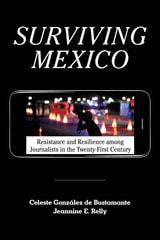
Surviving Mexico
Resistance and Resilience among Journalists in the Twenty-first CenturyBy Celeste González de Bustamante and Jeannine E. Relly
University of Texas Press, 2021
Mott KTA Journalism and Mass Communication Research Award, Kappa Tau Alpha
Tankard Book Award, Association for Education in Journalism and Mass Communication (AEJMC)
Knudson Latin America Prize, Association for Education in Journalism and Mass Communication (AEJMC)
Since 2000, more than 150 journalists have been killed in Mexico. Today the country is one of the most dangerous in the world in which to be a reporter. In Surviving Mexico, Celeste González de Bustamante and Jeannine E. Relly examine the networks of political power, business interests, and organized crime that threaten and attack Mexican journalists, who forge ahead despite the risks.
Amid the crackdown on drug cartels, overall violence in Mexico has increased, and journalists covering the conflict have grown more vulnerable. But it is not just criminal groups that want reporters out of the way. Government forces also attack journalists in order to shield corrupt authorities and the very criminals they are supposed to be fighting. Meanwhile some news organizations, enriched by their ties to corrupt government officials and criminal groups, fail to support their employees. In some cases, journalists must wait for a “green light” to publish not from their editors but from organized crime groups. Despite seemingly insurmountable constraints, journalists have turned to one another and to their communities to resist pressures and create their own networks of resilience. Drawing on a decade of rigorous research in Mexico, González de Bustamante and Relly explain how journalists have become their own activists and how they hold those in power accountable.
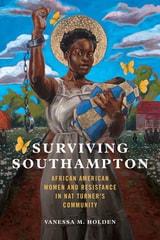
Surviving Southampton
African American Women and Resistance in Nat Turner's CommunityVanessa M. Holden
University of Illinois Press, 2021
The 1831 Southampton Rebellion led by Nat Turner involved an entire community. Vanessa M. Holden rediscovers the women and children, free and enslaved, who lived in Southampton County before, during, and after the revolt. Mapping the region's multilayered human geography, Holden draws a fuller picture of the inhabitants, revealing not only their interactions with physical locations but also their social relationships in space and time. Her analysis recasts the Southampton Rebellion as one event that reveals the continuum of practices that sustained resistance and survival among local Black people. Holden follows how African Americans continued those practices through the rebellion’s immediate aftermath and into the future, showing how Black women and communities raised children who remembered and heeded the lessons absorbed during the calamitous events of 1831.
A bold challenge to traditional accounts, Surviving Southampton sheds new light on the places and people surrounding Americas most famous rebellion against slavery.
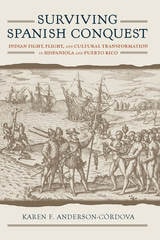
Surviving Spanish Conquest
Indian Fight, Flight, and Cultural Transformation in Hispaniola and Puerto RicoKaren F. Anderson-Córdova
University of Alabama Press, 2017
In Surviving Spanish Conquest: Indian Fight, Flight, and Cultural Transformation in Hispaniola and Puerto Rico, Karen F. Anderson-Córdova draws on archaeological, historical, and ethnohistorical sources to elucidate the impacts of sixteenth-century Spanish conquest and colonization on indigenous peoples in the Greater Antilles. Moving beyond the conventional narratives of the quick demise of the native populations because of forced labor and the spread of Old World diseases, this book shows the complexity of the initial exchange between the Old and New Worlds and examines the myriad ways the indigenous peoples responded to Spanish colonization.
Focusing on Hispaniola and Puerto Rico, the first Caribbean islands to be conquered and colonized by the Spanish, Anderson-Córdova explains Indian sociocultural transformation within the context of two specific processes, out-migration and in-migration, highlighting how population shifts contributed to the diversification of peoples. For example, as the growing presence of “foreign” Indians from other areas of the Caribbean complicated the variety of responses by Indian groups, her investigation reveals that Indians who were subjected to slavery, or the “encomienda system,” accommodated and absorbed many Spanish customs, yet resumed their own rituals when allowed to return to their villages. Other Indians fled in response to the arrival of the Spanish.
The culmination of years of research, Surviving Spanish Conquest deftly incorporates archaeological investigations at contact sites copious use of archival materials, and anthropological assessments of the contact period in the Caribbean. Ultimately, understanding the processes of Indian-Spanish interaction in the Caribbean enhances comprehension of colonization in many other parts of the world. Anderson-Córdova concludes with a discussion regarding the resurgence of interest in the Taíno people and their culture, especially of individuals who self-identify as Taíno. This volume provides a wealth of insight to historians, anthropologists, archaeologists, and those interested in early cultures in contact.
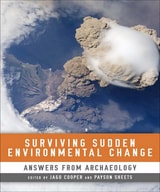
Surviving Sudden Environmental Change
Answers From ArchaeologyJago Cooper
University Press of Colorado, 2012
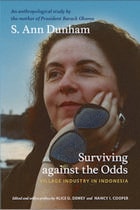
Surviving against the Odds
Village Industry in IndonesiaS. Ann Dunham
Duke University Press, 2009
President Barack Obama’s mother, S. Ann Dunham, was an economic anthropologist and rural development consultant who worked in several countries including Indonesia. Dunham received her doctorate in 1992. She died in 1995, at the age of 52, before having the opportunity to revise her dissertation for publication, as she had planned. Dunham’s dissertation adviser Alice G. Dewey and her fellow graduate student Nancy I. Cooper undertook the revisions at the request of Dunham’s daughter, Maya Soetoro-Ng. The result is Surviving against the Odds, a book based on Dunham’s research over a period of fourteen years among the rural metalworkers of Java, the island home to nearly half Indonesia’s population. Surviving against the Odds reflects Dunham’s commitment to helping small-scale village industries survive; her pragmatic, non-ideological approach to research and problem solving; and her impressive command of history, economic data, and development policy. Along with photographs of Dunham, the book includes many pictures taken by her in Indonesia.
After Dunham married Lolo Soetoro in 1967, she and her six-year-old son, Barack Obama, moved from Hawai‘i to Soetoro’s home in Jakarta, where Maya Soetoro was born three years later. Barack returned to Hawai‘i to attend school in 1971. Dedicated to Dunham’s mother Madelyn, her adviser Alice, and “Barack and Maya, who seldom complained when their mother was in the field,” Surviving against the Odds centers on the metalworking industries in the Javanese village of Kajar. Focusing attention on the small rural industries overlooked by many scholars, Dunham argued that wet-rice cultivation was not the only viable economic activity in rural Southeast Asia.
Surviving against the Odds includes a preface by the editors, Alice G. Dewey and Nancy I. Cooper, and a foreword by her daughter Maya Soetoro-Ng, each of which discusses Dunham and her career. In his afterword, the anthropologist and Indonesianist Robert W. Hefner explores the content of Surviving against the Odds, its relation to anthropology when it was researched and written, and its continuing relevance today.

Surviving in Two Worlds
Contemporary Native American VoicesBy Lois Crozier-Hogle and Darryl Babe Wilson
University of Texas Press, 1997
Surviving in Two Worlds brings together the voices of twenty-six Native American leaders. The interviewees come from a variety of tribal backgrounds and include such national figures as Oren Lyons, Arvol Looking Horse, John Echohawk, William Demmert, Clifford Trafzer, Greg Sarris, and Roxanne Swentzell.
Their interviews are divided into five sections, grouped around the themes of tradition, history and politics, healing, education, and culture. They take readers into their lives, their dreams and fears, their philosophies and experiences, and show what they are doing to assure the survival of their peoples and cultures, as well as the earth as a whole. Their analyses of the past and present, and especially their counsels for the future, are timely and urgent.
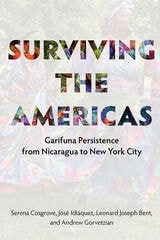
Surviving the Americas
Garifuna Persistence from Nicaragua to New York CitySerena Cosgrove, José Idiáquez, Leonard Joseph Bent, and Andrew Gorvetzian
University of Minnesota Press, 2020
In Surviving the Americas, Serena Cosgrove, José Idiáquez, Leonard Joseph Bent, and Andrew Gorvetzian shed light on what it means to be Garifuna today, particularly in Nicaragua. Their research includes over nine months of fieldwork in Garifuna communities in the Pearl Lagoon on the southern Caribbean coast of Nicaragua and in New York City. The resulting ethnography illustrates the unique social issues of the Nicaraguan Garifuna and how their culture, traditions, and reverence for their ancestors continues to persist.

Surviving the Essex
The Afterlife of America's Most Storied ShipwreckDavid O. Dowling
University Press of New England, 2016
Surviving the ICE Age
Children of Immigrants in New YorkJoanna Dreby
Russell Sage Foundation, 2025
Dreby shows that a restrictive approach to immigration creates problems over time and across generations. These issues occur regardless of one’s citizenship status and go beyond deportations. Despite having pride in their heritage, her interviewees did not talk much about immigration. She refers to this unwillingness—and at times, inability—to speak about immigration as silencing. Silencing in a community or family is often intended to protect children, but this can leave them with little information about their backgrounds and status, leading to fear and anxiety instead. Self-silencing often resulted from traumatic experiences tied to enforcement episodes, which sometimes took the form of memory loss or emotional withholding. Dreby finds that experiences with the immigration system that disrupted relationships in a child’s household arising from family separations, moves, or changing roles in the family had especially long-term effects, causing, at times, ongoing mental health issues. Even the risk of immigration involvement left some young adults feeling vulnerable and undermined their sense of safety and security as U.S. citizens.
Dreby also highlights stories that offer hope. Young adults developed strategies to persevere, and children who grew up in communities and families that openly talked about migration felt empowered and fared much better, especially when they had access to resources, such as adequate food and shelter, mental health services, and community support. Dreby calls for policies and practices to mitigate the harms of restrictive migratory control on children’s wellbeing, such avoiding the arrest of parents in front of children and ensuring that U.S. citizen children’s interests are considered in immigration court without their direct involvement.
Surviving the ICE Age details the generational harms caused by U.S. immigration policy and offers suggestions for a better way forward.
Surviving the Peace
The Struggle for Postwar Recovery in Bosnia-HerzegovinaPeter Lippman
Vanderbilt University Press, 2019
Essential reading for students of the former Yugoslavia and anyone interested in postwar or post-genocide studies, Surviving the Peace is an instant classic of long-form reporting, an impossible accomplishment without a lifetime of dedication to a place and people.
Peter Lippman's website is http://survivingthepeace.org/.
Surviving the State
Land and Democracy in MyanmarHilary Oliva Faxon
Duke University Press, 2026
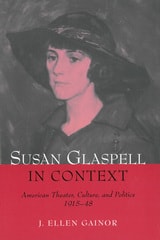
Susan Glaspell in Context
American Theater, Culture, and Politics, 1915-48J. Ellen Gainor
University of Michigan Press, 2003

Susan Glaspell
Essays on Her Theater and FictionLinda Ben-Zvi, Editor
University of Michigan Press, 1995
The career of Susan Glaspell (1876-1948), the American playwright and novelist, follows closely the trajectory of other "reclaimed" American women writers of the century such as Kate Chopin, Charlotte Perkins Gilman, and Zora Neale Hurston. She was well known in her time, effaced from canonical consideration after her death, and rediscovered years later through the surfacing of one work around which critical attention has focused. Glaspell was a respected international playwright and novelist who amassed some of the most impressive credentials in American theater history, including the Pulitzer Prize in 1931. Over the past fifteen years, she has been rediscovered through the work of leading feminist scholars; and her one-act play Trifles and its short story form, "A Jury of Her Peers," have become classics. This book is the first collection devoted to the study of the body of Glaspell's work. Essays by leading playwrights and scholars provide an array of perspectives on the writer and her work. The book features the first complete Glaspell bibliography, including original reviews of her plays and fiction and recent critical studies of her writing.
Sushi in Cortez
Interdisciplinary Essays on Mesa VerdeDavid Taylor and Steve Wolverton
University of Utah Press, 2015
The Mesa Verde region is one of the most popular tourist destinations in the world and is an area fraught with complexities, anomalies, and layers of histories. Sushi in Cortez is a collection of essays by an interdisciplinary group of academics, artists, and cultural observers that explores this diverse landscape and heritage by combining and sharing the differing perspectives provided by various disciplines. Poetry, film, environmental philosophy, nature photography, native Pueblo perspectives, and archaeology are used to touch on the common questions people ask about the value of their work and lives as well as the value of visiting ancient sites such as Mesa Verde. The authors share personal stories about the difficulties, joys, confusions, and epiphanies they experienced as they crossed the boundaries of their professional lives, coming to understand how incomplete any single rendition of place can be. Find additional images on our website www.uofupress.com.
Take a look inside the authors’ Mesa Verde experience in this short film,“Location Fracture” by Melinda Levin.

Suspect Citizens
Women, Virtue, and Vice in Backlash PoliticsJocelyn Boryczka
Temple University Press, 2012
What drives the cycle of backlashes against women’s ongoing struggle for equality, freedom, and inclusion in American politics? In her innovative and provocative book, Suspect Citizens, Jocelyn Boryczka presents a feminist conceptual history that shows how American politics have largely defined women in terms of their reproductive and socializing functions. This framework not only denies women full citizenship, but also devalues the active political engagement of all citizens who place each other and their government under suspicion.
Developing the gendered dynamics of virtue and vice, Boryczka exposes the paradox of how women are perceived as both virtuous moral guardians and vice-ridden suspect citizens capable of jeopardizing the entire nation’s exceptional future. She uses wide-ranging examples from the Puritans and contemporary debates over sex education to S&M lesbian feminists and the ethics of care to show how to move beyond virtue and vice to a democratic feminist ethics.
Suspect Citizens advances a politics of collective responsibility and belonging.
Suspect Communities
Anti-Muslim Racism and the Domestic War on TerrorNicole Nguyen
University of Minnesota Press, 2019
The first major qualitative study of “countering violent extremism” in key U.S. cities
Suspect Communities is a powerful reassessment of the U.S. government’s “countering violent extremism” (CVE) program that has arisen in major cities across the United States since 2011. Drawing on an interpretive qualitative study, it examines how the concept behind CVEaimed at combating homegrown terrorism by engaging Muslim community members, teachers, and religious leaders in monitoring and reporting on young peoplehas been operationalized through the everyday work of CVE actors, from high-level national security workers to local community members, with significant penalties for the communities themselves.
Nicole Nguyen argues that studying CVE provides insight into how the drive to bring liberal reforms to contemporary security regimes through “community-driven” and “ideologically ecumenical” programming has in fact further institutionalized anti-Muslim racism in the United States. She forcefully contends that the U.S. security state has designed CVE to legitimize and shore up support for the very institutions that historically have criminalized, demonized, and dehumanized communities of color, while appearing to learn from and attenuate past practices of coercive policing, racial profiling, and political exclusion.
By undertaking this analysis, Suspect Communities offers a vital window into the inner workings of the U.S. security state and the devastating impact of CVE on local communities.
Suspended Apocalypse
White Supremacy, Genocide, and the Filipino ConditionDylan Rodríguez
University of Minnesota Press, 2009
Suspended Apocalypse is a rich and provocative meditation on the emergence of the Filipino American as a subject of history. Culling from historical, popular, and ethnographic archives, Dylan Rodríguez provides a sophisticated analysis of the Filipino presence in the American imaginary. Radically critiquing current conceptions of Filipino American identity, community, and history, he puts forth a genealogy of Filipino genocide, rooted in the early twentieth-century military, political, and cultural subjugation of the Philippines by the United States.
Suspended Apocalypse critically addresses what Rodríguez calls "Filipino American communion," interrogating redemptive and romantic notions of Filipino migration and settlement in the United States in relation to larger histories of race, colonial conquest, and white supremacy. Contemporary popular and scholarly discussions of the Filipino American are, he asserts, inseparable from their origins in the violent racist regimes of the United States and its historical successor, liberal multiculturalism.
Rodríguez deftly contrasts the colonization of the Philippines with present-day disasters such as Hurricane Katrina and Mount Pinatubo to show how the global subjection of Philippine, black, and indigenous peoples create a linked history of genocide. But in these juxtapositions, Rodríguez finds moments and spaces of radical opportunity. Engaging the violence and disruption of the Filipino condition sets the stage, he argues, for the possibility of a transformation of the political lens through which contemporary empire might be analyzed, understood, and perhaps even overcome.
Suspended Waters
Eliana Hernandez-Pachon
Diaphanes, 2026
From the Colombia National Poetry Prize winner, Eliana Hernández-Pachón, comes a poetic essay that asks: what does it mean to possess, to preserve, to let go?
Suspended Waters is a poetic essay that connects four objects made of plant fibers: a death raft woven from reeds that has come ashore in the wrong place, a gold Muisca raft that evokes the legend of El Dorado, Amazonian flutes made of palm that can only be seen by men, and a sheet of paper used for museum records.
Exploring how these objects sustain different worlds through a text pulsing with the life of more-than-human beings and voices both solo and Choral, Colombian writer Eliana Hernández-Pachón evokes worlds of ritual, sanctity, and abundance.

Suspense in the Formula Story
George N. Dove
University of Wisconsin Press, 1989
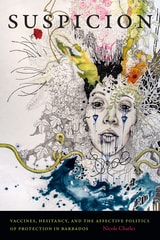
Suspicion
Vaccines, Hesitancy, and the Affective Politics of Protection in BarbadosNicole Charles
Duke University Press, 2021
Duke University Press Scholars of Color First Book Award recipient
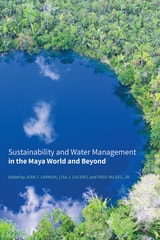
Sustainability and Water Management in the Maya World and Beyond
Jean T. Larmon
University Press of Colorado, 2021
The volume focuses primarily on the Precolumbian Maya but offers several analogous case studies outside the ancient Maya world that illustrate the pervasiveness of water’s role in sustainability, including an ethnographic study of the sustainability of small-scale, farmer-managed irrigation systems in contemporary New Mexico and the environmental consequences of Angkor’s growth into the world’s most extensive preindustrial settlement. The archaeological record offers rich data on past politics of climate change, while epigraphic and ethnographic data show how integrated the ideological, political, and environmental worlds of the Maya were.
While Sustainability and Water Management in the Maya World and Beyond stresses how lessons from the past offer invaluable insight into current approaches of adaptation, it also advances our understanding of those adaptations by making the inevitable discrepancies between past and present climate change less daunting and emphasizing the sustainable negotiations between humans and their surroundings that have been mediated by the changing climate for millennia. It will appeal to students and scholars interested in climate change, sustainability, and water management in the archaeological record.
Contributors: Mary Jane Acuña, Wendy Ashmore, Timothy Beach, Jeffrey Brewer, Christopher Carr, Adrian S. Z. Chase, Arlen F. Chase, Diane Z. Chase, Carlos R. Chiriboga, Jennifer Chmilar, Nicholas Dunning, Maurits W. Ertsen, Roland Fletcher, David Friedel, Robert Griffin, Joel D. Gunn, Armando Anaya Hernández, Christian Isendahl, David Lentz, Sheryl Luzzadder-Beach, Dan Penny, Kathryn Reese-Taylor, Michelle Rich, Cynthia Robin, Sylvia Rodríguez, William Saturno, Vernon Scarborough, Payson Sheets, Liwy Grazioso Sierra, Michael Smyth, Sander van der Leeuw, Andrew Wyatt
Sustainability for the Forgotten
Gary E. Machlis
University of Utah Press, 2024
Sustainability for the Forgotten is an incendiary book that confronts the history, policies, and practices of sustainability. It interrogates the usefulness of current sustainability approaches for the poorest of the poor, the chronic underclass, victims of natural disasters, refugees, the oppressed, and asks, how can we do better? With examples that range from the coffeelands of El Salvador to the coal country of American Appalachia, from the streets of Detroit to refugee camps in Greece and the upscale metro centers of the affluent, sustainability is examined with a critical eye and with an emphasis on insuring that the forgotten are heard.
At once well-researched and passionate, wide-ranging and sharply focused, Sustainability for the Forgotten is unlike any other book on the sustainability movement. Written with a distinctive voice that is reasoned, unflinching, and often poetic, the book challenges the sustainability movement to follow "a just and necessary path." The result is a provocative statement on the future of sustainability and a call to action that is ultimately hopeful.

Sustainability, Participation and Culture in Communication
Edited by Jan Servaes
Intellect Books, 2013
Sustainable Failures
Environmental Policy and Democracy in a Petro-dependent WorldSherry Cable
Temple University Press, 2012
Environmental policies fail in conspicuous and egregious ways to sustain the natural resource base and protect citizens from production-generated risky exposures. In her engaging study, Sustainable Failures, Sherry Cable asks, why does environmental policy seem to be a contributing cause rather than a partial solution to environmental problems?
Melding a biophysical science perspective of environmental processes with sociological insights into human behavior, Cable examines the people, policies, and issues of petrochemical dependence and broader environment questions. She insists that our present policies around the manufacture and use of petroleum products violate rudimentary ecological principles—and do so in complicated ways.
Sustainable Failures is a blistering wake-up call to what is at stake not only regarding the failure of policy outcomes and grievous natural resource depletion and pollution, but also concerning democracy and ecological survival, and eventually, potentially, the existence of our species.
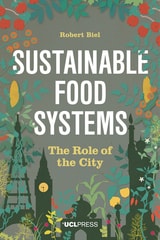
Sustainable Food Systems
The Role of the CityRobert Biel
University College London, 2016
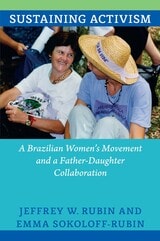
Sustaining Activism
A Brazilian Women's Movement and a Father-Daughter CollaborationJeffrey W. Rubin and Emma Sokoloff-Rubin
Duke University Press, 2013
Starting in 2002, Rubin and Sokoloff-Rubin traveled together to southern Brazil, where they interviewed activists over the course of ten years. Their vivid descriptions of women’s lives reveal the hard work of sustaining a social movement in the years after initial victories, when the political way forward was no longer clear and the goal of remaking gender roles proved more difficult than activists had ever imagined. Highlighting the tensions within the movement about how best to effect change, Sustaining Activism ultimately shows that democracies need social movements in order to improve people’s lives and create a more just society.
Sustaining Interdisciplinary Collaboration
A Guide for the AcademyRegina Bendix
University of Illinois Press, 2017
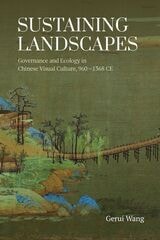
Sustaining Landscapes
Governance and Ecology in Chinese Visual Culture, 960–1368 CEGerui Wang
Hong Kong University Press, 2025
Sustaining Landscapes: Governance and Ecology in Chinese Visual Culture, 960–1368 CE examines ecological thought contested amid the rise of the Chinese landscape genre, tracing its intersections with infrastructure governance, natural resource management, and geospatial knowledge. It traces the pre-industrial notion of “sustainability” in policy debates, legal regulations, and arts. Landscape imagery on paintings, maps, as well as mass-produced artifacts such as fans and ceramic pillows documented both appropriate and exploitative use of natural resources, and critiqued on social inequity and political turmoil. This book breaks new ground by bringing together research on visual and material culture with analysis of politics and ecology. Wang argues that the Chinese landscape genre embodied a holistic approach to negotiating debates on human-nature interdependence and people-state relationships. It joins the increasing literature on ecocriticism and offers alternative perspectives to address contemporary challenges, ranging from environmental crisis to global governance.
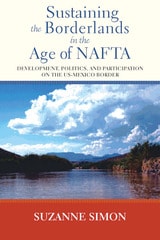
Sustaining the Borderlands in the Age of NAFTA
Development, Politics, and Participation on the US-Mexico BorderSuzanne Simon
Vanderbilt University Press, 2014
Although the key to the side accords' anticipated success lay in their ostensibly generous encouragement of a participatory politics and sustainable development opportunities, Sustaining the Borderlands reveals that the Mexican border populations for which they were largely created are effectively excluded from participating due to the ongoing online, territorial, class, and cultural barriers that shape the borderlands. Rather than experiencing the side accords and their companion institutions as transparent and accessible, residents experienced them as opaque and indecipherable. Simon concludes that the side accords have failed to deliver on their promise of bringing democracy to Mexico because practical mechanisms that would ensure their effective implementation were never put in place.
NAFTA took effect at a time when Mexico was undergoing a democratic transition. The treaty was supposed to encourage this transition and improve environmental and labor conditions on the US-Mexico border. This book demonstrates that, twenty years later, the promises of NAFTA have not come to pass.
Swahili Beyond the Boundaries
Literature, Language, and IdentityAlamin Mazrui
Ohio University Press, 2007
Swahili literature is a hybrid that is being reconfigured by a conjuncture of global and local forces. As the interweaving of elements of the colonizer and the colonized, this hybrid formation provides a representation of cultural difference that is said to constitute a “third space,” blurring existing boundaries and calling into question established identitarian categorizations. This cultural dialectic is clearly evident in the Swahili literary experience as it has evolved in the crucible of the politics of African cultural production.
However, Swahili Beyond the Boundaries demonstrates that, from the point of view of Swahili literature, while hybridity evokes endless openness on questions of home and identity, it can simultaneously put closure on specific forms of subjectivity. In the process of this contestation, a new synthesis may be emerging that is poised to subject Swahili literature to new kinds of challenges in the politics of identity, compounded by the dynamics and counterdynamics of post–Cold War globalization.

Swahili Origins
Swahili Culture and The Shungwaya PhenomenonJames de Vere Allen
Ohio University Press, 1993
Kiswahili has become the lingua franca of eastern Africa. Yet there can be few historic peoples whose identity is as elusive as that of the Swahili. Some have described themselves as Arabs, as Persians or even, in one place, as Portuguese. It is doubtful whether, even today, most of the people about whom this book is written would unhesitatingly and in all contexts accept the name Swahili.
This book was central to the thought and lifework of the late James de Vere Allen. It is his major study of the origin of the Swahili and of their cultural identity. He focuses on how the African element in their cultural patrimony was first modified by Islam and later changed until many Swahili themselves lost sight of it.
They share a language and they share a culture. Their territory stretches from the coast of southern Somalia to the Lamu archipelago in Kenya, to the Rovuma River in modern Mozambique and out into the islands of the Indian Ocean. But they lack a shared historical experience.
James de Vere Allen, in this study of contentious originality, set out to give modern Swahili evidence of their shared history during a period of eight centuries.
Swallows and Settlers
The Great Migration from North China to ManchuriaThomas R. Gottschang and Diana Lary
University of Michigan Press, 2000

Swamplife
People, Gators, and Mangroves Entangled in the EvergladesLaura A. Ogden
University of Minnesota Press, 2010
Today, the many visions of the Everglades—protectionist, ecological, commercial, historical—have become a tangled web of contradictory practices and politics for conservation and for development. Yet within this entanglement, the place of people remains highly ambivalent. It is the role of people in the Everglades that interests Ogden, as she seeks to reclaim the landscape’s long history as a place of human activity and, in doing so, discover what it means to be human through changing relations with other animals and plant life.
Ogden tells this story through the lives of poor rural whites, gladesmen, epitomized in tales of the Everglades’ most famous outlaws, the Ashley Gang. With such legends and lore on one side, and outsized efforts at drainage and development on the other, Swamplife strikes a rare balance, offering a unique insight into the hidden life of the Everglades—and into how an appreciation of oppositional culture and social class operates in our understanding of wilderness in the United States.

Sweated Work, Weak Bodies
Anti-Sweatshop Campaigns and Languages of LaborBender, Daniel E.
Rutgers University Press, 2004
In the early 1900s, thousands of immigrants labored in New Yorks Lower East Side sweatshops, enduring work environments that came to be seen as among the worst examples of Progressive-Era American industrialization. Although reformers agreed that these unsafe workplaces must be abolished, their reasons have seldom been fully examined.
Sweated Work, Weak Bodies is the first book on the origins of sweatshops, exploring how they came to represent the dangers of industrialization and the perils of immigration. It is an innovative study of the language used to define the sweatshop, how these definitions shaped the first anti-sweatshop campaign, and how they continue to influence our current understanding of the sweatshop.
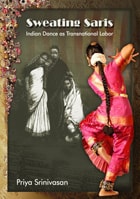
Sweating Saris
Indian Dance as Transnational LaborPriya Srinivasan
Temple University Press, 2011
A groundbreaking book that seeks to understand dance as labor, Sweating Saris examines dancers not just as aesthetic bodies but as transnational migrant workers and wage earners who negotiate citizenship and gender issues.
Srinivasan merges ethnography, history, critical race theory, performance and post-colonial studies among other disciplines to investigate the embodied experience of Indian dance. The dancers’ sweat stained and soaked saris, the aching limbs are emblematic of global circulations of labor, bodies, capital, and industrial goods. Thus the sweating sari of the dancer stands in for her unrecognized labor.
Srinivasan shifts away from the usual emphasis on Indian women dancers as culture bearers of the Indian nation. She asks us to reframe the movements of late nineteenth century transnational Nautch Indian dancers to the foremother of modern dance Ruth St. Denis in the early twentieth century to contemporary teenage dancers in Southern California, proposing a transformative theory of dance, gendered-labor, and citizenship that is far-reaching.
Sweatshop Capital
Profit, Violence, and Solidarity Movements in the Long Twentieth CenturyBeth Robinson
Duke University Press, 2025

Sweatshop
The History of an American IdeaHapke, Laura
Rutgers University Press, 2004
Arguing that the sweatshop is as American as apple pie, Laura Hapke surveys over a century and a half of the language, verbal and pictorial, in which the sweatshop has been imagined and its stories told. Not seeking a formal definition of the sort that policymakers are concerned with, nor intending to provide a strict historical chronology, this unique book shows, rather, how the “real” sweatshop has become intertwined with the “invented” sweatshop of our national imagination, and how this mixture of rhetoric and myth has endowed American sweatshops with rich and complex cultural meaning.
Hapke uncovers a wide variety of tales and images that writers, artists, social scientists, reformers, and workers themselves have told about “the shop.” Adding an important perspective to historical and economic approaches, Sweatshop draws on sources from antebellum journalism, Progressive era surveys, modern movies, and anti-sweatshop websites. Illustrated chapters detail how the shop has been a facilitator of assimilation, a promoter of upward mobility, the epitome of exploitation, a site of ethnic memory, a venue for political protest, and an expression of twentieth-century managerial narratives.
An important contribution to the real and imagined history of garment industry exploitation, this book provides a valuable new context for understanding contemporary sweatshops that now represent the worst expression of an unregulated global economy.
Swedes in Michigan
Rebecca J. Mead
Michigan State University Press, 2012
In the late nineteenth and early twentieth centuries, large numbers of Swedish immigrants came to Michigan seeking new opportunities in the United States and relief from economic, religious, or political problems at home. In addition to establishing early farming communities, Swedish immigrants worked on railroad construction, mining, fishing, logging, and urban manufacturing. As a result, Swedish Americans made significant contributions to the economic and cultural landscape of Michigan, a history this book explores in engaging and illustrative depth. Swedes in Michigan traces the evolution of hard-working people who valued education and assimilated actively while simultaneously maintaining their cultural ties and institutions. Moving from past to present, the book examines community patterns, family connections, social organizations, exchange programs, ethnic celebrations, and business and technical achievements that have helped Swedes in Michigan maintain a sense of their heritage even as they have adapted to American life.

Swedish Exodus
Lars Ljungmark. Translated by Kermit B. Westerberg
Southern Illinois University Press, 1979
"America fever" gripped Sweden in the middle of the nineteenth century, seethed to a peak in 1910, when one-fifth of the world’s Swedes lived in America, cooled during World War I, and chilled to dead ash with the advent of the Great Depression in 1930.
Swedish Exodus, the first English translation and revision of Lars Ljungmark’s Den Stora Utvandringen, recounts more than a century of Swedish emigration, concentrating on such questions as who came to America, how the character of the emigrants changed with each new wave of emigration, what these people did when they reached their adopted country, and how they gradually became Americanized.
Ljungmark’s essential challenge was to capture in a factual account the broad sweep of emigration history. But often he narrows his focus to look closely at those who took part in this mass migration. Through historical records and personal letters, Ljungmark brings many of these people back to life. One young woman, for example, loved her parents, but loved America more: "I never expect to speak to you in this life. . . . Your loving daughter unto death." Like most immigrants, she never expected to return. Another immigrant wrote back seeking a wife: "I wonder how you have it and if you are living. . . . Are you married or unmarried? If you are unmarried, you can have a good home with me."
Ljungmark also focuses closely on some of the leaders: Peter Cassel, a liberal temperance supporter and free-church leader whose community in America prospered; Hans Mattson, a colonel in the Civil War and founder of a colony in Minnesota; Erik Jansson, a book burner, self-proclaimed messiah, and founder of the Bishop Hill Colony; Gustaf Unonius, a student idealist and founder of a Wisconsin colony that faltered.
The story of Swedish immigrants in the United States is the story in miniature of the greatest mass migration in human history, that of thirty-five million Europeans who left their homes to come to America. It is a human story of interest not only to Swedes but to everyone.
Swedish-American Borderlands
New Histories of Transatlantic RelationsDag Blanck
University of Minnesota Press, 2021
Reframing Swedish–American relations by focusing on contacts, crossings, and convergences beyond migration
Studies of Swedish American history and identity have largely been confined to separate disciplines, such as history, literature, or politics. In Swedish–American Borderlands, this collection edited by Dag Blanck and Adam Hjorthén seeks to reconceptualize and redefine the field of Swedish–American relations by reviewing more complex cultural, social, and economic exchanges and interactions that take a broader approach to the international relationship—ultimately offering an alternative way of studying the history of transatlantic relations.
Swedish–American Borderlands studies connections and contacts between Sweden and the United States from the seventeenth century to today, exploring how movements of people have informed the circulation of knowledge and ideas between the two countries. The volume brings together scholars from a wide range of disciplines within the humanities and social sciences to investigate multiple transcultural exchanges between Sweden and the United States. Rather than concentrating on one-way processes or specific national contexts, Swedish–American Borderlands adopts the concept of borderlands to examine contacts, crossings, and convergences between the nations, featuring specific case studies of topics like jazz, architecture, design, genealogy, and more.
By placing interactions, entanglements, and cross-border relations at the center of the analysis, Swedish–American Borderlands seeks to bridge disciplinary divides, joining a diverse set of scholars and scholarship in writing an innovative history of Swedish–American relations to produce new understandings of what we perceive as Swedish, American, and Swedish American.
Contributors: Philip J. Anderson, North Park U; Jennifer Eastman Attebery, Idaho State U; Marie Bennedahl, Linnaeus U; Ulf Jonas Björk, Indiana U–Indianapolis; Thomas J. Brown, U of South Carolina; Margaret E. Farrar, John Carroll U; Charlotta Forss, Stockholm U; Gunlög Fur, Linnaeus U; Karen V. Hansen, Brandeis U; Angela Hoffman, Uppsala U; Adam Kaul, Augustana College; Maaret Koskinen, Stockholm U; Merja Kytö, Uppsala U; Svea Larson, U of Wisconsin–Madison; Franco Minganti, U of Bologna; Frida Rosenberg, KTH Royal Institute of Technology, Stockholm; Magnus Ullén, Stockholm U.

Sweeping Beauty
Contemporary Women Poets Do HouseworkPamela Gemin
University of Iowa Press, 2005