Results by title
22279 books match the query 'Social Science' and 1635 start with s
Sweeping the Way
Divine Transformation in the Aztec Festival of OchpaniztliCatherine DiCesare
University Press of Colorado, 2022

Sweet Bells Jangled
Laura Redden Searing, A Deaf Poet RestoredJudy Yaeger Jones
Gallaudet University Press, 2003
Laura Redden Searing (1839-1923) defied critics of the time by establishing herself as a successful poet, a poet who was deaf. She began writing verse at the Missouri School for the Deaf in 1858, and, under the pseudonym Howard Glyndon, soon found herself catapulted into national prominence by her patriotic Civil War poems. Abraham Lincoln himself bought her books, the most critically acclaimed being Idylls of Battle and Poems of the Rebellion, published in 1864. Her poem “Belle Missouri” became the song of the Missouri Volunteers, and she was sent by the St. Louis Republican newspaper to Washington as a war correspondent.
Despite her success, detractors decried her poetry simply because she was deaf, asking how she could know anything of rhyme, rhythm, or musical composition. She quieted them with the simple elegance of her words and the sophistication of her allegorical themes. Readers can enjoy her work again in this volume, which features more than 70 of her finest poems. They also will learn her feelings about the constraints imposed on 19th-century women in her epic narrative of misunderstanding and lost love “Sweet Bells Jangled:”
Out of sight of the heated land
Over the breezy sea;
Into the reach of the solemn mist
Quietly drifted we.
Her restoration will be an event welcomed by poetry aficionados everywhere.

Sweet Cane
The Architecture of the Sugar Works of East FloridaLucy B. Wayne
University of Alabama Press, 2010
From the late eighteenth century to early 1836, the heart of the Florida sugar industry was concentrated in East Florida, between the St. Johns River and the Atlantic Ocean. Producing the sweetest sugar, molasses, and rum, at least 22 sugar plantations dotted the coastline by the 1830s. This industry brought prosperity to the region—employing farm hands, slaves, architects, stone masons, riverboats and their crews, shop keepers, and merchant traders. But by January 1836, Native American attacks of the Second Seminole War, intending to rid the Florida frontier of settlers, devastated the whole sugar industry.
Although sugar works again sprang up in other Florida regions just prior to the Civil War, the competition from Louisiana and the Caribbean blocked a resurgence of sugar production for the area. The sugar industry would never regain its importance in East Florida—only two of the original sugar works were ever rebuilt. Today, remains of this once thriving industry are visible in a few parks. Some are accessible but others lie hidden, slowly disintegrating and almost forgotten. Archaeological, historical, and architectural research in the last decade has returned these works to their once prominent place in Florida’s history, revealing the beauty, efficiency of design, as well as early industrial engineering. Equally important is what can be learned of the lives of those associated with the sugar works and the early plantation days along the East Florida frontier

Sweet Dreams
The World of Patsy ClineEdited by Warren R. Hofstra
University of Illinois Press, 2013

Sweet Promised Land, 50th ed.
Robert Laxalt
University of Nevada Press, 2007
Dominique Laxalt was sixteen when he left the French Pyrenees for America. He became a sheepherder in the Nevada desert and nearby hills of the Sierra. Like all his fellow Basque immigrants, Dominique dreamed of someday returning to the land of his beginnings. Most Basques never made the journey back, but Dominique finally did return for a visit with family and friends. Sweet Promised Land is the story of that trip, told by his son Robert, who accompanied him to the pastoral mountain village of Tardets in France. Dominique came home victorious, the adventurer who had conquered the unknown and found his fortune in the New World. He told of his life in America, the hardships and challenges, and began to realize that he had changed since his departure from Tardets. By the end of the visit, he knew with certainty where he belonged.
During the past fifty years, this book has become a classic in Western American literature, still beloved by the Basque-American community. In celebration of the fiftieth anniversary of the book’s publication, western literature scholar Ann Ronald wrote a new foreword, discussing the book in the context of American and Nevada literature.

Sweet Promised Land, 50th ed.
Robert Laxalt
University of Nevada Press, 2007
Dominique Laxalt was sixteen when he left the French Pyrenees for America. He became a sheepherder in the Nevada desert and nearby hills of the Sierra. Like all his fellow Basque immigrants, Dominique dreamed of someday returning to the land of his beginnings. Most Basques never made the journey back, but Dominique finally did return for a visit with family and friends. Sweet Promised Land is the story of that trip, told by his son Robert, who accompanied him to the pastoral mountain village of Tardets in France. Dominique came home victorious, the adventurer who had conquered the unknown and found his fortune in the New World. He told of his life in America, the hardships and challenges, and began to realize that he had changed since his departure from Tardets. By the end of the visit, he knew with certainty where he belonged.
During the past fifty years, this book has become a classic in Western American literature, still beloved by the Basque-American community. In celebration of the fiftieth anniversary of the book’s publication, western literature scholar Ann Ronald wrote a new foreword, discussing the book in the context of American and Nevada literature.

Sweet, Tart, and Golden
Apples in the Midwestern ImaginationLucy M. Long
University of Illinois Press, 2026
Lively and surprising, Sweet, Tart, and Golden blends food history with on-the-ground exploration to tell the multifaceted story of the apple.

Sweetness in the Blood
Race, Risk, and Type 2 DiabetesJames Doucet-Battle
University of Minnesota Press, 2021
A bold new indictment of the racialization of science
Decades of data cannot be ignored: African American adults are far more likely to develop Type 2 diabetes than white adults. But has science gone so far in racializing diabetes as to undermine the search for solutions? In a rousing indictment of the idea that notions of biological race should drive scientific inquiry, Sweetness in the Blood provides an ethnographic picture of biotechnology’s framings of Type 2 diabetes risk and race and, importantly, offers a critical examination of the assumptions behind the recruitment of African American and African-descent populations for Type 2 diabetes research.
James Doucet-Battle begins with a historical overview of how diabetes has been researched and framed racially over the past century, chronicling one company’s efforts to recruit African Americans to test their new diabetes risk-score algorithm with the aim of increasing the clinical and market value of the firm’s technology. He considers African American reticence about participation in biomedical research and examines race and health disparities in light of advances in genomic sequencing technology. Doucet-Battle concludes by emphasizing that genomic research into sub-Saharan ancestry in fact underlines the importance of analyzing gender before attempting to understand the notion of race. No disease reveals this more than Type 2 diabetes.
Sweetness in the Blood challenges the notion that the best approach to understanding, managing, and curing Type 2 diabetes is through the lens of race. It also transforms how we think about sugar, filling a neglected gap between the sugar- and molasses-sweetened past of the enslaved African laborer and the high-fructose corn syrup- and corporate-fed body of the contemporary consumer-laborer.

Swift Viewing
The Popular Life of Subliminal InfluenceCharles R. Acland
Duke University Press, 2012

Swimming Against the Tide
African American Girls and Science EducationSandra L. Hanson
Temple University Press, 2009
“They looked at us like we were not supposed to be scientists,” says one young African American girl, describing one openly hostile reaction she encountered in the classroom. In this significant study, Sandra Hanson explains that although many young minority girls are interested in science, the racism and sexism in the field discourage them from pursuing it after high school. Those girls that remain highly motivated to continue studying science must “swim against the tide.”
Hanson examines the experiences of African American girls in science education using multiple methods of quantitative and qualitative research, including a web survey and vignette techniques. She understands the complex interaction between race and gender in the science domain and, using a multicultural and feminist framework of analysis, addresses the role of agency and resistance that encourages and sustains interest in science in African American families and communities.
Swing Shift
"All-Girl" Bands of the 1940sSherrie Tucker
Duke University Press, 2001
Filled with firsthand accounts of more than a hundred women who performed during this era and complemented by thorough—and eye-opening—archival research, Swing Shift not only offers a history of this significant aspect of American society and culture but also examines how and why whole bands of dedicated and talented women musicians were dropped from—or never inducted into—our national memory. Tucker’s nuanced presentation reveals who these remarkable women were, where and when they began to play music, and how they navigated a sometimes wild and bumpy road—including their experiences with gas and rubber rationing, travel restrictions designed to prioritize transportation for military needs, and Jim Crow laws and other prejudices. She explains how the expanded opportunities brought by the war, along with sudden increased publicity, created the illusion that all female musicians—no matter how experienced or talented—were “Swing Shift Maisies,” 1940s slang for the substitutes for the “real” workers (or musicians) who were away in combat. Comparing the working conditions and public representations of women musicians with figures such as Rosie the Riveter, WACs, USO hostesses, pin-ups, and movie stars, Tucker chronicles the careers of such bands as the International Sweethearts of Rhythm, Phil Spitalny’s Hours of Charm, The Darlings of Rhythm, and the Sharon Rogers All-Girl Band.
Swingin' at the Savoy
Norma Miller
Temple University Press, 1996
A dance contest winner by 14, Norma Miller became a member of Herbert White's Lindy Hoppers and a celebrated Savoy Ballroom Lindy Hop champion. Swingin' at the Savoy chronicles a significant period in American cultural history and race relations, as it glorifies the home of the Lindy Hop and he birthplace of memorable dance hall fads. Miller shares fascinating anecdotes about her youthful encounters with many of the greatest jazz legends in music history, including Ella Fitzgerald, Count Basie, Benny Goodman, Billie Holiday, Artie Shaw, Duke Ellington, Ethel Waters, and even boxer Joe Louis. Readers will experience the legend of the celebrated Harlem ballroom and the phenomenal Swing generation that changed music and dance history forever.

Swinging Single
Representing Sexuality in the 1960sHilary Radner
University of Minnesota Press, 1999

Swinging the Machine
Modernity, Technology, and African American Culture between the World WarsJoel Dinerstein
University of Massachusetts Press, 2003
In any age and any given society, cultural practices reflect the material circumstances of people's everyday lives. According to Joel Dinerstein, it was no different in America between the two World Wars—an era sometimes known as the “machine age”—when innovative forms of music and dance helped a newly urbanized population cope with the increased mechanization of modern life. Grand spectacles such as the Ziegfeld Follies and the movies of Busby Berkeley captured the American ethos of mass production, with chorus girls as the cogs of these fast, flowing pleasure vehicles.
Yet it was African American culture, Dinerstein argues, that ultimately provided the means of aesthetic adaptation to the accelerated tempo of modernity. Drawing on a legacy of engagement with and resistance to technological change, with deep roots in West African dance and music, black artists developed new cultural forms that sought to humanize machines. In “The Ballad of John Henry,” the epic toast “Shine,” and countless blues songs, African Americans first addressed the challenge of industrialization. Jazz musicians drew on the symbol of the train within this tradition to create a set of train-derived aural motifs and rhythms, harnessing mechanical power to cultural forms. Tap dance and the lindy hop brought machine aesthetics to the human body, while the new rhythm section of big band swing mimicked the industrial soundscape of northern cities. In Dinerstein's view, the capacity of these artistic innovations to replicate the inherent qualities of the machine-speed, power, repetition, flow, precision-helps explain both their enormous popularity and social function in American life.

Switzerland
A Village HistoryDavid Birmingham
Ohio University Press, 2004
Switzerland: A Village History is an account of an Alpine village that illuminates the broader history of Switzerland and its rural, local underpinnings. It begins with the colonization of the Alps by Romanized Celtic peoples who came from the plain to clear the wilderness, establish a tiny monastic house, and create a dairy economy that became famous for its cheeses. Over ten centuries the village, like the rest of Switzerland, went through the traumas of religious reformation and political revolution. A single currency, a unified postal service, and eventually an integrated army brought improved stability and prosperity to the union of two dozen small republics.
Yet Switzerland’s enduring foundation remains the three thousand boroughs to which the Swiss people feel they truly belong. In Switzerland: A Village History, distinguished scholar David Birmingham tells the story of his childhood village-Château-d’Oex-where records of cheesemaking date to 1328. The evolution of this ancient grazing and forest economy included the rise of the legal profession to keep track of complex deeds, grazing allotments, and animal rights-of-way. Switzerland’s eventual privatization of communal grazing land drove many highlanders to emigrate to the European plains and overseas to the Americas. The twentieth century brought wealth from foreign tourism to Switzerland, punctuated by austerities imposed by Europe’s wars. Alpine peasants were integrated into Swiss union society and began at last to share in some of the prosperity flowing from urban industry.
Switzerland: A Village History replaces the mythology and patriotic propaganda that too often have passed for Swiss history with a rigorous, insightful, and charming account of the daily life, small-scale rivalries, and local loyalties that actually make up Swiss history.

Sylvia Pankhurst
A Life in Radical PoliticsMary Davis
Pluto Press, 1999
Sylvia Pankhurst
Suffragette, Socialist and Scourge of EmpireKatherine Connelly
Pluto Press, 2013
From militant suffragette at the beginning of the twentieth century to campaigner against colonialism in Africa after the Second World War, Sylvia Pankhurst dedicated her life to fighting oppression and injustice.
In this vivid biography Katherine Connelly examines Pankhurst’s role at the forefront of significant developments in the history of radical politics. She guides us through Pankhurst's construction of a suffragette militancy which put working-class women at the heart of the struggle, her championing of the Bolshevik Revolution and her clandestine attempts to sabotage the actions of the British state, as well as her early identification of the dangers of Fascism.
The book explores the dilemmas, debates and often painful personal consequences faced by Pankhurst which were played out in her art, writings and activism. It argues that far from being an advocate of disparate causes, Pankhurst’s campaigns were united by an essential continuity which hold vital lessons for achieving social change. This lively and accessible biography presents Pankhurst as a courageous and inspiring campaigner, of huge relevance to those engaged in social movements today.

Sylvia Plath and the Mythology of Women Readers
Janet Badia
University of Massachusetts Press, 2011
Janet Badia investigates the evolution of this narrative, tracing its origins, exposing the gaps and elisions that have defined it, and identifying it as a bullying mythology whose roots lie in a long history of ungenerous, if not outright misogynistic, rhetoric about women readers that has gathered new energy from the backlash against contemporary feminism.
More than just an exposé of our cultural biases against women readers, Badia's research also reveals how this mythology has shaped the production, reception, and evaluation of Plath's body of writing, affecting everything from the Hughes family's management of Plath's writings to the direction of Plath scholarship today. Badia discusses a wide range of texts and issues whose significance has gone largely unnoticed, including the many book reviews that have been written about Plath's publications; films and television shows that depict young Plath readers; editorials and fan tributes written about Plath; and Ted and (daughter) Frieda Hughes's writings about Plath's estate and audience.

Sylvia Wynter
On Being Human as PraxisKatherine McKittrick, ed.
Duke University Press, 2015
Symbiosis
Popular Culture and Other FieldsRay B. Browne
University of Wisconsin Press, 1988

Symbolic Crusade
Status Politics and the American Temperance MovementJoseph R. Gusfield
University of Illinois Press, 1986
This significant contribution to the theory of status conflict also discloses the importance of political acts as symbolic acts and offers a dramatistic theory of status politics, Gusfield provides a useful addition to the economic and psychological modes of analysis current in the study of political and social movements.
Symbolic Interaction and Cultural Studies
Edited by Howard S. Becker and Michal M. McCall
University of Chicago Press, 1990

Symbolic Power, Politics, and Intellectuals
The Political Sociology of Pierre BourdieuDavid L. Swartz
University of Chicago Press, 2013
Symbolic Violence
Conversations with BourdieuMichael Burawoy
Duke University Press, 2019
Symbolism and Ritual in a One-Party Regime
Unveiling Mexico's Political CultureLarissa Adler-Lomnitz, Rodrigo Salazar Elena, and Ilya Adler
University of Arizona Press, 2010
Discussing Mexican presidential politics from the perspectives of anthropology, political science, and communications science, the authors analyze the 1988 presidential campaign of Carlos Salinas de Gortari—the last great campaign of the PRI to display the characteristics traditionally found in the twentieth century. These detailed descriptions of campaign events show that their ritualistic nature expressed both a national culture and an aura of domination.
The authors describe the political and cultural context in which this campaign took place—an authoritarian presidential system that dated from the 1920s—and explain how the constitutional provisions of the state interacted with the informal practices of the party to produce highly scripted symbolic rituals. Their analysis probes such topics as the meanings behind the candidate’s behavior, the effects of public opinion polling, and the role of the press, then goes on to show how the system has begun to change since 2000.
By dealing with the campaign from multiple perspectives, the authors reveal it as a rite of passage that sheds light on the political culture of the country. Their study expands our understanding of authoritarianism during the years of PRI dominance and facilitates comparison of current practices with those of the past.

Symbols that Stand for Themselves
Roy Wagner
University of Chicago Press, 1986

Synthetic
How Life Got MadeSophia Roosth
University of Chicago Press, 2017
In Synthetic: How Life Got Made, cultural anthropologist Sophia Roosth reveals how synthetic biologists make new living things in order to understand better how life works. The first book-length ethnographic study of this discipline, Synthetic documents the social, cultural, rhetorical, economic, and imaginative transformations biology has undergone in the post-genomic age. Roosth traces this new science from its origins at MIT to start-ups, laboratories, conferences, and hackers’ garages across the United States—even to contemporary efforts to resurrect extinct species. Her careful research reveals that rather than opening up a limitless new field, these biologists’ own experimental tactics circularly determine the biological features, theories, and limits they fasten upon. Exploring the life sciences emblematic of our time, Synthetic tells the origin story of the astonishing claim that biological making fosters biological knowing.

Syrian and Lebanese Patricios in São Paulo
From the Levant to BrazilOswaldo Truzzi. Translated by Ramon J. Stern
University of Illinois Press, 2018
Oswaldo Truzzi's original work on these so-called patrícios changed the face of Brazilian studies. Now available in an English translation, Truzzi's pioneering book identifies the complex social paths blazed by Syrian and Lebanese immigrants and their descendants from the 1890s to the 1960s. He considers their relationships to other groups within São Paulo's kaleidoscopic mix of cultures. He also reveals the differences--real and perceived--between Syrians and Lebanese in terms of religious and ethnic affinities and in the economic sphere. Finally, he compares the two groups with their counterparts in the United States and looks at the wave of Lebanese Muslims to São Paulo that began in the 1960s.

System and Succession
The Social Bases of Political Elite RecruitmentBy John D. Nagle
University of Texas Press, 1977
System and Succession provides a comparative analysis of the social composition of national political leadership in the United States, Russia, Germany, and Mexico. These systems were chosen as case studies because their forms of government are representative of many others, because they are conveniently suited for comparison, and because they have high internal control over their own means of recruitment. Drawing on a mass of data and an extensive bibliography, Nagle's comprehensive study exhibits a mastery of the intricacies of these four quite divergent political systems. Complete time-series data covering several generations of elite recruitment provide the basis for a new methodological approach to comparative elite analysis.
The author investigates, among other issues, elite displacements associated with revolution, economic crises, and postwar peace and prosperity. Especially important differences along class and generational lines are found in the elite displacements associated with the revolutions in Germany (1918), Russia (1917–1921), and Mexico (1910–1920). The American case serves as a nonrevolutionary control case. The overriding theoretical issue throughout System and Succession is the debate among Marxists, radical democrats, and pluralists over the importance of elite social composition for equitable representation of social or class interests. Nagle develops a convincing argument supporting the Marxist thesis that the importance of class in elite recruitment is a defining characteristic of the political system.
System and Succession will be of particular interest to scholars in comparative politics. Political scientists in other areas, as well as historians and sociologists interested in the four countries examined, will also find this book provocative.

Systemic Choices
Nonlinear Dynamics and Practical ManagementGregory A. Daneke
University of Michigan Press, 1999

Systemic Silencing
Activism, Memory, and Sexual Violence in IndonesiaKatharine E. McGregor
University of Wisconsin Press, 2023

Systems of Suffering
Dispersal and the Denial of AsylumJonathan Darling
Pluto Press, 2021
Of the many state-enacted cruelties to which refugees and asylum seekers are subjected, detention and deportation loom largest in popular consciousness. But there is a third practice, perpetrating a slower violence, that remains hidden: dispersal.
Jonathan Darling provides the first detailed account of how dispersal - the system of accommodation and support for asylum seekers and refugees in Britain - both sustains and produces patterns of violence, suffering and social abjection. He explores the evolution of dispersal as a privatized process, from the first outsourced asylum accommodation contracts in 2012 to the renewed wave of outsourcing pursued by the Home Office today.
Drawing on six years of research into Britain's dispersal system, and foregrounding the voices and experiences of refugees and asylum seekers, Darling argues that dispersal has played a central role in the erasure of asylum from public concern. Systems of Suffering is a vital tool in the arsenal of those fighting to hold the government to account for the violence of its asylum policy and practice.

Sámi Folktales from the Near and Far Worlds
Just Knud Qvigstad
University of Minnesota Press, 2026
The most comprehensive collection of Sámi folktales ever translated into English
From the vast region of Northern Sápmi comes Sámi Folktales from the Near and Far Worlds, the most extensive compilation of Sámi narratives recorded from Sámi storytellers ever published in English translation. Comprising more than 300 folktales and legends from Northern Norway, including many from the coastal Sámi and the Skolt Sámi of Eastern Finnmark, this volume illuminates an oral storytelling tradition and shares narratives told by fishers, farmers, reindeer herders, lay preachers, and teachers from the interior plateaus and valleys to the Arctic fjords.
Originally recorded in the late nineteenth and early twentieth centuries by the Norwegian philologist Just Knud Qvigstad and the Sámi politician and folklorist Isak Saba, this collection spans centuries of storytelling in multiple genres, from migratory fairytales with kings and princesses to legends of ghosts and the Devil to fables with talking animals. A young lad from a poor family embarks on a quest through the wilderness to find treasure, receiving help from a wise female elder along his path. A Sámi boy falls in love with a háldi girl from another world, and they find a way to marry. A man carries sickness out of a village and stops the plague from spreading. Cunning foxes outsmart bears and humans alike. The villainous Chudes are tricked, foiled in their plans to steal from and kill the Sámi. People are turned into wolves, able to turn back only if they don’t taste the blood of a reindeer or if they are given cooked food. The ogre Stállu appears again and again, terrorizing the community until he’s outwitted or subdued. Rávgas, undead creatures of the sea, drag themselves out of the depths to lure others to their demise.
With historical context that reveals the cultural resilience of the Sámi people, Sámi Folktales from the Near and Far Worlds honors these traditional narratives, often overlooked in other folktale anthologies from the Nordic countries. Translator Barbara Sjoholm’s insightful introduction describes Qvigstad’s and Saba’s backgrounds and their work in gathering and translating these essential texts, and she introduces Sámi storytellers Johan Aikio, Efraim Pedersen, and Elen Utsi, who contributed dozens of stories.
An unprecedented trove of Sámi narratives, this expansive collection brings most of these tales to English readers for the first time, marking a major contribution to Indigenous folk literature and enhancing a broader understanding of Sámi and Nordic cultures.
Retail e-book files for this title are screen-reader friendly with images accompanied by short alt text and/or extended descriptions.
Sámi People
Traditions in TransitionsVeli-Pekka Lehtola
University of Alaska Press, 2005
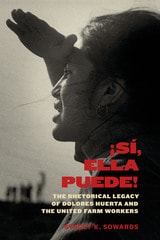
Sí, Ella Puede!
The Rhetorical Legacy of Dolores Huerta and the United Farm WorkersBy Stacey K. Sowards
University of Texas Press, 2019
Winner, Marie Hochmuth Nichols Award, Public Address Division, National Communication Association, 2020
Outstanding Book Award, Latina/o Communication Studies Division, National Communication Association, 2020
Since the 1950s, Latina activist Dolores Huerta has been a fervent leader and organizer in the struggle for farmworkers’ rights within the Latina/o community. A cofounder of the United Farm Workers union in the 1960s alongside César Chávez, Huerta was a union vice president for nearly four decades before starting her own foundation in the early 2000s. She continues to act as a dynamic speaker, passionate lobbyist, and dedicated figure for social and political change, but her crucial contributions and commanding presence have often been overshadowed by those of Chávez and other leaders in the Chicana/o movement. In this new study, Stacey K. Sowards closely examines Huerta’s rhetorical skills both in and out of the public eye and defines Huerta’s vital place within Chicana/o history.
Referencing the theoretical works of Pierre Bourdieu, Chela Sandoval, Gloria Anzaldúa, and others, Sowards closely analyzes Huerta’s speeches, letters, and interviews. She shows how Huerta navigates the complex intersections of race, ethnicity, gender, language, and class through the myriad challenges faced by women activists of color. Sowards’s approach to studying Huerta’s rhetorical influence offers a unique perspective for understanding the transformative relationship between agency and social justice.