Results by title
28167 books match the query 'History' and 1838 start with s

Supreme Court Appointments
Judge Bork and the Politicization of Senate ConfirmationsNorman Vieira and Leonard Gross
Southern Illinois University Press, 1998
Norman Vieira and Leonard Gross provide an in-depth analysis of the political and legal framework surrounding the confirmation process for Supreme Court nominees.
President Ronald Reagan’s nomination of Judge Robert Bork to the Supreme Court met with a fierce opposition that was apparent in his confirmation hearings, which were different in many ways from those of any previous nominee. Lasting longer than any other Supreme Court confirmation battle, the Senate hearings dragged on for eighty-seven hours over a twelve-day period. Bork personally testified for more than thirty hours, outlining his legal philosophy in greater detail than had ever before been required of a Supreme Court nominee. Nor had any previous Supreme Court nominee faced the number of witnesses who testified at the Bork hearings.
Deriving their material from hundreds of in-depth interviews with those who participated in the confirmation hearings, Vieira and Gross present a firsthand account of the behind-the-scenes pressure on senators to oppose Bork. Special-interest groups, they note, attempted to control the confirmation process, with both the media and public-opinion polls playing major roles in the defeat of the nomination. Both liberal and conservative groups used the Bork debate to raise money for political war chests.
This behind-the-scenes view of the politics and personalities involved in the Bork confirmation controversy provides a framework for future debates regarding the confirmation process. To help establish that framework, Vieira and Gross examine the similarities as well as the differences between the Bork confirmation battle and other confirmation proceedings for Supreme Court nominees. They also analyze the Supreme Court nominations made after the Bork hearings, including an extensive examination of the controversial Clarence Thomas nomination.

Supremely Tiny Acts
A Memoir of a DaySonya Huber
The Ohio State University Press, 2021
“I think we have to get to the real, to catch the facts we have, to hold on to what we see. . . .in this time where lies are currency,” Sonya Huber writes in her book-length essay Supremely Tiny Acts: A Memoir of a Day. On the theory that naming the truths of quotidian experience can counter the dangerous power of lies, she carefully recounts two anxiety-fueled days one fall. On the first, she is arrested as part of a climate protest in Times Square. On the other, she must make it to her court appearance while also finding time to take her son to get his learner's permit. Paying equal attention to minor details, passing thoughts, and larger political concerns around activism and parenting in the Trump-era United States, Huber asks: How can one simultaneously be a good mother, a good worker, and a good citizen? As she reflects on the meaning of protest and on whiteness and other forms of privilege within political activism, Huber offers a wry, self-aware, and stirring testament to the everyday as a seedbed for meaningful change.
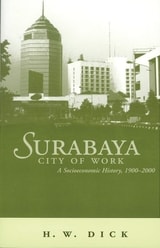
Surabaya, City of Work
A Socioeconomic History, 1900–2000Howard Dick
Ohio University Press, 2002
Surabaya is Indonesia’s second largest city but is not well known to the outside world. Yet in 1900, Surabaya was a bigger city than Jakarta and one of the main commercial centers of Asia. Collapse of sugar exports during the 1930s depression, followed by the Japanese occupation, revolution, and independence, brought on a long period of stagnation and retreat from the international economy. Not until the export boom of the 1990s did Surabaya regain prominence as Southeast Asia’s leading non–capital–city industrial area.
Previous thinking on Indonesia is being reassessed in light of recent political and economic upheaval. Surabaya, City of Work offers an alternative to the Jakarta-centric focus of most writing on the country. It is a multifaceted view of a fascinating and complex city in the dimensions of time and space, economy and society, and the current transition toward decentralization makes it highly topical.
Exploration of this eventful economic history gives new insight into Indonesia’s modern economic development. Industrialization is recognized as being associated with rapid urbanization, but this is the first study of Indonesia from an explicitly urban perspective. Surabaya, City of Work takes a broad approach that links industrialization to socioeconomic trends, the increasing role of government, changing land use, and trade patterns.
This well–illustrated local history encompassing national events and trends will be a central work on Indonesia for years to come.
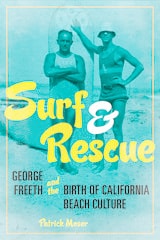
Surf and Rescue
George Freeth and the Birth of California Beach CulturePatrick Moser
University of Illinois Press, 2022
A compelling merger of biography and sports history, Surf and Rescue brings to light the forgotten figure whose novel way of seeing the beach sparked the imaginations of people around the world.

Surge to Freedom
The End of Communist Rule in Eastern EuropeJ. F. Brown
Duke University Press, 1991
"Nobody has yet produced a more perceptive and inclusive work on the events of what is arguably the most important year of our lifetimes. This book is essential for anyone with an interest in Eastern Europe, radical social change, or post-bipolar global politics."—Joel M. Jenswold, Social Science Quarterly
"Brown has been a close observer of the region for decades, and the breadth of his knowledge and the acuity of his judgments are evident throughout."—Michael Bernhard, Political Science Quarterly
"There is no surer guide than Brown to an understanding of these events, and no one better qualified to describe the complex and daunting problems facing the new non-communist governments."—John C. Campbell, Foreign Affairs

Surpassing Wonder
The Invention of the Bible and the TalmudsDonald Harman Akenson
University of Chicago Press, 2001

Surplus Citizens
Struggle and Nationalism in the Greek CrisisDimitra Kotouza
Pluto Press, 2018
Surplus
The Politics of Production and the Strategies of Everyday LifeChristopher T. Morehart
University Press of Colorado, 2015
The concept of surplus captures the politics of production and also conveys the active material means by which people develop the strategies to navigate everyday life. Surplus: The Politics of Production and the Strategies of Everyday Life examines how surpluses affected ancient economies, governments, and households in civilizations across Mesoamerica, the Southwest United States, the Andes, Northern Europe, West Africa, Mesopotamia, and eastern Asia.
A hallmark of archaeological research on sociopolitical complexity, surplus is central to theories of political inequality and institutional finance. This book investigates surplus as a macro-scalar process on which states or other complex political formations depend and considers how past people—differentially positioned based on age, class, gender, ethnicity, role, and goal—produced, modified, and mobilized their social and physical worlds.
Placing the concept of surplus at the forefront of archaeological discussions on production, consumption, power, strategy, and change, this volume reaches beyond conventional ways of thinking about top-down or bottom-up models and offers a comparative framework to examine surplus, generating new questions and methodologies to elucidate the social and political economies of the past.
Contributors include Douglas J. Bolender, James A. Brown, Cathy L. Costin, Kristin De Lucia, Timothy Earle, John E. Kelly, Heather M. L. Miller, Christopher R. Moore, Christopher T. Morehart, Neil L. Norman, Ann B. Stahl, Victor D. Thompson, T. L. Thurston, and E. Christian Wells.
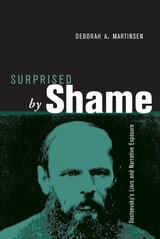
Surprised by Shame
Dostoevsky's Liars and Narrative ExposureDeborah A. Martinsen
The Ohio State University Press, 2003
In Surprised by Shame, Deborah A. Martinsen combines shame studies and literary criticism. She begins with a discussion of shame dynamics, including the tendency of those who witness shame to feel shame themselves. Because Dostoevsky identified shame as a fundamental source of lying, Martinsen focuses on scenes when liars are exposed. She argues that by making readers witness such scandal scenes, Dostoevsky surprises them with shame, thereby collapsing the distance between readers and characters and viscerally involving them in his message of human interconnection.
Treating Dostoevsky’s liars as case studies, Surprised by Shame discusses varieties of shame and shamelessness; it also illustrates how Dostoevsky uses lying to indicate and expose subconscious processes. In addition, Martinsen demonstrates how Dostoevsky plucks shame from the realm of character trait and plot motive and embeds it in the narrative dynamics of The Idiot, Demons, and The Brothers Karamazov, thereby plunging readers into fictional experience and ethically transforming them.
By focusing on shame, this book uncovers new perspectives on Dostoevsky as writer and psychologist. By exposing how shame dynamics implicate readers in texts’ ethical actions, it enriches understanding of his tremendous influence on twentieth-century thinkers and writers. Finally, reading Dostoevsky as a prophet of shame-begotten violence reveals his universal relevance in a twenty-first century already scarred by acts of violence.
Surreal Geographies
A New History of Holocaust ConsciousnessKathryn L. Brackney
University of Wisconsin Press, 2024
Brackney offers a new look at familiar works by authors and artists such as Claude Lanzmann, W. G. Sebald, and Paul Celan, while making surprising connections to contemporary scholars like Timothy Snyder and Donna Haraway, and events such as the Space Race. In the process, she maps out a decades-long process through which transnational conventions of mourning have emerged in Western Europe, North America, and Israel, functioning to constitute Jewish victimization as “grievable life.” Ultimately, she shows how the Holocaust has developed into a figure for the destabilization and reformulation of the category of humanity and the problem of mourning across difference.

Surrealism at Play
Susan Laxton
Duke University Press, 2019

Surrealism from Paris to Shanghai
Lauren Walden
Hong Kong University Press, 2024
Surrealism from Paris to Shanghai is the first English language book dedicated to introducing Chinese Surrealism, enlarging the geographical authority of Surrealist studies beyond a Eurocentric prism of analysis. The book reveals the mutual cultural influence between China and the Western avant-garde, moving beyond notions of “copying from the West.” Utilizing primary source materials, particularly periodicals, Lauren Walden reveals the underexplored dissemination of Surrealism in Shanghai. Highlighting how Surrealism was applied across a broad political spectrum in Shanghai including anti-colonialism, communism, and nationalism, Walden also demonstrates why Shanghai’s former French concession became the birthplace of Surrealism in China.

Surroundings
A History of Environments and EnvironmentalismsEtienne S. Benson
University of Chicago Press, 2020
Through a series of richly contextualized case studies, Benson shows us how and why particular groups of people—from naturalists in Napoleonic France in the 1790s to global climate change activists today—adopted the concept of environment and adapted it to their specific needs and challenges. Bold and deeply researched, Surroundings challenges much of what we think we know about what an environment is, why we should care about it, and how we can protect it.

Surveillance and Spies in the Civil War
Exposing Confederate Conspiracies in America’s HeartlandStephen E. Towne
Ohio University Press, 2015

Surveying in Early America
The Point of Beginning, An Illustrated HistoryDan Patterson; Clinton Terry
Ohio University Press, 2020
Published by the University of Cincinnati Press
In Surveying in Early America: The Point of Beginning, An Illustrated History, award-winning photographer Dan Patterson and American historian Clinton Terry vividly examine the profession of surveying in the eighteenth century. Retracing the steps Washington and other surveyors took to map the Ohio River Valley, readers are immersed in historically accurate details of early surveying techniques and practices. Terry's narrative describes the practice of land and survey measurement—methods that did not substantially change until the invention of GPS technology 200 years later. Over 100 full color photographs exclusively shot for the book depict authentic and historically accurate reproductions of tools along with early American reenactors to provide an interpretive look at surveying as a primary means to building the American nation. Working with the Department of the Geographer, Patterson restages actual expeditions, brilliantly displaying the techniques and instruments Washington would have employed 260 years ago. Through the lens of Patterson's camera and Terry's accompanying narrative, readers see what Washington saw as he learned his trade, explored the vast American wilderness, and occasionally laid personal claim to great expanses of land along the way.

Survival Arts of the Primitive Paiutes
Margaret M. Wheat
University of Nevada Press, 1977
Survival City
Adventures among the Ruins of Atomic AmericaTom Vanderbilt
University of Chicago Press, 2002
On the road to Survival City, Tom Vanderbilt maps the visible and invisible legacies of the cold war, exhuming the blueprints for the apocalypse we once envisioned and chronicling a time when we all lived at ground zero. In this road trip among ruined missile silos, atomic storage bunkers, and secret test sites, a lost battleground emerges amid the architecture of the 1950s, accompanied by Walter Cotten’s stunning photographs. Survival City looks deep into the national soul, unearthing the dreams and fears that drove us during the latter half of the twentieth century.
“A crucial and dazzling book, masterful, and for me at least, intoxicating.”—Dave Eggers
“A genuinely engaging book, perhaps because [Vanderbilt] is skillful at conveying his own sense of engagement to the reader.”—Los Angeles Times
“A retracing of Dr. Strangelove as ordinary life.”—Greil Marcus, Bookforum

Survival Pending Revolution
The History of the Black Panther PartyPaul Alkebulan
University of Alabama Press, 2007
Survival Schools
The American Indian Movement and Community Education in the Twin CitiesJulie L. Davis
University of Minnesota Press, 2013
In the late 1960s, Indian families in Minneapolis and St. Paul were under siege. Clyde Bellecourt remembers, “We were losing our children during this time; juvenile courts were sweeping our children up, and they were fostering them out, and sometimes whole families were being broken up.” In 1972, motivated by prejudice in the child welfare system and hostility in the public schools, American Indian Movement (AIM) organizers and local Native parents came together to start their own community school. For Pat Bellanger, it was about cultural survival. Though established in a moment of crisis, the school fulfilled a goal that she had worked toward for years: to create an educational system that would enable Native children “never to forget who they were.”
While AIM is best known for its national protests and political demands, the survival schools foreground the movement’s local and regional engagement with issues of language, culture, spirituality, and identity. In telling of the evolution and impact of the Heart of the Earth school in Minneapolis and the Red School House in St. Paul, Julie L. Davis explains how the survival schools emerged out of AIM’s local activism in education, child welfare, and juvenile justice and its efforts to achieve self-determination over urban Indian institutions. The schools provided informal, supportive, culturally relevant learning environments for students who had struggled in the public schools. Survival school classes, for example, were often conducted with students and instructors seated together in a circle, which signified the concept of mutual human respect. Davis reveals how the survival schools contributed to the global movement for Indigenous decolonization as they helped Indian youth and their families to reclaim their cultural identities and build a distinctive Native community.
The story of these schools, unfolding here through the voices of activists, teachers, parents, and students, is also an in-depth history of AIM’s founding and early community organizing in the Twin Cities—and evidence of its long-term effect on Indian people’s lives.

Survival at Treblinka
Geography, Gender, and Social Networks in Jewish ResistanceChad S.A. Gibbs
University of Wisconsin Press, 2026
On August 2, 1943, prisoners at the Nazi extermination camp Treblinka, located in occupied Poland, launched an uprising against their captors, during which hundreds successfully escaped while guards killed as many in the process. In this groundbreaking work, Chad S.A. Gibbs draws upon recently discovered sources and novel research methods to fundamentally reassess Jewish resistance at Treblinka—both before and during the revolt.
Using the testimonies of revolt survivors, prior escapees, those who passed through the camp, and a handful of bystander witnesses and former SS guards, Gibbs sheds new light on the events of August 2 as well as many prior acts of resistance. Critical to these new interpretations of the revolt are the actions of women prisoners, who here assume a central place in this story for the first time.
Survival under Dictatorships
Life and Death in Nazi and Communist RegimesLászló Borhi
Central European University Press, 2024
A complex array of individual responses to the abuse of power by the state is represented in this book in three horrific episodes in the history of East-Central Europe. The three events followed each other within a span of about ten years: the deportation and murder of Hungarian Jews in Nazi death and labor camps; the Arrow Cross terrorist rule in Budapest; and finally the Stalinist terror in Hungary and East-Central Europe. Through the prism of survival, László Borhi explores the relationship between the individual and power, attempting to understand the mechanism of oppression and terror produced by arbitrary, unbridled power through the experience of normal people.
Despite the obvious peculiarities of time and place, the Hungarian cases convey universal lessons about the Holocaust, Nazism, and Stalinism. In the author's conception, the National Socialist and Stalinist experiences are linked on several levels. Both regimes defended their visions of the future against social groups whom they saw as implacable enemies of those visions, and who therefore had to be destroyed for sake of social perfection. Furthermore, the social practices of National Socialism were passed on. And although Stalinism was imposed by a foreign power, some of the survival skills for coping with it were rehearsed under the previous hellish experience.

Survival
Dislocation and Repair in BurmaFrançois Robinne
National University of Singapore Press, 2027
Captures the tenuous reality of daily life for those in and outside Burma.
In the wake of the military coup of February 2021, a new and unsettling reality has emerged in Burma. Unlike previous uprisings, this time the junta's reach extends beyond marginalized groups and ethnic territories to target the entire spectrum of civil society—urban and rural, young and old, across all groups, faiths, and social classes. The "Spring Revolution" sees Generation Z not only resisting authoritarian rule but also striving to forge a new societal vision.
In the face of totalitarian desocialization, a complex dance of dislocation and repair unfolds, within, outside, and along Burma's international borders. Survival takes a multi-sited approach to explore these dynamics: we hear from asylum seekers in France, the undocumented in Thailand, resistance leaders in constant motion, and, through the medium of the handphone, from within Burma. The result that emerges is a compelling picture of the individual struggle in an unforgiving situation, of interest to anyone who seeks a grounded understanding of the conflict—and what might emerge from it. Highly engaged yet academically rigorous, this compelling book also opens new spaces for understanding the complications of migration in today’s world.
Surviving Mexico's Dirty War
A Political Prisoner's MemoirAlberto Ulloa Bornemann, edited by Arthur Schmidt and Aurora Camacho de Schmidt
Temple University Press, 2007
Surviving Mexico
Resistance and Resilience among Journalists in the Twenty-first CenturyBy Celeste González de Bustamante and Jeannine E. Relly
University of Texas Press, 2021
Mott KTA Journalism and Mass Communication Research Award, Kappa Tau Alpha
Tankard Book Award, Association for Education in Journalism and Mass Communication (AEJMC)
Knudson Latin America Prize, Association for Education in Journalism and Mass Communication (AEJMC)
Since 2000, more than 150 journalists have been killed in Mexico. Today the country is one of the most dangerous in the world in which to be a reporter. In Surviving Mexico, Celeste González de Bustamante and Jeannine E. Relly examine the networks of political power, business interests, and organized crime that threaten and attack Mexican journalists, who forge ahead despite the risks.
Amid the crackdown on drug cartels, overall violence in Mexico has increased, and journalists covering the conflict have grown more vulnerable. But it is not just criminal groups that want reporters out of the way. Government forces also attack journalists in order to shield corrupt authorities and the very criminals they are supposed to be fighting. Meanwhile some news organizations, enriched by their ties to corrupt government officials and criminal groups, fail to support their employees. In some cases, journalists must wait for a “green light” to publish not from their editors but from organized crime groups. Despite seemingly insurmountable constraints, journalists have turned to one another and to their communities to resist pressures and create their own networks of resilience. Drawing on a decade of rigorous research in Mexico, González de Bustamante and Relly explain how journalists have become their own activists and how they hold those in power accountable.
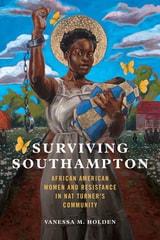
Surviving Southampton
African American Women and Resistance in Nat Turner's CommunityVanessa M. Holden
University of Illinois Press, 2021
The 1831 Southampton Rebellion led by Nat Turner involved an entire community. Vanessa M. Holden rediscovers the women and children, free and enslaved, who lived in Southampton County before, during, and after the revolt. Mapping the region's multilayered human geography, Holden draws a fuller picture of the inhabitants, revealing not only their interactions with physical locations but also their social relationships in space and time. Her analysis recasts the Southampton Rebellion as one event that reveals the continuum of practices that sustained resistance and survival among local Black people. Holden follows how African Americans continued those practices through the rebellion’s immediate aftermath and into the future, showing how Black women and communities raised children who remembered and heeded the lessons absorbed during the calamitous events of 1831.
A bold challenge to traditional accounts, Surviving Southampton sheds new light on the places and people surrounding Americas most famous rebellion against slavery.
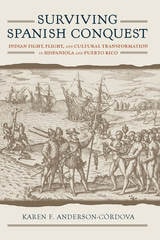
Surviving Spanish Conquest
Indian Fight, Flight, and Cultural Transformation in Hispaniola and Puerto RicoKaren F. Anderson-Córdova
University of Alabama Press, 2017
In Surviving Spanish Conquest: Indian Fight, Flight, and Cultural Transformation in Hispaniola and Puerto Rico, Karen F. Anderson-Córdova draws on archaeological, historical, and ethnohistorical sources to elucidate the impacts of sixteenth-century Spanish conquest and colonization on indigenous peoples in the Greater Antilles. Moving beyond the conventional narratives of the quick demise of the native populations because of forced labor and the spread of Old World diseases, this book shows the complexity of the initial exchange between the Old and New Worlds and examines the myriad ways the indigenous peoples responded to Spanish colonization.
Focusing on Hispaniola and Puerto Rico, the first Caribbean islands to be conquered and colonized by the Spanish, Anderson-Córdova explains Indian sociocultural transformation within the context of two specific processes, out-migration and in-migration, highlighting how population shifts contributed to the diversification of peoples. For example, as the growing presence of “foreign” Indians from other areas of the Caribbean complicated the variety of responses by Indian groups, her investigation reveals that Indians who were subjected to slavery, or the “encomienda system,” accommodated and absorbed many Spanish customs, yet resumed their own rituals when allowed to return to their villages. Other Indians fled in response to the arrival of the Spanish.
The culmination of years of research, Surviving Spanish Conquest deftly incorporates archaeological investigations at contact sites copious use of archival materials, and anthropological assessments of the contact period in the Caribbean. Ultimately, understanding the processes of Indian-Spanish interaction in the Caribbean enhances comprehension of colonization in many other parts of the world. Anderson-Córdova concludes with a discussion regarding the resurgence of interest in the Taíno people and their culture, especially of individuals who self-identify as Taíno. This volume provides a wealth of insight to historians, anthropologists, archaeologists, and those interested in early cultures in contact.
Surviving Sudden Environmental Change
Answers From ArchaeologyJago Cooper
University Press of Colorado, 2012
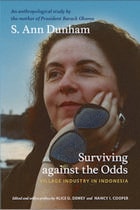
Surviving against the Odds
Village Industry in IndonesiaS. Ann Dunham
Duke University Press, 2009
President Barack Obama’s mother, S. Ann Dunham, was an economic anthropologist and rural development consultant who worked in several countries including Indonesia. Dunham received her doctorate in 1992. She died in 1995, at the age of 52, before having the opportunity to revise her dissertation for publication, as she had planned. Dunham’s dissertation adviser Alice G. Dewey and her fellow graduate student Nancy I. Cooper undertook the revisions at the request of Dunham’s daughter, Maya Soetoro-Ng. The result is Surviving against the Odds, a book based on Dunham’s research over a period of fourteen years among the rural metalworkers of Java, the island home to nearly half Indonesia’s population. Surviving against the Odds reflects Dunham’s commitment to helping small-scale village industries survive; her pragmatic, non-ideological approach to research and problem solving; and her impressive command of history, economic data, and development policy. Along with photographs of Dunham, the book includes many pictures taken by her in Indonesia.
After Dunham married Lolo Soetoro in 1967, she and her six-year-old son, Barack Obama, moved from Hawai‘i to Soetoro’s home in Jakarta, where Maya Soetoro was born three years later. Barack returned to Hawai‘i to attend school in 1971. Dedicated to Dunham’s mother Madelyn, her adviser Alice, and “Barack and Maya, who seldom complained when their mother was in the field,” Surviving against the Odds centers on the metalworking industries in the Javanese village of Kajar. Focusing attention on the small rural industries overlooked by many scholars, Dunham argued that wet-rice cultivation was not the only viable economic activity in rural Southeast Asia.
Surviving against the Odds includes a preface by the editors, Alice G. Dewey and Nancy I. Cooper, and a foreword by her daughter Maya Soetoro-Ng, each of which discusses Dunham and her career. In his afterword, the anthropologist and Indonesianist Robert W. Hefner explores the content of Surviving against the Odds, its relation to anthropology when it was researched and written, and its continuing relevance today.

Surviving the Essex
The Afterlife of America's Most Storied ShipwreckDavid O. Dowling
University Press of New England, 2016
Surviving the Peace
The Struggle for Postwar Recovery in Bosnia-HerzegovinaPeter Lippman
Vanderbilt University Press, 2019
Essential reading for students of the former Yugoslavia and anyone interested in postwar or post-genocide studies, Surviving the Peace is an instant classic of long-form reporting, an impossible accomplishment without a lifetime of dedication to a place and people.
Peter Lippman's website is http://survivingthepeace.org/.

Surviving the Slaughter
The Ordeal of a Rwandan Refugee in ZaireMarie Beatrice Umutesi; Foreword by Catharine Newbury
University of Wisconsin Press, 2004
Though the world was stunned by the horrific massacres of Tutsi by the Hutu majority in Rwanda beginning in April 1994, there has been little coverage of the reprisals that occurred after the Tutsi gained political power. During this time hundreds of thousands of Hutu were systematically hunted and killed.
Surviving the Slaughter: The Ordeal of a Rwandan Refugee in Zaire is the eyewitness account of Marie Béatrice Umutesi. She tells of life in the refugee camps in Zaire and her flight across 2000 kilometers on foot. During this forced march, far from the world’s cameras, many Hutu refugees were trampled and murdered. Others died from hunger, exhaustion, and sickness, or simply vanished, ignored by the international community and betrayed by humanitarian organizations. Amidst this brutality, day-to-day suffering, and desperate survival, Umutesi managed to organize the camps to improve the quality of life for women and children.
In this first-hand account of inexplicable brutality, day-to-day suffering, and survival, Marie Béatrice Umutesi sheds light on a backlash of violence that targeted the Hutu refugees of Rwanda after the victory of the Rwandan Patriotic Front in 1994. Umutesi’s documentation of the flight and terror of these years provides the world a veritable account of a history that is still widely unknown. After translations from its original French into three other languages, this important book is available in English for the first time. It is more than a testimony to the lives and humanity lost; it is a call for those politicians, military personnel, and humanitarian organizations responsible for the atrocious crimes—and the devastating silence—to be held accountable.
“Umutesi’s tale, told with honesty and eloquence, is a tribute to the human spirit, a searing indictment of the agents who perpetrated these horrors, and a reproach to those who turned away.”—Catharine Newbury, African Studies Review
“Restores a human dimension that has been lacking in the history of the genocide and massacres in Rwanda.”—Danielle de Lame, African Studies Review
“A vivid account of the grueling nightmare experienced by tens of thousands of Rwandan civilians whom the world had deliberately forsaken. . . . An outstanding call for justice.”—Aloys Habimama, African Studies Review
“A towering work. . . . An epic for our times, a tale to ponder for the lessons it conveys, testimony so powerful and moving that it reaches an unintended literary greatness.”—Jan Vansina, African Studies Review
“Of all the current books and films ten years after the Rwandan genocide, none is more effective than Surviving the Slaughter . . . . This book carries one along, often as if running with the refugees.”—Anne Serafin, Multicultural Review

Surviving the Upheaval of Arctic War
Evacuation and Return of the Sámi People in Sápmi and Finland During and After the Second World WarVeli-Pekka Lehtola
University of Alaska Press, 2021
Survivors
CAMBODIAN REFUGEES IN THE UNITED STATESSucheng Chan
University of Illinois Press, 2004
Unparalleled in scope, Survivors begins with the Cambodians' experiences under the brutal Khmer Rouge regime, following them through escape to refugee camps in Thailand and finally to the United States, where they try to build new lives in the wake of massive trauma. Their struggle becomes primarily economic as they continue to negotiate new cultures and deal with rapidly changing gender and intergenerational relations within their own families. Poverty, crime, and racial discrimination all have an impact on their experiences in America, and each is examined in depth.
Although written as a history, this is a thoroughly multidisciplinary study, and Chan makes use of research from anthropology, sociology, psychology, medicine, social work, linguistics and education. She also captures the perspective of individual Cambodians. Drawing on interviews with more than fifty community leaders, a hundred government officials, and staff members in volunteer agencies, Survivors synthesizes the literature on Cambodian refugees, many of whom come from varying socioeconomic backgrounds.
A major scholarly achievement, Survivors is unique in the Asian American canon for its memorable presentation of cutting-edge research and its interpretation of both sides of the immigration process.
Susan Glaspell in Context
American Theater, Culture, and Politics, 1915-48J. Ellen Gainor
University of Michigan Press, 2003
Susan Glaspell's Poetics and Politics of Rebellion
Emeline Jouve
University of Iowa Press, 2017
Analyzing plays from the early Trifles (1916) through Springs Eternal (1943) and the undated, incomplete Wings, author Emeline Jouve illustrates the way that Glaspell’s dramas addressed issues of sexism, the impact of World War I on American values, and the relationship between individuals and their communities, among other concerns. Jouve argues that Glaspell turns the playhouse into a courthouse, putting the hypocrisy of American democracy on trial. In staging rebels fighting for their rights in fictional worlds that reflect her audience’s extradiegetic reality, she explores the strategies available to individuals to free themselves from oppression. Her works envisage a better future for both her fictive insurgents and her spectators, whom she encourages to consider which modes of revolt are appropriate and effective for improving the society they live in. The playwright defines social reform in terms of collaboration, which she views as an alternative to the dominant, alienating social and political structures. Not simply accusing but proposing solutions in her plays, she wrote dramas that enacted a positive revolt.
A must for students of Glaspell and her contemporaries, as well as scholars of American theatre and literature of the first half of the twentieth century.

Sustainability and Water Management in the Maya World and Beyond
Jean T. Larmon
University Press of Colorado, 2021
The volume focuses primarily on the Precolumbian Maya but offers several analogous case studies outside the ancient Maya world that illustrate the pervasiveness of water’s role in sustainability, including an ethnographic study of the sustainability of small-scale, farmer-managed irrigation systems in contemporary New Mexico and the environmental consequences of Angkor’s growth into the world’s most extensive preindustrial settlement. The archaeological record offers rich data on past politics of climate change, while epigraphic and ethnographic data show how integrated the ideological, political, and environmental worlds of the Maya were.
While Sustainability and Water Management in the Maya World and Beyond stresses how lessons from the past offer invaluable insight into current approaches of adaptation, it also advances our understanding of those adaptations by making the inevitable discrepancies between past and present climate change less daunting and emphasizing the sustainable negotiations between humans and their surroundings that have been mediated by the changing climate for millennia. It will appeal to students and scholars interested in climate change, sustainability, and water management in the archaeological record.
Contributors: Mary Jane Acuña, Wendy Ashmore, Timothy Beach, Jeffrey Brewer, Christopher Carr, Adrian S. Z. Chase, Arlen F. Chase, Diane Z. Chase, Carlos R. Chiriboga, Jennifer Chmilar, Nicholas Dunning, Maurits W. Ertsen, Roland Fletcher, David Friedel, Robert Griffin, Joel D. Gunn, Armando Anaya Hernández, Christian Isendahl, David Lentz, Sheryl Luzzadder-Beach, Dan Penny, Kathryn Reese-Taylor, Michelle Rich, Cynthia Robin, Sylvia Rodríguez, William Saturno, Vernon Scarborough, Payson Sheets, Liwy Grazioso Sierra, Michael Smyth, Sander van der Leeuw, Andrew Wyatt
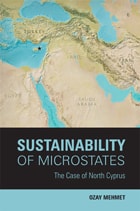
Sustainability of Microstates
The Case of North CyprusOzay Mehmet
University of Utah Press, 2009
Utah Series in Middle East Studies
This interdisciplinary study discusses the development, economics, and politics of North Cyprus, a divided state since 1960 when sovereignty was surrendered by the British to both Greek and Turkish Cypriots. Mehmet works to demonstrate that, as a microstate with an area of just 3,442 square kilometers, North Cyprus possesses certain inherent comparative economic advantages in the service sectors that enable it to be sustainable in today's rapidly globalizing and competitive economic world.
Mehmet bases his arguments for the potential sustainability of North Cyprus on the concept of economic rationalism, in which participating parties work to optimize their own self-interest. In an ethnic conflict like that of North Cyprus, the logic of optimization demands a rational, free, and objective balancing of competing interests to reach an agreed solution. The economic rationalist approach sharply contrasts with the highly emotional political, historical, cultural, and legal approaches that have thus far dominated the study and discussion of the Cyprus problem, approaches that have largely resulted in a protracted conflict.
While recognizing the negative forces of ethnic tension and the very real possibility of a continued divided Cyprus state, Sustainability of Microstates nevertheless remains hopeful, designed to unleash the forces of convergence that may be deduced from economic rationalism, and unwavering in its conviction of the ultimate sustainability of North Cyprus.

Sustaining Activism
A Brazilian Women's Movement and a Father-Daughter CollaborationJeffrey W. Rubin and Emma Sokoloff-Rubin
Duke University Press, 2013
Starting in 2002, Rubin and Sokoloff-Rubin traveled together to southern Brazil, where they interviewed activists over the course of ten years. Their vivid descriptions of women’s lives reveal the hard work of sustaining a social movement in the years after initial victories, when the political way forward was no longer clear and the goal of remaking gender roles proved more difficult than activists had ever imagined. Highlighting the tensions within the movement about how best to effect change, Sustaining Activism ultimately shows that democracies need social movements in order to improve people’s lives and create a more just society.
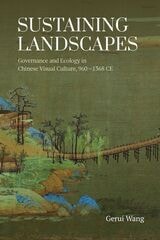
Sustaining Landscapes
Governance and Ecology in Chinese Visual Culture, 960–1368 CEGerui Wang
Hong Kong University Press, 2025
Sustaining Landscapes: Governance and Ecology in Chinese Visual Culture, 960–1368 CE examines ecological thought contested amid the rise of the Chinese landscape genre, tracing its intersections with infrastructure governance, natural resource management, and geospatial knowledge. It traces the pre-industrial notion of “sustainability” in policy debates, legal regulations, and arts. Landscape imagery on paintings, maps, as well as mass-produced artifacts such as fans and ceramic pillows documented both appropriate and exploitative use of natural resources, and critiqued on social inequity and political turmoil. This book breaks new ground by bringing together research on visual and material culture with analysis of politics and ecology. Wang argues that the Chinese landscape genre embodied a holistic approach to negotiating debates on human-nature interdependence and people-state relationships. It joins the increasing literature on ecocriticism and offers alternative perspectives to address contemporary challenges, ranging from environmental crisis to global governance.

Sustaining the Borderlands in the Age of NAFTA
Development, Politics, and Participation on the US-Mexico BorderSuzanne Simon
Vanderbilt University Press, 2014
Although the key to the side accords' anticipated success lay in their ostensibly generous encouragement of a participatory politics and sustainable development opportunities, Sustaining the Borderlands reveals that the Mexican border populations for which they were largely created are effectively excluded from participating due to the ongoing online, territorial, class, and cultural barriers that shape the borderlands. Rather than experiencing the side accords and their companion institutions as transparent and accessible, residents experienced them as opaque and indecipherable. Simon concludes that the side accords have failed to deliver on their promise of bringing democracy to Mexico because practical mechanisms that would ensure their effective implementation were never put in place.
NAFTA took effect at a time when Mexico was undergoing a democratic transition. The treaty was supposed to encourage this transition and improve environmental and labor conditions on the US-Mexico border. This book demonstrates that, twenty years later, the promises of NAFTA have not come to pass.

Sutherland Springs, Texas
Saratoga on the CiboloRichard B. McCaslin
University of North Texas Press, 2017

Swahili Origins
Swahili Culture and The Shungwaya PhenomenonJames de Vere Allen
Ohio University Press, 1993
Kiswahili has become the lingua franca of eastern Africa. Yet there can be few historic peoples whose identity is as elusive as that of the Swahili. Some have described themselves as Arabs, as Persians or even, in one place, as Portuguese. It is doubtful whether, even today, most of the people about whom this book is written would unhesitatingly and in all contexts accept the name Swahili.
This book was central to the thought and lifework of the late James de Vere Allen. It is his major study of the origin of the Swahili and of their cultural identity. He focuses on how the African element in their cultural patrimony was first modified by Islam and later changed until many Swahili themselves lost sight of it.
They share a language and they share a culture. Their territory stretches from the coast of southern Somalia to the Lamu archipelago in Kenya, to the Rovuma River in modern Mozambique and out into the islands of the Indian Ocean. But they lack a shared historical experience.
James de Vere Allen, in this study of contentious originality, set out to give modern Swahili evidence of their shared history during a period of eight centuries.
Swallows and Settlers
The Great Migration from North China to ManchuriaThomas R. Gottschang and Diana Lary
University of Michigan Press, 2000

Sweated Work, Weak Bodies
Anti-Sweatshop Campaigns and Languages of LaborBender, Daniel E.
Rutgers University Press, 2004
In the early 1900s, thousands of immigrants labored in New Yorks Lower East Side sweatshops, enduring work environments that came to be seen as among the worst examples of Progressive-Era American industrialization. Although reformers agreed that these unsafe workplaces must be abolished, their reasons have seldom been fully examined.
Sweated Work, Weak Bodies is the first book on the origins of sweatshops, exploring how they came to represent the dangers of industrialization and the perils of immigration. It is an innovative study of the language used to define the sweatshop, how these definitions shaped the first anti-sweatshop campaign, and how they continue to influence our current understanding of the sweatshop.
Sweatshop Capital
Profit, Violence, and Solidarity Movements in the Long Twentieth CenturyBeth Robinson
Duke University Press, 2025

Sweatshop
The History of an American IdeaHapke, Laura
Rutgers University Press, 2004
Arguing that the sweatshop is as American as apple pie, Laura Hapke surveys over a century and a half of the language, verbal and pictorial, in which the sweatshop has been imagined and its stories told. Not seeking a formal definition of the sort that policymakers are concerned with, nor intending to provide a strict historical chronology, this unique book shows, rather, how the “real” sweatshop has become intertwined with the “invented” sweatshop of our national imagination, and how this mixture of rhetoric and myth has endowed American sweatshops with rich and complex cultural meaning.
Hapke uncovers a wide variety of tales and images that writers, artists, social scientists, reformers, and workers themselves have told about “the shop.” Adding an important perspective to historical and economic approaches, Sweatshop draws on sources from antebellum journalism, Progressive era surveys, modern movies, and anti-sweatshop websites. Illustrated chapters detail how the shop has been a facilitator of assimilation, a promoter of upward mobility, the epitome of exploitation, a site of ethnic memory, a venue for political protest, and an expression of twentieth-century managerial narratives.
An important contribution to the real and imagined history of garment industry exploitation, this book provides a valuable new context for understanding contemporary sweatshops that now represent the worst expression of an unregulated global economy.

Sweden and Visions of Norway
Politics and Culture 1814-1905H. Arnold Barton
Southern Illinois University Press, 2002
H. Arnold Barton investigates Norwegian political and cultural influences in Sweden during the period of the Swedish-Norwegian dynastic union from 1814 to 1905.
Although closely related in origins, indigenous culture, language, and religion, Sweden and Norway had very different histories, resulting in strongly contrasting societies and forms of government before 1814. After a proud medieval past, Norway had come under the Danish crown in the fourteenth century and had been reduced to virtually a Danish province by the sixteenth.
In 1814, as a spin-off of the Napoleonic Wars, Denmark relinquished Norway, which became a separate kingdom, dynastically united with Sweden with its own government under a constitution independently framed that year. Disputes during the next ninety-one years caused Norway unilaterally to dissolve the tie.
Seeing the union a failure, most historians have concentrated on its conflicts. Barton, however, examines the impact of the union on internal developments, particularly in Sweden. Prior to 1814, Norway, unlike Sweden, had no constitution and only the rudiments of higher culture, yet paradoxically, Norway exerted a greater direct influence on Sweden than vice versa.
Reflecting a society lacking a native nobility, Norway’s 1814 constitution was—with the exception of that of the United States—the most democratic in the world. It became the guiding star of Swedish liberals and radicals striving to reform the antiquated system of representation in their parliament. Norway’s cultural void was filled with a stellar array of artists, writers, and musicians, led by Bjørnsjerne Børnson, Henrik Ibsen, and Edvard Grieg. From the 1850s through the late 1880s, this wave of Norwegian creativity had an immense impact on literature, art, and music in Sweden. By the 1880s, however, August Strindberg led a revolt against an exaggerated “Norvegomania” in Sweden. Barton sees this reaction as a fundamental inspiration to Sweden’s intense search for its own cultural character in the highly creative Swedish National Romanticism of the 1890s and early twentieth century.
Thirty-three illustrations of art and architecture enhance Sweden and Visions of Norway.

Sweden, Enlarged Edition
The Nation's HistoryBy Franklin D. Scott. Epilogue by Steven Koblik
Southern Illinois University Press, 1988
Steven Koblik’s epilogue extends Scott’s now standard text with an analysis of contemporary Swedish political, economic, and social behavior. In addition to the epilogue, Scott has made a number of alterations in the text in order to maintain the timeliness and comprehensiveness of the work.
Using a chronological-topical structure, Scott shows how and why Sweden progressed from times of backwardness to an age of military greatness, through two centuries of cultural development and relapse into poverty followed by a sudden outburst of productive energy and the creation of an exceptionally prosperous welfare state where the ideal is consensus rather than confrontation.

Sweden
A Modern Democracy on Ancient FoundationsNils Herlitz
University of Minnesota Press, 1939
Sweden was first published in 1939. Minnesota Archive Editions uses digital technology to make long-unavailable books once again accessible, and are published unaltered from the original University of Minnesota Press editions.
Believing the journalists have done both the United States and Sweden a disservice in playing up Sweden as a democratic utopia and overemphasizing the importance of cooperatives, the author presents the facts as they appear to a Swedish publicist with a profound knowledge of the government and problems of his country.
To the English-reading public he now offers this succinct yet comprehensive survey of Swedish government and the essentials of its historical background. He has succeeded in presenting at the same time much of the spirit and the life of the Swedish people and their politics.
The aspects of Swedish life which Professor Herlitz treats are very little understood in foreign countries and should be taken into account by anyone who aspires to know the Sweden of today. His opening review of the historical development of the Swedish constitution may be studied with profit by all who are interested in government.
Of particular timeliness is his account of the rise of the Socialist party to dominance and his explanation of why many people see in the present government (with its majority coalition) the beginning of dictatorship.
After describing the organization and work of the riksdag and its relations to the government, he surveys public administration and civil service in Sweden. His chapter on "The Service-State" covers numerous topics of current interest, such as government monopolies, social legislation, relief problems, old-age pensions, and farm adjustment.
The book is an amplification of a series of lectures delivered by Professor Herlitz in the United States in the spring of 1938 in connection with the Swedish Tercentenary celebration.
Sweden’s Development From Poverty to Affluence, 1750-1970
Steven Koblik, EditorTranslated by Joanne Johnson
University of Minnesota Press, 1975
Sweden's Development From Poverty to Affluence, 1750–1970 was first published in 1975. Minnesota Archive Editions uses digital technology to make long-unavailable books once again accessible, and are published unaltered from the original University of Minnesota Press editions.
Contemporary Sweden commands a degree of interest and attention from foreigners that is all out of proportion to its small size and its present position among the world powers. The country, at least since the publication of Marquis Childs's book Sweden: The Middle Way in 1936, has become synonymous with the idea of a welfare state or cradle-to-grave social security. But accurate, unbiased information about the development of modern Sweden has been scanty, and this book is designed to fill the gap.
Thirteen Swedish scholars—historians, political scientists, sociologists, and an economist—look at particular aspects of Swedish history over the last two centuries. Steven Koblik, the editor, provides an extensive general introduction as well as brief introductions as background for each of the essays.