Results by title
28167 books match the query 'History' and 1838 start with s
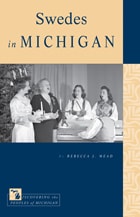
Swedes in Michigan
Rebecca J. Mead
Michigan State University Press, 2012
In the late nineteenth and early twentieth centuries, large numbers of Swedish immigrants came to Michigan seeking new opportunities in the United States and relief from economic, religious, or political problems at home. In addition to establishing early farming communities, Swedish immigrants worked on railroad construction, mining, fishing, logging, and urban manufacturing. As a result, Swedish Americans made significant contributions to the economic and cultural landscape of Michigan, a history this book explores in engaging and illustrative depth. Swedes in Michigan traces the evolution of hard-working people who valued education and assimilated actively while simultaneously maintaining their cultural ties and institutions. Moving from past to present, the book examines community patterns, family connections, social organizations, exchange programs, ethnic celebrations, and business and technical achievements that have helped Swedes in Michigan maintain a sense of their heritage even as they have adapted to American life.
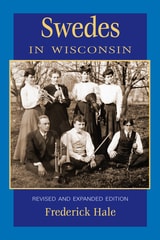
Swedes in Wisconsin
Frederick Hale
Wisconsin Historical Society Press, 2002
Hale describes the mass emigration from Sweden to the Midwest that began during the late 1860s and fundamentally changed both Sweden and the Midwest. During this time more than a million Swedes left their homeland for North America, motivated at least in part by a huge population surge that overtaxed Sweden’s relatively small amount of arable land (agriculture served until the twentieth century as the Swedish economy’s mainstay).
Updates for the new edition include new photos and excerpts from letters Swedish novelist and feminist Fredrika Bremer wrote to her sister while touring the Wisconsin frontier in the autumn of 1850.

Swedish Exodus
Lars Ljungmark. Translated by Kermit B. Westerberg
Southern Illinois University Press, 1979
"America fever" gripped Sweden in the middle of the nineteenth century, seethed to a peak in 1910, when one-fifth of the world’s Swedes lived in America, cooled during World War I, and chilled to dead ash with the advent of the Great Depression in 1930.
Swedish Exodus, the first English translation and revision of Lars Ljungmark’s Den Stora Utvandringen, recounts more than a century of Swedish emigration, concentrating on such questions as who came to America, how the character of the emigrants changed with each new wave of emigration, what these people did when they reached their adopted country, and how they gradually became Americanized.
Ljungmark’s essential challenge was to capture in a factual account the broad sweep of emigration history. But often he narrows his focus to look closely at those who took part in this mass migration. Through historical records and personal letters, Ljungmark brings many of these people back to life. One young woman, for example, loved her parents, but loved America more: "I never expect to speak to you in this life. . . . Your loving daughter unto death." Like most immigrants, she never expected to return. Another immigrant wrote back seeking a wife: "I wonder how you have it and if you are living. . . . Are you married or unmarried? If you are unmarried, you can have a good home with me."
Ljungmark also focuses closely on some of the leaders: Peter Cassel, a liberal temperance supporter and free-church leader whose community in America prospered; Hans Mattson, a colonel in the Civil War and founder of a colony in Minnesota; Erik Jansson, a book burner, self-proclaimed messiah, and founder of the Bishop Hill Colony; Gustaf Unonius, a student idealist and founder of a Wisconsin colony that faltered.
The story of Swedish immigrants in the United States is the story in miniature of the greatest mass migration in human history, that of thirty-five million Europeans who left their homes to come to America. It is a human story of interest not only to Swedes but to everyone.
Swedish-American Borderlands
New Histories of Transatlantic RelationsDag Blanck
University of Minnesota Press, 2021
Reframing Swedish–American relations by focusing on contacts, crossings, and convergences beyond migration
Studies of Swedish American history and identity have largely been confined to separate disciplines, such as history, literature, or politics. In Swedish–American Borderlands, this collection edited by Dag Blanck and Adam Hjorthén seeks to reconceptualize and redefine the field of Swedish–American relations by reviewing more complex cultural, social, and economic exchanges and interactions that take a broader approach to the international relationship—ultimately offering an alternative way of studying the history of transatlantic relations.
Swedish–American Borderlands studies connections and contacts between Sweden and the United States from the seventeenth century to today, exploring how movements of people have informed the circulation of knowledge and ideas between the two countries. The volume brings together scholars from a wide range of disciplines within the humanities and social sciences to investigate multiple transcultural exchanges between Sweden and the United States. Rather than concentrating on one-way processes or specific national contexts, Swedish–American Borderlands adopts the concept of borderlands to examine contacts, crossings, and convergences between the nations, featuring specific case studies of topics like jazz, architecture, design, genealogy, and more.
By placing interactions, entanglements, and cross-border relations at the center of the analysis, Swedish–American Borderlands seeks to bridge disciplinary divides, joining a diverse set of scholars and scholarship in writing an innovative history of Swedish–American relations to produce new understandings of what we perceive as Swedish, American, and Swedish American.
Contributors: Philip J. Anderson, North Park U; Jennifer Eastman Attebery, Idaho State U; Marie Bennedahl, Linnaeus U; Ulf Jonas Björk, Indiana U–Indianapolis; Thomas J. Brown, U of South Carolina; Margaret E. Farrar, John Carroll U; Charlotta Forss, Stockholm U; Gunlög Fur, Linnaeus U; Karen V. Hansen, Brandeis U; Angela Hoffman, Uppsala U; Adam Kaul, Augustana College; Maaret Koskinen, Stockholm U; Merja Kytö, Uppsala U; Svea Larson, U of Wisconsin–Madison; Franco Minganti, U of Bologna; Frida Rosenberg, KTH Royal Institute of Technology, Stockholm; Magnus Ullén, Stockholm U.
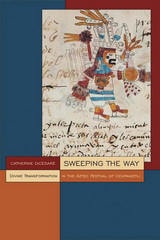
Sweeping the Way
Divine Transformation in the Aztec Festival of OchpaniztliCatherine DiCesare
University Press of Colorado, 2022

Sweet Air
Modernism, Regionalism, and American Popular SongEdward Comentale
University of Illinois Press, 2013
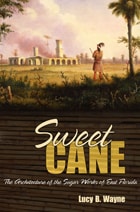
Sweet Cane
The Architecture of the Sugar Works of East FloridaLucy B. Wayne
University of Alabama Press, 2010
From the late eighteenth century to early 1836, the heart of the Florida sugar industry was concentrated in East Florida, between the St. Johns River and the Atlantic Ocean. Producing the sweetest sugar, molasses, and rum, at least 22 sugar plantations dotted the coastline by the 1830s. This industry brought prosperity to the region—employing farm hands, slaves, architects, stone masons, riverboats and their crews, shop keepers, and merchant traders. But by January 1836, Native American attacks of the Second Seminole War, intending to rid the Florida frontier of settlers, devastated the whole sugar industry.
Although sugar works again sprang up in other Florida regions just prior to the Civil War, the competition from Louisiana and the Caribbean blocked a resurgence of sugar production for the area. The sugar industry would never regain its importance in East Florida—only two of the original sugar works were ever rebuilt. Today, remains of this once thriving industry are visible in a few parks. Some are accessible but others lie hidden, slowly disintegrating and almost forgotten. Archaeological, historical, and architectural research in the last decade has returned these works to their once prominent place in Florida’s history, revealing the beauty, efficiency of design, as well as early industrial engineering. Equally important is what can be learned of the lives of those associated with the sugar works and the early plantation days along the East Florida frontier

Sweet Charlie, Dike, Cazzie, and Bobby Joe
HIGH SCHOOL BASKETBALL IN ILLINOISTaylor H. A. Bell
University of Illinois Press, 2004
Far from the jaded professionals, the stories in Taylor Bell's Sweet Charlie, Dike, Cazzie, and Bobby Joe are of hungry young men playing their hearts out, where high-tops and high hopes inspire "hoop dreams" from Peoria to Pinckneyville, and Champaign to Chicago. Bell, a life-long fan and authority on high school basketball in Illinois, brings together for the first time the stories of the great players, teams, and coaches from the 1940s through the 1990s.
The book is titled for four players who reflect the unique quality of high school basketball, and whose first names are enough to trigger memories in fans who love the sport -- Sweet Charlie Brown, Dike Eddleman, Cazzie Russell, and Bobby Joe Mason. Bell offers exciting accounts of their exploits, told with a journalistic flair.
Beyond a lifetime spent covering the sport, Bell's research includes three hundred and fifty personal interviews with coaches, administrators, family members, and fans. He has attended the Elite Eight finals of every boys' state basketball tournament since 1958, and met and written about many of the most outstanding teams, coaches, and players who helped to make Illinois one of the most exciting arenas for high school basketball in the United States. Sixty photographs add depth to the accounts.
By a fan, for the fans, Sweet Charlie, Dike, Cazzie, and Bobby Joe is the authoritative book on high school basketball in Illinois, and will elate anyone who has thrilled to the poignant highs and shattering lows of high school sports.
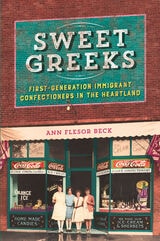
Sweet Greeks
First-Generation Immigrant Confectioners in the HeartlandAnn Flesor Beck
University of Illinois Press, 2020
Ann Flesor Beck's charming personal account recreates the atmosphere of her grandfather's candy kitchen with its odors of chocolate and popcorn and the comings-and-goings of family members. "The Store" represented success while anchoring the business district of Gus's chosen home. It also embodied the Midwest émigré experience of chain migration, immigrant networking, resistance and outright threats by local townspeople, food-related entrepreneurship, and tensions over whether later generations would take over the business.
An engaging blend of family memoir and Midwest history, Sweet Greeks tells how Greeks became candy makers to the nation, one shop at a time.
Sweet Science
Romantic Materialism and the New Logics of LifeAmanda Jo Goldstein
University of Chicago Press, 2017
Goldstein puts apparently literary projects, such as William Blake’s poetry of embryogenesis, Goethe’s journals On Morphology, and Percy Shelley’s “poetry of life,” back into conversation with the openly poetic life sciences of Erasmus Darwin, J. G. Herder, Jean-Baptiste Lamarck, and Étienne Geoffroy Saint-Hilaire. Such poetic sciences, Goldstein argues, share in reviving Lucretius’s De rerum natura to advance a view of biological life as neither self-organized nor autonomous, but rather dependent on the collaborative and symbolic processes that give it viable and recognizable form. They summon De rerum natura for a logic of life resistant to the vitalist stress on self-authorizing power and to make a monumental case for poetry’s role in the perception and communication of empirical realities. The first dedicated study of this mortal and materialist dimension of Romantic biopoetics, Sweet Science opens a through-line between Enlightenment materialisms of nature and Marx’s coming historical materialism.
Sweet Tyranny
Migrant Labor, Industrial Agriculture, and Imperial PoliticsKathleen Mapes
University of Illinois Press, 2008

Sweet, Tart, and Golden
Apples in the Midwestern ImaginationLucy M. Long
University of Illinois Press, 2026
Lively and surprising, Sweet, Tart, and Golden blends food history with on-the-ground exploration to tell the multifaceted story of the apple.

Sweetness in the Blood
Race, Risk, and Type 2 DiabetesJames Doucet-Battle
University of Minnesota Press, 2021
A bold new indictment of the racialization of science
Decades of data cannot be ignored: African American adults are far more likely to develop Type 2 diabetes than white adults. But has science gone so far in racializing diabetes as to undermine the search for solutions? In a rousing indictment of the idea that notions of biological race should drive scientific inquiry, Sweetness in the Blood provides an ethnographic picture of biotechnology’s framings of Type 2 diabetes risk and race and, importantly, offers a critical examination of the assumptions behind the recruitment of African American and African-descent populations for Type 2 diabetes research.
James Doucet-Battle begins with a historical overview of how diabetes has been researched and framed racially over the past century, chronicling one company’s efforts to recruit African Americans to test their new diabetes risk-score algorithm with the aim of increasing the clinical and market value of the firm’s technology. He considers African American reticence about participation in biomedical research and examines race and health disparities in light of advances in genomic sequencing technology. Doucet-Battle concludes by emphasizing that genomic research into sub-Saharan ancestry in fact underlines the importance of analyzing gender before attempting to understand the notion of race. No disease reveals this more than Type 2 diabetes.
Sweetness in the Blood challenges the notion that the best approach to understanding, managing, and curing Type 2 diabetes is through the lens of race. It also transforms how we think about sugar, filling a neglected gap between the sugar- and molasses-sweetened past of the enslaved African laborer and the high-fructose corn syrup- and corporate-fed body of the contemporary consumer-laborer.
Swift Viewing
The Popular Life of Subliminal InfluenceCharles R. Acland
Duke University Press, 2012
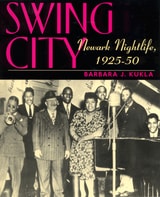
Swing City
Newark Lightlife, 1925-50Kukla, Barbara J.
Rutgers University Press, 2002
When people think of the hottest cities of the Jazz Age and Swing Era, New York, Nashville, New Orleans, Memphis, Kansas City, and Chicago immediately spring to mind. But Newark, New Jersey was just as happening as each of these towns. On any given evening, you could listen to a legendary singer like Sarah Vaughan or laugh at the celebrated comedy of Red Foxx. Newark was a veritable maze of thriving theaters, clubs, and after-hours joints where the sporting folks rambled through the night. There were plenty of jobs for musicians and entertainers, so the city was teaming with musical talent.
Swing City reveals Newark’s role as an undocumented entertainment mecca between 1922 and 1950. The book is based on interviews with musicians, singers, dancers, comedians, bartenders, waitresses, nightclub owners, and their families and is heavily illustrated with rare photographs from the author’s personal collection. Barbara J. Kukla presents a musical tour of the city, covering the vaudeville acts, the musicians who started at Newark’s Orpheum Theater and went on to join famous bands, and the teenage dancers who started as chorus girls and eventually toured with famous tap dancers. She also describes the house rent parties of the 1930s, the “colored only” clubs, the entertainment at Newark’s 1,000 saloons during Prohibition, and the Coleman Hotel where Billie Holiday often stayed. Throughout the book, which concentrates on performers’ lives and personalities, Kukla discusses music and other forms of entertainment as social and economic survival tools in Newark’s Third Ward during a time of ruthless segregation.
Swing City includes several appendixes that provide a virtual “Who’s Who” of 25 years of nightlife activities in Newark. Music and nostalgia buffs, students of African American history, and anyone who’s ever been to Newark will find in this bookfabulous entertainment.

Swing Low, Sweet Chariot
The Mortality Cost of Colonizing Liberia in the Nineteenth CenturyAntonio McDaniel
University of Chicago Press, 1995
McDaniel compares the mortality rates of the emigrants to those of other migrants to tropical areas. He finds that, contrary to popular belief, black immigrants during this period died at unprecedented rates. Moreover, he shows that though the emigrant's mortality levels were exceptionally high, their mortality patterns were consistent with those of other populations.
McDaniel concludes that the greater the variance between the environment left and the environment entered, the higher the probability of contracting a new disease, and, in some cases, of death from these diseases. Additionally, a migrant's health can be affected by dietary changes, differences in local pathogens, inappropriate immunities, and increased risk of accidents due to unfamiliar surroundings.
Swingin' at the Savoy
Norma Miller
Temple University Press, 1996
A dance contest winner by 14, Norma Miller became a member of Herbert White's Lindy Hoppers and a celebrated Savoy Ballroom Lindy Hop champion. Swingin' at the Savoy chronicles a significant period in American cultural history and race relations, as it glorifies the home of the Lindy Hop and he birthplace of memorable dance hall fads. Miller shares fascinating anecdotes about her youthful encounters with many of the greatest jazz legends in music history, including Ella Fitzgerald, Count Basie, Benny Goodman, Billie Holiday, Artie Shaw, Duke Ellington, Ethel Waters, and even boxer Joe Louis. Readers will experience the legend of the celebrated Harlem ballroom and the phenomenal Swing generation that changed music and dance history forever.

Swinging Single
Representing Sexuality in the 1960sHilary Radner
University of Minnesota Press, 1999
Swinging the Machine
Modernity, Technology, and African American Culture between the World WarsJoel Dinerstein
University of Massachusetts Press, 2003
In any age and any given society, cultural practices reflect the material circumstances of people's everyday lives. According to Joel Dinerstein, it was no different in America between the two World Wars—an era sometimes known as the “machine age”—when innovative forms of music and dance helped a newly urbanized population cope with the increased mechanization of modern life. Grand spectacles such as the Ziegfeld Follies and the movies of Busby Berkeley captured the American ethos of mass production, with chorus girls as the cogs of these fast, flowing pleasure vehicles.
Yet it was African American culture, Dinerstein argues, that ultimately provided the means of aesthetic adaptation to the accelerated tempo of modernity. Drawing on a legacy of engagement with and resistance to technological change, with deep roots in West African dance and music, black artists developed new cultural forms that sought to humanize machines. In “The Ballad of John Henry,” the epic toast “Shine,” and countless blues songs, African Americans first addressed the challenge of industrialization. Jazz musicians drew on the symbol of the train within this tradition to create a set of train-derived aural motifs and rhythms, harnessing mechanical power to cultural forms. Tap dance and the lindy hop brought machine aesthetics to the human body, while the new rhythm section of big band swing mimicked the industrial soundscape of northern cities. In Dinerstein's view, the capacity of these artistic innovations to replicate the inherent qualities of the machine-speed, power, repetition, flow, precision-helps explain both their enormous popularity and social function in American life.
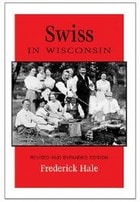
Swiss in Wisconsin
Frederick Hale
Wisconsin Historical Society Press, 2007
In this concise introduction to the state’s Swiss settlers, Frederick Hale traces the catalysts for Swiss emigration, their difficult journeys, and their adjustments to life on Wisconsin soil. Updates for this expanded edition include additional historic photographs and the selected writings of John Luchsinger, who settled at the Swiss colony at New Glarus, in 1856.

Switzerland
A Village HistoryDavid Birmingham
Ohio University Press, 2004
Switzerland: A Village History is an account of an Alpine village that illuminates the broader history of Switzerland and its rural, local underpinnings. It begins with the colonization of the Alps by Romanized Celtic peoples who came from the plain to clear the wilderness, establish a tiny monastic house, and create a dairy economy that became famous for its cheeses. Over ten centuries the village, like the rest of Switzerland, went through the traumas of religious reformation and political revolution. A single currency, a unified postal service, and eventually an integrated army brought improved stability and prosperity to the union of two dozen small republics.
Yet Switzerland’s enduring foundation remains the three thousand boroughs to which the Swiss people feel they truly belong. In Switzerland: A Village History, distinguished scholar David Birmingham tells the story of his childhood village-Château-d’Oex-where records of cheesemaking date to 1328. The evolution of this ancient grazing and forest economy included the rise of the legal profession to keep track of complex deeds, grazing allotments, and animal rights-of-way. Switzerland’s eventual privatization of communal grazing land drove many highlanders to emigrate to the European plains and overseas to the Americas. The twentieth century brought wealth from foreign tourism to Switzerland, punctuated by austerities imposed by Europe’s wars. Alpine peasants were integrated into Swiss union society and began at last to share in some of the prosperity flowing from urban industry.
Switzerland: A Village History replaces the mythology and patriotic propaganda that too often have passed for Swiss history with a rigorous, insightful, and charming account of the daily life, small-scale rivalries, and local loyalties that actually make up Swiss history.

Symbiotic Antagonisms
Competing Nationalisms in TurkeyAyse Kadioglu
University of Utah Press, 2011
Utah Series in Middle East Studies
Today, nationalism and nationalist sentiments are becoming more and more pronounced, creating a global emergence of ethno-nationalist and religious fundamentalist identity conflicts. In the post-9/11 era of international terrorism, it is appropriate to suggest that nationalism will retain its central place in politics and local and world affairs for the foreseeable future. It is in this vein that there has been a recent upsurge of interest concerning the power of nationalist tendencies as one of the dominant ideologies of modern times.
Symbiotic Antagonisms looks at the state-centric mode of modernization in Turkey that has constituted the very foundation on which nationalism has acquired its ideological status and transformative power. The book documents a symposium held at Sabanci University, presenting nationalism as a multidimensional, multiactor-based phenomenon that functions as an ideology, a discourse, and a political strategy. Turkish, Kurdish, and Islamic nationalisms are systematically compared in this timely and significant work.

Symbolic Crusade
Status Politics and the American Temperance MovementJoseph R. Gusfield
University of Illinois Press, 1986
This significant contribution to the theory of status conflict also discloses the importance of political acts as symbolic acts and offers a dramatistic theory of status politics, Gusfield provides a useful addition to the economic and psychological modes of analysis current in the study of political and social movements.

Symbolic Space
French Enlightenment Architecture and Its LegacyRichard A. Etlin
University of Chicago Press, 1994
For Etlin, the eighteenth-century city was a place in which actual physical space was subjected to a complex mental layering of conceptual spaces. He focuses on the design theory of Boullée and Durand and charts their legacy through the architecture of Paul Philippe Cret, Frank Lloyd Wright, and Louis Kahn. He defines the distinctive features of neoclassicism and outlines the new grammar for classical architecture articulated by theorists and architects such as Laugier, Leroy, and Ledoux.
After discussing the eighteenth-century hôtel, revolutionary space, and the transformation of the image of the cemetery, Etlin examines the space of absence as embodied in commemorative architecture from Boullée and Gilly to Cret, Wright, and Terragni. His book provides an accessible introduction to a century of architecture that transformed the classical forms of the Renaissance and Baroque periods into building types still familiar today.
Symbolic Violence
Conversations with BourdieuMichael Burawoy
Duke University Press, 2019
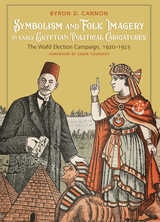
Symbolism and Folk Imagery in Early Egyptian Political Caricatures
The Wafd Election Campaign, 1920–1923Byron D. Cannon, Foreword by Samir Toubassy
University of Utah Press, 2019
Art is politics and politics is art in this study of post–World War I caricature art in Egypt and Egyptian politics. This book explores the complex meaning and significance of caricature art drawn to support the ascendant Egyptian Wafdpolitical party and its push for independence from British colonial control. The works of previously neglected Egyptian lithographers are also explored, especially those who adopted sophisticated European techniques while experimenting with a variety of new styles during a remarkable period in Egyptian history.
Caricature art by Wafd party artists was almostsui generis. It is distinguished especially by its sincere use of iconic, folkloric imagery, intended to rally nationalistic sentiments among an emerging Egyptian electorate that included many nonliterate citizens. Cannon’s research breathes new life into an influential yet largely forgotten artistic movement in Egypt, one that deserves recognition for its contribution to Egypt’s share of modern Middle East cultural history. Includes full color reproductions.
Symbolism and Ritual in a One-Party Regime
Unveiling Mexico's Political CultureLarissa Adler-Lomnitz, Rodrigo Salazar Elena, and Ilya Adler
University of Arizona Press, 2010
Discussing Mexican presidential politics from the perspectives of anthropology, political science, and communications science, the authors analyze the 1988 presidential campaign of Carlos Salinas de Gortari—the last great campaign of the PRI to display the characteristics traditionally found in the twentieth century. These detailed descriptions of campaign events show that their ritualistic nature expressed both a national culture and an aura of domination.
The authors describe the political and cultural context in which this campaign took place—an authoritarian presidential system that dated from the 1920s—and explain how the constitutional provisions of the state interacted with the informal practices of the party to produce highly scripted symbolic rituals. Their analysis probes such topics as the meanings behind the candidate’s behavior, the effects of public opinion polling, and the role of the press, then goes on to show how the system has begun to change since 2000.
By dealing with the campaign from multiple perspectives, the authors reveal it as a rite of passage that sheds light on the political culture of the country. Their study expands our understanding of authoritarianism during the years of PRI dominance and facilitates comparison of current practices with those of the past.
Symbols of Wealth and Power
Architectural Terracotta Decoration in Etruria and Central Italy, 640-510 B.C.Nancy A. Winter
University of Michigan Press, 2009
Although initially intended for the innovative, if prosaic, purpose of providing waterproof and fireproof cover for earlier thatch-roofed homes, fired clay tiles, in seventh- and sixth-century Etruria and Central Italy, combined with Etruscan love of adornment to create exceptional domestic and religious building decoration. Featuring statues and figured friezes of humans, animals, and mythological figures intended to convey the status of the owner or dedicator, the surviving terracotta roofs provide important insights into the architectural history of Etruria. With Symbols of Wealth and Power, Nancy A. Winter has provided a definitive overview of the evidence for these roofing elements that will enhance our knowledge of Etruscan---and more broadly, ancient---architecture.
Nancy A. Winter is an archaeologist and former librarian of the American School of Classical Studies, Athens. She is the author of Greek Architectural Terracottas: From the Prehistoric to the End of the Archaic Period (1993).
Role Models in the Roman World: Identity and Assimilation, edited by Sinclair Bell and Inge Lyse Hansen
The Maritime World of Ancient Rome, edited by Robert L. Hohlfelder
Cosa: The Black-Glaze Pottery 2, by Ann Reynolds Scott
Symptoms of the Self
Tuberculosis and the Making of the Modern StageRoberta Barker
University of Iowa Press, 2022
Symptoms of the Self offers the first full study of the stage consumptive. In the nineteenth and early twentieth centuries in France, Britain, and North America, tuberculosis was a leading killer. Its famous dramatic and operatic victims—Marguerite Gautier in La Dame aux Camélias and her avatar Violetta in La Traviata, Mimì in La Bohème, Little Eva in Uncle Tom’s Cabin, and Edmund Tyrone in Long Day’s Journey into Night, to name but a few—are among the most iconic figures of the Western stage. Its classic symptoms, the cough and the blood-stained handkerchief, have become global performance shorthand for life-threatening illness.
The consumptive character became a vehicle through which standards of health, beauty, and virtue were imposed; constructions of class, gender, and sexuality were debated; the boundaries of nationhood were transgressed or maintained; and an exceedingly fragile whiteness was held up as a dominant social ideal. By telling the story of tuberculosis on the transatlantic stage, Symptoms of the Self uncovers some of the wellsprings of modern Western theatrical practice—and of ideas about the self that still affect the way human beings live and die.
Syncretism in the West
Pico's 900 Theses (1486) With Text, Translation, and CommentaryEdited by S. A. Farmer
Arizona Center for Medieval and Renaissance Studies, 2016
This is the 2016 paperback printing of the 2008 edition of the popular text, translation, and commentary by S. A. Farmer. (The 2008 edition was a revised edition of the 1998 original publication).
Published by ACMRS (Arizona Center for Medieval and Renaissance Studies) in Tempe, Arizona as part of the MRTS (Medieval and Renaissance Texts and Studies) Series, this book -- previously available only in hardcover and otherwise out-of-print since 2014 -- is now available in its entirety in paperback format.

SynergiCity
Reinventing the Postindustrial CityEdited by Paul Hardin Kapp and Paul J. Armstrong
University of Illinois Press, 2012

Synthesizing Hope
Matter, Knowledge, and Place in South African Drug DiscoveryAnne Pollock
University of Chicago Press, 2019
Consideration of this case exposes the limitations of global health frameworks that implicitly posit rich countries as the only sites of knowledge production. Analysis of iThemba identifies the problems inherent in global north/south divides at the same time as it highlights what is at stake in who makes knowledge and where. It also provides a concrete example for consideration of the contexts and practices of postcolonial science, its constraints, and its promise.
Synthesizing Hope explores the many legacies that create conditions of possibility for South African drug discovery, especially the specific form of settler colonialism characterized by apartheid and resource extraction. Paying attention to the infrastructures and laboratory processes of drug discovery underscores the materiality of pharmaceuticals from the perspective of their makers, and tracing the intellectual and material infrastructures of South African drug discovery contributes new insights about larger social, political, and economic orders.

Synthetic
How Life Got MadeSophia Roosth
University of Chicago Press, 2017
In Synthetic: How Life Got Made, cultural anthropologist Sophia Roosth reveals how synthetic biologists make new living things in order to understand better how life works. The first book-length ethnographic study of this discipline, Synthetic documents the social, cultural, rhetorical, economic, and imaginative transformations biology has undergone in the post-genomic age. Roosth traces this new science from its origins at MIT to start-ups, laboratories, conferences, and hackers’ garages across the United States—even to contemporary efforts to resurrect extinct species. Her careful research reveals that rather than opening up a limitless new field, these biologists’ own experimental tactics circularly determine the biological features, theories, and limits they fasten upon. Exploring the life sciences emblematic of our time, Synthetic tells the origin story of the astonishing claim that biological making fosters biological knowing.

Syrian and Lebanese Patricios in São Paulo
From the Levant to BrazilOswaldo Truzzi. Translated by Ramon J. Stern
University of Illinois Press, 2018
Oswaldo Truzzi's original work on these so-called patrícios changed the face of Brazilian studies. Now available in an English translation, Truzzi's pioneering book identifies the complex social paths blazed by Syrian and Lebanese immigrants and their descendants from the 1890s to the 1960s. He considers their relationships to other groups within São Paulo's kaleidoscopic mix of cultures. He also reveals the differences--real and perceived--between Syrians and Lebanese in terms of religious and ethnic affinities and in the economic sphere. Finally, he compares the two groups with their counterparts in the United States and looks at the wave of Lebanese Muslims to São Paulo that began in the 1960s.
Systemic Silencing
Activism, Memory, and Sexual Violence in IndonesiaKatharine E. McGregor
University of Wisconsin Press, 2023
Systems We Have Loved
Conceptual Art, Affect, and the Antihumanist TurnEve Meltzer
University of Chicago Press, 2013
Systems, Institutions, and Values in East and West
Engaging with János Kornai's ScholarshipMiklós Rosta
Central European University Press, 2020
Leading social scientists, empirical analysts, and policy practitioners demonstrate the various ways in which the insights of János Kornai, a renowned early analyst and critic of the command economies of Eastern European communist states, are stirring academic and policy discussions about current challenges. While dissecting the economic theories and practices in the Soviet Bloc, Kornai devised and applied concepts such as soft-budget constraints, rush versus harmonic growth, surplus versus shortage economy, non-Walrasian equilibrium, bureaucratic coordination, and the invisible power of the communist party. These concepts are commonly applied to a variety of issues in the contexts of fundamental transformation. The cases discussed in this volume include the transitional paths of post-communist economies, the pitfalls of East European market-building, economic repercussions of the dissolution of Yugoslavia, and the process of integration in the Eurozone.
In conclusion János Kornai’s thoughts on a variety of research topics as well as the value of democracy are included as he delivered at the conference celebrating his 90th birthday in 2018.
Sí, Ella Puede!
The Rhetorical Legacy of Dolores Huerta and the United Farm WorkersBy Stacey K. Sowards
University of Texas Press, 2019
Winner, Marie Hochmuth Nichols Award, Public Address Division, National Communication Association, 2020
Outstanding Book Award, Latina/o Communication Studies Division, National Communication Association, 2020
Since the 1950s, Latina activist Dolores Huerta has been a fervent leader and organizer in the struggle for farmworkers’ rights within the Latina/o community. A cofounder of the United Farm Workers union in the 1960s alongside César Chávez, Huerta was a union vice president for nearly four decades before starting her own foundation in the early 2000s. She continues to act as a dynamic speaker, passionate lobbyist, and dedicated figure for social and political change, but her crucial contributions and commanding presence have often been overshadowed by those of Chávez and other leaders in the Chicana/o movement. In this new study, Stacey K. Sowards closely examines Huerta’s rhetorical skills both in and out of the public eye and defines Huerta’s vital place within Chicana/o history.
Referencing the theoretical works of Pierre Bourdieu, Chela Sandoval, Gloria Anzaldúa, and others, Sowards closely analyzes Huerta’s speeches, letters, and interviews. She shows how Huerta navigates the complex intersections of race, ethnicity, gender, language, and class through the myriad challenges faced by women activists of color. Sowards’s approach to studying Huerta’s rhetorical influence offers a unique perspective for understanding the transformative relationship between agency and social justice.