Results by title
5550 books match the query 'Biography & Autobiography' and 348 start with s

Sister Kenny
The Woman Who Challenged the DoctorsVictor Cohn
University of Minnesota Press, 1976
Sister Kenny was first published in 1976. Minnesota Archive Editions uses digital technology to make long-unavailable books once again accessible, and are published unaltered from the original University of Minnesota Press editions.
Sister Elizabeth Kenny, the Australian-born nurse, is remembered by thousands of grateful parents and grandparents of young polio patients, as well as others who were less personally affected, as the woman who successfully fought the medical profession to win acceptance of her techniques to combat the crippling effects of this disease.
In this biography Victor Cohn, a prize-winning science writer, details the life of Sister Kenny and her significant role in the history of medicine. It is an inspiring story and one which will be of particular interest to those of the present generation who are engaged in the movement for women's equality. Sister Kenny's struggle against the bitter opposition of many doctors to her concepts for the treatment of polio dramatized the then common attitude of male chauvinism on the part of the medical profession toward nurses.
The biography traces Sister Kenny's life from her birth in Australia, through her early nursing career in the bush, to her rise to prominence in America. Much of the narrative focuses on her confrontation with the medical establishment. Throughout, the author writes from an objective viewpoint, and in conclusion he assesses Sister Kenny's accomplishments.
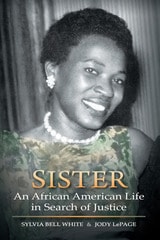
Sister
An African American Life in Search of JusticeSylvia Bell White and Jody LePage
University of Wisconsin Press, 2013
Winner, Wisconsin Historical Society Book Award of Merit
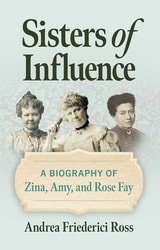
Sisters of Influence
A Biography of Zina, Amy, and Rose FayAndrea Friederici Ross
Southern Illinois University Press, 2025
WINNER, Certificate of Excellence in “Scholarly Publications” from the Illinois State Historical Society’s 2026 Best of Illinois History Awards!
Three sisters who forged intertwined paths to empowerment
A real-life Little Women, Sisters of Influence is the untold story of three extraordinary sisters who defied Victorian-era expectations to leave their marks on history. Andrea Friederici Ross breathes new life into the fascinating stories of Zina, Amy, and Rose Fay, intertwining their narratives into a captivating family biography.
Born into modest circumstances as daughters of an Episcopal rector and a poet, the seven Fay siblings’ upbringing in small-town Vermont was shaped by financial struggles, rare educational opportunities, and the early loss of their mother. While their sisters pursued traditional paths and their brother Norman helped them all, Zina, Amy, and Rose boldly charted their own courses, becoming trailblazers in music, writing, and women’s advocacy.
Zina Fay Peirce envisioned a life of intellectual partnership with her husband, philosopher Charles Sanders Peirce, only to find her dreams frustrated by domestic expectations. Undeterred, she became a writer and a conservative feminist, championing improved education for women and pioneering cooperative housekeeping initiatives. Despite challenges, Zina’s vision for women’s empowerment laid a foundation for future reform.
Amy Fay, a gifted pianist, pursued music studies abroad, including under the tutelage of Franz Liszt. Her letters home, filled with vivid accounts of her experiences in Europe, were edited into a memoir by Zina and published to critical acclaim. As a concert pianist, music teacher, and advocate for women in music, Amy inspired generations of women to follow their artistic passions.
Rose Fay Thomas, initially a quiet supporter of her sisters, emerged as a formidable force in her own right, becoming a founder of the Anti-Cruelty Society. Her leadership in Chicago’s Amateur Musical Club and the National Federation of Music Clubs helped shape the American classical music scene. As the wife of conductor Theodore Thomas, Rose played a pivotal role in establishing the Chicago Symphony Orchestra. Her later writings on gardening and her husband’s life further solidified her legacy.
Through her exploration of the Fay sisters’ lives, Ross illuminates the shifting roles of women during a transformative era. From advocating for women’s education to advancing the arts and social reform, Zina, Amy, and Rose exemplify the resilience and determination that bridged the restrictive norms of the Victorian age and the activism of the Progressive Era. Their remarkable journeys will inspire readers to reimagine the possibilities of women’s contributions to history and culture.
Sites
A Third MemoirWallace Fowlie
Duke University Press, 1987
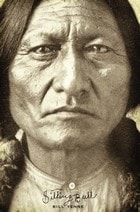
Sitting Bull
Bill Yenne
Westholme Publishing, 2008
An Acclaimed Biography of the Greatest American Indian Leader
Sitting Bull's name is still the best known of any American Indian leader, but his life and legacy remain shrouded with misinformation and half-truths. Sitting Bull's life spanned the entire clash of cultures and ultimate destruction of the Plains Indian way of life. He was a powerful leader and a respected shaman, but neither fully captures the enigma of Sitting Bull. He was a good friend of Buffalo Bill and skillful negotiator with the American government, yet erroneously credited with both murdering Custer at the Little Big Horn and with being the chief instigator of the Ghost Dance movement. The reality of his life, as Bill Yenne reveals in his absorbing new portrait, Sitting Bull, is far more intricate and compelling. Tracing Sitting Bull's history from a headstrong youth and his first contact with encroaching settlers, through his ascension as the spiritual and military leader of the Lakota, friendship with a Swiss-American widow from New York, and death at the hands of the Indian police on the eve of the massacre at Wounded Knee, Yenne scoured rare contemporary records and consulted Sitting Bull's own "Hieroglyphic Autobiography" in the course of his research. While Sitting Bull was the leading figure of Plains Indian resistance his message, as Yenne explains, was of self-reliance, not violence. At the Battle of the Little Bighorn, Sitting Bull was not confronting Custer as popular myth would have it, but riding through the Lakota camp making sure the most defenseless of his tribe--the children--were safe. In Sitting Bull we find a man who, in the face of an uncertain future, helped ensure the survival of his people.
Sitting with Elephants
Lessons in Humility from the African Bush, Enhanced and Expanded Second EditionRonald Dulek, Illustrations by Abbey Ndlovu
University of Alabama Press, 2026
A professor of communication and strategy reveals deep lessons from life in the African bush.
Sitting with Elephants is a heartfelt memoir that follows a middle-aged American professor and his wife as they trade suburban life for a remote bush house in South Africa. What begins as a spontaneous decision becomes a life-changing experience—one shaped by lions at the backdoor, baboons in the rafters, and above all, a herd of elephants who frequent their yard like neighbors.
Told through a series of emails to their adult children and brought to life by vivid illustrations from Abbey Ndlovu, Ronald Dulek’s narrative explores the profound lessons nature teaches: patience, humility, and deep respect for the wild. As the couple learns to communicate with elephants and navigate the rhythms of bush life, they also reflect on the unexpected beauty of slowing down and embracing the unknown.
Blending lighthearted anecdotes with moments of quiet insight, Sitting with Elephants invites readers into a story of transformation—both personal and environmental. This second edition includes expanded content with new stories and reflections, offering a deeper look into the couple’s unforgettable time in the African bush.

Six American Novelists of the Nineteenth Century
An IntroductionRichard Foster
University of Minnesota Press, 1968
Six Generations Here
A Farm Family RemembersMarjorie McLellan
Wisconsin Historical Society Press, 1997
Six Generations Here: A Farm Family Remembers
by Marjorie L. McLellan, with an essay by Kathleen Neils Conzen and a foreword by Dan Freas
Discover the story of the Krueger family, as images of farm, family, and landscape reveal the struggles of rural immigrant life in Wisconsin. Drawing on snapshots, memorabilia, and interviews, Six Generations Here brings together the voices of the past and the present to create a distinctive portrait of Wisconsin farm life.
Leaving their German home in 1851, the Kruegers came to America for economic opportunity. But like other immigrant families, they struggled to make ends meet. Only with the whole family helping out did they manage to get their Watertown farm up and running. By the turn of the century, they had achieved a life of middle-class comfort in the midst of the rigors of dairy farming. Over the generations, the Kruegers incorporated their past traditions with the needs of the present, adapting to the challenges of rural American life and, when necessary, breaking from the past. Despite these changes, their commitment to hard work and family persisted, shaped their identity, and ensured their success.
Through photographs, documents, and family stories, the Kruegers left a deep history of who they were and how they sought to be remembered. Follow their family through six generations as they compile a rich and varied record of Wisconsin life.

Six Women Who Shaped What Americans Eat
Food Choice in an Age of AbundanceMichelle Mart, Foreword by Mark D. Hersey
University of Alabama Press, 2025
How six groundbreaking women redefined American food—what we eat, how we eat it, and why it matters.
From wartime nutrition science to modern food activism, Six Women Who Shaped What Americans Eat examines the pivotal roles six women played in rewriting the rules of American cuisine. Michelle Mart offers a rich and accessible narrative that connects dietary trends, food marketing, and public health movements to the voices of the women who helped drive them.
Part one highlights Hazel Stiebeling’s development of dietary guidelines and RDAs, Poppy Cannon’s promotion of processed foods for convenience and gourmet meals, and Julia Child’s introduction of French cuisine with an emphasis on fresh ingredients and culinary techniques. Part two shifts the focus to women who challenged the food system itself: Frances Moore Lappé’s advocacy for vegetarianism and sustainable practices, Marion Nestle’s exposure of food corporations’ manipulative practices, and Alice Waters’s emphasis on locally sourced, organic ingredients and sustainable food systems. Thoughtful and timely, this book explores how culture, politics, and personal vision collided in the kitchens and campaigns of six food pioneers—leaving a lasting imprint on what America eats today.
Sixteenth President-in-Waiting
Abraham Lincoln and the Springfield Dispatches of Henry Villard, 1860–1861Edited by Michael Burlingame
Southern Illinois University Press, 2018
Between Abraham Lincoln’s election in November 1860 and his departure for Washington three months later, journalist Henry Villard sent scores of dispatches from Springfield, Illinois, to various newspapers describing the president-elect’s doings, quoting or paraphrasing his statements, chronicling events in the Illinois capital, and analyzing the city’s mood. With Sixteenth President-in-Waiting Michael Burlingame has collected all of these dispatches in one insightful and informative volume.
Best known as a successful nineteenth-century railroad promoter and financier, German-born Henry Villard (1835–1900) was also among the most conscientious and able journalists of the 1860s. The dispatches gathered in this volume constitute the most intensive journalistic coverage that Lincoln ever received, for Villard filed stories from the Illinois capital almost daily to the New York Herald, slightly less often to the Cincinnati Commercial, and occasionally to the San Francisco Bulletin.
Lincoln welcomed Villard and encouraged him to ask questions, as he was the only full-time correspondent for out-of-town papers. He spoke with inside sources, such as Lincoln’s private secretaries John G. Nicolay and John Hay, devoted friends like Jesse K. Dubois and Stephen T. Logan, political leaders like Governor Richard Yates, and journalists like William M. Springer and Robert R. Hitt.
Villard boasted that he did Lincoln a service by scaring off would-be office seekers who, fearing to see their names published in newspapers, gave up plans to visit the Illinois capital to badger the president-elect. Villard may have done an even greater service by publicizing Lincoln’s views on the secession crisis.
His little-known coverage of the 1858 Lincoln-Douglas Senate race, translated from the German for the first time, is included as an appendix. At the time Villard was an ardent Douglas supporter, and his reports criticized Lincoln.
Not only informative but also highly readable, Villard’s vivid descriptions of Lincoln’s appearance, daily routine, and visitors, combined with fresh information about Springfielders, state political leaders, and the capital, constitute an invaluable resource.
Skepticism, Individuality, and Freedom
The Reluctant Liberalism Of Richard FlathmanBonnie Honig
University of Minnesota Press, 2002
Major thinkers grapple with the challenge of this renowned liberal thinker.
As one of liberal theory’s most important gadflies, Richard Flathman has during the past four decades produced a significant body of work that is iconoclastic, idiosyncratic, and increasingly influential. Flathman criticizes liberal theory’s role in justifying a politics of governance that has drifted substantially from liberalism’s central commitments to individuality and freedom. It is this challenge, and its implications for the future of liberal theory, that brings together the diverse and distinguished authors of this volume. Topics include the relationships between theory and practice, skepticism and knowledge, individuality and egoism, negative and positive freedom, Hobbes and liberalism, as well as the uneasy connections among liberalism, feminism, and democratic politics.
Contributors: Ronald Beiner, U of Toronto; Jane Bennett, Goucher; William E. Connolly, Johns Hopkins; Peter Digeser, U of California, Santa Barbara; Richard Friedman, SUNY, Buffalo; Nancy J. Hirschmann, Cornell; George Kateb, Princeton; Patrick Neal, U of Vermont; Anne Norton, U of Pennsylvania; Richard Tuck, Harvard; Jeremy J. Waldron, Columbia; Linda Zerilli, Northwestern.
Sketchbook, 1946–1949
Max Frisch
Seagull Books, 2022
Throughout his life, the great Swiss playwright and novelist Max Frisch (1911–1991) kept a series of diaries, or sketchbooks, as they came to be known in English. First published in English translation in the 1970s, these sketchbooks played a major role in establishing Frisch as, according to the New York Times, “the most innovative, varied and hard-to-categorize of all major contemporary authors.” His diaries, said the Times, “read like novels and his best novels are written like diaries.”
Now Seagull Books presents the first unabridged English translation of Sketchbooks, 1946–1949 in a new translation by Simon Pare. This edition reinstates material omitted from the 1977 edition, including a screenplay for an unmade film. In this first volume, which covers the years 1946 to 1949, Frisch chronicles the intellectual and material situation in postwar Europe from the vantage point of a citizen of a neutral, German-speaking country. His notes on travels to the scarred cities of Germany, to Austria, France, Italy, Prague, Wroclaw, and Warsaw paint a complex and stimulating picture of a continent emerging from the rubble as new fault lines are drawn between East and West. As Frisch completes his final architectural projects and garners early success as a writer, he reflects on theater, language, and writing, and he sketches the outlines of plays, including The Fire Raisers and Count Öderland.
Whatever experience he chronicles in the sketchbook—whether it’s a Bastille Day party, an Italian fish market, or a tightrope display amid the ruins of Frankfurt or an afternoon by Lake Zurich with Bertolt Brecht, to take just a few examples—his keen dramatist’s eye immerses the reader in the setting while also probing the deeper significance and motivations underlying the scene. This new translation will serve to draw out the immediacy and contemporary quality of Frisch’s observations from the shadow of his status as a classic author, bringing his work to life for a new audience.
Sketchbook, 1966–1971
Max Frisch
Seagull Books, 2023
By the time Swiss author Max Frisch published the second volume of his diaries or sketchbooks, he had achieved international recognition as a writer and dramatist. In this volume, he develops his version of the literary diary as a mosaic of musings on architecture and writing, travelogue, autobiography, and political insight. He considers Cold War tensions as well as the civil rights and anti–Vietnam War movements in the United States. Now middle-aged himself, he looks squarely at men’s evolving attitude to life, love, sex, women, and status. And for all the idyllic descriptions of his new home in Berzona, Frisch becomes increasingly critical of his native Switzerland, in particular the crackdowns on left-wingers and protestors, and receives abuse for his stance. Based on the second German edition that reinstated material that had been removed from the original 1972 version, this fresh and definitive translation brings an important mid-twentieth-century European classic back to life.
Sketches of Slave Life and From Slave Cabin to Pulpit
Katherine Clay Bassard
University of Delaware Press, 0
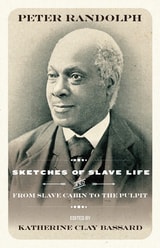
This book is the first anthology of the autobiographical writings of Peter Randolph, a prominent nineteenth-century former slave who became a Black abolitionist, pastor, and community leader. Randolph’s story is unique because he was freed and relocated from Virginia to Boston, along with his entire plantation cohort. A lawsuit launched by Randolph against his former master’s estate left legal documents that corroborate his autobiographies.
Randolph's writings give us a window into a different experience of slavery and freedom than other narratives currently available and will be of interest to students and scholars of African American literature, history, and religious studies, as well as those with an interest in Virginia history and mid-Atlantic slavery.
Sketches of Slave Life and From and From Slave Cabin to the Pulpit
Peter Randolph
West Virginia University Press, 2016
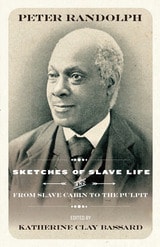
This book is the first anthology of the autobiographical writings of Peter Randolph, a prominent nineteenth-century former slave who became a black abolitionist, pastor, and community leader.
Randolph’s story is unique because he was freed and relocated from Virginia to Boston, along with his entire plantation cohort. A lawsuit launched by Randolph against his former master’s estate left legal documents that corroborate his autobiographies.
Randolph's writings give us a window into a different experience of slavery and freedom than other narratives currently available and will be of interest to students and scholars of African American literature, history, and religious studies, as well as those with an interest in Virginia history and mid-Atlantic slavery.
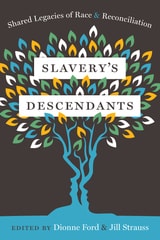
Slavery's Descendants
Shared Legacies of Race and ReconciliationJill Strauss
Rutgers University Press, 2019
Slavery’s Descendants brings together contributors from a variety of racial backgrounds, all members or associates of a national racial reconciliation organization called Coming to the Table, to tell their stories of dealing with America’s racial past through their experiences and their family histories. Some are descendants of slaveholders, some are descendants of the enslaved, and many are descendants of both slaveholders and slaves. What they all have in common is a commitment toward collective introspection, and a willingness to think critically about how the nation’s histories of oppression continue to ripple into the present, affecting us all.
The stories in Slavery’s Descendants deal with harrowing topics—rape, lynching, cruelty, shame—but they also describe acts of generosity, gratitude, and love. Together, they help us confront the legacy of slavery to reclaim a more complete picture of U.S. history, one cousin at a time.
Funding for the production of this book was provided by Furthermore, a program of the J. M. Kaplan Fund (https://www.furthermore.org).
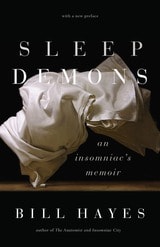
Sleep Demons
An Insomniac’s MemoirBill Hayes
University of Chicago Press, 2018
An acclaimed journalist and memoirist—and partner of the late neurologist Oliver Sacks—Hayes has been plagued by insomnia his entire life. The science and mythology of sleep and sleeplessness form the backbone to Hayes’s narrative of his personal battles with sleep and how they colored his waking life, as he threads stories of fugitive sleep through memories of growing up in the closet, coming out to his Irish Catholic family, watching his friends fall ill during the early years of the AIDS crisis in San Francisco, and finding a lover. An erudite blend of science and personal narrative, Sleep Demons offers a poignant introduction to the topics for which Hayes has since become famous, including art, eros, city life, the history of medical science, and queer identity.
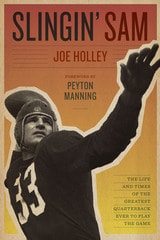
Slingin' Sam
The Life and Times of the Greatest Quarterback Ever to Play the GameBy Joe Holley
University of Texas Press, 2012
Dan Jenkins calls him “the greatest quarterback who ever lived, college or pro.” Slingin’ Sammy Baugh, who played for TCU and the Washington Redskins, single-handedly revolutionized the game of football. While the pros still wore leather helmets and played the game more like rugby, Baugh’s ability to throw the ball with rifle-like accuracy made the forward pass a strategic weapon, not a desperation heave. Like Babe Ruth, who changed the very perception of how baseball is played, Slingin’ Sam transformed the notion of offense in football and how much yardage can be gained through the air. As the first modern quarterback, Baugh led the Redskins to five title games and two NFL championships, while leading the league in passing six times—a record that endures to this day—and in punting four times. In 1943, the triple-threat Baugh also scored a triple crown when he led the league in passing, punting, and interceptions.
Slingin’ Sam is the first major biography of this legendary quarterback, one of the first inductees into the Pro Football Hall of Fame. Joe Holley traces the whole arc of Baugh’s life (1914–2008), from his small-town Texas roots to his college ball success as an All-American at TCU, his brief flirtation with professional baseball, and his stellar career with the Washington Redskins (1937–1952), as well as his later career coaching the New York Titans and Houston Oilers and ranching in West Texas. Through Holley’s vivid descriptions of close-fought games, Baugh comes alive both as the consummate all-around athlete who could play every minute of every game, on both offense and defense, and as an all-around good guy.
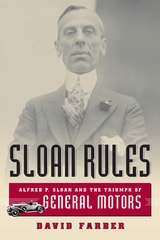
Sloan Rules
Alfred P. Sloan and the Triumph of General MotorsDavid Farber
University of Chicago Press, 2002
Here, for the first time, is a study of both the difficult man and the pathbreaking executive. Sloan Rules reveals the GM genius as not only a driven manager of men, machines, money, and markets but also a passionate and not always wise participant in the great events of his day. Sloan, for example, reviled Franklin Roosevelt and the New Deal; he firmly believed that politicians, government bureaucrats, and union leaders knew next to nothing about the workings of the new consumer economy, and he did his best to stop them from intervening in the private enterprise system. He was instrumental in transforming GM from the country's largest producer of cars into the mainstay of America's "Arsenal of Democracy" during World War II; after the war, he bet GM's future on renewed American prosperity and helped lead the country into a period of economic abundance. Through his business genius, his sometimes myopic social vision, and his vast fortune, Sloan was an architect of the corporate-dominated global society we live in today.
David Farber's story of America's first corporate genius is biography of the highest order, a portrait of an extraordinarily compelling and skillful man who shaped his era and ours.
Slobodan Milosevic and the Destruction of Yugoslavia
Louis Sell
Duke University Press, 2002
Sell spent much of his diplomatic career in Eastern Europe and Russia, including eight years in Yugoslavia between 1974 and 2000, and witnessed the events that contributed to the dissolution and ultimate destruction of Yugoslavia. In Slobodan Milosevic and the Destruction of Yugoslavia he provides first-hand observations of Milosevic from the heady days of his rise to power and, later, in the endgame of the Bosnian war, including the Dayton Peace Conference. Drawing on a wide range of published material as well as interviews with Yugoslav and foreign participants, Sell covers such areas as Milosevic’s relationship to the military, his responsibility for war crimes, his methods of persuasion and negotiation, and his notoriously explosive personality.
Slow Fuse of the Possible
A Memoir of Poetry and PsychoanalysisKate Daniels
West Virginia University Press, 2022
Slow Fuse of the Possible is a poet’s narrative of a troubled psychoanalysis. It is also a commanding meditation on the powers of language, for good and for ill.
From the beginning of their time together, it is clear that the enigmatic analyst and Daniels are not a good match, yet both are determined to continue their work—the former in nearly complete silence, and the latter as best she can with the tools at her disposal: careful attention to language, deep reading, and literary imagination. Throughout, the story is filtered through the mind of Emily Dickinson, whose poetry Daniels uses as a fulcrum for the interpretation of her own experience. The book is saturated with Dickinson’s verse, and Dickinson is an increasingly haunting presence as crises emerge and the author unravels.
This compelling lyric memoir, so richly steeped in all facets of language and the literary, allows readers a glimpse into the mind of a renowned poet, revealing the dazzling and anguished connections between poetry and psychoanalysis.

Small Altars
Justin Gardiner
Tupelo Press, 2024
In Small Altars, Justin Gardiner delves into the world of comic books and superheroes as a means for coming to terms with the many struggles of his brother’s life, as well as his untimely death, offering a lyric and honest portrayal of the tolls of mental illness, the redemptive powers of art and familial love, and the complex workings of grief.
Small Worlds
Adopted Sons, Pet Piranhas, and Other Mortal ConcernsRobert Klose
University of Missouri Press, 2006
Small
Life and Death on the Front Lines of Pediatric SurgeryCatherine Musemeche
Dartmouth College Press, 2014
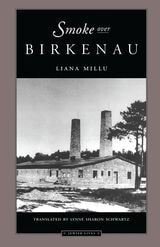
Smoke over Birkenau
Liana Millu
Northwestern University Press, 1997
An Italian-Jewish journalist and schoolteacher who joined the Italian partisans in 1943, Liana Millu was arrested in 1944 and deported to Birkenau. The astonishing stories in this book tell of the women who lived and suffered alongside her.

Smoky, the Dog That Saved My Life
The Bill Wynne StoryNancy Roe Pimm
Ohio University Press, 2019
World War II soldier Bill Wynne met Smoky while serving in New Guinea, where the dog, who was smaller than Wynne’s army boot, was found trying to scratch her way out of a foxhole. After he adopted her, she served as the squadron mascot and is credited as being the first therapy dog for the emotional support she provided the soldiers. When they weren’t fighting, Bill taught Smoky hundreds of tricks to entertain the troops. Smoky became a war hero herself at an airstrip in Luzon, the Philippines, where she helped save forty airplanes and hundreds of soldiers from imminent attack.
After the war, Bill worked as a Hollywood animal trainer and then returned to his hometown of Cleveland, Ohio. He and Smoky continued to perform their act, even getting their own TV show, How to Train Your Dog with Bill Wynne and Smoky.
Nancy Roe Pimm presents Bill and Smoky’s story to middle-grade readers in delightful prose coupled with rich archival illustrations. Children will love learning about World War II from an unusual perspective, witnessing the power of the bond between a soldier and his dog, and seeing how that bond continued through the exciting years following the war.

Smollett's Britain
Jeremy Black
St. Augustine's Press, 2022

Snake's Daughter
The Roads in and out of WarGail Hosking Gilberg
University of Iowa Press, 1997
Gail Hosking Gilberg's father was a hero, a valiant soldier decorated posthumously with the Medal of Honor, a man who served his country throughout his entire adult life. But Charles Hosking was a mystery to his daughter. He was killed in Vietnam a week after her seventeenth birthday. She buried the war, the protests, the medal, and her military upbringing along with her father, so much so that she felt cut off from herself. It took more than twenty years for her to recognize the stirrings of a father and a daughter not yet at peace.
Gilberg began a journey—two journeys really—to find out who her father was and in the process to find herself. She explored her buried rage, shame, and silence, and examined how war had shaped her life. In studying the photo albums that her father had left behind, Gilberg found that the photographs demanded that she give voice to her feelings, then release her silent words, words that had no meaning in war for her father yet had all the meaning in the world for her. The result was an epiphany. The photographs became the roads she took in and out of war, and her words brought her father home. Snake's Daughter reveals the crossroads where a soldier father's life and a daughter's life connect.
Snake's Daughter is an arresting and anguished narrative that gives voice to an experience Gail Hosking Gilberg shares with thousands of Americans, including military “brats” whose parents served their country and often gave their lives in the process.
So Lonesome
Hank Williams and the Creation of Country MusicRichard A. Peterson
University of Chicago Press, 1997
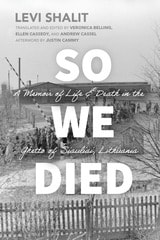
So We Died
A Memoir of Life and Death in the Ghetto of Šiauliai, LithuaniaLevi Shalit, translated and edited by Veronica Belling, Ellen Cassedy, and Andrew Cassel, introduction by Veronica Belling, afterword by Justin Cammy
University of Alabama Press, 2025
In the shadow of death, Levi Shalit wrote to remember—so we would never forget.
So We Died: A Memoir of Life and Death in the Ghetto of Šiauliai, Lithuania (Azoy zaynen mir geshtorbn) is a powerful eyewitness account of the Shavl ghetto during the Nazi occupation of Lithuania. Written in Yiddish by Levi Shalit and available now for the first time in English, the work fills a stark void in historical records.
Shalit divided his work into four sections. In the first, he describes the German invasion of Šiauliai, the murder of thousands of Jews in the city and surrounding countryside, and the forced relocation of the surviving Jews into the Shavl ghetto. In the second, he describes daily life in the ghetto in engrossing detail. In the third, titled “The Masada Book,” Shalit describes ghetto residents’ attempt to organize a resistance group of which he himself was a member. In the fourth, he narrates the transformation of the ghetto into a concentration camp and the seizure and deportation of the community’s children.
Few accounts of the Shavl ghetto survived the war. Shalit’s work offers English-language readers a rare insight into a vital chapter of history. The translators artfully reveal Shalit’s literary prowess and the ways he illuminated the Shavl ghetto’s daily struggles, false hopes, and atrocities.
More than an account of a previously overlooked episode in Holocaust history, So We Died is a testament to the enduring power of the human spirit in the face of unspeakable tragedy. It offers keen insight into a time of war, fascism, and resistance. A must-read for anyone seeking understanding and remembrance.

Soapy
A Biography of G. Mennen WilliamsThomas J. Noer
University of Michigan Press, 2005
---George McGovern
"Soapy Williams had a deep talent not only to compel but on occasion to repel."
---John Kenneth Galbraith
"Thomas Noer has written a model biography of a fascinating political figure. He brings Williams to life with all his contradictions, old-fashioned qualities, and admirable idealism."
---Robert Divine, George W. Littlefield Professor Emeritus in American History, University of Texas
"G. Mennen 'Soapy' Williams was not only a giant in the 20th century history of the Michigan Democratic Party, the history of the state of Michigan and our nation-he was a giant ahead of his time. Throughout his long and extremely distinguished career as Governor of Michigan, Assistant Secretary of State for African Affairs and Chief Justice of the Michigan Supreme Court, Soapy maintained an unwavering commitment to equality, justice and civil rights for all people."
---Senator Carl Levin
In this first complete biography of G. Mennen "Soapy" Williams, author Thomas Noer brings to life the story of one of the most controversial and colorful politicians in twentieth-century American politics and a giant in the Michigan Democratic Party.
In 1948, winning a stunning upset, Williams became Michigan's second Democratic governor since the Civil War and was reelected five times. He served under Kennedy and Johnson as Assistant Secretary of State for Africa, briefly held the post of U.S. Ambassador to the Philippines, and was a member of the Michigan Supreme Court from 1970 to 1986, serving as Chief Justice in his last term.
Sporting his instantly recognizable trademark green and white polka-dot bow tie, Williams was a flamboyant character. He was also known for his energetic campaign style: he could say "hello" in seventeen languages, would shake hands with as many as five thousand factory workers a day, and made seemingly endless diplomatic trips to Africa. All of this captured the attention of the media and the public and made Williams into a celebrity.
Beneath his showy public persona, however, Williams also made important contributions to American diplomatic and political history. He built an unrivaled political machine in Michigan, bringing organized labor, African Americans, and ethnic groups into a new coalition; influenced the shift in American policy toward support for African independence; and wrote landmark decisions as a jurist on the Michigan Supreme Court.
The fascinating story of a complex and complicated man, Soapy will introduce one of the great American political figures of the twentieth century to a new generation of readers.

Soccer
Jean-Philippe Toussaint
Rutgers University Press, 2019
Soccer takes readers on an idiosyncratic journey that delves deep into the author’s childhood memories, but also transports us to World Cup matches in Japan, Germany, South Africa, and Brazil. Along the way, it kicks around such provocative questions as: How does soccer fandom both support and transcend nationalism? How are our memories of soccer matches both collective and distinctly personal? And how can a game this beautiful and this ephemeral be adequately captured in words?
Part travelogue, part memoir, and part philosophical essay, Soccer is entirely unique, a thrilling departure from the usual clichés of sports writing. Even readers with little knowledge of the game will be enthralled by Touissant’s profound musings and lyrical prose.
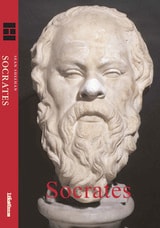
Socrates
Sean Sheehan
Haus Publishing, 2007
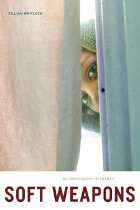
Soft Weapons
Autobiography in TransitGillian Whitlock
University of Chicago Press, 2007
Azar Nafisi’s Reading Lolita in Tehran,Marjane Satrapi’s comics, and “Baghdad Blogger” Salam Pax’s Internet diary are just a few examples of the new face of autobiography in an age of migration, globalization, and terror. But while autobiography and other genres of life writing can help us attend to people whose experiences are frequently unseen and unheard, life narratives can also be easily co-opted into propaganda. In Soft Weapons, Gillian Whitlock explores the dynamism and ubiquity of contemporary life writing about the Middle East and shows how these works have been packaged, promoted, and enlisted in Western controversies.
Considering recent autoethnographies of Afghan women, refugee testimony from Middle Eastern war zones, Jean Sasson’s bestsellers about the lives of Arab women, Norma Khouri’s fraudulent memoir Honor Lost, personal accounts by journalists reporting the war in Iraq, Satrapi’s Persepolis, Nafisi’s book, and Pax’s blog, Whitlock explores the contradictions and ambiguities in the rapid commodification of life memoirs. Drawing from the fields of literary and cultural studies, Soft Weapons will be essential reading for scholars of life writing and those interested in the exchange of literary culture between Islam and the West.
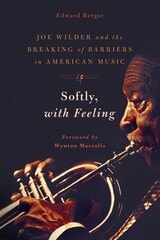
Softly, With Feeling
Joe Wilder and the Breaking of Barriers in American MusicEdward Berger
Temple University Press, 2014
"Joe Wilder set the table. His struggles made it easier for me and many others."--From the Foreword by Wynton Marsalis
Trumpeter Joe Wilder is distinguished for his achievements in both the jazz and classical worlds. He was a founding member of the Symphony of the New World, where he played first trumpet, and he performed as lead trumpet and soloist with Lionel Hampton, Jimmy Lunceford, Dizzy Gillespie, and Count Basie. Yet Wilder is also known as a pioneer who broke down racial barriers, the first African American to hold a principal chair in a Broadway show orchestra, and one of the first African Americans to join a network studio orchestra.
In Softly, with Feeling, Edward Berger tells Wilder's remarkable story-from his growing up in working-class Philadelphia to becoming one of the first 1,000 black Marines during World War II-with tremendous feeling and extensive reminiscences by Wilder and his colleagues, including renowned Philadelphia-area musicians Jimmy Heath and Buddy DeFranco. Berger also places Wilder's experiences within a broader context of American musical and social history.
Wilder's modesty and ability to perform in many musical genres may have prevented him from achieving popular recognition, but in Softly, with Feeling, his legacy and contributions to music and culture are assured.
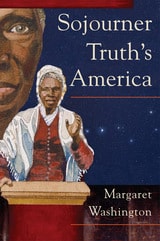
Sojourner Truth's America
Margaret Washington
University of Illinois Press, 2009
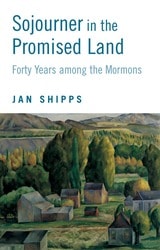
Sojourner in the Promised Land
Forty Years among the MormonsJan Shipps
University of Illinois Press, 2001
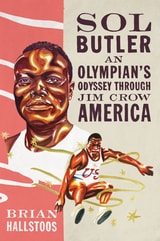
Sol Butler
An Olympian's Odyssey through Jim Crow AmericaBrian Hallstoos
University of Illinois Press, 2026

Sol Plaatje
Selected WritingsSol T. Plaatje
Ohio University Press, 1997
These books are not Plaatje’s only claim to fame. In the course of a prolific career he wrote letters to the press, newspaper articles and editorials, pamphlets, political speeches, evidence to government commissions of enquiry, unpublished autobiographical writings, and many personal letters. Together they provide both an engaging personal record and a very readable – and revealing – commentary on South African social and political affairs during the era of segregation, from 1899 through to Plaatje’s tragically early death in 1932.
What he wrote has a unique historical importance, all the more meaningful from the perspective of the 1990s.
Soldier of the Press
Covering the Front in Europe and North Africa, 1936-1943Henry T. Gorrell, Edited & Intro by Kenneth Gorrell, & Foreword by John C. McManus
University of Missouri Press, 2009
Soldier-Artist of the Great Reconnaissance
John C. Tidball and the 35th Parallel Pacific Railroad SurveyEugene C. Tidball
University of Arizona Press, 2004
Soldiers and Statesmen
Reflections on LeadershipJohn S. D. Eisenhower
University of Missouri Press, 2012

Solitary Song
An AutobiographyPauline Koner
Duke University Press, 1989

Some Catholic Writers
Ralph McInerny
St. Augustine's Press, 2007
Some Kind of Mirror
Creating Marilyn MonroeKonkle, Amanda
Rutgers University Press, 2019
Some Kind of Mirror offers the first extended scholarly analysis of Marilyn Monroe’s film performances, examining how they united the contradictory discourses about women’s roles in 1950s America. Amanda Konkle suggests that Monroe’s star persona resonated with audiences precisely because it engaged with the era’s critical debates regarding femininity, sexuality, marriage, and political activism. Furthermore, she explores how Monroe drew from the techniques of Method acting and finely calibrated her performances to better mirror her audience’s anxieties and desires.
Drawing both from Monroe’s filmography and from 1950s fan magazines, newspaper reports, and archived film studio reports, Some Kind of Mirror considers how her star persona was coauthored by the actress, the Hollywood publicity machine, and the fans who adored her. It is about why 1950s America made Monroe a star, but it is also about how Marilyn defined an era.
Some Like It Cold
Surfing the Malibu of the MidwestWilliam Povletich
Wisconsin Historical Society Press, 2016
Some Like It Cold
chronicles the true story of twin brothers Lee and Larry Williams, whose love of surfing evolved in the most unlikely of geographies: off the shores of Lake Michigan. From their boyhood home in Sheboygan, Wisconsin, the brothers trekked to the local beach with their longboards and their dreams to master the waves at spots like the Elbow and the Cove. The next six decades proved that their zeal for catching grinders and barrels was much more than a hobby.
Surfing in the cold had its challenges, and Lee and Larry recall stories of freak storms, ice-encrusted beaches, and near drownings, along with the usual hypothermia, helped but not cured by their customized cold-water wetsuits. Despite living nearly 2,000 miles from either coast, Lee and Larry have made a lifestyle out of freshwater surfing, recreating their hometown as "The Malibu of the Midwest" and gaining international fame as hosts of the Dairyland Surf Classic.
With humor and wit, author William Povletich brings their tale of revolutionizing surf culture to the page.
Some Seed Fell on Good Ground
The Life of Edwin V. O'HaraTimothy Michael Dolan
Catholic University of America Press, 2012
Some of Us
Chinese Women Growing Up in the Mao EraZhong, Xueping
Rutgers University Press, 2001
What does it mean to have grown up female in the Mao era? How can the remembered details of everyday life help shed light upon those turbulent times?
Some of Us is a collection of memoirs by nine Chinese women who grew up during the Mao era. All hail from urban backgrounds and all have obtained their Ph.D.s in the United States; thus, their memories are informed by intellectual training and insights that only distance can allow. Each of the chapters—arranged by the age of the author—is crafted by a writer who reflects back to that time in a more nuanced manner than has been possible for Western observers. The authors attend to gender in a way that male writers have barely noticed and reflect on their lives in the United States.
The issues explored here are as varied as these women’s lives: The burgeoning rebellion of a young girl in northeast China. A girl’s struggles to obtain for herself the education her parents inspired her to attain. An exploration of gender and identity as experienced by two sisters.
Some of Us offers insight into a place and time when life was much more complex than Westerners have allowed. These eloquent writings shatter our stereotypes of persecution, repression, victims, and victimizers. Together, these multi-faceted memoirs offer the reader new perspectives as they daringly explore difficult—and fascinating—issues.
Some of the People Who Ate My Barbecue Didn't Vote for Me
The Life of Georgia Governor Marvin GriffinScott E. Buchanan
Vanderbilt University Press, 2011
.
In "Some of the People Who Ate My Barbecue Didn't Vote for Me," Scott Buchanan portrays Marvin Griffin as a Yellow Dog Democrat struggling against inevitable change. Griffin was viewed by many as a charismatic voice of resistance in the Georgia and the South in the wake of Brown v. Board of Education. He combined a staunch segregationist approach with economically progressive policies, assisting in Georgia's transformation from an agrarian economy to a more industrialized one.
Ironically, it was these efforts and the larger shift in politics that doomed Griffin's career, ensuring his administration would last only one term. In many ways, Griffin stands as a clear dividing line between the Old South and the New.

Somebody Else
Arthur Rimbaud in Africa 1880-91Charles Nicholl
University of Chicago Press, 1999
In this compelling biography, Charles Nicholl pieces together the shadowy story of Rimbaud's life as a trader, explorer, and gunrunner in Africa. Following his fascinating journey, Nicholl shows how Rimbaud lived out that mysterious pronouncement of his teenage years: "Je est un autre"—I is somebody else.
"Rimbaud's fear of stasis never left him. 'I should like to wander over the face of the whole world,' he told his sister, Isobelle, 'then perhaps I'd find a place that would please me a little.' The tragedy of Rimbaud's later life, superbly chronicled by Nicholl, is that he never really did."—London Guardian
"Nicholl has excavated a mosaic of semi-legendary anecdotes to show that they were an essential part of the poet's journey to become 'somebody else.' Not quite biography, not quite travel book, in the end Somebody Else transcends both genres."—Sara Wheeler, Daily Telegraph
"At the end of Somebody Else Rimbaud is more interesting and more various than before: he is not less mysterious, but he is more real."—Susannah Clapp, Observer Review