Results by title
3071 books match the query 'Business & Economics' and 189 start with s

Strategic Newspaper Management
Conrad Fink
Southern Illinois University Press, 1988
The time is right for bright, aggressive newspaper managers to influence and prosper, but bleak indeed for those newspapers whose managers lack the requisite knowledge. Using case studies and examples from the business, Fink shows why some newspapers change with the times and surge ahead and why some continue to publish to an eroding market base and fail.
The difference between success and failure, he concludes, is in "long-range planning and in daily operating methodology—in, simply, the professionalism of management at all levels."
Strategic Planning in the Arts
A Practical GuideMichael M. Kaiser
Brandeis University Press, 2018
Strategy or Principle?
The Choice Between Regulation and TaxationMark Kelman
University of Michigan Press, 1999
Street-Level Bureaucracy, 30th Anniversary Edition
Dilemmas of the Individual in Public ServiceMichael Lipsky
Russell Sage Foundation, 2010
Street-Level Bureaucracy
Dilemmas of the Individual in Public ServiceMichael Lipsky
Russell Sage Foundation, 1983
Strike!
Twenty Days in 1970 When Minneapolis Teachers Broke the LawWilliam D. Green
University of Minnesota Press, 2022
When viewed from our turbulent times, the Minneapolis of fifty years ago might seem serene, but Minneapolis schoolteachers of the day remember it quite differently. It was, author William D. Green said of their recollections, as if they’d been through war. This book recreates twenty days in April 1970 when a then-illegal strike by Minneapolis’s public school teachers marked a singular moment of cultural upheaval—and forever changed the city’s politics, labor law, educational climate, and the right to collective bargaining.
Since the inception of public education in Minnesota, teachers were expected to pursue their vocation out of civic spirit, with low wages, no benefits, and no job security. Strike! describes the history and circumstances leading to the teachers’ extraordinary action, which pitted the progressive and conservative teachers’ unions against each other—and both against the all-powerful school district, a hostile governor and state legislature, and a draconian Minnesota law. Capturing the intense emotions and heated rivalries of the strike, Green profiles the many actors involved, the personal and professional stakes, and the issues of politics, law, and the business of education.
Informed by interviews, firsthand accounts, news reports, and written records, Strike! brings to life a pivotal moment not just for Minneapolis’s teachers but for the city itself, whose government, school system, and culture would, in a complex but inexorable way, change course for good.
Strikes and Strikeouts
Sports and the Labor Movement in the Mid-Twentieth-Century United StatesJames W. J. Robinson
Rutgers University Press, 2027
During the first half of the twentieth century, the introduction of cheap or free recreation to the workplace provided a metaphorical place where ordinary working-class people of all races and genders gained access to physical leisure and developed bonds of camaraderie in the anti-fascist labor movement. Strikes and Strikeouts: Sports and the Labor Movement in the Mid-Twentieth-Century United States illustrates how this largely forgotten Labor Sports movement was critical in helping unions become forces for larger cultural change and essential to understanding the potency of the 1930-40s labor movement. Drawing from ten different labor and leftist social movement archives, Robinson strives to reconstruct the “people’s history." At its height, from the late 1930s to the early 1950s, the Labor Sports movement presented a real alternative to both apolitical and conservative sports and involved millions of working-class people. It was a key part of improving the lives of average Americans and helped build an anti-racist, anti-fascist, working class counterculture that helped change the United States through a strong labor movement. This movement brought higher living standards for working class people and the end of racial segregation in sports, which in turn aided the Civil Rights movement.
Striking Steel
Jack Metzgar
Temple University Press, 2000
Combining personal memoir and historical narrative, Striking Steel argues for reassessment of unionism in American life during the second half of the twentieth century and a recasting of "official memory." As he traces the history of union steelworkers after World War II, Metzgar draws on his father's powerful stories about the publishing work in the mills, stories in which time is divided between "before the union" and since. His father, Johnny Metzgar, fought ardently for workplace rules as a means of giving "the men" some control over their working conditions and protection from venal foremen. He pursued grievances until he eroded management's authority, and he badgered foremen until he established shop-floor practices that would become part of the next negotiated contract. As a passionate advocate of solidarity, he urged coworkers to stick together so that the rules were upheld and everyone could earn a decent wage.
Striking Steel's pivotal event is the four-month nationwide steel strike of 1959, a landmark union victory that has been all but erased from public memory. With remarkable tenacity, union members held out for the shop-floor rules that gave them dignity in the workplace and raised their standard of living. Their victory underscored the value of sticking together and reinforced their sense that they were contributing to a general improvement in American working and living conditions.
The Metzgar family's story vividly illustrates the larger narrative of how unionism lifted the fortunes and prospects of working-class families. It also offers an account of how the broad social changes of the period helped to shift the balance of power in a conflict-ridden, patriarchal household. Even if the optimism of his generation faded in the upheavals of the 1960s, Johnny Metzgar's commitment to his union and the strike itself stands as an honorable example of what a collective action can and did achieve. Jack Metzgar's Striking Steel is a stirring call to remember and renew the struggle.

Striking a Balance
Making National Economic PolicyAlbert Rees
University of Chicago Press, 1984
Striking a Balance sets forth in clear, nontechnical language the principal goals of national economic policy, the instruments used to achieve these goals, and the political and economic problems arising from conflicting goals and the choice of inappropriate instruments. It is written not for economics students but for the general public and for students in the related fields of public policy, journalism, and law. Unlike economics textbooks, it is not organized according to theoretical categories such as supply and demand, but around issues such as full employment and inflation. It has no ideological axe to grind and tries to present different views of controversial issues fairly.
Striking a Balance benefits from the wisdom and experience of a mature economist. Albert Rees achieves the rare feat of explicating complex issues without oversimplification or trivialization.
Structural Impediments to Growth in Japan
Edited by Magnus Blomström, Jennifer Corbett, Fumio Hayashi, and Anil Kashyap
University of Chicago Press, 2003
In this, the first book-length academic treatment of this important issue, a team of notable contributors present nine papers, offering a comprehensive assessment of those economic difficulties and addressing a range of specific issues, from financial restructuring and the impact of the aging Japanese population to corporate behavior, public lending, employment practices, and innovative capacity. In each paper, contributors clearly identify and outline problems and concerns, carefully pose provocative questions, and in many instances present concrete suggestions for improvement.
The resulting volume is a timely and important examination of critical issues for Japan's stalling economy, packed with both telling data and expert analysis and offering valuable perspectives on Japan's current obstacles.
Studies in International Taxation
Edited by Alberto Giovannini, R. Glenn Hubbard, and Joel Slemrod
University of Chicago Press, 1993
The contributors examine the effects of taxation on decisions about international financial management, business investment, and international income shifting. They consider the influence of tax rules on dividend policy decisions within multinationals; the extent to which tax incentives affect the level and location of research and development across countries; and the fact that foreign-controlled companies operating in the United States pay lower taxes than do domestically controlled companies.
The contributors to this volume are Rosanne Altshuler, Alan J. Auerbach, Neil Bruce, Timothy Goodspeed, Roger H. Gordon, Harry Grubert, Bronwyn H. Hall, David Harris, Kevin Hassett, James R. Hines Jr., Roy D. Hogg, Joosung Jun, Jeffrey K. Mackie-Mason, Jack M. Mintz, Randall Morck, John Mutti, T. Scott Newlon, James M. Poterba, Joel Slemrod, Deborah Swenson, G. Peter Wilson, and Bernard Yeung.
Studies in Labor Markets
Sherwin Rosen
University of Chicago Press, 1981
Originally presented at a Universities-National Bureau Committee for Economic Research conference on labor markets in 1978, and not published elsewhere, the thirteen papers treat four interrelated themes: labor mobility, job turnover, and life-cycle dynamics; the analysis of unemployment compensation and employment policy; labor market discrimination; and labor market information and investment. The Introduction by Sherwin Rosen provides a thoughtful guide to the contents of the papers and offers suggestions for continuing research.
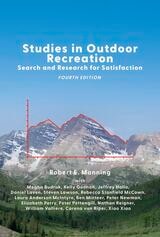
Studies in Outdoor Recreation
Search and Research for SatisfactionRobert E. Manning
Oregon State University Press, 2022
Since its original publication in 1986, Studies in Outdoor Recreation has been a standard text in courses on parks and outdoor recreation and serves as an invaluable reference for park and recreation managers. The first book to integrate the social science literature on outdoor recreation, it reviews studies from this broad, interdisciplinary field and synthesizes them into a body of knowledge, providing an historical perspective on outdoor recreation research and developing its practical management implications.
This fourth edition includes a new preface and is completely revised to reflect current research and new concerns in the field. A new chapter examines emerging issues such as sustainable transportation and the impacts of climate change.
An essential resource for students, scholars, and professionals, Studies in Outdoor Recreation explores the theoretical and methodological issues in outdoor recreation and describes the management implications of outdoor recreation research.
Contributors to the fourth edition include Laura Anderson, Megha Budruk, Kelly Goonan, Jeffrey Hallo, Daniel Laven, Steven Lawson, Rebecca Stanfield McCown, Ben Minteer, Peter Newman, Elizabeth Perry, Peter Pettengill, Nathan Reigner, William Valliere, Carena van Riper, and Xiao Xiao.
Studies in Philosophy, Politics, and Economics
F. A. Hayek
University of Chicago Press, 1967
Studies in State and Local Public Finance
Edited by Harvey S. Rosen
University of Chicago Press, 1986
Developed from a National Bureau of Economic Research conference on state and local financing, the volume includes papers summarizing and extending recent research as well as commentaries. Covering a wide range of topics, the papers share an empirical orientation and a concern with policy issues. The first two papers look at the role of tax-exempt bonds in local public finance. Their findings suggest that tax policies significantly affect municipal borrowing practices and that financial advantage can be achieved under certain of these practices. Other papers address specific issues related to state and local tax policy: the impact of local taxes on location decisions; efficient road-use charges for trucks; and the relation of income and general sales tax systems over time. Examining issues related to United States federalism, the last paper focuses on the impact of federal grant aid to states.
The research and findings these papers report make an important contribution to the study of local public finance and should be of particular interest to policymakers and those involved in private and public financing at the local, state, or federal level.
Studies in the Economics of Aging
Edited by David A. Wise
University of Chicago Press, 1994

Studies in the Formation of the Nation-state in Latin America
Edited by James Dunkerley
University of London Press, 2002
Contributors include Miguel Angel Centeno (Princeton University), Malcolm Deas (St Antony's College, Oxford), James Dunkerley (Institute of Latin American Studies, University of London), Paul Gootenberg (State University of New York at Stony Brook), Alan Knight (St Antony's College, Oxford), Colin Lewis (London School of Economics), Fernando Lopez Alves (University of California, Santa Barbara), David McCreery (Georgia State University), Florencia Mallon (University of Wisconsin), Seemin Qayum (Goldsmiths College, University of London), Guy Thomson (University of Warwick), and Steven Topik (University of California, Irvine). James Dunkerley is director of the Institute of Latin American Studies, University of London, and also professor of politics at Queen Mary, University of London. He is coeditor of the Journal of Latin American Studies. His most recent books are Americana:The Americas in the World, around 1850 (or 'Seeing the Elephant' as the Theme for an Imaginary Western) (2000) and Warriors and Scribes: Essays in the History and Politics of Latin America (2000).
Studies of Labor Market Intermediation
Edited by David H. Autor
University of Chicago Press, 2009
From the traditional craft hiring hall to the Web site Monster.com, a multitude of institutions exist to facilitate the matching of workers with firms. The diversity of such Labor Market Intermediaries (LMIs) encompasses criminal records providers, public employment offices, labor unions, temporary help agencies, and centralized medical residency matches. Studies of Labor Market Intermediation analyzes how these third-party actors intercede where workers and firms meet, thereby aiding, impeding, and, in some cases, exploiting the matching process.
By building a conceptual foundation for analyzing the roles that these understudied economic actors serve in the labor market, this volume develops both a qualitative and quantitative sense of their significance to market operation and worker welfare. Cross-national in scope, Studies of Labor Market Intermediation is distinctive in coalescing research on a set of market institutions that are typically treated as isolated entities, thus setting a research agenda for analyzing the changing shape of employment in an era of rapid globalization and technological change.
Studies of Supply and Demand in Higher Education
Edited by Charles T. Clotfelter and Michael Rothschild
University of Chicago Press, 1993
In higher education, supply refers to such issues as government support for public colleges and universities, the means by which graduate programs allocate financial support to students, and the criteria that universities use for investing endowments. Demand pertains to patterns of student enrollment and to the government, business, and individual market for the service and research activities of higher education.
Why are tuitions nearly the same among schools despite differences in prestige? How are institutions with small endowments able to compete successfully with institutions that have huge endowments? How are race and ethnicity reflected in enrollment trends? Where do the best students go? What choices among colleges do young people from low-income backgrounds face? This volume addresses these questions and suggests subjects for further study of the economics of higher education.
Studies on Wealth in the Ancient World (BICS Supplement 133)
Edited by Errietta M. A. Bissa and Federico Santangelo
University of London Press, 2016
Studies on the Abuse and Decline of Reason
Text and DocumentsF. A. Hayek
University of Chicago Press, 2010
Hayek argues that the vast number of elements whose interactions create social structures and institutions make it unlikely that social science can predict precise outcomes. Instead, he contends, we should strive to simply understand the principles by which phenomena are produced. For Hayek this modesty of aspirations went hand in hand with his concern over widespread enthusiasm for economic planning. As a result, these essays are relevant to ongoing debates within the social sciences and to discussion about the role government can and should play in the economy.

Studying Unmade, Unseen, and Unreleased Film and Television
Histories, Theories, MethodsJames Fenwick and Kieran Foster
Intellect Books, 2026
Unmade, unseen, and unreleased film and television are a strikingly underexplored aspect of media history, even though significant financial investment and creative labor in these industries are devoted to projects that never reach production or distribution. This groundbreaking collection offers a comprehensive examination of this phenomenon, bringing together interdisciplinary perspectives from film history, gender and sexuality studies, industry studies, archival research, and creative practice.
Each chapter presents a state-of-the-art overview of a key theme, debate, method, or theory, drawing on illuminating case studies from different historical periods and global contexts. Together, the contributions define what it means for a work to remain unmade, unseen, or unreleased, while showcasing innovative research approaches and mapping the scale of unfinished projects in film and television. Serving as both a foundational text for students and a valuable reference for established researchers, the volume’s scope will offer an essential resource for anyone seeking to understand the hidden histories of the screen industries.
Subjective Lives and Economic Transformations in Mongolia
Life in the GapRebecca M. Empson
University College London, 2020
Subterranean Struggles
New Dynamics of Mining, Oil, and Gas in Latin AmericaEdited by Anthony Bebbington and Jeffrey Bury
University of Texas Press, 2013
Successful Fisheries Management
Issues, Case Studies, PerspectivesEdited by Stephen Cunningham and Tim Bostock
Eburon Academic Publishers, 2005
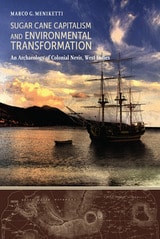
Sugar Cane Capitalism and Environmental Transformation
An Archaeology of Colonial Nevis, West IndiesMarco G. Meniketti
University of Alabama Press, 2015
In this deeply researched and multifaceted study, Marco G. Meniketti demonstrates how the landscape of the small Caribbean island of Nevis preserves and reveals artifacts and evidence of the highly complex and interrelated seventeenth- to nineteenth-century “Atlantic Economy,” comprising early capitalist sugar production, the African slave trade, and European settlement.
Sugar Cane Capitalism and Environmental Transformation is based on twelve seasons of meticulous archaeological field work and documentary research. Although Nevis was once a bustling hub of the British colonial project, the emigration of emancipated slaves and abandonment by European planters left large swathes of Nevis vacant. Reclaimed by forests and undisturbed by later waves of economic development, the island—dotted with fascinating ruins, debris from the sugar industry, windmills, chimneys, and multistoried great house—provided Meniketti with an ideal subject for archaeological inquiry.
Through intensive archaeological and landscape surveys of multiple key plantation sites, Meniketti traces the development of Nevis from its initial European settlement in 1627 to its central role as a British mercantile hub and a laboratory and prototype of capitalist sugar cultivation. His nuanced analysis explains the backdrop of European political and economic rivalries, of which the colonial agro-industrial enterprises were the physical manifestations, and makes telling comparisons with Dutch and French archaeological sites. The work also compares and contrasts the adoption of capitalist modes of sugar production and socialization at wealthy and middling plantation sites.
Supported with a wealth of photos, tables, and maps, Sugar Cane Capitalism and Environmental Transformation offers a vital case study of one island whose environment and archaeological record illuminates the complex webs of Atlantic history.
Sugarland
The Transformation of the Countryside in Communist AlbaniaArtan R. Hoxha
Central European University Press, 2023
In this historical monograph on non-urban communist Albania, Artan Hoxha discusses the ambitious development project that turned a swampland into a site of sugar production after 1945. The author seeks to free the history of Albanian communism from the stereotypes that still circulate about it with stigmas of an aberration, paranoia, extreme nationalism, and xenophobia.
This micro-history of the agricultural and industrial transformation of a zone in southeastern Albania, explores a wide range of issues including modernization, development, and social, cultural, and economic policies. In addition to analyzing the collectivization of agriculture, Hoxha shows how communism affected the lives of ordinary rural people. As elsewhere in the Communist Bloc, the Albanian regime borrowed developmental projects from the past and implemented them using social mobilization and a command economy. The abundant archival resources along with interviews in the field attest to the authorities’ efforts to increase consumption and to radically transform people’s tastes. But the book argues that despite the repressive environment, people involved in the sugar project were not simply passive receivers of models from the nation's capital. The author also describes that—in defiance of Cold War bipolarity—technological requirements and social policy considerations required a degree of engagement with the broader world.
Suing the Gun Industry
A Battle at the Crossroads of Gun Control and Mass TortsTimothy D. Lytton
University of Michigan Press, 2005
-New York Law Journal
"Second Amendment advocate or gun-control fanatic, all Americans who care about freedom need to read Suing the Gun Industry."
-Bob Barr, Member of Congress, 1995-2003, and Twenty-First Century Liberties Chair for Freedom and Privacy, American Conservative Union
"The source for anyone interested in a balanced analysis of the lawsuits against the gun industry."
-David Hemenway, Professor of Health Policy & Director, Harvard Injury Control Research Center Harvard School of Public Health Health Policy and Management Department, author of Private Guns, Public Health
"Highly readable, comprehensive, well-balanced. It contains everything you need to know, and on all sides, about the wave of lawsuits against U.S. gun manufacturers."
-James B. Jacobs, Warren E. Burger Professor of Law and author of Can Gun Control Work?
"In Suing the Gun Industry, Timothy Lytton has assembled some of the leading scholars and advocates, both pro and con, to analyze this fascinating effort to circumvent the well-known political obstacles to more effective gun control. This fine book offers a briefing on both the substance and the legal process of this wave of lawsuits, together with a better understanding of the future prospects for this type of litigation vis-à-vis other industries."
-Philip J. Cook, Duke University
"An interesting collection, generally representing the center of the gun-control debate, with considerable variation in focus, objectivity, and political realism."
-Paul Blackman, retired pro-gun criminologist and advocate
Gun litigation deserves a closer look amid the lessons learned from decades of legal action against the makers of asbestos, Agent Orange, silicone breast implants, and tobacco products, among others.
Suing the Gun Industry collects the diverse and often conflicting opinions of an outstanding cast of specialists in law, public health, public policy, and criminology and distills them into a complete picture of the intricacies of gun litigation and its repercussions for gun control.
Using multiple perspectives, Suing the Gun Industry scrutinizes legal action against the gun industry. Such a broad approach highlights the role of this litigation within two larger controversies: one over government efforts to reduce gun violence, and the other over the use of mass torts to regulate unpopular industries.
Readers will find Suing the Gun Industry a timely and accessible picture of these complex and controversial issues.
Contributors:
Tom Baker
Donald Braman
Brannon P. Denning
Tom Diaz
Howard M. Erichson
Thomas O. Farrish
Shannon Frattaroli
John Gastil
Dan M. Kahan
Don B. Kates
Timothy D. Lytton
Julie Samia Mair
Richard A. Nagareda
Peter H. Schuck
Stephen D. Sugarman
Stephen Teret
Wendy Wagner

Summers Off?
A History of U.S. Teachers' Other Three MonthsChristine A. Ogren
Rutgers University Press, 2026
Supersizing Urban America
How Inner Cities Got Fast Food with Government HelpChin Jou
University of Chicago Press, 2017
What doesn’t get mentioned in all this? The fact that the federal government helped create the obesity crisis in the first place—especially where it is strikingly acute, among urban African-American communities. Supersizing Urban America reveals the little-known story of how the U.S. government got into the business of encouraging fast food in inner cities, with unforeseen consequences we are only beginning to understand. Chin Jou begins her story in the late 1960s, when predominantly African-American neighborhoods went from having no fast food chain restaurants to being littered with them. She uncovers the federal policies that have helped to subsidize that expansion, including loan guarantees to fast food franchisees, programs intended to promote minority entrepreneurship, and urban revitalization initiatives. During this time, fast food companies also began to relentlessly market to urban African-American consumers. An unintended consequence of these developments was that low-income minority communities were disproportionately affected by the obesity epidemic.
In the first book about the U.S. government’s problematic role in promoting fast food in inner-city America, Jou tells a riveting story of the food industry, obesity, and race relations in America that is essential to understanding health and obesity in contemporary urban America.
Surabaya, City of Work
A Socioeconomic History, 1900–2000Howard Dick
Ohio University Press, 2002
Surabaya is Indonesia’s second largest city but is not well known to the outside world. Yet in 1900, Surabaya was a bigger city than Jakarta and one of the main commercial centers of Asia. Collapse of sugar exports during the 1930s depression, followed by the Japanese occupation, revolution, and independence, brought on a long period of stagnation and retreat from the international economy. Not until the export boom of the 1990s did Surabaya regain prominence as Southeast Asia’s leading non–capital–city industrial area.
Previous thinking on Indonesia is being reassessed in light of recent political and economic upheaval. Surabaya, City of Work offers an alternative to the Jakarta-centric focus of most writing on the country. It is a multifaceted view of a fascinating and complex city in the dimensions of time and space, economy and society, and the current transition toward decentralization makes it highly topical.
Exploration of this eventful economic history gives new insight into Indonesia’s modern economic development. Industrialization is recognized as being associated with rapid urbanization, but this is the first study of Indonesia from an explicitly urban perspective. Surabaya, City of Work takes a broad approach that links industrialization to socioeconomic trends, the increasing role of government, changing land use, and trade patterns.
This well–illustrated local history encompassing national events and trends will be a central work on Indonesia for years to come.
Surrender
How the Clinton Administration Completed the Reagan RevolutionMichael Meeropol
University of Michigan Press, 2000
Meeropol provides compelling evidence of the failure of the U.S. economy between 1990 and 1994 to generate rising incomes for most of the population or improvements in productivity. This caused, first, the electoral repudiation of President Bush in 1992, followed by a repudiation of President Clinton in the 1994 Congressional elections. The Clinton administration made a half-hearted attempt to reverse the Reagan Revolution in economic policy, but ultimately surrendered to the Republican Congressional majority in 1996 when Clinton promised to balance the budget by 2000 and signed the welfare reform bill. The rapid growth of the economy in 1997 caused surprisingly high government revenues, a dramatic fall in the federal budget deficit, and a brief euphoria evident in an almost uncontrollable stock market boom. Finally, Meeropol argues powerfully that the next recession, certain to come before the end of 1999, will turn the predicted path to budget balance and millennial prosperity into a painful joke on the hubris of public policymakers.
Accessibly written as a work of recent history and public policy as much as economics, this book is intended for all Americans interested in issues of economic policy, especially the budget deficit and the Clinton versus Congress debates. No specialized training in economics is needed.
"A wonderfully accessible discussion of contemporary American economic policy. Meeropol demonstrates that the Reagan-era policies of tax cuts and shredded safety nets, coupled with strident talk of balanced budgets, have been continued and even brought to fruition by the neo-liberal Clinton regime." --Frances Fox Piven, Graduate School, City University of New York
Michael Meeropol is Chair and Professor of Economics, Western New England College.

Surviving Climate Change
The Struggle to Avert Global CatastropheEdited by David Cromwell and Mark Levene
Pluto Press, 2007
Governments and business keep reassuring the public they are going to fix the problem. This book brings together some leading activists who disagree. They expose the inertia, denial, deception -- even threats to our civil liberties -- which comprise mainstream responses from civil and military policy makers, and from opinion formers in the media, corporations and academia.
An epochal change is called for in the way we all engage with the climate crisis. Key to that change is Aubrey Meyer's proposed Contraction and Convergence framework for limiting global carbon emissions. This book, which also includes contributions by Mayer Hillman and George Marshall, is a powerful and vital guide to how mass mobilisation can avert the looming catastrophe.
Sustainable Capitalism
Essential Work for the AnthropoceneEdited by Inara Scott
University of Utah Press, 2024
Sustainable Capitalism takes on the challenge of sustainability from a uniquely interdisciplinary and diverse perspective, offering both theory and tools for action. Topics range from an analysis of the foundations and definition of capitalism to the specific regulatory mechanisms that may be necessary to rein in its current, unsustainable trajectory. Readers will find nuanced and important analyses of options and potential outcomes that are not available in any other work. This book is essential reading for anyone concerned about the path we are on and how we might improve the lives of people around the globe.
https://www.sustainablecapitalismbook.com/
Swallows and Settlers
The Great Migration from North China to ManchuriaThomas R. Gottschang and Diana Lary
University of Michigan Press, 2000

Sweet Greeks
First-Generation Immigrant Confectioners in the HeartlandAnn Flesor Beck
University of Illinois Press, 2020
Ann Flesor Beck's charming personal account recreates the atmosphere of her grandfather's candy kitchen with its odors of chocolate and popcorn and the comings-and-goings of family members. "The Store" represented success while anchoring the business district of Gus's chosen home. It also embodied the Midwest émigré experience of chain migration, immigrant networking, resistance and outright threats by local townspeople, food-related entrepreneurship, and tensions over whether later generations would take over the business.
An engaging blend of family memoir and Midwest history, Sweet Greeks tells how Greeks became candy makers to the nation, one shop at a time.
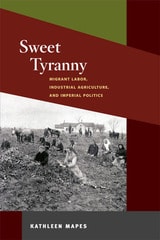
Sweet Tyranny
Migrant Labor, Industrial Agriculture, and Imperial PoliticsKathleen Mapes
University of Illinois Press, 2008
Synthetic Worlds
The Business and Culture of Online GamesEdward Castronova
University of Chicago Press, 2006
In Synthetic Worlds, Edward Castronova offers the first comprehensive look at the online game industry, exploring its implications for business and culture alike. He starts with the players, giving us a revealing look into the everyday lives of the gamers—outlining what they do in their synthetic worlds and why. He then describes the economies inside these worlds to show how they might dramatically affect real world financial systems, from potential disruptions of markets to new business horizons. Ultimately, he explores the long-term social consequences of online games: If players can inhabit worlds that are more alluring and gratifying than reality, then how can the real world ever compete? Will a day ever come when we spend more time in these synthetic worlds than in our own? Or even more startling, will a day ever come when such questions no longer sound alarmist but instead seem obsolete?
With more than ten million active players worldwide—and with Microsoft and Sony pouring hundreds of millions of dollars into video game development—online games have become too big to ignore. Synthetic Worlds spearheads our efforts to come to terms with this virtual reality and its concrete effects.
“Synthetic Worlds is a surprisingly profound book about the social, political, and economic issues arising from the emergence of vast multiplayer games on the Internet. What Castronova has realized is that these games, where players contribute considerable labor in exchange for things they value, are not merely like real economies, they are real economies, displaying inflation, fraud, Chinese sweatshops, and some surprising in-game innovations.”—Tim Harford, Chronicle of Higher Education
Systemic Choices
Nonlinear Dynamics and Practical ManagementGregory A. Daneke
University of Michigan Press, 1999